Best Perch Fishing Spots on Lake Erie
There's nothing quite like the thrill of feeling that distinct tug on your line, signaling a hungry yellow perch has taken the bait, especially when you're out on the vast, often challenging waters of Lake Erie. For many anglers, figuring out where these schools of delicious panfish are hiding can feel like searching for a needle in a haystack, leading to frustrating days without a single bite. But don't you worry, because this guide is specifically designed to cut through that guesswork, giving you the insider scoop on the very best yellow perch fishing spots across New York's Lake Erie shoreline, so you can fill your cooler and your belly with success.
Understanding Lake Erie's Yellow Perch Fishery in New York
Lake Erie isn't just one of the Great Lakes; it's a phenomenal freshwater ecosystem that supports an incredibly robust fishery, particularly for species like yellow perch. For those of us in New York, our stretch of Lake Erie offers some truly world-class opportunities, but knowing the nuances of this vast waterbody is key to consistent success.
Why Lake Erie is a Perch Powerhouse
When you look at Lake Erie, especially the eastern basin that touches New York, you're seeing the perfect recipe for a thriving yellow perch population. This lake is relatively shallow compared to some of its Great Lakes cousins, which means its waters warm up more efficiently. This warmth, combined with rich nutrient input from tributaries, fuels an incredible amount of aquatic life, from microscopic plankton to small baitfish like emerald shiners. These baitfish are the primary food source for yellow perch, and a robust forage base means healthy, abundant, and fast-growing perch.
The lake bottom itself is a mosaic of different habitats, from vast stretches of mud and sand to rocky shoals, submerged humps, and man-made structures like breakwalls and piers. Each of these features provides essential habitat for perch at different stages of their life cycle or during various seasons. They might be spawning in shallow weed beds in spring, retreating to deeper, cooler waters over mudflats in summer, or staging near structure in the fall. This diversity in habitat ensures that no matter the time of year, there's always somewhere for perch to thrive and for anglers to target them. The New York Department of Environmental Conservation (DEC) has also done a fantastic job managing the fishery, ensuring sustainable populations through careful stocking programs and regulation. To learn more about this incredible fishery, check out our detailed guide on Yellow Perch in New York Once you understand what makes Lake Erie tick, you'll appreciate why it's such a consistent producer of these prized panfish.
Perch Behavior and Seasonal Movements
Yellow perch are fascinating fish, and understanding their seasonal movements is absolutely critical for consistently finding them. Their behavior is largely dictated by water temperature, available food, and spawning cycles.
In the spring, as ice recedes and water temperatures climb into the 40s and 50s Fahrenheit, yellow perch will move into shallower areas, often around 5 to 15 feet deep, to spawn. They look for areas with submerged vegetation, woody debris, or even rocky shorelines and breakwalls where they can lay their distinctive ribbon-like egg masses. During this time, they are quite aggressive and can be found relatively close to shore. This is a prime time for shore anglers or those with smaller boats to get in on the action.
As summer progresses and the shallow waters heat up, perch typically retreat to deeper, cooler waters, often ranging from 20 to 50 feet or even deeper, depending on the specific location and thermal stratification of the lake. They'll often school up over soft, muddy bottoms where they can find abundant insect larvae and small baitfish. This is when boat anglers often employ drift fishing techniques over vast expanses of the lake. Knowing Best Time of Year to Fish in New York will certainly give you an edge, as will understanding the specific seasonal movements for these popular fish.
Come fall, as water temperatures begin to drop again, perch will once again migrate closer to shore and congregate around structure. They're feeding heavily to build up fat reserves for winter, making them very accessible and often eager to bite. This can be some of the most productive fishing of the year. And for those brave enough to venture out onto the hard water, winter ice fishing for perch on Lake Erie can be spectacular, with large schools often holding in 15 to 30 feet of water near drop-offs or humps. Predicting these movements takes a bit of experience, but modern fish finders can be invaluable tools for locating these nomadic schools, which we'll touch on later.
Top Perch Hotspots on New York's Lake Erie Shores
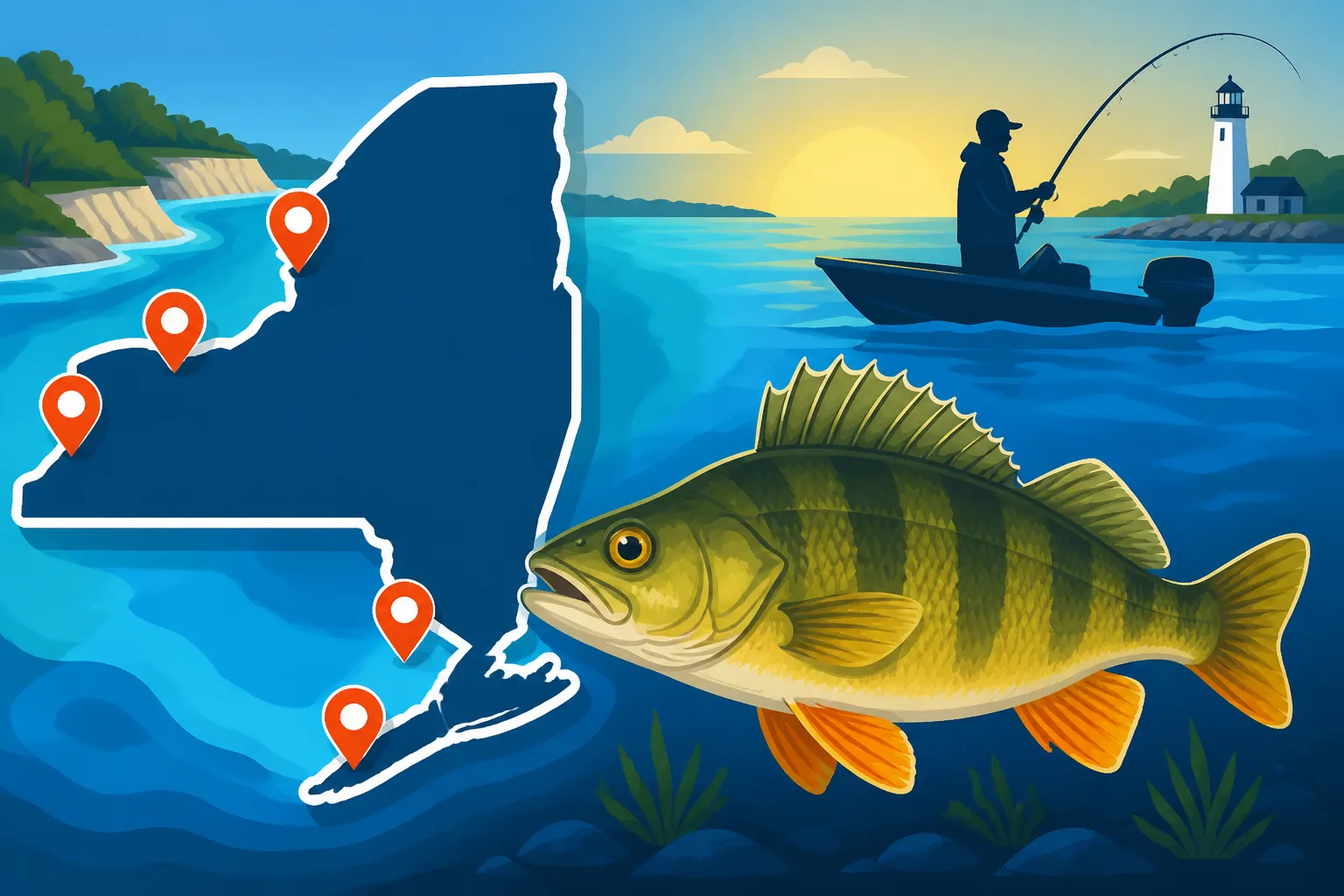
When it comes to nailing down the best spots for yellow perch on New York's Lake Erie, we're talking about a mix of accessible shorelines, productive harbors, and fantastic nearshore structures that hold fish year-round. While perch can literally be found anywhere in the lake, certain areas consistently produce more and bigger fish.
Dunkirk and Barcelona Harbors
If you're looking for a perch-fishing paradise, the area around Dunkirk, New York, is often at the top of the list. The Dunkirk Harbor itself is a phenomenal spot, offering diverse fishing opportunities. The inner harbor, protected by breakwalls, provides calmer waters and often holds schools of perch, especially in spring and fall. Anglers can fish from the city pier, the harbor walls, or launch a boat and target the deeper channels and fringes of the harbor. The availability of boat launches, bait shops, and even charter services makes it incredibly angler-friendly. Outside the harbor, especially just off the breakwalls, you'll find excellent hard-bottom structure and access to deeper waters where large schools of perch roam. Many local captains specializing in perch fishing operate out of Dunkirk, and a quick search on a site like FishingBooker can connect you with experienced guides who know the exact depths and drifts that are producing. If you're planning a trip to this area, our guide on Lake Erie Fishing Near Dunkirk will provide even more localized insights.
A bit further southwest along the New York shoreline, Barcelona Harbor is another gem. While perhaps not as bustling as Dunkirk, Barcelona offers excellent access to prime perch waters. The harbor itself, especially near the mouth, can hold good numbers of perch, and the surrounding waters feature a mix of rocky areas and productive mudflats. This area is particularly known for its consistent summer fishing, where anglers can drift over deeper humps and troughs, often finding those jumbo perch that Lake Erie is famous for. Like Dunkirk, Barcelona has good boat launch facilities, making it easy to get out on the water and explore. Both of these harbors act as magnets for baitfish, which in turn draws in the hungry perch.
Buffalo Harbor and Outer Harbors
For those closer to the northern end of New York's Lake Erie shoreline, the Buffalo Harbor area presents some outstanding perch opportunities, especially during the cooler months. The Buffalo River and Outer Harbor are expansive and feature a lot of structure, from old breakwalls and docks to deep channels and current breaks. These areas tend to hold a lot of baitfish, making them attractive to schools of yellow perch. Access can be found from public piers, parks along the waterfront, or via multiple boat launches.
The Tifft Nature Preserve, while not typically thought of as a primary fishing destination, offers unique shore fishing access within the greater Buffalo area that can hold perch. More seriously, the breakwalls protecting the Outer Harbor are legendary. Fishing from these structures, especially during the spring and fall runs, can yield impressive catches. You'll often see anglers lined up, each with their two-hook perch rigs, patiently waiting for that tell-tale tap-tap-tap. During colder months, when much of the lake is turbulent, the protected waters of Buffalo's inner and outer harbors offer a crucial refuge for bait and gamefish alike, including perch. While many people associate Buffalo with stellar Lake Erie Walleye Fishing Near Buffalo, New York there are fantastic perch possibilities here too.
Van Buren Bay and Sturgeon Point
Moving away from the major harbors, the stretches of coastline like Van Buren Bay and the areas around Sturgeon Point offer more open-water perch fishing. These spots are less about man-made structures and more about natural contours, drop-offs, and subtle changes in the lake bottom. Van Buren Bay, for instance, has a mix of sand and mud bottoms, and anglers often find excellent perch fishing by drifting or anchoring over specific humps or depressions in 20-40 feet of water.
Sturgeon Point, with its prominent lighthouse and underlying rocky structures, acts as another key aggregation point for baitfish, and thus, for perch. Offshore from Sturgeon Point, there are numerous natural reefs and contours that hold significant schools of perch, particularly during the summer and early fall. These areas might require a bit more navigation and knowledge of Lake Erie's bottom topography, but the rewards can be substantial. Finding these subtle structures often means relying on a good fish finder and understanding how to interpret its readings. Many experienced anglers use detailed contour maps from companies like Navionics or C-MAP to pinpoint these offshore perch magnets. The beauty of these open-water spots is the potential for larger, less pressured fish, making the search well worth the effort for dedicated perch hunters.
Here's a quick overview of some prime New York Lake Erie perch fishing locations:
| Location | Primary Access Type | Best Seasons (General) | Key Features for Perch | Notes |
|---|---|---|---|---|
| Dunkirk Harbor | Boat Launch, Pier, Shore | Spring, Fall, Winter | Breakwalls, deeper channels, artificial reefs | Very angler-friendly, bait shops, charters available |
| Barcelona Harbor | Boat Launch, Shore | Spring, Summer, Fall | Harbor mouth, rocky points, nearshore mudflats | Excellent for drifting, often less crowded than Dunkirk |
| Buffalo Harbor | Boat Launch, Piers, Shore | Spring, Fall, Winter | Outer Harbor breakwalls, deep channels, current breaks | Great for cold weather, urban access, baitfish congregations |
| Van Buren Bay | Boat Launch | Summer, Fall | Offshore humps, mudflats, subtle depth changes | Requires boat, good for drifting, often holds larger fish |
| Sturgeon Point | Boat Launch | Summer, Fall | Rocky reefs, deep contours, baitfish schools offshore | More open-water focused, good electronics recommended |
Essential Techniques, Bait, and Tackle for Erie Perch
Catching yellow perch on Lake Erie often comes down to presenting the right bait in the right way, especially when you've pinpointed a school. While they're generally not overly finicky, using the tried-and-true methods will dramatically increase your success rate.
The Classic Perch Rig
When it comes to tackle for yellow perch on Lake Erie, simplicity and effectiveness go hand-in-hand. The absolute cornerstone of perch fishing here is the classic two-hook perch rig, often referred to as a "crappie rig" or "drop-shot rig" in other contexts, though it's typically tied differently for perch. This rig usually consists of a main line tied to a swivel, with a leader section (often 10-20 lb monofilament or fluorocarbon) below it. Along this leader, two smaller hooks (size 6 to 10 is common) are snelled or tied in a dropper loop fashion, spaced about 6-12 inches apart. A weight (1/2 to 1 oz bell sinker or pyramid sinker, depending on current and depth) is then tied at the very bottom of the leader.
The beauty of this rig is that it allows you to present two baits at different depths simultaneously, increasing your chances of finding where the perch are biting. The weight keeps your bait near the bottom, where perch primarily feed, but the dropper hooks allow the bait to suspend just above the lakebed, making it highly visible and accessible. Using a medium-light action spinning rod (6'6" to 7' range) with a fast tip and a matching spinning reel spooled with 6-8 lb monofilament or braided line (with a fluorocarbon leader) is an ideal setup. The sensitive tip allows you to detect those often subtle perch bites, while the backbone helps you handle multiple fish if you hook a "double." Remember that in New York, you can typically use up to three lines, so consider having a few of these rigs ready. If you're curious about the specifics of your setup, you might want to look at our guide on How Many Fishing Rods Can I Use at Once?
Best Baits for Yellow Perch
Hands down, the king of yellow perch baits on Lake Erie is the emerald shiner. These small, silvery baitfish are native to the Great Lakes and are a natural part of the perch's diet, making them irresistible. Live emerald shiners, hooked lightly through the lips or just behind the dorsal fin, offer natural action that perch simply can't ignore. You can find them at almost any bait shop along the Lake Erie shoreline, especially in places like Dunkirk and Buffalo.
While emerald shiners are the go-to, other baits can also be incredibly effective. Nightcrawlers or pieces of nightcrawler are always a solid choice, particularly when perch are less aggressive or when fishing in slightly muddier water. Small pieces of cut bait, like the belly strip from a freshly caught perch or even a piece of clam, can also work wonders due to their scent trail. For those who prefer artificials, small soft plastics like Gulp! Minnows, grub tails, or even tiny tube jigs in natural colors (like smoke, green pumpkin, or white) can be deadly, especially when tipped with a small piece of worm or shiner for added scent. Jigging spoons, like Swedish Pimples or Kastmasters, are also effective, especially for ice fishing or when fishing deeper schools. The key is to experiment; sometimes perch will prefer a lively shiner, other times a slow-moving worm or a brightly colored jig. For more specifics on what tempts these fish, check out our guide on How to Catch Yellow Perch on New York's Lake Erie
Reading the Water and Electronics
On a vast body of water like Lake Erie, simply dropping a line isn't going to cut it if you want consistent success. Understanding how to "read the water" – both visually and with electronics – is paramount. Visually, look for areas where baitfish are congregating, diving birds, or even subtle changes in water color or current. Pay attention to changes in wind direction or speed, as these can affect current and push baitfish (and therefore perch) into certain areas.
However, the real game-changer for perch fishing on Lake Erie is a quality fish finder. Modern sonar units from brands like Humminbird, Lowrance, or Garmin allow you to scan the water column and bottom for baitfish and, more importantly, schools of gamefish like perch. Look for dense, often elongated schools that appear as "blobs" or "arches" near the bottom. Perch often hug the bottom, so setting your sensitivity high and adjusting your depth range to focus on the last 10-20 feet of the water column can be very helpful. Once you mark a school, you can either anchor up-current and drift your baits through them, or use your trolling motor or electric anchor (like a Minn Kota Spot-Lock) to hold directly over the fish. For a deeper dive into making the most of your electronics, our article on How to Read a Fish Finder for New York Lakes is an excellent resource. This combination of traditional angling knowledge and modern technology is what separates good perch anglers from great ones on Lake Erie.
Maximizing Your Perch Catch and Staying Legal
Catching a mess of delicious yellow perch is a fantastic experience, but doing it consistently means paying attention to timing, technique, and, of course, the rules. Staying informed ensures your fishing trips are both successful and entirely legal.
Optimal Times and Conditions for Perch
Just like any other fish, yellow perch have their preferences when it comes to when and where they'll bite best. Generally, the early morning hours and late afternoon/evening tend to be the most productive times, as these are often prime feeding windows when light conditions are lower, making perch feel more secure in their foraging. However, during overcast days, perch can bite steadily throughout the entire day.
Seasonally, as we discussed, spring and fall are often considered the prime times for perch fishing in New York's Lake Erie. In spring, they are shallow for spawning and aggressively feeding. In fall, they are bulking up for winter, often forming large, accessible schools near shore or around structure. Even winter ice fishing can be incredibly productive if you can safely access the ice. Summer fishing can be excellent too, but it often requires locating deeper schools further offshore, making a boat and good electronics essential.
Weather also plays a significant role. Stable weather patterns, especially a few days of consistent conditions, usually lead to better fishing. A light chop on the water, often caused by a gentle breeze, can be beneficial as it breaks up the surface, making anglers less visible to fish and potentially stirring up the bottom, making food more available. Conversely, extremely calm, sunny days can sometimes make perch a bit more finicky, especially in shallow water. Major cold fronts or sudden drops in barometric pressure can temporarily shut down the bite, so keeping an eye on the forecast is always a good idea. Knowing the Best Season for Perch Fishing on New York's Lake Erie will significantly improve your planning.
New York Perch Regulations and Licensing
Before you even cast a line, you absolutely must be familiar with New York's fishing regulations for Lake Erie and, more broadly, for freshwater species. Regulations are put in place by the New York State Department of Environmental Conservation (DEC) to ensure sustainable fishing for future generations. For yellow perch on Lake Erie, there are typically daily creel limits and sometimes minimum size limits, which can vary by water body and even change year-to-year. Always check the most current DEC Freshwater Fishing Regulations Guide before you head out. These guides are available online on the DEC website or at most bait and tackle shops where licenses are sold.
In addition to understanding catch limits, possessing a valid New York State fishing license is non-negotiable for most anglers aged 16 and older. There are various license types available, from annual resident and non-resident options to shorter-term licenses like the New York 7-Day Fishing License or even a New York 1-Day Fishing License for those just visiting. Failing to have a proper license can result in significant fines and penalties, and it's simply not worth the risk. Our comprehensive New York Fishing License Guide and New York Fishing Regulations Explained articles can help you navigate all the necessary requirements to ensure you're fishing responsibly and legally. Always carry your license with you when fishing, whether it's a physical copy or a digital one on your phone, as enforcement officers regularly patrol Lake Erie.
Finding a Great Perch Charter
While it's entirely possible to find great perch fishing on your own, especially from shore or with a smaller boat, sometimes the best way to guarantee a productive day, especially if you're targeting those deeper, offshore schools, is to book a charter. An experienced Lake Erie fishing charter captain or guide knows the nuances of the lake, including current hot spots, bait movements, and the most effective techniques for the day's conditions.
When looking for a charter, prioritize those with a strong reputation for targeting yellow perch. Many captains specialize, and while some are renowned for walleye or salmon, others are true perch pros. Websites like FishingBooker are excellent resources for finding reputable captains in areas like Dunkirk, Buffalo, and Barcelona. You can browse profiles, read reviews from other anglers, and compare prices and offerings. A good charter will provide all the necessary fishing gear, bait, and often even clean your catch at the end of the day. They'll also ensure all safety equipment is on board and that you're fishing within regulations.
Booking a charter is not just about catching fish; it's also an incredible learning experience. You can pick up tips and tricks from seasoned pros that would take years to learn on your own. It's a fantastic option for beginners who want to learn the ropes, for families looking for a fun day on the water, or for experienced anglers who want to maximize their time on a new or unfamiliar body of water. Don't hesitate to ask potential captains about their perch-specific success rates and what you can expect on a typical trip.
Disclaimer
The information provided in this guide is for general informational and educational purposes only. Fishing regulations, season dates, and limits can change frequently. Always consult the most current New York State Department of Environmental Conservation (DEC) fishing regulations guide before planning your fishing trip to ensure compliance with all state and local laws. Fishing involves inherent risks; always prioritize safety, wear appropriate personal flotation devices, and be aware of weather conditions.