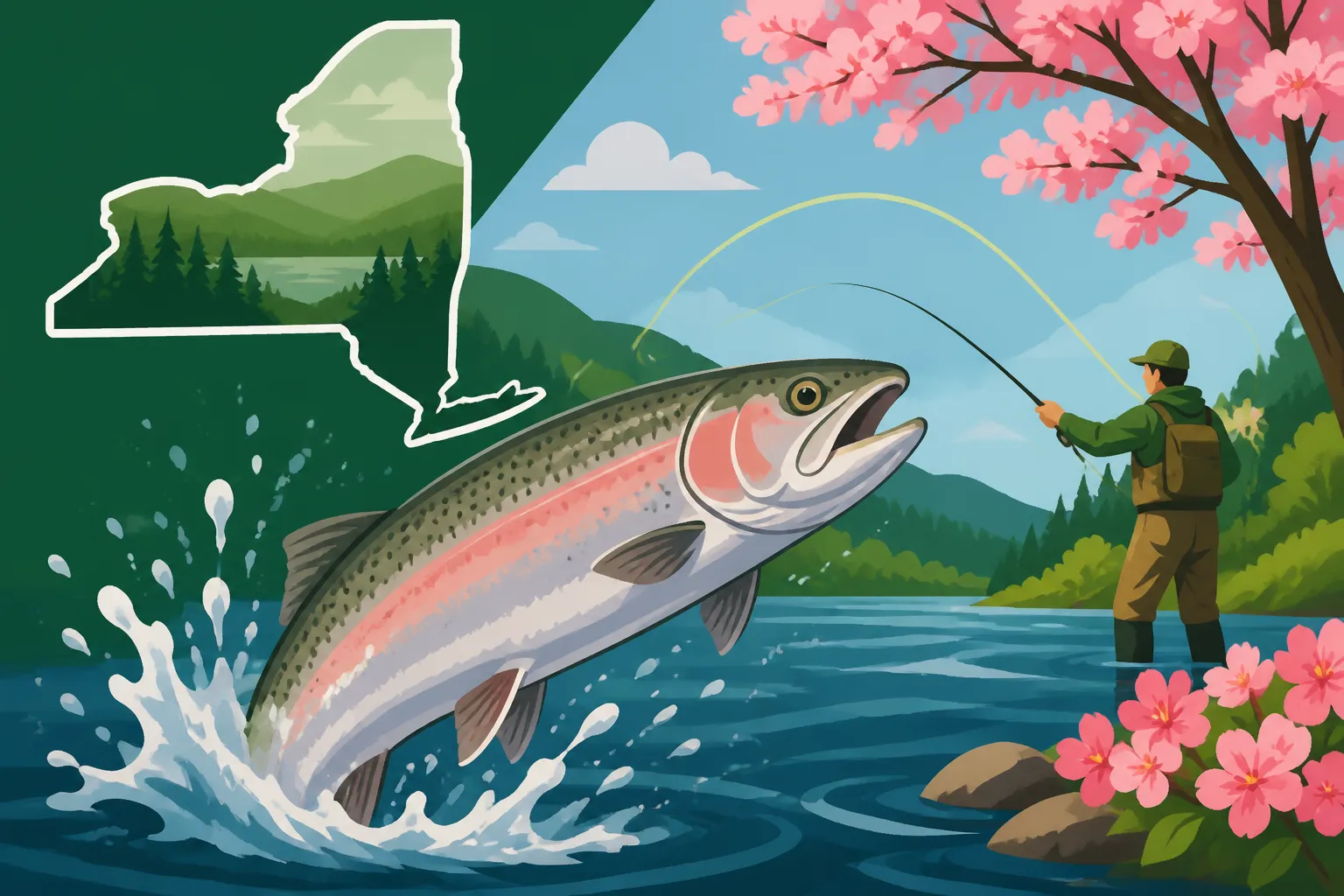
Spring Steelhead Fishing in New York Peaks Into Mid-May
There’s nothing quite like the rush of a chrome-bright steelhead peeling line off your reel, especially after a long, cold New York winter. Many anglers find themselves wondering when that magical moment truly arrives, and for those targeting spring steelhead in New York, the action often builds to an exhilarating crescendo, peaking gloriously into mid-May. This comprehensive guide will walk you through everything you need to know to hit the water at the perfect time and land some of these incredible fish.
Understanding the Spring Steelhead Run in New York
The spring steelhead run is a truly special event for anglers across New York State, particularly in the tributaries flowing into the Great Lakes. It's a period of intense activity, marked by magnificent fish moving upstream to spawn, offering some of the most exciting freshwater fishing experiences imaginable. But understanding why spring is prime time, and what influences the peak, is key to success.
Why Spring is Prime Time for Steelhead
Steelhead, which are essentially rainbow trout that migrate to the Great Lakes and return to rivers to spawn, begin their upstream journey as the ice melts and water temperatures start to rise. While some "early" fish might nose their way into the lower river sections in late fall or even winter, the main event, the real push, happens in spring. They are driven by an ancient biological imperative: reproduction. As the days lengthen and the sun warms the snowmelt, these powerful fish sense it's time to head upstream to deposit their eggs.
This spring surge means the rivers are suddenly brimming with strong, aggressive fish. They’re not just heading to the spawning grounds; they're also keenly aware of feeding opportunities to fuel their arduous journey. Post-spawn, as they drop back to the lake, they become even more aggressive, gorging themselves to recover condition. This makes for fantastic fishing, as they’re actively moving, often holding in predictable spots, and willing to strike a well-presented bait or fly. You'll often hear about the "Steelhead Average Weight in New York's Lake Ontario Tributaries" being quite impressive during this period, as they've spent years growing fat in the lake.
Key Factors Influencing Peak Season
While we can say that spring steelhead fishing "peaks into mid-May," it's not a rigid calendar date. Mother Nature has a way of throwing curveballs, and several environmental factors play a massive role in when the steelhead action truly explodes and when it winds down. The biggest players are water temperature, river flow, and overall weather patterns.
Water temperature is arguably the most critical factor. Steelhead prefer to spawn in water temperatures ranging from the mid-40s to low 50s Fahrenheit. As river temperatures climb into this range, typically from late March through May, more and more fish will commit to their upstream migration. Too cold, and they'll hold in the lake or lower river. Too warm, and they might zip through quickly or even become lethargic. You’ll find that understanding "How to Fish Cold Water in New York" can be a significant advantage earlier in the season, but by mid-May, the water is usually in that sweet spot.
River flow, often dictated by snowmelt and rainfall, is another huge influence. A good spring freshet (a sudden increase in river flow from snowmelt or rain) can trigger a massive run of fish, providing them with the necessary water levels to navigate rapids and obstacles. However, too much water, resulting in high, muddy conditions, can shut down the bite, making it difficult for fish to see baits and for anglers to fish effectively. Conversely, extremely low, clear water can make fish spooky and less willing to bite. A stable flow, perhaps with a slight increase after a rain, is often ideal. Keep an eye on local stream gauges – these real-time tools are invaluable for predicting fishing conditions.
Top New York Tributaries for Spring Steelhead
New York is blessed with an abundance of fantastic steelhead waters, particularly those flowing into Lake Ontario and Lake Erie. These tributaries become vibrant hubs of angling activity each spring, drawing dedicated anglers from all over the region. Knowing where to go and how to navigate popular spots is crucial for a successful trip.
Great Lakes Tributaries Hotspots
When it comes to spring steelhead, New York’s Lake Ontario tributaries are legendary. The Salmon River, often dubbed the "Steelhead Alley" of the East, is perhaps the most famous, and for good reason. From Pulaski upstream, its pools, runs, and riffles teem with fish. While the Salmon River sees heavy pressure, especially in the fall, its spring run is equally robust. Anglers often target its many Public Fishing Rights (PFR) sections. Other highly productive Lake Ontario tributaries include Oak Orchard Creek, Eighteenmile Creek, Genesee River, Sandy Creek, and the Oswego River. Each of these offers unique characteristics, from wide, deep pools to shallow, fast-flowing runs, providing diverse opportunities for anglers. You'll often hear discussions about the "Best Time to Fish for Steelhead on New York's Lake Ontario Tributaries," and for many, mid-May is right up there.
Over on the Lake Erie side, tributaries like Cattaraugus Creek are also stellar for spring steelhead. This larger system can handle more pressure and offers a different fishing experience, with vast stretches accessible to the public. Smaller streams such as Buffalo Creek and Chautauqua Creek also get good runs, though they might be more dependent on significant rain events to draw fish up. These western New York streams provide an equally thrilling, albeit sometimes more intimate, steelhead experience.
Navigating Access and Pressure
With so many incredible fish available, it’s no surprise that popular steelhead rivers can get crowded, especially during peak times. Navigating public access and dealing with pressure is part of the game. The New York State Department of Environmental Conservation (DEC) has done an excellent job of securing and marking Public Fishing Rights (PFR) along many of these rivers, giving anglers clear access points. Always respect private property signs and never trespass, even if a spot looks promising.
One strategy to beat the crowds is to venture a bit further upstream or downstream from the most popular parking areas. Many anglers stick close to the road, but a willingness to walk a bit can often lead to quieter stretches of river and unpressured fish. Another tactic is to fish during off-peak hours – early mornings, late evenings, or even weekdays if your schedule allows. Weekends, especially glorious sunny ones in May, will always draw a crowd. Being patient, respectful of other anglers, and willing to share the water goes a long way. Remember to always consult the New York Fishing Regulations Explained to ensure you're fishing legally and ethically, including rules on crowding and distancing.
Essential Gear and Techniques for Mid-May Steelhead
By mid-May, water conditions are often becoming more stable, and steelhead, whether spawning or dropping back, are active. Having the right gear and knowing the most effective techniques can dramatically increase your chances of success. It’s a bit different than the brutal cold of early spring, demanding adaptability from anglers.
Rods, Reels, and Line Selection
For spring steelhead, you'll want a setup that can handle powerful fish in often swift currents, while still allowing for sensitive presentations. A medium-light to medium-heavy spinning rod, typically 9 to 11 feet long, is ideal. The extra length helps with line management, mending, and absorbing the shock of a hard-fighting fish. Brands like Fenwick, St. Croix, and G. Loomis offer excellent options, but you can find great entry-level rods on online retailers like Amazon that are perfectly capable. Match this with a high-quality spinning reel in the 2500-4000 series. A smooth drag is non-negotiable – that's your insurance policy when a steelhead decides to run.
For line, a good quality monofilament or fluorocarbon main line in 8 to 12 lb test is standard. Many anglers prefer braided line (15-20 lb) for its sensitivity and strength, but if you go this route, you must use a fluorocarbon leader (6-10 lb test) for stealth, as braid is highly visible. The length of your leader will depend on water clarity and depth, but typically 3-6 feet is a good starting point. Having a range of leader sizes is smart, as fish can be leader-shy in clear water.
Baits and Lures for Post-Spawn Success
Mid-May sees steelhead in various stages: some might still be on their redds (spawning beds), some are actively spawning, and many are beginning their post-spawn drop-back to the lake. This means a variety of offerings can be effective.
One of the most consistently productive baits for steelhead, especially during and after the spawn, is the egg sac. Steelhead are cannibals, and stray eggs are a natural part of their diet during this time. You can learn "How to Fish Egg Sacs for Steelhead" effectively, using mesh netting to create small, enticing bundles of salmon or trout eggs. Natural eggs are best, but synthetic egg imitations also work. Another powerhouse bait is worms, particularly juicy nightcrawlers. Worms tumbling along the bottom mimic a natural food source disturbed by current.
For artificials, small jigs (1/16 to 1/8 oz) tipped with a maggot, wax worm, or soft plastic grub can be incredibly effective, especially when drifted under a float. Bright colors like chartreuse, orange, and pink often trigger strikes in stained water, while more natural colors like white or brown can excel in clear conditions. Small crankbaits or drift baits that imitate minnows can also entice aggressive post-spawn fish that are actively feeding. Fly anglers will find that "Best Fly Patterns for New York's Lake Ontario Steelhead" include egg patterns, stoneflies, and various nymph patterns that imitate aquatic insects.
Drifting and Nymphing Strategies
When targeting steelhead in rivers, drift fishing is the dominant technique. This involves presenting your bait or lure so it tumbles naturally with the current, mimicking an unattached food source. Whether you're using a float (also known as a bobber or strike indicator) or fishing bottom-bounced, the goal is a drag-free drift.
Float fishing is incredibly popular and effective. You set your float so your bait drifts just above the bottom, adjusting the depth based on the specific run you’re fishing. The float provides excellent strike indication, especially for subtle takes. When you see that float dip, pause, or dart, set the hook! This technique is perfect for covering long runs and detecting the slightest bite. Make sure you understand "How to Drift Fish for Steelhead" to maximize your success with this method.
Bottom bouncing or nymphing without a float is another deadly technique, especially in faster, deeper runs where a float might be difficult to manage. This involves using just enough weight to keep your bait ticking along the bottom, allowing it to move naturally. It requires a keen sense of touch to differentiate between a bottom tap and a fish take, but it can be highly effective. For fly anglers, swinging streamers or nymphing under an indicator are go-to methods. Regardless of your chosen method, practice casting upstream and letting your offering drift down naturally, following the contours of the riverbed.
Navigating Challenges and Maximizing Your Success
Even with the best gear and knowledge, fishing, especially for elusive steelhead, often presents its fair share of challenges. The mid-May timeframe in New York can be beautiful, but it also brings its own set of variables. Being prepared to adapt and understanding the ethical side of the sport are key to a rewarding experience.
Dealing with Changing Water Conditions
New York weather in May can be famously fickle. One day it's sunny and warm, the next a cold front rolls in with heavy rain. These rapid changes directly impact river conditions, and thus, steelhead behavior.
A sudden influx of rain can cause rivers to rise and become muddy. When this happens, fish might move to slower pockets of water or close to the banks to escape the main current. They also rely more on their lateral line to detect food rather than sight, so vibrant, contrasting colors in your baits (think bright orange egg sacs or chartreuse jigs) become more effective. Also, increasing the scent profile of your bait, either with natural eggs or artificial scents, can make a huge difference.
Conversely, a prolonged dry spell can lead to low, clear water. In these conditions, steelhead become incredibly wary. You'll need to scale down your leader size, use more natural bait colors, and be extra stealthy in your approach. Long casts, wearing drab clothing, and avoiding heavy footsteps on the bank are all crucial. Fishing during low light conditions, such as "Best Time of Day to Fish in New York" at dawn or dusk, can also be advantageous when waters are clear and low, as fish feel more secure feeding. Always check online resources or local bait shops for the most current river conditions before you head out.
Ethical Angling and Conservation
Steelhead are a precious resource, and as responsible anglers, we have a duty to treat them with respect and ensure their populations thrive for future generations. This is especially true during the spawning period when fish are most vulnerable.
One of the most important practices is avoiding fishing on redds. Redds are the gravel nests where female steelhead lay their eggs. They appear as clean, oval patches of lighter gravel in the riverbed. Stepping on redds can crush eggs, and targeting fish actively on redds can disrupt their spawning process. If you see a fish on a redd, it's best to move on and target holding fish in deeper pools or runs downstream.
Practicing catch-and-release with care is also paramount, especially for larger, older spawning fish. If you plan to release a fish, try to keep it in the water as much as possible. Minimize handling, use wet hands to protect its slime coat, and avoid squeezing it. If you need a photo, get it quickly and return the fish gently to the water, supporting it until it swims away under its own power. Always be aware of daily catch limits and minimum size requirements as outlined in the New York Fishing Regulations Explained. If you're unsure about specific regulations or identifying fish, tools like the How to Identify a Steelhead vs a Brown Trout guide can be very helpful. Remember, a New York Fishing License Guide is required for all anglers, and sometimes additional endorsements like "What Is a Trout Stamp?" might be necessary depending on where you fish.
| Gear Category | Recommended for Mid-May Steelhead | Key Considerations | Where to Find |
|---|---|---|---|
| Rod | 9-11 foot, medium-light to medium-heavy spinning rod | Sensitivity for subtle bites, length for line control and shock absorption. | Local tackle shops, online retailers like Amazon |
| Reel | 2500-4000 series spinning reel | Smooth, reliable drag is critical for fighting powerful fish. | Sporting goods stores, Amazon |
| Main Line | 8-12 lb monofilament/fluorocarbon or 15-20 lb braided line | Mono/fluoro for stretch and stealth, braid for sensitivity (use fluoro leader). | Anywhere fishing line is sold, Amazon |
| Leader | 6-10 lb fluorocarbon | Stealth is key; vary length based on water clarity. | Local bait shops, Amazon |
| Baits | Egg sacs (natural or synthetic), nightcrawlers | Mimic natural food sources during and after spawn; bright colors in stained water. | Bait shops, Amazon for synthetic options |
| Lures | 1/16 – 1/8 oz jigs (tipped with grub/maggot), small crankbaits | Effective for active fish; bright colors for stained water, natural for clear. | Tackle stores, Amazon |
| Terminal Tackle | Assorted floats/indicators, split shot, small swivel, size 6-10 hooks | Match float size to current, use sharp hooks. | Bait shops, Amazon |
| Waders/Footwear | Breathable chest waders, studded wading boots | Stay dry and comfortable, secure footing in rocky rivers. | Outdoor retailers, Amazon |
Disclaimer
Fishing regulations can change. Always consult the latest New York State Department of Environmental Conservation (DEC) fishing regulations guide before heading out on the water. This article is intended for informational purposes only and does not constitute legal advice regarding fishing regulations.