How to Fish for Striped Bass at Night
There’s a unique magic to fishing for striped bass under the cloak of darkness, but let's be real, it comes with its own set of challenges. Between navigating unfamiliar terrain in low light, dealing with colder temperatures, and making sure your gear is up to snuff for nocturnal pursuits, it can feel a bit daunting for even seasoned anglers. Many of us have felt that frustration of casting blindly, wondering if the fish are even there, or worse, fumbling with gear you can't quite see. This comprehensive guide will illuminate the path, showing you exactly how to tackle night fishing for striped bass in New York, turning those nighttime uncertainties into unforgettable catches.
Why Night Fishing for Striped Bass is a Game-Changer
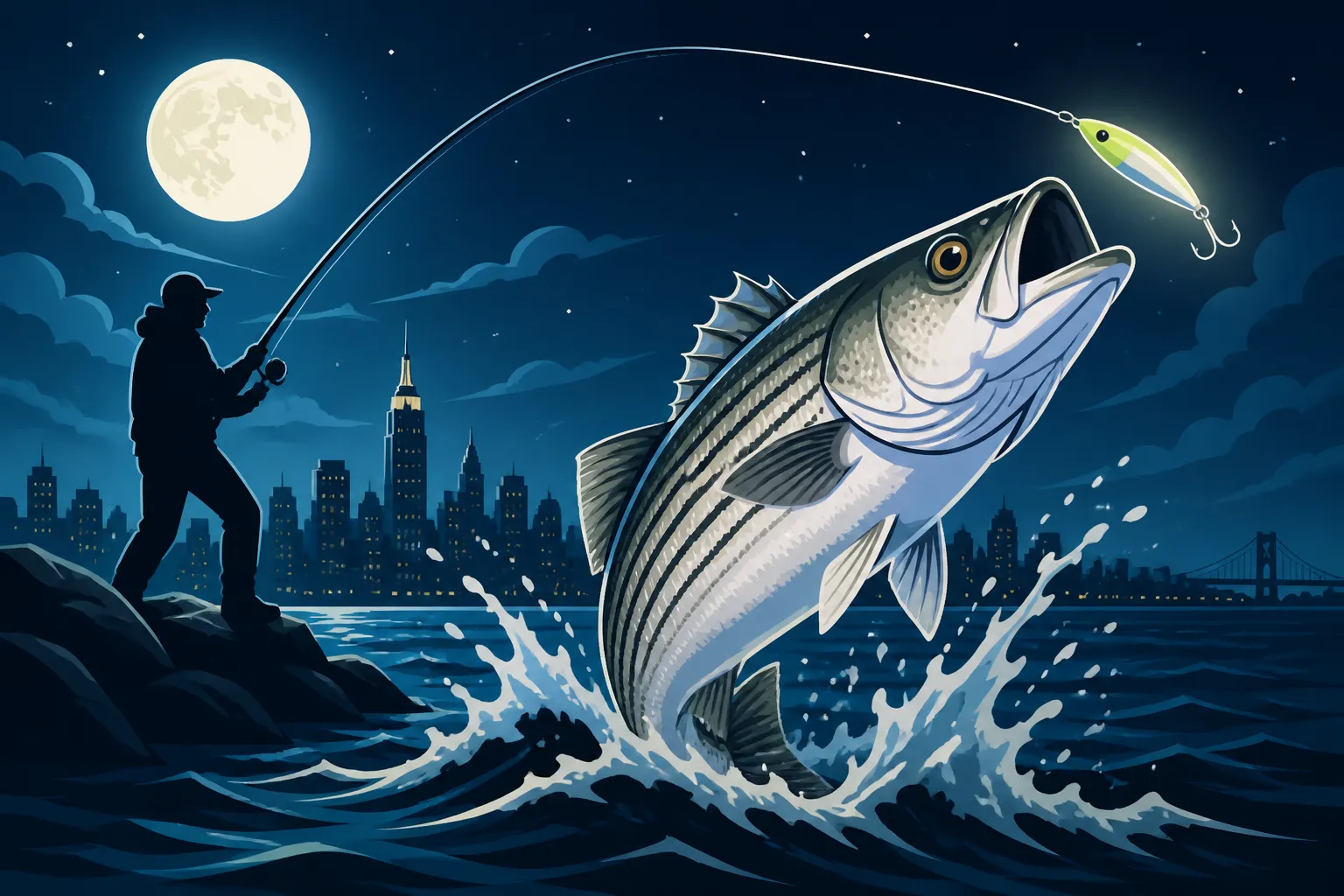
When the sun dips below the horizon, a different world awakens beneath the surface, especially for striped bass. These powerful fish, often wary and elusive during the bright daytime hours, become far more active and aggressive under the cover of night. If you’ve ever found yourself struggling to find stripers during a crowded summer day, you might just find your new favorite strategy in the stillness of the night. It's not just about avoiding the crowds; it's about tapping into a prime feeding window and outsmarting the fish when they least expect it.
Understanding Striped Bass Behavior After Dark
Striped bass are ambush predators, and while they hunt day and night, their feeding patterns can shift significantly once darkness falls. Many anglers report that larger, more aggressive striped bass are often caught at night. This isn't just anecdotal; there's a scientific reason for it. Under the cover of darkness, these fish feel more secure in shallower waters, venturing out from deeper hiding spots to hunt baitfish that also become more disoriented or active in low light. Their incredible lateral line system, which detects vibrations in the water, and their keen sense of smell become even more crucial hunting tools when visibility drops. This means they're less likely to be spooked by shadows or human presence and more reliant on sensing their prey, which you can use to your advantage. Understanding this shift in behavior is the first step to truly mastering night fishing for stripers. They become less about sight and more about sound, vibration, and scent, which changes your approach entirely.
The Advantages of Fishing Under the Stars
Beyond the thrill of hooking into a trophy striper, night fishing offers a multitude of benefits that can enhance your angling experience. First and foremost, the crowds practically disappear. You'll often find popular fishing spots that are packed during the day become peaceful havens at night, giving you ample room to cast and move around without interference. This solitude can be incredibly refreshing, allowing you to truly connect with the environment. Secondly, the cooler air temperatures are a huge plus, especially during New York's humid summer months. You can fish for hours in comfort without battling the oppressive heat and relentless sun.
Furthermore, fishing pressure is significantly reduced. Striped bass that have been relentlessly pursued by boats and shore anglers all day long become more complacent and willing to strike at night. This can lead to more consistent action and, often, larger fish. The reduced boat traffic also means less disruption to fish habitat, allowing baitfish schools and predatory stripers to move more freely. For anyone looking to target those bigger, more cautious fish that seem to vanish during the day, the cover of night provides the perfect opportunity. You're entering their prime-time feeding window, when their guard is down and their predatory instincts are in full swing. If you haven't tried fishing after dark, you're missing out on a truly unique and often more productive aspect of striper fishing.
Essential Gear and Setup for Night Striper Anglers
Getting your gear dialed in for night fishing isn't just about convenience; it's crucial for safety, efficiency, and success. You're operating in a world where your sight is limited, so every piece of equipment needs to serve a purpose and ideally be easily accessible or identifiable in the dark. Don't just grab your daytime setup and expect to conquer the night; a few key adjustments and additions can make all the difference, transforming a frustrating experience into a seamless and productive one.
Illumination and Safety Considerations
When you're out there in the dark, light sources are your best friends, but you need to use them wisely. A good quality headlamp is absolutely non-negotiable. Look for one with adjustable brightness settings and, ideally, a red light option. Red light preserves your night vision and is much less disruptive to fish and fellow anglers. Brands like Petzl or Black Diamond offer excellent, reliable options that you can often find readily on Amazon. Always carry spare batteries or a fully charged power bank. Handheld flashlights are also useful for more focused tasks, like tying knots or unhooking a fish, but the headlamp keeps your hands free.
Beyond personal illumination, consider glow sticks for marking rods or buckets, especially if you're fishing with multiple rods or with others. A small, waterproof float light for your landing net can also be a game-changer when you're trying to net a thrashing striper in the dark. For personal safety, especially if you're near water with currents or slippery rocks, a personal flotation device (PFD) is a smart choice, even if you’re a strong swimmer. Wearing reflective clothing or adding reflective tape to your waders or jacket can also increase your visibility to others, whether they are fellow anglers or boaters. Don't forget a first-aid kit; small cuts and scrapes are common, and in the dark, they can be harder to spot and treat quickly. Being prepared means you can focus on the fishing, not on potential hazards.
Rods, Reels, Lines, and Lures for Night Fishing
Your general striped bass setup should work, but optimizing it for night can make a real difference. For rods, a medium-heavy to heavy power rod, typically 7 to 10 feet long for surf casting, or 6.5 to 7.5 feet for boat or jetty fishing, will provide the leverage needed for strong stripers and heavier baits. A fast action tip is helpful for detecting subtle bites in the dark. Match this with a durable spinning reel in the 4000-6000 size range, capable of holding plenty of line and handling the corrosive saltwater environment. A strong drag system is crucial for those hard-fighting nocturnal stripers.
When it comes to line, braided line is a popular choice for its sensitivity and strength, allowing you to feel even the slightest tap in the dark. A 30-50 lb test braid is usually sufficient. Consider adding a 2-4 foot fluorocarbon leader (30-50 lb test) for abrasion resistance and reduced visibility, though visibility is less of a concern at night. For lures, remember that stripers rely more on vibration and scent at night. Darker colors like black, dark blue, or purple often silhouette better against the moonlight or sky. Soft plastics with paddle tails, large swimbaits, and jointed or rattling plugs that create a lot of commotion are excellent choices. Surface lures like poppers or walk-the-dog baits can also be incredibly effective on calm nights, as the fish will hear the disturbance on the surface. Don't forget to check out articles like "Best Line Weight for New York Freshwater Fishing" to understand the general principles of line selection, even if you need to adjust for saltwater specifics. For bait fishing, hooks like the Gamakatsu Octopus or Mustad Demon Perfect Circle are fantastic.
Top Techniques for Targeting Striped Bass at Night in New York
Night fishing for striped bass isn't just about showing up after dark; it's about adapting your approach to their nocturnal habits. The strategies that work so well during the day might not yield the same results when the sun is gone. You need to think about how fish perceive their environment in low light and how you can best present your offerings to capitalize on their heightened senses of smell, vibration, and hearing. This means focusing on different baits, presentations, and even where you choose to cast your line.
Using Live Bait and Cut Bait After Dark
For many seasoned anglers, live bait and fresh cut bait are the undisputed kings of night fishing for striped bass, especially in productive areas like the Hudson River or Long Island Sound. The natural scent and vibration these baits emit are irresistible to stripers hunting in the dark. Mackerel, eels, bunker (menhaden), and herring are prime choices for live bait. If you're fishing from shore or a jetty, you can cast these out with a simple fish-finder rig or a three-way swivel rig, allowing the bait to move naturally with the current. Make sure your hooks are appropriate for the bait size and the target fish. Using a proper circle hook, as detailed in the "Striped Bass Circle Hook Requirement" guidelines, is not only often legally mandated for bait fishing but also greatly improves the chances of a solid lip hook, protecting the fish.
Cut bait, such as chunks of fresh bunker, mackerel, or even clam, also works wonders. The strong scent trail it leaves in the water is a powerful attractant. Again, a fish-finder rig with a pyramid or Sputnik sinker to hold bottom in current is ideal. When using cut bait, don't be afraid to try larger pieces than you might during the day. Stripers at night are often less cautious and more willing to engulf a substantial meal. Periodically checking and refreshing your bait to maintain a strong scent is a good practice. Remember, patience is key with bait fishing at night. Let the scent do the work, and be ready for a powerful strike. For more general advice on what to use, consult "Best Bait for Striped Bass".
Mastering Artificial Lures at Night
While live and cut bait are fantastic, artificial lures can be incredibly effective for active night fishing, especially for anglers who prefer to cast and retrieve. The key is selecting lures that create vibration, flash (even in low light, subtle flash can matter), or sound, and those that present a good silhouette. Large soft plastic paddle tail swimbaits, like those from Z-Man or Daiwa, rigged on heavy jig heads, are a go-to. Their thumping tail creates irresistible vibrations that stripers detect easily. Darker colors, such as black, purple, or dark blue, often work best as they provide a clear silhouette against any ambient light from the moon or nearby sources. You can find a vast selection of these lures and jig heads on Amazon, making it easy to stock up.
Topwater lures, like large poppers or walking baits, can also produce explosive strikes on calm nights. The noise and disturbance they create on the surface are incredibly attractive to hunting stripers. Don't underestimate the power of metal lip swimmers or large lipped plugs that dive and wobble, displacing a lot of water. Retrieve them slowly, allowing the fish time to locate them. Bucktail jigs dressed with a curly tail grub or a pork rind trailer are another classic choice; they're versatile and can be fished at various depths. The general rule for night lure fishing is often slower retrieves and larger profiles to give the fish ample opportunity to find and strike your offering. For a broader understanding of techniques, check out "How to Fish for Striped Bass in New York."
Strategic Spot Selection for Night Success
Choosing the right location is paramount when targeting striped bass at night in New York. While many daytime hotspots can be productive, certain types of areas truly shine after dark. Stripers often move into shallower water, especially around structures, under the cover of night. Look for areas with strong current breaks, like rocky points, jetties, bridge pilings, and inlets, where baitfish congregate. The moving water brings food, and the structure provides ambush points for hungry stripers. Places along the Hudson River and its various tributaries are known hotspots, as are many locations on Long Island Sound. Explore "Fishing the Hudson River in New York: Where to Go" and "Fishing Long Island Sound in New York: A Complete Guide" for specific geographic recommendations.
Docks and marinas with ambient lighting are also excellent choices. The lights attract baitfish, which in turn attract stripers. Cast around the edges of the light and into the darker shadows. Beaches with deeper cuts, troughs, or nearby rocky outcroppings can also hold fish close to shore. Pay attention to tide cycles; incoming and outgoing tides often concentrate bait and activate feeding. A rising tide moving into a shallow flat or a falling tide pulling bait out of an estuary can be particularly productive. Always research the local regulations for specific areas, as some spots might have restrictions on night fishing or access. Remember that your chances of finding fish increase dramatically when you choose a location that naturally funnels bait and provides cover for stripers after dark.
Safety and Etiquette When Fishing at Night
Fishing at night offers incredible rewards, but it also demands a heightened sense of awareness and responsibility. The reduced visibility adds layers of complexity that aren't present during the day. Ensuring your safety and showing respect to fellow anglers and the environment are not just good practices; they're essential for an enjoyable and trouble-free nocturnal adventure. A little bit of planning and mindfulness goes a long way in making your night fishing trips memorable for all the right reasons.
Navigating the Dark Safely
Your personal safety should always be your number one priority when fishing after dark. Before you even head out, scout your chosen fishing spot during the daytime. Identify potential hazards like uneven terrain, slippery rocks, hidden drop-offs, or submerged obstacles. Knowing the layout in advance will prevent nasty surprises when you can't see clearly. Wear appropriate footwear with good grip – non-slip boots or wading shoes are a must, especially around wet or rocky areas. As mentioned, a reliable headlamp with spare batteries is indispensable. Consider carrying a whistle or other signaling device in case you need to attract attention.
If you're fishing from a boat, ensure all your navigation lights are working, and you have all required safety gear onboard, including PFDs for everyone. Familiarize yourself with the area's boat traffic and always err on the side of caution. Inform someone of your fishing plans – where you're going and when you expect to return. A simple text message can be a lifesaver. Keep your phone charged and in a waterproof case. For those venturing into New York's waters, it’s critical to have your current "New York Fishing License Guide" and be aware of "New York Striped Bass Length Requirements" and other regulations, as conservation officers do patrol at night. Always be aware of your surroundings, listen for sounds that might indicate approaching boats or wildlife, and trust your instincts. If a situation feels unsafe, it's better to pack up and try another time.
Respecting Fellow Anglers and the Environment
Night fishing often brings a sense of camaraderie, but it also requires a keen awareness of etiquette. Since light is a premium, be mindful of how you use your headlamp. Avoid shining bright lights directly into other anglers' faces or casting lines. Use the red light setting whenever possible, especially when walking or setting up. If you need to tie a knot or handle a fish, direct your light downwards or away from others. Giving ample space to fellow anglers is even more important at night, as lines can tangle easily in the dark. A polite "Hey, mind if I cast near you?" goes a long way.
Leave no trace behind. This principle is vital at any time of day, but it's especially important at night when trash can be harder to spot and remove. Carry a trash bag and pack out everything you pack in, including fishing line, bait containers, and snack wrappers. Be respectful of wildlife; avoid disturbing nesting birds or other animals that are active at night. If you're using bait, be mindful of where you dispose of any unused portions; avoid just tossing it onto the shore, as it can attract unwanted pests. Understanding and adhering to the "Striped Bass Season on the Hudson Runs April Through November" and other local fishing regulations is not just about avoiding fines; it’s about responsible angling and protecting the resource for everyone. By practicing good etiquette and environmental stewardship, we ensure that the magic of night fishing for striped bass remains a cherished experience for generations of anglers.
Disclaimer
Fishing inherently involves risks. Always prioritize your safety and be aware of your surroundings. Adhere to all local, state, and federal fishing regulations, including licensing requirements, season dates, and catch limits. Conditions can change rapidly; exercise caution on and near the water. The information provided in this guide is for informational purposes only and does not constitute professional advice.