How to Fish a Spinnerbait in New York Lakes
Have you ever stood at the edge of a beautiful New York lake, armed with a shiny new spinnerbait, only to cast it out repeatedly with little to no success? It can be incredibly frustrating to see other anglers pulling in fish while your spinnerbait seems to just be a pretty piece of metal. This guide is here to unravel the mysteries of spinnerbait fishing in New York's diverse waters, helping you understand not just how to cast one, but how to truly fish it for consistent results.
Understanding the Spinnerbait: More Than Just Bling
Spinnerbaits, with their flashy blades and vibrant skirts, might seem straightforward, but there's a lot more going on beneath the surface than meets the eye. They're designed to mimic baitfish, provoke reaction strikes, and cut through cover in ways few other lures can. Understanding their components and ideal applications is the first step to unlocking their full potential on your local lake.
Anatomy of a Spinnerbait and Why It Works
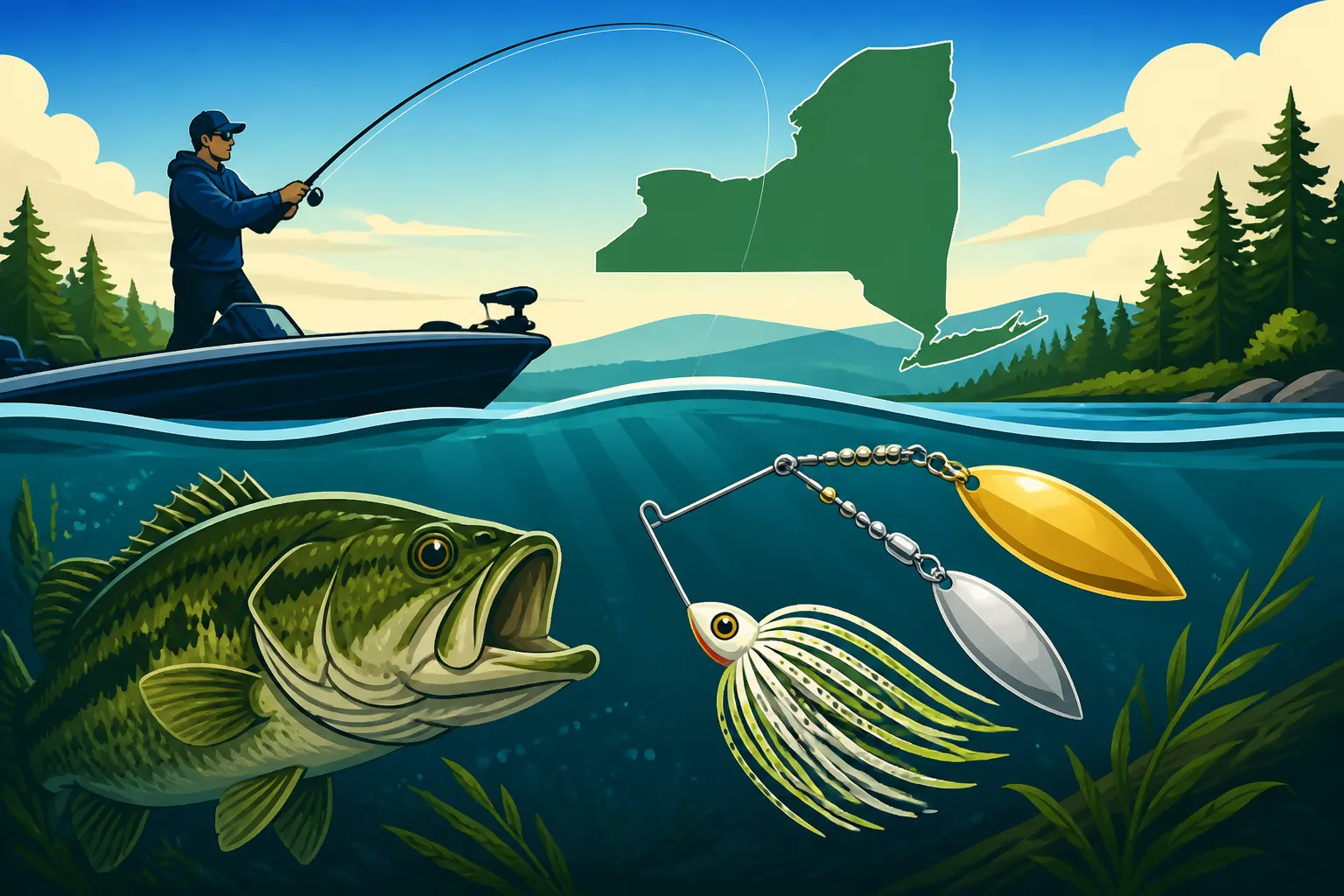
Think of a spinnerbait as a finely tuned instrument of attraction. It's essentially a lead head molded onto a wire frame, which supports one or more spinning blades and a flowing skirt. Each element plays a crucial role in creating the irresistible commotion that draws fish in.
First, let's talk about the blades. These are the "bling" that gives the spinnerbait its name and its primary drawing power. You'll typically encounter three main types:
- Colorado Blades: These are round and cup-shaped, designed to move a lot of water and create maximum vibration. They spin slower and generate a strong thump, making them excellent for low-light conditions, murky water, or when you want a slower retrieve that still has a lot of presence. Imagine a bass feeling that heavy throb through the water from a good distance away.
- Willowleaf Blades: Long and slender, resembling a willow leaf (hence the name). These blades spin faster, create less vibration, but generate a tremendous amount of flash, mimicking a fleeing baitfish. They're perfect for clear water, faster retrieves, or when fish are keying in on visual cues. They also shed weeds incredibly well, which is a huge plus in many New York lakes.
- Indiana Blades: A hybrid between Colorado and Willowleaf, these are teardrop-shaped. They offer a good balance of flash and vibration, making them a versatile choice when you're not sure what the fish prefer. They're a solid all-around option for many conditions you'll encounter.
The blades are attached to a wire arm, which extends to a lead head and hook. The head typically has a skirt of silicone or living rubber tied onto it. This skirt breathes and pulsates in the water, giving the lure a larger profile and a lifelike action that conceals the hook. The colors of the skirt are crucial; natural baitfish patterns like white, chartreuse, or shad are always good, but don't be afraid to experiment with brighter colors in stained water or for aggressive fish. Some anglers even combine different skirt colors to create a unique blend. The weight of the head dictates how deep and fast your lure will run, from light 1/4 ounce models for shallow water to heavy 1 ounce or more for deep retrieves or strong currents.
When to Reach for a Spinnerbait in New York Waters
So, you've got this flashy, vibrating contraption. When is the right time to tie it on? Spinnerbaits truly shine in specific situations across New York's vast array of lakes, from the Finger Lakes to smaller Adirondack ponds.
- Low Light Conditions: This is a classic spinnerbait scenario. At dawn, dusk, or on heavily overcast days, the flash of the blades combined with the vibration can be a potent attractant. Fish rely more on lateral line senses and less on sight in these conditions, and that thumping Colorado blade can be heard (or felt) from a distance. You'll often find Best Time of Day to Fish in New York aligns perfectly with prime spinnerbait action.
- Stained or Murky Water: Much like low light, murky water reduces visibility. Here, the spinnerbait's vibration and profile become paramount. Larger blades and brighter skirts can really help your lure stand out in water with poor clarity, giving fish something substantial to track.
- Windy Conditions and Chop: Don't shy away from wind; embrace it! Wind creates current and chop on the water's surface, which breaks up light penetration and disorients baitfish. This gives game fish an advantage and makes them more likely to ambush. The spinnerbait thrives in these conditions, as its action isn't easily masked by the natural turbulence, and the fish are often more active.
- Targeting Aggressive Fish: When bass, northern pike, or even larger perch are in an aggressive mood, a spinnerbait can be deadly. Its erratic flash and vibration often trigger a strong, territorial strike rather than a tentative bite. This is especially true during pre-spawn or post-spawn periods when fish are feeding heavily. If you're wondering New York's Most Popular Freshwater Fish, many of them will readily hit a spinnerbait.
- Fishing Around Cover: This is where spinnerbaits truly earn their stripes. Their single upward-pointing hook makes them incredibly weedless and snag-resistant compared to crankbaits or jerkbaits. They can be bounced off submerged logs, ripped through thick weeds, and slid past dock pilings with remarkable efficiency. This ability to navigate heavy cover allows you to put your lure right where the big fish hide, making them a fantastic choice for areas like the lily pads of Black Lake or the submerged timber of Oneida Lake. When learning How to Fish for Largemouth Bass in Weeds, a spinnerbait is an indispensable tool.
| Blade Type | Shape | Vibration | Flash | Ideal Conditions | Retrieve Speed |
|---|---|---|---|---|---|
| Colorado | Round/Cupped | High | Low/Medium | Low light, murky water, cold water | Slow to medium |
| Willowleaf | Long/Slender | Low/Medium | High | Clear water, bright sun, open water | Medium to fast |
| Indiana | Teardrop | Medium | Medium | Versatile, all-around, balanced | Medium |
Essential Techniques for New York Lakes
Once you understand when to use a spinnerbait, the next step is mastering how to present it effectively. New York's lakes offer diverse environments, and adapting your retrieve and presentation to these conditions is what separates the average angler from the consistently successful one.
The Art of the Retrieve: Matching the Hatch (or Baitfish)
The beauty of a spinnerbait lies in its versatility. You can work it in countless ways, each designed to elicit a different reaction from the fish. Don't fall into the trap of reeling it in at one constant speed; variety is truly the spice of life here.
- Slow Rolling: This is a fantastic technique for deeper water, cooler temperatures, or when fish are less active. Cast your spinnerbait out, let it sink to your desired depth (or even hit bottom), and then retrieve it just fast enough to keep the blades turning. The goal is a subtle, steady throb that mimics a slowly cruising baitfish or crawfish. This is often effective when fishing deeper points or breaks, allowing the lure to stay in the strike zone longer. When targeting larger, lethargic fish, a slow roll with a larger Colorado blade can be incredibly effective.
- Burning: On the opposite end of the spectrum is "burning" the spinnerbait. This involves a very fast, aggressive retrieve, keeping the lure high in the water column. The idea here is to trigger a reaction strike – the fish sees it, doesn't have time to think, and lashes out. This works best when fish are highly active and aggressive, or when you're trying to cover a lot of water quickly to locate fish. Willowleaf blades often excel with this technique due to their reduced drag and flash. Imagine a baitfish frantically fleeing a predator; that's the illusion you're trying to create.
- Stop-and-Go: This retrieve is exactly what it sounds like. Cast out, retrieve for a few seconds, then pause, letting the spinnerbait flutter or sink slightly. Then, start reeling again. This erratic action can often trigger a strike when a steady retrieve won't. The sudden change in direction or speed often convinces a hesitant fish that the bait is injured or vulnerable. The pause can be just long enough for a curious bass to commit.
- Yo-yoing: Primarily used in deeper water or around vertical structure, yo-yoing involves letting the spinnerbait sink, then quickly lifting your rod tip to pull it up through the water column, and letting it fall again on a semi-slack line. This creates a vertical jigging motion that can be deadly for fish suspended over structure or holding tight to bottom contours. It's an excellent way to cover different depths quickly.
- Varying Retrieve Speeds and Depths: The most crucial tip is to always experiment. Start with a medium retrieve, and if you're not getting bites, try slowing down or speeding up. Pay attention to the depth at which you're getting strikes and try to replicate it. Some days fish want it high and fast, other days they want it barely moving along the bottom. The fish will tell you what they want, but only if you try different things.
Spinnerbait Presentation Around New York's Diverse Cover
New York lakes are rich with various forms of cover and structure, from dense weed beds to fallen trees and rocky shorelines. The spinnerbait's weedless design makes it perfectly suited for these challenging environments, but knowing how to present it effectively in each scenario is key.
- Weeds: Weed lines, submerged weed beds, and even lily pads are prime holding areas for predatory fish like bass and northern pike. When fishing the edges of weeds, run your spinnerbait just along the outside, allowing the blades to occasionally tick the vegetation. This can draw fish out. For fishing in the weeds, choose a spinnerbait with willowleaf blades, which tend to glide through better. When your spinnerbait snags a bit of weed, a quick, sharp rip of the rod tip will usually free it. This "ripping" action often triggers an immediate strike, as it mimics a struggling baitfish trying to escape. Fishing specific spots like the thick weed beds in Lake Oneida or the edges of the Finger Lakes, can be incredibly productive with this method.
- Wood: Fallen trees, submerged logs, and stump fields are bass magnets. The key here is to make your spinnerbait "bounce" off the wood. Cast beyond the cover, let your lure sink, and retrieve it so it makes contact. When it hits, let the lure deflect slightly or even pause for a split second before continuing your retrieve. This sudden change in direction or speed can be irresistible to a fish lurking nearby. Don't be afraid to bump it; the upward angle of the hook reduces snags significantly. Just make sure your tackle is stout enough to haul a fish out of the cover.
- Docks and Fallen Trees: These man-made and natural structures provide shade, cover, and ambush points. Parallel cast along dock edges or skip your spinnerbait under overhanging trees. The flash and vibration will often draw fish out from the shadows. Retrieve slowly and deliberately, paying close attention to any sudden change in line movement or feel. Many of the best fishing spots near Rochester, New York and Best Fishing Spots Near Syracuse, New York will have ample docks and fallen trees to target.
- Rocks and Points: Rocky shorelines, rip-rap, and points extending into the lake are excellent spinnerbait territory. These areas often hold baitfish and provide ambush points for game fish. Run your spinnerbait so it occasionally scrapes or bounces off the rocks. The irregular action and sound created can mimic a crawfish or a stunned baitfish. When fishing points, cast across them or parallel to them, allowing your lure to follow the contour and hit various depths.
- Open Water Schooling Fish: While often associated with cover, spinnerbaits can also be effective when fish are schooling in open water, especially during feeding frenzies. A fast-retrieved spinnerbait, particularly one with lots of flash from willowleaf blades, can cut through a school of baitfish, triggering aggressive strikes from the predators underneath. Look for diving birds or surface boils to identify these opportunities.
Gear Up for Spinnerbait Success in New York
Having the right equipment can make a world of difference when you're throwing spinnerbaits. You want gear that can handle the lure's action, get it into tight spots, and haul out a feisty bass or pike.
Rod, Reel, and Line for Optimal Performance
Choosing the right rod, reel, and line isn't just about personal preference; it's about maximizing your spinnerbait's effectiveness and your ability to land fish.
- Rod Power and Action: For most spinnerbait fishing, a medium-heavy power rod with a fast tip action is the sweet spot.
- Medium-heavy power means the rod has enough backbone to cast heavier spinnerbaits, rip them through weeds, and most importantly, muscle a fish out of heavy cover without breaking your line or letting the fish bury itself.
- A fast tip action means the rod bends mostly in the top third of its length. This provides sensitivity for detecting subtle bites, allows for accurate casting, and gives you a quick, powerful hookset. You'll feel every thump of the blade and every brush against a submerged branch, giving you critical feedback on what your lure is doing.
- The ideal length is often between 6'6" and 7'3". Shorter rods offer more accuracy for pitching into tight spots, while longer rods provide better casting distance and leverage for fighting fish.
- Baitcasting vs. Spinning Reels:
- Baitcasting reels are generally preferred for spinnerbait fishing, especially with heavier baits and in heavier cover. They offer superior power, control, and casting accuracy for specific targets. They allow for precise pitches and flips into tight spots like under docks or into small pockets in weed beds. The direct line feel also helps immensely with feeling those subtle strikes.
- Spinning reels can certainly be used, especially for lighter spinnerbaits (1/4 to 3/8 ounce) or if you're fishing more open water with less heavy cover. They are often easier for beginners to master and can be better for very long, open-water casts. However, for true power fishing and control around heavy cover, a baitcaster shines.
- Line Choices: Your fishing line is the crucial connection between you and the fish, and the right choice can impact your spinnerbait's action and your success rate.
- Fluorocarbon: Many anglers prefer fluorocarbon line for spinnerbaits due to its low stretch, high sensitivity, and near-invisibility underwater. The low stretch translates to better feel for your lure and more positive hooksets. Its density also helps spinnerbaits sink slightly faster and run a little deeper, which can be an advantage.
- Monofilament: Monofilament line offers more stretch, which can be forgiving with aggressive strikes, acting as a shock absorber. It also floats, which might be a slight disadvantage if you want your spinnerbait to run deeper, but can be helpful for keeping it higher in the water column on a faster retrieve. It's also typically more affordable.
- Braided Line: Braid offers incredible strength, no stretch, and excellent sensitivity. It's fantastic for ripping spinnerbaits through heavy weeds or when fishing around thick timber, as it cuts through vegetation very well. However, it's highly visible underwater, so many anglers will tie on a fluorocarbon leader (usually 12-20 lb test) to the end of their braid to provide a more stealthy presentation. This combination gives you the best of both worlds: strength and invisibility.
Ultimately, balancing your rod, reel, and line is key. The setup should feel comfortable in your hands, allow for effective casting, and provide the power needed to present your spinnerbait correctly and land the fish you hook.
Spinnerbait Customization and Enhancements
Don't think of a spinnerbait as a finished product right out of the package. There are several ways to customize and enhance them to increase your hook-up ratio and attraction, giving you an edge on New York's finicky fish. You can find a wide variety of these accessories on Amazon to suit any need.
- Trailer Hooks: This is perhaps the most common and effective spinnerbait enhancement. Many fish, especially bass, often "short strike" a spinnerbait, meaning they nip at the tail of the skirt rather than fully engulfing the main hook. A trailer hook, typically a single, small hook (like a 2/0 or 3/0) attached to the main hook, extends the reach and significantly improves your chances of hooking those short-striking fish. Ensure the trailer hook points up to avoid snags.
- Soft Plastic Trailers: Adding a soft plastic trailer can drastically change the profile, action, and bulk of your spinnerbait.
- Grubs: A simple curly-tail grub in a matching or contrasting color can add more wiggle and vibration.
- Swimbaits: Small paddle-tail swimbaits can create a larger profile and a distinct thumping action, mimicking a bigger baitfish.
- Craws or Creatures: These can be effective when fish are keying in on crawfish, especially when slow-rolling your spinnerbait along the bottom.
The choice of trailer depends on what you want to imitate and the desired action. Sometimes, a subtle addition makes all the difference.
- Scent Application: Fish, especially those in clear water or with heightened senses, often use smell to locate prey. Applying a fish attractant scent to your spinnerbait's skirt or soft plastic trailer can entice hesitant fish to hold onto the bait longer, giving you more time for a solid hookset. This can be particularly useful on highly pressured lakes or during colder water periods when fish are less aggressive.
- Blade Changes: While many spinnerbaits come with fixed blade combinations, some higher-end models allow you to swap out blades. This gives you incredible flexibility. For instance, if you start with Colorado blades in murky water but the sun comes out and the water clears, you might want to switch to willowleaf blades for more flash. You can also experiment with different blade colors (gold, silver, painted) to see what the fish prefer on a given day. Having a selection of different blades on hand, easily purchased from a major retailer like Amazon, means you're always ready to adapt.
Common Spinnerbait Mistakes and How to Avoid Them
Even with the right gear and an understanding of techniques, it's easy to fall into common traps when spinnerbait fishing. Recognizing and correcting these mistakes can significantly improve your catch rate in New York's beautiful lakes.
Not Varying Your Retrieve
This is perhaps the most frequent error I see anglers make, and I've been guilty of it myself more times than I care to admit! We get comfortable with one retrieve speed or style, especially if it's worked for us in the past. But fish are not always predictable, and their preferences can change throughout the day, season, or even from one cast to the next.
- The "One Speed" Trap: You cast out, reel in at a consistent pace, and repeat. While a steady retrieve can work, it often leaves a lot of fish un-bitten. Fish can become accustomed to a consistent presentation, and a slight deviation is often what triggers them to strike. If you're not getting bites after several casts with a steady retrieve, don't just keep doing the same thing. That's the definition of insanity, right?
- Importance of Experimentation: Think of your spinnerbait as a dance. Sometimes fish want a slow waltz, sometimes a fast jig, sometimes an erratic shuffle. Start with a baseline, but be prepared to deviate wildly. Try reeling three cranks, then pausing for a second. Try a rapid "burn" for 10 feet, then suddenly slow to a crawl. Lift your rod tip high, then drop it. The more variations you try, the faster you'll figure out what the fish are keying into. The goal is to present something that looks vulnerable, fleeing, or irresistible.
- Reading the Fish and Conditions: Your retrieve should be a response to what you're observing. If it's a cold, sluggish morning after a front, a slow roll might be best. If it's sunny and windy, burning a flashy willowleaf might be the ticket. If you see fish chasing baitfish on the surface, a stop-and-go retrieve mimicking a wounded minnow could be lethal. Always be observant of the water, weather, and any signs of fish activity. Sometimes the smallest adjustment to your retrieve speed or cadence is all it takes to turn a slow day into a memorable one.
Ignoring Cover and Structure
Another common mistake, particularly for those new to spinnerbaits, is avoiding the very places these lures are designed to excel: heavy cover and structure. There's a natural fear of snagging and losing a lure, especially a new one, but to unlock the spinnerbait's full potential, you must put it where the fish live.
- Why Spinnerbaits Excel in These Areas: As we discussed, the upward-pointing hook of a spinnerbait makes it incredibly snag-resistant. It's designed to deflect off wood, slide over rocks, and rip through weeds without getting hung up like many other lures. This means you can confidently cast it into places where other baits would be immediately lost. These gnarly areas are precisely where big bass, pike, and even walleye often ambush their prey.
- Overcoming Fear of Snags: It's okay to get snagged sometimes; it's part of fishing heavy cover. But with a spinnerbait, a lot of "snags" are just momentary hang-ups that can be freed with a sharp rip of the rod. If you're constantly fishing out in open water because you're worried about losing lures, you're missing out on a huge percentage of the fish. Invest in a good quality spinnerbait, perhaps a pack of spares from a reputable online supplier like Amazon, and have the confidence to cast it where the fish are hiding.
- The Bounce-Off Bite: This is a crucial concept. Many times, fish won't strike your spinnerbait until it makes contact with something. When your spinnerbait deflects off a log, a rock, or rips through a clump of weeds, that sudden, erratic movement often triggers an immediate, aggressive reaction strike. It mimics a baitfish that just hit an obstacle or is trying to escape. Don't just cast near cover; cast into it or through it, actively making your lure interact with the environment. This is where you'll find those trophy-worthy fish that hide deep in their sanctuaries. Places like the Best Fishing Spots on the Hudson River with its abundant shoreline structure, or the rugged shorelines of Lake Ontario Fishing in New York: Where to Go are perfect for this aggressive approach.
Embrace the versatility and resilience of the spinnerbait. With practice, understanding, and a willingness to experiment, you'll soon find it to be one of your most productive lures on any New York lake. Happy fishing!
Disclaimer
This article is for general informational purposes only and does not constitute professional advice. Laws, prices and regulations vary by location and change over time. Consult a qualified professional for guidance on your specific situation.