How to Fish a Ned Rig for Bass
There are days on the water when the bass just seem to have lockjaw, ignoring everything you throw at them. Whether you're facing heavily pressured waters, dealing with a tough post-frontal bite, or just trying to coax a strike out of lethargic fish in New York's diverse lakes and rivers, it can be incredibly frustrating. This comprehensive guide is here to walk you through the finesse technique of fishing a Ned Rig, explaining why this unassuming setup is often the secret weapon for turning those tough days into successful ones, especially when targeting finicky New York bass.
What Exactly Is a Ned Rig and Why Does It Work So Well for New York Bass?
The Ned Rig might look simple, almost too simple, but don't let its humble appearance fool you. It's a true game-changer, rooted in a philosophy of finesse that often outperforms more aggressive tactics when the fish are being particularly shy. Understanding what makes it tick is key to unlocking its potential in waters from Lake Champlain down to the mighty Hudson River.
The Philosophy Behind the Finesse
At its heart, the Ned Rig is an embodiment of "Midwest Finesse," a technique popularized by angler Ned Kehde. The core idea is to present a very small, unobtrusive bait that mimics natural forage with minimal effort. Think about it: bass aren't always in a chasing mood, especially when conditions are tough. They might be wary, sluggish, or simply uninterested in a big, flashy meal. That's where the Ned Rig shines. It presents a non-threatening, easy target that even the most reluctant bass finds hard to resist. In New York, where many popular fishing spots see a lot of angler pressure, having a finesse option like this in your tackle box is absolutely essential. It’s a stark contrast to power fishing, where you’re trying to cover water quickly with big baits. With the Ned Rig, you're slowing down, focusing on subtle triggers, and appealing to the bass's instinct to grab an easy snack. This approach can be incredibly effective when How Weather Affects Fishing in New York in ways that make bass less aggressive.
Key Components: Jighead and Soft Plastic
The magic of the Ned Rig lies in its two primary components: a specialized jighead and a specific style of soft plastic bait.
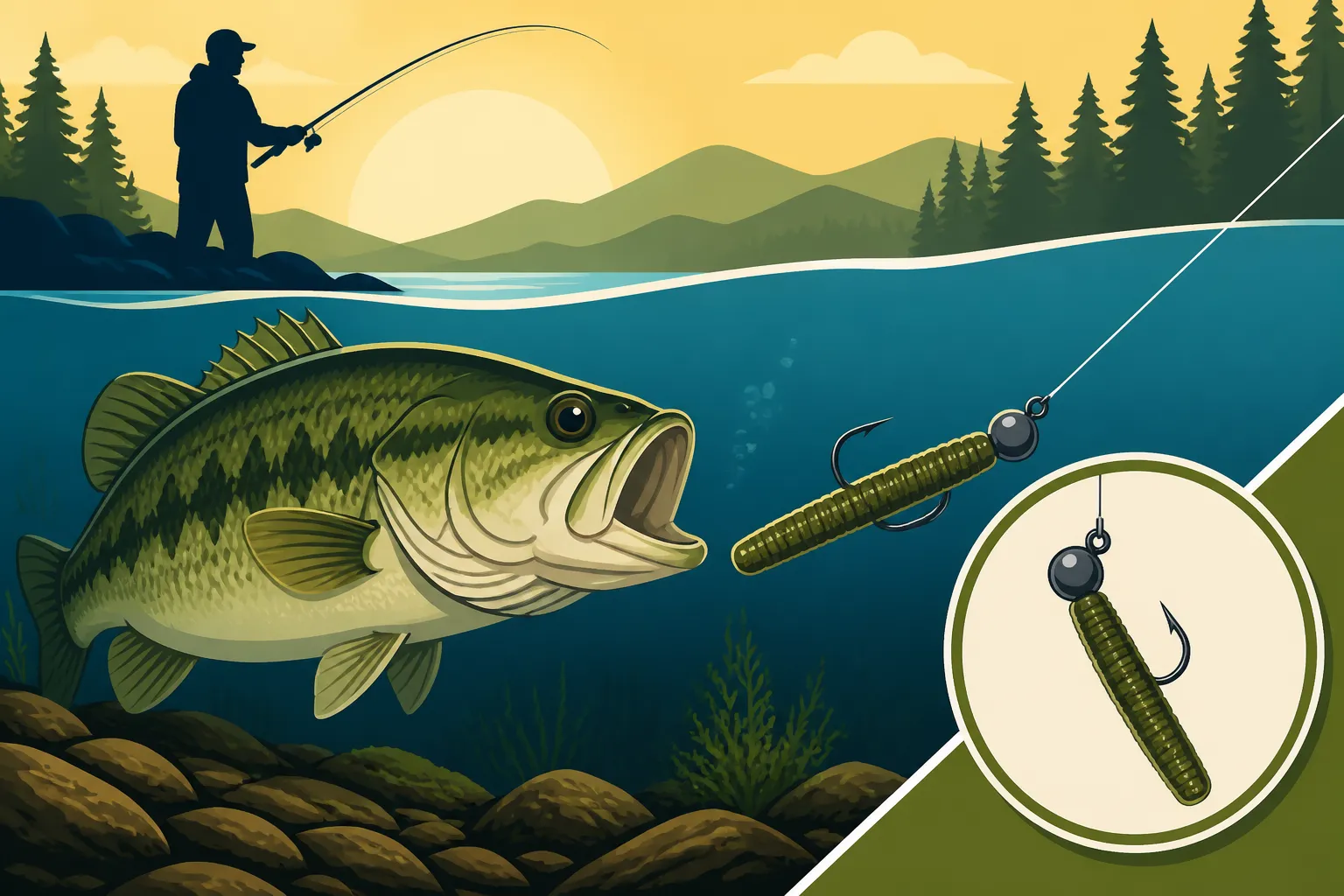
First, let's talk about the jighead. The most recognizable feature of a Ned Rig jighead is its mushroom shape. It typically has a flat bottom and comes in very light weights, usually ranging from 1/16 ounce to 1/8 ounce, though you might go up to 1/5 or 1/4 ounce for deeper water or stronger currents. This flat bottom is crucial because it allows the jig to stand upright on the bottom when at rest, mimicking a small critter foraging or a baitfish nosing into the bottom. The hook is generally a light-wire, sharp, and exposed hook, which helps with easy hooksets even with light bites. You can often find a good selection of these specialized jigheads, like those from Z-Man, on Amazon with various hook sizes to match your plastics.
Second, the soft plastic bait. This is almost always a short, stubby stickbait, typically 2.5 to 3 inches long. The most famous example is the Z-Man Finesse TRD, made from a durable, buoyant ElaZtech material. The buoyancy of this plastic is absolutely critical. When paired with the flat-bottomed jighead, it causes the tail end of the plastic to stand straight up off the bottom. This subtle, vertical presentation is what makes the Ned Rig so irresistible. Other brands also offer similar short, buoyant worms or creatures that work well, and a quick search on Amazon will reveal many options. The combination of the flat jighead and buoyant plastic creates a lifelike presentation that’s hard for bass to ignore.
The Magic of the Stand-Up Presentation
So, why does this upright posture matter so much? Imagine a small baitfish feeding on the bottom, or a crawfish rooting around. They aren't lying flat and lifeless. They're typically in an upright or slightly angled position, poking around. The Ned Rig perfectly emulates this natural behavior. When you pause your retrieve, the bait stands up, wiggling subtly with the slightest current or rod tip twitch. This creates the illusion of a live organism, either feeding or trying to escape, which is a powerful trigger for bass, especially those that have seen every other lure in the book.
This subtle, "I'm alive!" posture makes it incredibly effective in a variety of situations where other baits fall short. For example, if you're fishing a clear, rocky lake known for smallmouth, like some of the Best Smallmouth Bass Lakes in New York, the Ned Rig's natural presentation can fool even the wariest bronzebacks. It also shines in colder water when fish are less active, or during a tough bite following a cold front. This isn't about provoking an aggressive strike; it's about making a bass think it's found an easy, unsuspecting meal.
How to Rig and Fish a Ned Rig for Maximum Success in New York
Getting the most out of a Ned Rig isn't complicated, but it does require a bit of finesse, both in your gear choice and your presentation. It’s all about subtle movements and letting the bait do most of the work.
Setting Up Your Gear
To truly appreciate the subtlety of the Ned Rig, you need the right tools. Heavy gear will overpower the bait and prevent you from feeling those delicate bites that are so common with this technique.
- Rod: A light to medium-light spinning rod, typically 6'6" to 7'2" in length, with a fast action tip is ideal. The fast action allows you to feel those light bites and gives you enough backbone to set the hook, while the lighter power ensures you don't overwork the bait. If you're used to heavier baitcasting gear, this might feel almost like a toy, but trust me, it’s perfect for the job.
- Reel: Pair your rod with a smaller spinning reel, a 1000-2500 series. This size keeps the setup balanced and comfortable for long hours of subtle fishing.
- Line: This is crucial. Most anglers opt for a braided main line (6-10 lb test) for its sensitivity and casting distance with light baits. Tie a fluorocarbon leader (4-8 lb test) to the braid. Fluorocarbon is nearly invisible underwater, which is a huge advantage in clear New York waters, and it offers excellent abrasion resistance. A good knot like the FG or Alberto knot will ensure a strong, smooth connection. This setup gives you the best of both worlds: sensitivity and stealth. When you're fishing for wary bass, having that invisible line can make all the difference.
Mastering the Retrieve Techniques
The biggest mistake people make with a Ned Rig is fishing it too fast or trying to impart too much action. The beauty of this bait is its inherent ability to look alive with minimal input. Here are the go-to retrieves:
- The "Drag and Pause": This is the bread and butter of Ned Rig fishing. Cast your rig out, let it sink to the bottom on a semi-slack line (watching for those tell-tale twitches as it falls), and then simply drag it slowly along the bottom with your rod tip. After a short drag (say, a foot or two), pause completely. Let the bait sit there, standing up on its own, for a few seconds. Most bites will come on the pause. The key here is slow. Imagine you're dragging a tiny piece of food across a table. This method works wonders in a variety of spots, including when you're probing around docks or rocky points on Fishing New York's Finger Lakes: A Complete Guide.
- The "Hop and Drag": A slightly more active retrieve for when bass might need a little more enticement. Instead of just dragging, gently lift your rod tip a few inches to hop the bait off the bottom, then let it fall back down on a semi-slack line. Once it settles, drag it a short distance and then pause. This mimics a crawfish scurrying or a baitfish making a quick dart.
- The "Shake and Bake": This is for when the fish are truly lethargic. Cast it out, let it sink, and then simply hold your rod tip steady, just above the water, and subtly quiver it. This makes the buoyant plastic wiggle and twitch without moving the jighead much from its spot. It's an incredibly subtle presentation for very tough bites, almost like a stationary target that's just barely alive. Remember, the goal is often to emulate a dying baitfish or an easy meal, not a fleeing one.
Prime Locations and Conditions in New York
The Ned Rig excels in specific scenarios, making it a must-have for challenging days on the water.
- Clear Water: The finesse presentation and subtle action are perfect for clear waters where bass have excellent visibility and are often more cautious. Many of New York's pristine lakes, especially in the Adirondacks or Finger Lakes regions, fit this bill perfectly.
- Post-Frontal Conditions: We've all been there: a cold front rolls through, dropping temperatures and often atmospheric pressure, and the fish shut down. This is where the Ned Rig truly shines. When bass become lethargic and hesitant to chase, the subtle, easy meal offered by a Ned Rig can trigger bites when nothing else will. If you're wondering How to Fish in a Cold Front, the Ned Rig is a fantastic answer.
- Heavily Pressured Lakes: New York has some fantastic fisheries, but many popular spots see a lot of angler traffic. Bass in these waters become "educated" and are less likely to fall for aggressive, common presentations. The Ned Rig’s unassuming nature makes it effective on these wary fish. Consider using it in well-fished areas around structure on lakes like Fishing at Oneida Lake, New York or Fishing at Lake George, New York.
- Deep Points, Rocky Bottoms, Docks, and Weed Edges: Wherever bass might be hiding and looking for an easy meal, the Ned Rig can be effective. Its ability to stand up on rocky bottoms makes it fantastic for smallmouth on deep points. It can also be skipped under docks or worked along the outside edges of weed lines where bass ambush prey. For those who use electronics, pairing a Ned Rig with information from How to Read a Fish Finder for New York Lakes can be a deadly combination for targeting specific structures.
Common Mistakes and Advanced Tips for Ned Rig Fishing
While the Ned Rig is relatively simple, there are common mistakes beginners make that can hinder success. Avoiding these pitfalls and incorporating a few advanced tips will dramatically increase your catch rate.
Avoiding Pitfalls
It's easy to fall into old habits, but with the Ned Rig, less is definitely more.
- Fishing Too Fast: This is probably the number one mistake. You're not power fishing. The Ned Rig needs time to work its magic on the bottom, allowing that buoyant plastic to stand up and entice curious bass. Dragging or hopping it quickly negates its primary advantage. Slow down, way down. Embrace the pause.
- Using Too Heavy a Jighead: While there are times for heavier weights (more on that later), starting with a 1/16 or 1/8 ounce is key. Too heavy a jighead makes the bait fall too fast and lie flat on the bottom, losing that crucial stand-up action. It also makes it harder to feel subtle bites.
- Overworking the Bait: Constant twitching, reeling, or aggressive hops will make the bait look unnatural. The Ned Rig is designed to do most of the work itself, subtly swaying and standing up. Trust the bait and its design. Your job is to move it into position and then let it sit.
- Not Using Buoyant Plastics: This is essential! If your plastic doesn't float, it won't stand up, and you've lost the core appeal of the Ned Rig. Always check that your soft plastics are buoyant before rigging. Z-Man's ElaZtech material is famous for this, but other brands offer similar buoyant options.
- Using Too Heavy Line: As mentioned, heavy fluorocarbon or monofilament will hinder the action of such a light bait and reduce your ability to feel bites. Stick to light braid with a light fluorocarbon leader for optimal performance.
Advanced Rigging and Presentation
Once you've got the basics down, you can start experimenting to fine-tune your approach for different situations.
- Experimenting with Plastic Colors: While natural greens, browns, and black/blue are staples, don't be afraid to try other colors. Sometimes, a bright chartreuse or pink can trigger a reaction strike, especially in stained water or during specific seasons. Always consider the forage in the lake you're fishing; if there are bluegills, a bluegill-patterned Ned Rig might work wonders.
- Adding Scent: A little scent can go a long way, especially when fish are scrutinizing your bait. Many anglers apply a gel or spray scent directly to their Ned Rig plastic to give bass another reason to hold on. There are plenty of options available, even on platforms like Amazon, that can make your lure even more enticing.
- Using Slightly Heavier Jigheads for Deeper Water or Current: There are times when a 1/5 or 1/4 ounce Ned Rig jighead is appropriate. If you're fishing very deep water, strong currents (like on parts of How to Fish for Smallmouth Bass on the St. Lawrence River or the lower Hudson), or needing to punch through light vegetation, a slightly heavier jig will get down faster and maintain bottom contact. Just remember the goal is still to allow the plastic to stand up, so ensure you have enough buoyancy.
- Exploring Different Soft Plastic Shapes: While the traditional stickbait is king, don't overlook other small, buoyant creature baits or worms. Small crawfish imitations or even tiny grub bodies can be deadly on a Ned Rig, offering a slightly different profile while maintaining that stand-up action. Think about what the bass are actually feeding on, whether it's New York's Bass Species Explained or other forage.
Ned Rig for Other Species
While the Ned Rig is a bass fishing staple, its finesse nature and irresistible presentation make it surprisingly effective for a wide array of other fish species in New York. Don't be surprised if you hook into more than just bass when you're using this technique.
Table: Ned Rig Jighead Weight Guide for New York Waters
| Jighead Weight | Ideal Depth Range | Ideal Conditions | Target Species/Notes |
|---|---|---|---|
| 1/16 oz | 0-10 feet | Shallow, calm, clear water, subtle bite | Finicky bass, panfish, ultralight setups, super slow retrieve. |
| 1/8 oz | 5-20 feet | Versatile, light wind, moderate current | All-around bass, common starting point, good for most situations. |
| 1/5 oz | 15-30 feet | Deeper water, stronger wind, light current | Deeper bass, faster fall rate, still maintains finesse. |
| 1/4 oz | 25+ feet | Strong current, very deep water, heavy wind | Targeting deep smallmouth, current applications, punching light cover. |
You might find that species like yellow perch, crappie, or even stubborn trout can't resist a slowly dragged Ned Rig. It's a fantastic bait for kids or beginners learning Best Beginner Fishing Techniques for New York Lakes because it requires very little technical skill to present effectively and often gets bites even on tough days. Its versatility is part of what makes it such a valuable tool in any New York angler's arsenal. Whether you’re targeting New York Lakes Known for Largemouth Bass or trying to tempt a wary smallmouth, the Ned Rig offers a subtle yet potent presentation that consistently puts fish in the boat.
Disclaimer
This article is for general informational purposes only and does not constitute professional advice. Laws, prices and regulations vary by location and change over time. Consult a qualified professional for guidance on your specific situation.