How to Fish for Smallmouth Bass on the St. Lawrence River
If you've ever dreamt of battling a hard-fighting smallmouth bass, then the St. Lawrence River in New York State is likely at the top of your list. This incredible waterway is legendary for its bronzeback population, but knowing how to consistently hook into these elusive fighters, especially with the river's dynamic currents and vast structure, can feel like a secret whispered only among seasoned pros. This guide will pull back the curtain, giving you actionable steps and detailed strategies to help you conquer the St. Lawrence and land those trophy smallmouth bass.
Understanding St. Lawrence River Smallmouth Bass
Fishing the St. Lawrence isn't just about casting a line; it's about understanding the environment and the fish that call it home. Smallmouth bass here are unique, sculpted by the powerful currents and abundant forage.
The Environment: Current, Structure, and Water Clarity
The St. Lawrence River is a majestic, sprawling waterway, and its sheer size and constant flow are defining characteristics for any angler. Unlike a stagnant lake, the river's current is a major factor that dictates where smallmouth bass hold and how they feed. These fish are masters of using current breaks and eddies to their advantage, conserving energy while waiting for prey to be swept by.
Imagine a large boulder field, a common sight on the St. Lawrence. The current rushes past, but behind and beside those rocks, pockets of calmer water form. These are prime ambush points. Smallmouth will position themselves just out of the main flow, ready to dart out and grab a crayfish or a disoriented baitfish. Similarly, submerged shoals, steep drop-offs, and rocky points where the current changes direction create vital holding areas. Understanding these current dynamics is half the battle. You'll often find fish on the "down-current" side of structure, where they can sit comfortably and wait. The water in the St. Lawrence is also renowned for its clarity, which, while beautiful, demands a stealthier approach and more natural lure presentations.
Smallmouth Behavior and Feeding Habits
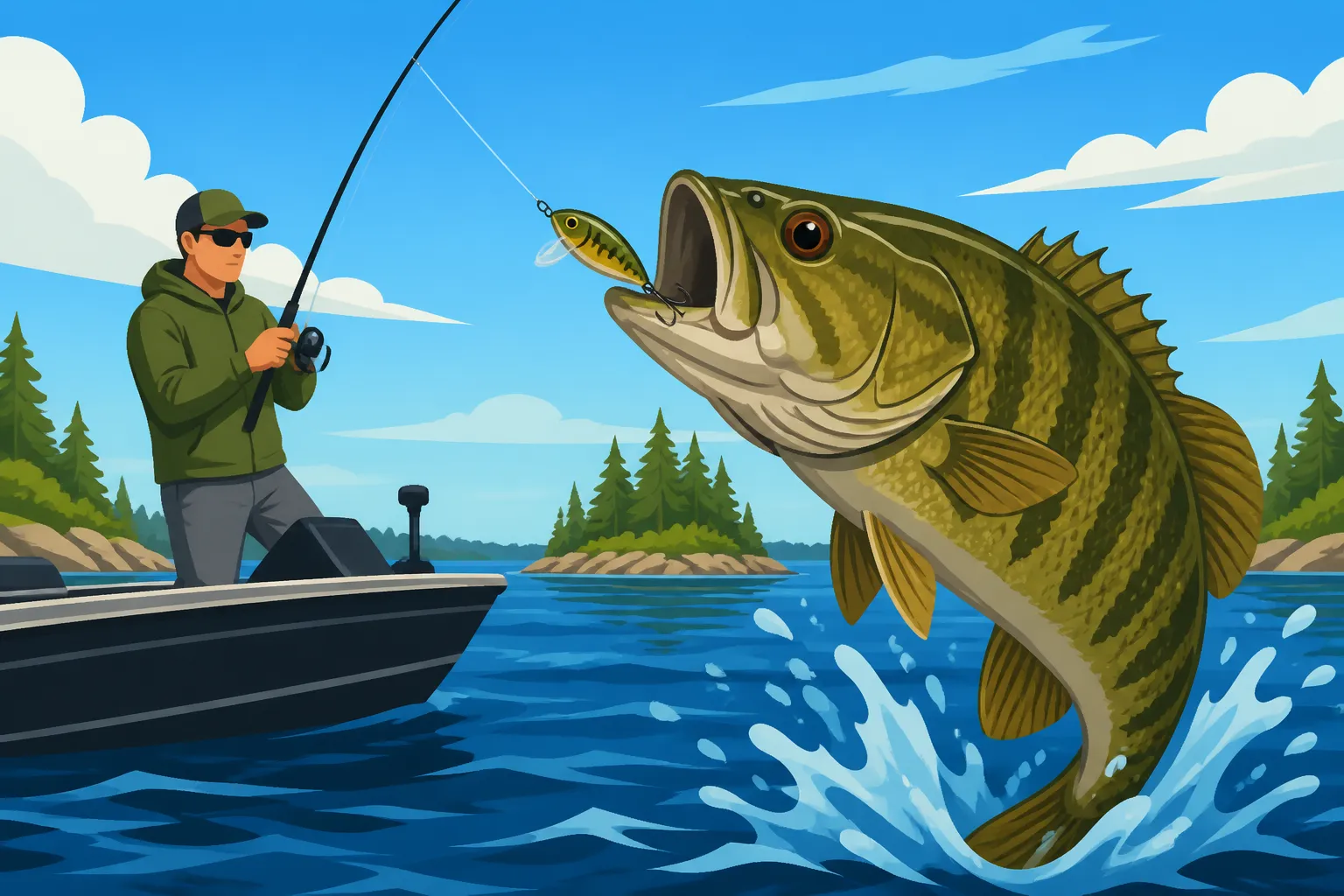
St. Lawrence River smallmouth bass are incredibly aggressive, a trait often amplified by their riverine existence. They are opportunistic predators with a voracious appetite, constantly on the hunt for their next meal. Their diet is diverse, but a few key food sources dominate. Crayfish are a huge part of their menu, especially in rocky areas, making creature baits and jigs that mimic these crustaceans incredibly effective. The invasive round goby has also become a significant food source, which means lures imitating these bottom-dwellers, like tube jigs and drop shots, can be absolutely deadly. Schools of baitfish, such as emerald shiners or juvenile perch, also feature prominently, especially when bass are schooling up and pushing bait against structure.
Their movements are often dictated by the seasons and available forage, but throughout much of the year, they'll congregate in groups, especially larger fish. These schools can be found patrolling rocky flats, cruising along drop-offs, or holding tight to current-breaking structures. Their aggressive nature means they're often willing to chase, but their keen eyesight in the clear water means your presentation has to be spot-on. If you're struggling to find them, remember they’re likely relating to some form of structure that breaks the current or provides an ambush point. Knowing the Average Smallmouth Bass Size on New York's St. Lawrence River can also give you an idea of the caliber of fish you might encounter, which is often impressive!
Essential Gear for St. Lawrence Smallmouth Fishing
Having the right tools for the job can make all the difference, especially when you're battling feisty smallmouth in the robust currents of the St. Lawrence River. Don't underestimate how crucial your setup is.
Rods, Reels, and Line Selection
When it comes to smallmouth bass fishing on the St. Lawrence, versatility and sensitivity are key. You'll want to have both spinning and baitcasting setups ready to go. For spinning gear, a 6'6" to 7' medium-light to medium-power rod with a fast action tip is ideal. This combination offers enough backbone to fight powerful fish while still providing the sensitivity needed to detect subtle bites, especially when using lighter presentations like a tube jig or a drop shot. Pair this with a reliable 2500 or 3000 series spinning reel.
For baitcasting, a 6'8" to 7'2" medium to medium-heavy power rod with a fast action will handle heavier lures like crankbaits, jerkbaits, or larger swimbaits, giving you better casting distance and control in windy conditions. A smooth baitcasting reel with a good gear ratio (around 7.1:1) will help you quickly pick up slack and maintain control. As for line, I highly recommend a braided main line (10-20 lb test) for its incredible sensitivity and lack of stretch, which is invaluable for feeling those light bites in deep water or strong current. Always tie a fluorocarbon leader (8-12 lb test) to your braid. Fluorocarbon is nearly invisible in the clear St. Lawrence water and offers excellent abrasion resistance against all that rocky structure. You can find a fantastic selection of high-quality rods and reels on Amazon that are perfectly suited for this type of fishing. For more detailed insights, you might want to look into Best Line Weight for New York Freshwater Fishing.
Top Lures and Baits for St. Lawrence Smallmouth
The clear waters and rocky bottom of the St. Lawrence River make certain lure types exceptionally effective for smallmouth bass. You'll want a diverse tackle box to adapt to changing conditions and fish preferences.
- Tube Jigs: These are arguably the most iconic and consistently productive lures for St. Lawrence smallmouth. Mimicking crayfish or gobies, they are incredibly versatile. Opt for 3-4 inch tubes in natural colors like green pumpkin, smoke, or brown, rigged on 1/4 to 1/2 oz internal jig heads.
- Drop Shots: Another phenomenal clear-water technique, the drop shot allows for incredibly subtle presentations right in the fish's face. Use small soft plastics like 3-4 inch minnow or worm imitations in natural shades. This setup excels when fish are finicky or holding tight to structure.
- Jerkbaits: When smallmouth are active and willing to chase, a jerkbait can be deadly. Suspending jerkbaits in natural baitfish patterns (silver, perch, clown) twitched and paused around rocky points and current seams provoke aggressive strikes.
- Crankbaits: Both shallow-diving and deep-diving crankbaits are essential. Shallow divers work well over rocky flats, while deep divers are excellent for covering water along drop-offs and submerged humps. Look for natural shad, crayfish, or perch patterns.
- Swimbaits: Small, paddle-tail swimbaits rigged on jig heads are fantastic for mimicking gobies or other baitfish. They can be slow-rolled along the bottom or fished higher in the water column.
- Topwater Lures: Nothing beats the thrill of a smallmouth exploding on a topwater bait. Poppers, walking baits, and prop baits can be incredibly effective during low-light conditions or when fish are actively feeding on the surface, especially during the warmer months.
For an extensive range of options, from tried-and-true classics to the latest innovations, check out the fishing lure sections on Amazon. Remember, the Best Smallmouth Bass Lures for Clear Water will often lean towards natural colors and profiles, especially on the St. Lawrence. Outfit yourself with a good selection, and remember, you can easily replenish your tackle box on Amazon whenever you're running low.
Proven Techniques for Targeting St. Lawrence Smallmouth
Fishing the St. Lawrence River demands precise techniques to entice its wary smallmouth bass. It's not just about what you throw, but how you present it in the river's dynamic environment.
Mastering the Tube Jig and Drop Shot
The tube jig and drop shot are foundational techniques for any angler hoping to consistently catch smallmouth bass on the St. Lawrence. They both excel at imitating bottom-dwelling forage like crayfish and gobies, and their subtle nature is perfect for the river's clear water.
Let's start with the tube jig. Rigging a tube correctly is crucial: insert a lead jig head into the tube body, ensuring the hook eye exits cleanly from the plastic. For fishing in current, a slightly heavier jig head (1/4 to 1/2 oz, sometimes heavier in very strong current or deep water) will help you maintain bottom contact. The retrieve is key: cast upstream or up-current of your target structure (like a rock pile or seam) and let the current carry the tube down. As it drifts, keep your rod tip low and maintain a semi-slack line, just enough to feel the bottom. Occasionally, hop or drag the tube subtly along the bottom. Most bites will feel like a slight "tick" or simply a sudden heaviness. Set the hook decisively when you feel anything out of the ordinary. This technique is especially potent around current breaks and rocky flats where bass are ambushing prey.
The drop shot rig, on the other hand, offers an even more refined approach, perfect for vertical presentations or when fish are tightly schooled and finicky. Tie your hook directly to your main line (a palomar knot works well), leaving a tag end of 10-18 inches, to which you'll tie your weight. This allows your soft plastic bait (a small minnow, worm, or goby imitation) to hover enticingly above the bottom, independent of your weight. The beauty of the drop shot is that you can keep your bait in the strike zone for extended periods. Cast it out, let it sink to the bottom, and then simply shake your rod tip subtly, imparting action to the bait without moving the weight. When you feel a bite, often a soft tap or pressure, simply reel down and lift into the fish, rather than a hard sweep-set. Learning How to Fish a Tube Jig for Smallmouth Bass effectively on the St. Lawrence can transform your fishing success.
Crankbaits, Jerkbaits, and Topwater Strategies
While subtle presentations shine, sometimes you need to trigger a reaction strike, and that's where crankbaits, jerkbaits, and topwater lures come into play.
Crankbaits are fantastic for covering water and eliciting aggressive strikes. For the St. Lawrence, you'll want both shallow-diving models that run 3-8 feet deep and deeper-diving crankbaits that can reach 10-20 feet. Match the crankbait's dive depth to the structure you're fishing. Cast parallel to rocky banks, over submerged shoals, or along drop-offs. A steady retrieve often works best, but don't be afraid to incorporate pauses or speed changes to draw attention. The deflection off rocks or wood often triggers a strike, so intentionally bumping structure is a good strategy.
Jerkbaits excel in cooler water or when bass are suspended. These lures are designed to be retrieved with a "rip-pause" cadence. Cast your jerkbait out, let it sit for a moment, then give it 2-3 sharp jerks of the rod, followed by a pause. The length of the pause can vary, sometimes up to 10 seconds or more. Many strikes occur during this pause, as the bait hangs enticingly motionless. Natural baitfish patterns are typically best in the clear St. Lawrence water.
For pure adrenaline, nothing beats a topwater strike. Poppers, walking baits (like a Zara Spook), and prop baits are excellent choices. Topwater fishing is generally best during low-light conditions – dawn, dusk, or on overcast days – and when the water is relatively calm. Work these baits over shallow rocky flats, near weed lines, or around current breaks. Poppers are fished with a pop-pause retrieve, while walking baits are "walked the dog" with rhythmic twitches of the rod tip. Be patient with topwater; wait until you feel the fish before setting the hook. Sometimes they'll just swirl at it, other times they'll engulf it.
Navigating and Positioning Your Boat
Successfully fishing the St. Lawrence River isn't just about what's on the end of your line; it's also about skillful boat control and strategic positioning. The river's relentless current can be your friend or your foe, depending on how you manage it.
Your trolling motor is your best friend here. It allows you to subtly maneuver and hold your position against the current, which is critical for precise lure presentation. When fishing current-affected areas, try to position your boat slightly up-current of where you expect the fish to be. This allows you to drift your lures naturally into the strike zone, mimicking how real bait would move. For example, if you're targeting a rocky point with a strong current pushing past it, position your boat 20-30 yards up-current and cast your tube jig or drop shot ahead of the point, letting it tumble and settle into the calmer water behind the structure. Using your trolling motor to slowly "creep" down-current with the flow, while making casts ahead of your boat, is an incredibly effective way to cover water and present your lure naturally.
Learning to "read the water" is an invaluable skill on the St. Lawrence. Look for visual cues of current breaks – seams where fast water meets slow water, eddies behind large boulders or islands, and areas where the surface water looks different. These are often indicators of submerged structure or depth changes that smallmouth will exploit. Your electronics, including your depth finder and GPS, are also vital for marking productive spots, understanding bottom contours, and identifying those crucial drop-offs and submerged humps where smallmouth congregate. A good GPS will help you stay on course and return to productive areas time and again. Remember, the St. Lawrence River and Thousand Islands offer some incredible fishing, but the navigation requires respect for its power.
Seasonal Considerations and Best Practices
The St. Lawrence River's smallmouth bass offer fantastic fishing throughout the open water season, but understanding their seasonal patterns will dramatically increase your success. Each part of the year presents unique opportunities and challenges.
Spring and Early Summer: Post-Spawn Aggression
As the ice retreats and water temperatures begin to climb in the spring, smallmouth bass in the St. Lawrence start to become very active. Following the spawn, typically in late May to early June when water temperatures hit the mid-50s to low-60s Fahrenheit, these fish enter a period of intense feeding known as the post-spawn. This is a prime time for targeting them, as they're often shallow, hungry, and relatively easy to locate.
During this period, you'll find smallmouth cruising rocky flats, shallow bays, and points, particularly areas that warm up quickly. They're recovering from the rigors of spawning and are looking for easy meals. Jerkbaits, spinnerbaits, and shallow-diving crankbaits are excellent choices for covering water and appealing to their aggressive nature. Topwater action can also be fantastic during this time, especially in the early mornings or late evenings when fish are feeding actively on the surface. Look for submerged logs, large boulders, and sparse weed growth in these shallower zones. Pay attention to changes in depth contour, even subtle ones, as these can concentrate fish. This is a great time to explore new areas, as fish are more spread out and accessible.
Mid-Summer: Deeper Water and Current Breaks
As summer progresses and water temperatures rise, St. Lawrence River smallmouth bass tend to move deeper, seeking cooler water and more stable oxygen levels. While you might still find some fish shallow early and late in the day, the bulk of the population will retreat to deeper structure. This doesn't mean the fishing slows down; it just means you need to adjust your approach.
During mid-summer, focus your efforts on offshore humps, deep rocky points, extensive rock piles, and steep drop-offs that lead into deeper water (20-40 feet). These areas provide both refuge from the heat and access to abundant forage. This is where those tube jigs and drop shots truly shine, as they allow you to meticulously work these deeper structures. Vertical jigging with heavy spoons or goby imitations can also be incredibly effective. Pay close attention to your electronics to identify schools of baitfish or individual bass holding tight to the bottom. Remember to adjust your weight to maintain bottom contact in the often-stronger current found in deeper sections. Current breaks continue to be crucial, even in deeper water; look for submerged channels, points, and structural anomalies that disrupt the flow and create ideal ambush points for these bronzebacks.
Fall: Feeding Frenzy Before Winter
Autumn on the St. Lawrence is a truly magical time for smallmouth bass fishing. As water temperatures begin to drop in late September and October, the bass enter a pre-winter feeding frenzy. They instinctively know that colder water is coming, and they need to pack on calories to survive the lean winter months. This translates to incredibly aggressive fish that are often willing to hit bigger baits.
During the fall, smallmouth will often move shallower than their mid-summer haunts, but still relating to deep water access. They'll frequent rocky points, humps, and flats adjacent to deep channels. Large jerkbaits, deep-diving crankbaits, and swimbaits become incredibly effective. Some anglers even throw larger bucktail jigs, typically associated with muskie fishing, to target monster smallmouth. The key is to be aggressive with your presentations, as these fish are actively chasing and are less hesitant to strike. Keep an eye on the weather; stable fall conditions can lead to incredible days on the water. However, as the water gets truly cold, they'll retreat to deep wintering holes, becoming less active until the spring thaw. Always check New York Fishing Season Dates and Catch Limits before heading out, as regulations can change with the seasons.
Respecting Regulations and Conservation
As anglers, we have a responsibility to protect the incredible fishery of the St. Lawrence River. This means not only following the rules but also practicing good conservation habits. Before every trip, familiarize yourself with the current New York Fishing Regulations Explained and specifically the rules for smallmouth bass on the St. Lawrence. These regulations cover everything from season dates and minimum size limits to daily creel limits. Regulations are designed to protect fish populations and ensure healthy fishing for future generations, so adherence is non-negotiable.
Beyond the regulations, practicing responsible catch-and-release is vital, especially for larger, older smallmouth bass. These fish are crucial for the breeding stock. When you do catch a fish you intend to release:
- Minimize air exposure: Get the fish back in the water as quickly as possible.
- Handle with care: Support the fish horizontally, avoiding squeezing its belly or gills.
- Use appropriate tools: Pliers for hook removal are essential, and a de-hooking tool can be beneficial.
- Consider barbless hooks: These make hook removal much easier, reducing stress on the fish.
- Revive if necessary: If a fish seems sluggish, hold it gently in the water, facing into the current, until it swims away under its own power.
Understanding the New York Freshwater Fishing Rules for the river, including species-specific guidelines, ensures you're fishing legally and sustainably. We all want this incredible fishery to thrive, and responsible angling is the best way to make that happen.
Disclaimer
This article is for general informational purposes only and does not constitute professional advice. Laws, prices and regulations vary by location and change over time. Consult a qualified professional for guidance on your specific situation.