Best Lakes in New York for Ice Fishing Walleye
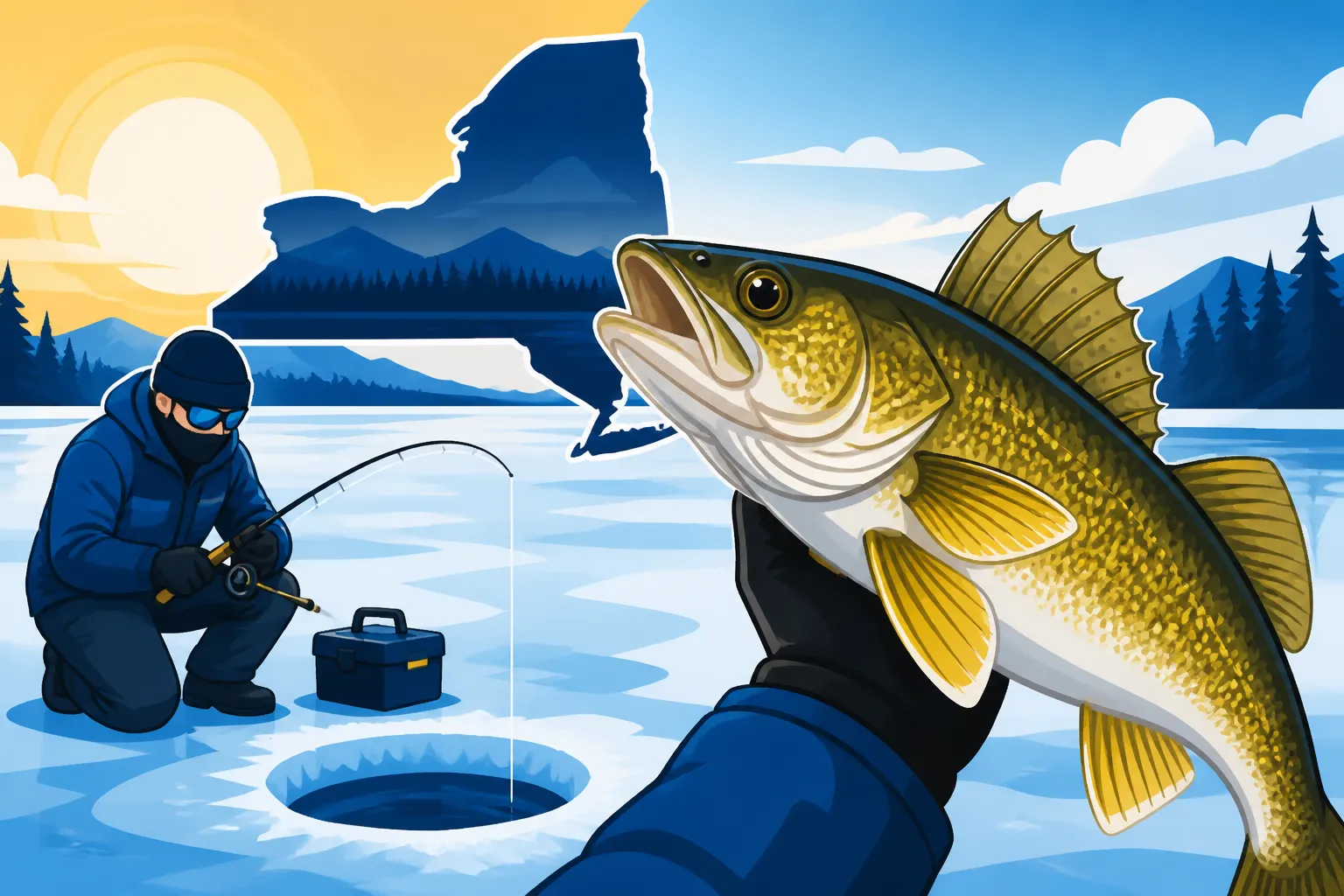
There's nothing quite like the crisp winter air, the solitude of a frozen lake, and the thrill of feeling that distinct "thump" of a walleye hitting your line through a small hole in the ice. But let's be real: finding those elusive walleye under a sheet of ice in New York isn't always a walk in the park. It can be incredibly frustrating to drill countless holes, brave the elements, and come up empty-handed. This guide is here to cut through the guesswork, revealing the best lakes across New York State where you have a genuine shot at landing some fantastic walleye through the ice, along with the strategies that will make your efforts worthwhile.
Understanding Walleye Behavior for Ice Fishing Success
Walleye are fascinating fish, and their behavior changes significantly when the water turns cold and a thick layer of ice forms above them. They become more lethargic, conserving energy, and often school up in specific areas. Knowing what makes a lake a prime walleye ice fishing destination means understanding these winter habits and how different lake characteristics cater to them. It's not just about having walleye; it's about having walleye that are accessible and willing to bite through the ice.
The Walleye's Winter Habitat Preferences
When lakes freeze over, walleye tend to gravitate towards certain types of structure and depth. They're often looking for areas where they can ambush baitfish with minimal effort. This usually means a combination of deeper water adjacent to shallower feeding flats, or areas with distinct structural elements. Think about gradual breaks, humps, points, and even deep weed lines that hold green vegetation throughout the winter. These spots provide cover and attract forage, creating perfect hunting grounds for a sluggish walleye.
We're often talking about depths anywhere from 15 to 40 feet, depending on the lake's overall depth and the clarity of the water. In clearer lakes, walleye might hold deeper during the day to avoid light, moving shallower during low-light conditions like dawn, dusk, or overcast days. In stained or murkier water, they might be shallower throughout the day. It’s a constant game of hide-and-seek, and knowing their general tendencies is your first step to success. Understanding these patterns is key to figuring out How to Ice Fish for Walleye in New York.
Forage and Structure: The Walleye Magnet
Walleye are predatory fish, and their presence in high numbers in a particular area during winter is almost always directly tied to the availability of their preferred food sources. This means panfish like perch and sunfish, as well as various baitfish species. Lakes that support healthy populations of these forage fish are naturally going to be better walleye lakes.
Beyond just food, structure plays a critical role. Walleye are ambush predators, so they love to hang around features that break up the open water and allow them to dart out at unsuspecting prey. This could be rock piles, submerged timber, or even subtle contours on the bottom. Areas where hard bottom transitions to soft bottom can also be highly productive, as these "seams" often concentrate baitfish. When you're out on the ice, especially if you're using an auger to drill many holes, you're not just looking for fish; you're looking for these specific types of underwater real estate that walleye are drawn to.
Top New York Lakes for Ice Fishing Walleye
New York is blessed with an incredible diversity of waterways, and while many hold walleye, only a handful truly shine when the ice sets in. These are the places where local knowledge runs deep, and anglers consistently pull out respectable catches. From vast inland seas to smaller, more intimate settings, these lakes offer some of the best opportunities for ice fishing walleye in the state.
Oneida Lake: A Walleye Ice Fishing Mecca
Oneida Lake, often called "The Walleye Factory," is perhaps New York’s most famous walleye destination, and for very good reason. Located just north of Syracuse, this large, relatively shallow lake consistently produces incredible numbers of walleye, making it a top choice for ice anglers. Its vast expanse and nutrient-rich waters support an enormous forage base, especially yellow perch, which walleye absolutely gorge themselves on.
During the ice fishing season, which typically runs from mid-January through March (ice conditions permitting), Oneida Lake becomes a hub of activity. Anglers spread out across its nearly 80 square miles, targeting distinct structures. The famous "humps" and "shoals" in the center of the lake are prime locations, as are the deeper edges of weed beds and gradual drop-offs. The average depth is around 22 feet, but you'll find walleye holding in a wide range, from 15 to 30 feet. Key areas often include Big Bay, Messenger Shoals, and the areas around Shackelton Point. You can often find success jigging spoons or small stickbaits, tipped with a minnow head, or using tip-ups with live minnows set just off the bottom. If you're really serious about this specific spot, our detailed Oneida Lake Walleye Fishing Guide offers even more insights.
Chautauqua Lake: Western New York's Walleye Gem
Nestled in the southwestern corner of New York State, Chautauqua Lake is another phenomenal walleye fishery that offers excellent ice fishing opportunities. Unlike Oneida, Chautauqua is shaped like a dumbbell, with a deeper, clearer southern basin and a shallower, weedier northern basin. Both sections hold walleye, but their patterns can differ. This lake is known for producing quality walleye, often a bit larger on average than some other waters.
Ice anglers on Chautauqua often focus on the many distinct humps, rock piles, and points that dot both basins. In the deeper southern basin, walleye might be found in 20-40 feet of water, especially along the extensive drop-offs. In the shallower northern basin, concentrate on the edges of remaining deep weeds or channel breaks in 10-25 feet. Popular access points include Prendergast Point and the public launches near Mayville and Bemus Point. Jigging with a Rippin' Rap or a traditional Swedish Pimple tipped with a minnow, or setting up tip-ups with shiners or fatheads, are reliable tactics here. The New York State record muskellunge was caught here, so while you're targeting walleye, you always have a chance at something truly enormous!
Lake Erie's Nearshore Waters: A Challenging but Rewarding Fishery
While its vastness can be intimidating, the shallower, nearshore areas of Lake Erie, especially near Dunkirk and Buffalo, can be incredibly productive for ice fishing walleye when conditions allow for safe ice. Lake Erie is renowned for its colossal walleye population, and many of these fish spend the winter months relatively close to shore, particularly in the harbors and protected bays, or over extensive flats where food is plentiful.
The challenge with Lake Erie is safety; its size and exposure to wind mean that ice conditions can be notoriously unpredictable and change rapidly. However, in colder winters when stable ice forms, anglers who venture out can be richly rewarded. Depths can vary, but often walleye are found in 15-30 feet of water. Look for areas with a mix of hard and soft bottom, or subtle structures that break the current. Jigging with heavier spoons or blade baits, often tipped with a minnow head, is a common and effective technique here due to the stronger currents. Always prioritize safety on Lake Erie – check local ice reports religiously and consider going with experienced local anglers or a guide if you're unfamiliar with the specific ice patterns.
Essential Strategies for Walleye Ice Fishing
Landing walleye through the ice requires more than just knowing where to go; it demands a strategic approach to presentation, bait, and understanding the fish's mood. These techniques are honed over years on the ice, and while every day is different, these fundamentals will put you in a much better position to succeed.
Mastering Jigging and Tip-Up Techniques
When it comes to ice fishing for walleye, you're generally going to rely on a combination of active jigging and passive tip-up fishing. Jigging involves using a short, sensitive rod and reel to work a lure up and down, mimicking a struggling baitfish. The key here is often subtle movements; walleye in cold water don't always chase aggressively. Small lifts, pauses, and light jiggles can be incredibly effective. Popular jigging lures include slender spoons (like the Swedish Pimple or Kastmaster), blade baits (like the Vibrato or Jigging Rap), and soft plastics on jig heads, often sweetened with a minnow head, a piece of gulp, or a wax worm. The best approach is to experiment with retrieve speed and cadence until you find what the walleye are responding to on a given day. You can learn more about specific presentations in our guide on How to Ice Fish for Walleye in New York.
Tip-ups, on the other hand, are set-and-forget devices that allow you to cover a wider area. Each tip-up holds a spool of line, a flag, and a live minnow, usually hooked through the back or lips. When a walleye takes the bait, the flag springs up, signaling a bite. Setting your minnow at various depths, typically just above the bottom or suspended in the water column where you've marked fish, is crucial. Walleye often cruise a specific depth, and a spread of tip-ups allows you to find that sweet spot. Remember to adhere to New York Ice Fishing Rules regarding the number of lines you can use – typically two lines per person, including jigging rods and tip-ups combined.
Using Electronics to Your Advantage
In today's ice fishing world, electronics are no longer a luxury; for walleye, they're practically a necessity. A good flasher unit (like a Vexilar or Marcum) or an ice fishing specific fish finder (like a Humminbird Helix or Garmin Striker Ice) will show you exactly what's happening beneath your hole in real-time. You can see your lure, any approaching fish, and their reaction to your presentation. This allows you to adjust your jigging style on the fly – speeding up, slowing down, or pausing – to entice a bite.
Learning How to Find Fish Under the Ice with these units is a game-changer. They help you pinpoint schools of baitfish, identify subtle bottom transitions, and mark individual walleye. Pay attention to how fish react to your lure. Do they come up to it and then shy away? That might mean you need to change your lure color, size, or presentation. Do they ignore it completely? Maybe it's time to move holes. These tools are invaluable for maximizing your time and effort on the ice, especially when dealing with often finicky walleye.
Best Baits and Lures for Walleye
When targeting walleye through the ice, certain baits and lures consistently outperform others. Live bait, especially minnows, remains a top choice. Large shiners, fatheads, or even suckers are excellent for tip-ups. They provide natural movement and scent, which can be irresistible to a lethargic walleye. Make sure your minnows are lively and hooked properly to maintain their action.
For jigging, as mentioned, blade baits like the Rapala Jigging Rap or Moonshine Shiver Minnow are incredibly effective. Their erratic swimming action on the fall and subtle vibration are great for triggering reaction strikes. Spoons, particularly glow-in-the-dark or metallic finishes, are also staples. Tip these with a minnow head or a small piece of plastic to add scent and visual appeal. Don't be afraid to experiment with color; sometimes a change from natural silver to a bright chartreuse or orange can make all the difference, especially in stained water or low light. Understanding the local forage and current conditions will always guide your best bait selection.
Safety First: Critical Ice Fishing Considerations
While the pursuit of walleye through the ice can be incredibly rewarding, it's paramount to remember that safety must always come first. Ice fishing inherently carries risks, and being prepared and knowledgeable about ice conditions can literally be a life-saver. Never compromise safety for a potential catch.
Assessing Ice Thickness and Stability
The most crucial aspect of ice fishing safety is understanding and constantly checking ice thickness and quality. There's no such thing as "safe ice" – only "safer ice." A general rule of thumb from the New York State Department of Environmental Conservation (DEC) is a minimum of 4 inches of clear, solid ice for individual foot travel. For snowmobiles or ATVs, you need at least 5-7 inches, and for a car or light truck, 8-12 inches. These are minimums, and more is always better.
However, thickness isn't the only factor. Snow can insulate ice, preventing it from thickening. Slush pockets can indicate weak spots. Pressure ridges, where ice sheets push against each other, are extremely dangerous. Always check the ice with an auger or spud bar as you venture out, especially when going onto a new body of water or new area of a familiar lake. Varying currents, springs, and inlets can create thinner ice, even if the rest of the lake appears solid. Our guide on How to Read Ice Thickness for Safe Ice Fishing dives deeper into these critical measurements and observations.
Essential Safety Gear and Practices
Beyond monitoring the ice, having the right safety gear is non-negotiable. This includes:
- Ice Picks: Wear them around your neck. If you fall through, these can help you grip the ice and pull yourself out.
- Life Vest (PFD): Even if you're not on a boat, wearing a PFD can provide crucial buoyancy if you unexpectedly go through the ice.
- Rope: A length of sturdy rope can be thrown to someone who has fallen through.
- Spud Bar or Auger: Use it constantly to check ice thickness as you walk.
- Buddy System: Never ice fish alone. Always go with at least one other person.
- Tell Someone: Let someone know where you're going and when you expect to return.
- First Aid Kit: Be prepared for minor injuries.
- Insulated, Waterproof Clothing: Hypothermia is a real danger. Dress in layers.
It's also vital to be aware of the New York Ice Fishing Season Dates and any specific regulations for the body of water you're on, including species-specific rules like the New York Walleye Season and Limits, and the Walleye Daily Limit in New York. Local bait shops and guides are excellent resources for current ice conditions and safety advisories. If you're planning a trip and want to ensure you're with an expert, platforms like FishingBooker can connect you with experienced local ice fishing guides who prioritize safety above all else. They know the lakes, the ice, and the walleye, helping you have a successful and secure outing.
Disclaimer
Fishing conditions, regulations, and ice thickness can change rapidly. Always check the latest New York State Department of Environmental Conservation (DEC) regulations and local ice reports before heading out onto the ice. Safety should always be your top priority. This guide is for informational purposes only, and anglers are responsible for their own safety and adherence to all applicable laws.