Best Public Fishing Access Sites in New York
It can be incredibly frustrating to gear up for a day of fishing, only to drive around for ages trying to figure out where you're actually allowed to cast a line. Many beautiful stretches of water seem to be bordered by private property, leaving you wondering if you'll ever find a good, legal spot without trespassing. This guide is here to solve that very problem, showing you the best public fishing access sites across New York State and how to find even more hidden gems, ensuring your next fishing trip is filled with peace of mind and plenty of bites.
The Quest for Public Water: Why Access Matters
Navigating the waters of New York, both literally and figuratively, often means understanding the nuances of public versus private land. For many anglers, the dream is to find that secluded spot where the fish are biting, but the reality can be a tangled mess of "No Trespassing" signs and limited parking. It's a common struggle, and knowing your rights and the available resources can transform your fishing experience.
Navigating Private Property vs. Public Rights
One of the biggest headaches for anglers, especially those new to an area, is distinguishing between private property and public waterways. In New York, even if a river or stream flows through private land, the water itself is often considered public property, particularly for navigation and fishing. However, accessing that public water usually requires permission from the landowner or using designated public access points. This is where the frustration kicks in – you know the fish are there, but how do you get to them legally? The New York State Department of Environmental Conservation (DEC) has done a fantastic job over the years of securing public fishing rights and creating specific access sites to alleviate this very issue.
The Urban Angler's Dilemma: Finding Solitude in the City
When you think of New York fishing, your mind might jump to serene Adirondack lakes or the roaring Salmon River. But what about those of us living in or near bustling urban centers? Finding a tranquil spot to cast a line within a city, or even just a short drive away, can feel like an impossible task. Crowds, noise, and sheer lack of green space often deter urban anglers. Yet, cities like New York City, Rochester, and Buffalo surprisingly offer incredible public fishing opportunities, from well-maintained piers to accessible riverfront parks, proving that a peaceful fishing escape isn't always miles away in the wilderness.
Overcoming Crowds and Finding Your Niche
Even at designated public access sites, especially during peak season or on beautiful weekends, you might find yourself shoulder-to-shoulder with other anglers. This can dampen the experience and make it harder to catch fish. The trick isn't always to find a secret spot, but rather to understand the flow of these public areas. Fishing during off-peak hours (early mornings, late evenings), weekdays, or even venturing a little further from the main parking areas can often yield a more solitary and productive experience. Sometimes, simply knowing the alternative access points for a popular body of water can make all the difference.
Types of Public Fishing Access in New York State
New York State, through the efforts of the DEC and local municipalities, provides a vast network of public fishing access points. These aren't all created equal, and understanding their different characteristics can help you plan your trip more effectively.
DEC Fishing Access Sites: What They Offer
The DEC is your best friend when it comes to public fishing. They actively acquire public fishing rights (PFRs) along streams and rivers, and develop access sites, which often include parking areas, launch ramps for boats or kayaks, and well-marked footpaths to the water. These sites are typically well-maintained and clearly signed, making them incredibly reliable. For example, along the famous New York's Salmon River Fishing Guide, the DEC maintains numerous access points with parking and even fishing platforms, allowing anglers to target trophy salmon and steelhead without having to navigate private land issues. The DEC's online interactive maps are an invaluable tool for locating these spots, showing everything from parking lots to the exact boundaries of public fishing easements.
State Parks and Forests: More Than Just Campsites
New York's extensive network of State Parks and Forests are treasure troves for anglers. While many associate them with camping and hiking, a significant number offer fantastic fishing opportunities, often with amenities like restrooms, picnic areas, and boat rentals. Places like Robert Moses State Park on Long Island provide excellent surf fishing access, while numerous parks around the New York's Finger Lakes: A Complete Guide offer boat launches and shore fishing opportunities. These sites are generally family-friendly and well-patrolled, adding an extra layer of comfort for those fishing with kids or looking for a safe, accessible spot.
Municipal Parks and Piers: Unexpected Urban Fishing Opportunities
Don't underestimate your local town or city park! Many municipalities, especially those along major rivers or coastal areas, maintain their own public parks with designated fishing areas, docks, or piers. These can be fantastic spots for a quick fishing trip, particularly for panfish, catfish, or even migrating species depending on the location. For instance, in New York City, various parks along the waterfront, such as Brooklyn Bridge Park or Gantry Plaza State Park in Long Island City, feature public piers where you can catch striped bass, bluefish, and fluke. These urban gems prove that quality fishing doesn't always require a long drive out into the wilderness.
Public Right-of-Way Along Rivers and Streams
Beyond dedicated sites, New York State also has many miles of public fishing rights (PFR) easements along rivers and streams. These are typically narrow strips of land (often 33 feet wide) along the bank where the public has the right to walk and fish, even if the adjacent land is private. They are usually marked with yellow "Public Fishing" signs. This is particularly common in popular trout streams like those in the Catskills, such as sections of the Beaverkill and Willowemoc Creek. Always look for these signs and respect the boundaries; venturing beyond the marked PFR is trespassing.
Here's a quick overview of different public access types:
| Access Type | Typical Features | Best For | Considerations |
|---|---|---|---|
| DEC Fishing Access Sites | Parking, boat/kayak launches, designated footpaths, well-marked PFR | River/stream fishing, specific species (e.g., trout, salmon, steelhead) | Clearly defined, follow regulations specific to the waterbody. |
| State Parks & Forests | Parking, restrooms, picnic areas, boat launches, camping, shore access | Family outings, lake/ocean fishing, diverse species, amenities | Entrance fees may apply, check specific park rules. |
| Municipal Parks & Piers | Piers, docks, seawalls, shore access, often in urban settings | Convenient, diverse species (e.g., urban bass, saltwater species), light tackle | Can be crowded, check local ordinances for fishing. |
| Public Right-of-Way (PFR) | Narrow strips of land along rivers/streams, marked with yellow signs | Wading, fly fishing, accessing less-pressured stretches of water | Respect private property boundaries outside the PFR, limited amenities. |
Top Public Fishing Access Sites Across New York
Now, let's dive into some specific, tried-and-true public fishing access sites across New York, offering a range of experiences from freshwater giants to saltwater thrills.
Freshwater Gems
New York's freshwater fishing scene is legendary, from its Great Lakes tributaries to its pristine Adirondack ponds. Finding a spot to wet a line often comes down to knowing where the public access points are.
Lake Ontario Tributaries: Salmon River, Oswego River, and More
When we talk about freshwater fishing in New York, the Lake Ontario tributaries are in a league of their own, especially for those chasing migratory salmon and steelhead. The Salmon River in Pulaski, for instance, boasts numerous DEC public fishing access sites. Anglers flock to these well-maintained areas, often providing ample parking and clear access to prime fishing holes. Places like the "Douglaston Salmon Run" offer paid access to premium water, but there are also extensive free public sections. Similarly, the Oswego River in downtown Oswego offers fantastic public access right from the city's riverwalk and Linear Park, where you can target salmon, steelhead, and even walleye. Don't forget the lesser-known tributaries like Sandy Creek or Oak Orchard Creek, which also have public access easements and can be less crowded.
Finger Lakes Region: Seneca Lake, Cayuga Lake, and Keuka Lake
The majestic New York's Best Lakes for Fishing are not only stunning but also provide incredible fishing, especially for lake trout, landlocked salmon, and smallmouth bass. Public access here is largely through state parks and public boat launches. For example, Seneca Lake State Park in Geneva offers boat launches and excellent shore fishing opportunities, especially near the outlet. Similarly, Taughannock Falls State Park on Cayuga Lake provides public access to the lake and creek, perfect for targeting brown trout and landlocked salmon. On Keuka Lake, several DEC boat launch sites allow anglers to get on the water easily. These lakes are also fantastic for ice fishing in the winter, and many public access points remain viable for this activity. You can often find a good charter captain on FishingBooker who can show you the ropes on these larger bodies of water, departing from public marinas.
Adirondack Park: Lake Placid, Saranac Lakes, and Remote Ponds
For those seeking a more wilderness experience, the Adirondack Park is unparalleled. It's home to countless lakes and ponds with extensive public access, often via state-maintained boat launches or roadside parking areas. Lake Placid and the Saranac Lakes chain (Upper, Middle, Lower) are famous for trout and landlocked salmon, with numerous public launch sites. For a true backcountry adventure, the DEC maintains dozens of remote ponds accessible by hiking, where you can find brook trout in their native habitat. Always check the specific regulations for Adirondack waters, as some have special rules. A great resource for exploring further is the Best Trout Streams in the Adirondacks guide.
Catskill Mountain Streams: Beaverkill, Willowemoc, and Delaware River
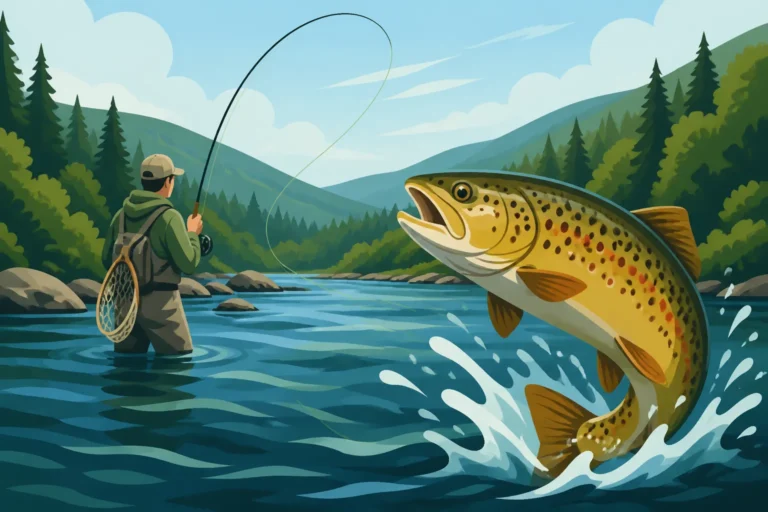
The Catskills are the birthplace of American fly fishing, and thankfully, much of this legendary water is publicly accessible through DEC Public Fishing Rights. The Beaverkill River and Willowemoc Creek have miles of marked public access easements, allowing anglers to wade and fly fish for wild and stocked trout. Look for the distinctive yellow "Public Fishing" signs. The Delaware River also offers extensive public access along its New York segments, particularly for smallmouth bass and trout. These waters provide a stunning backdrop for a day of fishing, and a deep dive into How to Fly Fish in New York will certainly help you make the most of your visit.
Hudson River: Numerous Parks and Boat Launches
The Fishing the Hudson River in New York: Where to Go offers diverse fishing opportunities, from striped bass in the lower tidal sections to smallmouth bass and walleye further north. Public access is plentiful, with numerous state parks, municipal parks, and boat launches dotting its banks from New York City all the way up to the Adirondacks. Popular spots include Hudson River Park in NYC (for pier fishing), Kingston Point Park near Kingston (boat launch, shore fishing), and Schodack Island State Park near Albany (boat launch, shore fishing). Many of these sites are easily found using the DEC's online mapping tools.
Saltwater Sanctuaries
New York's saltwater fishing is equally vibrant, offering everything from surf casting on ocean beaches to targeting fluke in calm bays.
Long Island Sound and South Shore Bays: Captree, Montauk, Jones Beach
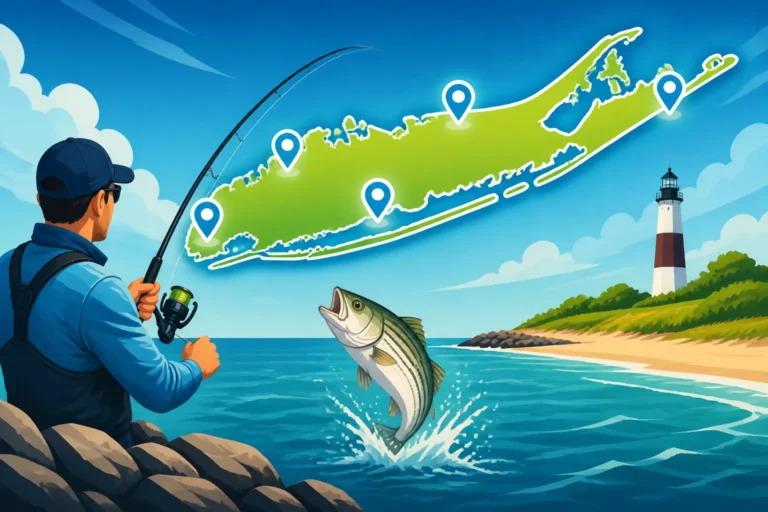
Long Island boasts some of the best saltwater fishing on the East Coast, and public access is a major reason why. Captree State Park on the South Shore is a fantastic hub, offering extensive public piers, surf fishing access, and numerous party boats. Montauk Point State Park, at the very eastern tip of Long Island, is iconic for striped bass and bluefish, with unparalleled surf casting opportunities from its rocky shores. Jones Beach State Park also offers miles of public surf fishing. Along the Long Island Sound, numerous town beaches and parks provide excellent public access, especially for fluke, porgy, and blackfish. Remember to check local regulations and park entry fees.
New York City Piers: Brooklyn Bridge Park, Gantry Plaza State Park
Don't let the urban jungle fool you; New York City has fantastic public fishing opportunities. The piers at Brooklyn Bridge Park, Gantry Plaza State Park in Long Island City, and even Pier 40 in Manhattan offer easily accessible spots to catch a surprising variety of fish, including striped bass, bluefish, porgy, and even some flounder. These spots are perfect for a quick escape, and while they can be busy, the convenience is hard to beat. Just make sure you're aware of the specific rules for fishing in city parks, as some areas may have restrictions. You can often find local knowledge or even book a guided trip through services like FishingBooker right from these urban centers.
Marine Fishing Registry Access Points
For saltwater fishing in New York, you'll need to enroll in the New York Recreational Marine Fishing Registry, which is free. This registry, while not directly providing physical access, is a prerequisite for fishing in marine waters. The actual access points are then provided by state parks, municipal piers, and town beaches. Always ensure you're registered before heading out to any saltwater spot.
Making the Most of Public Access: Tips for Anglers
Finding public access is just the first step. To truly have a successful and enjoyable trip, a little preparation and respect go a long way.
Researching Your Spot: DEC Info Mapper and Local Knowledge
Before you even leave the house, the best tool in your arsenal is information. The New York State DEC's online Interactive Fishing Map (DEC Info Mapper) is a powerhouse. It precisely shows public fishing rights, parking areas, boat launches, and even fish stocking locations. Coupled with a quick search on FishingBooker for what species are biting, or asking local tackle shop owners, you can quickly build a plan. Local knowledge is invaluable, so don't be shy about striking up a conversation with other anglers or staff at bait and tackle shops. They often have the most up-to-date information on current conditions and productive spots. Also, always check the New York Fishing Regulations Explained for your specific target species and location.
Respecting the Environment and Fellow Anglers
Public access means shared access. This golden rule is critical. Always pack out everything you pack in, and then some. Leave no trace. Be mindful of casting lines near other anglers, especially in crowded areas. If someone is already in a prime spot, give them space. Many public areas are carry-in/carry-out for trash, so bring a bag for your waste. Maintaining good etiquette ensures that these precious public resources remain enjoyable for everyone. This also extends to fish handling, especially with catch-and-release practices. Proper handling helps ensure the fish survive to be caught another day.
Safety First: Know the Regulations and Prepare for Your Trip
No matter where you fish, safety should be your top priority. Always check the current New York Fishing Season Dates and Catch Limits for the species you're targeting. Ensure you have the proper New York Fishing License Guide, as enforcement officers frequently patrol public access sites. If you're using a boat or kayak, understand the Boat Registration Requirements for Anglers and carry necessary safety gear. Be aware of your surroundings, especially if fishing alone or in remote areas. Tell someone where you're going and when you expect to return. Dressing appropriately for the weather, bringing plenty of water, and having a first-aid kit are always smart moves. By being prepared and responsible, you can fully enjoy the incredible public fishing opportunities New York State has to offer.
Disclaimer
The information provided in this guide is for general informational purposes only and is subject to change. Always consult the most current New York State Department of Environmental Conservation (DEC) fishing regulations and local ordinances before engaging in any fishing activity. It is the angler's responsibility to understand and comply with all applicable laws and regulations.