Best Season to Charter Fish for Striped Bass on the Hudson
Oh, the Hudson River striped bass! There's nothing quite like the thrill of chasing those powerful fish, but trying to figure out the absolute perfect time to book a charter can feel like deciphering an ancient riddle. So many factors come into play – water temperature, fish migration, weather patterns – and it's easy to get overwhelmed. This guide is here to cut through the confusion and help you pinpoint the best season to charter fish for striped bass on the iconic Hudson, ensuring you maximize your chances of a memorable trip.
Understanding the Striped Bass Annual Migration on the Hudson
Before we dive into the best times, it's really helpful to understand why striped bass show up in the Hudson when they do. These are migratory fish, and their patterns are largely dictated by their biological clock, specifically spawning and feeding. The Hudson River isn't just a convenient stopover; it's a critical spawning ground for a significant portion of the Atlantic coast's striped bass population.
Think of it like a grand annual journey. As the waters of the Atlantic Ocean begin to warm in the spring, adult striped bass, often quite large, start their journey north and inland, pushing into the Hudson River. They're driven by the urge to spawn in the freshwater stretches of the river. After the spawning ritual, they disperse, some heading back to the ocean relatively quickly, others lingering to feed, and some even remaining in the river system for extended periods. Then, as fall approaches and water temperatures begin to drop, many of these fish start their southward migration, feeding aggressively to build up reserves for the winter ahead. This predictable, yet always slightly variable, pattern is what dictates the fishing seasons.
The Role of Water Temperature in Striper Movement
Water temperature is the unspoken conductor of the striped bass symphony. It's the primary trigger for their migration, spawning, and feeding behaviors. In the spring, as the Hudson warms from the cold winter months, it signals to the stripers that it's time to move upstream for spawning. They're looking for that sweet spot, generally between the high 40s and low 60s Fahrenheit, to begin their reproductive cycle. If the spring is unusually cold, the run might be delayed; if it's warm, they could arrive earlier.
Conversely, in the fall, cooling water temperatures send a clear message: it's time to feed heavily before heading to warmer coastal waters for the winter. The fish become incredibly active, almost frenzied, as they stock up on calories. Understanding this temperature sensitivity means a good charter captain is constantly monitoring water conditions, allowing them to predict fish movements with impressive accuracy.
Key Forage and Their Influence on Striper Location
Striped bass are opportunistic feeders, and their location in the Hudson often correlates directly with their food sources. In the spring, after the spawning run, they'll often be found shadowing schools of herring and shad that are also making their way upstream to spawn. These baitfish provide a crucial protein boost for post-spawn stripers. A good guide knows exactly where these baitfish congregate.
Later in the season, during summer and fall, bunker (menhaden) become a prime target. These oily, protein-rich fish are like candy to a striper. If you see bunker flipping on the surface, chances are there are striped bass nearby, either below them or pushing them from the sides. Crabs, eels, and other smaller baitfish also play a role, influencing local movements and feeding patterns. Your charter captain will always have an eye on the bait situation, as it's a huge clue to finding the fish.
Spring Run: The Prime Time for Hudson River Striped Bass
Hands down, for many anglers, the spring run is the premier season to target striped bass on the Hudson River. This is when the big, breeding females, often called "cows," push their way upstream to spawn. The anticipation builds for weeks as anglers wait for the conditions to be just right, and when it breaks, it's an explosion of activity.
The spring migration usually kicks off in April, sometimes even late March if winter gives way to an early warm-up, and typically lasts through May, occasionally extending into early June. During this window, the river comes alive. You'll often find charters busy navigating the river, everyone eager to hook into a trophy-sized striped bass. This is the time when you stand your best chance of encountering those truly giant fish that make your arms ache and your reel scream.
Early Spring: Arrival of the First Migrants
When those first signs of spring appear—water temperatures slowly creeping into the high 40s and low 50s—you'll see the earliest arrivals. These are often the smaller, male "schoolie" stripers, followed by medium-sized fish, and then, the highly sought-after large females. They're making their way from the ocean, pushing up the tidal estuaries and into the main stem of the Hudson. Fishing in early spring can be a bit hit or miss as the fish are still spread out, but it can also be incredibly rewarding if you hit that perfect window.
Anglers targeting these early arrivals often use bloodworms, sandworms, or small baitfish imitations. The fish aren't always super aggressive yet, so a subtle presentation can be key. A seasoned charter captain will know the usual staging areas where these early migrants tend to hold before continuing their journey upstream. It's a fantastic time for those who enjoy the quiet anticipation of the hunt and the thrill of being among the first to greet the returning stripers.
Peak Spring: Spawning Activity and Aggressive Feeding
As water temperatures climb into the mid-50s to low 60s, typically from late April through May, you're squarely in the peak of the spring run. This is when the majority of the adult striped bass are in the river, actively spawning in the freshwater sections north of the Tappan Zee Bridge. During this time, they're not always focused on eating, especially when directly on the spawning grounds, but before and after spawning, they feed aggressively to fuel their journey and recover energy.
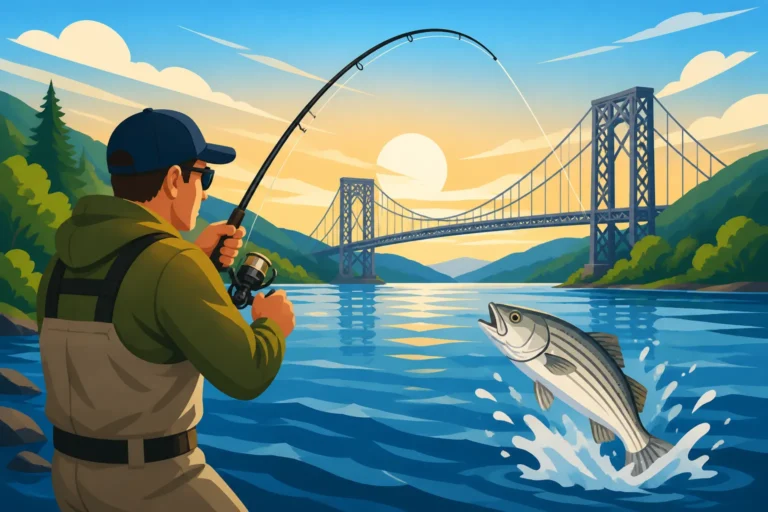
This is the window when your chances of catching a truly massive striper are at their highest. Charters will often focus on trolling with large plugs or casting big soft plastics and swimbaits to mimic the abundant baitfish. Live bait, like herring or shad (if legal for collection and use, always check local regulations), can also be incredibly effective. The energy on the river during this time is palpable, and it's a truly exciting experience. For comprehensive information on specific regulations, you might want to check out New York Fishing Regulations Explained.
Late Spring: Post-Spawn Dispersal
Towards late May and early June, as the spawning activity winds down, the stripers begin to disperse. Some will start their journey back downstream towards the ocean, while others may linger in the river, feeding on whatever forage is available. The bite can become a bit more spread out, and the fish might not be as concentrated as during the peak spawn. However, these post-spawn fish are often still quite hungry, and with less angler pressure than the peak, you can sometimes find some fantastic, less crowded fishing.
Focus shifts to areas where current meets structure, or where baitfish are abundant. Trolling or casting can still be effective, but sometimes a more finessed approach with lighter tackle or live bait in deeper holes works best. Don't overlook these late spring opportunities; a savvy charter captain can still put you on plenty of fish.
| Season Segment | Typical Timing | Striper Behavior Highlights | Common Techniques | Pros for Charter Fishing | Cons for Charter Fishing |
|---|---|---|---|---|---|
| Early Spring | Late March – Mid-April | First arrivals, smaller fish initially, followed by medium ones. Warming up. | Bloodworms, sandworms, small soft plastics, jigging. | Less crowded, chance for early big fish. | Can be hit-or-miss, fish spread out. |
| Peak Spring | Late April – Late May | Major spawning run, largest fish present, active feeding (pre/post spawn). | Trolling large plugs, big swimbaits, live bait (herring/shad). | Best chance for trophy fish, high activity. | Can be crowded, intense angler pressure. |
| Late Spring | Late May – Early June | Post-spawn dispersal, fish still hungry but more scattered. | Trolling, casting soft plastics, live bait in deeper holes. | Less pressure, good numbers of fish. | Fish more dispersed, requires more searching. |
Summer Fishing: Adapting to Warmer Waters
Once June rolls around and the summer heat settles in, the Hudson River's water temperatures continue to climb. For many of the larger striped bass, these warmer conditions, particularly in the shallower sections, aren't ideal. A significant portion of the population will migrate back to the cooler, saltier waters of the ocean. However, that doesn't mean the Hudson is devoid of stripers! Far from it.
Summer fishing for striped bass on the Hudson requires a different approach. The bite often becomes more nocturnal or confined to specific times of day when water temperatures are at their coolest, typically dawn and dusk. You'll find stripers holding in deeper channels, near cooler freshwater inlets, or around bridge pilings and other structures that offer shade and current breaks. This is often when you'll find a strong resident population of smaller to medium-sized stripers, with the occasional larger fish lingering.
Targeting Residual and Resident Stripers
While the massive migratory spawners might be gone, a healthy population of striped bass remains in the Hudson throughout the summer. These are often younger fish, or those that simply choose to stay in the river. They're still feeding, but they're more sensitive to heat and light. Charter captains during this period become expert sleuths, using their knowledge of the river's deep holes and shaded structures to find where the fish are hiding.
Early mornings, late evenings, and even night fishing become incredibly effective. The fish are less active during the bright, hot midday sun. Think about how you feel on a scorching summer day – you'd probably prefer to chill in the shade, right? Stripers are no different. They'll seek out cooler, darker spots. Techniques often involve live eels, cut bait presented on the bottom, or careful jigging with soft plastics in deeper water. How to Fish for Striped Bass at Night is a great resource if you're considering a nocturnal adventure.
Challenges and Rewards of Summer Striper Fishing
The biggest challenge in summer is undeniably the heat. Not only can it be uncomfortable for anglers, but it also directly impacts fish behavior. Stripers can become lethargic and less willing to chase a lure. Finding them requires patience and precise presentations. However, the rewards can be plentiful. Summer often brings stable weather patterns (fewer storms than spring or fall), and the river can be absolutely beautiful in the morning and evening light.
You might not catch as many "trophy" fish as during the peak spring run, but you can still have fantastic days catching solid, hard-fighting stripers. It's an excellent time for those who prefer less crowded waters and enjoy a more relaxed pace. Many charters are available on platforms like FishingBooker, offering options for those looking to experience the Hudson during these warmer months. Plus, it's often a great time for family trips, especially if younger anglers are involved, as the weather is typically more predictable and pleasant.
Fall Run: A Second Chance at Trophy Stripers
As summer slowly gives way to autumn, and the days shorten, the Hudson River experiences a remarkable transformation. Water temperatures begin to cool, and with that comes the highly anticipated fall run of striped bass. This is another prime window for targeting stripers, offering a different, but equally exciting, experience compared to the spring run.
The fall run typically kicks off in late September, gains momentum through October, and can extend well into November, sometimes even early December, depending on how quickly winter arrives. During this period, striped bass that spent the summer in various coastal areas or even lingering in the Hudson begin to migrate south, heading back towards their wintering grounds. They are driven by an insatiable hunger, actively gorging themselves on baitfish to build up fat reserves for the colder months ahead. This aggressive feeding behavior makes for some truly epic fishing.
Aggressive Feeding Before Winter Migration
The key characteristic of the fall run is the stripers' intense feeding. They know winter is coming, and they need to pack on as much weight as possible. This means they are often less finicky and more willing to chase down a variety of baits and lures. You'll often find them busting bait on the surface, pushing schools of bunker or herring against the shore, creating spectacular feeding frenzies. It's an adrenaline rush to witness and even more exciting to cast into!
Charter captains during the fall run will often focus on locating these massive bait balls and the stripers that are undoubtedly underneath them. Trolling with large swimming plugs, casting big topwater lures, spoons, or soft plastics are all highly effective methods. Live bait, especially bunker or eels, can also be deadly. This is another excellent opportunity to catch larger fish, perhaps not always the absolute giants of the spring spawn, but often chunky, healthy stripers that are incredibly strong fighters. Many guides who specialize in New York's Hudson River Striped Bass Guides will be booked solid during this period.
Weather Considerations and Fall Strategies
While the fall run offers incredible fishing, it also brings more variable weather. Cooler temperatures are a blessing for the fish, but cold snaps, strong winds, and sudden storms can make conditions challenging for anglers. It's crucial to dress in layers and be prepared for anything when heading out on a fall charter. However, a little chill in the air often translates to a hot bite on the water.
Strategically, fall fishing often involves covering a lot of water. The stripers are on the move, following their food sources, so a charter boat with an experienced captain can efficiently locate these migratory schools. Focus areas often include river bends, deeper channels, mouths of tributaries, and areas where current concentrates bait. Don't forget to understand important regulations like New York Striped Bass Length Requirements before you hit the water. It's a dynamic and rewarding season for those who love the hunt.
Factors Influencing the Best Time to Go
Even within the generally defined "best" seasons, there are always nuances and variables that can shift the prime fishing window. An experienced charter captain is constantly monitoring these factors, and understanding them yourself can help you better plan your trip and appreciate the expertise your guide brings to the table.
Tides and Currents
On a tidal river like the Hudson, tides and currents play an enormous role in striped bass behavior. Moving water concentrates baitfish, activates stripers, and can position them in predictable ambush points. Often, the incoming or outgoing tide (known as the "moving water" or "slack tide" periods) will trigger the best bites. Some captains prefer the outgoing tide as it sweeps bait out of creeks and tributaries, creating a buffet for waiting stripers.
However, specific spots on the river might fish better on an incoming tide, pushing bait into a particular cove or eddy. Your charter captain will have a deep understanding of these local nuances and will time their fishing efforts accordingly. Asking about Best Tides for Striped Bass Fishing on New York's Long Island Sound might give you an idea of how much tides impact saltwater species, and it's no different for stripers in the Hudson.
Moon Phases and Solunar Tables
While perhaps not as critical as water temperature or bait presence, many seasoned anglers and guides pay attention to moon phases and solunar tables. The moon's gravitational pull influences tides, and some believe it also directly impacts fish feeding activity. Full and new moons often coincide with stronger tidal currents, which can mean more active feeding periods.
While there's no hard-and-fast rule, some swear by fishing around these lunar cycles. Your charter captain might factor this into their daily planning, combining it with their knowledge of local conditions to put you in the best position. It's part of the art and science of fishing that makes every trip unique.
Seasonal Baitfish Movements
We've touched on this before, but it bears repeating: where the bait goes, the stripers follow. The seasonal migration of different baitfish species is intimately linked to the best times to target striped bass. In spring, it's often river herring and shad. In summer and fall, it's frequently bunker (Atlantic menhaden) that draw the most attention.
A good charter captain will have an excellent understanding of these baitfish movements. They'll know when the herring are pushing upriver, where the bunker schools are holding, and how to mimic them with lures or use them as live bait. What Striped Bass Eat in the Hudson River is a good read if you want to know more about their diet. Keeping an eye on local fishing reports, which often mention baitfish activity, can give you a preliminary idea of what to expect before your trip.
Booking Your Hudson River Striper Charter
Once you've decided which season sounds most appealing for your striped bass adventure, the next step is booking a charter. This is where an experienced guide becomes invaluable. They handle all the gear, know the local spots, and constantly track the fish.
Choosing the Right Charter and Captain
When looking for a charter, consider a few things. First, ask about their experience specifically targeting striped bass on the Hudson River. This isn't offshore tuna fishing; it requires specific knowledge of the river's unique currents, structures, and fish behaviors. Look for captains who are passionate about conservation and practice ethical fishing, including proper catch-and-release techniques if you're not keeping fish.
Platforms like FishingBooker are excellent resources for finding reputable Hudson River fishing guides. You can often read reviews from other anglers, see what types of trips they offer (half-day vs. full-day), and get an idea of their preferred techniques. Don't hesitate to call the captain directly to discuss your expectations and ask any questions you have. This initial conversation can tell you a lot about their professionalism and whether they're a good fit for your group. For more details, you can explore New York Fishing Charters and Guides.
What to Expect on a Hudson River Charter
A typical Hudson River striped bass charter will provide all the necessary fishing gear, including rods, reels, tackle, and often bait. Your captain will brief you on safety procedures and fishing techniques. Expect to spend your time either casting to visible schools of fish, jigging in deeper water, or trolling specific stretches of the river. The captain's job is to put you on fish, and a good one will work tirelessly to achieve that.
Remember to bring appropriate clothing for the weather, sunscreen, snacks, drinks, and a cooler for any fish you plan to keep (observing all catch limits and size restrictions, of course). Most importantly, bring a positive attitude and be ready for an exciting day on the water! Your captain will guide you through things like How to Use Circle Hooks for Striped Bass as these are often required when bait fishing for stripers.
Planning for the Best Experience
To truly maximize your experience, communicate clearly with your captain about your goals. Are you hoping for a trophy fish? Do you just want to catch a lot of fish, regardless of size? Are you new to fishing and looking for a teaching experience? The more information your captain has, the better they can tailor the trip to your preferences.
Booking in advance, especially for the peak spring and fall runs, is highly recommended. Popular captains get booked up quickly. Be flexible with your dates if possible, as sometimes moving a day or two can make a huge difference in conditions. And don't forget to confirm details like meeting times, what's included, and payment information well before your trip. The Hudson River offers an incredible striped bass fishery, and with a little planning, you're set for an unforgettable adventure.
Disclaimer
This article is for general informational purposes only and does not constitute professional advice. Laws, prices and regulations vary by location and change over time. Consult a qualified professional for guidance on your specific situation.