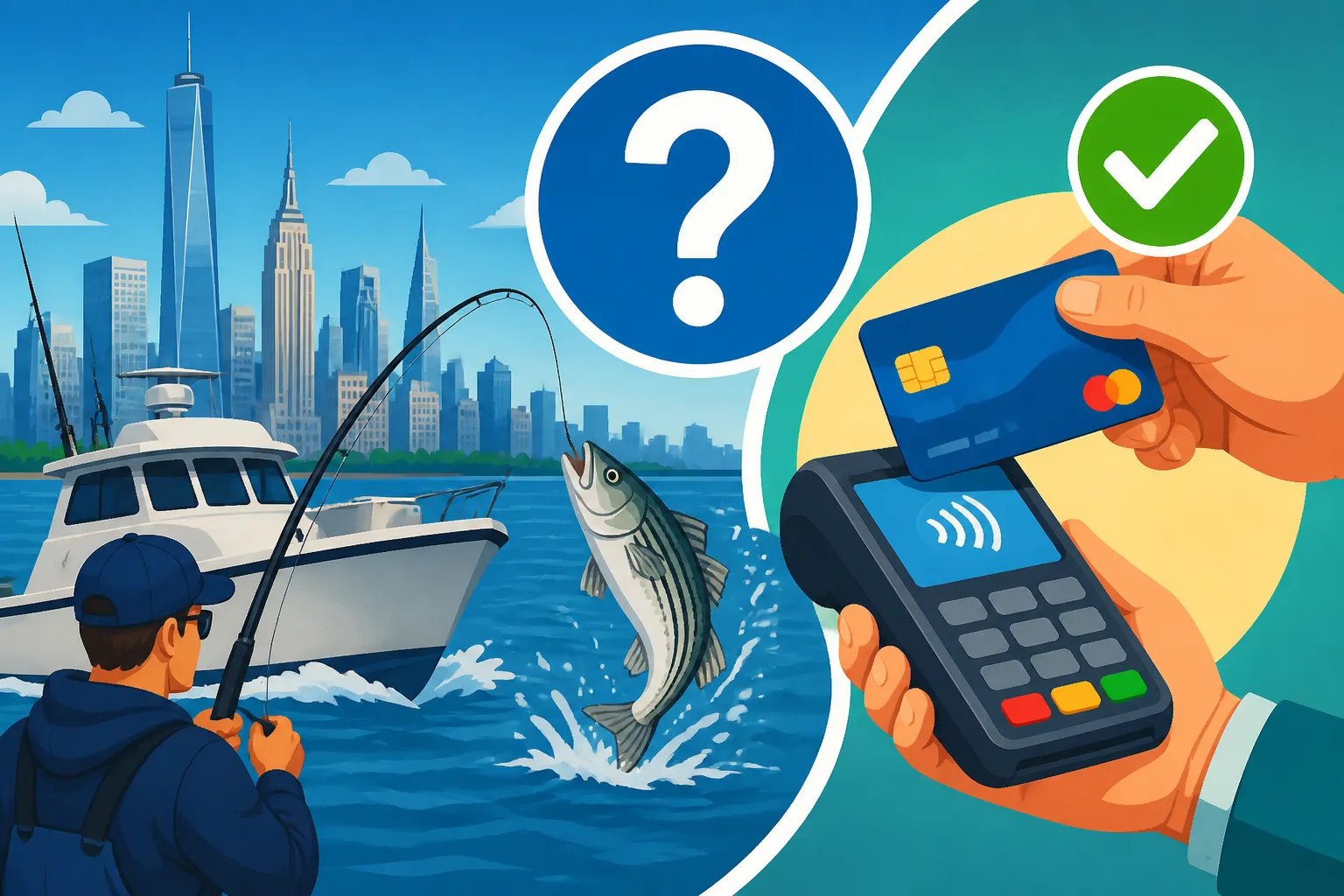
Do Fishing Charters Accept Credit Cards?
One of the biggest anxieties when planning a much-anticipated fishing trip, especially if you're shelling out for a charter, is often not about catching fish – it's about the logistics, specifically, how you're going to pay for it all. You've found the perfect charter, envisioned yourself reeling in that trophy catch, but then a little voice asks, "Do they even take credit cards?" This guide is here to unravel the payment mysteries surrounding New York fishing charters, so you can focus on the fishing, not the finances.
The Modern Reality: Payment Options for Fishing Charters
Let's be real, in today's digital age, we're all pretty accustomed to swiping a card or tapping a phone for almost everything. It's convenient, it offers buyer protection, and honestly, who carries much cash anymore? However, the world of fishing charters, while modernizing, still has its own unique payment landscape. It's not always a one-size-fits-all situation, and understanding this beforehand can save you a headache (and potentially a missed trip!).
The Prevalence of Credit Card Acceptance
The good news is that many New York fishing charters, especially the larger, more established operations or those that book extensively through online platforms, absolutely accept credit cards. They understand that it's a convenience for their clients and a necessary part of doing business in the 21st century. When you're looking into New York Fishing Charters and Guides, you'll often find that their websites or booking pages clearly list their accepted payment methods. Many captains use mobile card readers that can process payments right on the dock or even on the boat. This means you can often pay your deposit, and sometimes even the final balance, with your Visa, Mastercard, or Discover. American Express is a bit less common due to higher processing fees, but still widely accepted by bigger outfits.
The main advantage for you, the angler, is the ease and security. You don't have to carry large sums of cash, and your payment is typically protected by your credit card company in case of any issues. For captains, it broadens their customer base, allowing them to cater to those who prefer electronic transactions or are traveling without much local currency.
Why Cash Remains King for Some Captains
Despite the rise of digital payments, you'll still encounter plenty of New York fishing captains who prefer, or even exclusively accept, cash for part or all of their fees. And honestly, there are very legitimate reasons for this. Small business owners, which most charter captains are, face processing fees with every credit card transaction. These fees, which can range from 1.5% to upwards of 3.5% or more, eat into their already tight margins. On a multi-hundred or even thousand-dollar charter, those fees add up quickly.
Think about a small, independent guide operating out of a quiet cove on Lake George or a veteran captain running a modest operation on the St. Lawrence River. For them, every dollar counts, and avoiding credit card fees can make a significant difference to their bottom line. Plus, in areas with spotty cell service, like some more remote fishing spots in the Adirondacks, mobile card readers might not even work reliably. It's often simpler and more guaranteed for them to take cash. This is especially true for independent guides or smaller operations. So, while you might be thinking, "It's 2024, everyone takes plastic!", remember that the fishing world often operates on its own practical terms.
Digital Payment Apps: A Growing Trend
Beyond traditional credit cards and good old cash, digital payment apps have become increasingly popular, especially among younger captains or those who are tech-savvy. Services like Venmo, PayPal, Zelle, and Cash App offer a convenient middle ground. They allow for instant transfers directly from your bank account or debit card, often with lower (or sometimes no) fees compared to credit card processing for peer-to-peer transactions.
Many captains appreciate these options because they offer a quick and secure way to receive payments without the overhead of credit card processors. It’s a great option if you find yourself without enough cash, but your captain doesn’t take cards. However, just like with mobile card readers, these apps do require a reliable internet connection. Before assuming this is an option, it's always best to ask your captain directly. It’s also worth noting that some apps have daily or weekly limits on transactions, so if you're paying a large sum, make sure your account limits can accommodate it.
Navigating the Booking Process: What to Expect
Booking a fishing charter shouldn't be a shot in the dark, especially when it comes to payment. Transparency is key, and a good charter service will make their payment policies clear from the outset. Don't be shy about asking questions; it's your money and your trip! Understanding the typical payment structure and what to ask can save you a lot of hassle.
Deposits and Final Payments
Most New York fishing charters operate on a deposit system, which is pretty standard across the industry. This deposit, usually a percentage of the total trip cost or a flat fee, is required upfront to secure your date. It acts as a commitment from you and ensures the captain doesn't turn away other business for your reserved slot. What Is a Typical Charter Deposit Amount? can vary significantly.
Often, this deposit is taken via credit card through an online booking system or over the phone. For the remaining balance, this is where payment methods can diverge. Some charters will want the final payment in cash on the day of the trip, before you even leave the dock. Others are perfectly fine with a credit card for the remainder, or a digital payment app. It's not uncommon for a captain to say, "The deposit can be on card, but the rest is cash, please." Always clarify this when booking. You don't want to be scrambling for hundreds of dollars in cash at 5 AM on the day of your trip.
Asking the Right Questions Before You Book
This is perhaps the most critical step. Never assume. When you're in the process of booking your charter, whether it's for a salmon trip on Lake Ontario or a striped bass adventure on the Hudson River, make sure you ask:
- "What forms of payment do you accept for the deposit?"
- "What forms of payment do you accept for the remaining balance on the day of the trip?"
- "Do you charge any processing fees for credit card payments?"
- "If I need to pay with cash, should I bring exact change, or can you make change?"
Don't be afraid to sound overly cautious. Captains appreciate prepared clients. Clear communication upfront prevents misunderstandings later. This is part of How to Choose a New York Fishing Charter wisely. You might find that some charters have specific policies for Cancellation Policies for New York Fishing Charters that also depend on payment methods, so it's good to understand the full picture.
Online Booking Platforms and Their Payment Systems
Online booking platforms have revolutionized how many anglers find and book charters. Sites like FishingBooker are excellent examples of this. When you book through such a platform, the payment process is often streamlined and typically involves credit card transactions. The platform acts as an intermediary, handling the deposit and sometimes the full payment, then forwarding the funds (minus their commission) to the captain.
This is often the easiest route if you prefer using a credit card exclusively, as these platforms are set up to accept them seamlessly. They usually provide clear breakdowns of costs, what's included, and the payment schedule. However, even when booking through a platform, it's still a good idea to confirm with the captain directly about how they prefer the final payment for things like fuel surcharges (if applicable) or any extra services not included in the initial booking. For instance, FishingBooker makes it clear what payment options a specific charter offers, often stating whether credit cards are accepted directly by the captain for the remaining balance.
Here's a quick comparison of common payment methods:
| Payment Method | Angler Pros | Angler Cons | Captain Pros | Captain Cons |
|---|---|---|---|---|
| Cash | No processing fees for you | Need to carry large sums; less security | No processing fees; immediate access | Security concerns; need to make change |
| Credit Card (Directly to Captain) | Convenient; purchase protection | Possible processing fees/surcharges | Broadens customer base | Processing fees; internet reliability |
| Digital Apps (Venmo, PayPal) | Convenient; often low/no fees | Requires internet; transaction limits | Low/no fees; quick transfer | Requires internet; less formal |
| Credit Card (Via Online Platform) | Easiest; strong purchase protection | Platform fees might be embedded | Streamlined booking; broader reach | Platform commission fees |
Preparing for Your Trip: Payment Best Practices
You've booked your trip, asked all the right questions, and now the day is approaching. Being prepared financially is just as important as having the right gear or knowing the New York Fishing Season Dates and Catch Limits. A smooth payment process ensures a stress-free start to your fishing adventure.
Always Confirm Payment Methods in Advance
Seriously, I can't stress this enough. Even if you think you know, a quick email or phone call a few days before your trip can prevent any last-minute surprises. Plans change, technology fails, and sometimes a captain's preferred method might shift. If you're heading out from a less populated area, cell service for digital payments or credit card readers might be nonexistent. Knowing exactly what to expect helps you prepare whether you need to stop at an ATM or ensure your digital wallet is topped up. This is a key part of asking Questions to Ask Before Booking a Fishing Charter.
Having a Backup Payment Option
This is just smart planning, regardless of what the captain tells you. Even if they confirm they take credit cards, what happens if their mobile reader is malfunctioning, or there's a power outage at the marina? What if the internet goes down, rendering digital apps useless? Always have a backup. If you plan to pay by card, consider bringing enough cash to cover the balance as a contingency. If you plan for cash, having a debit card or a digital app ready is still a good idea for any unforeseen expenses, like bait, tackle, or maybe even a celebratory meal after a successful outing!
Understanding Processing Fees and Surcharges
Some charters, particularly those with slimmer margins, may pass on the credit card processing fees to the customer. This isn't usually a massive amount, maybe 2-4% of the transaction, but it can be a surprise if you're not expecting it. Always ask if there's a surcharge for credit card payments. If there is, you can then weigh whether the convenience of using a card is worth the extra cost, or if bringing cash makes more sense for you. Transparency here is crucial, so a reputable captain will mention this upfront.
Tipping Your Captain and Crew: Payment Considerations
Ah, the age-old question of tipping! It’s a vital part of the charter experience, showing your appreciation for the hard work, expertise, and service provided by your captain and any crew members. Just like the charter fee itself, payment methods for tips have their own common practices. Understanding Tipping Etiquette for New York Fishing Charters is essential.
Cash is Customary for Tips
When it comes to tips, cash is almost universally preferred by captains and crew. There are a few reasons for this:
- Immediate Access: Tips in cash are immediately available to the crew, which is often appreciated at the end of a long day on the water.
- No Fees: Just like with the charter fee, tips paid via credit card would incur processing fees, reducing the amount the crew actually receives. Cash ensures they get 100% of your generous tip.
- Ease of Distribution: If there's a first mate or deckhand, cash tips are much easier for the captain to divide fairly on the spot, without having to track digital transfers or payroll adjustments.
A typical tip is often 15-20% of the total charter cost, assuming you had a good experience. So, factor this into your cash calculations before heading out.
Alternative Tipping Methods
What if you genuinely don't have enough cash for a tip? It happens! While cash is preferred, some captains might be willing to accept a tip via a digital payment app like Venmo or PayPal, especially if you communicate with them beforehand. However, it's generally less common for captains to take tips directly on a credit card machine designed for the charter fee, as it can complicate their accounting and often incurs those fees we discussed.
If you find yourself in a bind, the best approach is to be upfront with your captain at the end of the trip. Explain the situation and ask if a digital payment app would work. They'll appreciate your honesty and effort to still recognize their hard work.
In conclusion, while many New York fishing charters do accept credit cards, it's never a given. Always double-check with the charter directly, especially regarding the final balance and tips. Having cash as a backup, even if you plan to use plastic, is a smart move that will ensure your fishing trip starts and ends smoothly, allowing you to fully enjoy the incredible angling opportunities New York has to offer. Whether you're chasing trophy muskie in the Best Fishing Spots on the St. Lawrence River or battling salmon on Lake Ontario Fishing in New York: Where to Go, knowing your payment situation is handled means more focus on the fight!
Disclaimer
This article is for general informational purposes only and does not constitute professional advice. Laws, prices and regulations vary by location and change over time. Consult a qualified professional for guidance on your specific situation.