Tipping Etiquette for New York Fishing Charters
Heading out on a New York fishing charter is an incredible experience, but it often leaves many anglers scratching their heads about one thing: tipping. It's a common source of anxiety, wondering if you're doing it right, if you're being generous enough, or if you're accidentally offending someone. Don't worry, you're not alone! This comprehensive guide is here to demystify the unwritten rules of gratuity on New York fishing charters, ensuring you can focus on the fishing, not the fumbling with your wallet.
Why Tipping is Expected on New York Fishing Charters
The world of charter fishing, much like the service industry, operates on a system where tips form a significant portion of the crew's income. It's not just a nice gesture; it's an ingrained part of the professional fishing guide culture, reflecting the hard work and dedication that goes into making your trip successful and enjoyable. Understanding this foundational aspect can help alleviate any awkwardness you might feel.
The Hard Work Behind the Scenes
Think about everything that goes into a fishing charter, long before you even step foot on the boat. Your captain and crew are often up hours before dawn, checking weather forecasts, fueling up, preparing bait, ensuring all safety equipment is in order, and scouting the best fishing grounds. They spend countless hours maintaining their vessel, repairing tackle, and cleaning up after every trip. It's not just showing up for a few hours of fishing; it's a lifestyle of constant preparation and maintenance that keeps you safe and puts you on fish.
During the trip itself, they're working tirelessly. The captain navigates, operates the boat, monitors sonar, and constantly looks for signs of fish, all while keeping a watchful eye on sea conditions and your safety. The mate, if there is one, is a whirlwind of activity: rigging lines, baiting hooks, untangling snags (and trust me, there are always snags!), netting fish, gaffing bigger ones, and expertly cleaning your catch at the end of the day. They're also often your personal cheerleaders, offering encouragement and advice when the bite is slow. This level of service and expertise doesn't just happen; it's the result of years of experience and relentless effort, and tipping acknowledges that effort.
Industry Standard and Compensation Structure
In the charter fishing world, much like restaurants or guided tours, a significant portion of the crew's wages comes directly from tips. While captains often own their boats and businesses, mates are typically paid a base wage that is supplemented by gratuities. This compensation model is standard across the industry, from the bustling docks of Montauk for tuna charters to the serene waters of Lake Ontario for salmon. When you book a trip, the quoted price covers the operational costs of the boat, fuel, tackle, insurance, and the captain's base income, but it usually doesn't factor in a living wage for the hard-working mate or extra recognition for exceptional service from the captain.
Consider it an implicit understanding that is built into the overall cost of your experience. A good captain and crew are truly invested in your success and enjoyment, and your tip is a direct way to reward that commitment. It incentivizes them to go above and beyond, making sure your fishing adventure is memorable, whether it's a Lake Ontario Salmon Charter Cost in New York or a Long Island Sound Striped Bass Charters in New York trip. This is why neglecting to tip can be a significant oversight, as it directly impacts the crew's livelihood.
How Much to Tip Your Charter Crew in New York
Now for the burning question: how much is appropriate? While there's no strict law, there are well-established norms that most anglers adhere to. Understanding these guidelines will help you feel confident in your decision, rather than leaving you guessing at the end of a fantastic day on the water.
The Standard Percentage Guideline
The widely accepted tipping standard for fishing charters in New York, and across much of the United States, is 15-20% of the total charter cost. This percentage is calculated before any taxes or additional fees, based on the base price of your trip. So, if you booked a full-day charter for your group that cost a certain amount, you'd calculate 15-20% of that figure. For example, a $1,000 charter would typically warrant a tip between $150 and $200. This range serves as a solid starting point for any trip, whether you're targeting walleye on Lake Erie or striped bass on the Hudson River.
It's important to note that this is a minimum recommendation for good service. If you've had an absolutely stellar day, the crew went above and beyond, and you caught your limit, many anglers will lean towards the higher end of that scale, or even slightly above, to show their appreciation. This kind of gesture truly makes a difference to the crew and helps foster a great relationship, especially if you plan to become a repeat customer.
Adjusting Your Tip for Exceptional or Subpar Service
While 15-20% is the standard, it's not a rigid rule written in stone. Your tip should ultimately reflect the quality of service you received.
- Exceptional Service: Did the mate tirelessly untangle every backlash without a sigh? Did the captain go the extra mile, staying out a little longer to get you on fish, or moving to multiple spots despite slow conditions? Was the boat impeccably clean, and the crew genuinely friendly and helpful, especially if you had beginners or kids on board (see Can Kids Go on New York Fishing Charters?)? If you felt truly cared for, informed, and had an outstanding experience even beyond the fishing itself, consider tipping 20% or even a bit more. This is how you acknowledge true professionalism and dedication. Perhaps they even offered valuable advice about How to Fish Cold Water in New York or helped you land a personal best.
- Good, Standard Service: If the crew was competent, polite, and did their job effectively, a 15-18% tip is perfectly appropriate. This signals that you appreciated their efforts and that they met your expectations for a professional charter service.
- Subpar Service: This is where it gets tricky, and thankfully, it's a rare occurrence with reputable New York fishing charters. If the crew was genuinely rude, unhelpful, seemed unprepared, or neglected safety protocols, you might consider adjusting your tip downward. However, be sure to distinguish between poor service and slow fishing. If the fishing was tough but the crew worked their tails off, doing everything in their power to find fish and make the trip enjoyable, a lower tip would be unfair. A truly significant reduction in tip should only be for genuinely poor service, not for factors beyond their control, like a tough bite. If you find yourself in this situation, it might also be worth having a discreet conversation with the captain or even leaving a detailed, constructive review on a platform like FishingBooker, explaining your concerns.
Remember, the goal is to be fair and appreciative of the effort expended.
Factors Influencing Your Tipping Decision
Beyond the base percentage, several other elements can subtly, or not so subtly, play a role in how you ultimately decide to tip your charter crew. Thinking about these factors beforehand can help you arrive at a comfortable and fair amount.
Length and Type of Charter Trip
The duration and specific nature of your fishing trip can definitely influence your gratuity. A Half-Day vs Full-Day Fishing Charters comparison offers a good example. While the percentage guideline remains, a full-day trip often involves significantly more effort from the crew. More time on the water means more lines to tend, more potential tangles, more fish to handle, and more general maintenance throughout the day. It's a longer commitment for them, too, physically and mentally.
Similarly, certain types of fishing can be more demanding. Trolling for salmon on Lake Ontario, for instance, involves constant monitoring of multiple lines, downriggers, and planer boards. Deep-sea fishing for tuna out of Montauk might involve long runs, heavy gear, and intense battles with powerful fish, requiring specialized skills from the crew. Fly fishing guides in the Catskills might spend hours meticulously spotting fish and patiently coaching anglers. These more intensive or specialized trips, which demand a higher level of skill and physical exertion from the crew, might inspire you to lean towards the higher end of the tipping scale. Conversely, a very casual, short trip focused more on sightseeing with a bit of fishing might warrant a tip closer to the 15% mark, assuming good service.
Catch Success and Crew Effort
It's human nature to want to reward success, especially when fishing! A boat loaded with fresh fillets or a photo with a trophy fish certainly puts a smile on everyone's face, and that positive feeling often translates into a more generous tip. However, it's absolutely crucial to remember that a successful trip isn't solely defined by the number of fish caught. Fishing is, well, fishing. There are days when the fish simply aren't biting, despite the crew's best efforts.
A truly professional crew will work tirelessly regardless of the bite. They'll move to different spots, change baits and techniques, offer advice, and maintain a positive attitude. If the crew showed immense effort, actively tried different strategies, and maintained a great atmosphere even when the fishing was slow, they absolutely deserve a good tip. Your tip should reflect their effort and service, not just the fish count. Conversely, if you limited out quickly, but the crew seemed disengaged or didn't provide much service, that might affect your tip. The combination of effort and success, with effort being the primary driver of the tip, is the key takeaway here.
Crew Professionalism and Hospitality
Beyond finding fish, the overall experience provided by the captain and mate is paramount. Did they make you feel welcome? Were they patient with beginners or children? Did they offer useful instruction without being condescending? Were they safety-conscious and attentive to everyone's needs? A crew that demonstrates outstanding professionalism, a friendly demeanor, and excellent hospitality significantly enhances your trip, turning a simple fishing excursion into a memorable adventure.
Think about moments where they went above and beyond: helping someone who got seasick, sharing local fishing knowledge, telling entertaining stories, or patiently explaining the nuances of How to Fish for Salmon in New York. These little touches make a huge difference. If they provided a truly enjoyable and educational experience, not just a boat ride, that warrants a strong tip. On the flip side, a crew that is surly, constantly on their phone, or seems uninterested in their guests' enjoyment should certainly be noted. Remember, the tip is for the service provided, which encompasses much more than just putting bait on a hook. This is also where a platform like FishingBooker can be really helpful, as you can read reviews from other anglers that often highlight the professionalism and hospitality of the crew.
How to Deliver Your Tip Gracefully
The act of tipping itself can sometimes feel a bit awkward, but it doesn't have to be. There are some polite and common ways to present your gratuity that ensure it's well-received and appreciated by the hardworking crew.
Cash is King (and Discreet)
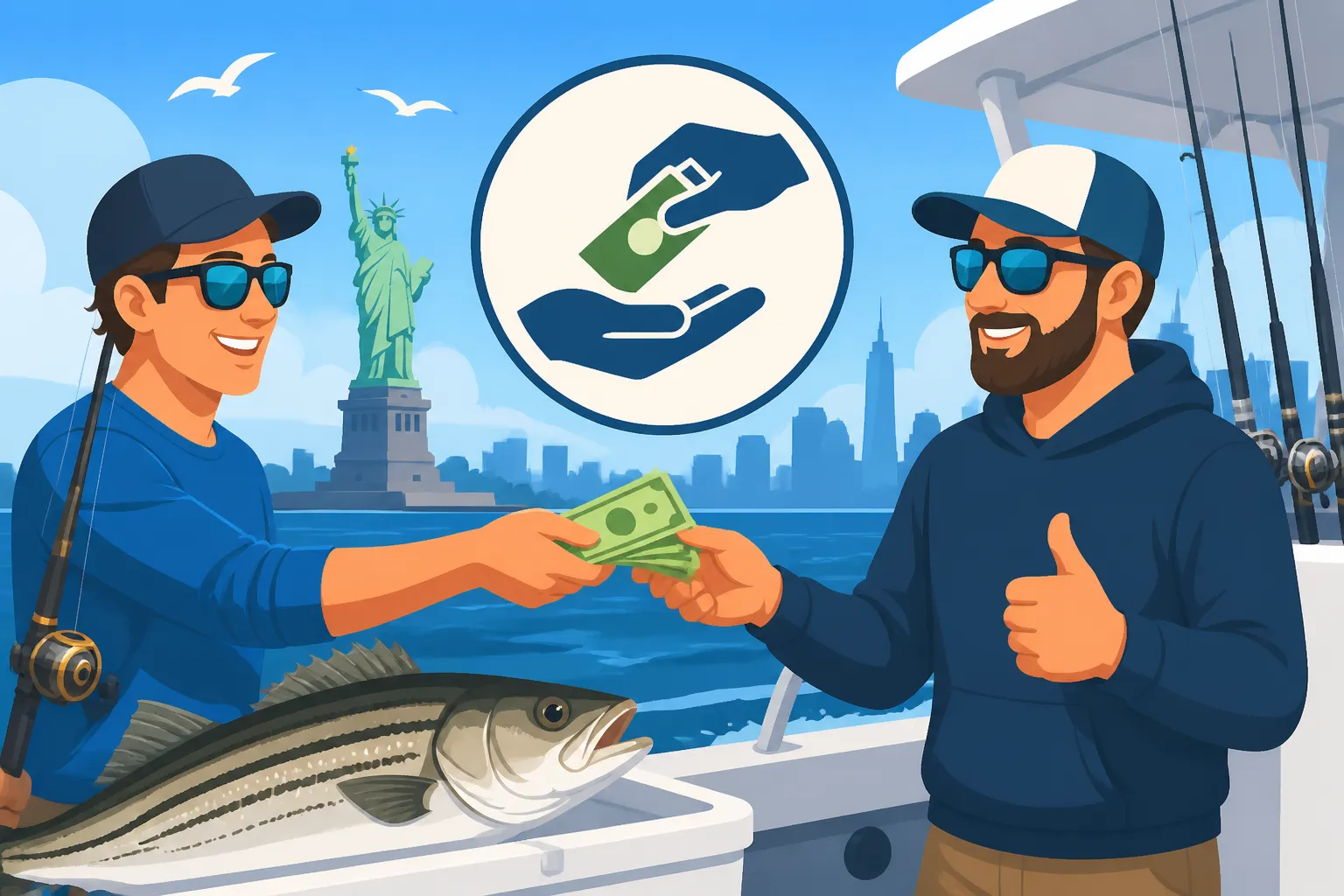
When it comes to tipping fishing charter crews, cash is almost always preferred and is considered the best method. There are several reasons for this. First, cash is immediate. The crew can use it right away, and it avoids any processing fees or delays that might be associated with credit card transactions. Second, it allows for easy splitting between the captain and mate, if there are two crew members. The captain can simply hand the mate their share directly.
Third, and perhaps most importantly, cash is discreet. It's usually handed over privately at the end of the trip, either to the captain as you're departing the boat or to the mate as they finish cleaning your fish. This avoids any public display or potential awkwardness. If you're on a multi-party trip where you don't know the other anglers, simply having your cash ready allows you to discreetly hand it over without drawing attention. Always try to bring enough cash for the tip, calculated beforehand based on the expected charter cost.
Tipping the Captain vs. the Mate
This is a common question, especially for those new to charter fishing. Generally, there are two main approaches, and both are acceptable:
- Tip the Captain, Who Then Tips the Mate: This is often the most straightforward method. At the end of the trip, you can approach the captain directly and hand them the full tip amount for the crew. You might say something simple like, "Captain, we had a fantastic time today, please share this with your mate." The captain will then distribute the appropriate portion to the mate. This is common because the captain is ultimately responsible for the trip and often acts as the primary contact.
- Tip Both Directly: If you prefer, and if you've had direct, significant interaction with both the captain and the mate, you can certainly tip them individually. For example, if the mate spent the entire trip rigging your lines, untangling your kids' fishing messes, and filleting your fish, you might hand a portion of the tip directly to them as they finish cleaning up. Then, you'd give the remaining portion to the captain. If you choose this method, a common split would be to give the mate a larger portion (say, 60-70%) as their income relies heavily on tips, and the captain a slightly smaller portion (30-40%), as they usually own the business and take a larger share of the charter fee.
Which method you choose really comes down to your comfort level and the dynamic of your specific trip. If in doubt, handing the full amount to the captain with a clear instruction to share it is always a safe and appreciated option. Don't feel you need to ask how they split tips; they have their own internal system.
Common Tipping Misconceptions and Clarifications
There are a few myths and misunderstandings that often swirl around the topic of charter tipping. Let's clear these up to ensure you have a truly hassle-free experience on your next New York fishing adventure.
Do Charters Include the Tip?
This is perhaps the biggest misconception out there, and the answer is almost universally no, the tip is not included in the charter price. Unless the charter explicitly states "gratuity included" or "all-inclusive," you should assume that the listed price covers the operating costs of the boat, fuel, tackle, insurance, and the captain's fee, but not the crew's gratuity. Reputable booking platforms, like FishingBooker, generally clarify this, or you can check a charter's FAQ or simply ask the captain when booking your trip.
Some higher-end, luxury charters or corporate packages might occasionally include gratuity, but this will always be clearly advertised. For the vast majority of private and open boat charters across New York, from fishing the St. Lawrence River Fishing Guides to a day trip on the Long Island Sound, the expectation is that the tip is separate and handled by the client directly at the end of the trip. Assuming it's included can lead to an awkward situation and leave a hardworking crew feeling undervalued.
What if the Fishing Was Slow?
We've all been there: you head out with high hopes, the weather is perfect, but the fish just aren't cooperating. It's a fundamental part of fishing, and it’s completely out of the crew's control. A slow day doesn't mean the crew didn't work hard or try their absolute best. They likely scouted multiple spots, changed baits, adjusted techniques, and exhausted every option to put you on fish. Their effort is what you're tipping for, not solely the fish in the cooler.
If the crew remained positive, informative, and worked diligently despite the tough conditions, they absolutely deserve a fair tip, typically still within the 15-20% range. Think of it this way: would you tip a waiter less if the restaurant was busy and your food took longer, even if they were hustling? No, you'd tip based on their service and effort. The same applies here. A captain and mate can't control the fish, but they can control their attitude, effort, and commitment to making your trip enjoyable regardless of the catch. Showing appreciation even on tough days is a mark of a thoughtful angler and will be remembered by the crew.
Is Tipping Mandatory?
Legally, no. Morally and ethically, tipping is essentially mandatory in the charter fishing industry for good or even adequate service. While there isn't a "law" that forces you to tip, failing to do so after receiving good service is considered a significant faux pas and can be a huge insult to the crew. As discussed, it forms a crucial part of their income structure.
Think of it less as a mandatory payment and more as a standard expectation for a service-based experience. If you wouldn't typically skip a tip for a waiter, hairdresser, or taxi driver, you shouldn't skip it for a fishing charter crew, especially considering the intense physical labor, specialized knowledge, and long hours involved. The question really isn't "Is tipping mandatory?" but rather, "What is the appropriate Typical Tip Amount for a New York Fishing Charter Captain for the service I received?" Understanding this unspoken rule is key to navigating the world of New York fishing charters with confidence and respect.
Disclaimer
This article is for general informational purposes only and does not constitute professional advice. Laws, prices and regulations vary by location and change over time. Consult a qualified professional for guidance on your specific situation.