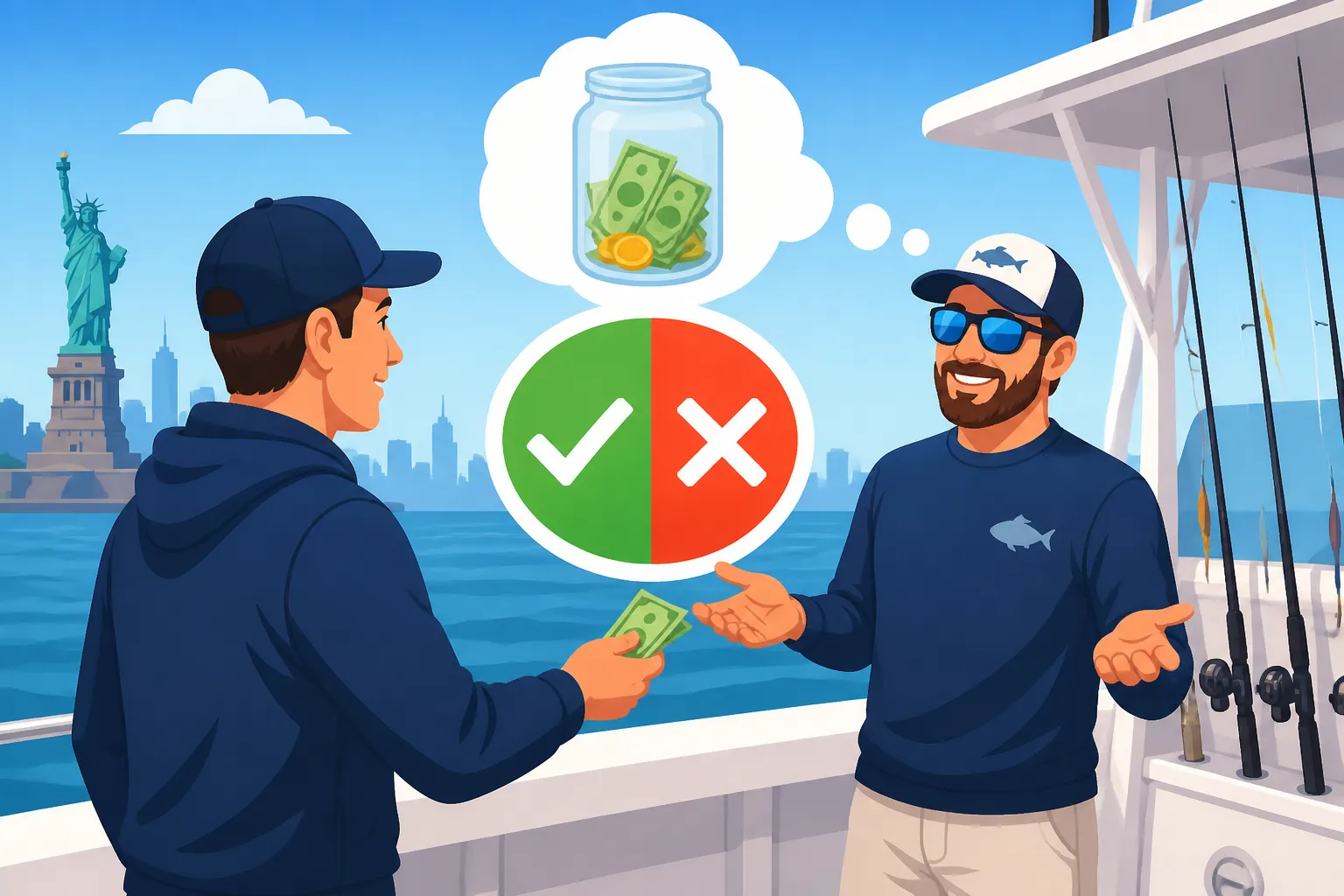
Is Tipping Required on New York Fishing Charters?
The thought of booking a New York fishing charter is incredibly exciting – you're envisioning big catches, beautiful waters, and a truly memorable day out. But then a little anxiety creeps in: what about tipping? It's not like a restaurant where a percentage is often clearly laid out, and the unique nature of a charter can leave many anglers wondering if a tip is truly expected, and if so, how much is appropriate. This guide is here to untangle that uncertainty, offering clear, empathetic advice on tipping etiquette for your next New York fishing adventure so you can focus on the thrill of the chase, not the awkwardness of the departure.
The Unspoken Expectation: Understanding Tipping Culture in Fishing
When you step aboard a fishing charter, you're not just buying a ride on a boat; you're investing in an experience curated by professionals. Unlike many other service industries where tipping might be seen as an extra, a bonus for going above and beyond, in the world of charter fishing, it's often a fundamental part of the crew's livelihood. This distinction is where a lot of the confusion and even discomfort can come from, especially for those new to the charter scene.
Why Tipping Feels Different on a Fishing Charter
Think about it: a fishing charter is a blend of hospitality, specialized skill, physical labor, and local expertise. Your captain isn't just steering the boat; they're navigating complex waters, tracking fish, operating advanced electronics, and ensuring everyone's safety. The deckhands? They're constantly baiting hooks, untangling lines, netting fish, cleaning up messes, and often filleting your catch at the end of a long day. This isn't a passive job; it's active, demanding, and often starts hours before you even arrive at the dock, with prep work like fueling, stocking bait, and readying tackle.
Because the cost of the trip itself covers the boat, fuel, licensing, and the captain's expertise, the crew often relies heavily on gratuities to supplement their wages. It’s a common practice across the service industry, but on a boat, in an environment where things can be unpredictable and challenging, the direct impact of their effort on your enjoyment and success is incredibly tangible. It’s not just about a friendly smile; it’s about their ability to put you on fish, their patience when you snag a line, and their willingness to go the extra mile to make your day special.
The Crew's Perspective: How Tips Impact Their Livelihoods
From the crew's side, tips aren't just "nice to have" – they're often a critical component of their overall income. This is especially true for deckhands, who might earn a modest hourly wage, making their tips essential for a living wage. Captains, while typically earning a higher base, also depend on tips to reflect the immense responsibility they shoulder and the years of experience they bring to the table. For many, charter fishing is a seasonal profession, with long hours packed into the warmer months, making every tip count.
Imagine working a 10 or 12-hour day, enduring various weather conditions, tirelessly helping guests, and then spending another hour cleaning the boat and filleting fish, all in hopes that your hard work translates into a fair gratuity. It's a physically demanding job that requires constant attention to detail and a passion for helping others succeed on the water. Recognizing this perspective can really shift your understanding of why tipping is so ingrained in this industry. A generous tip isn't just a thank you; it's a recognition of their skill, dedication, and the often unseen effort that goes into making your fishing trip a success.
Deciphering the "Required" Question: Is It Mandatory or Customary?
This is where the direct answer might surprise some, but the social reality quickly brings it back into focus. When you ask if tipping is "required," it’s important to understand the nuance between a legal obligation and a strong social custom. While you won't typically find a mandatory "gratuity fee" added to every charter invoice in New York, the expectation of a tip is almost universal within the industry.
The Legal vs. Social Obligation
Legally speaking, no, tipping is generally not a mandatory charge on a New York fishing charter unless it's explicitly stated as an included gratuity in your booking agreement. You won't be arrested or fined for not leaving a tip. However, the social obligation is incredibly strong. In the charter fishing world, much like in restaurants, bars, or hair salons, tipping is a deeply ingrained custom, almost an unspoken contract. It's how the industry operates, and it's how the hardworking crew members are compensated for their efforts beyond their base pay.
To not tip, especially after a good trip where the crew performed well, would be considered a significant social misstep and would likely leave the crew feeling unappreciated and undervalued. It's an awkward situation that most anglers want to avoid. If you're ever in doubt, platforms like FishingBooker often have sections where captains can outline their tipping preferences or common practices, providing a bit more clarity before you even set foot on the boat.
When Tipping Might Be Explicitly Stated (or Implied)
While it's rare for an individual charter to have a mandatory tip, there are specific situations where gratuity might be handled differently. For instance, some larger charter operations, especially those catering to corporate events or very large groups, might include an automatic gratuity in their pricing structure. This is usually communicated clearly upfront, often as a percentage of the total trip cost. Always double-check your booking confirmation or ask when you call to inquire about New York Fishing Charter Costs. This way, there are no surprises on the day of your trip.
More commonly, the expectation is implied. Reputable charter captains will rarely bring up tipping directly, as it can feel pushy or uncomfortable. They trust that anglers who appreciate their hard work and the experience provided will offer a gratuity. If you're unsure, a quick glance at online reviews for the charter company, or even discreetly asking friends who fish regularly, can often confirm the local norms. It's part of the unspoken etiquette of the fishing community, and understanding it beforehand can save you from an awkward moment at the end of a fantastic day on the water. Remember, these professionals are often passionate about fishing and sharing that passion, and a tip acknowledges that dedication.
How Much to Tip: Navigating the Percentage Puzzle
So, if it’s not strictly required but definitely customary, how much should you actually tip? This is the question that weighs heavily on many anglers' minds. The good news is there's a widely accepted range, and once you understand the factors that influence it, it becomes much easier to calculate.
The Standard Percentage Guideline
The general rule of thumb for tipping on a New York fishing charter is between 15% and 20% of the total trip cost. This applies whether you're embarking on a short Half-Day vs Full-Day Fishing Charters excursion or a full-day adventure targeting trophy fish. For instance, if you booked a charter for $800, a 15% tip would be $120, and a 20% tip would be $160. This amount is typically given to the captain, who then distributes it among the crew members, including any deckhands.
It's important to base this percentage on the cost of the charter itself, not just your individual share if you're part of a larger group that booked together. If you're on a "head boat" where you pay per person, you'd typically calculate your 15-20% based on your individual ticket price. This standard helps ensure that the entire crew, from the seasoned captain guiding you to the Best Fishing Spots on Lake Ontario to the diligent deckhand baiting your hook, is fairly compensated for their collective effort and expertise.
Factors That Influence Your Tipping Amount
While 15-20% is the baseline, there are definitely situations where you might feel compelled to tip more, or, in very rare cases, slightly less. It’s all about acknowledging the various elements that make a fishing trip memorable and successful.
- Exceptional Service: Did the crew go above and beyond? Were they incredibly patient with beginners or children on a Family-Friendly Fishing Charters in New York trip? Did they offer extra assistance with casting or tackle? Maybe they shared fascinating local stories or invaluable fishing tips. Perhaps they worked tirelessly through a slow bite, moving to multiple spots to try and find fish. These little extras truly elevate an experience and are certainly worth rewarding with a more generous tip.
- Catch Success (with a caveat): Let's be honest, everyone loves to catch fish! A banner day, especially if you land a personal best or a limit of your target species, often inspires a higher tip. However, it’s crucial to remember that fishing isn't always about catching. A truly professional crew will work hard regardless of whether the fish are biting. If they put in maximum effort, tried different techniques, and kept a positive attitude even when the bite was tough, they still deserve a solid tip for their work ethic, knowledge, and dedication.
- Effort and Attitude: This is paramount. Were the captain and deckhands friendly, approachable, and eager to ensure you had a good time? Did they communicate well, explaining techniques or pointing out wildlife? Did they make the trip feel safe and enjoyable for everyone on board? A great attitude and genuine effort, even on a challenging day, speaks volumes and merits a strong tip.
- Cleaning Your Catch: Many charters offer to clean and fillet your catch at the end of the trip, bagging it up for you to take home. This is a messy, time-consuming job, and it’s a huge convenience for anglers. If the crew provides this service meticulously and efficiently, it’s definitely a factor that should lean you towards the higher end of the tipping scale.
- Cost of the Trip: Always keep the overall cost in mind. A 20% tip on a high-end charter that might cost a significant amount for a full day of offshore fishing is a substantial sum, and you should factor that into your personal budget for the trip. Before you even head out, you can learn more about What Is Included in a New York Fishing Charter Price? to set your expectations.
When to Adjust Your Tip (Up or Down)
Most of the time, you'll find yourself happily tipping within or above the standard 15-20% range. However, it's good to know when adjustments might be appropriate.
- Tipping More: This is for those truly exceptional trips. Maybe the captain found a secret spot, the deckhand patiently taught your child how to cast, or they battled a massive fish for you until it was landed. If the crew’s expertise, enthusiasm, and hard work turned a good day into an unforgettable one, a tip exceeding 20% is a fantastic way to show your deep appreciation. It’s a genuine thank you for a professional experience that went above and beyond.
- Tipping Less (Rarely None): This should be reserved for genuinely poor service. We're talking about situations like unprofessional behavior, clear negligence regarding safety, a lack of effort from the crew, or a complete disinterest in ensuring guests have a good time. It's extremely rare to encounter this with reputable charters listed on platforms like FishingBooker, but if it happens, a reduced tip sends a clear message. However, even in less-than-ideal situations, many anglers still leave a minimal tip to acknowledge the time and basic service provided, reserving a complete lack of tip for truly egregious circumstances. Remember, "no fish" alone is usually not a reason to reduce a tip if the crew worked hard to try and find them.
Practicalities of Tipping: Cash, Card, or Other?
Once you’ve decided on an amount, the next question is often: how do I actually hand over the tip? The method can sometimes be as important as the amount itself, ensuring your gratitude reaches the right people efficiently.
Cash is Still King on the Docks
In the world of charter fishing, cash is overwhelmingly the preferred method for tipping. There are a few key reasons for this. First, it allows the captain to easily and immediately distribute the tip among the crew members who earned it. Deckhands, in particular, often rely on cash tips at the end of each trip. Second, some smaller independent charters might not have the capability to process tips via credit card, or doing so might incur additional processing fees that cut into the crew's earnings.
It’s always a good idea to bring a separate stash of cash specifically for tips. Don't rely on being able to find an ATM right after your trip, as many docks or remote launch points might not have one conveniently located. Having your tip ready in cash, perhaps in a separate envelope, makes the process smooth and hassle-free at the end of your adventure. While Booking a Fishing Charter in New York online might involve credit card payments for the trip itself, consider cash for the gratuity.
Tipping for Group Charters and Private Trips
The way you present your tip can vary slightly depending on whether you're on a private charter or a shared "head boat" trip.
- Private Charters: If you've booked a private trip, whether for yourself, your family, or a small group of friends, the 15-20% guideline applies to the total cost of the charter. You, as the booking party, would typically be responsible for presenting the full tip amount to the captain at the end of the trip. The captain will then handle the distribution to the rest of the crew. It's a straightforward process, often done as you're gathering your belongings and saying your goodbyes on the dock.
- Shared Charters (Head Boats): On a head boat, where multiple individuals or small groups pay a per-person fare, tipping is usually handled on an individual basis. You would calculate your 15-20% based on your individual ticket price and present that amount to a designated crew member (often the captain or a lead deckhand) at the end of the trip. Sometimes there's a visible tip jar, or crew members might circulate to collect gratuities. Make sure you understand who to give the tip to, as it's important that it reaches the right people. This structure allows each angler to tip based on their own assessment of the service they received.
Regardless of the charter type, giving your tip directly to the captain or a lead deckhand is generally the most appropriate way to ensure it's acknowledged and distributed fairly among the entire crew who made your day on the water possible.
Tipping Guidelines at a Glance
To help you remember, here's a quick summary of general tipping guidelines for New York fishing charters:
| Aspect | Recommendation | Notes |
|---|---|---|
| Standard Percentage | 15-20% of the total trip cost | This is the baseline for good service and effort. |
| Exceptional Service | 20% or more (e.g., 25%) | For outstanding effort, personalized attention, patience with beginners, going extra miles to find fish, or making the trip truly unforgettable. |
| Cash | Highly Preferred | Allows for easy distribution among the crew. Bring small bills or denominations for flexibility. |
| Credit Card Tips | Confirm in Advance | Some larger operations may allow this, but it's not universal and may incur fees. Always ask beforehand. |
| Who to Tip | Give to the Captain or a Lead Deckhand | They will ensure it's shared fairly with all crew members, including those working behind the scenes. |
| Included Gratuity | Check Your Booking Details | If gratuity is already included, it will be clearly stated. This is more common for large group bookings or special packages. You might still offer extra for truly exceptional service. |
| Factors for More | Great catch, extraordinary effort, safety focus, fish cleaning, helpfulness | Even if the fish aren't biting, if the crew works hard and keeps spirits high, a good tip is warranted. Learn about What to Bring on a New York Fishing Charter to be prepared, or check if Do I Need My Own Fishing License on a Charter Boat? is included. |
| Factors for Less | Unprofessionalism, lack of effort, safety concerns (very rare) | "No fish" alone is not usually a reason to reduce a tip if the crew tried their best. A truly reduced or no tip should be reserved for genuinely poor service or unsafe conditions. |
Ultimately, tipping on a New York fishing charter is a way to show your appreciation for the hard work, skill, and dedication of the crew who strive to give you a fantastic day on the water. It’s a custom born out of respect for their profession and their ability to turn an ordinary day into a cherished memory. So, as you plan your next fishing adventure, remember to factor in the gratuity, and enjoy the peace of mind that comes with knowing you're honoring this important tradition. Whether you're a seasoned angler or curious about Are New York Fishing Charters Good for Beginners?, understanding these norms will only enhance your experience. Don't forget to also familiarize yourself with New York Fishing Regulations Explained before you head out!
Disclaimer
This article is for general informational purposes only and does not constitute professional advice. Laws, prices and regulations vary by location and change over time. Consult a qualified professional for guidance on your specific situation.