New York’s Biggest Striped Bass Ever Caught
There's nothing quite like the dream of hooking into a truly monumental fish, the kind that tests your tackle, your grit, and your patience. For anglers in New York, that dream often revolves around the majestic striped bass, a powerful and elusive species that can grow to incredible sizes. If you've ever wondered about the biggest striped bass ever landed in our waters, you're not alone! This guide will dive deep into the legendary catches, the science behind these giants, and how you might just land your own trophy striper someday.
The Quest for the Record Striped Bass in New York
The allure of striped bass fishing runs deep in the veins of many New York anglers. From the salty coastlines of Long Island to the expansive waters of the Hudson River, these fish represent a unique challenge and an exhilarating reward. But for some, it's not just about catching a striper; it's about chasing a legend, a fish so large it enters the record books and becomes a benchmark for generations to come.
The Allure of Trophy Stripers
What is it about a trophy striped bass that captivates us so much? It’s more than just the sheer size, though that’s certainly a huge part of it. A truly massive striper, often referred to as a "cow" or "hog," has survived countless seasons, outsmarted predators, and endured varying environmental conditions. Each scale tells a story of survival and resilience. Catching one is a testament to an angler’s skill, persistence, and often, a little bit of luck. These are the fish that demand heavy-duty gear, strategic planning, and sometimes, days or even weeks of dedication. The fight they put up is legendary, a powerful display of raw strength that can leave your arms aching and your heart pounding. Many anglers dedicate their entire fishing careers to the pursuit of such a fish, knowing that it might only happen once in a lifetime, if ever. It’s the ultimate validation of their passion for the sport.
Beyond the personal accomplishment, there's a certain prestige associated with landing a truly enormous striped bass. These fish often appear on the covers of fishing magazines, become the subject of local lore, and cement the angler's place in the local fishing community. The stories of their capture are shared around campfires and bait shops for years, inspiring others to pick up their rods and head out in search of their own giants.
The Historical Significance of Record Catches
Why do these records matter to anglers? State records, like New York State Record Striped Bass Weight, serve as a historical marker, a tangible goal for those who dream of making their mark. They represent the pinnacle of what's possible in a given fishery and reflect the health and productivity of the ecosystem. When a new record is set, it sends ripples of excitement through the fishing community, often sparking new interest in certain techniques, locations, or even conservation efforts. These records remind us that incredible fish still swim in our waters and that there's always something new to strive for. They offer a benchmark against which all other catches are measured, a gold standard that pushes anglers to refine their techniques, explore new waters, and ultimately, become better fishermen.
Each record has its own story, often passed down through generations. These stories aren't just about the fish; they're about the people, the boats, the weather, and the sheer human will involved in pulling off such a feat. They become part of the collective heritage of the sport, inspiring dreams and fueling expeditions across the state. They also highlight the incredible potential of New York's diverse fisheries, from the vast Atlantic Ocean to the tidal reaches of the Hudson.
New York's Legendary State Record Striped Bass
New York's waters have a long and storied history of producing impressive striped bass, but one fish stands above the rest in the official record books. This truly monumental catch continues to inspire anglers dreaming of their own record-breaking moment.
The Unforgettable Catch
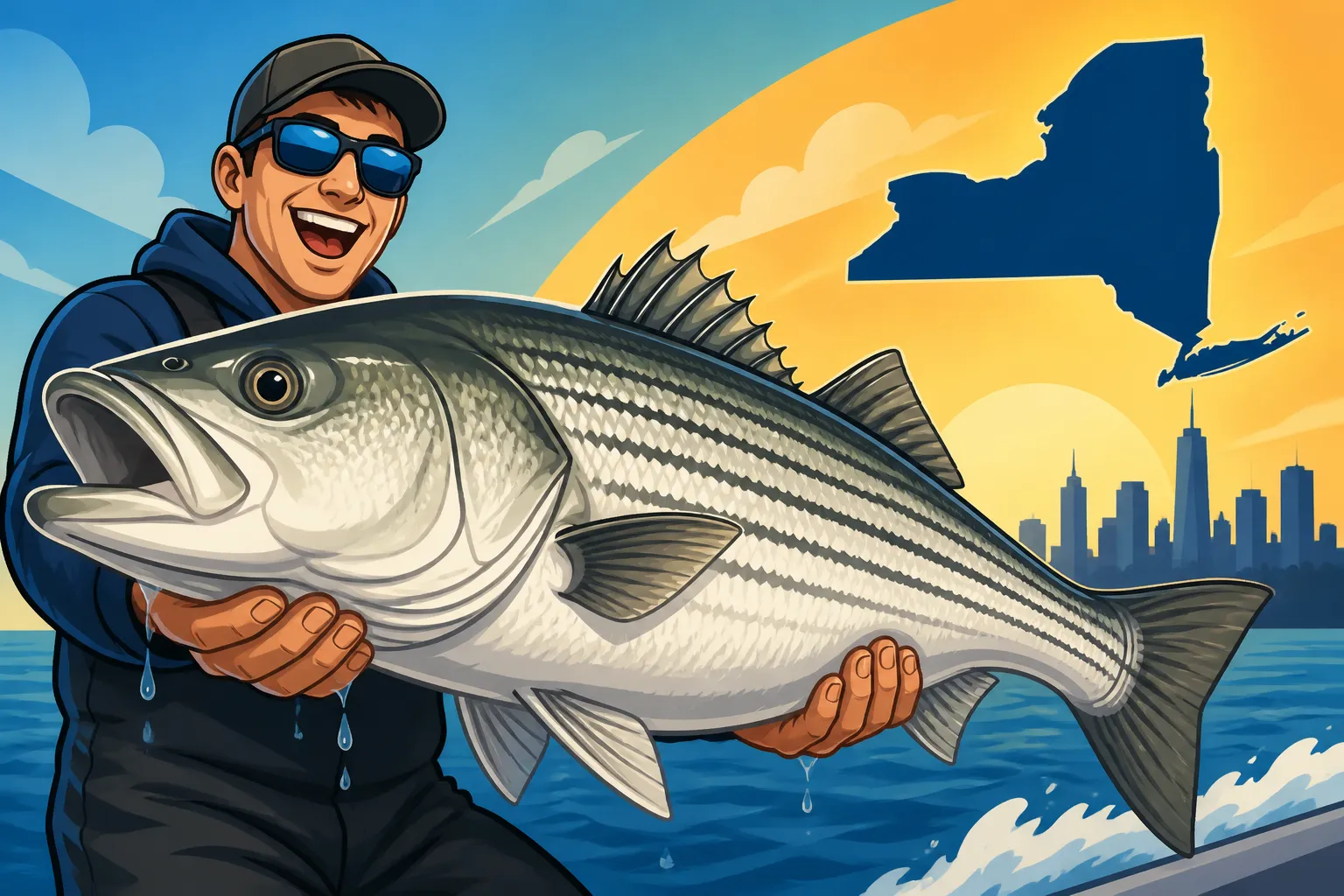
New York's state record striped bass is a testament to the incredible potential of our waters. The official state record for striped bass stands at a colossal 76 pounds, caught by John Puglisi on May 17, 1981, off the coast of Montauk, Long Island. This wasn't just a big fish; it was a true beast that solidified New York's reputation as a premier destination for trophy stripers. Imagine the scene: the salty air, the rolling waves, and then the sudden, violent strike of a fish that could rival a small child in weight. The battle must have been epic, a true test of strength and endurance for both angler and tackle. This legendary catch demonstrates that dedication, persistence, and a bit of luck can indeed lead to monumental results. It's a weight that many anglers can only dream of, and it continues to hold its place as a symbol of what's possible in New York's rich marine environment.
For decades, the waters around Montauk have been known for their incredible productivity, particularly for large migratory striped bass. The combination of strong currents, abundant baitfish, and deep offshore structure creates an ideal feeding ground for these giants. A fish of this size would have been a seasoned veteran, likely having made countless migrations up and down the Atlantic coast. Landing such a fish requires not only the right conditions and location but also the right gear and the sheer determination to fight a creature of such power for what could be a very long time.
Where Giants Lurk
While the specific record was set off Montauk, the truth is that trophy striped bass can be found in several key New York locations, each offering its own unique challenges and opportunities. The Best Fishing Spots on the Hudson River are famous for their spring and fall runs of enormous stripers, as these fish migrate upstream to spawn. Here, anglers often target them with large live baits or big artificials, fishing the deep channels and current seams. The Hudson's nutrient-rich waters provide an abundant food source, allowing bass to grow to impressive sizes.
Then there's the entire coastline of Long Island, particularly the inlets, surf beaches, and rocky points along the South Shore and around Montauk. These areas are prime hunting grounds for migratory stripers that feed heavily on bunker, squid, and other baitfish. Anglers will often brave the elements, casting large plugs, bucktails, or live eels into the churning surf at night, hoping for that one monster bite. Long Island Sound, on the North Shore, also holds its share of large fish, especially around structure like reefs and rocky ledges. Each of these locations offers distinct advantages and requires different approaches, but all share the potential to yield the next state-record contender.
The Anatomy of a Record-Breaking Striper
What makes a striped bass grow to such incredible proportions? It's a fascinating combination of genetics, environment, and sheer longevity. Understanding these factors can help us appreciate the true rarity of a record-breaking fish.
Understanding Striped Bass Growth and Lifespan
Striped bass, or Morone saxatilis, are known for their impressive growth rates and long lifespans, especially in cold water environments where their metabolism can be slower, allowing for sustained growth over many years. A truly massive striper, like the state record, didn't get that way overnight. It's the product of decades of survival. Striped Bass Lifespan Explained reveals that these fish can live for 30 years or more, with females generally living longer and growing significantly larger than males. This extended lifespan allows them to reach their incredible trophy sizes. Their growth is directly tied to the abundance of food sources, particularly oily baitfish like menhaden (bunker) and herring.
During their extensive migrations, as discussed in Striped Bass in New York, they travel from their spawning grounds in rivers like the Hudson to feeding grounds along the coast, packing on weight. Water temperature plays a crucial role too; a healthy balance of warm and cool waters ensures optimal feeding and less stress. A fish that consistently finds ample food, avoids predators (including anglers and other marine life), and navigates its migratory routes successfully year after year is the one that has the potential to become a true giant. It's a game of chance and survival, and only a select few make it to the top tier of size and age.
Ideal Habitats for Monster Stripers
Just like any top predator, striped bass need specific environments to thrive and reach trophy dimensions. They're often found in areas that offer a combination of deep water, strong currents, and abundant baitfish. Structure, whether natural or man-made, is also key. This includes rocky reefs, jetties, wrecks, bridge pilings, and even subtle changes in bottom contour. These structures provide ambush points where stripers can lie in wait for unsuspecting prey.
The mouths of large rivers, estuaries, and major inlets are particularly important, serving as migratory pathways and vital feeding zones. For instance, the confluence of freshwater from the Hudson River with the saltwater of the Atlantic creates a unique ecosystem where baitfish gather, attracting large stripers. Offshore humps and shoals that concentrate bait are also hot spots. These areas often experience strong tidal flows, which bring in fresh food and oxygen while disorienting prey, making them easier targets for a big bass. Healthy grass flats and oyster beds can also serve as nurseries for baitfish, further contributing to a thriving ecosystem capable of supporting monster stripers. It's truly a complex web of environmental factors that allows these fish to become the legends we chase.
Gear and Techniques for Pursuing Trophy Striped Bass
Chasing a record-breaking striped bass isn't a task for the faint of heart, nor for undersized gear. You need to be prepared for a battle, and that starts with the right tackle and a solid strategy.
Essential Tackle for Big Bass
When you're targeting fish that can exceed 50, 60, or even 70 pounds, your everyday freshwater setup simply won't cut it. You need heavy-duty, saltwater-grade equipment built to withstand immense pressure and prolonged fights.
- Rods: Look for stout, powerful rods in the 7 to 9-foot range with a heavy or extra-heavy action. These rods need enough backbone to turn a big fish and absorb the shock of powerful runs, especially when fishing from a boat or battling strong currents. For surf casting, longer rods (10-12 feet) are common to achieve maximum casting distance with large baits and lures.
- Reels: Matching your rod with a robust spinning or conventional reel is crucial. Spinning reels in the 8000 to 14000 series are popular for their casting ability and drag power. Conventional reels, often preferred for their cranking power and line capacity when trolling or bottom fishing, should be sized to hold ample heavy braided line. Ensure the drag system is smooth and capable of delivering significant stopping power without seizing up under pressure.
- Line: Braided line is almost a necessity for trophy striper fishing due to its incredible strength-to-diameter ratio and lack of stretch, which provides superior sensitivity. Many anglers will opt for 50-80 pound test braid, often with a fluorocarbon leader of 60-100 pound test for abrasion resistance and invisibility. The increased line capacity of braid means you can let a big fish run without worrying about getting spooled. You can find a huge array of these heavy-duty setups on platforms like Amazon, making it easy to compare features and read reviews before committing to your next big purchase.
- Lures and Bait: Large, durable lures are key. Big poppers, swimbaits (like those designed to imitate bunker), and metal jigs are effective. Live bait, however, is often the top choice for truly huge stripers. Live eels, bunker, or large herring fished on strong circle hooks (which are required for bait fishing for striped bass in certain areas) are irresistible to a big cow bass. Ensure your hooks are extra strong and sharp.
Mastering the Hunt
Targeting trophy stripers is more about strategy and patience than simply casting repeatedly. It requires understanding their behavior, feeding patterns, and preferred habitats. Many anglers rely on specific knowledge from How to Fish for Striped Bass in New York.
- Timing is Everything: Big stripers are often most active during low light conditions – dawn, dusk, and especially night. They use the cover of darkness to ambush prey, and the absence of boat traffic can make them less wary. Tidal movements are also critical. Fishing around incoming or outgoing tides, especially around new and full moons, can be incredibly productive as currents sweep baitfish past prime ambush points.
- Locate the Bait: Stripers follow their food. If you can find schools of bunker, herring, or other baitfish, you're likely to find stripers. Look for diving birds, slicks on the water, or use your fish finder to mark bait schools. If fishing the surf, look for rips, cuts, and depressions where bait might be concentrated.
- Fish the Structure: Big bass are rarely found in open, featureless water. They orient to structure. This means fishing around rocky points, jetties, bridge abutments, submerged wrecks, and even channel edges. These areas provide current breaks and ambush points. On the Hudson River, targeting deep holes and channel bends during the spawning run is particularly effective.
- Slow and Steady: Sometimes, a slower presentation is more effective for big, wary fish. When using live bait, let it swim naturally with the current. For artificials, vary your retrieve, incorporating pauses and twitches that mimic an injured baitfish. Don't be afraid to leave your bait in a productive area for an extended period, especially during the slower parts of the tide. Many experienced anglers also consult specialized books on advanced striper techniques, readily available on Amazon, to deepen their understanding of these complex hunting strategies.
Conservation and the Future of New York's Trophy Striped Bass
The pursuit of trophy striped bass is exhilarating, but it also comes with a serious responsibility. These magnificent fish are a precious resource, and their continued health and abundance depend on our collective efforts in conservation.
Balancing the Catch
Catching a truly massive striped bass is a dream for many, but the excitement of the moment needs to be balanced with an understanding of conservation. Large, older female striped bass are often the most prolific spawners, contributing significantly to the next generation of fish. Keeping too many of these "breeder" fish can have a detrimental impact on the overall population. This is why strict regulations, such as slot limits and bag limits, are put in place by authorities like the New York Department of Environmental Conservation. These rules are designed to protect the breeding stock while still allowing anglers to enjoy their sport. Familiarizing yourself with the New York Fishing Regulations Explained and understanding New York Fishing Season Dates and Catch Limits is not just a legal requirement but an ethical one.
Many anglers who specifically target trophy fish practice catch-and-release, especially for the largest specimens. This involves carefully handling the fish to minimize stress and injury before releasing it back into the water. This ensures that these valuable breeders can continue their role in the ecosystem. It's a choice that reflects a deep respect for the fish and a commitment to the long-term health of the fishery. Properly handling a large striped bass includes using appropriate landing gear (like a large net or lip gripper), minimizing its time out of water, and reviving it carefully until it swims away strongly.
Protecting Their Legacy
Ensuring that future generations can experience the thrill of chasing trophy striped bass requires ongoing effort and dedication from all stakeholders. Beyond individual angling choices, there are broader conservation efforts at play. Organizations and government agencies work tirelessly to protect vital habitats, such as spawning rivers and coastal estuaries, from pollution and development. These habitats are crucial for the entire life cycle of striped bass, from the smallest fry to the largest adults.
Research plays a significant role as well, helping scientists understand population dynamics, migratory patterns, and the impacts of environmental changes. This data then informs management decisions and regulations. Anglers can contribute by reporting tagged fish, participating in citizen science programs, and advocating for strong conservation policies. Choosing to buy a New York Fishing License Guide or supporting local fishing clubs often means contributing directly to these conservation initiatives through license fees or membership dues. By being responsible stewards of the environment and our fisheries, we can help ensure that the legacy of New York's trophy striped bass continues for many years to come, offering future anglers the same chance to chase their own giants.
| Striper Size Category | Typical Weight Range | Characteristics | Common Locations |
|---|---|---|---|
| Schoolie | 0-10 lbs | Abundant, aggressive, good for beginners | Bays, estuaries, nearshore |
| Keeper | 10-30 lbs | Legal harvest size (varies by slot limit), strong fight | Inshore, near structure |
| Cow/Trophy | 30-50 lbs | Large, powerful, challenging fight, often older females | Ocean fronts, deep channels, major inlets |
| Monster/Record | 50+ lbs | Rare, legendary, exceptional fight, highly elusive | Montauk, Hudson River (specific times), deep offshore structure |
Disclaimer
This article is for general informational purposes only and does not constitute professional advice. Laws, prices and regulations vary by location and change over time. Consult a qualified professional for guidance on your specific situation.