Average Carp Size in New York Lakes
It's incredibly exciting to dive into the world of carp fishing here in New York! Many anglers, especially those new to carp, often wonder what kind of size they can expect when they hook into one of these powerful fish. It's a valid question, because knowing the typical size range helps you prepare your gear and sets realistic expectations for the battle ahead. This guide will help you understand the average carp size you might encounter across New York's diverse lakes, rivers, and ponds, and what makes some of these fish grow to truly impressive proportions.
Understanding Carp in New York Lakes
Carp are often misunderstood, sometimes even unfairly labeled as "trash fish," but seasoned anglers know them for their incredible fighting power and the sheer challenge they present. When we talk about carp in New York, we're usually referring to a few distinct types, and their average size can vary quite a bit depending on the species and the environment they call home. It's not just about one generic "carp" out there!
The Different Faces of New York Carp
When you're out on the water in New York, you'll primarily be dealing with common carp, but you might also encounter their close relatives, the mirror carp, and in some areas, the very different grass carp. Each has its own characteristics, including how big they tend to get.
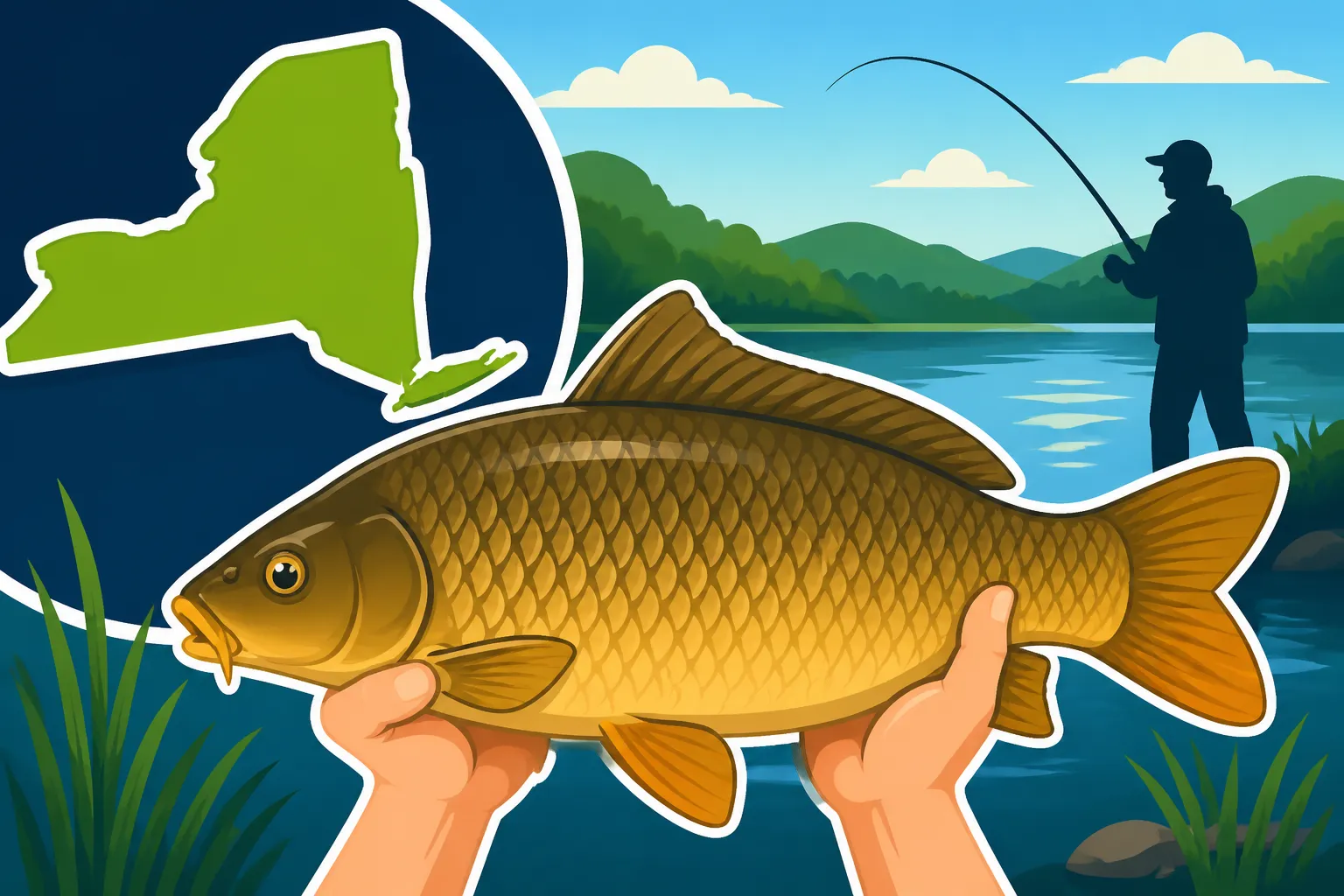
The Common Carp (Cyprinus carpio) is by far the most widespread and what most people picture when they think of carp. They're typically bronze or golden-brown, with large scales covering their entire body, and they have those distinctive barbels around their mouth. These are the workhorses of the carp world, found in almost every major waterway, from the mighty Hudson River to smaller ponds across the state. Their adaptability means they can thrive in various conditions, impacting their growth.
Then there are Mirror Carp, which are actually a variant of the common carp. What makes them unique is their irregular, often sparse, and very large scales, which look almost like mirrors – hence the name! Some mirror carp might have just a few huge scales along their lateral line, while others have patches of scales or are even mostly scaleless. Because they're the same species as common carp, their growth potential is similar, but their unique appearance makes them a prized catch for many dedicated carp anglers. It's always a treat to land a mirror carp, and their distinctive look often makes them feel even more special, regardless of their precise weight.
Finally, we have Grass Carp (Ctenopharyngodon idella). These are a different beast entirely. Unlike common and mirror carp, which primarily forage for bottom-dwelling invertebrates and plant matter, grass carp are, as their name suggests, primarily vegetarians. They were introduced in some areas for aquatic weed control. They have a more torpedo-shaped body and tend to be lighter in coloration. While they can grow to immense sizes, often surpassing common carp in length and weight, they are much harder to target with traditional carp baits. They are typically caught incidentally or with specialized techniques targeting their herbivorous diet. If you hook into one of these, prepare for a serious tug-of-war! Fish Species You Can Catch in New York provides a broader look at the aquatic diversity here.
Why Size Matters to Anglers (and Why It's Not Always Just About Length)
For many anglers, size absolutely matters. It's not just about bragging rights, though a photo with a monster carp certainly feels good! A bigger carp means a more intense fight, longer runs, and a truer test of your fishing skills and equipment. There's a tangible thrill in feeling the raw power of a twenty-pound-plus carp peeling line off your reel. It’s a battle of wills, and that's what draws so many to carp fishing.
However, it’s important to remember that size isn't only about length or even total weight. The condition of the fish, its girth, and its overall health contribute to the fight it puts up. A healthy, stocky carp of 15 pounds can often feel like a 20-pounder if it's in prime fighting shape. Anglers often talk about "football" carp – thick, powerful fish that are built like tanks. These fish, whether they are common carp or even a beautiful mirror carp, provide an unforgettable experience. The challenge of locating, baiting, and ultimately landing these strong fish is what truly defines carp fishing for many, and it’s why folks spend hours perfecting their rigs and bait presentations.
What "Average" Really Means for New York Carp
When someone asks about the "average" carp size, it's a bit like asking for the "average" weather in New York – it depends heavily on where and when you're looking! Carp populations in a small, nutrient-rich farm pond will look very different from those in the vast expanse of Lake Erie or the lower Hudson River. There's no single, definitive average, but we can certainly break down typical expectations.
Typical Size Ranges You Can Expect
Across New York's varied waterways, you'll encounter a wide range of carp sizes. Most recreational anglers, especially those just getting into Carp Fishing in New York, will typically encounter common carp that fall into a fairly common spectrum.
In smaller lakes and ponds, where food sources might be less abundant or populations denser, an "average" carp might be in the 5 to 10-pound range. These are still incredibly fun fish to catch, offering a spirited fight, especially on lighter tackle. They're often easier to locate and can provide consistent action, which is fantastic for a relaxing day by the water.
However, when you move to larger, more productive systems like the Finger Lakes, the St. Lawrence River, or the vast network of the Erie Canal, the average size starts to climb significantly. Here, it's not uncommon for anglers to regularly catch carp in the 12 to 25-pound range. These are solid, strong fish that will test your drag and your patience. These larger systems often provide an ample food supply and plenty of room for carp to grow without excessive pressure. The sheer volume of water also means carp have more diverse habitats to exploit.
For the serious carp enthusiast, the target often shifts to the true "trophy" fish. While not "average," these giants do exist and contribute to the overall potential of New York's waters. Fish exceeding 30 pounds are caught regularly by dedicated anglers, and specimens pushing 40 pounds or even more are certainly present, though they represent the top tier of the population. Landing one of these absolute beasts is a monumental achievement and often requires specialized tactics and a great deal of perseverance.
To give you a clearer picture, here's a general breakdown of typical size potentials for the carp species you're most likely to encounter in New York:
| Carp Type | Common Length Range (Inches) | Common Weight Range (Pounds) | Trophy Potential (Pounds) | Distinctive Feature |
|---|---|---|---|---|
| Common Carp | 18 – 30 | 5 – 25 | 30 – 50+ | Fully scaled, bronze/golden-brown body |
| Mirror Carp | 18 – 30 | 5 – 25 | 30 – 50+ | Large, irregular, often sparse scales |
| Grass Carp | 24 – 40 | 10 – 60+ | 60 – 80+ | Torpedo-shaped, silvery, herbivorous diet |
Please note these are general ranges. Actual sizes can vary widely based on specific water bodies and conditions.
Factors Influencing Carp Size in New York
What makes a carp grow to a truly impressive size, while another in a different lake remains relatively small? It's a complex interplay of several environmental and biological factors. Understanding these can help you pinpoint locations where you might have a better chance at a bigger fish.
Firstly, Food Availability is paramount. Carp are opportunistic feeders, and waters rich in their preferred food sources—such as insect larvae, worms, crustaceans, and various plant matter—will support larger, healthier fish. Lakes and rivers with abundant aquatic vegetation, fertile bottoms, and a healthy invertebrate population are typically hotspots for growing big carp. A carp that doesn't have to work hard to find its next meal can put more energy into growth.
Secondly, Water Quality and Habitat play a huge role. Clean, well-oxygenated water without extreme temperature fluctuations is ideal. Carp can tolerate a wide range of conditions, but optimal conditions allow them to thrive. Expansive, deep waters with diverse structures like submerged logs, weed beds, and drop-offs provide both food and protection, allowing carp to grow old and large without undue stress. A healthy ecosystem is a prerequisite for trophy fish.
Genetic Strain is another factor. While less obvious to the casual angler, some populations of carp simply have the genetic predisposition to grow larger and faster than others. This is often linked to the original stocking or natural colonization history of a particular water body.
Finally, Fishing Pressure can subtly influence average size. In waters that see heavy angling, fish might be caught and removed more frequently, potentially culling the larger individuals or making them warier and harder to catch, leaving a perceived "smaller average." Conversely, in less pressured waters, carp have more opportunity to grow undisturbed over many years. When thinking about where to find larger fish, it often pays to consider those spots that might be a little harder to access or less frequently fished. Many of New York's Best Lakes for Fishing and Best Fishing Spots in New York hold untapped potential.
Chasing Trophy Carp: Beyond the Average
While it's great to understand the average, most dedicated carp anglers are truly after those elusive trophy fish that far exceed the norm. New York has a fantastic reputation for producing some absolute monsters, and if you know where to look and what to do, you might just land the fish of a lifetime.
New York's State Record Carp and Notable Catches
New York is home to some truly massive carp, and the state record is a testament to the incredible growth potential of these fish in our waters. While I can't give you current, precise figures, historically, the state record common carp has been an absolutely colossal fish, weighing well over 50 pounds. This isn't just a fluke; it speaks to the rich, fertile environments found in many of our larger river systems and lakes. These record-breaking fish are often caught in mature, well-established populations where individuals have had decades to grow without significant predation or environmental stress.
Beyond the official state records, countless anglers have personal bests that hover in the 30s and 40s. These are the fish that inspire legends and motivate countless trips. Imagine hooking into a carp that takes twenty minutes to bring to the net, straining your rod and testing your every move. It's a truly humbling and exhilarating experience. These impressive fish show that New York is a premier destination for big carp, right up there with some of the best waters internationally. If you're interested in all the giants that swim here, check out New York's State Record Fish.
Where to Find the Biggest Carp in New York
If your goal is to land one of these true behemoths, you need to think strategically about where you fish. The biggest carp aren't usually found in every small pond; they tend to gravitate towards specific types of environments that offer them everything they need to grow exceptionally large.
Large River Systems: The Hudson River is perhaps one of the most famous carp factories in New York. Its vastness, nutrient-rich bottom, and slow-moving sections create perfect conditions for carp to grow immense. Look for deeper holes, areas with dense aquatic vegetation, and slack water near strong currents. The Mohawk River, connecting to the Hudson, also holds a substantial population of big carp. Rivers provide consistent food flow and complex habitats that allow carp to live long and grow large.
The Great Lakes and Their Tributaries: While often celebrated for salmon and steelhead, the shallow, fertile bays and tributaries of Lake Erie and Lake Ontario also harbor some phenomenal carp. Areas with warmer, shallower water, particularly near agricultural runoff (which often carries carp food sources), can be incredible. Think about the calmer bays or river mouths where water movement isn't too extreme.
Major Inland Lakes: Lakes like Oneida Lake, Chautauqua Lake, and many of the Finger Lakes (Cayuga, Seneca, etc.) are known to produce large carp. These are deep, vast bodies of water with plenty of diverse structure. Focus on the shallower, weedy flats, especially near agricultural areas or inlets where nutrients are abundant. The carp here can be particularly challenging, as they have plenty of room to run! Even lakes that are popular for other species, such as those highlighted in New York's Best Lakes for Fishing, can surprise you with a giant carp.
Erie Canal System: This extensive network of waterways, with its slow currents and often muddy, nutrient-rich bottom, is absolutely prime carp habitat. Look for wider sections, quieter backwaters, and areas around locks where food tends to accumulate. The canal provides a consistent, stable environment for carp to grow without significant disturbances.
When scouting for these spots, consider areas with minimal boat traffic, plenty of natural cover (like fallen trees or dense weed beds), and a good source of natural food. Carp are often found in areas that provide both food and safety, so thinking like a big carp can help you locate their haunts.
Gear and Tactics for Battling Big New York Carp
Catching an average carp is one thing, but consistently landing those larger, above-average specimens requires a bit more thought in terms of gear and tactics. These fish are powerful, and they will exploit any weakness in your setup. Don't worry, though; you don't need to break the bank, but investing in the right equipment will save you a lot of heartache (and lost fish!). You can find a lot of reliable gear from reputable brands through online retailers like Amazon.
Rods, Reels, and Line: Gearing Up for the Fight
When targeting New York's larger carp, your standard panfish or trout rod simply won't cut it. You need tackle designed to handle serious pulling power and long, sustained runs.
For rods, think about something in the medium-heavy to heavy power range, typically 9 to 12 feet long. These longer rods provide better casting distance, crucial for reaching distant feeding spots, and offer excellent leverage for fighting powerful fish, especially when they're trying to dive into snags. A rod with a good parabolic bend will absorb the shocks of a carp's head shakes and surges, preventing hooks from tearing out. You can find many purpose-built carp rods on platforms like Amazon, offering a great balance of power and sensitivity.
Reels should be sturdy spinning reels in the 4000 to 6000 size category, or baitrunner-style reels. Baitrunner reels are fantastic for carp as they allow the fish to take line freely (preventing your rod from being pulled into the water!) until you engage the main drag. A smooth, reliable drag system is non-negotiable – this is your best friend when a big carp decides to make a break for it. Make sure your reel has ample line capacity, as those long runs will eat up a lot of spool.
Speaking of line, forget about thin monofilament. You'll want a strong, abrasion-resistant line. Monofilament in the 15 to 20-pound test range is a popular choice for its stretch, which acts as a shock absorber. However, many experienced carp anglers opt for braided line in the 30 to 50-pound test range, often with a monofilament or fluorocarbon leader. Braid offers incredible strength and sensitivity, allowing you to feel even the most subtle bites. The lack of stretch in braid means a more direct fight, but also less forgiveness, which is why a good leader is key. Always use a strong leader, usually 15-25 lb monofilament or fluorocarbon, to prevent break-offs on sharp shells or rocks. Remember to always consider How Many Fishing Rods Can I Use at Once? based on New York's regulations for your chosen fishing spot.
Baits and Presentation for Larger Specimens
Carp aren't overly picky eaters, but targeting the larger, more cautious fish often requires specific baits and precise presentations. You're trying to appeal to a fish that has likely seen it all.
Boilies are the undisputed king of modern carp fishing baits. These are hard, round baits made from a mix of flours, milk proteins, and flavorings, then boiled to create a durable, attractive offering. They come in a vast array of flavors (sweet, fruity, spicy, fishy) and colors. Boilies are typically presented on a "hair rig," which allows the hook to sit outside the bait, ensuring better hookups. You can find various boilie brands and flavors on Amazon, giving you plenty of options to experiment with.
Sweet Corn remains a classic and highly effective carp bait. It's cheap, easy to use, and carp absolutely love it. You can fish it directly on the hook, but for bigger, warier fish, try presenting a small cluster of corn on a hair rig. Pre-baiting an area with a few cans of corn can draw carp in and get them feeding confidently.
Dough Baits and Pastes are also excellent. These are often made from bread, flour, or cornmeal, mixed with flavorings. They offer a softer presentation and can be very attractive. Some anglers even use specific "carp dough" recipes. The key is often to use a small, compact bait that is easily ingested by the carp.
Pellets are another popular option, especially for pre-baiting. These are compressed fishmeal or protein pellets that break down slowly in the water, releasing attractants. You can fish individual pellets on a hair rig or use them in conjunction with boilies.
For presentation, the Hair Rig is absolutely essential for consistent hookups with larger carp. It allows the carp to mouth the bait without immediately feeling the hook, leading to a more confident take. There are many variations of hair rigs, from simple knotless knot setups to more complex D-rigs and blowback rigs. Learning to tie these will significantly improve your catch rate.
Consider using a fishing alarm and bobbin/hanger system. These tools tell you when a carp is taking line (a "run") or even just moving your bait (a "drop back"). This allows you to fish multiple rods and relax, knowing you'll be alerted when a fish bites, which is incredibly useful, especially during long sessions targeting larger, less frequent bites. Setting up a consistent baiting strategy, often called "chumming" or "pre-baiting," by regularly introducing small amounts of your chosen bait to a spot over several days can significantly increase your chances of attracting and holding a school of larger carp. Don't forget to review New York Fishing Regulations Explained before heading out to ensure you're compliant with local baiting rules.
Good luck out there, and tight lines! You'll find that pursuing carp, especially those impressive specimens, is a rewarding experience that builds skill and appreciation for these powerful freshwater giants.
Disclaimer
This article is for general informational purposes only and does not constitute professional advice. Laws, prices and regulations vary by location and change over time. Consult a qualified professional for guidance on your specific situation.