New York’s State Record Fish
The dream of every angler is to land that truly monumental fish, the one that tells a story for generations and earns a place in the annals of local legend. While many of us are content with a good day on the water and a tasty dinner, there's a unique allure to chasing the kind of fish that makes history. This guide delves into the fascinating world of New York's state record fish, exploring not just the incredible catches themselves, but also the rigorous process behind their verification and the dedication it takes to achieve such a remarkable feat.
The Lure of the Record: Why Anglers Chase History
There’s something truly special about holding a state record. It’s more than just a big fish; it's a testament to skill, perseverance, and often, a little bit of luck. Anglers across New York dedicate countless hours to understanding their target species, honing their techniques, and exploring specific waters, all with the hope of one day tying into that fish of a lifetime. It’s a pursuit that combines scientific understanding with raw passion.
More Than Just a Fish: The Prestige and Recognition
Catching a state record fish is an achievement that transcends the immediate thrill of the fight. It earns an angler a place in the record books, cementing their name alongside other legendary figures in New York's rich fishing history. Imagine the bragging rights, the stories told and retold, and the respect gained from fellow anglers who understand the sheer dedication required. It's a personal legacy forged on the water.
This recognition often extends beyond the immediate fishing community. Local news outlets might pick up the story, casting a spotlight on the angler and the body of water where the record was set. It can inspire others to explore the sport, or to push their own limits in search of their personal best. The prestige comes from knowing you accomplished something truly extraordinary, something that few others ever will. It's not just about the size of the fish, but the magnitude of the accomplishment.
It also serves as a benchmark for the health and potential of New York's fisheries. A new state record signifies that the waters are producing exceptional specimens, often reflecting good management practices and abundant food sources. This recognition helps highlight specific regions or lakes as premier destinations, drawing more attention and appreciation to these vital natural resources.
The Thrill of the Hunt: What Drives the Pursuit
What truly drives an angler to chase a record? It’s often a complex mix of challenge, passion, and the unknown. The sheer difficulty of finding and enticing a truly enormous fish is a powerful motivator. These aren't your average catches; record-breakers are typically old, wise, and incredibly elusive. They've survived countless encounters with predators and anglers, developing an acute sense of caution.
The "thrill of the hunt" involves meticulous preparation. It means spending hours poring over maps, studying New York Fishing Season Dates and Catch Limits, and researching historical catches. It means selecting the perfect gear—heavy-duty rods and reels, specialized lines, and carefully chosen baits or lures that can stand up to the brute force of a giant. Many dedicated record-chasers spend significant time on online retailers like Amazon, sourcing specific tackle or high-precision scales to ensure they're fully equipped for any eventuality.
Beyond the physical preparation, there's a mental game. It requires immense patience, often enduring long hours or even days without a bite, only to be rewarded by a single, heart-stopping strike. The anticipation, the sudden jolt of the rod, and the epic battle that ensues are what many anglers live for. It's a deep connection to nature and a profound test of skill and endurance.
Understanding New York's State Record Program
New York takes its fishing records seriously, and for good reason. Maintaining an official list of state records provides valuable data on the maximum potential of various fish species within its diverse waters. It also ensures fair play and validates the incredible achievements of anglers. The New York State Department of Environmental Conservation (DEC) oversees this program, setting clear guidelines for what constitutes a record and how it must be verified.
How a Record is Verified: The Official Process
So, you've landed what you believe is a state record fish – congratulations! But the journey isn't over yet. The first, and most critical, step is to officially verify your catch. This process is stringent to maintain the integrity of the record books. The fish must be weighed on a certified scale, typically found at a post office, bait and tackle shop, or grocery store, that has been checked for accuracy by the Department of Weights and Measures. This isn't just any scale; it needs to be an official one.
You'll need witnesses present during the weighing. Ideally, these should be disinterested parties who can attest to the process. Immediately after weighing, the fish needs to be measured precisely for length and girth. Clear, well-lit photographs from multiple angles are also essential, showing the entire fish, the measuring device, and the weighing scale if possible. The DEC also requires that you contact them as soon as possible after the catch, usually within 24-48 hours, to report a potential record. They will guide you through the next steps, which may involve a biological examination of the fish. Always be familiar with the New York Fishing Regulations Explained to ensure your catch was legal.
The condition of the fish is also important. While many anglers strive for catch-and-release, a fish intended for a state record must often be kept for verification. However, some categories, especially for certain species or in specific waters, might allow for catch-and-release records if proper photographic and witness documentation of length and girth is provided, followed by immediate release. It's always best to check the most current DEC guidelines for the specific species you're targeting.
The Importance of Accurate Documentation
Without proper documentation, even the biggest fish is just another fish story. The DEC relies heavily on the accuracy and completeness of the information provided by the angler. This means having high-quality, unambiguous photographs that clearly show the fish, its dimensions, and potentially the scale reading. A clear shot of the fish next to a measuring board is far more valuable than a blurry photo of it held at arm's length, which can be deceptive.
Imagine the frustration of landing a potential record, only to have it disqualified because you didn't have the right equipment or didn't follow the proper steps. This is why many serious anglers invest in a quality measuring tape or a specialized fish measuring board, easily found on Amazon. Having a small, portable, certified scale is also a great idea for those moments when a post office might be far away. Two independent witnesses are usually required, so having fishing buddies who understand the process is invaluable.
The timely submission of information is another crucial aspect. Delaying the process can lead to questions about the fish's weight or condition. The DEC wants to ensure that the fish presented for verification is indeed the one caught and that its reported weight and measurements haven't been compromised. So, capture everything you can, as clearly as you can, and report it quickly.
Freshwater Giants: New York's Inland Record Holders
New York's freshwater lakes and rivers are home to some truly monstrous fish, and the state record books bear witness to their impressive sizes. From the toothy predators of the Great Lakes to the deep-water dwellers of the Finger Lakes, there's a diverse array of species that have pushed the boundaries of what anglers thought possible. These records represent not just individual triumphs, but also the health and vitality of New York's inland fisheries.
Mighty Muskellunge and Northern Pike
When we talk about freshwater giants in New York, the Muskellunge often comes to mind first. These apex predators are the stuff of legend, and the state record for Muskellunge is truly monumental. Can you imagine the fight a fish weighing nearly 70 pounds would put up? The current New York State Muskellunge Record: 69 Pounds, 15 Ounces is a testament to the incredible potential of these waters, caught way back in 1957 by Arthur Lawton in the St. Lawrence River. This historic catch has stood the test of time, inspiring generations of anglers to pursue their own "fish of a thousand casts." For more on this legendary catch, check out New York's Biggest Muskellunge Ever Caught.
Northern Pike, while generally smaller than muskies, also grow to impressive sizes in New York waters. The state record Northern Pike, a hefty fish weighing over 46 pounds, was caught in the Great Sacandaga Lake. These fish are aggressive feeders, often found lurking in weed beds or along drop-offs. Catching a trophy pike requires strong tackle and a certain amount of daring, as their razor-sharp teeth can make short work of improper rigging. Both muskies and pike represent the pinnacle of predatory fish in New York's freshwater systems, challenging anglers with their size, strength, and cunning.
The pursuit of these giant fish often involves specialized techniques. For muskies, anglers might spend hours casting massive bucktails or jerkin' baits, or even troll large plugs behind their boats in places like Chautauqua Lake or the St. Lawrence River. Pike can be caught on a variety of lures, from spoons to large spinnerbaits, often requiring a steel leader to prevent bite-offs. Landing one of these record-class fish is a true battle of wills and requires an angler to be fully prepared for an explosive fight.
Lake and River Trout Records
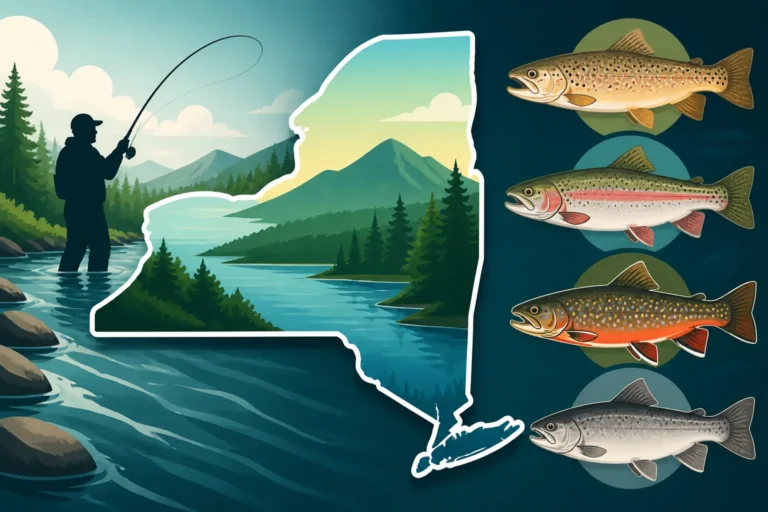
New York is renowned for its diverse trout fisheries, and the state record book reflects the immense size these cold-water beauties can attain. Lake Trout, often found in the deep, cold waters of the Finger Lakes and the Great Lakes, hold some truly impressive records. The state record Lake Trout, caught from Lake Placid, weighed in at a massive 31 pounds. Imagine reeling in a fish that big from the depths! These lakers are formidable fighters, often requiring heavy trolling gear and downriggers to reach them in their preferred cold-water haunts. For more on these incredible fish, read about New York State Record Lake Trout Weight.
Brown Trout, known for their powerful runs and elusive nature, also boast substantial state records. The state record Brown Trout, a 33-pound, 2-ounce behemoth, was pulled from the famous Lake Ontario. Anglers target big browns in the Great Lakes tributaries during their spawning runs, or by trolling the open waters of the lakes. Rainbow Trout (including Steelhead, which are migratory rainbows) also hold impressive records, often caught in the productive tributaries of Lake Ontario and Lake Erie. These fish are acrobatic fighters, testing an angler's skill and equipment to the limit. Learn more about these species in A Guide to New York's Trout Species.
Beyond the major trout species, New York also holds records for Brook Trout, the state's official fish, though these typically don't reach the same immense sizes as their lake-dwelling cousins. Nonetheless, catching a record brook trout, especially in a pristine Adirondack pond, is a cherished achievement. The strategies for targeting record-class trout vary widely, from delicate fly-fishing in small streams to deep-water trolling with sophisticated sonar on the larger lakes. Each method demands precision and a deep understanding of trout behavior.
Bass and Walleye Wonders
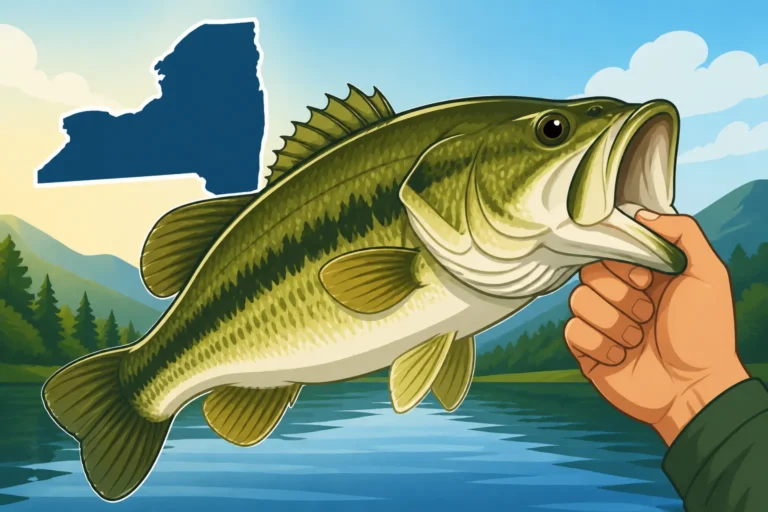
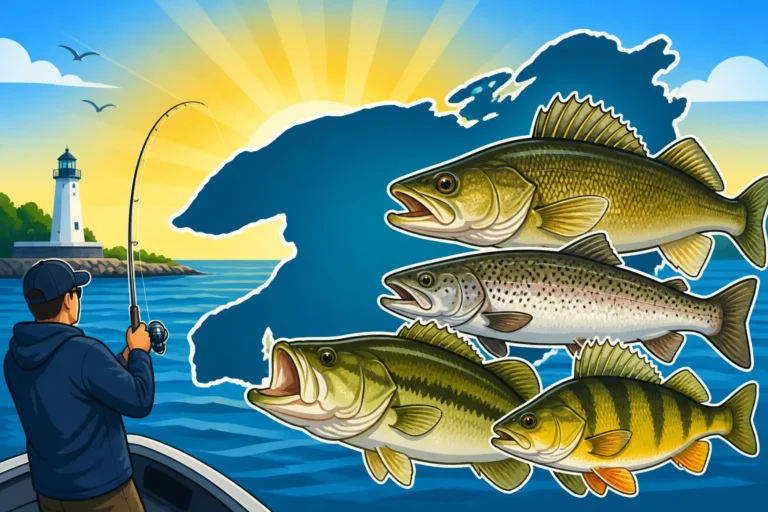
Bass fishing in New York offers incredible opportunities, and both Largemouth and Smallmouth Bass have left their mark on the state record books. The current state record Largemouth Bass, weighing in at 11 pounds, 4 ounces, was caught from Buckhorn Lake. These bucketmouths are often found in weedy, warmer waters, and catching a record-sized one typically involves targeting dense cover with jigs, worms, or topwater lures. The excitement of a huge largemouth exploding on a surface lure is an experience every angler remembers.
Smallmouth Bass, famous for their bulldog fighting style and preference for rocky, clear water, also boast impressive records. The state record Smallmouth Bass, weighing 8 pounds, 4 ounces, was caught from the mighty St. Lawrence River. This river, along with Lake Erie and Lake Ontario, is renowned for its world-class smallmouth fishing, often yielding fish of truly epic proportions. Anglers pursue them with tube jigs, drop shots, and crankbaits, often targeting rocky shoals and current seams. Both bass species are incredibly popular targets for recreational anglers, and a record catch is the pinnacle of a lifetime of fishing. To dive deeper into these fantastic gamefish, explore New York's Bass Species Explained.
Walleye are another highly sought-after species, known for their delicious fillets and nocturnal feeding habits. New York's state record Walleye, a monster weighing 18 pounds, 10 ounces, was caught from Kinzua Reservoir. Lakes Erie and Oneida are particularly famous for their walleye populations, regularly producing large fish. Catching a record walleye often involves night fishing with stickbaits, jigging techniques, or trolling with crankbaits in deeper water. The thrill of a soft bite turning into a powerful fight in the dark is something walleye anglers cherish. These species, along with other popular freshwater fish you can learn about in New York's Most Popular Freshwater Fish, continually challenge anglers to push their limits.
| Species | Record Weight (Approx.) | Typical Record Location |
|---|---|---|
| Muskellunge | ~69 lbs 15 oz | St. Lawrence River |
| Lake Trout | ~31 lbs | Lake Placid |
| Brown Trout | ~33 lbs 2 oz | Lake Ontario |
| Largemouth Bass | ~11 lbs 4 oz | Buckhorn Lake |
| Smallmouth Bass | ~8 lbs 4 oz | St. Lawrence River |
| Walleye | ~18 lbs 10 oz | Kinzua Reservoir |
Saltwater Sensations: New York's Coastal Brutes
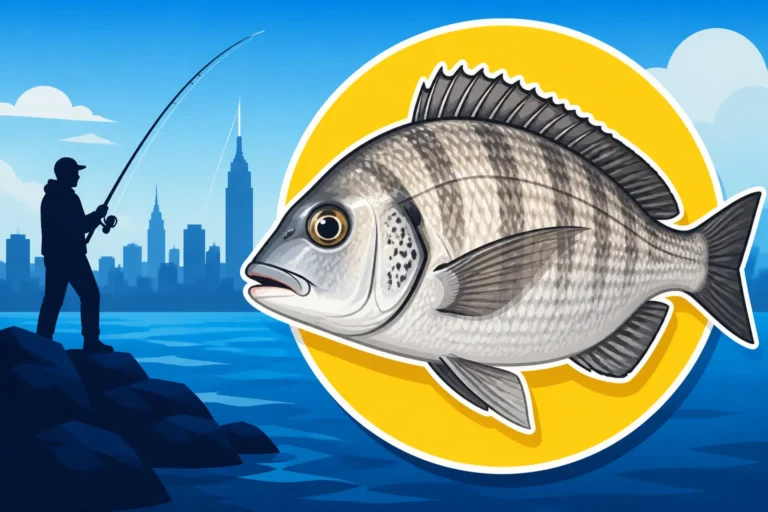
New York's extensive coastline, from the shores of Long Island to the teeming waters of the Hudson River estuary, offers incredible opportunities for saltwater anglers. Here, powerful migratory species grow to immense sizes, and the state record books reflect the adrenaline-pumping battles fought in these marine environments. Catching a state record saltwater fish is a truly monumental achievement, often requiring specialized gear and a deep understanding of tides, currents, and fish migration patterns.
Striped Bass and Bluefish Records
The Striped Bass is arguably the most iconic saltwater fish in New York, revered for its hard fighting and delicious meat. The state record Striped Bass, a colossal fish weighing over 76 pounds, was caught off Montauk. Imagine the sheer power and endurance needed to land a fish of that magnitude! These migratory giants move through New York's waters, providing exceptional fishing opportunities in places like the Hudson River and Long Island Sound. Targeting record stripers often involves using large live baits like eels or bunker, or casting big swimming plugs and poppers, especially during prime migratory runs. You can learn more about this incredible species by reading Striped Bass in New York.
Bluefish, known for their aggressive nature and razor-sharp teeth, are another popular record-holding species. The state record Bluefish, a hefty 25 pounds, was caught in the Atlantic Ocean near Block Island. These "choppers" attack lures and bait with incredible ferocity, often putting up a wild fight filled with head shakes and powerful runs. Anglers targeting big bluefish use strong leaders and durable lures, as these fish can quickly shred lighter tackle. Whether you're chasing them on the surf or from a boat in Long Island Sound, bluefish provide an exciting challenge. For more insights into these formidable fighters, check out Bluefish in Long Island Sound.
Chasing record-class stripers or bluefish requires patience and a keen understanding of their movements. Tides, moon phases, and baitfish availability all play a critical role in locating these giants. Many dedicated anglers spend hours scouting promising locations, often fishing at night when these predators are most active. The sheer exhilaration of hooking into a truly massive striped bass or a rampaging bluefish is an unforgettable experience.
Fluke, Tautog, and Other Marine Records
Beyond the legendary stripers and bluefish, New York's saltwater environment offers records for a host of other exciting species. Fluke, also known as Summer Flounder, are a popular bottom-dwelling target, and the state record Fluke, weighing over 22 pounds, was caught off Montauk. Catching a record fluke often involves drifting with bucktails and bait (like spearing or squid) over sandy or muddy bottoms, patiently waiting for that tell-tale thud on the line. The skill lies in detecting the subtle bite and setting the hook correctly. For specific details on these flatfish, refer to Fluke in New York Waters.
Tautog, or blackfish, are another challenging species known for their incredible pulling power and preference for rocky structures. The state record Tautog, a solid 22 pounds, 11 ounces, was caught from the waters of Long Island Sound. These fish are notorious for their strong jaws and ability to "lock up" in structure, making it a true test of strength and finesse to pull them out. Anglers typically target tautog with green crabs or fiddler crabs, fishing directly over wrecks, reefs, or rocky bottoms. It's a precise and demanding style of fishing.
Other marine species, such as Porgy (Scup) and Weakfish, also have impressive state records, often caught in similar nearshore environments. Catching any state record saltwater fish often means venturing into challenging conditions, understanding the nuances of the marine environment, and being prepared with robust tackle that can withstand the power of these ocean-dwelling giants.
The "Smaller" Records: Panfish, Catfish, and More
While the spotlight often falls on the giant gamefish, New York's state record book also celebrates the impressive catches of species that are sometimes overlooked. These "smaller" records showcase that monumental achievements aren't exclusive to the biggest predators. Dedicated anglers pursue these species with just as much passion and precision, demonstrating that a true trophy can come in many forms and sizes.
Panfish Perfection: Crappie, Perch, and Sunfish
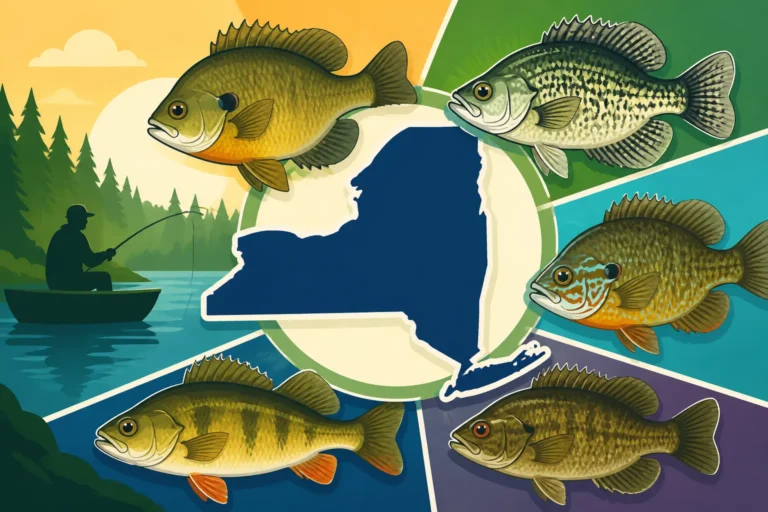
Don't let the term "panfish" fool you – a state record crappie, perch, or sunfish is a truly remarkable catch. These fish may not have the brute strength of a muskie, but finding one that reaches state record proportions requires incredible skill and persistence. For instance, the state record Black Crappie, weighing 4 pounds, 1 ounce, was caught from Lake Casse. Imagine the size of a crappie that weighs more than a bag of sugar! These records demonstrate the rich productivity of New York's smaller water bodies and the dedication of anglers who specialize in them.
Yellow Perch, a favorite among ice anglers and summer panfish enthusiasts alike, also have impressive records. The state record Yellow Perch, a hefty 3 pounds, 8 ounces, was caught from the Keuka Lake outlet. Sunfish species, including Bluegill and Pumpkinseed, also hold respectable records, often reaching sizes that would make any angler proud. Chasing these panfish records means understanding their schooling patterns, preferred habitats (often around submerged timber or weed beds), and being incredibly precise with presentation. It's a game of finesse and keen observation. To delve deeper into these delightful species, check out New York's Panfish Species Explained.
The beauty of pursuing panfish records is that it often makes the sport accessible to a wider range of anglers. While it still requires skill, the gear is generally lighter, and the techniques can be simpler. Yet, the challenge of finding that truly exceptional individual among thousands remains. It's a testament to the idea that any fish, given the right conditions and time, can grow to a truly impressive size.
Catfish and Carp: Overlooked Giants
Often underestimated, Channel Catfish and Common Carp are powerful fish that grow to truly staggering sizes in New York's lakes and rivers, and they have the state records to prove it. The state record Channel Catfish, a massive 35-pound, 3-ounce specimen, was caught from the St. Lawrence River. These whiskered bottom dwellers are incredible fighters, often employing deep, powerful runs that can test the drag on any reel. Targeting record catfish typically involves using smelly baits like cut bait, chicken livers, or nightcrawlers fished on the bottom in deep holes or along river channels.
Common Carp, introduced to New York waters long ago, are renowned for their immense size and extraordinary fighting ability. The state record Common Carp, an astounding 50-pound catch, came from Silver Lake. These "golden ghosts" are a favorite target for specialized carp anglers who use tactics similar to those employed in European carp fishing, including boilies, hair rigs, and patient waiting. Carp fishing is a game of strategy and precision, where stealth and presentation are key to enticing these wary giants. Landing a 50-pound carp is an epic battle that can last for a significant amount of time, bending rods and stripping line.
The pursuit of record-sized catfish and carp challenges preconceived notions about what makes a "trophy" fish. It requires a different set of skills and a deep appreciation for the unique characteristics of these powerful, often misunderstood species. Their records highlight the incredible diversity of fish found in New York waters and the varied passions of the anglers who pursue them.
How to Catch a Potential Record Fish
Dreaming of your name in the record books? While luck always plays a role, consistently catching trophy-sized fish, and potentially a record-breaker, is largely about preparation, knowledge, and sheer determination. It's about stacking the odds in your favor through meticulous research and the application of proven strategies.
Research and Preparation: The Angler's Edge
The journey to a potential record-breaking catch begins long before you even cast a line. Start by immersing yourself in knowledge. Study the existing state records for the species you're targeting: what were the weights, where were they caught, and what time of year? This historical data can provide invaluable clues. Understanding the specific habits of your target fish – their preferred forage, habitat, and seasonal movements – is crucial. Look into Best Time of Year to Fish in New York and Best Fishing Spots in New York for general guidance, then narrow it down for your specific quarry.
Next, focus on your gear. For record-class fish, you'll need tackle that is up to the challenge. This means heavy-duty rods with enough backbone to handle powerful runs, reels with smooth, reliable drags, and strong, fresh line. Don't skimp on terminal tackle; hooks should be razor-sharp and strong enough not to bend or break. Leaders should be abrasion-resistant. Many serious anglers buy their specialty gear, from reinforced lines to high-quality crimps, from trusted online retailers like Amazon to ensure they have access to the best options.
Consider every detail. Do you have a certified scale? A sturdy measuring board? A quality camera? These are all essential for documenting a potential record. Even things like a well-maintained boat, reliable electronics, and comfortable, weather-appropriate clothing can contribute to your success by allowing you to stay on the water longer and fish more effectively. Preparation isn't just about having the right lure; it's about optimizing every aspect of your fishing experience.
Patience, Persistence, and Proper Technique
Once you've done your research and prepared your gear, it's time to hit the water – and that's where patience and persistence truly come into play. Catching a record fish is rarely a quick affair. It often requires countless hours on the water, enduring slow periods, challenging weather, and the inevitable frustrations that come with fishing. The biggest fish are often the wisest and most elusive; they didn't get that big by being easy to catch.
Mastering proper technique for your chosen species and fishing method is paramount. Whether you're trolling for lake trout in the Finger Lakes, casting for muskies on the St. Lawrence, or soaking bait for striped bass in the Hudson, executing your presentation flawlessly makes a difference. This means understanding lure action, bait presentation, reading water, and feeling those subtle bites. It's about developing a sixth sense for what's happening beneath the surface.
And when that moment finally arrives – that powerful strike that signals a potential record – your training and composure will be tested. Fighting a truly large fish requires a combination of skill, strength, and finesse. Knowing when to apply pressure, when to let the fish run, and how to manage your boat or position yourself on shore are all critical. It’s a dance between angler and fish, where every decision can mean the difference between landing a lifetime catch and a heartbreaking loss.
Protecting the Future: Conservation and Responsible Angling
While the pursuit of state records is thrilling, it's vital to remember our responsibility as anglers to protect New York's precious fisheries for future generations. Our actions on the water have a direct impact on the health and abundance of fish populations. Responsible angling and conservation practices ensure that others can also experience the joy of fishing, and perhaps even chase their own record someday.
Catch and Release for Future Generations
The concept of "catch and release" has become a cornerstone of modern angling, particularly when targeting large, mature fish. These bigger fish are often the prime breeders, contributing significantly to the genetic strength and overall population health of a species. Releasing a large fish, even a potential record-breaker, ensures it can continue to spawn and pass on its strong genes, thereby improving the chances for future trophy fish.
While a state record often necessitates keeping a fish for official weighing and measurement, many anglers today prioritize the health of the fishery. If you've photographed, measured, and weighed a potential record quickly and believe the fish has a good chance of survival, releasing it back into the water is a powerful act of conservation. The DEC even has specific guidelines and sometimes separate categories for catch-and-release records that prioritize the fish's survival. Always be prepared with proper Catch-and-Release Handling Rules to minimize stress and maximize the fish's chances.
Using appropriate gear, handling fish carefully with wet hands, and limiting their time out of the water are all crucial elements of successful catch and release. This mindset ensures that the pursuit of personal glory doesn't come at the expense of the resource that makes it all possible. It's about celebrating the catch, but also celebrating the future of fishing.
Adhering to Regulations and Ethical Practices
Beyond catch and release, responsible angling encompasses a broader commitment to ethical behavior and strict adherence to all regulations. Every angler in New York has a responsibility to know and follow the rules set forth by the DEC. This includes understanding minimum and maximum size limits, daily creel limits, season dates, and any special regulations that apply to specific bodies of water. These rules are in place for a reason – to manage fish populations sustainably and prevent overfishing.
Ethical practices also extend to how we treat the environment. This means never littering, properly disposing of fishing line and other waste, and being respectful of other anglers and property owners. It also means understanding and preventing the spread of invasive species by cleaning boats and gear thoroughly between waterways. We are stewards of these natural resources, and our actions directly reflect on the angling community as a whole.
Ultimately, whether you're chasing a state record or simply enjoying a quiet day by the water, being a responsible and ethical angler ensures that New York's incredible fishing opportunities will remain vibrant for years to come. It’s a balance between enjoying the sport and contributing to its long-term health, a balance that every angler must strive to maintain.
Disclaimer
This article is for general informational purposes only and does not constitute professional advice. Laws, prices and regulations vary by location and change over time. Consult a qualified professional for guidance on your specific situation.