Brown Trout in New York
For many anglers in New York, the thought of landing a truly magnificent trout conjures images of powerful fish with stunning coloration, often caught in challenging waters. While brook trout hold a special place in our hearts as the state fish, and rainbow trout provide exciting acrobatic fights, it's the brown trout that often symbolizes the elusive, cunning quarry for many. They can be incredibly frustrating to target, especially when they grow to impressive sizes, demanding a deep understanding of their habits and habitat. This guide is dedicated to unraveling the mysteries of brown trout in New York, helping you understand where they come from, how to identify them, and most importantly, how to improve your chances of catching these wily beauties.
The Enduring Legacy of Brown Trout in New York: From European Shores to Empire State Waters
It might surprise some, but the brown trout isn't a native New Yorker. Unlike the brook trout, which has called these waters home for millennia, the brown trout is an immigrant, albeit a very successful one. Its journey from European rivers to become one of the most sought-after game fish in our state is a fascinating story of intent and adaptation. Understanding this history helps us appreciate their current distribution and habits in New York's diverse aquatic environments.
European Roots and Early Introductions
Brown trout, or Salmo trutta, originated in the streams and rivers of Europe and parts of Asia. They are incredibly adaptable fish, capable of thriving in both freshwater and saltwater (where they are often called "sea trout"). Their hardiness and sporting qualities were recognized centuries ago, and as angling became a popular pastime, enthusiasts began looking for ways to introduce them to new waters around the globe.
The first significant introduction of brown trout into North America occurred in the late 19th century, specifically in Michigan, from eggs imported from Germany. New York quickly followed suit. The allure was simple: brown trout could withstand warmer water temperatures and more varied stream conditions than native brook trout, which are far more sensitive to environmental changes. This made them excellent candidates for stocking in rivers and lakes that might have become marginal for brook trout due to logging, agriculture, or other human impacts. They offered a new, robust sportfish for an expanding population of anglers.
Stocking Efforts and Population Establishment
Once introduced, brown trout quickly found niches in New York's vast network of rivers, streams, and lakes. State agencies, recognizing their value as a sportfish, undertook extensive stocking programs throughout the late 19th and 20th centuries. These efforts helped establish self-sustaining populations in many waterways, particularly in the Catskills, Adirondacks, and the Finger Lakes regions. Today, while stocking continues in certain areas, many New York waters boast wild, naturally reproducing brown trout populations, a testament to their adaptability and success.
These stocking efforts weren't just about adding more fish; they were strategic. Brown trout often thrived in waters where native brook trout struggled, providing angling opportunities in areas that might otherwise have seen a decline in trout fishing. Over time, these introduced fish became integral to New York's freshwater ecosystems and a staple for local anglers, solidifying their place in our angling tradition.
What Makes a Brown Trout? Identifying These Beautiful Fish
One of the most satisfying parts of a day on the water is successfully identifying your catch. While all trout species share some common traits, brown trout have distinct characteristics that, once you know them, make them easy to pick out from their cousins. Being able to correctly identify a brown trout isn't just for bragging rights; it's crucial for adhering to specific New York Freshwater Fishing Rules regarding catch limits and size restrictions that can vary by species.
Distinctive Markings and Coloration
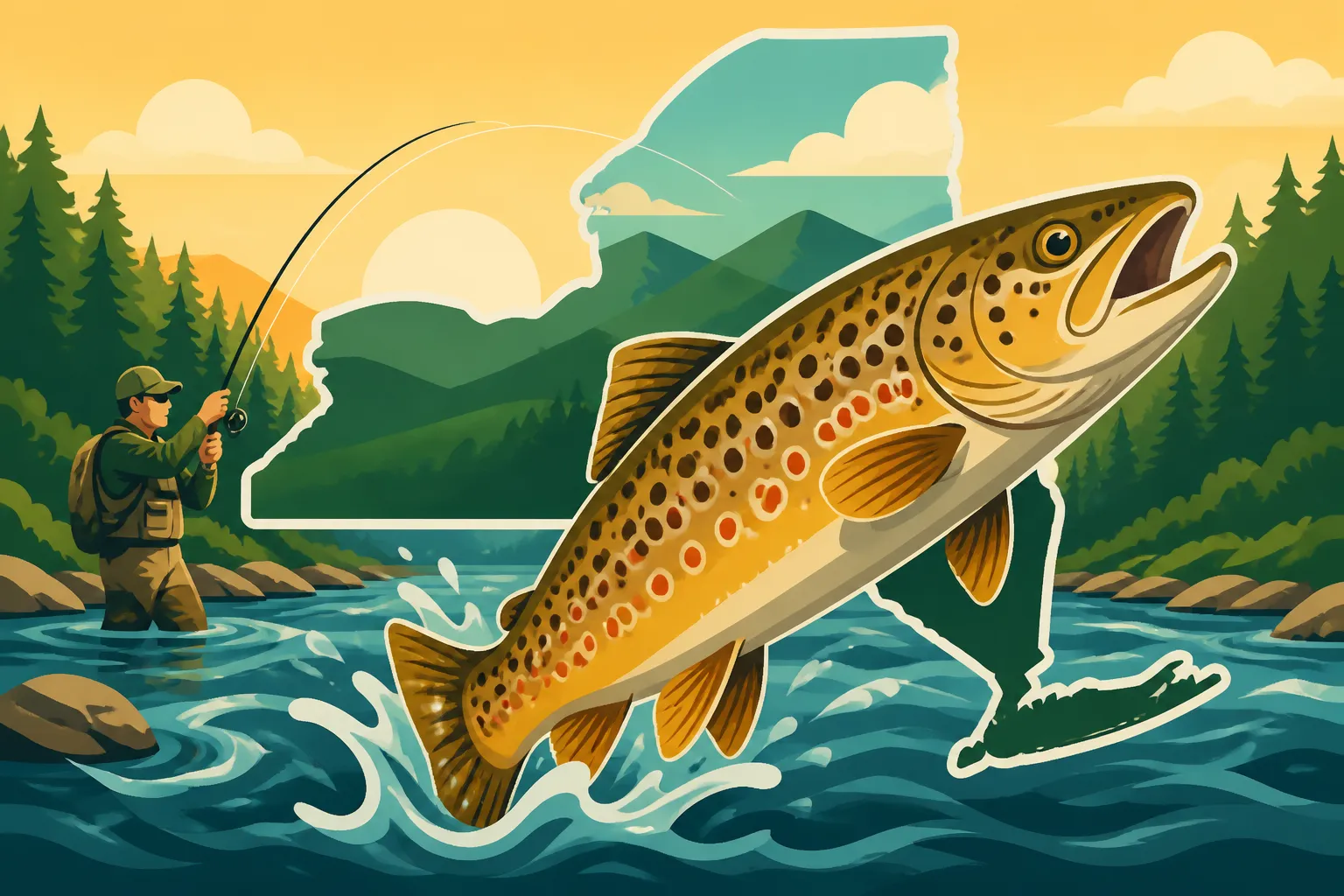
Brown trout are celebrated for their stunning and often highly variable coloration, which can range dramatically based on their habitat, diet, and even their mood. Generally, they feature a brownish to golden-brown body, fading to a lighter, sometimes yellowish, belly. Their most defining characteristic is the presence of dark spots, often ringed with a lighter halo, scattered across their sides, back, and dorsal fins. These spots can also be reddish-orange, especially on fish found in clear, cold streams.
Unlike rainbow trout, which often have a prominent pink or red band along their lateral line, brown trout typically lack this feature. Instead, their spots tend to be more numerous and irregular. The tail fin is usually square or slightly emarginate (forked), and it's often sparsely spotted or entirely unspotted, another key identifier. Keep in mind that a brown trout caught in a dark, tannin-stained Adirondack pond might look quite different from one pulled from a bright, gravel-bottomed Catskill stream, but those core spot patterns will generally hold true.
Size, Age, and Habitat Variations
Brown trout can grow to impressive sizes in New York, particularly in nutrient-rich lakes and larger rivers where ample forage is available. While stream-dwelling browns might typically range from 8 to 16 inches, those in the Great Lakes tributaries or the Finger Lakes can reach lengths well over 20 inches and weights into the double digits. The New York State record brown trout is a testament to this, showing just how massive these fish can become in the right conditions.
Their appearance can also change with age. Younger fish might have more defined, vivid spots and coloration, while older, larger fish can sometimes appear darker or more muted, with spots that blend in more with their overall hue. Fish living in deep, clear lakes might have a more silvery sheen, similar to sea trout, while those in tannic bog waters can take on a very dark, almost black appearance. This chameleon-like ability to adapt their color patterns helps them blend into their surroundings, making them truly formidable predators.
Brown Trout vs. Other Trout Species
It's common for anglers, especially beginners, to sometimes confuse brown trout with other species. The most frequent mix-up is between a brown trout and a How to Identify a Steelhead vs a Brown Trout or even a brook trout. Knowing the key differences is essential.
- Brown Trout vs. Brook Trout: Brook trout (which are technically a char, not a true trout) have distinct worm-like markings (vermiculations) on their backs and dorsal fins, and bright red spots with blue halos on their sides. Their fins, especially the lower ones, often have white leading edges followed by a black stripe, and then orange/red coloration. Brown trout lack these vermiculations and the white-black-red fin pattern.
- Brown Trout vs. Rainbow Trout/Steelhead: Rainbow trout and steelhead (which are migratory rainbow trout) typically have a more silvery body, a prominent pink or red stripe along their sides, and a heavily spotted tail fin. Brown trout, as mentioned, usually have a more golden or brown body, often with haloed spots, and a less spotted or unspotted tail.
Here's a quick comparison table:
| Feature | Brown Trout | Brook Trout | Rainbow Trout/Steelhead |
|---|---|---|---|
| Body Color | Golden-brown, yellowish belly | Olive to dark green, lighter belly | Silvery, often with pink/red stripe |
| Spots | Dark, often haloed, on sides/back | Red spots with blue halos on sides | Small, dark spots, heavily on tail |
| Back Markings | Mostly spots | Worm-like (vermiculations) | Mostly spots |
| Fin Edges (Lower) | No distinct white edges | White leading edge, black stripe, then red | No distinct white edges |
| Tail Fin | Square or slightly emarginate, sparse spots | Square, often plain | Heavily spotted, typically forked |
Understanding these distinctions will not only help you identify your catch accurately but also deepen your appreciation for the unique characteristics of each of A Guide to New York's Trout Species.
Where the Browns Roam: Prime Habitats in New York
New York State is a paradise for trout anglers, and brown trout have successfully colonized a vast array of its waterways. From the chilly headwaters of mountain streams to the expansive depths of our Great Lakes, finding brown trout often comes down to understanding their preferred environment. They are more tolerant of warmer temperatures and slightly lower water quality than brook trout, making them widely distributed, but they still thrive in specific conditions.
Preferred Aquatic Habitats
Brown trout are incredibly versatile, but they definitely have preferences. They tend to favor waters with good cover, such as undercut banks, submerged logs, rocks, and overhanging vegetation. This cover provides them with a sense of security from predators and offers ambush points for unsuspecting prey. They also appreciate a mix of riffles (fast, shallow water) and pools (deeper, slower water) where they can forage and rest.
Water temperature is key. While they can tolerate warmer temperatures than brook trout, brown trout still prefer cool, well-oxygenated water, typically between 55-65°F (13-18°C). This is why you'll often find them congregating near cold springs or feeder creeks during the warmer months. A good invertebrate base, providing plenty of insects and crustaceans, is also vital for their diet, along with smaller baitfish as they grow larger.
Key Rivers and Lakes for Brown Trout in New York
New York offers a plethora of world-class brown trout fishing opportunities. Here are some of the most renowned regions and specific waters where you can expect to find good populations:
- Catskill Mountains: Often considered the birthplace of American dry fly fishing, the Catskills are synonymous with trout, and brown trout are a huge part of that legacy. Rivers like the Beaverkill, Willowemoc Creek, and the Esopus Creek are legendary. These freestone rivers offer challenging but incredibly rewarding angling for wild browns. The waters here are generally cool and clear, with abundant insect hatches. Fishing the Beaverkill River and Fishing the Willowemoc Creek are classic experiences.
- Adirondack Park: While known for its native brook trout, many Adirondack rivers and lakes also hold strong populations of brown trout, especially in the larger, more accessible rivers and ponds. Rivers like the West Branch of the Ausable River or the Saranac River provide excellent opportunities. Look for waters with good structure and cooler temperatures. Best Trout Streams in the Adirondacks often includes spots famous for their brown trout.
- Finger Lakes Region: The deep, cold waters of the Finger Lakes (Cayuga, Seneca, Keuka, etc.) are home to impressive "football-shaped" brown trout that feed heavily on baitfish like alewives. These lake-dwelling browns can grow to immense sizes and offer fantastic trolling and casting opportunities, particularly in the spring and fall.
- Great Lakes Tributaries: The tributaries flowing into Lake Ontario and Lake Erie, such as the Salmon River, Oswego River, and Genesee River, are famous for their runs of migratory salmon and steelhead. However, these rivers also hold excellent populations of resident brown trout, and in the fall, trophy brown trout from the Great Lakes make spawning runs up these same tributaries. Fishing New York's Great Lakes Tributaries is an absolute must if you're looking for a chance at a true monster brown.
- Delaware River System: The West Branch and Main Stem of the Delaware River, forming part of New York's border, are renowned coldwater fisheries. Fishing the Delaware River in New York offers incredible fly fishing for wild brown trout, known for their selectivity and challenging nature.
- Eastern New York: Rivers like the Batten Kill and sections of the Hudson River's tributaries also hold good numbers of brown trout, providing diverse angling experiences across the state.
When planning your trip, consider what type of brown trout experience you're after. Are you looking for delicate dry fly fishing on a pristine Catskill stream, or are you hoping to tie into a massive, lake-run brown trout from a Finger Lake? New York truly has it all.
Understanding Brown Trout Behavior and Diet
To consistently catch brown trout, you need to think like a brown trout. These fish are masters of their environment, exhibiting fascinating behaviors that dictate when and where they feed, how they react to changes, and what drives their movements. Their diet is diverse, adapting to what's available, which means your approach needs to be equally flexible.
Feeding Habits and Prey Selection
Brown trout are opportunistic predators, meaning they'll eat just about anything that presents itself as an easy meal. Their diet changes significantly as they grow.
- Juveniles: Smaller browns primarily feed on aquatic insects (nymphs, larvae, pupae), terrestrial insects that fall into the water (ants, beetles, grasshoppers), and small crustaceans. This is why fly anglers often "match the hatch" with imitations of mayflies, caddisflies, and stoneflies.
- Adults: As brown trout mature, they develop a taste for larger prey. While insects remain a part of their diet, baitfish become increasingly important. Minnows, sculpins, dace, and even smaller trout are prime targets. They also won't shy away from eating leeches, crayfish, and even small rodents or amphibians if the opportunity arises. This predatory nature is what allows them to achieve their impressive sizes, particularly in lakes where baitfish like alewives are abundant.
Brown trout are often most active during periods of low light, such as dawn and dusk. This is when they feel safest to venture out from cover to feed. Overcast days can also provide excellent feeding opportunities throughout the day. They have sharp eyesight and can be incredibly wary, especially in clear water, making stealth a crucial component of successful angling.
Seasonal Movements and Spawning Behavior
Brown trout exhibit distinct seasonal movements driven by temperature, food availability, and their biological imperative to spawn.
- Spring: As waters warm after winter, brown trout become very active. They'll move into shallower areas to feed on emerging insects and newly active baitfish. This is a prime time for both fly fishing and spin fishing. New York Trout Season Opening Day Is April 1 and the subsequent weeks are usually fantastic.
- Summer: During the heat of summer, brown trout seek out colder, more oxygenated water. This means they'll often retreat to deep pools, areas near cold spring inputs, or fast-moving riffles. Night fishing can be incredibly effective during these months, as big browns move into the shallows under the cover of darkness to hunt.
- Fall: Autumn is perhaps the most exciting time for brown trout anglers. As water temperatures drop, brown trout become extremely aggressive feeders, bulking up for the winter and the upcoming spawn. They'll be found throughout the water column, actively hunting. Later in the fall, adult brown trout embark on their spawning runs. They seek out clean, gravelly bottoms in shallower stream sections or lake shoals to deposit their eggs. During this time, they are highly focused on reproduction and can be very aggressive towards anything perceived as a threat to their redds (spawning nests). However, fishing directly on spawning redds is generally discouraged by conservation-minded anglers.
- Winter: While less active, brown trout still feed during the colder months, especially in ice-free rivers or during milder periods. They tend to hold in deeper, slower pools, conserving energy. Ice fishing for brown trout in some New York lakes can also be quite productive.
Understanding these seasonal patterns allows anglers to adjust their locations and techniques, greatly increasing their chances of success throughout the year.
Top Techniques for Landing New York Brown Trout
Catching brown trout, especially the larger, more experienced ones, often requires a blend of skill, patience, and the right approach. Whether you're a seasoned fly angler or prefer the simplicity of spin fishing, there are effective strategies to put these beautiful fish in your net. Remember, brown trout are smart and wary, so stealth and presentation are always paramount.
Essential Gear and Tackle
Having the right equipment tailored to the conditions you'll be fishing is crucial.
- Rods and Reels: For stream fishing, a light to medium-light spinning rod (6-7 feet) paired with a small spinning reel spooled with 4-6 lb test monofilament or fluorocarbon line is ideal. For larger rivers or lake fishing, you might step up to a medium-action rod and 8-10 lb line, especially if you're targeting trophy browns that might take longer, powerful runs. Fly anglers typically use a 4-6 weight rod for most brown trout fishing in New York, with a matching reel and floating line.
- Lines and Leaders: Fluorocarbon leaders are excellent choices for brown trout due to their low visibility in water and abrasion resistance. For fly fishing, a tapered leader matching your tippet strength is standard.
- Waders and Boots: If you plan to wade streams, comfortable, well-fitting waders and sturdy wading boots with good grip are non-negotiable for safety and comfort in New York's diverse waterways. You can find reliable options for all budgets on platforms like Amazon.
- Nets: A good, soft-mesh landing net is invaluable for safely landing and releasing brown trout, especially if you're practicing catch and release. Look for nets with rubberized or knotless mesh to protect the fish's slime coat.
Popular Lures, Baits, and Flies
The array of offerings for brown trout is vast, reflecting their varied diet and the diverse environments they inhabit.
Spin Fishing Options
- Spinners: Classic in-line spinners (like Mepps Aglias or Panther Martins) or casting spoons (like Little Cleos or Kastmasters) in silver, gold, or brass finishes, often with a hint of red or orange, are incredibly effective. Their flash and vibration mimic small baitfish.
- Crankbaits and Jerkbaits: Small, shallow-running crankbaits or suspending jerkbaits that imitate minnows can be deadly, especially for aggressive, baitfish-eating browns. Brands like Rapala or Berkley offer excellent options in natural baitfish patterns.
- Soft Plastics: Small grubs, tube baits, or even realistic worm imitations rigged on a light jig head can be very effective, especially when fished slowly along the bottom or through deeper pools.
- Natural Bait: Worms (nightcrawlers, red wigglers) are universal trout bait and can be very productive, particularly after a rain. Live minnows, where legal, are often the top choice for targeting large, predatory brown trout. PowerBait and similar synthetic baits can also work well in stocked waters.
Fly Fishing Strategies
Fly fishing for brown trout is an art form, deeply ingrained in New York's angling culture, particularly in the Catskills. How to Fly Fish in New York covers a lot of ground, but here’s a specific focus for browns:
- Nymphing: This is often the most productive method, as brown trout feed primarily on subsurface insects. Patterns mimicking caddis larvae, mayfly nymphs (like Pheasant Tail or Hare's Ear), stonefly nymphs, or even small scuds are highly effective. How to Nymph Fish for Trout involves precise depth control and detecting subtle takes.
- Dry Fly Fishing: When insects are hatching, and trout are rising to the surface, dry fly fishing is incredibly exciting. Matching the specific mayfly or caddisfly hatch is key. Keep a variety of patterns in different sizes.
- Streamer Fishing: For larger, predatory brown trout, especially those targeting baitfish, streamers are the ticket. Patterns like Woolly Buggers, Clouser Minnows, or various articulated baitfish imitations can provoke aggressive strikes. Fishing them with a vigorous retrieve that mimics a fleeing baitfish often pays dividends.
- Terrestrials: During summer and early fall, patterns imitating grasshoppers, crickets, ants, or beetles can be incredibly effective when fished near grassy banks or overhanging vegetation.
Understanding the Best Times to Fish
Timing is everything when it comes to brown trout.
- Early Spring: As mentioned, post-winter warming brings browns out to feed actively. The weeks following New York Trout Season Opening Day Is April 1 can be fantastic, with fish eager to take a variety of offerings.
- Fall Spawning Runs: In late fall, especially in the tributaries of the Great Lakes and Finger Lakes, large lake-run brown trout enter rivers to spawn. This is a chance at truly trophy-sized fish, often targeted with larger streamers or egg patterns. Always be mindful of fishing spawning redds directly.
- Low Light Conditions: Brown trout, particularly the big ones, are often most active at dawn, dusk, and even at night. This is when they feel safest to hunt in shallower water. Night fishing for brown trout can be incredibly productive for large specimens.
- Overcast Days: Cloudy or rainy days reduce light penetration, making trout feel more comfortable and often leading to increased feeding activity throughout the day.
By combining the right gear, understanding their diet, and knowing when and where to present your offering, you'll significantly increase your success rate in targeting New York's magnificent brown trout.
Conservation and Responsible Angling Practices
As stewards of New York's natural resources, anglers play a critical role in ensuring the health and sustainability of our brown trout populations. Responsible angling practices and adherence to regulations are not just about avoiding penalties; they are about preserving the fishery for future generations.
New York Regulations and Catch Limits
The New York State Department of Environmental Conservation (DEC) sets specific regulations for trout, including brown trout, to manage populations effectively. These regulations can vary significantly depending on the body of water.
- General Regulations: Always check the most current New York Fishing Regulations Explained before you head out. General statewide rules for trout, for example, might allow a certain number of fish per day with a minimum size limit. However, many specific "Special Regulations" apply to individual rivers, streams, or lake sections.
- Special Regulations: It's common for renowned trout waters, particularly in the Catskills or sections of the Salmon River, to have unique regulations. These might include:
- Reduced Bag Limits: Lower daily creel limits (e.g., 1 or 2 trout instead of 5).
- Increased Minimum Size Limits: Larger minimum sizes to protect larger, spawning fish.
- Gear Restrictions: Fly-fishing-only sections, artificial lures only, or single-hook requirements.
- Catch and Release Only: Entire sections or specific seasons where all trout must be immediately released.
- Seasonal Closures: Certain periods where fishing for trout is entirely prohibited to protect spawning fish or sensitive populations. For instance, while some general trout seasons run from April 1st, New York Catch-and-Release Trout Season Runs October 16 Through March 31 for other specific waters.
Failing to understand and follow these rules can lead to significant fines and the loss of fishing privileges, so always consult the official DEC Fishing Regulations Guide before your trip. You can often find a physical copy at bait shops or sporting goods stores, and a digital version is always available on the DEC website.
The Importance of Catch and Release
While keeping a legal-sized brown trout for the dinner table is certainly a part of the angling tradition, practicing catch and release, especially for larger or wild fish, is vital for conservation. Big brown trout are often the most successful spawners and contribute significantly to the genetics and health of a wild population.
When practicing catch and release:
- Minimize Fight Time: Try to land the fish as quickly as possible without overstressing it.
- Use Barbless Hooks: Barbless hooks, or hooks with crushed barbs, are much easier and quicker to remove, causing less trauma to the fish. Many artificial lures found on Amazon come with barbed hooks, so always check and crimp them down if needed.
- Wet Your Hands: Always wet your hands before handling a fish. Dry hands can remove the protective slime coat, leaving the fish vulnerable to disease.
- Keep Fish in Water: Whenever possible, unhook and release the fish while it's still in the water. If you must remove it for a quick photo, do so briefly and gently, supporting its body horizontally.
- Revive Carefully: If a fish seems sluggish, hold it gently in the water, facing upstream, allowing water to flow over its gills. Only release it when it swims away under its own power.
- Avoid Handling Gills: Never touch the gills, as this is extremely damaging to the fish.
By embracing these responsible angling practices, we can all contribute to ensuring that New York's brown trout populations continue to thrive, providing incredible fishing experiences for generations to come.
Disclaimer
This article is for general informational purposes only and does not constitute professional advice. Laws, prices and regulations vary by location and change over time. Consult a qualified professional for guidance on your specific situation.