Carp Fishing in New York
It's easy to dismiss carp as just another bottom-feeder, especially when you're dreaming of trophy trout or hard-fighting bass. But trust me, as a seasoned angler and someone who's spent countless hours on New York's waters, ignoring carp means missing out on some seriously exciting and accessible fishing. This guide is dedicated to shedding light on the incredible sport of carp fishing in the Empire State, offering you everything you need to know to target these powerful, often underestimated, freshwater giants.
The Misunderstood Marvel: Why Carp Fishing in New York is So Rewarding
For many anglers, the mention of carp might conjure images of muddy rivers and less-than-glamorous catches. However, for those in the know, carp fishing offers an unparalleled experience, blending strategy, patience, and the thrill of a genuinely powerful fight. New York State is brimming with opportunities to pursue these often-overlooked giants, and once you hook into a big one, you'll quickly understand why they've garnered such a dedicated following worldwide.
Dispelling Common Misconceptions About Carp
Let's address the elephant in the room: the reputation. Carp, particularly common carp, are often unfairly labeled as "trash fish" or bottom feeders that muddy the waters and compete with native species. This perspective is largely a holdover from past biases and a misunderstanding of their role in many ecosystems. While it's true they can stir up sediment, especially in high densities, their impact is often exaggerated. In fact, carp are a highly sought-after game fish in many cultures and countries, revered for their strength and cunning.
The common carp (Cyprinus carpio) was introduced to North America centuries ago, primarily as a food source, and has since thrived in a wide variety of waters. This widespread distribution means they're not a rare catch; rather, they're an ever-present challenge. What many don't realize is just how intelligent these fish are. They are notoriously wary, possess excellent senses of smell and taste, and can be incredibly selective feeders. Landing a large, educated carp is a testament to an angler's skill, requiring careful bait presentation, stealth, and an understanding of their habits. It's not just dumb luck; it's a strategic game of wits.
The Unrivaled Fight and Accessibility of Carp
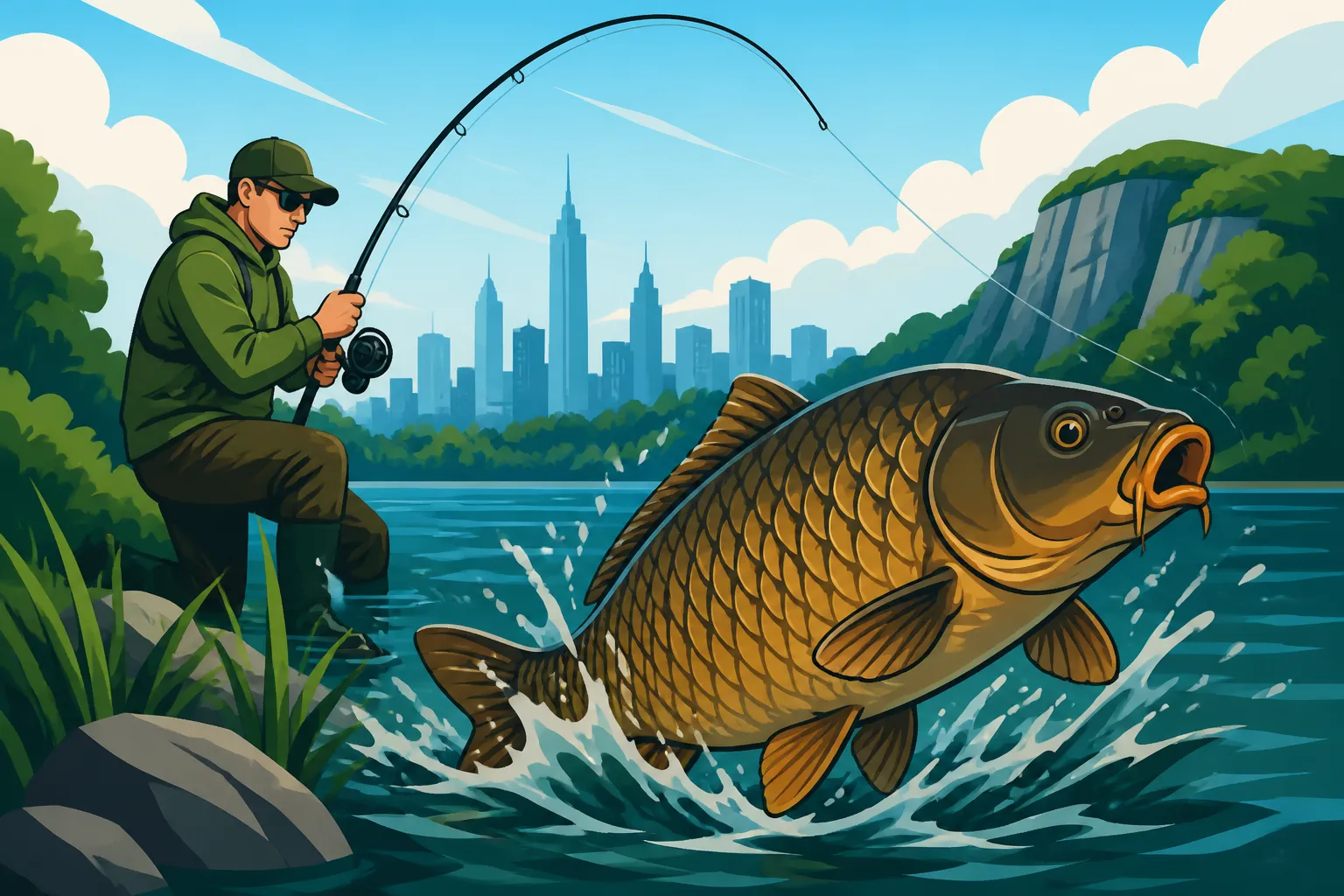
If you've never hooked a carp over 10 pounds, you're in for a real surprise. These fish are absolute powerhouses. Once hooked, they don't just give a little tug; they take off on blistering runs, stripping line from your reel with an authority that rivals many saltwater species. Their broad, muscular bodies are designed for endurance, and they'll pull and dive, testing your tackle and your patience to the limit. The fight isn't a quick sprint; it's a marathon, often involving multiple strong runs and deep headshakes. Every carp brought to the net feels like a hard-earned victory, and the adrenaline rush is truly addictive.
Beyond their fighting prowess, one of the greatest advantages of carp fishing in New York is their sheer accessibility. You don't need a fancy boat or expensive electronics to find them. Carp inhabit virtually every major watershed, from the mighty Great Lakes to tranquil urban ponds. They thrive in various conditions, from slow-moving rivers to large reservoirs and even smaller creeks. This means that whether you live in Buffalo, Albany, or on Long Island, there's likely excellent carp fishing just a short drive—or even a walk—away. This broad distribution also means that carp fishing can be a fantastic entry point for new anglers or a reliable option when other species are finicky. You can explore Fish Species You Can Catch in New York to see just how diverse our waters are.
Where to Find Carp: Top New York Waters for Your Next Adventure
One of the beautiful things about carp fishing in New York is that you're rarely far from a good spot. These adaptable fish have made themselves at home in a vast array of habitats across the state. Understanding where to look and what to look for is key to consistent success. Forget the myth that carp only live in dirty, stagnant water; you'll find them in some surprisingly pristine environments, often coexisting with other popular game fish.
Great Lakes and Major Rivers
New York's largest water bodies offer some truly incredible carp fishing, often with the potential for genuinely massive fish. Lake Erie and Lake Ontario, while famous for their salmon and walleye, also hold thriving populations of large common carp. Here, they often congregate in the warmer, shallower bays, especially during spring and early summer, or near the mouths of tributaries that bring in nutrients. Targeting them from shore or a boat in these areas can yield fish well into the 30-pound range, sometimes even larger.
The Hudson River, a historic waterway stretching from the Adirondacks to New York Harbor, is another prime location. Its diverse habitats, from tidal flats to slower upstream sections, provide ample opportunities. Look for carp in the calmer coves, near structures like old docks or fallen trees, and in areas where the current breaks. Fishing the Hudson River in New York: Where to Go provides more specific information. Similarly, the St. Lawrence River, particularly in its shallower bays and along its vast shoreline, is known for producing impressive carp catches. These major river systems offer expansive areas to explore, so focusing on nutrient-rich zones or areas with slower currents is usually a good strategy.
Canals, Ponds, and Smaller Waterways
Don't overlook the more intimate water bodies, as they can be hidden gems for carp fishing. The Erie Canal, for example, running through the heart of New York, is an absolute hotspot for carp. Its slow-moving sections, abundant vegetation, and consistent food sources create ideal conditions for them to thrive. You can learn more about this incredible fishery by checking out Fishing New York's Erie Canal. Many local ponds, municipal parks with water features, and smaller reservoirs are also home to healthy carp populations. These smaller waters often see less angling pressure for carp, meaning the fish might be less wary and more willing to feed.
Access can also be easier in these smaller locations, with plenty of bank fishing opportunities. Many of these ponds might be overlooked by anglers targeting trout or bass, creating a perfect niche for carp enthusiasts. It's worth spending some time exploring these local spots. You might just find your new favorite honey hole where you can relax and tangle with some surprisingly large fish close to home. Even tiny backwater sloughs or larger drainage ditches connected to main waterways can hold carp.
Identifying Prime Carp Habitat
Carp are opportunistic feeders and masters of finding comfortable, food-rich environments. When you're scouting for spots, keep an eye out for certain features that consistently attract them. Weed beds and lily pad fields are excellent indicators, as they provide cover from predators, shade from the sun, and a buffet of aquatic insects, crustaceans, and plant matter. Submerged timber, fallen trees, and old dock pilings offer similar advantages, creating ambush points and areas where food collects.
Look for areas with a muddy or silty bottom, especially near drop-offs or deeper channels. Carp love to root around in these soft substrates for invertebrates. In rivers, target slow-moving sections, eddies, and backwaters where the current is minimal, allowing them to conserve energy and feed without constant effort. During warmer months, you'll often see them cruising in shallow water or even "tailing" as they feed head-down on the bottom. In cooler weather, they might move into deeper holes or remain in areas with consistent thermal stability. Don't be afraid to walk the banks, observe the water, and look for signs of carp activity like subtle rises, mud clouds, or even fish jumping.
Essential Gear for New York Carp Anglers
Carp fishing, while accessible, truly benefits from having the right tools for the job. You can certainly catch a carp on a basic spinning rod, but to consistently land bigger fish and enjoy the fight, a more specialized setup will make all the difference. Think of it as investing in your success and, more importantly, in the health of the fish you're targeting.
Rods, Reels, and Line: Building Your Carp Arsenal
When it comes to rods, you'll want something with a good backbone but still enough flexibility to absorb the powerful runs of a large carp. A medium-heavy to heavy action rod, typically in the 9 to 12-foot range, is ideal. These longer rods help with casting distance and provide leverage when fighting a strong fish. Many dedicated carp anglers use specialized "carp rods" which are designed for precisely this purpose, offering the perfect blend of power and parabolic action.
For reels, a robust spinning reel or baitrunner-style reel is highly recommended. Baitrunner reels are particularly popular because they allow the fish to take line when it bites (preventing your rod from being pulled into the water!) while still engaged in a light drag setting. Once you're ready to fight the fish, a quick flick of a lever engages the main drag. Look for reels with a smooth, powerful drag system and a decent line capacity, generally sizes 4000 to 6000. These reels need to withstand the strong surges of a big carp.
As for line, strength and abrasion resistance are paramount. Many anglers opt for 12-20 pound test monofilament for its stretch and shock absorption, or 30-50 pound test braided line for its sensitivity and lack of stretch. If using braid, a fluorocarbon leader is often added for stealth and abrasion resistance in heavy cover. A good quality fishing line, like those you can find readily on platforms like Amazon, is a worthwhile investment to avoid frustrating break-offs.
Rigs, Hooks, and Bait: The Carp's Menu
Carp are intelligent feeders, and while they can be caught on simple setups, specialized rigs often increase your chances dramatically. The hair rig is a cornerstone of modern carp fishing. This rig presents the bait next to the hook, rather than directly on it, allowing the hook to penetrate cleanly when the carp inhales the bait. It's incredibly effective. Another popular choice is the method feeder rig, which uses a specially designed feeder packed with groundbait (a mix of breadcrumbs, pellets, and attractants) that disperses around your hookbait, creating an irresistible feeding zone. For simpler approaches, a basic ledger rig with an appropriate weight (1-3 oz) and a short leader can also be effective.
For hooks, choose strong, sharp, wide-gap hooks in sizes ranging from 2 to 8. Barbless hooks or micro-barbed hooks are often preferred for easier, safer unhooking and release, which is crucial for catch-and-release practices.
Now, for bait: carp are not particularly picky, but they do have favorites. Sweet corn is a classic and highly effective bait, used either directly on the hook or on a hair rig. Boilies (small, hard, pre-cooked baits made from a mix of flours, binders, and flavors) are extremely popular in Europe and are gaining traction in New York. They come in various flavors and sizes and are designed to be irresistible to carp while resisting smaller "nuisance" fish. Other excellent options include dough balls, bread (especially bread crust for surface fishing), worms, and even hot dogs. The key is to experiment and see what the carp in your chosen water are feeding on. You can find a huge variety of carp baits and rig components, including various boilies and method feeders, through online retailers.
Essential Accessories for a Successful Trip
Beyond the rod, reel, and bait, a few key accessories will significantly enhance your carp fishing experience and ensure the well-being of the fish. A large, carp-friendly landing net with a soft, knotless mesh is non-negotiable. This prevents damage to the fish's fins and scales during landing. Paired with this, an unhooking mat is essential. This padded mat provides a safe, soft surface for the carp while it's out of the water, protecting it from injury on hard ground. Many anglers don't realize how delicate a carp can be out of water, and an unhooking mat makes all the difference in ensuring a healthy release.
Rod rests or bank sticks are crucial for supporting your rods when fishing from shore, especially with multiple rods. If you're serious about carp, bite alarms are a game-changer. These electronic devices attach to your rod and emit an audible signal when a fish takes line, allowing you to relax and wait patiently without constantly staring at your rod tip. A comfortable chair, a brolly (fishing umbrella) for sun or rain protection, and a well-organized tackle box (many great options are available on Amazon for different budgets) will complete your setup, making your carp fishing sessions more enjoyable and productive.
Techniques for Tempting New York Carp
Catching carp consistently requires more than just casting out a piece of corn and waiting. These fish can be wary, and a thoughtful approach to presentation and strategy will significantly improve your catch rates. There are various techniques, each suited to different conditions and angler preferences, from patient bottom fishing to exhilarating surface takes.
Bottom Fishing and Feeder Tactics
The most common and often most effective method for carp fishing is bottom fishing, also known as ledgering. This involves casting a weighted rig to the bottom, where carp typically feed. The goal is to present your bait in a way that looks natural and irresistible. Using a simple running ledger rig, where the weight slides freely on the main line above a swivel and leader, allows the fish to pick up the bait without feeling the weight, leading to more confident takes. Once the fish moves off with the bait, the line pulls through the weight, triggering your bite alarm or bending your rod tip.
A more advanced and highly effective form of bottom fishing is method feeder fishing. The method feeder itself is a small, weighted cage or flatbed that you pack with a sticky groundbait mixture. Your hookbait is either molded into the groundbait or tied directly to it via a short leader. When cast, the feeder lands on the bottom, and the groundbait slowly breaks down, releasing a cloud of scent and food particles directly around your hookbait. This creates a highly attractive "dinner plate" that carp find hard to resist. The key here is to use a groundbait mix that disperses effectively but holds together during the cast. Many anglers will "pre-bait" a spot by casting out a few feeders without hooks to draw fish in before presenting their actual fishing rig.
Stalking and Surface Fishing
While sitting and waiting can be very productive, actively stalking carp can be one of the most exciting ways to target them. This involves slowly moving along the bank, observing the water for signs of feeding carp or those cruising in the margins. Once you spot fish, the challenge is to present a bait subtly without spooking them. This often means very careful casting, using minimal weight, and sometimes even hand-placing the bait if you can get close enough. Stalking is particularly effective in clearer waters or smaller ponds where you can visually locate your targets.
Surface fishing is arguably the most thrilling method for carp. Imagine seeing a large carp slowly approach your floating bait, mouth gulping it down, and then feeling the sudden, violent strike. This technique is best during warmer months when carp are more likely to feed at the surface. The most common baits are bread crusts or dog biscuits/kibble, floaters that resemble natural food items. You'll typically use a very light setup, often with just a small lead or no weight at all, and a float (or just free-lining) to allow the bait to drift naturally. Polarized sunglasses are a huge asset here, helping you spot the fish and observe their reactions to your offering. The visual aspect of surface fishing adds an entirely new dimension to the sport, making every bite an unforgettable moment.
Playing and Landing Big Carp
Once a carp takes your bait, the real battle begins. Setting the hook firmly is crucial, but don't overdo it with a heavy hand, especially with larger fish. Many carp will try to bolt for cover, like weed beds or submerged snags, so be prepared to apply steady pressure and guide them away from danger. Your rod acts as a shock absorber, bending to cushion the fish's powerful runs and preventing break-offs. Keep your drag set appropriately—tight enough to maintain control but loose enough to allow the fish to take line during its bursts of energy. Pumping and reeling, slowly gaining line when the fish pauses, is the standard approach.
As the carp nears the bank, it will likely make several more strong, desperate runs. Don't rush it; let the fish tire itself out. When it's ready, guide it over your large, carp-friendly landing net. Once in the net, carefully lift it onto your unhooking mat (which you should always have pre-wetted to protect the fish's slime coat). Remove the hook quickly and gently, ideally using a disgorger or forceps. Take a moment to admire your catch, snap a quick photo if you like, and then gently return it to the water, supporting it until it swims off strongly. Always prioritize the fish's well-being. For more on proper handling, see Catch-and-Release Handling Rules.
Conservation and Best Practices for Carp Fishing in New York
Carp fishing in New York, like any form of angling, comes with a responsibility to protect our aquatic resources and ensure sustainable fishing for everyone. While carp are abundant, practicing good ethics and understanding local regulations are paramount.
Catch and Release Ethic
For many dedicated carp anglers, catch and release is not just a suggestion; it's a fundamental principle. The large, powerful carp you catch today can offer another thrilling fight to you or another angler tomorrow. This ethic requires a conscious effort to minimize stress and injury to the fish. Always use a large, knotless landing net to avoid damaging fins and scales. Crucially, an unhooking mat is essential. This padded surface protects the carp from abrasive ground surfaces and reduces the risk of injury while the fish is out of the water. Make sure the mat is wet before placing the fish on it to preserve its protective slime coat.
When handling the fish, keep it out of the water for the absolute minimum amount of time required for unhooking and a quick photo. Support the fish horizontally, especially large ones, to protect its internal organs. Use specialized tools like forceps or a disgorger for quick and clean hook removal. Before releasing, hold the carp gently in the water, facing into any current, until it regains its strength and swims away on its own power. These practices ensure the health and longevity of these magnificent fish, allowing future generations to enjoy the same fantastic sport.
Understanding New York's Regulations
While carp are often less regulated than many other game species, it's still vital to understand and adhere to New York's fishing laws. The most important starting point is having a valid New York fishing license. Whether you're a resident or non-resident, annual, or short-term, you'll need one to legally fish. You can find comprehensive details in our New York Fishing License Guide and learn more about specific requirements by reading Do I Need a Fishing License to Fish in New York?.
Generally, common carp do not have specific size or creel limits in New York State, meaning you can typically keep them if you choose. However, it's always best to consult the most current New York DEC fishing regulations guide, as rules can change and may vary by specific water body. Pay close attention to rules regarding bait use, especially when it comes to live bait. Some waters have restrictions on what can be used to prevent the spread of invasive species or diseases. You can look into Rules on Using Live Bait in New York for more information. Being informed helps protect our waters and keeps you on the right side of the law.
Respecting the Environment and Other Anglers
Carp fishing often involves spending extended periods in one spot, and it's essential to practice responsible angling habits. Always adhere to the "Leave No Trace" principles. Pack out everything you pack in, including all fishing line, bait packaging, and any other trash. Leaving litter behind not only degrades the natural beauty of the fishing spot but can also harm wildlife.
Be mindful of other users of the waterway. Whether it's other anglers, kayakers, hikers, or families enjoying a park, we all share these precious resources. Set up your gear in a way that doesn't block public access or infringe on others' enjoyment. Keep noise levels down, especially if using bite alarms, and be courteous. Sharing information about conditions or recent catches can be a great way to build camaraderie, but always respect others' space and privacy. By demonstrating responsible behavior, we help foster a positive image for the carp fishing community and ensure that everyone can continue to enjoy New York's fantastic angling opportunities.
Here's a quick comparison of popular carp baits:
| Bait Type | Pros | Cons | Ideal Use Case |
|---|---|---|---|
| Sweet Corn | Cheap, readily available, highly attractive. | Smaller fish can pick at it, less selective for large carp. | General purpose, pre-baiting, easy for beginners. |
| Boilies | Selective for larger carp, durable, customizable. | Can be expensive, requires specialized rigs, fish need to be accustomed. | Targeting trophy carp, high-pressure waters. |
| Dough Balls | Easy to make at home, can be flavored. | Less durable on the hook, can attract smaller fish. | Quick sessions, experimenting with flavors. |
| Bread (Crust) | Floats naturally, visual takes, very accessible. | Falls off easily, attracts birds, limited to surface fishing. | Surface fishing, stalking visible carp. |
| Worms | Natural, widely accepted, good for various species. | Can be quickly devoured by smaller fish, less selective. | General purpose, especially in muddy or murky water. |
Disclaimer
This article is for general informational purposes only and does not constitute professional advice. Laws, prices and regulations vary by location and change over time. Consult a qualified professional for guidance on your specific situation.