Brook Trout in New York
Ah, the brook trout! There's something truly special, almost magical, about chasing these vibrant, elusive fish in New York's pristine waters. Many anglers, especially those new to trout fishing, often struggle to find these beauties or distinguish them from other trout species, leading to frustration and missed opportunities. This comprehensive guide is designed to cut through that confusion, helping you understand, locate, and respectfully catch New York's only native trout, giving you the knowledge you need for a truly rewarding angling experience.
Understanding the Brook Trout: New York's Native Gem
Brook trout, or "brookies" as many of us affectionately call them, hold a unique place in the hearts of New York anglers. They are not just another fish; they are a symbol of pristine wilderness, cold, clean water, and a connection to our state's natural heritage. Getting to know them is the first step in appreciating the angling journey they offer.
Appearance and Key Characteristics
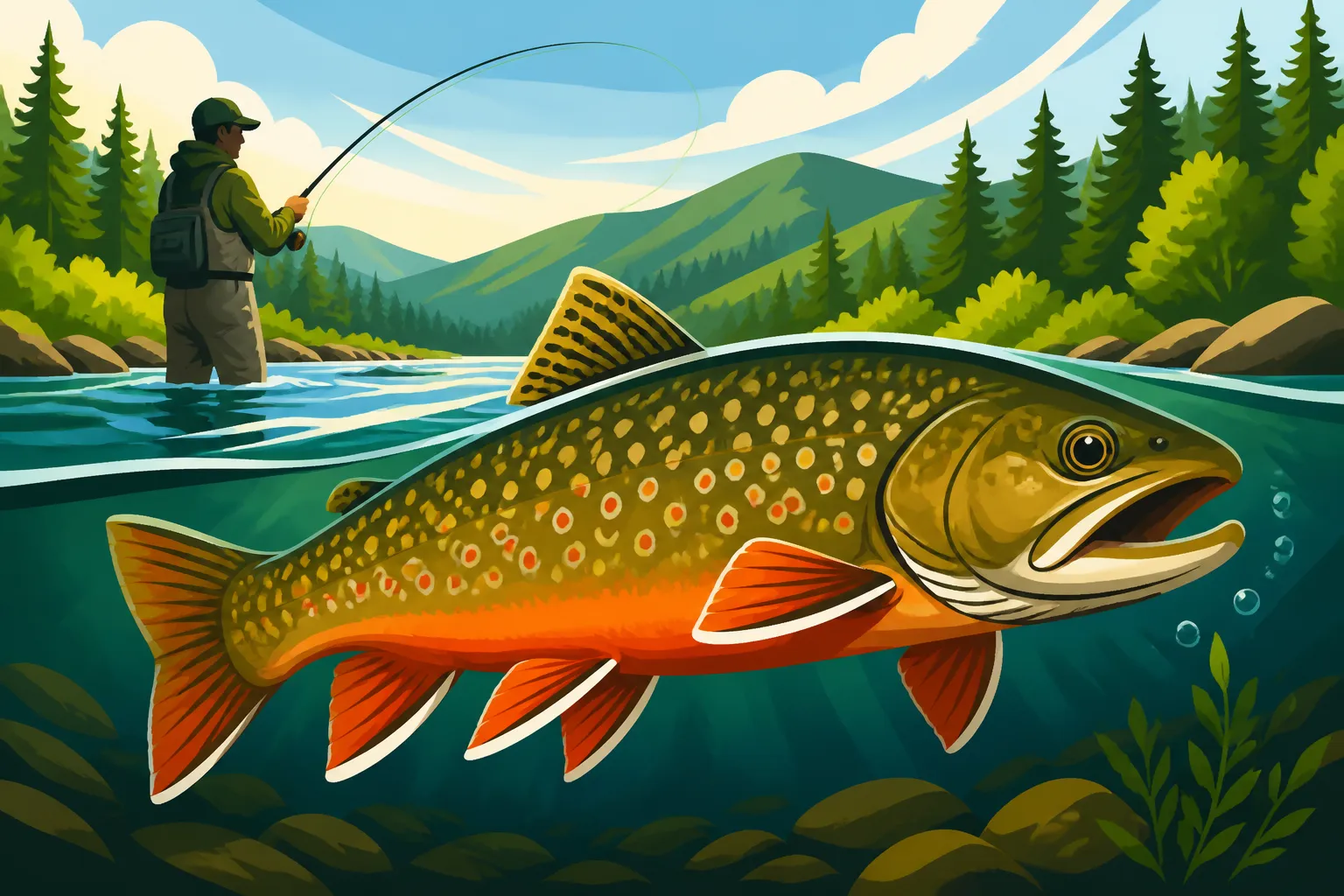
When you pull a brook trout from the water, it's like holding a living jewel. Their flanks are a breathtaking tapestry of greens and browns, often adorned with pale, worm-like markings known as vermiculation. What truly sets them apart are the small, vibrant red or orange spots surrounded by bluish halos, scattered along their sides. Their lower fins, particularly the pectorals, pelvic, and anal fins, boast striking white leading edges, often followed by a band of black, then a rich red-orange. This combination of colors is simply unmistakable once you've seen it.
The intensity of these colors can vary greatly depending on their habitat, diet, and even their mood. A wild brook trout from a dark, tannin-stained Adirondack pond might have much deeper, richer hues than a brook trout in a clear, sun-drenched Catskill stream. During spawning season, typically in the fall, male brook trout become even more brilliant, with their bellies turning a fiery orange or red, making them an incredible sight to behold. They're typically smaller than brown or rainbow trout, with a streamlined, torpedo-like body built for navigating swift currents and tight spaces.
Native Status and Ecological Importance
Here's a fact that often surprises newcomers: brook trout are actually a type of char, not a true trout, belonging to the genus Salvelinus. More importantly for us New Yorkers, they are the only trout species truly native to our state. Think about that for a moment – every other trout you catch, like brown trout or rainbow trout (which are anadromous steelhead when they return from the Great Lakes), were introduced from other regions or continents. This native status makes them incredibly important ecologically.
Brook trout are indicator species, meaning their presence signifies a healthy, undisturbed aquatic ecosystem. They demand exceptionally cold, clean, and well-oxygenated water, often found in high-elevation streams, spring-fed ponds, and secluded headwaters. If you're catching brook trout, it's a good sign that the water quality is excellent, the surrounding habitat is intact, and the system is largely free from pollution and excessive warming. Protecting these fish and their habitats is crucial not just for fishing, but for the overall health of our New York wild spaces. You can learn more about their unique place in our waters by exploring resources like Are Brook Trout Native to New York?.
Preferred Habitat and Water Conditions
As we touched on, brook trout are incredibly picky about their living conditions. They are true cold-water specialists. You'll find them thriving in waters that rarely exceed 68°F (20°C), with their preferred temperature range often much cooler, sometimes down into the low 50s. This is why spring-fed streams and ponds, where groundwater keeps temperatures consistently low even on hot summer days, are prime brook trout territory. These fish also prefer clean, clear water with ample oxygen.
Their ideal habitat isn't just about temperature; it's about structure. Brook trout love cover. Look for them hiding in undercut banks, beneath fallen logs, in deep pools carved out by currents, around submerged rocks, and under thick overhanging vegetation. These features provide shelter from predators, protection from strong currents, and ambush points for their prey. In streams, they often inhabit the faster-moving riffles and runs where oxygen levels are highest, darting out from cover to grab passing insects. In ponds and small lakes, they'll seek out cool, deep pockets or congregate near springs and feeder streams. Knowing these preferences is key to understanding New York Freshwater Fishing Rules that often aim to protect these delicate environments.
Where to Find Brook Trout in New York
While brook trout populations are certainly not as widespread as they once were due to habitat loss, pollution, and competition from introduced species, New York still boasts incredible opportunities to pursue these beautiful fish. Knowing where to focus your efforts is paramount, especially if you're seeking wild, native populations.
Adirondacks and Catskills Strongholds
If you're serious about finding brook trout in New York, the Adirondack Park and the Catskill Mountains should be at the very top of your list. These vast, protected regions offer the expansive wilderness, high elevations, and abundant cold, clear water that brookies need to thrive.
In the Adirondacks, you'll find countless small streams, remote ponds, and headwater lakes that are veritable brook trout havens. Many of these waters are only accessible by foot, often requiring a hike of several miles, which is part of their allure. The effort to reach them often means less fishing pressure and a better chance at unmolested, vibrant brook trout. Places like the West Branch of the Ausable River or countless nameless ponds nestled deep in the forest are prime examples. For those willing to put in the legwork, the rewards can be truly spectacular. This region truly offers some of Best Brook Trout Ponds in New York's Adirondacks.
Similarly, the Catskill Mountains, often considered the birthplace of American fly fishing, offer numerous cold-water streams that hold good populations of brook trout. While many of the larger rivers are dominated by brown and rainbow trout, the smaller tributaries, especially those in higher elevations or protected watersheds, are where the brookies shine. The headwaters of storied rivers like the Beaverkill or Willowemoc, as well as many smaller, lesser-known creeks, can provide fantastic brook trout fishing. These Best Trout Streams in the Catskills offer a combination of wild and stocked brook trout experiences, often providing stunning scenery as a bonus.
Hidden Gems and Remote Waters
Beyond the well-known hotspots, New York is dotted with countless smaller, less-pressured waters that can hold surprisingly robust brook trout populations. These are the "hidden gems" that truly reward exploration. Think about the tiny feeder creeks that flow into larger rivers, the secluded beaver ponds deep in state forests, or the small, spring-fed lakes far off the beaten path. These spots often require a good map, a compass or GPS, and a willingness to bushwhack, but they offer an unparalleled sense of discovery and solitude.
Finding these spots often comes down to research, local knowledge, and a bit of adventurous spirit. Look for areas with high forest cover, minimal development, and sources of cold water like springs. The brook trout in these remote waters tend to be smaller, but their brilliant colors and aggressive strikes make up for their modest size. They are often pure, wild strains, untouched by hatchery genetics, offering a glimpse into what New York's waters were like centuries ago. Remember, part of the joy of brook trout fishing is the journey to these wild places, not just the catch itself.
Stocked vs. Wild Populations
It's important to understand the distinction between stocked and wild brook trout populations when planning your fishing trips. New York's Department of Environmental Conservation (DEC) actively stocks brook trout in many waters across the state, particularly in areas with suitable habitat that might not support self-sustaining wild populations due to past degradation or limited natural reproduction. These stocked fish provide excellent opportunities for anglers, especially those just starting out or looking for a more accessible experience. They are often found in popular ponds and easily accessible streams.
However, many dedicated brook trout anglers seek out wild populations. These are fish that have reproduced naturally in their environment for generations, adapting to their specific ecosystem. Wild brook trout are often more brilliantly colored, feistier fighters, and represent the true essence of the species. Finding them requires focusing on the remote, pristine waters mentioned earlier. The DEC often designates certain waters as "wild trout streams" or "heritage brook trout waters," offering valuable clues for those pursuing native populations. Always check the current New York Fishing Regulations Explained for specific waters, as rules can vary greatly between stocked and wild fisheries to ensure conservation.
Best Techniques for Catching Brook Trout
Catching brook trout is less about brute force and more about finesse, stealth, and presenting your offering naturally. These fish, especially the wild ones, can be incredibly wary, but also surprisingly eager to strike when the conditions are right.
Light Tackle and Spin Fishing
For many anglers, ultralight spinning gear is the perfect choice for brook trout. A light action rod, typically 5 to 6 feet long, paired with a small spinning reel spooled with 2 to 4-pound test monofilament or fluorocarbon line, offers the sensitivity needed to feel subtle bites and the casting precision required for tight quarters.
Small inline spinners are incredibly effective for brook trout. Brands like Panther Martin, Mepps, and Rooster Tail produce excellent spinners in sizes #00 to #1. Their flashy blades and pulsating tails mimic small baitfish or aquatic insects, proving irresistible to hungry brookies. Small spoons, like the Little Cleo or Kastmaster in sizes 1/16 to 1/8 ounce, also work wonderfully, especially in deeper pools or larger streams. When using spinners or spoons, focus on casting upstream and retrieving just fast enough to get the blade spinning, allowing the current to carry it naturally past likely holding spots. For small streams, a compact tackle box and a selection of these lures, perhaps purchased conveniently from a retailer like Amazon, can make all the difference.
Fly Fishing for Brooks
Fly fishing for brook trout is, for many, the quintessential experience. It connects you directly to the insect life of the stream and the delicate art of presentation. A lightweight fly rod, typically a 2-weight to 4-weight, between 6 and 7.5 feet long, is ideal for the small streams and tight casting conditions where brook trout reside. You can explore Best Rod Weight for New York Trout Streams for more detailed recommendations.
Dry flies are a favorite, especially during insect hatches. Patterns like the Elk Hair Caddis, Adams, Parachute Adams, or Royal Wulff in sizes #12 to #18 are perennial brook trout producers. Presenting these flies gently upstream, allowing them to drift drag-free over a feeding lane, often results in an explosive strike. When trout aren't rising, nymphs are highly effective. Patterns such as the Pheasant Tail Nymph, Hare's Ear Nymph, or Prince Nymph in similar sizes, fished under a strike indicator or by high-sticking, can entice brookies feeding subsurface. Wet flies and small streamers, like a Woolly Bugger or a small Muddler Minnow, can also be deadly when swung through pools and runs. Matching the hatch is key, but often, a general attractor pattern will get the job done.
Natural Baits
Sometimes, especially when dealing with shy or finicky brook trout, natural baits are the most reliable option. Live baits appeal to a brook trout's opportunistic nature and strong sense of smell.
Worms, particularly small red wigglers or garden worms, are universally effective. Present them on a small hook (size #8 to #12) with minimal weight, allowing them to drift naturally with the current. This method is incredibly simple and often works wonders, especially after a rain when worms are washed into the stream. Other effective natural baits include small crickets, grasshoppers, or mealworms. These can be drifted or dangled into promising pockets of water. Always be mindful of local regulations regarding bait use, as some wild trout waters are designated "artificial lures only" to protect the fish populations. If you’re planning a trip, be sure to check the New York Freshwater Fishing Rules specific to your chosen spot. A small container for bait, easily found on Amazon, is a handy item for any angler.
Stealth and Approach
Brook trout are incredibly wary, and their small stream habitats mean they are acutely aware of anything unusual in their environment. A heavy footstep on the bank, a sudden shadow, or a brightly colored angler standing upright can send them scattering for cover in an instant.
Therefore, stealth is paramount. Approach fishing spots slowly and quietly, staying low and out of sight as much as possible. Use stream-side cover like bushes, trees, and rocks to your advantage. Wear natural, muted colors that blend in with the surroundings. When moving upstream, walk slowly and deliberately, disturbing the water as little as possible. Make short, accurate casts, aiming to land your lure or fly gently on the water without a splash. Often, your first cast into a promising pool is your best chance at catching a brook trout before they become alerted to your presence. Remember, patience and a respectful approach to their delicate habitat will significantly increase your success.
Conservation and Regulations for Brook Trout
Because brook trout are so special and sensitive, responsible angling practices and adherence to regulations are absolutely critical. We want to ensure future generations can also enjoy the thrill of catching these native beauties.
Catch and Release Practices
For wild brook trout, especially in remote or fragile ecosystems, catch and release is highly encouraged and often mandated by regulation. These populations can be slow to recover from overfishing, and every fish released successfully contributes to the health and sustainability of the fishery.
When practicing catch and release, handle the fish as little as possible. Keep them in the water if you can while removing the hook. If you must remove them from the water for a quick photograph, do so swiftly and gently, supporting their body weight. Wet your hands before touching them to protect their delicate slime coat, which is their primary defense against disease. Use barbless hooks, or pinch down the barbs on your hooks, as this makes hook removal much easier and less damaging to the fish. If a fish is deeply hooked, cut the line as close to the hook as possible rather than trying to rip it out. Allow the fish to recover in the water, facing upstream in a gentle current, until it swims away under its own power. These are essential Catch-and-Release Handling Rules for any responsible angler.
Size and Bag Limits
New York has specific regulations regarding the size and number of brook trout you can keep, and these can vary significantly depending on the water body. Many wild trout streams or special regulation areas might have more restrictive limits, or even be entirely catch-and-release, to protect fragile populations. Other waters, particularly those that are heavily stocked, might allow for a more generous harvest.
It is absolutely crucial to check the current New York DEC fishing regulations guide before you head out. These guides, available online or at license vendors, will detail specific size limits (e.g., minimum length) and bag limits (e.g., number of fish per day) for the particular stream, river, or pond you plan to fish. Ignoring these rules isn't just illegal; it can severely impact the future of these cherished fisheries. Understanding the New York Statewide Trout Daily Limit Explained is part of being a responsible angler who respects the resource.
Identifying Special Regulations Waters
New York has a system of "special regulations" waters, which are specific sections of streams, entire lakes, or even certain tributaries that have unique rules beyond the general statewide regulations. For brook trout, these often include "catch-and-release only" sections, "artificial lures only" rules, or very specific seasons and harvest limits designed to protect fragile wild trout populations.
These special regulations are often implemented to manage particular fish species, protect spawning grounds, or mitigate environmental pressures. Failing to know if you're fishing in a special regulations water can lead to fines and penalties. The New York Special Regulations Waters List is a critical resource for any angler in New York. Always consult the official DEC fishing guide or their website, particularly the "Special Regulations by County" sections, to ensure you are fully compliant. Sometimes a simple mapping app or a waterproof printout of regulations can save you a lot of headache and ensure your fishing trip is both enjoyable and legal.
Common Misconceptions and Identification
One of the biggest frustrations for new anglers, and even some seasoned ones, is properly identifying their catch. This is especially true with trout, where different species can sometimes look similar or where common names can be misleading. Let's clear up some common confusion about brook trout.
Brook Trout vs. Brown Trout: Key Differences
It's common for anglers to confuse brook trout with brown trout, especially in waters where both species coexist. While both are beautiful fish, they have distinct characteristics.
| Feature | Brook Trout (Salvelinus fontinalis) | Brown Trout (Salmo trutta) |
|---|---|---|
| Species Type | Char (native to NY) | True Trout (introduced from Europe) |
| Spots | Light (red/orange) spots with blue halos, vermiculation on back | Dark spots (black/red) on sides, often with pale halos, no vermiculation |
| Tail Fin | Square to slightly emarginate, often with a white leading edge | Usually squared or slightly forked, no prominent white edge |
| Lower Fins | Distinct white leading edge with a black band | No prominent white leading edge |
| Mouth | Relatively smaller, does not extend past eye | Extends past the eye, often more elongated |
| Color | Dark green/brown back, reddish belly (especially males), vibrant | Brown/golden/bronze hues, often lighter belly |
| Habitat | Colder, clearer, high-gradient streams, spring-fed ponds | More tolerant of warmer, slightly less pristine waters, wider range |
The most definitive markers are the brook trout's worm-like markings (vermiculations) on its back and dorsal fin, the vibrant red/orange spots with blue halos, and those distinctive white-edged lower fins. Brown trout, on the other hand, typically have dark spots (black and sometimes red/orange) without blue halos, and no vermiculations on their backs. Their coloration is usually more golden-brown. Understanding these differences, as detailed in Brook Trout vs Brown Trout: Key Differences, is crucial not only for identification but also for adhering to species-specific regulations.
Brook Trout vs. Rainbow Trout (Steelhead)
Another point of confusion can arise when comparing brook trout to rainbow trout, or their anadromous form, steelhead. It's important to remember that brook trout are char, while rainbow trout are true trout.
Rainbow trout are characterized by a broad, iridescent pink or red stripe running horizontally along their sides, especially prominent in males. Their bodies are typically silvery or olive green, and they are covered in small, dark spots (often black) on their back, sides, and fins, including the tail. Unlike brook trout, they lack the vermiculations on the back and the distinctive white leading edges on their lower fins.
Steelhead are essentially sea-run rainbow trout, typically larger and more silvery due to their time in the Great Lakes or ocean, but they still retain the basic characteristics of a rainbow trout, including the spotting and the lack of brook trout's unique markings. While all three are fantastic sportfish in New York, their identification is key to understanding their habitat needs and how they fit into the broader ecosystem. If you want to dive deeper into the differences, you might find articles like Steelhead vs Rainbow Trout: What's the Difference? incredibly helpful.
How to Identify a Brook Trout
To truly master brook trout identification, it helps to focus on a few key traits. Always look for:
- Vermiculations: Those wiggly, worm-like patterns on the back and dorsal fin. This is perhaps the most reliable identifier.
- Red/Orange Spots with Blue Halos: These are typically smaller and more vibrant than the spots on a brown trout.
- White Leading Edges on Lower Fins: The pectoral, pelvic, and anal fins will have a distinct white stripe, often followed by a black band.
- Absence of Black Spots on the Tail: Unlike rainbow trout, brook trout typically do not have prominent black spots on their tail fin.
By focusing on these features, you'll soon become adept at recognizing New York's native char. The more you encounter these beautiful fish, the easier it will become to tell them apart from their introduced cousins. Enjoy the challenge and the beauty these unique fish bring to our New York waters!
Disclaimer
This article is for general informational purposes only and does not constitute professional advice. Laws, prices and regulations vary by location and change over time. Consult a qualified professional for guidance on your specific situation.