Are Brook Trout Native to New York?
There’s a common question that pops up among anglers new to New York's incredible waters, and even seasoned veterans sometimes wonder about the nuances of our beloved trout populations: are brook trout really native to this state? It's a fair question, especially with all the stocking programs out there, and it can be confusing to discern which fish are truly original inhabitants and which have been introduced. This guide is here to clear up that confusion, diving deep into the fascinating history and current status of brook trout in New York, and explaining why their native roots are so important.
The Undeniable Native Status of Brook Trout in New York
Let's cut right to the chase: yes, brook trout are absolutely, unequivocally native to New York. They aren't just visitors; they're the original freshwater royalty of our streams and lakes. This isn't just a fun fact; it's a foundational truth that shapes how we manage, fish for, and protect these beautiful creatures. Their presence predates all human settlement and development that we typically think of when we picture New York.
A True New Yorker: Pre-Colonial Presence
Imagine New York hundreds of years ago, long before bustling cities, highways, or even small towns dotted the landscape. What you'd find were vast, unbroken forests, pristine rivers, and countless cold, clear mountain streams. In these untouched waters, the brook trout thrived. They were here, naturally reproducing and dominating the cold-water ecosystems across much of the state, especially in the mountainous regions and throughout the Adirondack and Catskill parks.
Their historical range was impressive, extending from the smallest headwater trickles to larger rivers and cold-water lakes. These fish evolved alongside New York's natural landscape, adapting perfectly to the conditions here. They are a testament to the wild, untamed beauty that once characterized our state, and in many ways, still does in the more remote corners. Understanding this deep history helps us appreciate every wild brook trout we encounter as a living piece of New York’s natural heritage.
Why Their Native Status Matters So Much
The native status of brook trout is more than just a historical tidbit; it's crucial for several reasons, primarily concerning ecological balance and conservation efforts. Native species, like our brook trout, are perfectly integrated into their ecosystems. They have specific relationships with the native insects, plants, and other fish species, forming a delicate web of life that has evolved over millennia. When a species is native, it acts as a reliable indicator of the health of its environment. If brook trout populations are struggling, it often signals larger issues with water quality, temperature, or habitat, which can then impact other species further up or down the food chain.
Conservation strategies for native species often focus on protecting and restoring their natural habitats, rather than solely relying on stocking. For brook trout, this means safeguarding pristine headwaters, preventing pollution, and managing riparian zones to maintain the cold, clear water they desperately need. Their native status means we have a responsibility to ensure these original New Yorkers continue to flourish, not just for fishing opportunities, but for the health of our entire ecosystem. When we talk about preserving biodiversity, protecting native brook trout is at the very heart of that mission.
Where New York's Brook Trout Thrive (and Struggle)
While brook trout are native to New York, their distribution isn't uniform. You won't find robust wild populations in every body of water, and where they do thrive, it's usually due to very specific environmental conditions. However, even in their strongholds, these resilient fish face significant pressures.
Iconic Habitats: Adirondacks and Catskills Strongholds
If you're looking for wild brook trout in New York, your best bet is to head to the mountainous regions, particularly the Adirondack and Catskill Parks. These vast, protected areas offer the quintessential brook trout habitat: cold, crystal-clear, highly oxygenated water, often flowing over rocky bottoms and shaded by dense forest canopies. The higher elevations mean cooler water temperatures, which are absolutely critical for brook trout survival. They simply cannot tolerate warm water for extended periods.
Within these regions, you'll find countless streams, rivers, and even high-elevation ponds that are home to thriving wild populations. The remote nature of many of these locations also helps protect them from the impacts of human development. For example, many of the remote ponds in the Adirondacks, accessible only by hiking deep into the wilderness, still hold stunning populations of "heritage" brook trout that have never been mixed with hatchery strains. These are truly special places to experience. Anglers seeking these gems often refer to resources like Best Brook Trout Ponds in New York's Adirondacks to pinpoint their next adventure.
Challenges to Their Survival: Past and Present
Despite their resilience and native status, brook trout have faced a relentless barrage of challenges over the centuries, some historical and others very much ongoing. In the past, acid rain caused significant damage to many Adirondack ponds and streams, making the water too acidic for brook trout to survive. While environmental regulations have helped mitigate acid rain, the recovery of these waters is a long, slow process. Deforestation and agricultural runoff in other areas historically led to habitat degradation, siltation of spawning beds, and warmer water temperatures.
Today, the challenges persist and, in some cases, intensify. Climate change is perhaps the most significant long-term threat. Warmer air temperatures translate to warmer water, pushing brook trout into smaller, more isolated pockets of cold water or stressing them to the point of decline. Habitat fragmentation from dams and culverts also prevents them from migrating to suitable spawning or thermal refuge areas. Furthermore, competition and predation from introduced species like Brown Trout in New York and Rainbow Trout in New York can severely impact native brook trout populations. These non-native trout often outcompete brook trout for food and space, or prey on their young, particularly in waters where habitat conditions are already marginal for brook trout. Anglers have a role to play in understanding these dynamics to help protect our native populations.
| Habitat Feature | Ideal for Wild Brook Trout | Detrimental to Wild Brook Trout |
|---|---|---|
| Water Temperature | Below 68°F (16°C) | Above 70°F (21°C) |
| Water Clarity | Crystal clear | Turbid, muddy |
| Oxygen Levels | High dissolved oxygen | Low dissolved oxygen |
| Stream Bottom | Gravel, cobble, bedrock | Silt, sand |
| Overhead Cover | Dense riparian vegetation | Open, deforested banks |
| pH Level | Slightly acidic to neutral | Highly acidic (acid rain) |
| Introduced Species | Absence of non-natives | Presence of brown/rainbow trout |
The Role of Stocking and Conservation
It’s easy to get confused about the native status of brook trout when you see so many stocking trucks on the road or read about fish stocking programs. This is where understanding the distinction between wild and stocked fish, and the specific goals of conservation, becomes crucial.
Differentiating Wild vs. Stocked Brook Trout
While brook trout are native to New York, the state's Department of Environmental Conservation (DEC) also runs extensive stocking programs to enhance fishing opportunities, particularly in waters where wild populations either never existed in great numbers or have declined due to habitat changes. So, it's entirely possible to catch a brook trout that was raised in a hatchery and released for anglers, even though the species itself is native.
How can you tell the difference? Wild brook trout often exhibit more vibrant, intense coloration – think deep reds, oranges, and greens, with distinctive blue halos around their red spots. Their fins will usually be perfectly formed and intact. Stocked fish, on the other hand, might have duller colors and, more tellingly, may show signs of wear and tear on their fins, particularly the dorsal and pectoral fins, due to being raised in crowded hatchery raceways. Many stocked trout also have a clipped adipose fin (the small, fleshy fin between the dorsal and tail fins), though this isn't universal for all brook trout stocking. For those keen on truly appreciating the subtle beauty, learning How to Identify a Brook Trout is a worthwhile endeavor. Ultimately, the goal of stocking is to provide recreational opportunities, but it’s important for anglers to recognize that wild fish hold immense ecological value that goes beyond just a catch.
Being a Responsible Angler: Protecting Our Natives
As anglers, we have a profound responsibility to protect New York's native brook trout populations. This means not just following the rules, but actively thinking about our impact on the resource. Catch-and-release is a powerful conservation tool, especially when targeting wild brook trout. Minimizing handling, keeping the fish in the water as much as possible, and using barbless hooks can dramatically increase a fish's survival rate after being released. Every wild brook trout that swims away healthy has the potential to contribute to future generations.
It's also essential to be familiar with and strictly adhere to New York Freshwater Fishing Rules and specific regulations, like New York Catch-and-Release Trout Fishing Rules, which might vary by waterbody. Some streams or ponds are managed exclusively for wild trout and have special regulations to protect them. Understanding these rules is not just about avoiding a penalty; it's about being a good steward of the environment. Consider carrying a compact fishing guide or checking the DEC website on your phone before you head out – many guides can be found on platforms like Amazon. Supporting organizations that work on stream restoration and habitat protection is another way to contribute to the long-term health of our native trout.
Brook Trout: New York's Official State Fish
The special place brook trout hold in New York's natural and cultural landscape is perhaps best exemplified by their official recognition. This isn't just a coincidence; it's a reflection of their significance.
The Honor and the History
Indeed, the brook trout holds the esteemed title of New York's official State Fish. This designation wasn't given lightly. It reflects the species' historical importance, its widespread presence across the state's pristine waters, and its iconic status among anglers and nature enthusiasts alike. The brook trout symbolizes the health and beauty of New York’s cold-water ecosystems. If you're curious about this, a deeper dive into Is the Brook Trout New York's State Fish? reveals the history behind this proud designation.
Choosing the brook trout as the state fish was a nod to its resilience, its beauty, and its role as a key indicator of environmental quality. It's a reminder of the wild character that New York still possesses, even amidst its bustling urban centers. This official status encourages further conservation efforts and raises public awareness about the importance of protecting these magnificent native fish and their habitats.
What Makes a Brook Trout So Special?
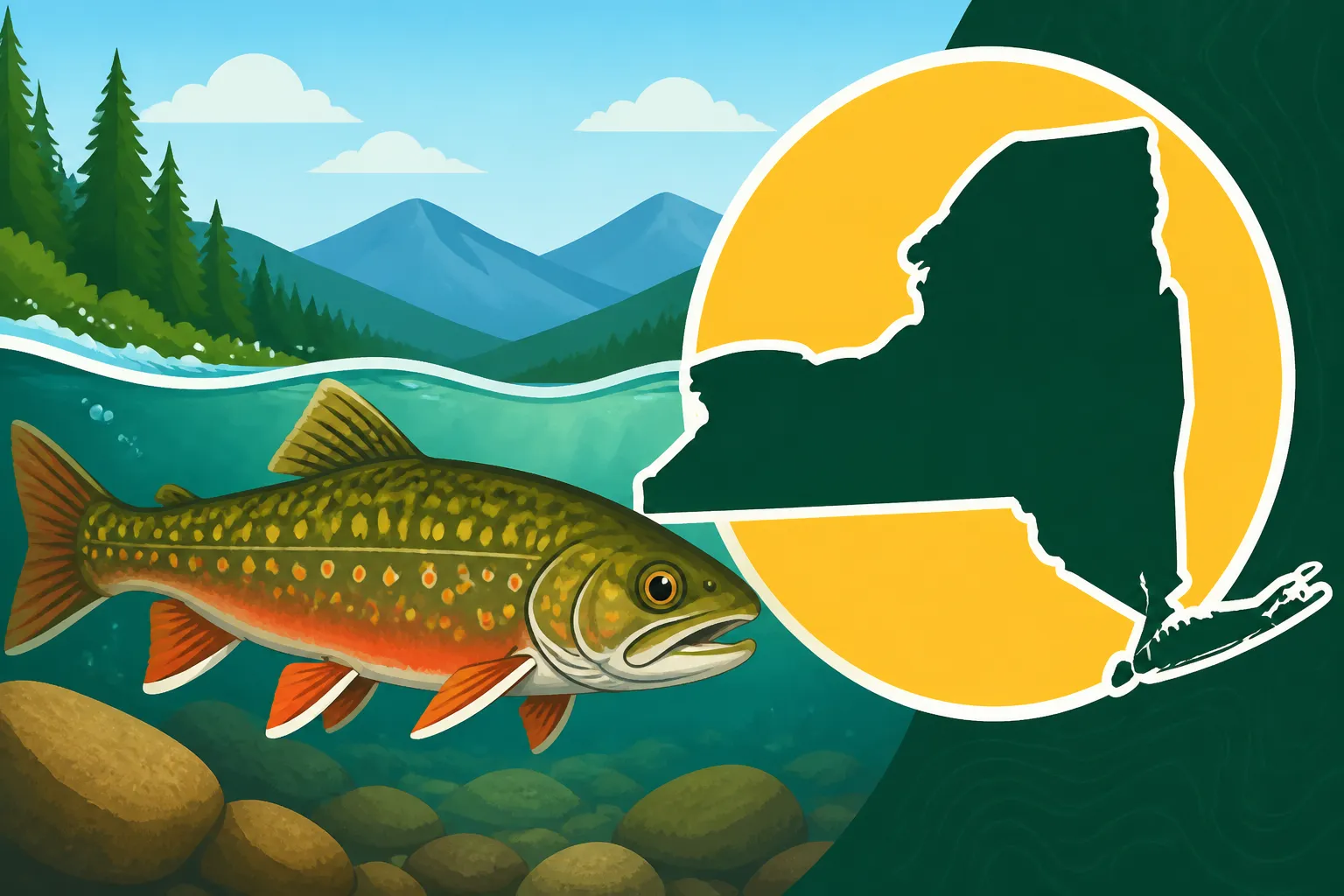
Beyond their native status and official recognition, brook trout are simply captivating fish. Their beauty is undeniable: a mosaic of olive green, vermiculate patterns (worm-like markings) on their backs, brilliant red and orange fins tipped with white, and those distinct red spots often encircled by blue halos. They are, without a doubt, one of the most aesthetically pleasing freshwater fish in North America. Learning How to Identify a Brook Trout makes every sighting even more rewarding.
From an angler's perspective, brook trout offer a thrilling challenge. They often inhabit breathtakingly beautiful, often remote, locations, making the journey as rewarding as the catch. Despite their relatively small size compared to some other trout species, they are feisty fighters on light tackle, providing an exhilarating experience. For many, catching a truly wild brook trout from a secluded Adirondack pond or Catskill stream is the pinnacle of freshwater fishing, connecting them directly to the untamed wilderness of New York. They are truly jewels of our waters, deserving of our utmost respect and protection, and a key component of A Guide to New York's Trout Species.
New York Brook Trout Fast Facts
Here's a quick look at some key characteristics of New York's native brook trout:
| Characteristic | Detail |
|---|---|
| Native Status | Yes, truly native to New York's cold-water ecosystems. |
| Scientific Name | Salvelinus fontinalis |
| Appearance | Olive green back with worm-like patterns, red/orange fins with white edges, red spots with blue halos. |
| Habitat | Cold, clear, oxygenated streams, rivers, and high-elevation lakes/ponds. |
| Diet | Insects (aquatic and terrestrial), small fish, crustaceans. |
| Indicator Species | Excellent indicator of water quality and ecosystem health. |
| State Fish | New York's official State Fish. |
| Conservation | Wild populations require protection from habitat degradation, warming waters, and non-native competition. |
| Angling Tip | Often best caught with light tackle, small flies, or lures; practice catch-and-release for wild fish. |
Disclaimer
This article is for general informational purposes only and does not constitute professional advice. Laws, prices and regulations vary by location and change over time. Consult a qualified professional for guidance on your specific situation.