Chinook Salmon Average Size in New York’s Lake Ontario
One of the most thrilling questions any angler casting lines into New York's vast Lake Ontario asks themselves is, "Just how big do those Chinook salmon really get?" It’s not just about the numbers on a scale; it’s about the raw power, the drag-screating runs, and the sheer challenge of bringing one of these magnificent fish to the boat. This guide is dedicated to giving you a realistic picture of the average size of Chinook salmon you can expect to encounter in Lake Ontario, peeling back the layers to reveal what makes these fish the undisputed kings of the Great Lakes.
Understanding Chinook Salmon in Lake Ontario
When we talk about Chinook salmon, often affectionately called "King Salmon," in Lake Ontario, we're discussing a truly iconic species that provides an incredible sportfishing experience. These fish aren't native to the Great Lakes, but through decades of successful stocking programs by the New York Department of Environmental Conservation (DEC) and neighboring states, they've established a robust presence, making Lake Ontario a world-class Chinook fishery.
The Life Cycle of New York's King Salmon
The journey of a Lake Ontario Chinook salmon is quite remarkable. Most of the salmon you'll encounter began their lives in hatcheries, then were stocked as fingerlings or smolts into Lake Ontario tributaries like the Salmon River, the Oswego River, or the Genesee River. Once released, they quickly head out into the vast, nutrient-rich waters of the main lake. Here, they spend the next few years growing at an astonishing rate.
These powerful predators feed voraciously on baitfish, primarily alewives, which are abundant in Lake Ontario. As they mature, their focus shifts from pure survival to the instinctual drive to spawn. Typically, after three to four years of life in the lake, they embark on their final, epic journey back to the rivers where they were stocked (or in some cases, naturally reproduced), often in late summer and fall. This is when they are at their peak size and strength, making them prime targets for anglers. Understanding this lifecycle is key to appreciating their size potential and knowing When Do Chinook Salmon Start Running in Lake Ontario Tributaries?.
Factors Influencing Chinook Growth
Several critical factors play a role in how large a Chinook salmon will grow during its time in Lake Ontario. It's not just a matter of time; it's a complex interplay of environment and opportunity.
First and foremost is food availability. Chinook salmon are opportunistic predators, and their growth is directly tied to the abundance of their primary forage, the alewife. If alewife populations are healthy, Chinook have ample food to fuel their rapid growth. Fluctuations in alewife numbers, whether due to environmental factors, predation pressure, or disease, can directly impact the overall size and condition of the salmon population.
Water temperature and overall lake conditions also contribute significantly. Optimal water temperatures allow Chinook to feed efficiently and grow quickly. Extreme heat or cold can slow down their metabolism and feeding habits. Additionally, the sheer size and depth of Lake Ontario provide a vast habitat, allowing fish to spread out and find optimal feeding grounds, minimizing competition compared to smaller bodies of water.
Finally, stocking programs and natural reproduction maintain the population. The DEC carefully monitors the health of the Chinook fishery and adjusts stocking numbers to ensure a sustainable population while also considering the forage base. While most Chinook are hatchery-raised, there is also some natural reproduction occurring in certain tributaries, which adds to the overall genetic diversity and resilience of the stock. These management efforts are crucial for sustaining the average size we see today. You can learn more about these efforts in guides like New York Fishing Regulations Explained.
Average Size Expectations for Lake Ontario Chinook
So, what does "average" really mean when it comes to these mighty fish in Lake Ontario? While tales of monsters abound, it's good to go into your fishing trip with realistic expectations, which only makes catching a truly large one even more exciting.
What "Average" Really Means for Anglers
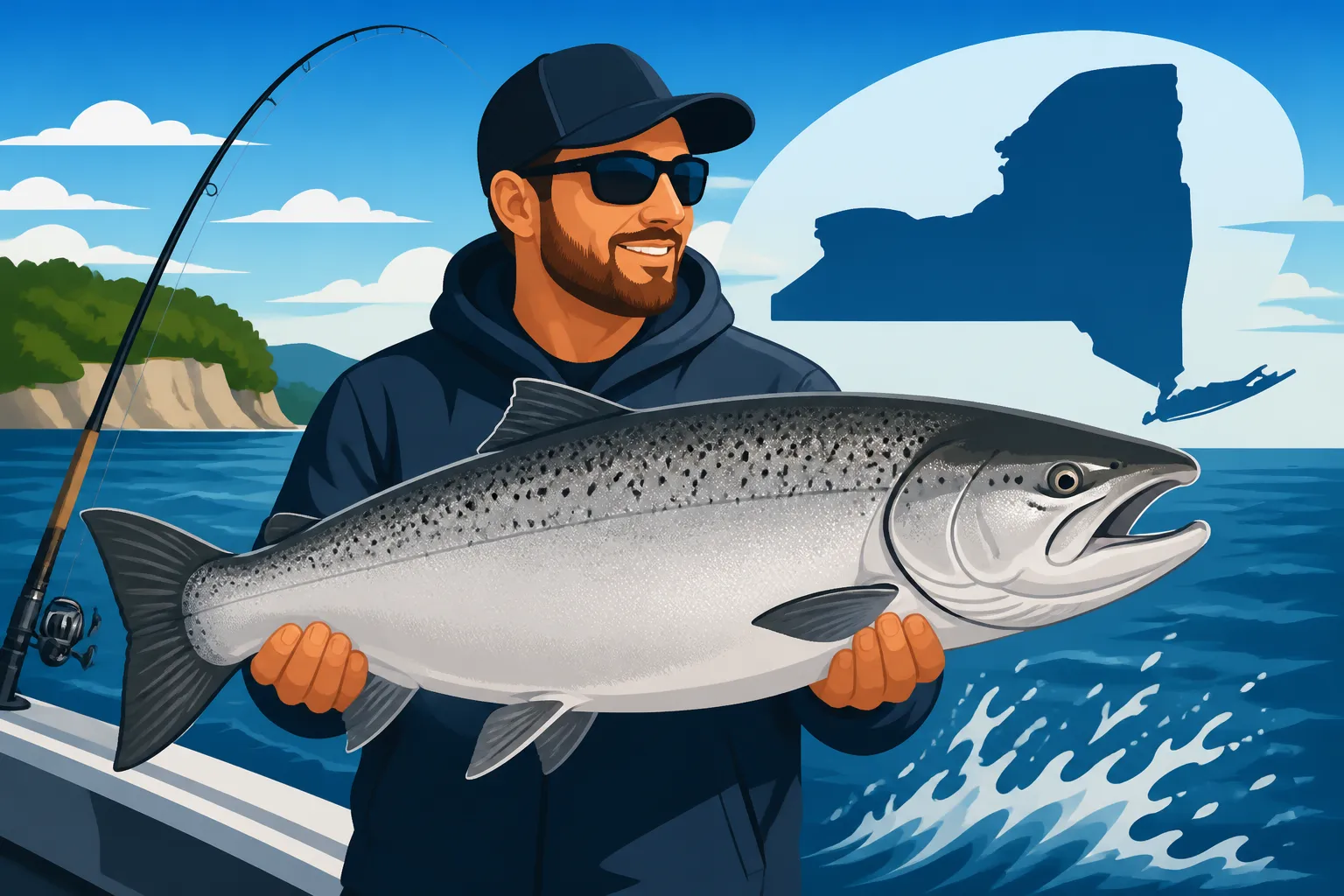
For Chinook salmon in New York's Lake Ontario, an "average" adult fish typically falls into a very respectable range. Most anglers fishing offshore during the summer months or in the tributaries during the fall run can expect to encounter fish ranging from 15 to 25 pounds. In terms of length, these fish will often measure anywhere from 30 to 38 inches.
It's important to remember that this "average" still represents an incredibly powerful and exciting fish to catch. A 20-pound Chinook will put up a fight that will test your tackle and your stamina. They are known for their blistering runs and head-shaking jumps, making every hook-up an adrenaline-fueled battle. You're not catching small panfish here; you're going toe-to-toe with a legitimate freshwater powerhouse. These are truly impressive fish that make for fantastic sport.
The Thrill of the "Trophy" Chinook
While 15-25 pounds is a solid average, Lake Ontario is famous for producing true "trophy" Chinook salmon. These are the fish that dominate fishing photos and fuel the dreams of every angler. A trophy Chinook typically starts at around 30 pounds and can climb significantly higher. Fish in the 35-40 pound class are caught every season, and while less common, some anglers are lucky enough to land true giants exceeding 40 pounds, even pushing towards the 50-pound mark. These are the kings among kings, requiring robust gear and often a fair bit of luck and skill.
The pursuit of these larger fish often dictates specific strategies, from targeting certain areas of the lake known for holding bigger fish to employing specialized tackle. While hitting the state record mark is incredibly rare – a feat usually reserved for incredible circumstances and a lot of dedication – the possibility of hooking into a personal best, a fish of a lifetime, is very real on Lake Ontario. It’s this potential for an absolute monster that keeps anglers coming back, season after season, hoping to feel the unmistakable tug of a truly colossal King. Many anglers often wonder, How Big Do Chinook Salmon Get in Lake Ontario? and the answer is, quite big indeed!
When and Where to Find Larger Chinook
Timing and location are everything when it comes to increasing your odds of landing a larger Chinook salmon on Lake Ontario. These fish aren't evenly distributed throughout the lake or across the calendar, and understanding their movements and habits is crucial.
Seasonal Size Variations
Chinook salmon exhibit distinct seasonal patterns that influence their size and condition for anglers.
- Spring and Early Summer (April – June): In the early part of the season, after the ice recedes, Chinook are typically feeding heavily in the colder waters of the lake. While they are actively putting on weight, the truly massive fish from the fall run of the previous year haven't fully reached their maximum size yet. You'll find a mix of smaller, aggressive feeders and some good-sized fish, often in the mid-teen to low 20-pound range. They are healthy and strong, but their heaviest weights are still a few months away. This is a great time to target fish that are very active after the long winter.
- Mid to Late Summer (July – August): This is often considered the prime time for catching the biggest Chinook in the main lake. As the water warms, baitfish scatter, and Chinook gorge themselves, packing on weight. The mature fish, those in their third and fourth year, are at their absolute peak physical condition before they begin their spawning migration. This is when the 25, 30, and even 40+ pound fish are most likely to be encountered offshore. They are strong, fat, and incredibly powerful. For serious trophy hunters, this window is golden.
- Fall (September – November): As fall approaches, the mature Chinook begin their migration into the tributaries to spawn. While these fish are at their maximum length and often appear massive, their weight can actually start to decline as they stop feeding and their bodies undergo significant physiological changes for spawning. They become darker in color, and their flesh quality diminishes. However, their sheer power and aggressive nature in the rivers make them an incredibly exciting catch, even if they've lost some condition. Many anglers specifically target this fall run for its intensity and the sheer number of large fish present in confined areas, as detailed in Chinook Salmon Run Peaks in Early October on Lake Ontario Tributaries.
Prime Locations for Bigger Fish
Knowing where to focus your efforts can drastically improve your chances of hooking into a trophy Chinook.
- Offshore Structure (Summer): During the summer, the biggest Chinook often hold to specific thermal breaks and baitfish concentrations in the deeper, open waters of Lake Ontario. Look for significant underwater structure like ledges, humps, and drop-offs, especially those near major river mouths. These areas act as natural highways and feeding grounds for migrating salmon. Utilizing good electronics to find bait balls and isolated large marks is key. Charter captains and experienced anglers know these "secret" spots well, often ranging from 80 to 200+ feet of water. Best Fishing Spots on Lake Ontario often refers to these types of offshore zones.
- Tributary Mouths (Late Summer/Fall): As the spawning season approaches, the areas directly outside the mouths of major tributaries become hotspots. Fish will stage here, waiting for the right conditions (like significant rain events that raise water levels and cool temperatures) to begin their upstream journey. These areas can hold incredible numbers of large, eager-to-spawn Chinook, offering some of the most exciting fishing of the year. Popular spots include the mouths of the Salmon River, the Oswego River, and Irondequoit Bay. Understanding the patterns here is vital for Best Time to Fish for Chinook Salmon on New York's Lake Ontario.
- Upstream in Tributaries (Fall): Once the fish commit to the rivers, they can be found throughout the accessible sections, often congregating in deeper pools, behind log jams, or in areas with good current breaks. While their condition might be slightly diminished, their aggressive territorial behavior makes them excellent targets for those fishing from shore or smaller boats. These are physically demanding fish to fight in current, and the sheer number of powerful fish can be astounding.
Gear and Techniques for Targeting Big Chinook
Successfully landing a big Lake Ontario Chinook isn't just about luck; it requires appropriate gear and refined techniques. These fish are incredibly powerful, and ill-prepared anglers often find their tackle snapped or their reel stripped of line.
Rods, Reels, and Line for Monster Kings
When you're dealing with fish that can easily hit 30, 40, or even 50 pounds, your equipment needs to be up to the task. Skimping on quality here is a recipe for heartbreak.
For rods, look for heavy-action trolling rods in the 8 to 10-foot range. These rods need enough backbone to handle the immense strain of a large Chinook on the run, especially when you're trolling with divers, downriggers, or lead core. They also need a good parabolic bend to absorb shocks and prevent hooks from pulling out. A common choice for many Lake Ontario anglers might be something like a Daiwa Wilderness or a St. Croix Eyecon, readily available on platforms like Amazon. For river fishing, a medium-heavy to heavy spinning or baitcasting rod, 8-10 feet, will give you the leverage needed to control these powerful fish in current.
Reels are perhaps the most critical component. You'll need high-capacity, robust baitcasting reels for trolling that can hold at least 300 yards of heavy line, and ideally more. Look for models with smooth, powerful drag systems that can withstand sustained pressure. Brands like Shimano Tekota, Daiwa Sealine, or Penn Fathom are popular choices known for their durability. For river fishing, a heavy-duty spinning reel or a stout baitcasting reel with excellent drag and line capacity is also essential.
Regarding fishing line, braided line has become a popular choice for its strength, sensitivity, and thin diameter, allowing you to run more line with less drag in the water. Many anglers use 30 to 50-pound test braided main lines, often paired with a fluorocarbon leader (20-30 pound test) for its invisibility and abrasion resistance. Monofilament in the 20-30 pound range is also still widely used, especially for its stretch which can act as a shock absorber. When browsing fishing lines, you'll find a huge selection on Amazon, from monofilament to fluorocarbon and various braids. Always err on the side of heavier test than you think you need when chasing these titans. Learning Best Line Weight for New York Freshwater Fishing is paramount for success.
Proven Lures and Presentations
Chinook salmon are attracted to a variety of lures, and success often comes from knowing which presentation to use based on the season, depth, and baitfish patterns.
For trolling in the open lake during summer, spoons are absolute staples. Popular sizes range from 3 to 6 inches, and colors can vary wildly from bright chartreuses and oranges to more natural baitfish patterns like emerald shiner or blue/silver. Common spoon brands include Dreamweaver, Michigan Stinger, and Northern King. Plugs and stickbaits, particularly diving models resembling alewives, are also highly effective, especially in lower light conditions or when fish are higher in the water column. Often, these are run behind flashers or dodgers that attract attention and mimic a school of baitfish, making your spoon or fly even more enticing.
Flasher-fly combinations are another deadly technique. A large, rotating flasher (often 8-10 inches) creates a strong visual attraction and vibration, leading a smaller, typically Mylar-tied fly. The fly imitates a wounded baitfish following a larger one. These setups are particularly effective when Chinook are aggressively feeding.
When the Chinook enter the tributaries in the fall, their feeding habits change, and they become more aggressive and territorial. Here, egg sacs, beads, and flies (like stoneflies, nymphs, or large streamers) are incredibly effective, mimicking the natural food sources or provoking a strike response. Drifting these offerings through prime holding water is a go-to technique. Spinners and small crankbaits can also elicit strikes from aggressive fish. You can find a wide array of terminal tackle and specialized lures for salmon fishing on Amazon, ensuring you have the right tools for any scenario. For details on tributary fishing, check out How to Fish New York's Great Lakes Tributaries.
Your Next Trophy Awaits in Lake Ontario
There’s an undeniable allure to chasing Chinook salmon in New York's Lake Ontario. The expectation of hooking into a powerful, acrobatic fish, especially one that tips the scales at an impressive average of 15-25 pounds, with the very real chance of a 30, 40, or even 50-pound monster, is what draws anglers from all over. It’s not just a fishing trip; it’s an adventure into one of the most exciting freshwater fisheries on the planet.
With the right knowledge of their life cycle, an understanding of the factors that influence their growth, and a commitment to using appropriate gear and proven techniques, you're well on your way to experiencing the thrill of a lifetime. Whether you're trolling the deep, clear waters of the main lake in summer, or navigating the vibrant chaos of a fall tributary run, Lake Ontario's King Salmon offer an unparalleled challenge and reward. So, get your gear ready, study those patterns, and prepare for battle – your next trophy Chinook is out there, waiting.
Disclaimer
This article is for general informational purposes only and does not constitute professional advice. Laws, prices and regulations vary by location and change over time. Consult a qualified professional for guidance on your specific situation.