Steelhead vs Rainbow Trout: What’s the Difference?
It's incredibly common for anglers, new and experienced alike, to get a little tangled up when talking about "steelhead" and "rainbow trout." They look similar, often inhabit the same waters, and sometimes the terms are even used interchangeably. But there's a fascinating, distinct difference in their life histories that makes each a unique challenge and a prized catch. This guide will unravel that confusion, helping you understand the subtle yet significant distinctions between these two incredible fish in New York waters.
The Core Distinction: Anadromy
At the heart of the steelhead versus rainbow trout debate lies a single, biological concept: anadromy. This fancy word simply means a fish is born in freshwater, migrates to saltwater to grow and mature, and then returns to freshwater to spawn. It's a journey that profoundly shapes every aspect of a fish's life.
What Makes a Steelhead a Steelhead?
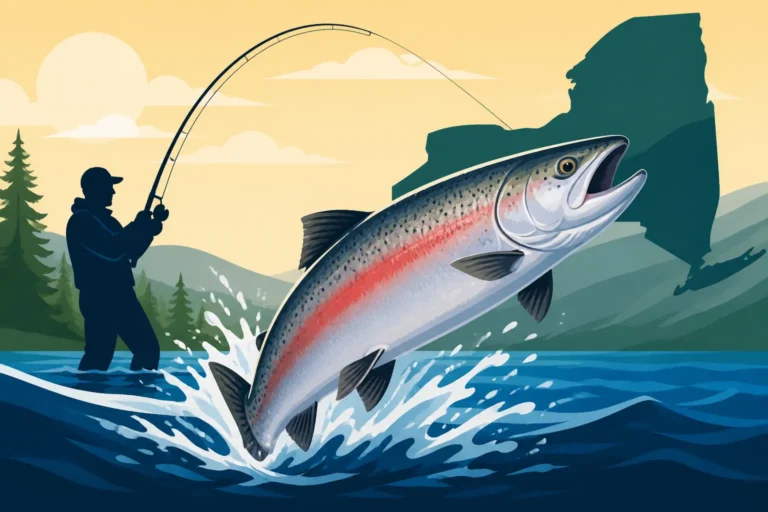
A steelhead is, genetically speaking, a rainbow trout that has decided to embark on this epic anadromous journey. Instead of staying put in their natal streams or lakes, young steelhead smolts feel an irresistible pull towards larger bodies of water, often oceans or, in New York's case, the Great Lakes. They spend years in these vast, nutrient-rich environments, growing larger, stronger, and developing a distinctive steely, chrome-plated appearance that gives them their name.
When it's time to spawn, these magnificent fish return to the very freshwater streams where they were born, sometimes traveling hundreds of miles upstream against powerful currents. Unlike Pacific salmon species, which typically die after spawning, steelhead are often iteroparous, meaning they can survive spawning and return to the big water, making multiple spawning runs throughout their lives. This incredible resilience is a testament to their strength and adaptability. For instance, anglers targeting these magnificent fish often focus on New York's Salmon River Fishing Guide and other tributaries feeding into Lake Ontario or Lake Erie.
What Makes a Rainbow a Rainbow?
A "resident" rainbow trout, on the other hand, is a member of the exact same species (Oncorhynchus mykiss) that chooses to live its entire life within a freshwater environment. This could be a small mountain stream, a larger river, or a tranquil lake. These fish never make the journey to saltwater or the open waters of the Great Lakes. They are content to find their food, grow, and reproduce within the confines of their freshwater home.
Resident rainbows tend to be smaller than their steelhead cousins, simply because freshwater environments typically don't offer the same abundance of food resources as the Great Lakes or oceans. Their coloration is also often more vibrant, with the distinctive pink or red lateral stripe that gives them the "rainbow" name becoming quite pronounced, especially during spawning season. In New York, you'll find healthy populations of resident rainbow trout in many of our state's beautiful rivers and streams, thriving in colder, oxygen-rich waters.
Physical Characteristics: Spotting the Differences
While they are the same species, the divergent life paths of steelhead and rainbow trout lead to some noticeable physical differences. Learning to spot these can be incredibly helpful when you're on the water and trying to identify your catch.
Size and Shape
One of the most immediate indicators is size. Steelhead, having spent years gorging on abundant prey in the Great Lakes, tend to be significantly larger and heavier than resident rainbows of the same age. They develop a more torpedo-like, streamlined body shape, built for powerful swimming against strong currents during their migratory runs. Imagine a perfectly sculpted athlete, lean and muscular. A typical steelhead might range from 5 to 20 pounds, with some true giants pushing even heavier, whereas a resident rainbow might average a pound or two, with a really big one perhaps hitting 5 pounds in a particularly rich stream or lake.
Their heads might also appear proportionally smaller compared to their robust bodies, another adaptation for efficient movement through water. The tail, or caudal fin, of a steelhead is often larger and more rigid, providing the propulsion needed for their incredible migrations.
Coloration and Markings
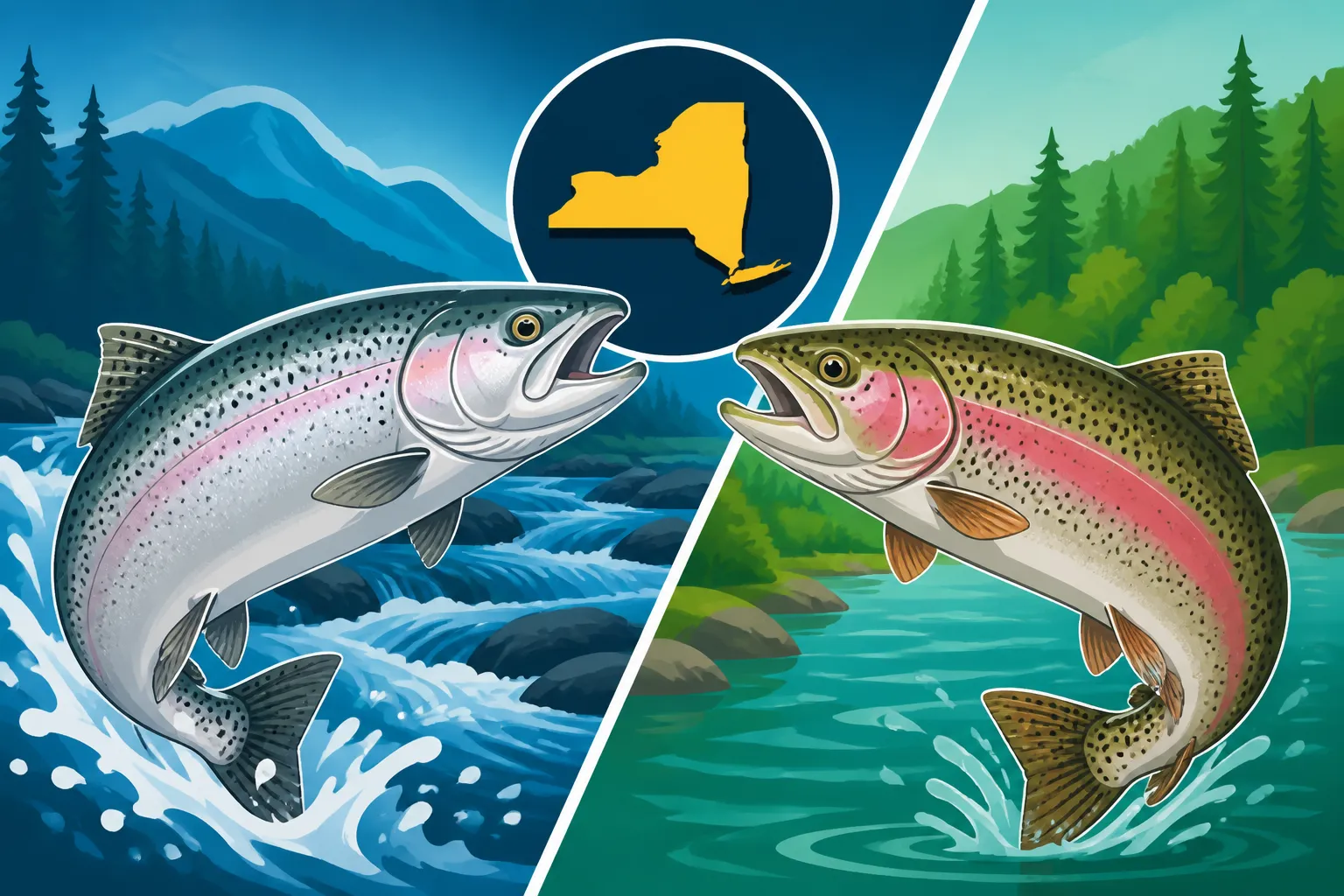
This is where the "chrome" really comes into play. Fresh-run steelhead from the Great Lakes often exhibit a brilliant, silvery, almost metallic sheen. Their backs might be a darker olive or blue-green, fading to that stunning silver on their flanks and a clean white belly. The spots on their bodies are typically less pronounced and may be smaller and more scattered, almost blending into the overall chrome. This silvery camouflage is a fantastic adaptation for life in open, big water environments, helping them blend in with the dappled light of the depths.
Resident rainbow trout, by contrast, generally display a much more vibrant and diverse palette. Their backs are often a darker green or brown, fading into a creamy or yellowish belly. The signature red or pink lateral stripe is usually very distinct, running along their sides, sometimes appearing quite brilliant. Their spots are typically larger, darker, and more numerous, extending all the way down to their lateral line and sometimes onto their fins. This more mottled coloration helps them blend into the varied, complex environments of rivers and streams, mimicking rocks, gravel, and vegetation.
Fin and Tail Differences
While often subtle, the fins can also offer clues. Steelhead often have fins that appear more symmetrical and well-defined, with sharp edges, especially their caudal fin, which is built for endurance and power. Their pectoral and pelvic fins might also be a bit longer and more pointed.
Resident rainbows, while still beautiful, may have fins that appear a bit more rounded or, depending on their habitat and age, might show more wear and tear from navigating tight spaces and abrasive stream bottoms. This is not a hard and fast rule, of course, as individual fish vary, but it's another characteristic to observe when you're trying to make an identification.
Life Cycles and Habitats: A Tale of Two Lives
Understanding the different life cycles and preferred habitats of steelhead and rainbow trout is crucial not only for identification but also for successful fishing. It dictates where you'll find them and what techniques you'll use.
The Steelhead's Epic Journey
The life of a steelhead is one of incredible endurance and migration. Born in a tributary river or stream, they spend their first year or two in freshwater, feeding and growing until they reach the "smolt" stage. At this point, a biological change occurs, preparing them for saltwater (or Great Lakes) life. They migrate downstream, entering the vastness of Lake Ontario or Lake Erie, where they will spend anywhere from two to five years.
During this time, they feed voraciously on smaller baitfish, growing rapidly into powerful, chrome-bright adults. When the urge to spawn hits, typically in the late fall or early spring, they begin their arduous journey back up their natal rivers. This is when anglers target them in tributaries like the Salmon River, the Genesee River, or Irondequoit Creek. They navigate rapids, leap waterfalls, and fight strong currents to reach their spawning grounds. After spawning, many, but not all, return to the big lake, only to repeat the cycle in subsequent years. New York's Salmon River Fishing Guide can give you an excellent overview of these runs.
The Rainbow's Cozy Niche
Resident rainbow trout, by contrast, lead a much more localized existence. They hatch from eggs laid in gravel beds within freshwater streams, rivers, or lakes, and they remain there their entire lives. Their diet consists of insects, small crustaceans, and other aquatic invertebrates found within their home waters. They don't have the benefit of the vast food resources of the Great Lakes, so their growth is generally slower and their ultimate size smaller.
These trout are often found in cooler, well-oxygenated waters, typically with good cover from overhanging banks, submerged logs, or rocky bottom structures. They are sensitive to water quality and temperature, making them excellent indicators of a healthy freshwater ecosystem. Anglers often find resident rainbows in pristine Adirondack streams or the clear waters of the Catskills. You might even find them in surprising urban settings if the water quality is good, showing their adaptability.
Where They Overlap
Here's where it can get tricky: sometimes, you'll find both steelhead (or at least, sea-run rainbow trout that are genetically capable of being steelhead) and resident rainbows in the same system. For instance, in a river system that flows into Lake Ontario, you might encounter large, migratory steelhead pushing upstream alongside smaller, resident rainbow trout that never left the river.
Some rivers, like certain sections of the Salmon River, are famous for their runs of migratory steelhead but also hold resident trout that either chose not to migrate or were stocked and remained in the river. This overlap is part of the challenge and excitement of fishing these systems. You might hook into a chrome missile fresh from the lake or a beautifully colored resident, adding to the mystery of each cast. Understanding Fish Species You Can Catch in New York will give you a broader picture of these ecosystems.
Fishing for Steelhead vs. Rainbow Trout
Given their distinct behaviors and habitats, the strategies and gear you employ will often differ significantly when targeting steelhead versus resident rainbow trout. While there's overlap, specializing your approach can make a huge difference in your success.
Tactics for Steelhead
Targeting steelhead is often about intercepting them during their powerful migratory runs. This means focusing on river systems that connect to the Great Lakes. Popular techniques include:
- Drift Fishing: Using floats (bobbers) to present natural baits like egg sacs, beads, or small worms, or artificial lures like small jigs, to fish holding in current seams, pools, and runs. The key is a natural, drag-free drift.
- Bottom Bouncing/Slinky Drifting: This involves weighting your line to keep your bait or lure near the bottom as it tumbles along with the current, especially effective in deeper runs.
- Fly Fishing: Steelhead on the fly is a highly revered pursuit. Nymphing with large stonefly or caddisfly imitations, or swinging large streamers, can be incredibly effective. Sometimes, even dry flies can work during specific hatches, though it's less common for large migratory fish.
- Casting Spoons/Spinners: In wider river sections or near river mouths, casting heavier spoons or spinners can entice aggressive steelhead.
The gear for steelhead needs to be robust. Think medium-light to medium power spinning rods or longer, sensitive centerpin rods for drift fishing. You'll want reels with smooth drags and 8-12 lb test line, often fluorocarbon leaders for stealth. When you're ready to pick up some of these specialized rods and reels, Amazon often has a great selection of reputable brands.
Tactics for Resident Rainbows
Fishing for resident rainbow trout often involves a more delicate approach, especially in smaller streams. These fish are typically less aggressive than their migratory cousins and are more focused on local food sources.
- Light Spin Fishing: Small spinners, inline spoons, or tiny jigs are excellent choices. Casting accurately and retrieving at varied speeds can trigger strikes. Ultra-light gear is often preferred here.
- Bait Fishing: Worms, corn, or powerbait presented under a small float or on the bottom are classic and effective methods, particularly in slower moving sections of rivers or lakes.
- Fly Fishing (Traditional): This is arguably the most popular method for resident rainbows. Dry flies that imitate emerging insects, nymphs fished subsurface, and small streamers are all highly effective. Matching the hatch is often critical.
- Trolling (Lakes): In larger lakes that hold resident rainbows, trolling small spoons, stickbaits, or even live bait behind a boat can be productive.
For resident rainbows, lighter tackle is usually the order of the day. Ultra-light spinning gear with 2-6 lb test line, or a 3-5 weight fly rod, is typically perfect. The goal is often subtle presentations and protecting light leaders.
Gear Considerations
While both types of fishing target trout, the demands on your gear can be quite different. A strong, long rod that helps you mend line and control drifts in a powerful river for steelhead isn't necessarily what you want for delicate presentations to wary resident rainbows in a small creek.
| Feature | Steelhead Fishing Gear | Resident Rainbow Trout Gear |
|---|---|---|
| Rod Power | Medium-Light to Medium (often longer rods, 9-13 ft) | Ultra-Light to Light (typically 5-8 ft) |
| Line Weight | 8-12 lb monofilament or braid, 6-10 lb fluorocarbon leaders | 2-6 lb monofilament or fluorocarbon |
| Lures/Baits | Egg sacs, beads, larger jigs, heavier spoons/spinners, large streamers | Small spinners, tiny jigs, worms, PowerBait, small dry flies/nymphs |
| Reel Size | 2500-4000 series spinning, or specialized centerpin reels | 1000-2000 series spinning, or small fly reels |
| Approach | Covering water, targeting migratory pathways, powerful fish | Stealth, delicate presentations, targeting structure, wary fish |
Remember, no matter what you're targeting, always check the local New York Fishing Regulations Explained for specific species, season dates, and catch limits.
Why Does the Distinction Matter?
You might be thinking, "They're both great fish, why does it matter what I call them?" And while that's true in terms of the pure joy of fishing, understanding the difference between steelhead and rainbow trout is actually quite important for several reasons.
Conservation and Management
For fisheries managers, distinguishing between steelhead and resident rainbow trout is absolutely critical for effective conservation and stocking programs. Steelhead populations rely heavily on healthy migratory corridors and clean water in both their freshwater spawning grounds and their Great Lakes feeding grounds. Protecting these pathways and managing the Great Lakes ecosystem is paramount to their survival.
Resident rainbow trout, on the other hand, require healthy stream and lake environments year-round. Over-harvesting a resident population can have a much more immediate and localized impact. Stocking efforts also differ; managers might stock domestic rainbow trout strains to provide recreational opportunities in landlocked waters, while they strive to protect and enhance wild steelhead runs through habitat restoration and careful regulation. The specific rules for New York Freshwater Fishing Rules often reflect these distinctions. Understanding the nuances helps ensure these amazing fish continue to thrive for generations.
Angler Experience
For the angler, knowing the difference can profoundly impact your experience and success. If you're heading to a Lake Ontario tributary in the fall hoping for a chrome-bright fish that will peel line off your reel, you're targeting steelhead. You'll bring different gear, use different tactics, and set different expectations than if you're hiking into an Adirondack stream for smaller, wild resident rainbows.
It also deepens your appreciation for the fish. When you land a magnificent steelhead, you understand the incredible journey it has undertaken. When you carefully release a vibrant resident rainbow from a clear mountain stream, you appreciate its resilience in a more localized, delicate ecosystem. It's about respecting the biology and the unique challenges each fish faces. Plus, confidently knowing what you've caught just adds to your overall satisfaction on the water.
This knowledge even plays into discussions with fellow anglers. Being able to articulate the difference allows for more precise conversations about fishing reports, techniques, and conservation efforts. It helps us all become more informed and responsible stewards of New York's incredible fisheries.
Disclaimer
This article is for general informational purposes only and does not constitute professional advice. Laws, prices and regulations vary by location and change over time. Consult a qualified professional for guidance on your specific situation.