Are Steelhead and Rainbow Trout the Same Fish?
It's a question that has sparked countless debates around campfires and on the banks of rivers across New York: Are steelhead and rainbow trout the same fish? You hear anglers call them by different names, describe different fighting styles, and talk about entirely separate habitats. It's enough to make your head spin, leaving you wondering if you're missing a crucial piece of information. Well, take a deep breath, because we're about to untangle this common confusion and shed some light on one of New York's most fascinating game fish. This guide will clarify the relationship between these two popular species and explain why they are both so beloved by anglers.
The Genetic Connection: Two Sides of the Same Coin?
The fundamental truth about steelhead and rainbow trout is often the most surprising to many anglers. Despite their different appearances, behaviors, and the distinct experiences they offer on the end of a line, they are, in fact, the exact same species. This might sound counterintuitive if you've ever battled a chrome-bright steelhead in a raging tributary compared to a colorful, stream-dwelling rainbow. But trust me, the science backs it up, and understanding this shared heritage is key to appreciating both forms of this incredible fish.
The Scientific Truth: Oncorhynchus mykiss
Scientifically, both steelhead and resident rainbow trout are classified as Oncorhynchus mykiss. Yes, it's that simple on a genetic level. Think of it like a human family: you might have cousins who live in a bustling city and work in finance, and other cousins who live on a quiet farm and work the land. They share the same last name, the same genetic lineage, but their environments and lifestyles have shaped them into very different individuals. The same principle applies here.
The designation Oncorhynchus mykiss groups all these variations under one umbrella. This means that if you were to take a tissue sample from a vibrant, resident rainbow trout living in a Catskill mountain stream and compare it to a sleek, silver steelhead fresh out of Lake Ontario, their DNA would tell you they are undeniably the same species. This common ancestry is why they share so many fundamental biological traits, from their preferred spawning habitats to their dietary tendencies. It's a testament to the incredible adaptability of this particular species, allowing it to thrive in vastly different ecological niches, even within the same region of New York.
How Environment Shapes Appearance and Behavior
If they're the same species, then why do they look and act so differently? The answer lies almost entirely in their environment and life history strategy. This is where the "steelhead" designation truly comes into play, referring to the anadromous (or adfluvial, in the case of Great Lakes fish) form of Oncorhynchus mykiss.
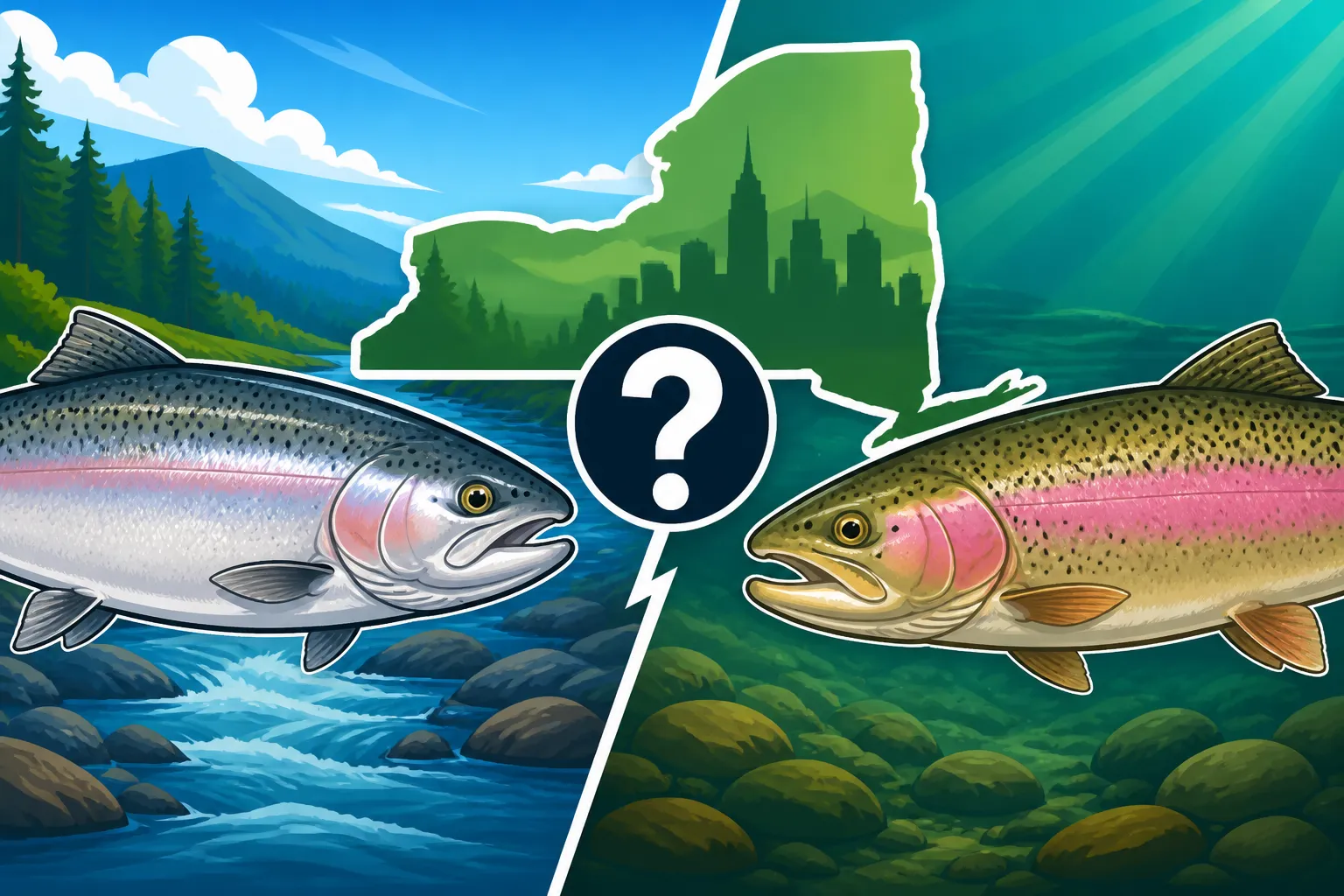
A fish that spends its entire life in a smaller, clear-water stream, constantly camouflaging itself against rocks and gravel, will naturally develop a different look than one that spends years feeding and growing in the vast, open waters of an ocean or a Great Lake. Resident rainbow trout, often found in New York's smaller creeks and rivers, tend to exhibit that classic "rainbow" coloration: a distinctive reddish-pink stripe running along their lateral line, often with darker spots and a greenish-blue back. This vibrant patterning helps them blend into their freshwater surroundings, offering protection from predators both above and below the water. You can find beautiful examples of these in many of New York's streams, offering anglers a colorful target. Rainbow Trout in New York
Conversely, steelhead, having spent significant time in large, open water bodies like Lake Ontario or Lake Erie, adopt a more streamlined, silvery, or "chromer" appearance. This sleek, metallic look helps them blend into the vast, often deeper waters they inhabit, much like a salmon or ocean-going trout. Their spots might be less defined, and the pink stripe often fades significantly, only becoming more prominent as they spend time in freshwater tributaries during their spawning runs. This adaptation helps them navigate their open-water existence, where camouflage against a varied streambed isn't as critical. These fish are true powerhouses, built for long migrations and open-water hunting, and their appearance reflects that.
Understanding the Steelhead Lifestyle
The term "steelhead" conjures images of powerful, chrome-bright fish leaping against a backdrop of snowy banks or crashing waves. This specific designation refers to a particular life cycle strategy within the Oncorhynchus mykiss species. These are the adventurous ones, the wanderers, who undertake incredible journeys that profoundly shape their bodies, strength, and fighting spirit.
The Anadromous Journey
The defining characteristic of a steelhead is its anadromous nature. While true anadromous fish migrate from freshwater to the ocean and back to freshwater to spawn, in the context of New York and the Great Lakes, steelhead are considered adfluvial. This means they are born in freshwater tributaries, migrate out into the vast expanse of a large freshwater lake (like Lake Ontario or Lake Erie), spend years growing large and robust, and then return to those same freshwater rivers and streams to spawn.
This migratory pattern is what gives them their distinctive "steel" grey or silver coloration – hence the name. They adapt to a pelagic (open-water) existence, feeding heavily on baitfish and growing to impressive sizes. When the urge to spawn calls, often triggered by changing water temperatures and flows, they begin their incredible upstream migrations, pushing against currents, leaping obstacles, and providing an unparalleled challenge for anglers. This annual pilgrimage is a true spectacle, and a highlight for many New York anglers. Fall Steelhead Run Timing in New York
Imagine the sheer physical demands of this journey: navigating powerful currents, avoiding predators, and enduring harsh weather conditions. It takes a fish of immense strength and endurance, which is exactly what a steelhead becomes. They are truly the gladiators of the trout world. Steelhead Trout in New York
Why They're So Prized by Anglers
There's a reason why so many anglers brave cold temperatures, icy winds, and slippery riverbanks for a chance to hook a steelhead: they are legendary fighters. A fresh steelhead, especially one that has just entered a river from the Great Lakes, is an absolute powerhouse. They are known for their explosive runs, aerial acrobatics, and relentless refusal to give up.
When you hook a steelhead, be prepared for a fight. They'll peel line off your reel at an alarming rate, often jump clear out of the water multiple times, and dive deep into the strongest currents, testing every knot and every piece of your tackle. It's a heart-pounding experience that few other freshwater fish can match. For many, the sheer thrill of landing one of these migratory warriors makes all the effort worthwhile. Anglers often invest in specific gear, like robust spinning or fly rods, capable of handling these powerful fish, and you can find a wide array of options, from basic setups to high-performance models, often available on Amazon. How to Fish for Steelhead in New York is a great resource if you're looking to try your hand at this exciting fishery.
The Resident Rainbow Trout Life
While their migratory cousins embark on epic journeys, resident rainbow trout choose a more settled existence. These are the fish that complete their entire life cycle within the same freshwater systems where they were born, adapting intimately to the nuances of their local streams, rivers, and lakes. They may not boast the sheer size or chrome plating of a steelhead, but they offer a different, equally rewarding, and often more accessible angling experience.
Staying Home: A Life in Freshwater
Resident rainbow trout are the homebodies of the Oncorhynchus mykiss family. From the moment they hatch from their eggs in a gravel redd, they remain in the same freshwater environment. They find their feeding lies, their hiding spots, and their spawning grounds all within the confines of a single river system or lake. This localized existence is why they develop the more "traditional" rainbow trout appearance: that striking, iridescent pink or red band along their sides, speckled bodies, and vibrant hues that blend perfectly with the mossy rocks, gravel bottoms, and dappled sunlight of their stream homes.
You'll find these beautiful fish in a huge variety of waters across New York. They populate cold, clear mountain brooks in the Adirondacks, healthy stretches of larger rivers in the Catskills, and many stocked lakes and ponds throughout the state. Because they don't undertake long migrations, their lives are focused on finding food, avoiding predators, and reproducing within their immediate surroundings. This makes them a more consistent presence for anglers who prefer to stay close to home or explore smaller, more intimate waterways. New York's Most Popular Freshwater Fish often include these resident rainbows for good reason.
Diverse Habitats, Diverse Angling Experiences
The beauty of resident rainbow trout lies in their ubiquity and adaptability. You can target them in vastly different environments, each offering its own unique charm and challenge.
- Small Streams: In tiny, crystal-clear brooks, you might find smaller, wild rainbow trout that are incredibly wary. Here, stealth, delicate presentations, and light tackle are key. A small fly rod or ultralight spinning gear with tiny spinners or worms can be incredibly effective.
- Larger Rivers: In broader river systems, rainbows can grow larger, feeding on a wider variety of insects, minnows, and crustaceans. Drifting natural baits, casting small crankbaits, or using various fly fishing techniques can yield excellent results.
- Lakes and Ponds: Stocked lakes are a fantastic place to introduce beginners to trout fishing, as these fish are often more cooperative. Trolling small spoons or stickbaits, still-fishing with powerbaits or worms from shore, or even fly casting from a float tube are all productive methods.
The diverse habitats mean that you can spend a lifetime exploring different ways to catch resident rainbow trout in New York. They offer a fantastic opportunity for anglers of all skill levels to enjoy a day on the water, whether you're a seasoned fly fisherman stalking wary wild trout or a family enjoying a leisurely afternoon at a stocked pond. How to Trout Fish in New York will give you plenty of ideas for getting started with these adaptable fish.
Key Differences in Angling and Management
Understanding that steelhead and rainbow trout are the same species, Oncorhynchus mykiss, but with different life histories, helps us appreciate why angling techniques and management strategies are so distinct. It's not just about what they are, but what they do and where they go that dictates how we approach them on the water and how state agencies protect them.
Gear and Techniques: Adapting to the Lifestyle
The most significant practical difference for anglers comes down to the gear and techniques required to successfully target each "type" of fish. You wouldn't bring a butter knife to a sword fight, and you wouldn't bring a delicate ultralight rod to battle a strong steelhead.
- Steelhead Fishing Gear: Targeting steelhead, especially in the powerful tributaries of Lake Ontario and Lake Erie, demands robust tackle. These fish are big, strong, and accustomed to fighting currents. You'll often see anglers using longer, powerful spinning rods (8-10 feet), capable of casting heavy rigs and absorbing powerful runs. Float fishing with large floats, drifting egg sacs or beads, or swinging large streamers and nymphs on heavy fly rods are common tactics. Investing in quality gear, including line with sufficient breaking strength and durable reels, is paramount. You might look for specific steelhead rods and reels on Amazon that are designed for this kind of rigorous fishing. These fish demand respect and the right tools for the job. How to Fish Egg Sacs for Steelhead provides excellent guidance on a popular technique.
- Resident Rainbow Trout Fishing Gear: For resident rainbow trout in smaller streams and rivers, a more delicate approach is often key. Lighter spinning rods (5-7 feet) with lighter lines (4-6 lb test) are common, allowing for subtle presentations of small spinners, spoons, or natural baits like worms. Fly fishing for resident rainbows, particularly in the famous Catskill streams, often involves lighter fly rods (3-5 weight), delicate leaders, and small dry flies, nymphs, or wet flies. Precision casting and stealth are frequently more important than brute force. If you're just starting, a versatile light spinning combo or an entry-level fly rod setup, easily found on Amazon, can get you started without breaking the bank.
| Feature | Steelhead | Resident Rainbow Trout |
|---|---|---|
| Scientific Name | Oncorhynchus mykiss | Oncorhynchus mykiss |
| Appearance | Silver/chrome, streamlined, fewer spots | Colorful, pink/red stripe, vibrant spots |
| Habitat | Born freshwater, grows in large lakes/ocean, returns freshwater | Spends entire life in freshwater streams/lakes |
| Size | Generally larger, 5-20+ lbs | Generally smaller, 1-5 lbs (can be larger) |
| Fight Style | Powerful runs, acrobatic jumps, relentless | Spirited runs, good fight, but less brute force |
| Typical Gear | Heavy spinning/fly rods, strong line | Light spinning/fly rods, delicate tackle |
| Primary Diet | Baitfish, crustaceans (in lakes), insects | Insects, small minnows, worms, crustaceans |
| Angling Focus | Migratory runs, specific river stretches | Year-round in various freshwater bodies |
Regulatory and Conservation Considerations
Despite their shared genetics, New York's Department of Environmental Conservation (DEC) often manages steelhead and resident rainbow trout populations with distinct regulations. This isn't because they are different species, but because their life cycles and population dynamics are fundamentally different, requiring tailored conservation efforts.
For steelhead, regulations often focus on protecting spawning runs in specific tributaries, ensuring enough fish make it upstream to reproduce. This can include specific season dates, bait restrictions (like mandating the use of circle hooks for bait fishing in certain areas to reduce mortality), and bag limits designed to sustain the migratory population. The health of the Great Lakes and their tributaries is critical for steelhead, and management often involves habitat restoration and careful monitoring of stocking programs. New York Freshwater Fishing Rules are detailed and specific for these fisheries.
Resident rainbow trout, particularly wild populations in smaller streams, may have different regulations aimed at protecting fragile ecosystems or enhancing wild reproduction. Some streams might be designated "catch-and-release only," or have specific tackle restrictions (e.g., artificial lures only). Stocked trout populations, on the other hand, are often managed with more liberal bag limits, as they are typically put-and-take fisheries designed to provide recreational opportunities. It's crucial for any angler to consult the New York DEC Fishing Regulations Guide to understand the specific rules for the waters they plan to fish, as ignoring these can lead to penalties.
The Great Lakes Connection: New York's Unique Steelhead Fishery
New York is particularly blessed with an incredible steelhead fishery, primarily due to its frontage on the Great Lakes, Lake Ontario and Lake Erie. These vast freshwater seas act as the "ocean" for New York's steelhead, providing rich feeding grounds where rainbow trout can grow to impressive sizes.
Every fall, winter, and spring, these magnificent fish embark on their journey from the deep waters of the Great Lakes into their natal tributaries across the state. Rivers like the Salmon River, the Genesee River, the Oswego River, and numerous smaller creeks become vibrant hotspots for steelhead anglers. This unique characteristic of New York's geography allows anglers to experience "anadromous" fishing without ever needing to touch saltwater. It's a truly special opportunity to target a fish that combines the fighting spirit of a salmon with the beauty of a trout.
The distinction between steelhead and rainbow trout, therefore, is not a matter of species, but of lifestyle. It's about respecting the incredible journey some fish undertake and the steadfast resilience of others who stay close to home. Understanding this connection enriches your angling experience and helps you appreciate the diverse forms of Oncorhynchus mykiss that grace the waters of New York. Whether you're chasing chrome or casting to colorful residents, you're interacting with different expressions of the same magnificent fish.
Disclaimer
This article is for general informational purposes only and does not constitute professional advice. Laws, prices and regulations vary by location and change over time. Consult a qualified professional for guidance on your specific situation.