How to Trout Fish in New York
For many anglers, the thought of fishing for trout in New York conjures images of pristine mountain streams, shimmering lakes, and the satisfying tug of a feisty fish. But let's be real, it's not always as simple as a postcard. From deciphering complex regulations to knowing which bait or fly to use at what time of year, it can feel overwhelming trying to connect with these elusive beauties. This comprehensive guide is designed to cut through the confusion, helping you understand everything you need to know to successfully catch trout across the diverse waters of New York State.
Understanding New York's Trout Species and Their Habitats
New York is truly a trout angler's paradise, offering a remarkable variety of species, each with its own unique characteristics and preferred haunts. Knowing which trout you're targeting can significantly influence your approach, from the gear you choose to the specific spots you seek out. It's not just about "trout fishing"; it's about fishing for this trout, in this stream, right now.
Native Brook Trout: The State Fish
Ah, the brook trout – New York's official state fish and a true gem of our colder, pristine waters. These aren't just fish; they're living jewels with their stunning vermiculated patterns, blue halos around red spots, and creamy white leading edges on their fins. They are, however, often the smallest of our trout species, typically ranging from 6 to 12 inches, though larger specimens can be found in wilder, less pressured waters.
Brook trout are incredibly sensitive to water quality and temperature. You'll primarily find them in the crystal-clear, oxygen-rich headwaters of mountain streams, secluded ponds, and high-elevation lakes, particularly throughout the Adirondacks and the Catskills. They thrive in environments with plenty of overhead cover, like fallen logs, undercut banks, and dense vegetation, which provide both shelter from predators and cooler water temperatures. Their diet consists mainly of aquatic insects, small minnows, and terrestrial bugs that fall into the water. If you're looking for a truly wild New York fishing experience, seeking out native brookies is it.
Brown Trout: The Hardy European Import
The brown trout is a testament to resilience, a European native that has found an exceptionally comfortable home in New York's waters. These fish are known for their striking golden-brown hues, often adorned with dark spots ringed with lighter halos, and sometimes a few red spots as well. They're often mistaken for brook trout due to their spots, but their overall color and lack of the distinctive white fin edges are key differentiators. Brown trout typically grow larger than brook trout, with many anglers regularly catching fish in the 12-20 inch range, and trophy browns exceeding 25 inches are not uncommon, especially in larger rivers and lakes.
What makes brown trout so pervasive is their remarkable adaptability. They can tolerate warmer water temperatures and more varied water conditions than their brook trout cousins, making them successful in a wider range of environments. You'll find them in almost every major trout stream and river system across New York, from the famous Salmon River tributaries to the larger Finger Lakes. They're opportunistic feeders, gorging on insects, baitfish, crayfish, and even small rodents, which contributes to their impressive size. This hardiness and willingness to strike at a variety of offerings make them a favorite target for many anglers.
Rainbow Trout: The Stream-Dwelling Fighter
Rainbow trout are the acrobats of the trout world, renowned for their spirited fights and spectacular leaps once hooked. Instantly recognizable by the iridescent pink or red stripe running along their flanks, especially prominent during spawning, these fish are a joy to catch. They are native to the Pacific drainages of North America but have been widely introduced across New York, thriving in both rivers and many of our larger lakes. Like brown trout, rainbows can reach impressive sizes, with stream-dwelling fish often in the 10-18 inch range and lake-run steelhead (which are essentially migratory rainbow trout) often exceeding 20 inches and packing serious muscle.
You'll find rainbow trout in cold, clear rivers and streams, particularly those with gravel beds suitable for spawning. They are also heavily stocked in many New York waters by the Department of Environmental Conservation (DEC), providing abundant opportunities for anglers. During their migratory phases, especially in spring and fall, the steelhead runs on Lake Ontario tributaries, like the Salmon River, are legendary. They're active feeders, keen on aquatic insects, small baitfish, and various lures, and their aggressive nature makes them a thrilling target for both fly and spin anglers. For more on these migrations, check out our guide on how to fish for steelhead in New York.
Lake Trout: The Deepwater Giants
When we talk about deepwater powerhouses in New York, we're talking about lake trout. These are the behemoths of the trout family, capable of growing to immense sizes. They typically have dark bodies, often olive to gray, covered with light spots that are larger and more irregular than those on a brown or brook trout. While most anglers catch lake trout in the 3-10 pound range, fish exceeding 20 or even 30 pounds are not unheard of in New York's deepest lakes. Just imagine the fight from a fish of that magnitude! You can even find information on the New York State Record Lake Trout Weight, which is truly impressive.
Lake trout are perfectly adapted to the cold, oxygen-rich depths of large, deep glacial lakes. In New York, their primary strongholds are the Finger Lakes (Cayuga, Seneca, Owasco, Skaneateles, and Keuka), Lake George, and the vast waters of Lake Champlain and Lake Ontario. They spend much of their lives suspended in cold water, often 50 feet or more below the surface, following schools of baitfish like alewives and smelt. Fishing for lake trout often requires specialized techniques like downrigging or deep jigging, but the reward of battling one of these ancient predators is well worth the effort.
Landlocked Salmon: An Honorable Mention
While not strictly a "trout," landlocked Atlantic salmon are often grouped with trout due to their similar habitat preferences and angling techniques. These magnificent fish are essentially Atlantic salmon that have adapted to live their entire lives in freshwater lakes and rivers, unable to reach the ocean. They share the classic silvery-blue sheen of their sea-run relatives, often with scattered dark spots. In New York, they are primarily found in a few specific locations, most notably some of the larger Finger Lakes and certain Adirondack lakes.
Landlocked salmon are known for their spectacular aerial displays when hooked and their strong, fast runs. They typically feed on smelt, alewives, and other baitfish, making trolling a popular and effective method to target them in deep lakes. Their presence adds another exciting dimension to New York's coldwater fisheries, offering a unique challenge for anglers looking to diversify their trout-fishing experience.
When and Where to Find Trout in New York
Timing and location are everything when it comes to trout fishing. New York's diverse geography and distinct seasons mean that the "best" time and place to find trout can change dramatically throughout the year. Understanding these patterns is key to consistent success.
Spring: The Season of Stocking and Opening Day Excitement
Spring is arguably the most celebrated season for trout fishing in New York. The air is crisp, the landscape is awakening, and most importantly, it marks the highly anticipated opening day of trout season, typically April 1st for many waters. This is also when the New York State Department of Environmental Conservation (DEC) undertakes its massive statewide trout stocking program. Millions of hatchery-raised brook, brown, and rainbow trout are released into rivers, streams, and ponds, providing incredible opportunities, especially for shore anglers and those new to the sport.
During early spring, water temperatures are still quite cold, and trout are often found in slower-moving pools and deeper runs where they can conserve energy. As the spring progresses and water temperatures gradually rise, trout become more active and spread out. Insect hatches begin, offering prime dry fly opportunities, especially on legendary Catskill streams like the Beaverkill and Willowemoc. This is also a fantastic time for the initial runs of steelhead and brown trout in the tributaries of Lake Ontario, as they finish their spawning migrations. Knowing how to trout fish in early spring can truly kickstart your angling year.
Summer: Challenging but Rewarding Warm Water Fishing
Summer in New York brings warmer weather, and with it, challenges for trout anglers. As water temperatures rise in streams and shallower lakes, trout seek refuge in colder, oxygenated waters. This means targeting deeper pools, areas with cold spring inputs, shaded sections, and the mouths of feeder creeks. In larger lakes, lake trout will retreat to the deep, thermocline layers, requiring specialized deepwater tactics. Many stream sections and smaller ponds can become too warm for trout, leading to lethargic fish and ethical concerns about catch-and-release mortality.
Despite the challenges, summer can be incredibly rewarding. Early mornings and late evenings are often the most productive times, as water temperatures are cooler and insect activity is higher. Terrestrial insects, like grasshoppers and ants, become important food sources. For the dedicated fly angler, matching hatches can be an intricate and satisfying puzzle. In the deep lakes, this is prime time for trolling for lake trout and landlocked salmon. Anglers need to be mindful of New York fishing season dates and catch limits, as some specific regulations, like certain catch-and-release only zones, are in effect to protect fish during warmer months.
Fall: Vibrant Colors and Spawning Runs
Fall is a truly magical time to pursue trout in New York. The cooler air temperatures bring stream and lake waters back into optimal temperature ranges, revitalizing trout populations. The vibrant foliage creates a stunning backdrop, and the fish themselves become more aggressive as they prepare for winter and, for some species, their spawning rituals. This is prime time for larger brown trout, which begin their spawning runs in many rivers and streams, making them particularly vulnerable to anglers presenting egg patterns or streamers.
Steelhead also begin to stage and enter the Lake Ontario tributaries in late fall, offering another exciting opportunity. The fish are often fat and feisty, packing on weight before winter. Fly fishing with nymphs and streamers, or spin fishing with hardware like spoons and spinners, can be highly effective. The lower sun angles and clearer water demand a more stealthy approach, but the rewards can be magnificent. It's a season of stunning beauty and fierce battles.
Winter: The Ice Fishing Opportunity
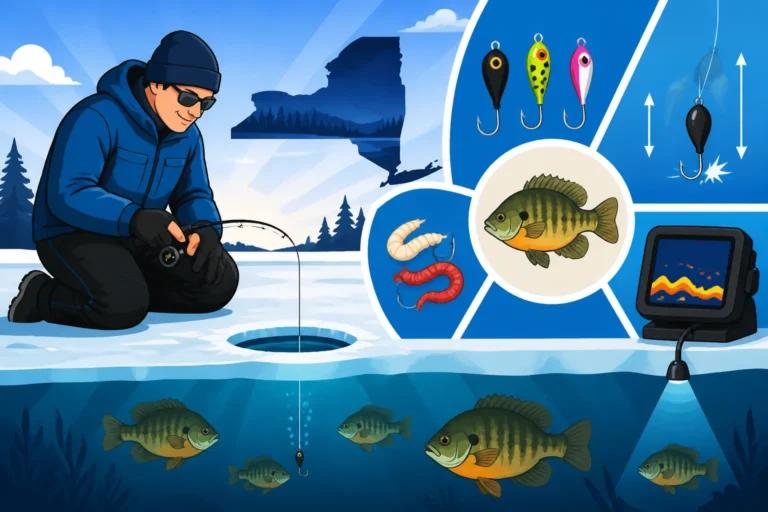
While most anglers pack away their open-water gear when the snow flies, winter offers a unique opportunity for trout fishing, particularly through the ice on many of New York's lakes and ponds. Once safe ice forms, usually from late December through March in colder regions, anglers can target a variety of species, including brook, brown, rainbow, and even lake trout. This is a wonderfully peaceful and often social way to fish, swapping stories and tips with fellow anglers on the ice.
Ice fishing for trout typically involves jigging small spoons, Swedish Pimples, or Rapalas, often tipped with a piece of bait like a grub or a minnow. Tip-ups are also popular for setting multiple lines, allowing anglers to cover more water and wait for a flag to pop up, signaling a bite. Key locations for ice fishing for trout include many of the smaller Adirondack lakes and ponds, as well as certain Finger Lakes for lake trout. Always check local ice conditions and New York ice fishing rules before venturing out.
Key Trout Habitats: Rivers, Streams, and Lakes
New York State boasts an incredible diversity of trout habitats, each requiring a slightly different approach.
Rivers and Streams: These are the classic trout waters, offering diverse structures from riffles and runs to deep pools and undercut banks. The Catskills are world-renowned for their freestone and spring creek trout rivers, including the Delaware River system, the Beaverkill, and Willowemoc Creek, which are legendary among fly anglers. Further north, the Adirondacks are crisscrossed with thousands of miles of wild trout streams, holding native brookies and wild browns. Tributaries flowing into the Great Lakes, like the Salmon River and Orwell Creek, are famous for their seasonal runs of steelhead and brown trout. Understanding stream currents, seams, and structure is paramount here.
Lakes and Ponds: From small, remote Adirondack ponds holding native brook trout to the massive, deep Finger Lakes, New York's still waters offer distinct trout fishing experiences. The Finger Lakes are prime territory for lake trout, landlocked salmon, and large brown and rainbow trout, often requiring boat access and trolling gear. Smaller ponds, especially those in state forests and wilderness areas, are frequently stocked and can provide excellent shore fishing or small boat access opportunities. Knowing the depths, thermocline, and baitfish locations are key when fishing these larger bodies of water. For specific locations, you might want to explore articles like Best Trout Streams in the Catskills or Best Trout Streams in the Adirondacks.
Essential Gear for New York Trout Fishing
Having the right gear makes a world of difference in trout fishing. It’s not about having the most expensive stuff, but rather the appropriate tools for the job. You wouldn’t bring a sledgehammer to drive a nail, and you certainly wouldn't bring a heavy saltwater setup to delicately present a dry fly to a wary brook trout. Let’s break down the essentials.
Rods, Reels, and Line Choices for Different Methods
Your rod, reel, and line are the core of your fishing system, and their selection will largely depend on your preferred method of trout fishing.
For Spin Fishing, a light to ultralight spinning rod, typically 5 to 7 feet in length with a fast or moderate-fast action, is ideal. This allows for sensitive feel to detect subtle bites and enough backbone to cast light lures or baits accurately. Pair this with a small spinning reel (size 1000 to 2500) spooled with 4 to 6-pound test monofilament or fluorocarbon line. Monofilament offers good knot strength and stretch, while fluorocarbon is virtually invisible underwater and has excellent abrasion resistance. For targeting larger trout in heavier current or larger lakes, you might bump up to an 8-pound test. Brands like Ugly Stik or St. Croix offer reliable options that you can often find on Amazon.
When Fly Fishing, the setup is entirely different. A 7 to 9-foot fly rod in a 3 to 5-weight is standard for most New York trout streams. The 3-weight is great for small streams and delicate presentations, while a 5-weight is a versatile all-rounder, capable of handling larger trout, nymphs, and even small streamers. Pair this with a matching fly reel (which primarily holds the line) and a weight-forward floating fly line. A tapered leader, usually 7.5 to 9 feet long, ending in a tippet section (typically 4x-6x) is crucial for turning over your fly accurately and stealthily. Orvis and Redington are popular fly fishing brands to consider.
For Bait Fishing, especially with a bobber or bottom rig, a slightly longer, more forgiving rod can be beneficial. A medium-light action spinning rod around 6.5 to 7.5 feet, paired with a 2500-sized reel spooled with 6 to 8-pound test monofilament, gives you good casting distance and enough power to handle a bait-and-sinker setup. The longer rod can also help with line management in moving water.
Lures, Baits, and Flies: What to Stock Your Tackle Box With
The array of options can be dizzying, but a few staples will cover most trout fishing scenarios.
For Spin Fishing, a diverse selection of small lures is key.
- Spinners: Classic in-line spinners like Mepps Aglias or Panther Martins (sizes #0-#2) are incredibly effective, mimicking small baitfish or insects. Their flash and vibration are irresistible.
- Spoons: Small casting spoons like Kastmasters or Little Cleos (1/8 to 1/4 oz) flutter enticingly and are great for covering water in lakes or larger pools.
- Crankbaits/Stickbaits: Tiny Rapala countdowns or similar minnow imitations are excellent for larger trout, particularly brown trout, which are known to key in on baitfish.
- Jigs: Small marabou jigs or soft plastic swimbaits (1/32 to 1/8 oz) fished under a bobber or retrieved slowly can be deadly, especially for stocked trout.
For Bait Fishing, simplicity often wins.
- Worms: Live nightcrawlers or garden worms are universal trout attractors. Small pieces of worm threaded onto a hook work wonders.
- PowerBait/Dough Bait: Specifically designed for trout, these scented, brightly colored baits are incredibly effective, particularly for recently stocked trout. They come in various forms, including nuggets, paste, and even small "eggs."
- Minnows: Live or preserved shiner minnows can be irresistible to larger trout, especially browns and lake trout. Be sure to check local regulations regarding live bait use.
For Fly Fishing, your fly box will be a constantly evolving collection.
- Dry Flies: Imitate adult insects on the surface. Classics include Adams, Elk Hair Caddis, Stimulators, and various ant and grasshopper patterns.
- Nymphs: Imitate immature aquatic insects under the water. Pheasant Tail Nymphs, Hare's Ear Nymphs, Prince Nymphs, and Caddis Larva patterns are essential.
- Streamers: Imitate baitfish or leeches. Woolly Buggers (in black, olive, or white), Clouser Minnows, and Muddler Minnows are highly effective for aggressive trout.
- Wet Flies: Fished subsurface, just below the surface film. Traditional patterns like the Hendrickson or Soft Hackles can be deadly during specific hatches.
Remember to stock up on hooks (sizes #8-#14 for bait/lures), sinkers (split shot and small egg sinkers), and swivels to prevent line twist. A good tackle box or fly box, readily available on Amazon, will keep your offerings organized.
Waders, Boots, and Other Important Accessories
Beyond your rod and reel, several other items are crucial for comfort, safety, and success on the water.
- Waders and Wading Boots: If you plan on fishing streams and rivers, waders are almost non-negotiable. Chest waders keep you dry and allow you to access prime fishing lies that are unreachable from the bank. Neoprene waders are great for cold weather, while breathable models are comfortable in warmer temperatures. Pair them with sturdy wading boots that offer good ankle support and felt or rubber soles for traction on slippery rocks. Orvis and Simms are well-regarded brands.
- Vest or Pack: A fishing vest, chest pack, or sling pack keeps your essential tools and tackle organized and accessible. This includes extra spools of line, nippers, forceps, a tape measure, and a small first-aid kit.
- Net: A small, soft-mesh landing net is invaluable for safely landing and releasing trout, especially if you plan to practice catch and release. Knotless or rubberized nets are gentler on fish scales and slime coats.
- Polarized Sunglasses: These are a game-changer. They cut glare off the water, allowing you to see submerged structure, detect subtle strikes, and even spot fish themselves. Crucial for safety too, protecting your eyes from errant hooks.
- Hat: A brimmed hat provides sun protection and further reduces glare, enhancing your vision.
- Pliers/Forceps: Essential for removing hooks quickly and safely, minimizing harm to the fish.
- Bug Spray: Depending on the season and location, mosquitoes and black flies can be a serious nuisance.
- Water and Snacks: Always stay hydrated and fueled, especially during long days on the water.
Having this gear, neatly organized, will ensure you're prepared for whatever the New York trout waters throw at you.
Effective Techniques for Trout Fishing in New York
Once you have your gear, understanding the techniques to present your bait, lure, or fly effectively is the next big step. Each method has its own nuances, and mastering them will significantly increase your success rate.
Spin Fishing: A Versatile Approach
Spin fishing is perhaps the most accessible and versatile method for targeting trout, favored by many for its ease of learning and effectiveness across various conditions. It involves casting a lure or bait with a spinning rod and reel, then retrieving it in a way that mimics a natural food source.
One of the most common and effective spin fishing techniques is casting and retrieving spinners or spoons. You'll want to cast slightly upstream or across the current, allowing the lure to swing downstream while you retrieve it at a speed that keeps the blade spinning or the spoon fluttering. Pay close attention to current seams, eddy lines, and behind submerged rocks or logs – these are prime holding lies where trout often ambush prey. Vary your retrieve speed and depth until you find what triggers a strike. For stocked trout, a steady, slow retrieve often works well, especially if they are recently introduced to the water.
Another highly effective spin fishing technique, particularly for stocked trout or in slower-moving waters, is using bait under a bobber. A small slip bobber rig, with just enough split shot to balance the bobber and get your bait (like PowerBait, a worm, or a small minnow) down to the desired depth, is a fantastic setup. Cast it out, let it drift naturally with the current or wind, and watch the bobber like a hawk. Any twitch, dip, or disappearance of the bobber signals a bite. This method is incredibly visual and can be very engaging, especially when fishing with kids.
Fly Fishing: The Art and Science
Fly fishing is often seen as an art form, a dance between angler, rod, and river. It involves using a lightweight "fly" that imitates an insect or small baitfish, cast with the weight of the fly line itself rather than the lure. It's a method that rewards precision, observation, and patience.
The most iconic fly fishing technique is dry fly fishing, where you present a fly that floats on the surface, mimicking an adult insect. This is most effective when trout are actively feeding on surface hatches. The key is to achieve a "dead drift," meaning the fly floats naturally with the current, without any drag from the line. Casting accuracy and line management are crucial. Watching a trout rise to sip your carefully presented dry fly is one of fly fishing's greatest thrills. Learning to "match the hatch" by identifying the prevalent insects on the water is a significant step in dry fly success.
Nymphing is another incredibly productive fly fishing technique, as trout feed on subsurface insects (nymphs) far more often than on surface flies. This involves using weighted flies that sink, often with an indicator (a small bobber) to detect subtle strikes. You'll cast upstream and allow your nymph to drift naturally along the bottom, mimicking an insect tumbling in the current. High-stick nymphing, where you keep as much line off the water as possible, helps achieve a drag-free drift. This technique accounts for a huge percentage of trout caught on the fly, especially in New York's renowned Catskill streams.
Finally, streamer fishing involves presenting larger, baitfish-imitating flies. This technique is particularly effective for targeting aggressive, larger trout, especially brown trout, which are predatory and often key in on bigger meals. You typically cast streamers across or downstream and retrieve them with a series of strips and pauses, making the fly dart and pulsate like a fleeing minnow. This active method often elicits violent strikes and is a great way to cover water quickly.
Bait Fishing: Simple and Effective
Bait fishing for trout is a straightforward and often highly effective method, particularly for beginners or when targeting recently stocked fish. It relies on the natural scent and appeal of organic baits to attract trout.
One of the simplest bait fishing setups is using a single hook, a small split shot or two, and a piece of worm or PowerBait, cast and allowed to drift naturally or settle on the bottom. When fishing in streams, casting upstream and allowing the bait to tumble downstream with the current into pools or eddies can be very productive. In lakes and ponds, casting out and letting the bait sit on the bottom, perhaps with a small marshmallow or floating PowerBait to lift it off the weeds, works well. The key is to use enough weight to get your bait where you want it but not so much that it causes an unnatural presentation.
Another popular bait fishing technique, especially for rainbow and brook trout, is using corn or salmon eggs. These smaller baits can be particularly effective for finicky trout or in highly pressured waters. They are often fished under a small bobber or with minimal weight, allowing for a very subtle presentation. When trout are wary, a lighter line (2-4lb test) can also make a significant difference. Just remember to check the New York freshwater fishing rules for any bait restrictions in specific waters.
Trolling and Downrigging for Lake Trout
When it comes to targeting the deepwater giants like lake trout and landlocked salmon in New York's large lakes, trolling is often the most effective method. Trolling involves dragging lures or baits behind a moving boat, covering large expanses of water and presenting your offering at precise depths.
Basic trolling can be done with simply a spoon or a deep-diving crankbait on a long line, allowing it to dive to a certain depth as your boat moves. This works well for shallower lake trout or when they are suspended higher in the water column, perhaps near the thermocline in summer. Varying your speed and making turns will make your lure rise and fall, often triggering strikes.
For accessing the truly deep water where lake trout often reside, downrigging is indispensable. A downrigger is a specialized piece of equipment that uses a heavy cannonball weight to carry your fishing line down to a precise depth, typically 50 to 150 feet or more. Your lure or bait is attached to a clip on the downrigger line, which releases when a fish strikes, allowing you to fight the fish directly without the weight. This technique allows for pinpoint depth control, crucial when fish are holding in a narrow temperature band or near specific submerged structures. Popular lures for downrigging include large spoons (like Northern King or Silver Streak), dodgers and flies, or even live baitfish. This is often how anglers achieve the New York State Record Lake Trout Weight catches!
Navigating New York's Trout Fishing Regulations
Fishing in New York State comes with a set of rules and regulations designed to protect fish populations and ensure sustainable angling for everyone. Getting caught off guard can lead to fines and a ruined day, so understanding the specifics is just as important as knowing how to cast.
Understanding Season Dates and Catch Limits
New York's fishing seasons and catch limits vary significantly depending on the species and the specific body of water. For trout, the general statewide season for most waters opens on April 1st and closes on October 15th. However, this is a very broad generalization, and special regulations often apply to specific streams, rivers, or lakes. For example, some waters may be designated "catch-and-release only" or have extended seasons, particularly for artificial lures only.
It's crucial to consult the official New York Fishing Regulations Guide, published annually by the DEC. This document details the open seasons, daily creel limits (the number of fish you can keep per day), and minimum size limits for each species in different regions and specific waters. For instance, the statewide trout daily limit might be five fish, but a particular stream could have a limit of one fish over 12 inches, or even be entirely catch-and-release. Ignorance of the law is not an excuse, so always have the most current regulations handbook with you, either physically or digitally on your phone. Keeping up with New York fishing season dates and catch limits is your responsibility as an angler.
Special Regulations and Catch-and-Release Zones
Beyond the general statewide rules, New York has numerous "Special Regulations Waters" that have unique rules to manage specific fisheries, often to protect wild trout populations or enhance trophy opportunities. These waters are often identified by signage, but are always detailed in the DEC regulations guide.
Common special regulations include:
- Artificial Lures Only: This means no bait (worms, PowerBait, minnows, etc.) is allowed. Only flies and lures made of metal, wood, plastic, or other synthetic materials are permitted.
- Catch-and-Release Only: All fish caught must be immediately and carefully released. This is often implemented in waters with fragile wild trout populations or to create trophy fisheries. Make sure you understand New York Catch-and-Release Trout Fishing Rules.
- Reduced Creel Limits: Instead of the statewide limit, a water might allow only one or two fish, or fish within a specific "slot limit" (e.g., only fish between 10-15 inches can be kept).
- Extended Seasons: Some waters may open earlier or close later than the general season, often for artificial lure fishing during colder months.
These special regulations are often found on popular fishing destinations like portions of the Salmon River, various Catskill streams, and specific Adirondack ponds. Always check the regulations for the exact waterbody you plan to fish to avoid violations. These rules are in place for good reason, to ensure the health and longevity of our precious trout fisheries.
The Importance of a Fishing License and Trout Stamp
Before you even make your first cast in New York, you need to ensure you're properly licensed. A valid New York fishing license is mandatory for almost all anglers over the age of 16. There are different license types available, including annual, 7-day, and 1-day options, catering to residents and non-residents alike. You can easily purchase your license online through the DEC website, at various sporting goods stores like those found on Amazon, or at town clerk offices. Our comprehensive New York Fishing License Guide can walk you through the entire process.
In addition to the general fishing license, many anglers overlook the Trout and Salmon Stamp. While not a "stamp" in the traditional physical sense anymore (it's often an endorsement on your license), it is an additional requirement for anglers aged 16 and older who wish to fish for trout, Atlantic salmon, or Pacific salmon. The funds generated from these endorsements are directly reinvested into New York's coldwater fisheries, supporting stocking programs, habitat improvements, and research. So, if you're planning to target trout, ask yourself, "Do I need a trout stamp to fish for trout in New York?" The answer is almost always yes. It's a small investment that pays big dividends for the future of our fishing.
Conservation and Ethical Angling Practices
As anglers, we have a profound responsibility to protect the resources we cherish. New York's trout fisheries are a precious natural asset, and our actions on the water can have a lasting impact. Practicing ethical angling and conservation isn't just a suggestion; it's a vital part of being a good steward.
Catch and Release Best Practices
Many of New York's trout fisheries, particularly those with wild or trophy trout, are managed under catch-and-release regulations, or anglers simply choose to release their catch. To ensure the fish you release survive to fight another day, follow these best practices:
- Minimize Fight Time: Bring the fish in quickly. A prolonged fight can exhaust a trout, making it less likely to recover.
- Keep Fish in Water: Whenever possible, unhook fish while they are still in the water. Taking a fish out of water, especially for extended periods, causes immense stress and can damage its gills and protective slime coat.
- Wet Your Hands: Always wet your hands thoroughly before handling a fish. Dry hands can remove the fish's protective slime, making it vulnerable to disease.
- Use Barbless Hooks: Crushing the barb on your hook or using barbless hooks makes unhooking much faster and easier, causing less damage to the fish's mouth.
- Use Proper Tools: Carry a pair of long-nosed pliers or forceps to quickly and safely remove hooks, especially if they are deep.
- Support the Fish: If you must take the fish out of water for a quick photo, support its body horizontally with both hands, one near the head and one near the tail. Never hold a fish vertically by the jaw or gills, as this can damage its spine and internal organs.
- Revive the Fish: If a fish appears lethargic, hold it gently in the water, facing upstream, and allow water to flow over its gills until it regains its strength and swims away on its own. Don't force it.
By following these simple steps, you significantly increase the survival rate of released fish, contributing to healthier fisheries for everyone.
Minimizing Impact on Stream Beds and Riparian Zones
Beyond the fish themselves, the health of the entire aquatic ecosystem is paramount. Stream beds and the riparian zone (the vegetated area along the banks) are critical habitats that are easily damaged by careless anglers.
- Stay on Established Paths: When approaching a stream or river, use existing trails or deer paths. Bushwhacking through dense vegetation can damage delicate plant life and contribute to erosion.
- Wade Carefully: When wading, try to avoid disturbing the stream bed more than necessary. Shuffle your feet rather than stomping, especially in areas with spawning gravels (redds) during spawning season. Avoid walking through areas with visible fish eggs.
- Respect Private Property: Always be aware of property lines and gain permission before accessing private land. Many trout streams run through private property, and respecting landowners is crucial for maintaining access for all anglers.
- Leave No Trace: Pack out everything you pack in – and then some. This includes all trash, fishing line, and any other debris. A pristine fishing environment is a shared responsibility. Even discarded fishing line can be a hazard to wildlife.
Our presence in these natural environments should be as minimally invasive as possible. A healthy stream bed means healthy insect populations, which in turn means healthy trout.
Preventing the Spread of Invasive Species
One of the most insidious threats to New York's aquatic ecosystems is the spread of invasive species. These non-native plants and animals can outcompete native species, disrupt food webs, introduce diseases, and drastically alter habitats. As anglers moving from one body of water to another, we are prime vectors for their spread.
The "Clean, Drain, Dry" protocol is essential for preventing the spread of aquatic invasives:
- Clean: Inspect your boat, trailer, waders, boots, and all fishing gear for any visible plants, mud, or organisms. Remove them before leaving the access point.
- Drain: Drain all water from your boat, livewell, bilge, and bait buckets before leaving the area. Do not transport water from one body of water to another.
- Dry: Allow all equipment to thoroughly dry for at least 5-7 days before using it in another body of water. If drying isn't possible, consider high-pressure washing or treating with hot water (140°F) or a diluted bleach solution (check specific recommendations from the DEC).
Examples of problematic invasive species in New York include zebra and quagga mussels, Eurasian watermilfoil, round gobies, and viral hemorrhagic septicemia (VHS). The consequences of introducing these species can be devastating and irreversible. Your diligence in preventing their spread is a critical act of conservation.
Top Trout Fishing Destinations in New York
New York is blessed with an abundance of fantastic trout fishing locations, each offering a unique experience. While a full list would be endless, here are some of the most iconic and productive areas to consider for your next trout adventure.
Catskill Streams: The Birthplace of American Fly Fishing
No discussion of New York trout fishing is complete without mentioning the legendary Catskill Mountains. Often hailed as the "Birthplace of American Fly Fishing," this region boasts a network of pristine rivers and streams that have captivated anglers for over a century. The clear, cold waters, abundant insect hatches, and challenging wild trout populations make it a mecca for fly anglers, though spin fishing can also be productive in many areas.
- Beaverkill River: This historic river is perhaps the most famous of the Catskill streams. It's renowned for its classic pools like the "Junction Pool" and its wild brown and rainbow trout populations. The Beaverkill is a quintessential dry fly stream, but nymphing is also highly effective. Access can be found at various public fishing rights areas.
- Willowemoc Creek: A major tributary to the Beaverkill, the Willowemoc offers similar fishing opportunities with beautiful runs and pools. It's often a bit smaller and more intimate than the mainstem Beaverkill, providing excellent dry fly fishing during hatches.
- Esopus Creek: Flowing through the heart of the Catskills, the Esopus is unique as it's partly fed by cold water from the Ashokan Reservoir, maintaining cool temperatures even in summer. It's known for its robust wild trout populations and can be fished with both flies and spin gear.
- Delaware River System: The East and West Branches of the Delaware, forming the mainstem along the New York-Pennsylvania border, are truly world-class trout fisheries. They are large, powerful rivers known for their prolific insect hatches and large wild brown and rainbow trout. These rivers offer challenging but incredibly rewarding angling experiences, often requiring specialized techniques due to their size and complexity. Many anglers seek out guides on the Delaware to unlock its secrets. For more details, explore our guide on Best Trout Streams in the Catskills.
Fishing these historic waters is more than just catching fish; it's an immersion in the rich heritage of trout fishing.
Adirondack Waters: Wild and Remote Opportunities
For those seeking a more wild, rugged, and sometimes remote trout fishing experience, the vast Adirondack Park offers an unparalleled array of options. From tiny, crystal-clear brooks harboring native brook trout to large, deep lakes with impressive lake trout, the Adirondacks provide a diverse landscape for trout anglers.
- High Peaks Wilderness Ponds: Throughout the High Peaks region, countless small, remote ponds are home to native brook trout. Access often requires a hike, sometimes several miles, making these trips true backcountry adventures. The reward is often solitude and the chance to catch brightly colored wild brookies in their natural element. These are often fished with lightweight pack rods and small spinners or flies.
- Saranac Lakes Chain: This extensive network of interconnected lakes and rivers offers excellent opportunities for a variety of trout species, including lake trout, brook trout, and brown trout. It's a popular destination for both boat and shore anglers, with many public access points and camping options.
- Ausable River: Famous for its Olympic history, the West Branch of the Ausable is also a premier trout stream. It's known for its strong population of wild brown and rainbow trout, offering diverse water from fast riffles to deep pools. Fly fishing is very popular here, with consistent hatches throughout the season.
- Lake Placid & Mirror Lake: These iconic lakes offer opportunities for lake trout and stocked trout. While popular tourist destinations, their deep waters hold fish, often requiring trolling or deep jigging techniques.
Fishing in the Adirondacks is as much about the stunning scenery and connection with nature as it is about the fish. Always be prepared for variable weather and consider checking our guide on Best Trout Streams in the Adirondacks for more localized insights.
Finger Lakes: Deepwater Challenges
New York's Finger Lakes, particularly the deepest ones, are renowned for their cold, clear waters and impressive populations of lake trout, landlocked salmon, and large brown and rainbow trout. These are big bodies of water, and fishing them effectively often requires a boat and specialized deepwater techniques.
- Seneca Lake: As the deepest of the Finger Lakes, Seneca Lake is a prime destination for lake trout. Anglers frequently use downriggers and deep jigging techniques to target these fish at depths of 80 to 200 feet or more. The lake also holds significant populations of brown trout and landlocked salmon, especially near tributaries.
- Cayuga Lake: The longest of the Finger Lakes, Cayuga is another excellent lake trout fishery, with strong populations of both wild and stocked fish. It also offers good opportunities for brown trout, rainbow trout, and landlocked salmon. Trolling with spoons and cut bait is a popular method here.
- Skaneateles Lake: Known for its exceptional water clarity, Skaneateles Lake offers good fishing for lake trout and a strong population of rainbow trout, often found closer to shore or near tributary mouths.
- Keuka Lake: Unique with its Y-shape, Keuka Lake provides excellent lake trout fishing, and it's also recognized for its impressive brown trout population, with many trophy-sized fish caught annually.
Fishing the Finger Lakes presents a different kind of challenge than stream fishing, demanding an understanding of hydrography, thermoclines, and baitfish movements. But the reward of hooking into a powerful lake trout or a leaping landlocked salmon is an unforgettable experience.
Lake Ontario Tributaries: Steelhead and Brown Trout Mecca
While primarily known for their incredible salmon runs, the tributaries flowing into Lake Ontario are also a world-class destination for steelhead (migratory rainbow trout) and large brown trout. These rivers become a magnet for anglers in the fall, winter, and spring as these migratory fish enter to spawn.
- Salmon River: The king of New York's tributaries, the Salmon River in Pulaski is legendary for its massive runs of Chinook and Coho salmon, but it's equally famous for its steelhead and trophy brown trout. These powerful fish enter the river starting in fall, providing incredible fishing through the winter and into spring. Drifting egg sacs, beads, or nymphs is highly effective for steelhead, while streamers and large minnow imitations can tempt the big browns.
- Oswego River: This large river, flowing through the city of Oswego, offers excellent public access and diverse fishing opportunities for steelhead and brown trout, especially in its lower sections. It's a powerful river that requires heavy tackle and patience, but it holds some truly enormous fish.
- Genesee River: Near Rochester, the Genesee River is another significant tributary that sees strong runs of steelhead and brown trout, particularly in its lower stretches and gorge areas.
- Oak Orchard Creek & Sandy Creek: Further west along Lake Ontario, these smaller but highly productive tributaries also attract strong numbers of steelhead and brown trout. They can offer a more intimate fishing experience than the larger rivers.
Fishing these tributaries is often a high-energy, exciting endeavor, battling strong fish in powerful currents. It's an essential experience for any serious trout angler in New York.
| Trout Species | Average Size (NY) | Preferred Habitat | Common Baits/Lures/Flies | Distinctive Features |
|---|---|---|---|---|
| Brook Trout | 6-12 inches | Cold, clear headwater streams & ponds | Worms, small spinners, dry flies | Vermiculated patterns, blue halos on red spots, white leading edges on fins. |
| Brown Trout | 12-20+ inches | Rivers, streams, Finger Lakes | Minnows, worms, spinners, streamers | Golden-brown, dark spots often with light halos, some red spots. |
| Rainbow Trout | 10-18+ inches | Rivers, streams, stocked lakes, Great Lakes tributaries | PowerBait, spoons, nymphs, egg patterns | Iridescent pink/red stripe on flanks, small dark spots. Known for acrobatic fights. |
| Lake Trout | 3-10+ lbs | Deep, cold glacial lakes | Spoons, jigs, live bait (trolled) | Dark body with light spots, often grey/olive. Large, powerful, deepwater fish. |
| Landlocked Salmon | 15-25+ inches | Deep, cold Finger Lakes | Spoons, stickbaits, smelt imitations (trolled) | Silvery-blue, distinct dark spots. Strong fighters, often mistaken for steelhead. |
Disclaimer
The information provided in this guide is for general informational purposes only. Fishing regulations and conditions in New York State can change frequently. It is the responsibility of the angler to always consult the most current New York State Department of Environmental Conservation (DEC) fishing regulations guide before heading out on the water. Local conditions, such as weather, water levels, and ice thickness, should also be assessed for safety.