How to Troll Spoons for Chinook Salmon
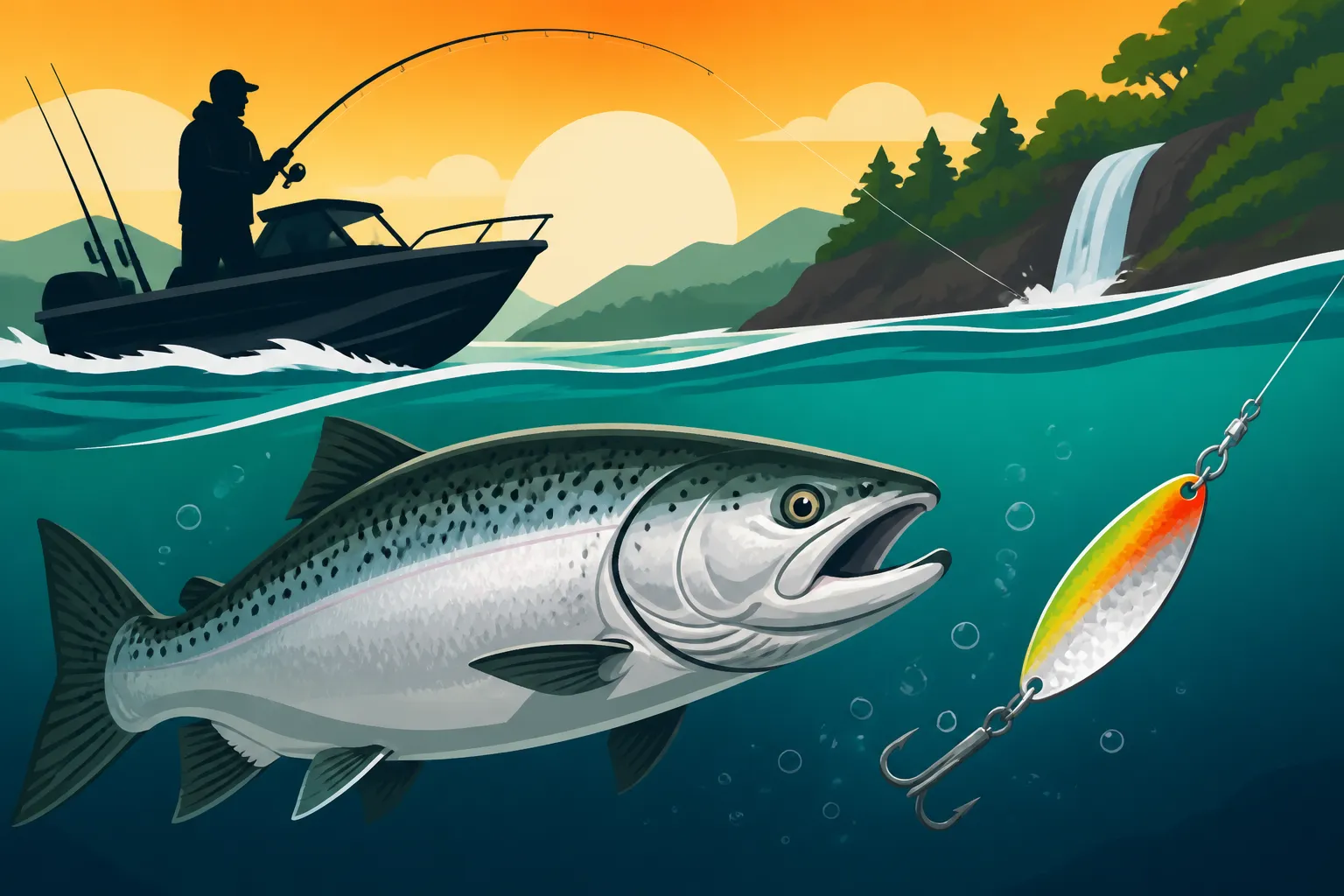
Chasing Chinook salmon on New York's vast Lake Ontario can feel like searching for a needle in a haystack, especially when you're trying to figure out the best way to get your lures in front of them. It’s incredibly frustrating when you know these powerful fish are out there but can’t seem to entice a strike. This comprehensive guide is here to demystify the art and science of trolling spoons for these incredible fish, helping you dial in your technique and fill your cooler.
Understanding Chinook Salmon in New York Waters
Before you can effectively troll for Chinook, it's crucial to understand a bit about their habits, especially within a massive freshwater system like Lake Ontario. These are not your average pond fish; they are apex predators that demand respect and a strategic approach.
The Life Cycle and Habitat of Lake Ontario Chinook
Chinook salmon, often affectionately called "Kings" by anglers, are a non-native species introduced to the Great Lakes and have absolutely thrived. In New York, Lake Ontario is their primary domain for feeding and growing to immense sizes. These fish spend most of their lives in the cold, deep waters of the lake, feeding voraciously on plentiful baitfish like alewives. They are migratory, traveling hundreds of miles within the lake basin throughout the seasons, always seeking out optimal water temperatures and abundant food sources.
Understanding their life cycle helps predict their movements. After spending several years maturing in the open waters of Lake Ontario, adult Chinook salmon instinctively begin their annual spawning migration into tributary rivers, most famously New York's Salmon River. This incredible journey usually begins in late summer and peaks in early fall. During this time, their focus shifts from feeding to reproduction, though they can still be caught. For more in-depth information on these magnificent fish, you can explore our guide on Chinook Salmon in New York.
Seasonal Movements and Feeding Patterns
Chinook salmon are highly susceptible to changes in water temperature and light conditions, which directly influence their location and feeding aggression.
- Early Season (Spring): As the ice recedes and water temperatures begin to rise slightly, often in April and May, Chinook can be found relatively shallower, sometimes in the upper 30 to 60 feet of the water column. They're often near temperature breaks or areas where warmer water from tributaries mixes with the colder lake water, pushing baitfish into more concentrated areas. This is a fantastic time for trolling as they are actively feeding after the winter slowdown.
- Mid-Season (Summer): Summertime on Lake Ontario sees the formation of a distinct thermocline – a layer where warm surface water meets cold deep water. Chinook salmon will typically orient themselves around this thermocline, especially on the cooler side, where baitfish are also abundant. This often means fishing much deeper, sometimes from 60 to 150 feet down, or even deeper depending on the specific conditions. Cloudy days or early mornings/late evenings might bring them up higher in the water column. Our article on Best Time to Fish for Chinook Salmon on New York's Lake Ontario dives deeper into these patterns.
- Late Season (Fall Run): As discussed, late summer and early fall are when the mature Kings prepare for their spawning run. They begin staging near river mouths and eventually ascend the tributaries. While many anglers target them directly in the rivers during this time, trolling still remains incredibly effective in the lake, particularly near the river mouths. They are still feeding, though perhaps less aggressively, as their bodies prepare for the arduous spawning journey. To truly understand the timing, check out When Do Chinook Salmon Start Running in Lake Ontario Tributaries?.
Essential Gear for Trolling Spoons
Trolling for Chinook salmon with spoons is a specialized technique that requires specific gear to get your lures down to the fish and present them effectively. Skimping on tackle can lead to frustrating break-offs and missed opportunities.
Rods, Reels, and Line Choices
The foundation of a good trolling setup starts with the right rod and reel, tailored to the specific methods you'll use to present your spoons.
- Downrigger Rods: These are typically medium to medium-heavy action rods, often 8 to 10.5 feet long, with a soft, sensitive tip but a strong backbone. The soft tip acts as a shock absorber, absorbing the sudden impact of a fish strike when the line releases from the downrigger clip. The strong backbone is essential for fighting powerful salmon. Brands like Daiwa and Shimano offer excellent downrigger rods.
- Dipsy Diver Rods: For Dipsy Divers, you'll want slightly stiffer, shorter rods, usually 7.5 to 9 feet, in a medium-heavy action. The stiffer rod helps manage the drag created by the diver, keeping it performing correctly.
- Leadcore and Copper Rods: If you plan on running leadcore or copper line, which are heavier lines designed to sink without additional weight, you'll need longer, parabolic rods (often 9 to 10 feet or more) with a strong, yet forgiving bend throughout.
- Reels: For all these applications, a level-wind baitcasting reel with a robust drag system and a high line capacity is critical. You'll be letting out a lot of line, sometimes hundreds of feet, so something like a Daiwa Sealine or a Shimano Tekota is ideal. A line counter reel is almost a necessity as it allows you to accurately replicate successful depths and retrieve lures consistently.
- Line: Your main line on downrigger setups is typically 20-30 pound monofilament or braided line. Many anglers prefer braid for its sensitivity and zero stretch, allowing for better hooksets. For Dipsy Divers, 30-50 pound braid is common. Leadcore and copper lines are distinct trolling lines, where the line itself provides the weight. For leaders, 20-30 pound fluorocarbon is an excellent choice due to its invisibility underwater and abrasion resistance.
Deep-Diving Solutions: Downriggers and Dipsy Divers
Getting your spoons down to the deep-dwelling Chinook requires specialized equipment that allows precise depth control and presentation.
- Downriggers: These are the backbone of serious Great Lakes trolling. A downrigger uses a heavy ball (typically 8-12 pounds) to carry your fishing line down to a precise, measured depth. Your fishing line is held by a specialized release clip on the downrigger wire, and when a fish strikes, the line "releases" from the clip, allowing you to fight the fish directly without the weight of the downrigger ball. This method provides the most accurate depth control and a clean fight. Modern downriggers, like those from Cannon or Scotty, often come with electric motors and even depth-tracking features, making them incredibly efficient. You can find a good selection of downrigger accessories and parts on Amazon.
- Dipsy Divers (or Disk Planers): Dipsy divers are saucer-shaped devices that attach directly to your main fishing line. They are designed to dive and plane away from the boat, spreading your lines horizontally as well as vertically. By adjusting a weight on the diver, you can control how far out to the side it tracks. They come in various sizes and colors, with larger divers diving deeper and pulling heavier lures. Dipsy divers are a versatile tool for covering a wider swath of water and adding more lines to your spread without needing multiple downriggers.
The Allure of Spoons: Selection and Significance
The spoon is the star of the show when targeting trolling Chinook. Its wobbling, flashing action perfectly mimics injured baitfish, making it irresistible to hungry salmon.
- Size and Profile: Spoons for Lake Ontario Chinook typically range from 3.5 inches to 5.5 inches in length. Larger spoons are often used for bigger, more aggressive fish or to create a bigger profile in stained water. Smaller spoons can be effective for finicky fish or when baitfish are smaller. The profile, or shape, of the spoon dictates its wobble and flash. Some spoons have a wide, erratic wobble (like a Michigan Stinger), while others have a tighter, darting action (like a Dreamweaver SS).
- Color Patterns: This is where the art comes in. Spoon colors are often dictated by water clarity, light conditions, and the prevalent forage.
- Bright/Sunny Days & Clear Water: Natural baitfish patterns (silver/blue, silver/green, pearl) and metallic finishes are often best.
- Cloudy Days & Stained Water: Brighter, more aggressive colors like chartreuse, orange, firetiger, and glow-in-the-dark patterns become highly effective, especially in deeper water where light penetration is low.
- Low Light/Deep Water: Glow spoons are a must. Many anglers will "charge" their glow spoons with a flashlight before deploying them.
- UV and Crushed Ice: Spoons with UV (ultraviolet) finishes are designed to be more visible in deeper water, while "crushed ice" or prism patterns add extra flash.
- Popular Brands: You'll hear names like Michigan Stinger, Dreamweaver, Silver Streak, and Northern King mentioned constantly by successful Lake Ontario anglers. It's a good idea to have a variety of sizes, profiles, and colors from these reputable brands. Stocking up on a diverse array of spoons, especially during sales, can be easily done via online retailers like Amazon.
Here's a quick reference table for common spoon types and their general applications:
| Spoon Type | Size Range | Typical Colors | Ideal Conditions | Retrieve Action |
|---|---|---|---|---|
| Michigan Stinger | 3.5" – 4.75" | Green/Silver, Blue/Silver, Purple/Silver, Firetiger | Clear to Stained Water, Sunny Days | Wide, Erratic Wobble |
| Dreamweaver SS | 3.0" – 4.5" | Glow, Chartreuse, Orange, Black/Purple | Low Light, Cloudy, Deeper Water | Tighter, Darting Action |
| Silver Streak | 2.5" – 4.75" | Metallic (Silver, Gold), Watermelon, Crushed Ice | Bright Days, Active Fish | Medium Wobble, Flashy |
| Northern King | 3.0" – 5.0" | White/Glow, Green/Dot, Black/Purple, Perch | Versatile, effective in various light conditions | Smooth, Consistent Action |
Setting Up Your Trolling Spread for Success
Creating an effective trolling spread is like conducting an orchestra; each line plays a different role, and together, they cover a wide range of depths and present diverse offerings to the fish. The goal is to maximize your chances of encountering fish at different levels of the water column.
Diversifying Depths and Presentations
Chinook salmon are often particular about their depth. One day they might be stacked up at 80 feet, the next they could be scattered from 50 to 120 feet. A good spread employs multiple methods to present spoons at various depths and distances from the boat.
- Staggering Depths: Don't run all your lures at the same depth. Use downriggers to target specific zones (e.g., 60 ft, 80 ft, 100 ft). Dipsy divers will run at shallower, yet still significant, depths (e.g., 30-50 ft depending on line out and setting). If using leadcore or copper, these will run at their own specific, unassisted depths. This methodical staggering is critical for locating the active fish and finding the "strike zone."
- Staggering Distances: It's not just about depth; it's also about how far behind the boat your lure is. Sometimes, fish are spooked by the boat and prefer lures further back. Other times, they might hit a spoon run closer in the prop wash. Downriggers allow you to vary the "lead" (distance from the downrigger ball to your spoon), and dipsy divers will run at different distances depending on their size and setting. Don't be afraid to experiment!
Downrigger Setup and Deployment
Downriggers are your precision tools for depth control. Mastering their use is fundamental to consistent Chinook success.
- Attach Your Lure and Leader: Start by tying your chosen spoon to a fluorocarbon leader (typically 6-10 feet long, 20-30 lb test), which is then connected to your main line with a quality swivel.
- Release Line and Attach to Clip: Lower your spoon into the water a short distance (often 10-50 feet, depending on how far you want the lure behind the ball, known as "lead"). Clip your main line into the downrigger release. Make sure the clip has enough tension to hold the line but will release cleanly on a strike. Many anglers adjust the clip tension by adding a rubber band to the line, which then goes into the clip for extra holding power in rough water, or for very heavy lures.
- Lower to Desired Depth: Slowly lower the downrigger ball to your target depth using the crank or electric motor. Watch your line counter carefully. Once at depth, put your rod in the holder. The rod tip should have a nice bend, indicating tension. When a fish hits, the rod will snap upright as the line releases.
- Consider Stackers: Downriggers can also be used to run multiple lines at different depths off a single downrigger wire using "stacker" clips. This is a great way to increase your presentation coverage.
Dipsy Diver and Planer Board Strategies
Dipsy divers and planer boards allow you to spread your lines horizontally, covering a much wider path behind the boat.
- Dipsy Diver Setup: Attach the dipsy diver to your main line, then tie on a 6-10 foot fluorocarbon leader with your spoon. Set the dive angle on the dipsy (usually numbers 0 through 3, with higher numbers sending it further to the side). Once deployed, the diver will pull your line out and down. The amount of line you let out will determine its depth and lateral distance. For example, a setting of "3" on a large diver with 100 feet of line out might put your lure 30 feet to the side and 40 feet deep. It's often helpful to consult a dive chart for your specific diver size.
- Planer Boards: While not always used with spoons in deep-water salmon trolling as much as with other techniques, offshore planer boards (like those from Big Jon or Church Tackle) can be used to run lines far out to the side of the boat. Your line is clipped to the board, which planes away from the boat, and when a fish strikes, the line releases from the board, allowing you to fight the fish directly. These are particularly useful for running shallow-diving spoons or surface presentations further out.
Remember, the exact science of How Deep to Troll for Salmon on New York's Lake Ontario and the Best Trolling Speed for New York's Lake Ontario Salmon are things you'll constantly fine-tune, even during a single trip.
Trolling Techniques and Strategies
Beyond simply deploying your lines, how you operate your boat and read the water will significantly impact your success when trolling spoons for Chinook salmon.
Mastering Trolling Speed and Turns
Speed and boat maneuvers are not just about getting from point A to point B; they are integral parts of your presentation.
- Optimal Trolling Speed: For Chinook salmon on Lake Ontario, a typical trolling speed ranges from 2.0 to 3.5 miles per hour (MPH), measured at the surface. However, the true speed of your lures at depth can vary significantly due to currents. It's crucial to experiment. Sometimes, slower speeds (2.0-2.5 MPH) can trigger strikes, especially when fish are lethargic or in very cold water. Other times, a faster pace (3.0-3.5 MPH) can elicit a reactionary strike from aggressive Kings. Using a GPS-enabled speed control on your kicker motor is invaluable for maintaining consistent speed.
- The Power of Turns: Don't just troll in a straight line. Deliberate turns are one of the most effective strike triggers. When you turn, the lures on the inside of the turn slow down and drop slightly, while the lures on the outside speed up and rise. This change in speed and depth mimics a baitfish trying to escape, often provoking a salmon to strike. Pay attention to which side of the boat gets hit on a turn; this can tell you if fish prefer a speeding-up or slowing-down presentation. Make broad, sweeping turns rather than sharp, abrupt ones to avoid tangling lines.
Reading Your Electronics and Water Conditions
Your boat's electronics are your eyes underwater, giving you critical insights into where the fish are and what they're doing.
- Fish Finder/Sonar: Learn to interpret your sonar screen. Look for bait balls – dense schools of alewives or other forage. Chinook salmon will often be found either directly within or just below these bait schools. Also, watch for "arches" indicating individual fish. If you see fish at a certain depth, adjust your downriggers and divers accordingly. Pay close attention to the thermocline (often appearing as a dense, hazy line on your sonar), as Chinook frequently patrol this temperature boundary during the summer months.
- Temperature Gauge: Water temperature is paramount. Chinook thrive in specific temperature ranges, typically in the 48-58°F zone. Your temperature probe, often integrated with your sonar or a standalone unit, will show you the surface temperature and, if you have a probe on your downrigger ball, the temperature at depth. Finding the "break" where the temperature changes rapidly is key to locating active fish. For deeper insights into this, check out our guide on How to Fish for Salmon in New York.
- Wind and Currents: These factors can make trolling a challenge but also create opportunities. Wind can create waves and surface chop, which can often improve fishing by breaking up the water surface and making your lures appear more natural. Currents, however, can drastically alter the true speed and depth of your lures. Use your boat's GPS and speed over ground (SOG) in conjunction with your paddlewheel speed (speed through water) to understand the current's effect. Trolling with or against the current will change your lure's action and depth.
Adjusting Your Spread Throughout the Day
Chinook salmon don't stay in one spot, and neither should your strategy. Constant adjustment is the mark of a successful angler.
- Morning vs. Mid-day vs. Evening: Fish activity often peaks during low-light conditions (early morning and late evening). At these times, fish might move shallower, and brighter, more aggressive colors or even topwater presentations might work. During bright mid-day sun, they typically retreat to deeper, darker water, and more subtle, natural patterns or glow spoons at depth might be required.
- Weather Changes: A sudden cloud cover, a shift in wind, or even a passing rain shower can change fish behavior. Be prepared to adjust your depths, speeds, and spoon colors. If conditions darken, consider deploying more glow spoons or brighter colors.
- Trial and Error: Always be experimenting. If a particular setup isn't producing, change something. Try a different depth, a different spoon color, a different leader length, or even a different speed. The fish will tell you what they want. Keep a mental log or a physical journal of what works and what doesn't. Sometimes, the difference between a slow day and a banner day is finding that one magic depth or color combination. Don't be afraid to pull a non-performing line and change it entirely. Knowing the Chinook Salmon Average Size in New York's Lake Ontario can also give you an idea of what size lures might appeal to the larger, more mature fish you're hoping to catch.
Troubleshooting and Common Mistakes
Even the most experienced anglers encounter challenges while trolling for Chinook. It's how you react to these frustrations that defines your success.
Addressing Fouled Lines and Non-Producing Spreads
Nothing is more disheartening than reeling in a line to find your spoon is tangled, or worse, trolling for hours without a single bite.
- Fouled Lines: This usually happens due to inadequate lead (too short), too tight of turns, or debris in the water. Always ensure your leader is free of tangles before clipping it into the downrigger release. When making turns, make them wide and sweeping. If you suspect a line has fouled due to weeds or debris, reel it in, clear it, and redeploy. Sometimes, your spoon might be spinning in circles rather than wobbling, especially if your leader is too short or your line is twisted. Use a quality ball-bearing swivel at the spoon to prevent line twist.
- No Bites: A non-producing spread often indicates you're not where the fish are, or your presentation isn't enticing them.
- Depth Adjustment: The first thing to check is depth. Are you seeing bait or fish on your sonar? If so, adjust your lures to that depth. If not, try moving shallower or deeper in increments of 10-20 feet until you find activity.
- Speed Adjustment: Experiment with increasing or decreasing your trolling speed by 0.2-0.5 MPH. A slight change can often make a huge difference.
- Color Change: If you're confident in your depth and speed, cycle through different spoon colors. Start with natural patterns, then move to brighter or glow colors, especially in deeper or darker water.
- Location Change: If an area isn't producing after significant effort and adjustments, it might be time to move to a new spot. Sometimes just a mile or two down the lake can make all the difference. Knowing the best areas, like those described in Lake Ontario Fishing in New York: Where to Go, can help you plan these moves.
Adapting to Changing Conditions
Lake Ontario can be fickle. What worked an hour ago might not work now. Being adaptable is key.
- Wind Shifts: A sudden shift in wind direction can create new currents or push baitfish into different areas. Adjust your boat's heading to maintain optimal speed and course. If the chop gets too severe, you might need to head for more sheltered waters or adjust your spread to handle the increased motion.
- Light Changes: As mentioned, light is a huge factor. If the sun breaks through after a cloudy morning, switch to more natural, flashy patterns. If clouds roll in, deploy those glows. Keep a wide variety of spoons organized and easily accessible so you can make quick changes.
- Bait Movement: Keep an eye on your fish finder. Baitfish move constantly. If you see bait schools moving shallower or deeper, adjust your downriggers and dipsy divers to follow them. Chinook won't be far behind.
- Angler Feedback: Pay attention to other boats. While you don't want to crowd them, observe what they're doing. Are they using planer boards? Are they making tight turns? This can sometimes offer clues, but remember, every boat and spread is unique. The most important feedback comes from your own rod tips – a screaming reel is the ultimate indicator of success!
Trolling spoons for Chinook salmon on Lake Ontario is a rewarding pursuit that combines science, art, and a healthy dose of patience. By understanding the fish, equipping yourself with the right gear (much of which you can find readily available on Amazon), and continuously refining your techniques, you'll be well on your way to experiencing the thrill of battling these majestic freshwater kings.
Disclaimer
Fishing regulations, license requirements, and catch limits can change frequently. Always consult the latest New York State Department of Environmental Conservation (DEC) regulations before heading out on the water. This guide is for informational purposes only and does not constitute legal advice.