How Many Trout Can You Keep Per Day in New York?
It’s a scenario every New York angler has faced: you’re out on a pristine stream, the trout are biting, and you’re having the time of your life. Then, a thought bubbles up – "Wait, how many of these beautiful fish am I actually allowed to keep?" The fear of accidentally breaking a regulation, or worse, harming the fishery, can really put a damper on an otherwise perfect day. Understanding the daily trout limits in New York isn't just about avoiding a fine; it's about being a responsible steward of our incredible freshwater resources. This guide is here to untangle the complexities, so you can focus on the tug on your line, not the worry in your mind.
Understanding New York's Statewide Trout Regulations
Navigating the world of fishing regulations in New York can sometimes feel like trying to tie a fly in the dark. The rules aren't always a simple, one-size-fits-all answer, especially when it comes to trout. The New York Department of Environmental Conservation (DEC) sets these guidelines to ensure healthy fish populations for generations to come, balancing recreational opportunities with conservation needs. It’s crucial to remember that these regulations are dynamic and can change, so always double-check the latest official DEC guide before you head out.
Generally speaking, New York has a statewide default for trout, but almost every specific body of water you’ll visit will have its own unique set of rules that supersede this general guideline. This is where the frustration often begins for many anglers; you can't just memorize one number and be done with it. You might be fishing a small creek that allows you to keep five trout of any size, then move to a larger river system just a few miles away where the limit is three fish over a certain length, and only one of which can be a brown trout. The key takeaway here is that "statewide" usually means "unless otherwise specified."
Many seasoned anglers carry a copy of the official New York Fishing Regulations Explained guide, or at least have the digital version readily accessible on their phone. This habit alone can save you a lot of guesswork and potential headaches. The intent of these regulations is not to confuse, but to tailor management efforts to the specific ecological needs and fish populations of individual waters. Factors like natural reproduction rates, stocking programs, fishing pressure, and environmental conditions all play a role in determining how many fish can be sustainably harvested from a particular lake or stream.
Default Daily Limits for General Trout Species
When there are no specific regulations listed for a body of water, New York defaults to a general rule for brook, brown, and rainbow trout. For most of the state's freshwater systems, the daily creel limit (that's the fancy term for how many fish you can keep) for these species combined is typically five fish. This means you could keep five brook trout, or two brook and three brown, or one rainbow and four brown, as long as the total doesn't exceed five.
However, this isn't the whole story. Along with the daily limit, there's usually a minimum size requirement. Often, for these general regulations, it's a 9-inch minimum length. So, if you catch a beautiful 7-inch brook trout, you're expected to release it gently back into the water, even if you haven't hit your five-fish limit yet. These minimum size limits are put in place to allow fish to reach maturity and spawn at least once, contributing to the next generation of trout before they can be harvested. It's a fundamental part of sustainable fisheries management.
It's also important to clarify that this general rule applies to the combined total of brook, brown, and rainbow trout. Lake trout and splake, which are a hybrid of brook and lake trout, often fall under different, more restrictive regulations. The same goes for landlocked Atlantic salmon, which are sometimes grouped with trout but frequently have their own separate limits and seasons. So, while the "five fish, 9-inch minimum" is a good starting point to remember when you're just getting into New York fishing, it's really just the tip of the iceberg. Always consult the specific regulations for your chosen fishing spot.
The Special Case of Lake Trout and Landlocked Salmon
While brook, brown, and rainbow trout are often grouped together under general regulations, lake trout and landlocked salmon are frequently managed with their own distinct rules. This is because these species have different life cycles, growth rates, and conservation needs. Lake trout, for instance, are a native coldwater species that can live for many years and grow to impressive sizes, but they mature slowly and are very susceptible to overfishing. Landlocked salmon, while a prized sport fish, are often stocked and have specific management goals to maintain their populations.
For these species, the daily limit is almost always lower than the general trout limit, usually two or three fish per day. The minimum size limits are also typically higher, often 15 inches or more for lake trout, and sometimes even larger for landlocked salmon, depending on the specific water body. For example, in many of the larger Finger Lakes, the limit for lake trout might be three fish, with a minimum size of 15 inches, but only one of those can be over 21 inches to protect the larger, breeding-size fish. This kind of tiered regulation is common for trophy species or those with slower growth rates.
It's critical not to confuse these species with other trout. Accidentally keeping a lake trout under the general brook trout limit could lead to a violation. Always take a moment to properly identify your catch, especially if you're targeting multiple species or fishing in a water body known to hold a diverse population of salmonids. If you're planning a trip to one of New York's fantastic lake trout fisheries, like parts of the Finger Lakes or Lake Ontario, make sure you've specifically looked up the regulations for that particular body of water and species, paying close attention to both the daily bag limit and any slot limits or maximum size restrictions.
Navigating Special Regulations for Trout Waters
The statewide default for trout is a nice baseline, but let's be realistic: most of the best trout fishing in New York happens in waters that have special regulations. These are the creeks, rivers, and lakes where the DEC has implemented specific rules to protect fragile populations, enhance wild fisheries, or manage heavily stocked areas for optimal angler experience. Failing to check these localized rules is one of the quickest ways to find yourself on the wrong side of a conservation officer.
Special regulations aren't just about different numbers; they can dictate everything from specific fishing seasons to gear restrictions. You might find waters designated as "catch-and-release only," where no trout can be kept regardless of size. Others might have "artificial lures only" or "fly fishing only" rules to minimize harm to fish. Sometimes, there are even "no bait" rules. It’s a lot to keep track of, but the rewards—like healthier fish and better fishing—are well worth the effort.
The most important step is always to identify the exact water body you plan to fish. Then, consult the official New York DEC Fishing Regulations Guide or their website. Don't rely on old guides, hearsay from a buddy, or general knowledge. These specific rules are often designed to address unique circumstances in that particular fishery, such as sensitive spawning grounds, a desire to promote trophy fishing, or intensive stocking efforts that allow for a more liberal harvest. It’s about precision management for our precious resources.
Catch-and-Release Only Areas
One of the most common special regulations you'll encounter, particularly on popular trout streams, is the "catch-and-release only" designation. These areas are specifically designed to protect trout populations, often wild or naturally reproducing ones, by eliminating harvest entirely. The goal is to allow fish to live, grow, and spawn multiple times, thereby creating more stable and robust fisheries. It’s a fantastic way to ensure there are plenty of fish for everyone to enjoy, even if it means you can't take any home for dinner.
In these areas, the rules are very clear: you must immediately release any trout you catch, regardless of its size or species. Often, these regulations also come with stipulations about the type of tackle you can use, such as mandating artificial lures with single, barbless hooks. The barbless hook requirement minimizes injury to the fish, making their chances of survival after release much higher. Many anglers also use a rubber or knotless net, which is gentler on a fish's slime coat and fins compared to traditional knotted nylon nets. You can find quality nets suitable for catch-and-release on sites like Amazon, ensuring you're well-equipped to practice responsible angling.
Examples of such waters can be found across the state, from famous Catskill rivers like sections of the Beaverkill and Willowemoc Creek, known for their Best Catskills Fly Fishing Streams, to parts of lesser-known streams that hold exceptional wild trout. Before fishing any new water, check the New York Freshwater Fishing Rules to see if it's a catch-and-release only section. Adhering to these rules is paramount for the health of these special fisheries, and violations are taken very seriously by the DEC. It’s a commitment to conservation that truly pays off in the quality of the fishing experience.
Specific Water Body Regulations and Exceptions
Beyond the general statewide rules and the explicit catch-and-release zones, New York's trout management gets even more granular. Many individual lakes, rivers, and streams have their own specific regulations that deviate from the norm. This could mean a different daily bag limit, a unique minimum size, or even a slot limit, where fish within a certain size range must be released, but fish outside that range (smaller or larger) can be kept. The variety can be astounding, and it's why the local regulations are your bible.
For instance, a particular lake might have a daily limit of three trout, but only two of them can be brown trout, and all must be over 12 inches. Another river could have a general season where you can keep five fish, but during a special "trophy season," the limit drops to one fish over 18 inches. Then there are tributary regulations, especially common on the Great Lakes, where different rules apply to the streams than to the main lake itself. The New York Statewide Trout Bag Limit is a great resource, but it also highlights how many exceptions there are.
To navigate these complexities, the best advice is to pinpoint your fishing location on the DEC's official fishing regulations map or in their printed guide. Look up the specific name of the body of water. For example, if you're heading to a popular spot like the Salmon River, you'll find very specific regulations for salmon and steelhead, but also for resident trout species that live there year-round. These unique regulations are often a testament to decades of study and careful management, ensuring that specific fisheries can thrive under tailored conditions. Always review these specifics carefully, especially for the species you intend to target.
Species-Specific Trout Limits and Size Requirements
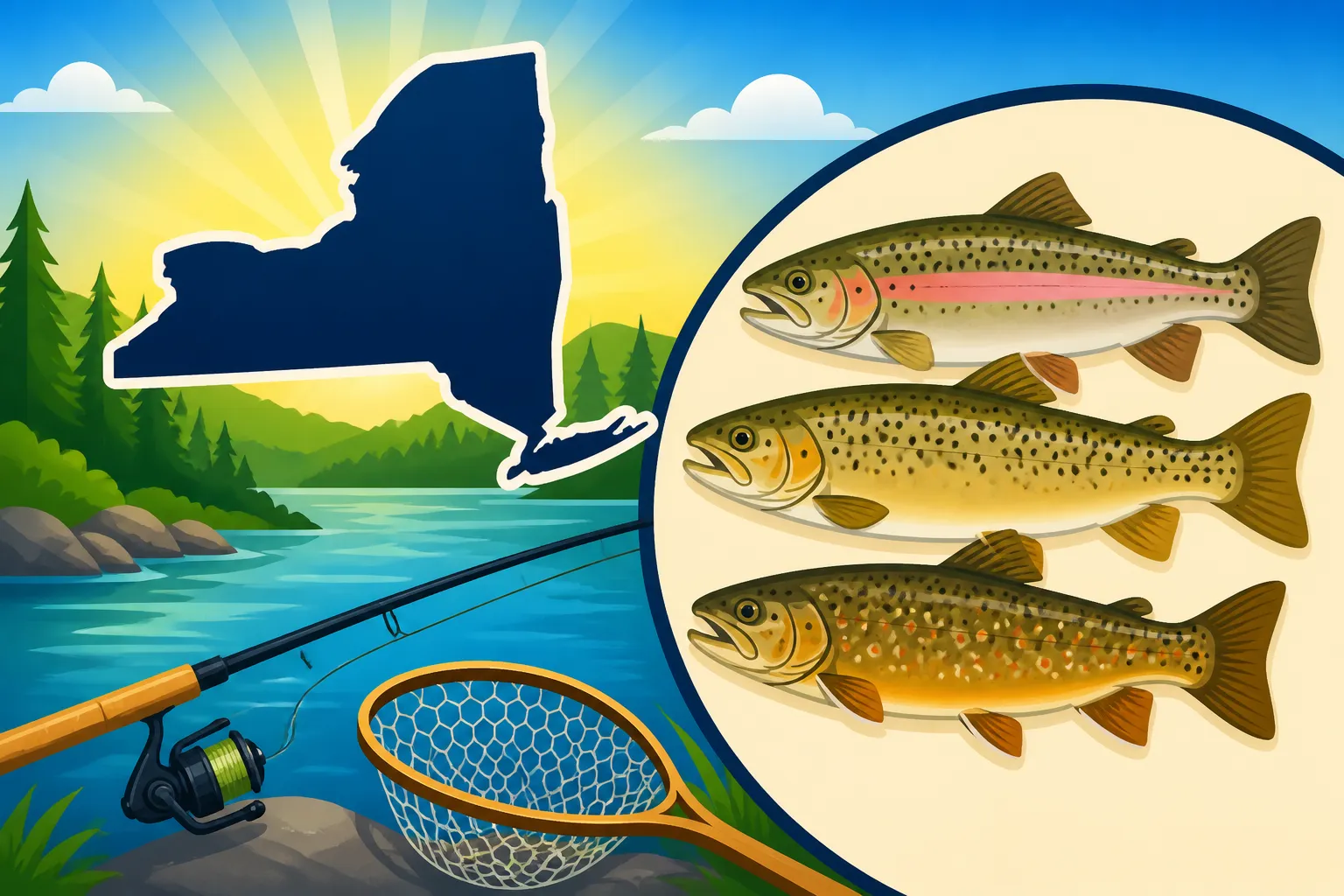
When you're out fishing in New York, it's not enough to just know you're catching "trout." New York is home to a fantastic array of trout species, including brook, brown, rainbow, lake trout, and even landlocked salmon, which are managed similarly to trout. Each of these species often comes with its own set of rules regarding daily limits and minimum size requirements, especially in specific waters. Learning to identify your catch is a fundamental skill for any responsible angler, and it's essential for adhering to regulations.
Distinguishing between these species can sometimes be tricky, particularly between rainbow and brown trout, or a young lake trout versus a large brook trout. However, key identifiers like fin coloration, body spots, and tail shape can help. The DEC's guides often include diagrams or descriptions to assist with identification. Being able to confidently identify what's on the end of your line means you'll know instantly whether it's a keeper, or if it needs to be gently returned to the water to grow larger or spawn.
Understanding these distinctions is not just for compliance; it also enhances your fishing experience. Knowing the habits and preferred habitats of different species, which you can learn more about in New York's Trout Species Explained, allows you to tailor your techniques and increase your success. After all, what works for a wild brook trout in a small mountain stream might not be the best approach for a trophy brown trout in a large river or a lake trout in a deep, cold lake.
Brook, Brown, and Rainbow Trout Guidelines
As mentioned earlier, the default statewide regulation for brook, brown, and rainbow trout is typically five fish combined, with a 9-inch minimum length. This applies to many of the smaller streams and ponds that don't have special regulations. However, many of New York's most renowned trout fisheries have much stricter rules for these species.
For instance, certain "no-kill" or "catch-and-release" sections of rivers, particularly those managed for wild trout, will require you to release all brook, brown, and rainbow trout. In other quality fishing waters, the daily limit might be reduced to three fish, with a higher minimum size limit, perhaps 12 or 15 inches. Some streams even have slot limits, where you might be able to keep fish under a certain size and over another, but not those in the middle, to protect breeding-size fish. An example might be keeping one fish under 10 inches and two over 18 inches, with everything in between needing to be released.
These specific rules are vital for maintaining the health and quality of these fisheries. For example, in a stream with excellent wild Brook Trout vs Brown Trout: Key Differences populations, the DEC might impose very restrictive limits to allow these native fish to thrive naturally. Always check the current New York Fishing Season Dates and Catch Limits for the precise body of water you're planning to fish, even if it's just a local stream you've fished for years. Regulations can and do change, and staying informed is part of being a good angler.
Lake Trout and Splake Specifics
Lake trout and splake are unique among New York's salmonids when it comes to regulations. These fish prefer deeper, colder waters and have different biological needs, which translates into more specialized management. Splake, being a hybrid, often get grouped with lake trout in regulations due to their similar habitat and growth patterns.
The typical daily limit for lake trout and splake is significantly lower than for other trout species, often two or three fish per day. The minimum size limits are also generally larger, commonly ranging from 15 to 21 inches, depending on the specific lake. In some of the trophy lake trout waters, you might find a slot limit or a maximum size rule. For example, in a lake like Cayuga or Seneca, you might be allowed to keep two lake trout, but only one can be over a certain length, say 25 inches, to protect the very large, older breeding stock.
These more restrictive limits are a direct reflection of these fish's biology. Lake trout mature slowly and can live for decades, making them vulnerable to overharvest. Splake, while growing a bit faster, also benefit from cautious management. If you’re heading out to fish for these deepwater beauties, make sure to thoroughly review the specific regulations for that particular lake. The rules for Lake Placid, for instance, might be very different from those for Lake George or one of the Finger Lakes. Getting these details right ensures you're helping to conserve these magnificent fish for future angling adventures.
Landlocked Salmon Requirements
Landlocked Atlantic salmon are another prized game fish in New York, primarily found in the larger Finger Lakes and some Adirondack waters. While they share characteristics with trout, they are often managed with their own distinct regulations. They are known for their strong fighting ability and acrobatic jumps, making them a favorite target for many anglers.
Similar to lake trout, the daily limits for landlocked salmon are usually more restrictive than for brook, brown, or rainbow trout, often set at one or two fish per day. Minimum size limits are also typically on the higher side, commonly 15 inches or more, again to allow these fish to reach maturity and contribute to the population. For instance, in some Finger Lakes, the limit might be one landlocked salmon over 15 inches. These fish are often part of active stocking programs, and the regulations are designed to provide a sustainable harvest while supporting the program's success.
When you're targeting landlocked salmon, it's particularly important to be sure of your identification, as they can sometimes be confused with large brown trout or even some of the Pacific salmon species in Great Lakes tributaries. Look for their slender, torpedo-shaped body, deeply forked tail, and a lighter spotting pattern than brown trout. Knowing your species helps ensure compliance with the specific regulations for this incredible sport fish. Always check the rules for the specific lake or river you're fishing to understand the New York Fishing Regulations Explained for landlocked salmon there.
Practical Tips for Adhering to Trout Limits
Staying within New York’s trout limits isn't just about reading the regulations; it’s about incorporating a few practical habits into your fishing routine. Nobody wants to be the angler who accidentally breaks the rules, whether out of ignorance or carelessness. With a little preparation and mindfulness, you can enjoy your time on the water confident that you're doing things by the book and contributing positively to the resource.
One of the simplest yet most effective tips is to check the regulations every time you go to a new spot, or even a familiar spot if it's been a while. Regulations can change annually, and sometimes even within a season. The DEC website is your best friend here, offering the most up-to-date information. Beyond that, having the right tools on hand can make all the difference in quickly and accurately assessing your catch.
Remember, the goal is to be a responsible angler. This means not only adhering to the letter of the law but also understanding the spirit of conservation behind it. It's about ensuring future generations can enjoy the same incredible trout fishing opportunities we have today.
Essential Gear for Measuring and Handling Trout
To effectively comply with size limits, you absolutely need a reliable measuring device. A simple, flexible tape measure is usually sufficient, but many anglers prefer a dedicated fish measuring board or ruler. These often have clear markings and can make measuring a squirming fish much quicker and less stressful for the fish. Look for models that are waterproof, durable, and easy to read. Many excellent options are available on online retailers like Amazon, from basic tape measures to more elaborate, foldable measuring boards.
Beyond measuring, proper fish handling is crucial, especially for fish you intend to release. A knotless rubber landing net is a game-changer. These nets minimize slime coat removal, fin damage, and eye injuries that can occur with traditional knotted nylon nets. Wetting your hands before handling a fish is also vital to protect its delicate protective slime layer, which acts as its first line of defense against disease. If you need to take a picture, do it quickly and keep the fish in or just above the water as much as possible.
Finally, consider carrying a small, digital scale, especially if you're targeting trophy fish or participating in events where weight matters. While not directly related to limits, a scale helps you record your catch accurately and appreciate the true size of the fish you're releasing or keeping. For those who frequently fish specific, highly regulated waters, a small laminated card with the regulations for that particular water body can be invaluable, easily tucked into a tackle box or vest.
Best Practices for Catching and Releasing Fish
Even when you're allowed to keep fish, practicing responsible catch-and-release techniques for those you don't intend to harvest is paramount. The health of the fishery depends on it. The first step is to minimize the fight time; try to land the fish as quickly as possible without overstressing it, especially in warmer water conditions where trout are more susceptible to exhaustion.
Once landed, handle the fish as little as possible. If you can, use a de-hooking tool or forceps to remove the hook while the fish is still in the water, or submerged in your net. If you must bring it out, support its body horizontally and avoid squeezing its internal organs. Never hold a trout by its gills or vertically by its jaw, as this can cause severe internal damage. Many anglers, myself included, will often opt for barbless hooks for all their trout fishing, making hook removal much easier and less traumatic for the fish.
Before releasing, gently hold the fish upright in the water, facing upstream if in a current, until it regains its strength and can swim away on its own. Sometimes it might take a minute or two for the fish to revive itself. Watch for strong tail kicks and for it to swim off with purpose. If it just floats away, it likely won't survive. This attentive approach to catch-and-release ensures that the trout you don't keep have the best possible chance of survival, contributing to healthy populations for everyone who enjoys How to Trout Fish in New York.
What Happens If You Exceed Trout Limits?
Ignoring fishing regulations, especially daily creel limits, isn't just a minor oversight; it can have serious consequences. The New York State Department of Environmental Conservation takes violations seriously, and for good reason. These rules are in place to protect fragile ecosystems and ensure sustainable fishing opportunities for everyone. Getting caught with more fish than allowed, or fish that are undersized, can quickly turn an enjoyable day on the water into a costly and regrettable experience.
The penalties for exceeding trout limits vary depending on the severity of the violation, the number of fish involved, and whether it's a repeat offense. It's not just a slap on the wrist; you could be looking at significant fines and other repercussions that impact your ability to fish in the future. Nobody wants to be in that situation, so understanding the potential consequences is another strong motivator to always stay informed and compliant.
This isn't about fear-mongering; it's about being realistic. DEC law enforcement officers are dedicated professionals who work hard to protect New York's natural resources. They are out on the water and in the field, and they are trained to spot violations. The best way to avoid any trouble is simply to know and follow the rules.
Penalties and Fines for Violations
If you are caught exceeding the daily trout limit or keeping undersized fish in New York, you can face a range of penalties. The most common immediate consequence is a fine. These fines can vary, but generally, expect to pay for each illegal fish kept, plus additional administrative fees and court costs. For example, a single undersized trout or one over the limit might incur a fine, but if you have several, those fines can add up very quickly.
Beyond monetary penalties, serious or repeated violations can lead to the suspension or revocation of your New York fishing license. Imagine not being able to fish in New York for a year, or even longer, because of a mistake you could have easily avoided. For some, fishing is a passion and a significant part of their lifestyle, and losing the privilege to fish is a truly severe consequence. This also applies to your New York Fishing License Costs and Options and any other licenses you hold.
In more egregious cases, especially involving commercial poaching or severe resource damage, violations can even escalate to criminal charges. While rare for a recreational angler keeping a few extra trout, the potential is there, highlighting the seriousness with which the state views resource protection. The best way to understand the potential repercussions is to review information on Fishing Without a License in New York: What Happens, as many of the penalty structures for license violations can be similar to those for bag limit infractions.
Long-Term Impact on Fisheries
The rules and regulations, including trout limits, aren't arbitrary; they are the backbone of sustainable fisheries management. Every time an angler keeps too many fish, or fish that are too small, it has a cumulative impact on the overall health and population dynamics of that specific fishery. If enough anglers disregard the rules, it can lead to a significant decline in fish numbers, size, and even genetic diversity.
For wild trout populations, overharvesting can decimate a year class or remove too many breeding-size fish, hindering natural reproduction and potentially leading to a collapse of the fishery. Stocked waters, while replenished by the state, also rely on adherence to limits to distribute the resource fairly among anglers and to ensure there are enough fish to survive and grow. When limits are ignored, the investment in stocking programs can be undermined, leading to poorer fishing for everyone.
Think about the long game. The reason we have such incredible fishing opportunities in New York, from the famed Catskill streams to the Great Lakes tributaries, is due to careful management and the collective responsibility of anglers. Adhering to the New York Freshwater Fishing Rules and limits is a direct contribution to that sustainability. By respecting the regulations, you're not just avoiding a fine; you're actively participating in the conservation effort, ensuring that the thrill of catching a New York trout remains a possibility for generations to come.
Disclaimer
Please note that fishing regulations, including daily limits and size restrictions, are subject to change. Always consult the most current New York State Department of Environmental Conservation (DEC) official fishing regulations guide before heading out on the water. This article provides general information and should not be considered a substitute for the official DEC regulations.