How to Fish for Salmon From Shore
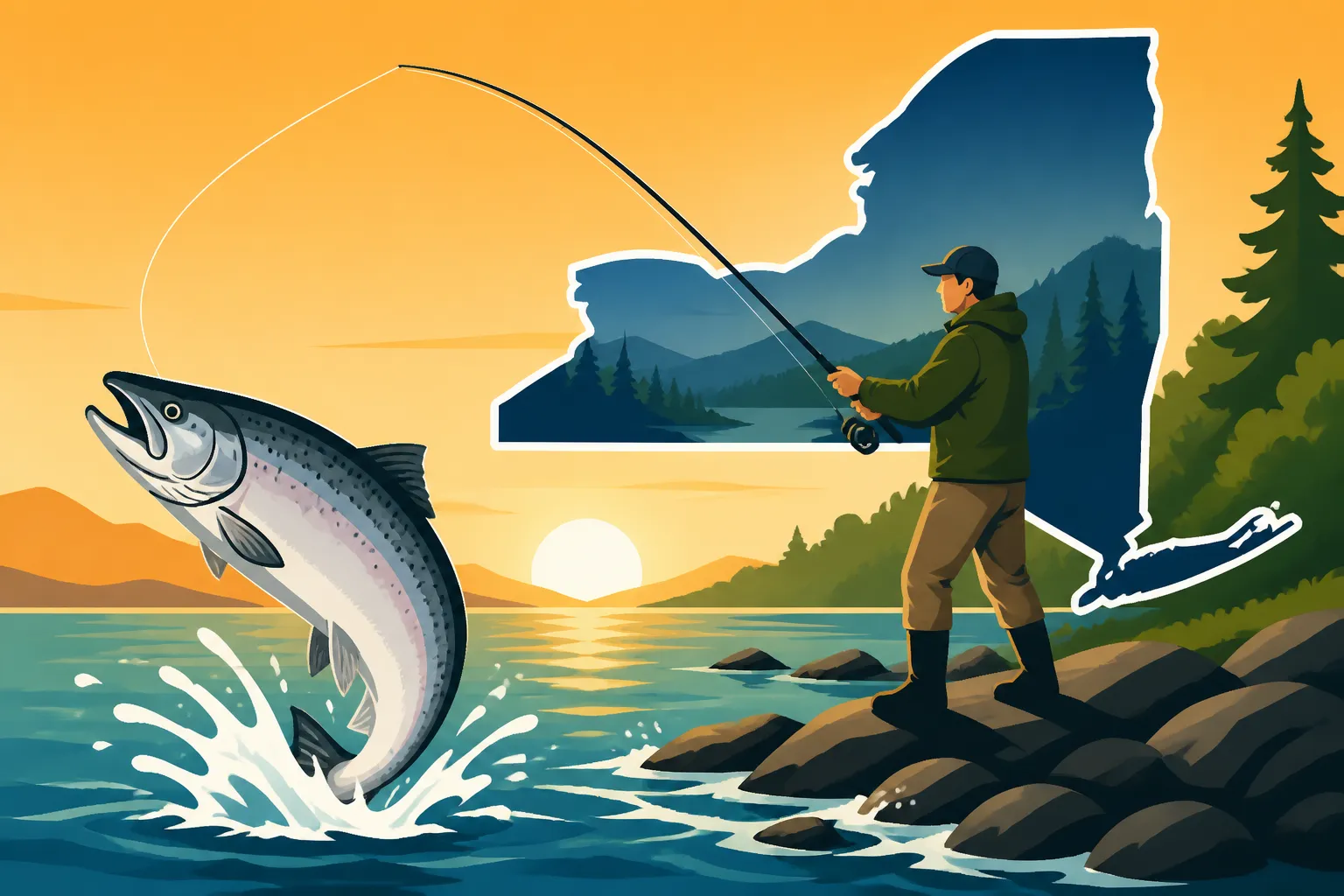
There’s nothing quite like the thrill of feeling a powerful salmon tugging at the end of your line, especially when you’re standing on solid ground. For many anglers, the dream of hooking into one of these magnificent fish in New York's renowned salmon runs feels out of reach without a boat. But let me tell you, that's simply not true! Shore fishing for salmon in New York is not only possible but incredibly rewarding, offering accessible opportunities for epic battles. This guide will walk you through everything you need to know to successfully target salmon from the banks of New York's incredible waterways, turning that dream into a reality.
Understanding New York's Salmon Runs from Shore
Fishing for salmon from shore in New York is all about timing and location. These anadromous fish, primarily Chinook and Coho salmon, spend most of their lives in the vast expanse of Lake Ontario or Lake Erie, growing to impressive sizes. It’s only when the ancient urge to spawn calls them that they embark on their upstream migration into the tributaries, making them accessible to shore anglers.
Identifying Salmon Species and Their Habits
When you're out on the water, especially in the fall, you'll primarily encounter two species of Pacific salmon: Chinook and Coho. Knowing the difference and understanding their habits can significantly improve your success.
Chinook salmon, often called "Kings," are the giants of the group, known for their incredible strength and explosive runs. They typically begin their migration into New York's rivers and streams from Lake Ontario and Lake Erie in late August, with the main run peaking through September and into October. These fish are usually dark, often bronze or even black, and males develop a pronounced hooked jaw (kype). They are aggressive and will strike at a variety of presentations, but as they progress further upstream and near their spawning beds, they become less interested in feeding and more focused on instinct, often striking out of aggression or to clear their redds (spawning nests) of perceived threats. Understanding this shift is key to choosing the right presentation. You can learn more about Chinook salmon in New York in our detailed guide.
Coho salmon, or "Silvers," are generally smaller than Chinooks but are renowned for their acrobatic fights and brilliant silver flanks when fresh from the lake. Their run usually follows closely behind the Chinooks, often peaking from mid-September through October. Coho tend to be a bit more willing to strike lures and flies, especially in the earlier stages of their run, and can provide incredible action. They are often found in similar areas as Chinooks but sometimes prefer slightly shallower or faster water. While both species are focused on reproduction once in the rivers, Coho often retain a stronger "feeding" instinct for longer, making them a fantastic target for shore anglers.
Prime Locations for Shore-Based Salmon Anglers
New York is blessed with incredible tributaries that feed into the Great Lakes, providing ample opportunities for shore-based salmon fishing. The key is to find public access points along these rivers where salmon are known to congregate during their runs.
The Salmon River in Oswego County is arguably the most famous salmon fishery in New York, and for good reason. It boasts numerous public access points, including major ones like the Altmar Bridge, Schoolhouse Pool, and the Lower Fly Zone. These spots are renowned for concentrating large numbers of salmon, especially during peak migration. While it can get crowded, the sheer volume of fish means there's always a chance to hook up. The river's varied structure, with deep pools, swift runs, and slower stretches, provides diverse environments for salmon to hold, making it an ideal place to explore. Our comprehensive New York's Salmon River Fishing Guide offers even more in-depth information.
Other significant tributaries to Lake Ontario include the Oswego River, which is a larger, wider river flowing right through the city of Oswego, offering easily accessible shorelines and piers, particularly near the dam. The Genesee River in Rochester also sees strong salmon runs, especially in its lower stretches and near the falls. Further west, creeks flowing into Lake Erie, like Cattaraugus Creek, also experience salmon runs, though they might be smaller in scale compared to the Lake Ontario tributaries. When seeking out these spots, look for public parks, state-managed fishing access sites, and bridge crossings. These areas often have established paths and parking, making your shore fishing adventure much easier.
Remember that salmon will often stack up at natural barriers like rapids, waterfalls, or dams before they can proceed further upstream. These choke points are excellent places for shore anglers to target, as fish will pause and gather in the deeper pools and slower current directly below these obstacles.
Essential Gear for Shore Salmon Fishing
Successfully landing a powerful salmon from shore requires the right tools for the job. You're not just casting; you're often battling strong currents and heavy fish, so your gear needs to be robust and reliable.
Rods, Reels, and Line Selection
Choosing the correct rod, reel, and line setup is paramount for shore fishing for salmon. You need equipment that can handle long casts, heavy lures, and the explosive power of a king salmon.
For rods, a medium-heavy to heavy power spinning or casting rod, typically between 9 and 11 feet in length, is ideal. The extra length helps with casting distance, which is often crucial for reaching holding water from the bank, and also provides better line control in strong currents, allowing you to mend your line effectively. A rod with a fast action will give you the sensitivity to detect subtle bites while retaining enough backbone to set the hook firmly and muscle in large fish. While a shorter rod might be easier to handle, the advantages of a longer rod for shore fishing salmon far outweigh the minor inconvenience.
When it comes to reels, a durable spinning reel in the 4000 to 6000 size range is a popular choice for its ease of use and versatility. For those who prefer baitcasting, a robust, high-capacity baitcaster capable of handling heavy lines and providing smooth drag performance is excellent. Whatever type you choose, ensure it has a smooth, reliable drag system, as a jerky drag can easily lead to a lost fish, especially with the initial powerful runs of a fresh salmon. Look for reels with ample line capacity, as these fish can strip a lot of line in a hurry.
Line selection is another critical component. Many experienced salmon anglers opt for a braided main line, typically 20 to 30 lb test, due to its incredible strength, thin diameter, and lack of stretch, which enhances sensitivity. Braided line, however, is highly visible, so it's almost always paired with a fluorocarbon leader. A fluorocarbon leader of 10 to 20 lb test, about 4 to 6 feet long, provides invisibility underwater and offers good abrasion resistance, which is vital when fishing around rocks and logs. The choice of leader strength often depends on water clarity and the specific conditions, with lighter leaders for clearer, low-flow situations, and heavier ones for stained or faster water. You can find a wide array of reliable braided and fluorocarbon lines on platforms like Amazon, making it convenient to stock up before your trip.
Must-Have Lures and Baits
Salmon, particularly Chinook and Coho in rivers, will strike at a variety of presentations, but some stand out as consistent producers for shore anglers.
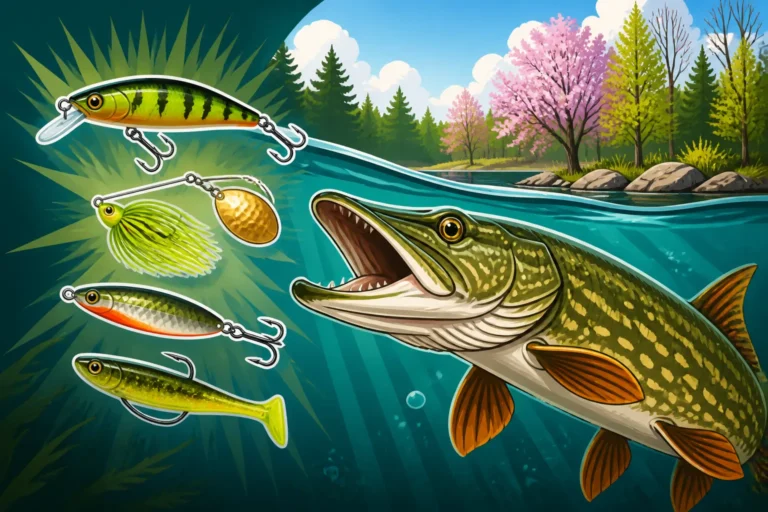
Spoons are a classic choice and for good reason. Their wobbling action mimics injured baitfish, triggering aggressive strikes. Popular spoon sizes range from 3/8 oz to 1 oz, with colors like silver, blue/silver, chartreuse, orange, and even black being highly effective. Brands like Little Cleo, Dardevle, and KO Wobbler are mainstays in many anglers' tackle boxes. They cast well, allowing you to cover a lot of water from shore, and their flash is irresistible to salmon. When retrieving, vary your speed and add occasional twitches to give them an erratic, lifelike movement.
Stickbaits, both floating and diving, are another excellent option, especially for fresher fish holding in runs or pools. These lures imitate slender baitfish and are very effective when cast across and downstream, allowing the current to work the lure. Colors can vary, but natural baitfish patterns, fire tiger, and bright orange or chartreuse are often successful. Rapala, Kwikfish, and FlatFish are well-regarded brands. For shore fishing, focus on models that can reach the desired depth without getting constantly snagged.
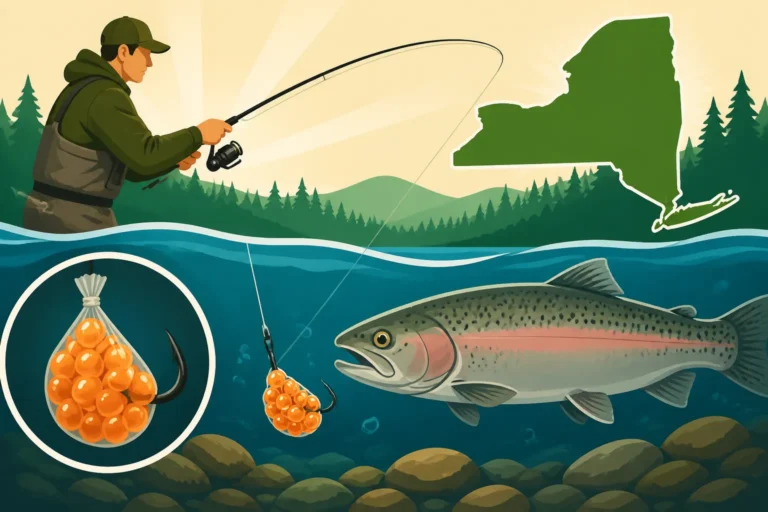
For a more natural presentation, especially when fish are "locked in" on natural food sources or are more wary, egg sacs and beads are deadly. Egg sacs are small mesh bags filled with cured salmon or trout eggs, mimicking the natural spawn that drifts downstream. Beads, usually made of plastic or glass, are designed to look like a single salmon egg and are fished a short distance above a small hook. These are typically fished by drifting them under a float or bottom bouncing, presenting them naturally to fish holding in deeper pockets. You can find quality egg netting and bead assortments for your tackle box easily on Amazon.
Finally, for the fly-fishing enthusiast, large streamers (like woolly buggers or articulator patterns), egg patterns, and stonefly nymphs can be incredibly effective. Fly fishing from shore for salmon often involves specialized techniques, but for the purpose of this general guide, just know these presentations can be highly productive in the right hands and conditions.
Essential Accessories
Beyond your main tackle, a few key accessories can make your shore salmon fishing experience much more enjoyable and successful, not to mention safer.
A long-handled landing net with a rubberized mesh is non-negotiable. Salmon are big, powerful fish, and trying to hoist one onto shore without a proper net is a recipe for disaster and can severely injure the fish if you plan to release it. The rubberized mesh protects the fish's slime coat and prevents hooks from tangling. Make sure the handle is long enough to reach out over the water from the bank or a slippery rock.
Waders and sturdy wading boots are essential for accessing prime fishing positions, especially in rivers where you might need to wade out a bit to make a proper cast or get around obstacles. Neoprene waders are excellent for colder fall temperatures, while breathable waders are good for warmer days. Always prioritize safety in wading; never wade alone or in unfamiliar swift currents. A wading belt is crucial to prevent your waders from filling with water in case of a slip.
Don't forget polarized sunglasses to cut through the glare on the water, helping you spot fish or structure beneath the surface. A good multi-tool or pair of pliers is invaluable for hook removal and general tackle adjustments. A compact tackle box or backpack will keep your lures, leaders, and other small items organized and easily accessible. And for those long days on the water, a comfortable, insulated cooler for your catch (if keeping) and your lunch is a must. Many anglers also carry a small first-aid kit, a whistle, and perhaps a personal flotation device (PFD) if wading into deeper or swifter waters.
Effective Shore Fishing Techniques for Salmon
It's not enough to have the right gear; you need to know how to use it effectively from shore. Unlike boat fishing, you have less mobility, so maximizing your casting, retrieval, and water-reading skills is paramount.
Casting and Retrieval Strategies
When shore fishing for salmon, your casting technique is critical. You need to be able to cast accurately and often a significant distance to reach the fish-holding water, which might be in the middle of a river or against the far bank.
Practice casting to improve your accuracy, aiming for current seams, deeper pools, and areas around submerged structures where salmon might be resting or congregating. A powerful overhead cast is often necessary to launch heavier spoons and stickbaits far out. Once your lure hits the water, the retrieval strategy becomes key. Salmon, especially those that have been in the river for a while, can be finicky. Sometimes a steady, moderate retrieve with a spoon is all it takes to entice a strike. Other times, an erratic retrieve, incorporating sudden jerks, pauses, and changes in speed, can be more effective. This "stop-and-go" or "twitch-and-pause" action often mimics an injured baitfish, which can trigger an aggressive reaction from a salmon. For stickbaits, allowing the current to sweep the lure downstream while maintaining tension, with occasional twitches, can be deadly. Always pay attention to what the fish are responding to on a given day. If one retrieve isn't working, don't be afraid to experiment.
It's also crucial to consider the current. Casting upstream and retrieving faster than the current will make your lure look unnatural. Instead, cast slightly upstream or directly across the current, and allow your lure to swing downstream as you retrieve, maintaining a natural drift. The goal is to present your lure as if it's effortlessly moving with the water, just like natural prey.
Drifting Baits and Floats
Drift fishing, particularly with egg sacs or beads under a float (often called a "bobber"), is an incredibly productive technique for shore anglers targeting salmon in rivers. This method allows for a very natural presentation that imitates loose salmon eggs or small insects drifting downstream.
To set up for drift fishing, you'll typically use a float that's large enough to support your weight and bait, but not so large that it creates excessive drag. An adjustable slip float is ideal, allowing you to quickly change your depth to match the water you're fishing. Below the float, you'll have a few split shot weights to get your bait down, followed by your leader and a small, sharp hook (often a size 6 or 8 octopus hook). A single salmon egg bead or an egg sac is then threaded onto the hook.
The technique involves casting upstream of where you believe the fish are holding, allowing the float and bait to drift naturally downstream at the same speed as the current. The goal is a "dead drift," where your line is slack enough not to pull the float unnaturally, but taut enough to set the hook quickly when the float dips or pauses. As the float drifts past your target zone, carefully watch it. Any hesitation, dip, or unusual movement could indicate a bite. Set the hook quickly and firmly! This technique is especially effective in runs and seams where salmon are actively migrating or holding in current breaks. Mastering the art of the dead drift is a game-changer for shore salmon fishing.
Another variation is bottom bouncing, where instead of a float, you use a three-way swivel or a specialized bottom-bouncing rig to keep your bait (often an egg sac) just off the bottom. A heavier weight (slinky or pencil lead) drags along the bottom, while your leader with the bait floats just above it, again imitating a natural drift. This is great for deeper, faster water where floats might not be as effective.
Reading the Water and Locating Fish
Successful shore fishing isn't just about casting; it's about understanding where the fish are likely to be. Salmon, like all fish, are creatures of habit and will seek out specific types of water.
First, look for current breaks. These are areas where the main flow of the river is interrupted, creating calmer water behind an obstacle. This could be a large rock, a submerged log, a bend in the river, or even the edge of a deep pool. Salmon will often hold in these calmer spots to rest from the powerful current while still being close enough to dart out for food or to continue their migration. The "seams" where the fast water meets the slow water are prime target zones.
Deeper pools are another key feature. Salmon need deeper water to feel secure and to stage before moving further upstream. These pools are often found below rapids, waterfalls, or dams. Look for darker areas in the water, which often indicate deeper sections. Riffles and runs – areas of shallower, faster-moving water – can also hold salmon, especially Coho or fresher Chinooks actively pushing upstream. Don't overlook the "tail-outs" of pools, which are the shallower, faster sections at the downstream end; fish often stage here before moving into the next upstream pool.
Keep an eye out for any visual signs of fish. Sometimes you'll see salmon jumping or rolling on the surface, indicating their presence. While these might be fish that aren't actively biting, their presence confirms you're in a productive area. Pay attention to other anglers too; if several people are concentrated in one spot or are consistently hooking up, it's a good indicator that fish are present. However, always be respectful of other anglers and maintain proper spacing, especially in crowded public access areas. Learning to read the water effectively comes with experience, so spend time observing the river before you even make your first cast.
New York Specific Regulations and Best Practices
Before you even tie on your first lure, it's absolutely crucial to understand the rules and ethical considerations that govern salmon fishing in New York. Fishing responsibly ensures the health of the fishery for future generations.
Understanding Salmon Season and Catch Limits
New York State has specific regulations regarding salmon fishing, particularly in the Great Lakes tributaries. These regulations are designed to manage fish populations and ensure sustainable angling opportunities.
Generally, the prime salmon season in the Lake Ontario and Lake Erie tributaries is during the fall run, typically from September through November, although fish can start entering rivers in late August and some may linger into early winter. Specific opening and closing dates can vary by water body and species, so it's paramount to consult the latest New York State Department of Environmental Conservation (DEC) fishing regulations guide. These guides are updated annually and will detail the specific seasons, daily bag limits, and minimum size requirements for Chinook and Coho salmon. For instance, there might be different limits for Lake Ontario tributaries versus Lake Erie tributaries, or special regulations for specific sections of famous rivers like the Salmon River. Our guide on New York Fishing Season Dates and Catch Limits provides a good overview, but always double-check the official DEC website or publication.
It's also important to note that you will need a valid New York State fishing license to fish for salmon. There are different licenses for residents and non-residents, and various options depending on age and duration. Make sure your license is current before you head out. You can also explore options like the New York Freshwater Fishing Rules to understand the broader context of inland fishing. Fishing without a proper license or violating catch limits can result in significant fines and penalties, so always be compliant.
Ethical Angling and Conservation
Beyond the legal requirements, practicing ethical angling and conservation principles is vital for the long-term health of New York's incredible salmon fishery.
One of the most important aspects is proper catch-and-release handling. Many salmon, particularly in the later stages of their spawning run, are not considered prime eating quality, and many anglers practice catch-and-release to preserve the fishery. If you intend to release a fish, minimize its time out of water. Use a rubberized net to land it gently, and unhook it while it's still in the water if possible. Avoid dragging fish onto dry ground or handling them by their gills or eyes. If you must handle the fish, wet your hands first to protect its delicate slime coat, which is vital for its immune system. Support the fish horizontally, especially large ones, to avoid damaging internal organs. After unhooking, hold the fish gently in the current, facing upstream, until it regains its strength and swims away on its own. Our guide on Catch-and-Release Handling Rules offers more detailed advice.
Another critical ethical consideration is not disturbing spawning fish. Salmon are on their final journey to reproduce, and it's essential to respect this natural process. Avoid targeting fish that are actively on their redds (spawning beds), which appear as clean, gravelly depressions in the riverbed. These fish are focused solely on procreation, and repeatedly hooking them causes unnecessary stress and can jeopardize their spawning success. While they might strike out of aggression, a truly ethical angler will focus on fish that are still actively migrating or holding in pools before they reach the spawning grounds.
Finally, always practice leave no trace principles. Pack out everything you pack in, and perhaps even pick up any litter you find. Respect private property boundaries, and be courteous to fellow anglers. These small actions contribute to a positive angling experience for everyone and help preserve the natural beauty of New York's fishing spots. By adhering to both regulations and ethical practices, we ensure that the spectacular tradition of salmon fishing in New York continues to thrive for generations to come.
Popular Lures for Shore Salmon Fishing
To help you quickly decide what to tie on, here's a breakdown of some top lure choices for shore-based salmon anglers in New York's rivers.
| Lure Type | Common Sizes | Effective Colors | Key Action / Technique | Best for Conditions |
|---|---|---|---|---|
| Spoons | 3/8 oz – 1 oz | Silver, Chartreuse, Orange, Blue/Silver | Wobbling, flashing, erratic retrieve | Varying current, casting distance needed, aggressive fish |
| Stickbaits | 3" – 6" | Natural baitfish, Fire Tiger, Clown | Diving, floating, twitching, current-driven | Fresher fish, clear to stained water, strong current |
| Egg Sacs | Small (nickel-sized) | Orange, Red, Chartreuse | Natural drift under float, bottom bounce | Spawning fish, wary fish, clear to stained water |
| Beads | 6mm – 12mm | Orange, Red, Peach, Fluorescent Yellow | Natural drift above small hook | Similar to egg sacs, often more durable |
| Jigs | 1/8 oz – 1/2 oz | Black, Olive, White, Chartreuse | Jigging, swinging, twitching | Deeper pools, slower water, when fish are lethargic |
This table provides a quick reference, but remember that experimentation is often the key to success on any given day. Conditions change, and so do the fish's preferences!
Disclaimer
Fishing regulations, seasons, and licensing requirements can change. Always consult the most current New York State Department of Environmental Conservation (DEC) regulations before heading out on the water. This guide is for informational purposes only and should not be considered a substitute for official regulations. Be safe and enjoy your time on the water!