Best Depth for Lake Trout in Summer on New York’s Seneca Lake
Trying to pinpoint lake trout in Seneca Lake during the warmer months can feel like an endless quest, leaving many anglers wondering if they're even fishing in the right part of the water column. It's a common frustration when those surface bites disappear, and you know the fish are still in there, just deeper. This guide is all about demystifying summer lake trout fishing on Seneca Lake, giving you the knowledge and strategies to consistently find where those lakers are hiding and what depths they prefer when the sun really starts to beat down.
Understanding Lake Trout Behavior in Summer
Lake trout are cold-water fish, and their behavior is heavily dictated by water temperature and oxygen levels. As summer progresses and the surface waters heat up, these magnificent fish don't just vanish; they simply move to the comfort of deeper, cooler, and more oxygenated environments. Understanding this fundamental drive is the first step to success on Seneca Lake.
The Thermocline and Oxygen Levels
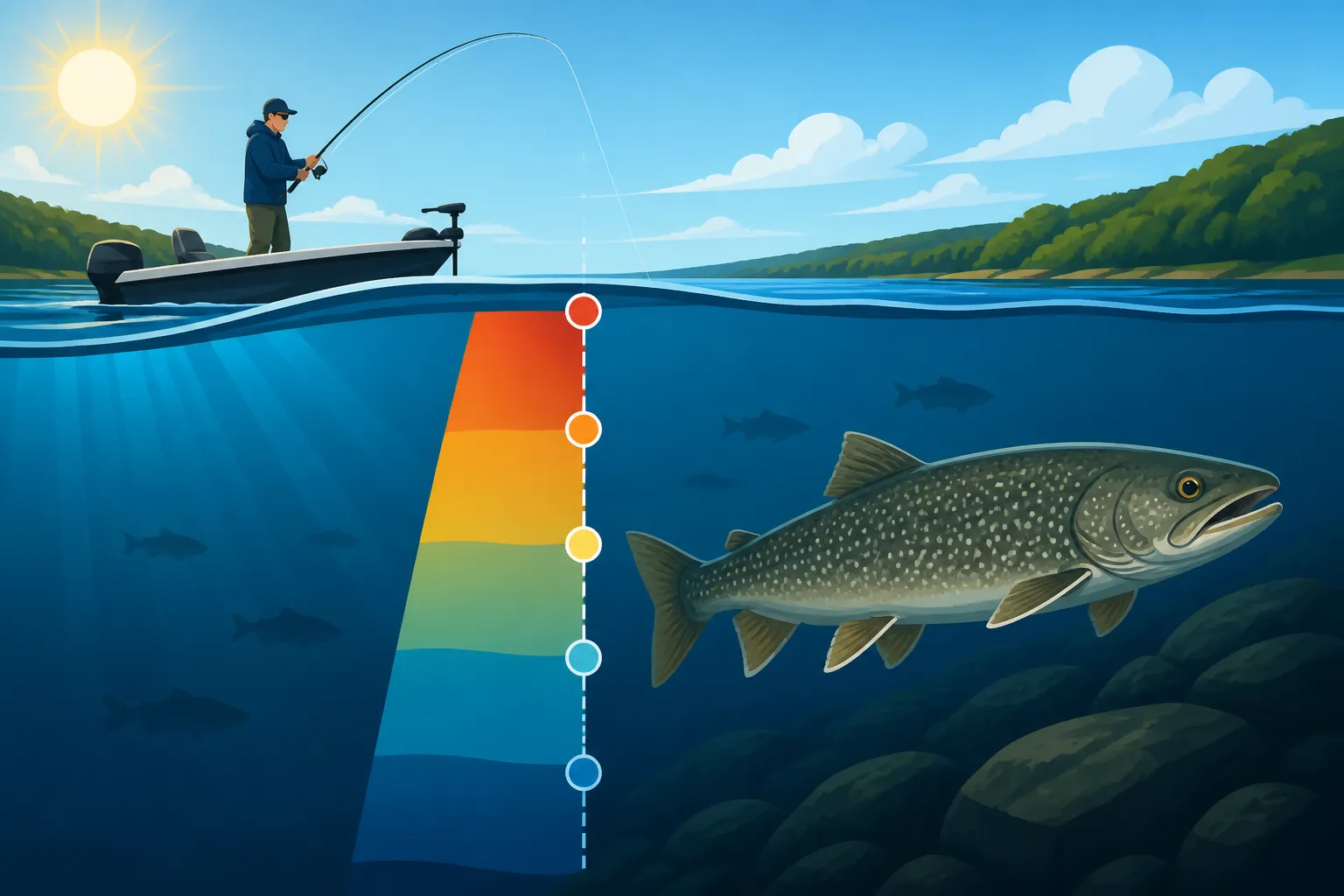
The thermocline is like an invisible wall in the lake, a distinct layer where water temperature changes rapidly. Above it, the water is warm; below it, it's significantly colder. In Seneca Lake, especially in the summer, this thermocline sets up firmly. Lake trout will almost always be found at or below this layer, where the water is to their liking. However, it's not just about temperature; oxygen levels also play a crucial role. While deeper water is cooler, extremely deep water, particularly in very productive lakes, can sometimes become deoxygenated, creating a 'dead zone' where fish cannot survive. Seneca Lake, being one of the deepest Finger Lakes, generally maintains good oxygen levels at greater depths, but it's still a factor to consider. You're looking for that sweet spot where cold, oxygen-rich water meets their preferred temperature range.
Lake Trout's Preferred Temperature Range
For lake trout, comfort is key, and their comfort zone is generally quite chilly compared to many other freshwater species. They thrive in water temperatures ranging from the mid-40s to low 50s Fahrenheit (around 7-12 degrees Celsius). As Seneca Lake's surface waters warm into the 70s or even 80s during peak summer, these fish will go to impressive depths to find those ideal conditions. This means they’ll often be suspended over deep basins or hugging the bottom near deep structure. Knowing this preferred range helps you interpret your electronics and focus your efforts. For a more general overview of these fish, check out our guide to Lake Trout in New York.
Food Sources in Deeper Water
It's not just about temperature; lake trout also need to eat! While they are driven by cold water, they will relate to baitfish. In Seneca Lake, their primary forage often includes alewives and smelt, both of which also seek out cooler waters during the summer. So, when you're scanning with your fish finder, you're not just looking for solitary lakers; you're often looking for schools of baitfish, too. The lake trout will be nearby, either actively feeding or waiting in ambush. Sometimes, they'll be suspended just above or within a bait ball, making them a little easier to spot. Understanding what these fish eat and where their food sources go is crucial for summer success.
Key Factors Influencing Lake Trout Depth in Seneca Lake
Seneca Lake is a vast, deep body of water, and finding lake trout isn't always a simple matter of dropping a line to a fixed depth. Several dynamic factors influence exactly where these fish will hold on any given day. Adapting your approach based on these factors is what separates a good day on the water from a frustrating one.
Seasonal Patterns
While our focus is summer, it's helpful to briefly touch on how this differs from other seasons. In spring and fall, lake trout can often be found much shallower, even near the surface, as the overall water column is cooler. But once summer really takes hold, usually from late June through August, the pattern becomes quite consistent: deep is where they reside. This shift is a direct response to the warming surface waters. During early summer, they might still be found a bit shallower as they transition, perhaps in the 60-90 foot range. By late summer, however, especially during prolonged heatwaves, it's not uncommon to find them well over 100 feet deep, sometimes even pushing past 150 or 200 feet in the deepest parts of Seneca Lake. Understanding these seasonal tendencies is fundamental to New York Fishing Seasons Explained.
Time of Day and Light Penetration
The time of day, and consequently the amount of light penetrating the water, also plays a role in lake trout depth. While they are already deep in summer, intense sunlight can push them even deeper or make them more lethargic. On bright, sunny days with clear skies, lake trout tend to hold tighter to structure or in the darkest parts of the water column. Conversely, on overcast days or during low-light periods like early morning or late evening, they might move up slightly within the cold water column, perhaps to pursue baitfish that have also risen a bit. This doesn't mean they'll be shallow, but they might be 10-20 feet shallower than their mid-day depth. Always start your search with the deepest part of their known range and work your way up if conditions suggest it.
Bottom Structure and Forage
Seneca Lake boasts incredible depth and varied bottom structure. Lake trout are often found relating to specific underwater features. Look for deep points, drop-offs, underwater humps, and ledges. These areas act as ambush points where they can easily intercept passing baitfish. While lake trout will often suspend over vast deep basins, they frequently do so near these structural elements. The presence of forage is perhaps the most critical factor. If you see large schools of baitfish on your sonar, chances are the lake trout won't be far away, even if the depth isn't exactly what you predicted. They are opportunistic predators, and a dense school of alewives is too good to pass up. Always keep an eye out for these concentrations of bait.
Here’s a general idea of how lake trout might position themselves in Seneca Lake during the summer, though every day is different:
| Depth Range (feet) | Water Temperature (Est. °F) | Primary Forage | Recommended Technique | Key Gear Considerations |
|---|---|---|---|---|
| 60-90 | 50-55 | Alewives, Smelt | Downrigging, Dipsy Diver | Medium-heavy rod, good reel, 12-17lb mono/fluoro |
| 90-120 | 45-50 | Alewives, Smelt | Downrigging, Wire-line Trolling | Heavy rod, larger reel, 20-30lb braided line |
| 120-180+ | 40-45 | Smelt | Downrigging (heavy balls), Lead Core | Extra heavy rod, specialized reel, heavier lead core |
Note: Water temperatures are estimates and can vary significantly based on specific conditions, time of summer, and precise location within the lake.
Essential Gear and Techniques for Deepwater Lake Trout
Successfully targeting lake trout in the depths of Seneca Lake isn't just about knowing where they are; it's about having the right tools to get your lures down to them effectively. This is where specialized gear truly shines. Without it, you'll spend more time guessing and less time fishing. If you're new to this kind of fishing, our guide on How to Trout Fish in New York offers some great foundational knowledge.
Downriggers and Dipsy Divers
These are the workhorses of deepwater trolling. Downriggers use a heavy ball and a cable to precisely control the depth of your lure. You attach your fishing line to a release clip on the downrigger cable, drop the ball to your desired depth, and when a fish strikes, your line pops free, allowing you to fight the fish directly without the weight of the downrigger ball. This precision is invaluable when lake trout are holding within a very specific depth band. Dipsy divers are another excellent tool, using water pressure to dive to a set depth. They can be set to run out to the side of the boat, helping you cover a wider swath of water. Both methods allow you to present lures effectively at the depths where summer lake trout are likely to be lurking. You can find a fantastic selection of both downriggers and various Dipsy Diver sizes on platforms like Amazon, often with helpful reviews to guide your choice.
Electronics: Fish Finders and Sonar for Locating Fish and Structure
Your boat's electronics are your eyes into the deep. A quality fish finder or sonar unit is absolutely non-negotiable for summer lake trout fishing on Seneca Lake. These devices allow you to:
- Identify the thermocline: Most modern units will show a distinct line where the water temperature changes, helping you gauge the upper limit of where lakers might be.
- Locate baitfish schools: Spotting dense clouds of bait is a huge indicator that predators like lake trout are nearby.
- Pinpoint individual fish: While more challenging at extreme depths, you can often mark larger fish arcs, especially if they are suspending.
- Map bottom structure: Understanding the contours, humps, and drop-offs beneath you is critical for finding fish-holding areas.
Learning How to Read a Fish Finder for New York Lakes is an essential skill. Spend time with your unit, understand its settings, and interpret what it's showing you. It will dramatically improve your success rate.
Lure Selection for Deep Water
Once you can get your lures down, what should you put on the end of your line? For deepwater lake trout, durability and action are key.
- Spoons: Large trolling spoons are incredibly popular and effective. Brands like Northern King, Dreamweaver, or Sutton Spoons come in a wide array of colors and sizes. Their fluttering action mimics wounded baitfish, irresistible to hungry lakers. Silver, blue/silver, green/silver, and watermelon patterns are often excellent choices on Seneca Lake.
- Flasher-Flies: These are a deadly combination, especially when fishing for lake trout that are feeding on alewives. The large, rotating flasher creates vibration and attraction, while the small fly trailing behind it perfectly imitates a baitfish.
- Stickbaits: Deep-diving stickbaits, like those from Rapala or Bomber, can also be effective when trolled behind a downrigger or Dipsy Diver. Choose models that are designed for deeper presentations.
- Meat Rigs: Some serious lake trout anglers also employ "meat rigs," which involve a small piece of bait (often a cut alewife or smelt) fished behind a flasher. These can be incredibly enticing.
When buying lures, especially if you're experimenting with different colors or sizes, online retailers like Amazon offer a vast selection, allowing you to build up your tackle box without having to visit multiple stores. Consider the size of the predominant baitfish in Seneca Lake when choosing your lure sizes.
Reading Your Electronics and Adapting Your Strategy
Having the right gear is only half the battle; knowing how to use it and, more importantly, how to interpret what your electronics are telling you, is what truly sets successful deepwater lake trout anglers apart. The lake is a dynamic environment, and the fish aren't always where you expect them.
Interpreting Sonar Readings
Your fish finder is your best friend when targeting deepwater lake trout. Look for several key indicators:
- The Thermocline: As mentioned, this is often visible as a distinct, usually darker, horizontal band on your screen where the temperature changes rapidly. Lake trout will typically be found at or below this line.
- Bait Balls: These appear as dense clouds or clumps of small dots. If you see bait, be sure to work that area thoroughly, as lakers will often be nearby.
- Arches: Individual fish will show up as arches. The size and shape of the arch can give you clues about the fish's size and how it's relating to your boat. A strong, distinct arch means a larger fish directly under your transducer.
- Bottom Structure: Pay attention to depth changes, humps, and points. Lake trout often relate to these features, even if they are suspending slightly above them. A good unit will allow you to see the bottom composition, too, which can sometimes provide clues.
Don't just look for fish; look for the patterns in bait, structure, and temperature that reveal where the fish should be. For more general guidelines, our post on How to Fish Deep Water Lake Trout in Summer on New York's Finger Lakes can provide additional insights applicable to Seneca Lake.
Adjusting Depth on the Fly
One of the biggest mistakes anglers make is setting their depth and sticking to it rigidly. Lake trout are constantly on the move, even if it's just a few feet up or down in the water column. If you're marking fish at 100 feet and you're only sending your lures to 80 feet, you're missing them. Conversely, if you're hitting bottom too often, you need to raise your presentation.
- Observe and React: If you see baitfish rising or dropping, adjust your downriggers to match. If you mark a laker higher or lower than your current lures, make a slight adjustment.
- Stagger Depths: When running multiple lines, always stagger your depths. This helps you figure out the precise depth the fish prefer on that particular day. For example, if running two downriggers, put one at 90 feet and one at 110 feet. If a fish hits the 110-foot line, you know to adjust the other line to that depth or slightly deeper.
- Check the Sonar Continuously: Your sonar is not just for finding fish; it's for confirming your lure's depth and ensuring you're in the strike zone. Many downriggers can display the actual depth of the weight, which is helpful.
Trial and Error: The Importance of Experimentation
Even with the best electronics and gear, deepwater lake trout fishing in Seneca Lake still requires a good dose of trial and error. What worked yesterday might not work today.
- Vary Lure Colors and Sizes: If one color isn't producing, don't be afraid to change it up. Have a variety of spoons, flies, and stickbaits ready to deploy.
- Adjust Trolling Speed: Slight changes in speed can dramatically alter the action of your lure and sometimes trigger a strike. Experiment with speeds from 1.8 to 2.8 mph, observing what your lures are doing at each speed.
- Change Presentation: If standard trolling isn't working, consider trying different techniques like jigging while drifting over deep structure, especially if you're marking fish tight to the bottom.
- Keep a Log: Note down successful depths, lure colors, speeds, and even weather conditions. Over time, this data can help you identify patterns and make more informed decisions on future trips. This kind of diligent observation and adaptation will improve your results significantly when pursuing summer lake trout.
Disclaimer
This article is for general informational purposes only and does not constitute professional advice. Laws, prices and regulations vary by location and change over time. Consult a qualified professional for guidance on your specific situation.