How Weather Affects Fishing in New York
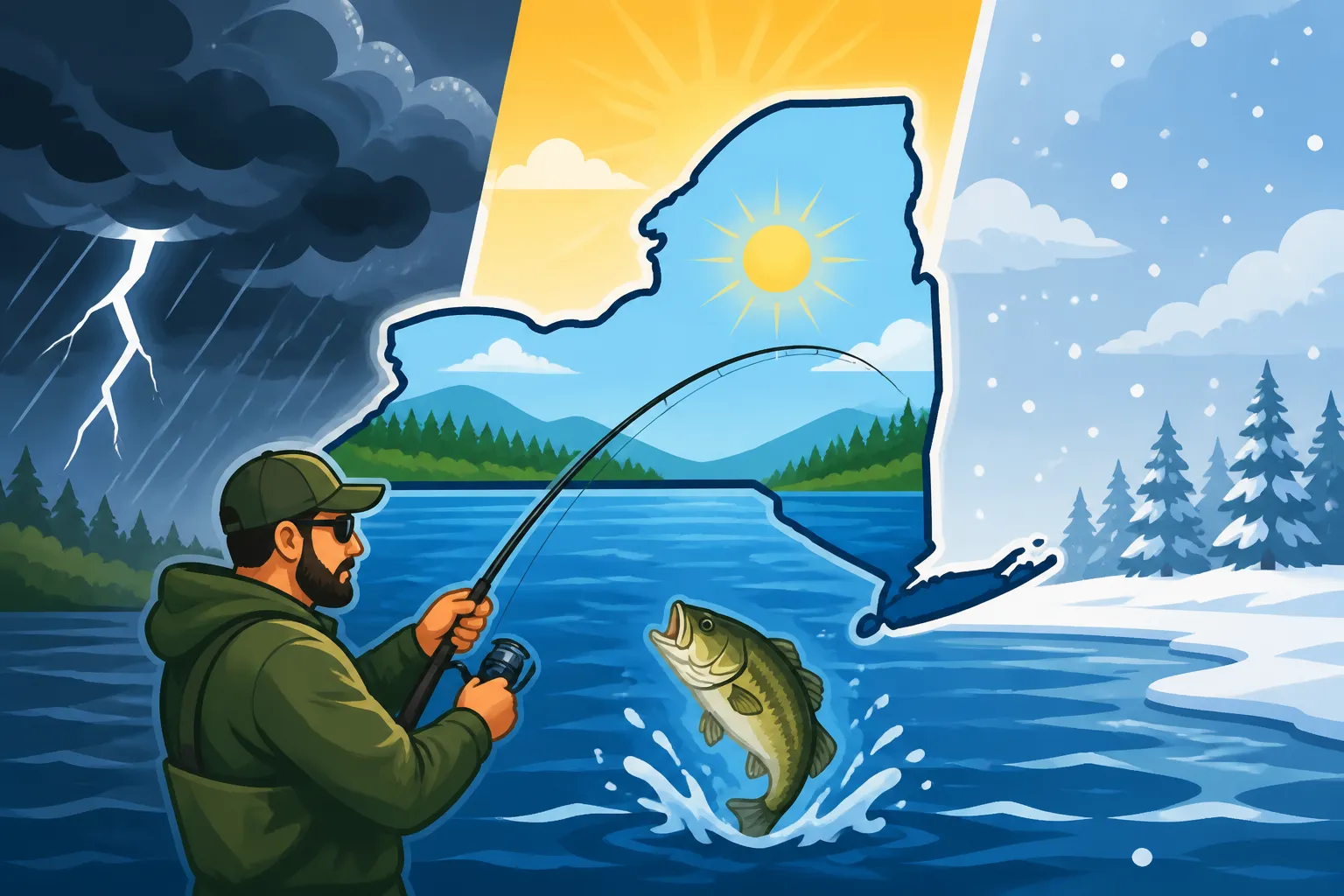
We’ve all been there: you’ve planned your fishing trip to the beautiful waters of New York for weeks, meticulously organized your gear, and set your alarm for an early start. Then you wake up to a completely different weather scenario than what you expected, or even worse, the perfect sunny day turns into a fishing nightmare. It’s incredibly frustrating when fish seem to vanish or get lockjaw, and often, the culprit is something you can’t control – the weather. This comprehensive guide will help you understand precisely how different weather patterns in New York affect fish behavior and, more importantly, how you can adapt your strategy to still find success on the water.
Understanding Barometric Pressure and Its Influence
Barometric pressure, essentially the weight of the air above us, is one of the most significant, yet often overlooked, factors influencing fish activity. Think of it like this: fish have an air bladder that helps them maintain buoyancy. Changes in atmospheric pressure directly impact this bladder, much like how our ears pop on an airplane. Sudden drops or rises can make them uncomfortable or stimulate them to feed.
High Pressure: Clear Skies, Tougher Bites
When a high-pressure system settles in, you usually get those picture-perfect, clear, sunny days. The kind where the sky is a brilliant blue, and there’s barely a cloud in sight. While lovely for a picnic, these conditions often spell tougher fishing. The increased atmospheric pressure pushes down on the water, which in turn can make fish feel more pressure on their swim bladders. This often makes them uncomfortable and less inclined to feed aggressively.
You’ll typically find fish moving deeper into the water column, seeking refuge in cooler, darker areas where the pressure changes might be less pronounced. They become more lethargic, conserving energy. For us anglers, this means we need to slow down our presentations significantly. Think subtle movements, smaller baits, and focusing on structure in deeper water or shaded areas. Sometimes, mimicking a barely moving, injured baitfish can be the ticket. It's a game of patience and finesse, where every gentle twitch matters. Many anglers swear by the idea that a stable high-pressure system, even if tough, eventually leads to more predictable, if not aggressive, fish movement.
Low Pressure: Approaching Storms, Active Fish
Conversely, a low-pressure system is often associated with cloudy skies, increasing humidity, and the promise of rain or storms. This is when the air pressure drops, and it's generally considered a fantastic time to go fishing. The reduced pressure makes fish feel more comfortable, often leading to increased activity and aggressive feeding. Their swim bladders expand slightly, giving them a sense of buoyancy and often making them more energetic.
Before a storm truly hits, during the falling barometer period, fish frequently go on a feeding frenzy. They instinctively know that tough weather is coming, and they need to fuel up. This is your cue to ramp up your retrieve speeds and use larger, more attention-grabbing baits. Targeting shallower areas, especially those with cover where baitfish might be seeking shelter, can be incredibly productive. As the storm passes and the pressure begins to stabilize, the bite might slow slightly, but fish generally remain more active than during high-pressure days. This is a prime example of when the Best Barometric Pressure for Fishing can make or break your day.
Stable Pressure: Consistent Action
When the barometric pressure remains relatively stable for several days, regardless of whether it’s high or low, fish tend to settle into more predictable patterns. This consistency allows them to adjust to the prevailing conditions, making their feeding habits more regular.
During periods of stable pressure, you can often rely on your tried-and-true techniques and target established fishing spots. If the pressure has been stable and high, you might still need to fish deeper and slower, but the fish won’t be quite as skittish as on a rapidly changing high-pressure day. If it’s been stable and low, you can expect continued good action, perhaps not the pre-storm frenzy, but a consistent bite. For anglers who like to keep a detailed log, stable pressure days are perfect for confirming patterns and understanding specific fish behavior in certain locations. It removes one major variable, allowing you to focus on other factors like forage, water temperature, or time of day.
Temperature Swings and Their Impact on Fish Metabolism
Just like us, fish are highly sensitive to temperature. But unlike us, they're cold-blooded, meaning their body temperature mirrors their surroundings. This makes water temperature a critical factor, directly influencing their metabolism, activity levels, and where they choose to hang out.
Cold Fronts: The Angler's Nemesis
A cold front is almost universally disliked by anglers, and for good reason. It typically signifies a sudden, sharp drop in air temperature, often followed by clear skies and high barometric pressure. This dramatic shift can shock fish systems. Their metabolism slows significantly, turning them sluggish and unenthusiastic about feeding. It's like going from a cozy sweater to a thin t-shirt in winter – they just want to hunker down and minimize movement.
When a cold front hits New York, fish often retreat to deeper, more stable water where temperature fluctuations are less severe. They might also seek out dense cover, like weed beds or fallen trees, or even the sunny side of a lake or pond where the sun can penetrate the water and offer some warmth. If you find yourself fishing in a cold front, patience is key. Think about How to Fish Cold Water in New York. You’ll want to present baits slowly, perhaps even dead-sticking, with very subtle twitches. Smaller, less intrusive baits are generally more effective. Fish aren't actively hunting; they're opportunistically feeding if an easy meal comes their way. Targeting sheltered coves or areas with darker bottoms that absorb more solar radiation can sometimes offer a slightly better bite.
Warm Fronts: A Welcome Change
In contrast to cold fronts, a warm front brings rising air temperatures, often accompanied by increasing humidity and typically falling barometric pressure. For many New York fish species, especially those that thrive in warmer waters like bass and panfish, this is a welcome change that sparks increased activity. As the water temperature gradually rises, their metabolism speeds up, making them more energetic and hungry.
During a warm front, fish often move shallower, becoming more aggressive and willing to chase down a meal. This is a great time to cover more water with active presentations – think spinnerbaits, crankbaits, or topwater lures. Targeting ambush points like weed lines, fallen timber, or rocky shorelines can be highly effective as fish position themselves to intercept passing bait. Even cooler water species like trout can become more active as insect hatches might increase with the rising temperatures. It's a fantastic time for a spirited fight, as fish will be at their most energetic.
Water Temperature: The Master Key
Beyond just fronts, the actual water temperature itself is the single most critical factor in locating fish and predicting their behavior. Every species has an optimal temperature range where they are most active and comfortable. For example, cold-water species like trout and salmon prefer cooler waters, typically in the 50s and low 60s Fahrenheit. Warm-water species like largemouth bass and panfish thrive in temperatures ranging from the upper 60s to low 80s.
Understanding these preferences is paramount. In the heat of summer, lake trout might be found deep in the thermocline of a Finger Lake, while largemouth bass will be hiding in shady, shallow cover. In spring, as waters warm, crappie will move into shallows to spawn. Using a reliable water thermometer, which you can easily find on Amazon, can be a game-changer. Look for "thermal breaks" or areas where different water temperatures meet, as these can concentrate baitfish and, consequently, predatory fish. This is crucial knowledge for any angler, helping you decide on the Best Time of Year to Fish in New York for specific species.
Wind, Rain, and Cloud Cover: Surface Disruptions and Opportunities
Beyond pressure and temperature, other atmospheric elements like wind, rain, and cloud cover also play a significant role in how fish behave and how we, as anglers, approach our day on the water. These factors often affect visibility, oxygen levels, and food availability, creating both challenges and prime opportunities.
Wind: Friend or Foe?
Wind is a double-edged sword for anglers. On one hand, a gentle breeze can be your best friend. It creates a ripple on the water's surface, breaking up the clear view for fish and providing camouflage for you. This allows you to approach them more closely without spooking them. Wind also helps oxygenate the water, stirring up nutrients and disorienting baitfish, making them easier targets for predators. These wind-blown areas often concentrate baitfish, leading to fantastic feeding opportunities. Understanding how wind direction affects lake fishing can lead to some incredible catches.
However, too much wind can quickly turn into a foe. Strong winds make boat control a nightmare, casting nearly impossible, and can churn up the water, drastically reducing visibility for both fish and angler. In rivers, heavy wind can sometimes push debris downstream, making certain areas unfishable. When facing high winds, consider fishing wind-blown points or shorelines where waves are pushing food. Alternatively, seek out sheltered coves or the lee side of islands where the water is calmer, and fish might be taking refuge. Using heavier baits to cut through the wind and maintain contact with the bottom can also be a smart move.
Rain: Timing is Everything
Ah, rain. It can be a miserable experience for the unprepared angler, but timing it right can lead to some of the best fishing of your life. A light, steady rain, especially in warmer months, is often fantastic. It adds oxygen to the water, washes terrestrial insects and nutrients into the system, and further breaks up the surface, making fish feel more secure and active. This is when fish often move shallower and become more aggressive.
However, heavy downpours can quickly turn the tide, especially in rivers and smaller lakes. Intense rain can muddy the water, reducing visibility to near zero and making it difficult for fish to find food. It can also cause sudden spikes in water levels and strong currents, forcing fish to hunker down or seek calmer backwaters. If the water gets too muddy, it's often best to wait for it to clear. For those wondering How to Fish Muddy Water After Rain, focus on edges where clearer water might meet the murkier inflows, or areas with distinct structure where fish can ambush prey. Always be prepared with quality rain gear – nothing ruins a good fishing day faster than being soaked to the bone.
Cloud Cover and Sunlight: Vision and Comfort
Cloud cover and direct sunlight significantly influence fish behavior, primarily by affecting light penetration into the water and the fish's sense of security. Overcast days are generally celebrated by anglers. The diffused light reduces visibility for fish, making them feel less exposed to predators (both airborne and human). This often encourages them to move into shallower water and feed for longer periods throughout the day. Topwater action can be phenomenal on cloudy days, as fish feel confident enough to strike at the surface.
Bright, sunny days, on the other hand, often push fish deeper or into heavy cover. The intense light can be uncomfortable for their eyes, and it also makes them more vulnerable to predators. You'll often find them seeking shade under docks, overhanging trees, or within dense weed beds. On such days, adjusting your presentation to target these shaded pockets or fishing deeper with jigs and worms becomes essential. Sunglasses are not just for your comfort; they help you spot fish or subtle movements that intense glare might otherwise obscure. Consider bringing a broad-brimmed hat, too, to help with glare and protect you from the sun.
Putting It All Together: Reading the Forecast Like a Pro
Understanding individual weather factors is a great start, but the real magic happens when you learn to combine these pieces of information. Fishing success often hinges on predicting how multiple weather elements will interact and influence the fish.
Combining Factors for Better Predictions
Rarely does only one weather element dictate fish behavior. It’s almost always a combination. For instance, a pre-frontal low-pressure system combined with rising temperatures and a light, overcast sky typically signals prime fishing conditions across New York. Fish will likely be active, aggressive, and willing to chase baits in shallower water. Conversely, a post-frontal high-pressure system with dropping temperatures, clear skies, and strong winds usually means a tough bite, requiring slow, deep presentations and immense patience.
Consider a spring day on one of New York’s renowned fishing spots like the Salmon River. If you see a forecast with a steady barometer, increasing cloud cover, and light winds, that might be ideal for steelhead. But if a strong cold front is blowing through, you might be better off targeting deep pools with very slow presentations, or even considering another activity for the day. Learning to read these nuances and understand how they affect different fish species is what separates good anglers from truly exceptional ones. This combined knowledge is invaluable when looking at New York Fishing Seasons Explained or determining the best time to fish for specific species.
Gear and Preparedness for New York's Weather
New York's weather can be notoriously unpredictable, swinging from calm to chaotic in a matter of hours, especially in transitional seasons like spring and fall. Therefore, being prepared with the right gear isn't just about comfort; it's about safety and maximizing your fishing opportunities. Always check the local forecast before heading out, not just for temperature and rain, but for wind speed and direction, and barometric pressure trends. Many weather apps even provide barometric pressure graphs, which are incredibly helpful.
Layering your clothing is crucial. Start with a moisture-wicking base layer, add insulating layers, and top it off with waterproof and windproof outerwear. A good quality rain jacket and pants are non-negotiable for anyone fishing regularly in New York. Don't forget waterproof boots and gloves in colder weather. Sunscreen, a wide-brimmed hat, and polarized sunglasses are essential year-round. For those venturing into more remote areas or planning longer trips, a portable weather radio, like some options available on Amazon, can be a lifesaver, keeping you updated on sudden changes. Staying dry, warm, and protected means you can stay out longer and fish more effectively.
Learning from Experience and Local Knowledge
While forecasts and scientific principles are invaluable, nothing beats personal experience and local knowledge. Every lake, river, and stream in New York has its own microclimates and unique ways fish react to weather changes. Keeping a detailed fishing log – noting the date, time, weather conditions (pressure, temperature, wind, clouds), water temperature, lures used, location, and catch results – will build an invaluable personal database over time. This helps you identify patterns specific to your favorite fishing spots.
Don't hesitate to tap into the wisdom of local experts. Strike up conversations with bait shop owners, guides, and seasoned anglers. They often possess generations of knowledge about how particular bodies of water and their resident fish react to specific weather conditions. For example, a local guide might tell you that on a certain lake, walleye go deep with a south wind, but come shallow with a north wind. This kind of hyper-local insight, combined with your understanding of broader weather patterns, will dramatically increase your success rate and truly make you a pro at reading the water and the sky. You might even discover that for some specific waters, local anglers have their own theories on how New York Fishing Regulations Explained can be interpreted depending on the season and weather.
| Weather Element | Effect on Fish Behavior | Recommended Angling Strategy |
|---|---|---|
| Rising Barometer | Fish often move deeper, become less active, finicky. | Slow down, use subtle presentations, smaller baits, target deep structure. |
| Falling Barometer | Fish become more active, aggressive, feed heavily. | Speed up retrieves, use larger baits, target shallow areas, consider topwater. |
| Stable Barometer | Predictable behavior; follow established patterns. | Stick to proven techniques, adjust based on stable high (deep, slow) or stable low (active, shallow). |
| Cold Front | Fish become sluggish, seek deep water/cover, slow metabolism. | Slow presentations, small baits, target sunny/protected areas, focus on structure. |
| Warm Front | Increased activity, higher metabolism, move shallower. | Active presentations, cover more water, target ambush points, try various lure types. |
| Wind (Light-Moderate) | Breaks surface, oxygenates, disorients bait, camouflages. | Fish wind-blown points, use topwater or moving baits, focus on current seams. |
| Wind (Strong) | Difficult casting/boat control, muddy water, fish seek shelter. | Seek sheltered coves, use heavier baits, target lee sides of islands/structure. |
| Rain (Light) | Adds oxygen, washes in food, camouflages, increases activity. | Fish shallows, focus on inflows, use active presentations. |
| Rain (Heavy) | Muddy water, strong currents, fish hunker down. | Wait for water to clear, target edges of muddy water, use scent baits. |
| Cloudy/Overcast | Fish feel safer, move shallower, feed longer. | Active presentations, topwater lures, target varied depths. |
| Bright Sun | Fish seek shade/depth, less active, sensitive to light. | Fish deep structure, shaded areas, heavy cover; use subtle, natural presentations. |
Disclaimer
This article is for general informational purposes only and does not constitute professional advice. Laws, prices and regulations vary by location and change over time. Consult a qualified professional for guidance on your specific situation.