What Gear Do I Need to Bring on a Charter Fishing Trip?
So, you've decided to book a New York fishing charter – excellent choice! There's nothing quite like heading out with an experienced captain who knows the waters. But then the nagging question starts: "What exactly do I need to bring?" It's a common worry, whether you're a seasoned angler or a first-timer, because you don't want to show up unprepared or, worse, lug a bunch of unnecessary gear. This guide will help you pack smart, ensuring you have everything you need for a fantastic day on the water without overdoing it.
Your Essential Checklist: What Must Go in Your Bag
When you're preparing for a fishing charter, think of the absolute necessities first. These are the items that, if forgotten, could genuinely impact your day, from legal requirements to basic comfort. Your captain provides the specialized fishing tools, but personal items are squarely on you.
Your Valid Fishing License is Non-Negotiable
This is perhaps the most critical item you need to bring. In New York, almost everyone aged 16 and older needs a fishing license, whether you're fishing freshwater or saltwater (though saltwater requires a free registry). Even on a charter boat, you are responsible for having your own valid license or marine registration. Your captain will have theirs, but it doesn't cover you. Imagine the disappointment of getting to the dock, excited for a day of chasing trophy fish, only to be turned away because your paperwork isn't in order. It happens more often than you'd think! Make sure you check the specific requirements for where you'll be fishing – freshwater, saltwater, or both – and purchase or register beforehand. You can find detailed information in our New York Fishing License Guide and learn more about specific requirements in Do I Need My Own Fishing License on a Charter Boat?. For saltwater excursions, don't forget the New York Recreational Marine Fishing Registry, which is free but mandatory.
Personal Identification and Payment for the Day
Beyond your fishing license, always carry a valid form of personal identification, like your driver's license. This is important for many reasons, including verifying your age if needed, or in the unlikely event of an emergency. Equally important is having your payment squared away. Most charters require a deposit upfront, with the remaining balance due on the day of the trip. Confirm with your captain or the booking platform (like FishingBooker, where many New York charters list their payment options) what forms of payment they accept for the balance. Cash is always a good idea for any last-minute purchases at the dock or for a crucial part of the charter experience: tipping your crew. These folks work incredibly hard to put you on fish, clean your catch, and ensure your safety, so a gratuity is customary and very much appreciated. You can get more insights on this in Typical Tip Amount for a New York Fishing Charter Captain.
Snacks, Drinks, and Keeping Your Catch Fresh
While some high-end charters might offer light refreshments, it's always best to assume you're responsible for your own food and drink. Pack enough non-alcoholic beverages to stay hydrated throughout the day – water is key, even on cooler days. Bring snacks or a light lunch that will sustain you, especially on a full-day trip. Sandwiches, fruit, granola bars are all excellent choices. Avoid anything too messy or strong-smelling. Most importantly, bring a separate cooler with ice for your catch. This cooler should stay in your car or on the dock until the boat returns. You don't want to mix your lunch with your fresh fillets, and you certainly don't want your prized salmon or striped bass losing freshness on the ride home. A good rule of thumb is one cooler for you, one cooler for the fish.
Comfort and Protection: Staying Happy and Safe on the Water
Fishing charters often involve long hours exposed to the elements. Being comfortable is crucial for enjoying your trip. From sun to spray to unexpected chills, having the right personal gear can make or break your experience.
Layer Up: Clothing for All Conditions
New York weather, especially near large bodies of water like Lake Ontario, Lake Erie, or the Atlantic Ocean, can be incredibly unpredictable. Even a sunny forecast can turn breezy and cool on the water, or a calm morning can give way to an afternoon shower. The golden rule for clothing is layers, layers, layers!
- Base Layer: Start with something comfortable and moisture-wicking, not cotton, which holds moisture and makes you feel colder.
- Mid-Layer: A fleece jacket or sweatshirt provides warmth.
- Outer Layer: A waterproof and windproof jacket is an absolute must. Even if rain isn't in the forecast, boat spray can be relentless, and a good shell will keep you dry and happy. Consider waterproof pants too.
- Headwear: A baseball cap or wide-brimmed hat protects from the sun. In colder weather, a warm beanie is essential for retaining body heat.
- Gloves: Fingerless gloves can be great for sun protection and grip, while warmer gloves are needed for colder conditions.
Remember, it's easier to take off a layer if you get warm than to conjure one out of thin air if you're freezing. For more specific advice, check out What to Wear on a New York Lake Ontario Charter.
Essential Sun Protection
The sun's rays reflect off the water, intensifying their effect, even on cloudy days. Sun protection isn't just about avoiding a sunburn; it's about long-term skin health and comfort.
- Sunscreen: Apply a high SPF sunscreen generously to all exposed skin before you even leave the dock, and reapply throughout the day, especially after any splash or sweat. Don't forget your ears and the back of your neck!
- Sunglasses: Polarized sunglasses are a game-changer for fishing. They cut through the glare on the water, allowing you to see deeper and spot fish or structure more easily. Plus, they protect your eyes from harmful UV rays and stray hooks.
- Lip Balm with SPF: Your lips are just as susceptible to sun and windburn.
- Neck Gaiter: A lightweight neck gaiter can provide excellent protection for your neck and face without feeling stifling.
Footwear for Safety and Comfort
Your choice of footwear is crucial for safety on a rocking boat deck.
- Non-Slip Soles: This is paramount. Boat decks can be wet and slick, so shoes with good traction are a must. Sneakers or deck shoes are usually fine, but avoid open-toed sandals or flip-flops that offer no protection or stability.
- Waterproof: Depending on the weather and the type of fishing, waterproof boots or shoes can keep your feet dry and warm, preventing discomfort and potential blisters.
Personal Medications and Seasickness Remedies
If you take any prescription medications, make sure they are easily accessible and kept dry. It's also wise to bring any over-the-counter pain relievers or allergy medicines you might need. Seasickness is a real concern for many anglers, even those who don't typically get motion sick. The rocking of a boat, especially offshore or in choppy conditions, can bring it on.
- Prevention is Key: If you're prone to seasickness, or even if you're not sure, consider taking medication like Dramamine or Bonine before you board the boat. Ginger chews or wristbands can also help some people.
- Consult Your Doctor: If you have concerns, talk to your doctor about the best preventative measures for you.
For more on this topic, our guide Do I Need Sea Sickness Medicine for a Lake Ontario Charter? offers valuable insights. Bringing a small, dry bag to keep your phone, wallet, and other small essentials protected from spray or rain is also a smart move.
What Your Charter Captain Already Has Covered (Usually!)
One of the greatest benefits of booking a fishing charter, often conveniently through services like FishingBooker, is that you don't need to bring the heavy-duty fishing gear. Your captain is equipped with everything necessary to target the specific species they pursue. This saves you the hassle, expense, and luggage space of transporting rods, reels, and tackle.
Rods, Reels, and Terminal Tackle
Unless you've specifically arranged with your captain to bring your own specialized gear (and usually, this is only for highly experienced anglers with very specific preferences for unique setups), you absolutely do not need to bring your own fishing rods and reels. Your captain has invested in high-quality, well-maintained equipment perfectly suited for the fish you'll be targeting, whether it's heavy-duty trolling gear for salmon on Lake Ontario, stout conventional tackle for striped bass on the Hudson River, or lighter spinning gear for walleye on Lake Erie.
- Rods and Reels: These are provided, calibrated for the target species and local conditions.
- Terminal Tackle: All the hooks, weights, swivels, and leaders are supplied. The captain knows what works best in their waters.
- Lures and Bait: Charters come fully stocked with the right lures, baits (live or artificial), and chum needed for a successful trip. You don't need to worry about sourcing live bait or guessing which color spoon will work best that day.
Bringing your own gear without prior discussion can sometimes even be problematic, as it might not be compatible with the boat's setup or the captain's preferred techniques. When looking at listings on platforms like FishingBooker, pay close attention to the "What's Included" section. It almost always states that fishing equipment, bait, and tackle are provided. You can also confirm this in articles like Does a Lake Ontario Charter Provide Rods and Tackle?.
Safety Equipment and Basic Necessities
Your safety is the captain's top priority, and all licensed charter boats are required to carry a full complement of safety equipment.
- Life Jackets: Plenty of Coast Guard-approved life jackets in various sizes will be on board for everyone. While adults are not always required to wear them, children usually are, and it's always available if you feel more comfortable.
- First Aid Kit: A comprehensive first aid kit is standard.
- Navigation and Communication: Modern boats are equipped with advanced GPS, radar, and VHF radios for navigation and emergency communication.
- Filleting Services: Many captains or their mates will offer to clean and fillet your catch at the end of the trip, either included in the price or for a small additional fee. This is a huge convenience!
So, relax about the gear; the pros have it covered. Your job is to show up ready to fish and enjoy the experience.
Tailoring Your Gear to New York's Diverse Waters and Weather
New York State boasts an incredible variety of fishing environments, from the vast Great Lakes to winding trout streams, tidal rivers, and the open ocean. What you bring for a salmon trip on Lake Ontario might be slightly different than what you pack for fluke fishing off Long Island. It's all about understanding the conditions you're likely to encounter.
Adapting to Seasonal Shifts and Water Types
The time of year and the specific body of water you're fishing in New York will heavily influence the kind of weather and conditions you'll face.
- Spring & Fall Cold Fronts: These transitional seasons, particularly on large bodies of water like Lake Ontario or Lake Erie, can bring sudden drops in temperature, strong winds, and driving rain. Even if the forecast looks mild, pack an extra thermal layer, a heavy fleece, and truly waterproof outer shells. Insulated, waterproof boots are highly recommended. For those brave enough to consider early or late season ice fishing charters on smaller lakes, the gear list changes entirely, requiring specialized insulated suits, ice cleats, and extreme cold-weather protection, as detailed in Ice Fishing in New York: A Complete Guide.
- Summer Heat: While you still need sun protection and rain gear, summer fishing often calls for lightweight, breathable clothing. Think light-colored shirts that wick moisture, quick-drying shorts, and plenty of water to combat dehydration. Even in summer, a light jacket for breezy mornings or evenings is a good idea.
- Saltwater vs. Freshwater: While many core principles remain the same, saltwater environments can be harsher on gear. Salt spray can coat everything. If you're bringing any personal electronics, ensure they're in a truly waterproof case. The type of target species will also define the fishing gear, but since that's handled by the charter, your personal gear considerations largely remain about comfort and climate. For example, chasing king salmon on Lake Ontario (see How to Fish for Salmon in New York) might mean cold, choppy conditions, while pursuing striped bass on the Hudson River (see How to Fish for Striped Bass in New York) could involve warmer, calmer waters, but still requires robust rain gear for unexpected showers. Similarly, targeting steelhead in a tributary (see How to Fish for Steelhead in New York) will demand waders and cold-weather layers, though a charter on a large lake will have you on a boat.
Platforms like FishingBooker are excellent resources here, as many captains include notes about typical weather conditions for their trips and what they recommend bringing. Don't hesitate to contact your captain directly a few days before your trip to get the most up-to-date advice on conditions and what they suggest you wear or bring. They are the local experts!
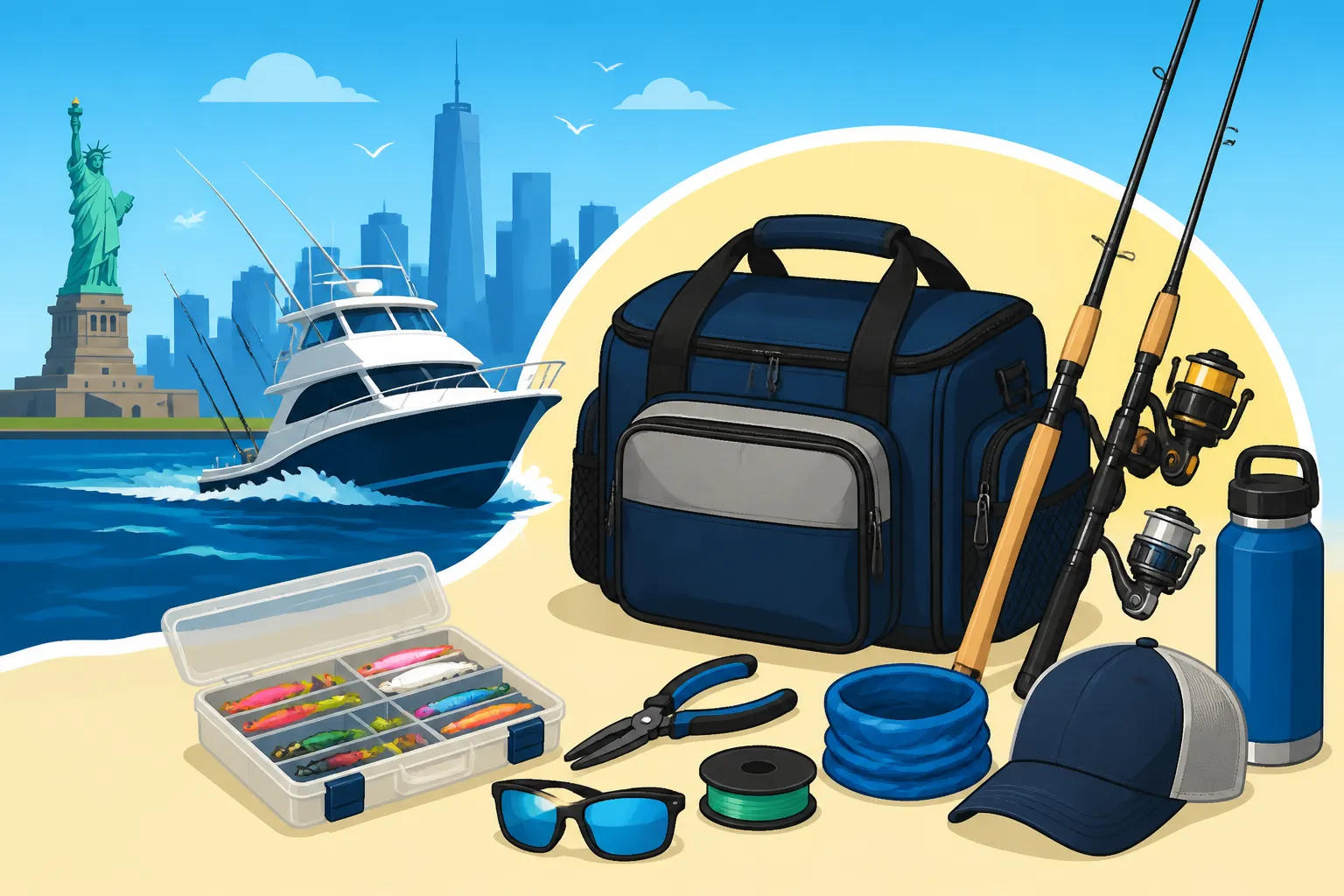
A Quick Glance: What to Pack & What's Handled
To make things easy, here’s a quick overview of what you should definitely pack versus what your charter captain will typically provide:
| Category | You Should Bring | Charter Will Provide (Typically) |
|---|---|---|
| Legal/Admin | Valid NY Fishing License (or Marine Registry), Photo ID | Captain's License, Boat Registration |
| Personal Funds | Cash for tips, Remaining balance payment (if applicable) | |
| Food & Drink | Snacks, Meals, Non-alcoholic beverages | Often water, sometimes light snacks (confirm beforehand) |
| Catch Storage | Separate cooler with ice for your fish (kept in car/dock until return) | Livewell for bait, Cooler for general use (not for your catch) |
| Clothing | Layers (base, mid, outer), Waterproof/windproof jacket & pants, Hat, Gloves | |
| Sun Protection | Sunscreen, Polarized sunglasses, Lip balm with SPF, Neck gaiter | |
| Footwear | Non-slip, closed-toe shoes/boots (waterproof recommended) | |
| Health | Personal medications, Seasickness remedies | Basic first aid kit on board |
| Fishing Gear | Optional: "Lucky" lure/fly (with captain's permission) | Rods, Reels, Line, Bait, Lures, Terminal Tackle, Landing Nets |
| Safety Gear | Life jackets (PFDs), Flares, First aid kit, VHF radio, GPS | |
| Other | Camera/phone (in waterproof case), Small dry bag, Small towel |
By following this guide and communicating with your captain, you'll ensure you're perfectly prepared for your New York fishing charter. The goal is to spend less time worrying about your gear and more time enjoying the incredible fishing opportunities New York has to offer.
Disclaimer
This article is for general informational purposes only and does not constitute professional advice. Laws, prices and regulations vary by location and change over time. Consult a qualified professional for guidance on your specific situation.