New York State Record Lake Trout Weight
Many anglers in New York dream of reeling in that once-in-a-lifetime trophy fish, the kind that makes your arms ache and your heart pound. For those who love the cold, clear depths of our state's majestic waters, the lake trout often represents that ultimate challenge. There's a natural curiosity about just how big these fish can get, and who holds the legendary title for the largest one ever caught. This guide will take a deep dive into the incredible story of New York's state record lake trout, explore what makes these fish such giants, and offer insights for those hoping to pursue their own personal best.
The Quest for Giants: New York State's Record Lake Trout
There's something truly inspiring about a state record fish. It's not just about the size; it's about the perseverance of the angler, the pristine waters that harbor such incredible creatures, and the sheer wonder of nature. The New York State record for lake trout isn't just a number on a wall; it's a testament to the potential hidden beneath our waves.
Unveiling the Record: Arthur Lawton's Legendary Catch
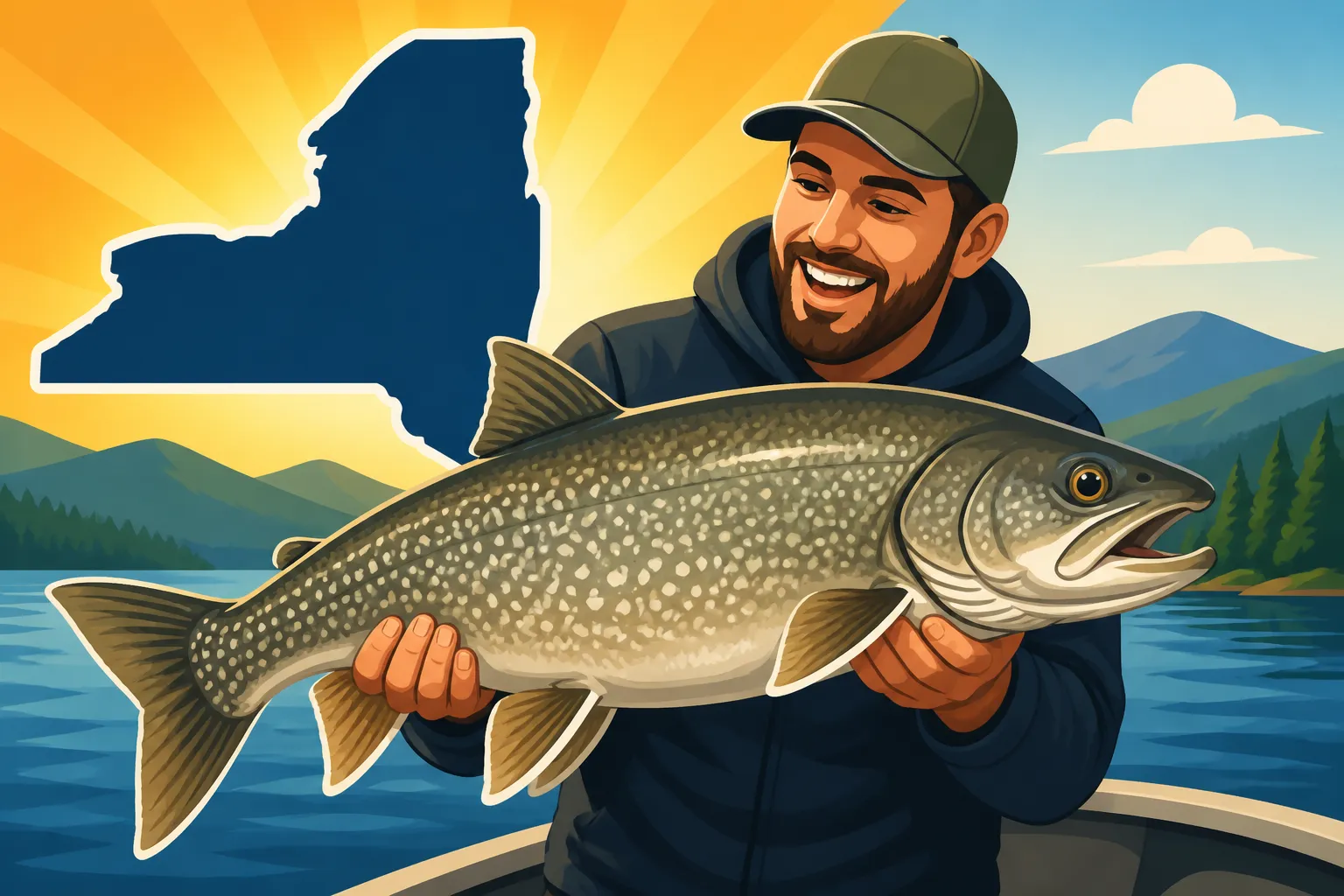
When we talk about the biggest lake trout ever officially recorded in New York State, one name stands out: Arthur Lawton. Back in 1957, Mr. Lawton pulled a monumental lake trout from the depths of Lake Placid that weighed an astonishing 41 pounds! Imagine the fight, the thrill, the absolute disbelief as such a creature emerged from the water. This catch isn't just a local legend; it's a benchmark for all serious lake trout anglers across the state. To put it in perspective, many anglers are absolutely ecstatic to land a lake trout in the 10-15 pound range, so 41 pounds is truly a goliath among its kind. It reminds us that even in waters we think we know well, there can always be bigger fish lurking.
Why This Record Stands Out
The 41-pound lake trout caught by Arthur Lawton isn't just heavy; it's a piece of New York fishing history. What makes it so remarkable is the consistency of its challenge. Despite decades of advanced fishing gear, better sonar technology, and countless hours spent by dedicated anglers, this record has stood the test of time. It speaks to the unique conditions of Lake Placid, a deep, cold, oligotrophic lake in the Adirondacks, which provides the ideal habitat for lake trout to grow to immense sizes. It also highlights the fact that these deep-water predators are not easily fooled, and a catch of this magnitude requires a perfect combination of skill, luck, and being in the right place at the right time. For many, breaking such a long-standing record is the ultimate fishing aspiration, a dream that keeps them heading back to the big lakes year after year.
Deep-Water Dwellers: Characteristics of New York's Lake Trout
To truly appreciate the magnitude of a record like Arthur Lawton's, it helps to understand the fish itself. Lake trout are magnificent creatures, perfectly adapted to the cold, deep environments they call home. They are a keystone species in many of New York's most iconic lakes. A Guide to New York's Trout Species provides a broader look at their cousins, but the lake trout truly stands in a league of its own when it comes to size and longevity.
A Look at the Lake Trout's Life Cycle and Habitat
Lake trout (Salvelinus namaycush) are not actually true trout, but rather belong to the char genus, making them closely related to brook trout and Arctic char. They are characterized by their sleek, torpedo-shaped bodies, often adorned with light spots on a darker body, ranging from grey-green to deep blue or even silvery. What allows them to grow so large is their longevity and their position as apex predators. Lake trout can live for many decades, often reaching 20-30 years in healthy populations, and some even longer. This extended lifespan gives them ample time to feed and pack on weight.
Their preferred habitat is crucial to their growth: deep, cold, well-oxygenated lakes. They thrive in water temperatures typically below 55 degrees Fahrenheit, moving to deeper sections of lakes as surface waters warm in summer. Their diet consists primarily of smaller baitfish like ciscoes, alewives, and smelt, which are rich in fats and protein, fueling their impressive growth. The abundance of these forage species in certain New York lakes is a significant factor in the potential for trophy-sized lakers. In the spring and fall, they may move into shallower waters, especially during spawning season, offering anglers a different set of opportunities.
Where New York's Largest Lake Trout are Found
While Arthur Lawton's record came from Lake Placid, New York is blessed with many lakes capable of producing truly massive lake trout. The Great Lakes, particularly Lake Ontario and Lake Erie, hold vast populations of lake trout and offer incredible opportunities for large fish. These massive bodies of water provide the immense depth, cold temperatures, and abundant forage necessary for lake trout to reach their full potential.
Beyond the Great Lakes, New York's Finger Lakes are renowned for their laker populations. Lakes like Seneca, Cayuga, and Keuka all boast healthy lake trout fisheries with the potential for trophy catches. These deep, ancient lakes offer the specific conditions these fish need to thrive. New York's Finger Lakes Fishing Guide offers a closer look at these productive waters. Further north, the Adirondack Park is home to numerous deep, cold lakes, including Lake George and the aforementioned Lake Placid, which continue to produce impressive lake trout catches. Understanding these prime habitats is the first step in targeting a trophy. New York's Best Lakes for Fishing is a great resource if you're looking for other potential hotspots.
| Lake Type/Size | Typical Lake Trout Size Range (lbs) | Potential for State Record Lake Trout |
|---|---|---|
| Small/Medium Deep Lakes | 2-10 | Possible, but rare |
| Large Finger Lakes | 5-20 | Good |
| Great Lakes | 10-30+ | Excellent |
| Adirondack Deep Lakes | 5-15 | Excellent (as shown by record) |
Strategizing for Your Own Lake Trout Pursuit
So, you've heard the legend, you understand the fish, and now you're feeling that familiar tug of aspiration. Chasing a trophy lake trout, even if it's not a state record, is an exhilarating challenge. It requires patience, the right gear, and a good understanding of their behavior.
Essential Gear for Deep-Water Dominance
Landing a 20-pound-plus lake trout, let alone a 40-pounder, is no small feat. These fish fight hard and deep, using their powerful bodies and the immense pressure of their habitat to their advantage. You'll need gear that can stand up to the challenge.
For deep-water trolling, which is often the most effective method for big lake trout, a stout 7 to 8-foot medium-heavy to heavy action trolling rod paired with a line-counter reel is essential. This setup allows you to precisely control your depth and battle a strong fish without fear of equipment failure. Spool your reel with 20-30 pound test braided line, which offers superior strength and sensitivity, with a fluorocarbon leader of similar or slightly higher strength. Braided line has less stretch, which is critical for detecting subtle bites at great depths and setting the hook firmly.
When it comes to outfitting yourself for these deep-water battles, a quick search on Amazon will show you the sheer variety of heavy-duty rods and reels available, from trusted brands to newer innovations. Don't skimp on quality here; a cheap reel can quickly give up the ghost when a monster lake trout decides to make a run. You'll find everything from durable braided line to specialized downrigging gear available on Amazon, ready to be delivered right to your door. Good quality swivels, snaps, and split rings are also crucial; a weak link in your setup can mean a lost trophy.
Proven Techniques for Targeting Monster Lake Trout
Targeting large lake trout often involves getting your lures down deep, where these cold-water dwellers prefer to hang out, especially during the warmer months.
- Downrigging: This is perhaps the most common and effective method for deep-water lake trout. Downriggers use heavy weights to send your lure down to a specific depth, while your fishing line is temporarily clipped to the weight. When a fish strikes, the line pops free, and you fight the fish directly. This allows you to present large spoons, flasher-and-fly combos, or even live bait at precise depths. Mastering a How to Downrig for Lake Trout setup can significantly increase your success.
- Deep Jigging: When fish are congregated around specific structures like underwater humps, points, or drop-offs, deep jigging can be incredibly effective. Large vertical jigs, tube jigs, or heavy spoons can be dropped to the bottom and worked with an aggressive retrieve. This technique is often enhanced by a good fish finder to locate schools of bait or individual fish.
- Lead Core or Copper Line Trolling: For anglers without downriggers, or those who prefer a simpler setup, using lead core or copper line can achieve significant depths without additional weights. These specialized lines are heavy and sink naturally as you troll, but they require heavier rods and different trolling speeds to achieve desired depths.
- Wire Line Trolling: Similar to lead core, wire line allows lures to reach deep. It's incredibly sensitive and tough but can be trickier to handle. Many charter captains swear by it for its effectiveness.
Remember that understanding the specific lake you're fishing – its depths, structure, and forage base – is paramount. Fish finders and topographic maps are invaluable tools. Check out Trolling Techniques for New York's Lakes for more detailed information on various trolling strategies.
Understanding Seasonal Patterns and Regulations
Lake trout behavior changes throughout the year, primarily driven by water temperature. In early spring and late fall, they might be found shallower, often within casting distance from shore or in waters less than 50 feet deep. As summer progresses and surface temperatures rise, they retreat to their deep, cold sanctuaries, often 80 feet or deeper, sometimes even hundreds of feet down in the deepest lakes.
Always, and I mean always, consult the official New York Department of Environmental Conservation (DEC) regulations before you head out. These regulations cover everything from season dates and minimum size limits to daily creel limits. New York Fishing Season Dates and Catch Limits is a great place to start, and you'll definitely want to check the specific rules for the body of water you intend to fish. These rules can vary significantly from one lake to another, especially for larger lakes or those with special management areas. Being familiar with New York Fishing Regulations Explained will save you from potential fines and ensure you're contributing to sustainable fishing practices. For instance, some lakes might have a "trophy trout" regulation, allowing only one fish over a certain size, or requiring catch-and-release for certain periods.
Preserving the Future of New York's Lake Trout Legacy
Catching a truly massive lake trout is an incredible achievement. But with such great rewards comes great responsibility. As anglers, we have a vital role in ensuring that these magnificent fish continue to thrive in New York's waters for generations to come.
Practicing Responsible Angling: Catch and Release for Large Lake Trout
While you might be dreaming of that record-breaking fish to mount on your wall, many anglers, even when pursuing trophies, opt for catch and release, especially with very large, old fish. These older, larger lake trout are crucial to the genetics and spawning success of the population. If you do plan to release a large lake trout, particularly one caught from deep water, proper handling is essential for its survival.
- Minimize Fight Time: Use appropriate tackle to bring the fish in as quickly as possible without overstressing it.
- Handle with Care: Keep the fish in the water as much as possible. If you must remove it for a quick photo, support its entire body horizontally and avoid touching its gills or putting fingers in its eyes.
- Dehook Carefully: Use pliers or a dehooking tool to quickly and cleanly remove the hook. Barbless hooks can make this process even easier.
- Revive Gently: If the fish seems sluggish, hold it upright in the water, facing into the current, until it regains its strength and swims away on its own.
- Understand Barotrauma: Lake trout caught from very deep water (often 50 feet or more) can suffer from barotrauma, where rapid changes in pressure cause their swim bladder to expand. If you notice a distended belly or bulging eyes, the fish may need to be "fizzed" (vented) to release the air. This is a specialized technique best learned from experienced guides or resources like Catch-and-Release Handling Rules.
The Vital Role of Conservation and Adherence to Regulations
The health of New York's lake trout fisheries relies heavily on responsible management and angler compliance. The DEC works tirelessly to monitor populations, conduct stocking programs where necessary, and set regulations designed to protect these species. By adhering to these rules, we play an active part in conservation.
Every time you buy your New York Fishing License Guide or register for New York Saltwater Fishing Registration Guide, a portion of those funds goes directly back into conservation efforts. Understanding and respecting the New York DEC Fishing Regulations Guide for specific waters helps maintain healthy fish stocks. Overharvesting, especially of large, mature fish, can have detrimental long-term effects on a fishery. By practicing selective harvest – keeping smaller, healthier fish for the table and releasing the larger breeding stock – we ensure that the next generation of anglers will also have the opportunity to pursue their own trophy lake trout, and perhaps, one day, even challenge Arthur Lawton's remarkable record.
Disclaimer
This article is for general informational purposes only and does not constitute professional advice. Laws, prices and regulations vary by location and change over time. Consult a qualified professional for guidance on your specific situation.