Black Crappie vs White Crappie: Key Differences
It's easy to look at two fish and think they're the same, especially when they share a common name like "crappie." But for us anglers here in New York, knowing the subtle yet significant differences between black crappie and white crappie isn't just a matter of identification; it can dramatically impact our fishing success. This guide will walk you through everything from how to spot them in the water to their preferred hangouts and feeding habits, so you can tailor your approach and land more of these delicious panfish.
Visual Identification: Telling Them Apart on the Water
When you've got a crappie on the line, the first thing many of us do is instinctively try to figure out what kind it is. It's not always obvious, especially to the untrained eye, but there are some pretty reliable visual cues that can help you distinguish between a black crappie and a white crappie without needing a biology degree.
Color and Pattern Nuances
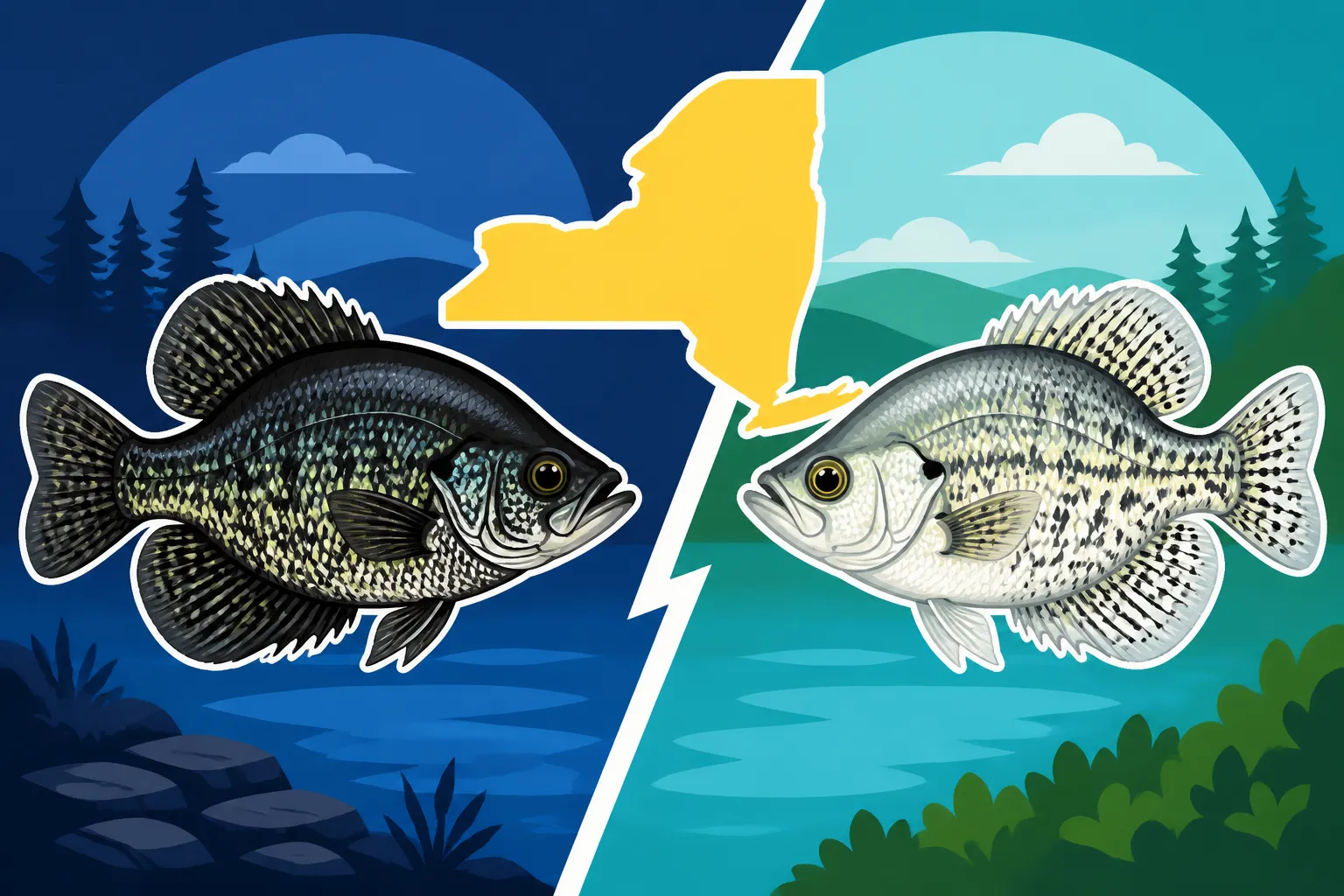
While both species share a generally silvery body, their markings are a dead giveaway once you know what to look for. Black crappie, as their name subtly suggests, tend to have a much more speckled appearance. Imagine a canvas splattered with irregular, dark blotches or spots across their sides. These spots don't usually form any distinct pattern, just a general mottling that can sometimes look like vertical bands, but they're never truly organized. Their overall coloration can also be darker, sometimes with a greenish or brownish tint, especially if they're pulled from stained water or are actively spawning.
White crappie, on the other hand, are typically lighter in overall body color and have more organized, often vertical, bars or stripes along their sides. These bars usually run from their back down towards their belly and are more uniform than the black crappie's blotches. Think of it like a zebra's stripes, but much fainter and fewer in number. The intensity of these markings can vary based on water clarity, light conditions, and the fish's mood, but the pattern itself remains consistent. If you see distinct vertical lines, you're almost certainly looking at a white crappie.
Dorsal Fin Spines: The Most Reliable Indicator
If the color and pattern leave you scratching your head, or if the fish is particularly camouflaged by its environment, the dorsal fin is your ultimate secret weapon for identification. This is the single most consistent and accurate way to tell the two species apart. Black crappie will almost always have 7 or 8 spines in their dorsal fin. It's like a little secret code Mother Nature gave them. You might have to gently spread the fin to count accurately, but they'll be there.
White crappie, conversely, nearly always have 6 dorsal fin spines. This difference is so reliable that even fisheries biologists use it as a primary characteristic. So, if you're ever in doubt, carefully count those stiff, pointed rays on the fin on their back. Six means white crappie, and seven or eight means black crappie. It's a simple, undeniable fact that helps you classify your catch with confidence.
Body Shape and Overall Appearance
Beyond the markings and fin spines, there are some subtle differences in their body shape, though these can be harder to discern quickly. Black crappie tend to have a slightly deeper, more compressed body, giving them a rounder, almost disc-like profile. Think of them as being a bit more "chunky" or "tall" relative to their length. Their mouth might also appear a little smaller, though this is a very subjective observation.
White crappie usually have a more elongated, "sleeker" body shape. They're often described as having a more torpedo-like or football shape compared to their black crappie cousins. Their mouths can also seem larger, extending back further towards their eyes. While these body shape differences aren't as definitive as the dorsal fin spine count, they can offer another piece of the puzzle, especially once you've gained some experience handling both species on the fishing grounds of New York.
Habitat Preferences and Behavior
Understanding where these fish prefer to hang out and how they behave is crucial for any angler aiming to improve their crappie game. Just like humans have favorite coffee shops or quiet parks, black and white crappie have distinct preferences for their watery homes in New York's vast network of lakes and rivers. This knowledge can save you a lot of time and effort by helping you pinpoint the right spots. You'll find that these preferences often dictate the Best Fishing Spots in New York for each species.
Water Clarity and Vegetation: Where Each Prefers to Hide
This is one of the most significant differentiators. Black crappie are notorious for favoring clearer, cooler water with an abundance of submerged aquatic vegetation, brush piles, or standing timber. They are masters of ambush, using dense cover to hide and dart out at unsuspecting prey. If you're fishing a clear lake with lots of lily pads, weed beds, or fallen trees, you're likely in black crappie territory. Think of some of the clearer Finger Lakes or Adirondack ponds; that's prime black crappie habitat. They thrive where they can blend into their surroundings and stalk.
White crappie, by contrast, are more tolerant of turbid or stained water, and they often prefer areas with less dense vegetation. You'll frequently find them in larger rivers, impoundments, and lakes with silty bottoms or slightly muddier conditions. They still appreciate structure, but it might be more open water structure like bridge pilings, channel drop-offs, or large isolated stumps rather than thick, matted weeds. The slower-moving sections of the Hudson River or some of the larger reservoirs might hold good numbers of white crappie, where they can adapt to slightly murkier conditions.
Schooling Habits and Aggression
Both crappie species are schooling fish, meaning they hang out together, often in good numbers. However, there can be subtle differences in the size and density of their schools, as well as their general demeanor. Black crappie tend to form tighter, sometimes smaller, schools, especially around specific pieces of cover. When you find one black crappie, you're usually going to find several, sometimes stacked vertically in a brush pile. They can be a bit more territorial around their chosen cover.
White crappie often form larger, more spread-out schools, especially in open water or along channel edges. They might roam more widely, and while you can certainly find them concentrated, their groups can feel more dispersed. They can also be a bit more aggressive in their feeding, particularly during active periods, often hitting baits with a more authoritative strike than their black crappie cousins. This slight difference in schooling behavior can influence how you approach a fishing spot – do you meticulously pick apart a small cover area, or do you drift and search a wider expanse?
Diet and Foraging Strategies
When it comes to dinner, both black and white crappie are opportunistic predators, but their preferences align with their habitat. Black crappie, in their clearer, vegetated environments, tend to feed more heavily on smaller minnows, insects, and insect larvae. They're often found suspended within or just outside cover, waiting to ambush prey. Their foraging can be more methodical, picking off individual insects or small baitfish. For anglers, this means small jigs, tiny spinners, and live minnows are often irresistible. You can find excellent selections of crappie jigs and soft plastics on Amazon, perfect for targeting these nuanced eaters.
White crappie, with their tolerance for murkier water and slightly larger mouths, often have a diet that leans more towards small baitfish, crustaceans, and larger insect larvae. They are often found patrolling open water adjacent to structure or drop-offs, actively hunting schools of minnows. Their feeding can be more aggressive, often chasing down their prey. Larger minnows or slightly larger jigs and crankbaits might be more effective when targeting white crappie, especially in stained water where a bigger profile makes a difference.
Spawning Habits and Reproduction
The annual spawning ritual is a critical time for crappie, driving their movements and making them a prime target for anglers in New York. While both species are prolific spawners, there are some distinctions in their timing and preferred nesting sites that can give you an edge. Knowing these habits is key to understanding New York Fishing Seasons Explained for crappie.
Nest Building and Timing
Both black and white crappie are nest builders, with the males taking on the primary role of creating and guarding the nest. However, their preferences for location and timing can differ. Black crappie typically spawn earlier in the spring, often when water temperatures hit the mid-50s to low 60s Fahrenheit. They prefer to build their nests in shallower water, usually 2 to 8 feet deep, often associated with dense cover like submerged brush, weed beds, or the roots of trees. They'll fan out a shallow depression on the bottom, usually sandy or gravelly, but hidden amongst the structure. Their earlier spawning means you can often find them concentrated in shallow, protected bays as soon as the ice melts in many New York lakes.
White crappie tend to spawn a bit later than black crappie, usually when water temperatures reach the upper 60s Fahrenheit. They also prefer shallower water, often 3 to 10 feet deep, but they are more tolerant of areas with less dense cover. You might find their nests near submerged logs, stumps, or even relatively open areas with firm bottoms, often along channel edges or points. They don't typically seek out the same thick, matted vegetation that black crappie do. This slightly later and more open-water spawning pattern means that even after the black crappie have scattered, you might still find white crappie guarding nests. If you're looking for How to Catch Crappie in the Spring, understanding these timings is absolutely essential.
Parental Care and Fry Development
Once the eggs are laid and fertilized, the male crappie takes over guarding duties. He diligently protects the nest from predators, fanning the eggs to keep them oxygenated until they hatch. Both species exhibit this protective behavior, which is why targeting spawning crappie can be very effective, as they are less wary and fiercely defend their territory.
After hatching, the tiny crappie fry remain in the vicinity of the nest for a short period before dispersing into larger schools. The fry of both species initially feed on microscopic organisms before transitioning to larger zooplankton and eventually small insects and minnows. The success of their reproduction depends heavily on stable water conditions during this vulnerable period. A sudden cold snap or drastic water level fluctuation can devastate a year's class of crappie, impacting fishing opportunities a few years down the line. Protecting these spawning areas is crucial for maintaining healthy crappie populations in New York.
Fishing Considerations and Techniques
Now that we've covered how to tell them apart and where they like to hang out, let's talk about the fun part: catching them! While many general crappie techniques will work for both, fine-tuning your approach based on the species you're targeting can significantly boost your success rate.
Best Baits and Lures
This is where understanding their dietary and habitat preferences really pays off. For black crappie, especially those hiding in dense cover in clearer waters, smaller and subtler presentations are often best. Live minnows, fished under a bobber or slowly retrieved on a small jig head, are perennial favorites. Small jigs, often 1/32 to 1/16 ounce, paired with tiny soft plastic bodies like tube jigs, curly-tail grubs, or small creature baits, are deadly. Think natural colors like green pumpkin, smoke, or shad patterns. Tiny in-line spinners or micro crankbaits can also entice bites, especially if they mimic small insects or minnows. Many anglers swear by the vast selection of crappie jigs and scents available on Amazon for their black crappie arsenal.
White crappie, given their preference for slightly murkier water and potentially more aggressive feeding habits, can sometimes respond well to slightly larger baits and more vibrant colors. While minnows are still fantastic, a 1/8 ounce jig with a larger profile grub or paddle tail can often get their attention in stained water. Chartreuse, pink, and orange can be excellent color choices when visibility is low. Small crankbaits that dive to different depths can also be very effective for covering water and finding schools of white crappie, especially when they're positioned along channel breaks or suspended over deeper water. A slightly heavier line might also be beneficial for white crappie if you're pulling them out of current or around heavier structure.
Seasonal and Time of Day Strategies
Crappie fishing is largely seasonal, with spring being a prime time as they move shallow to spawn. During this period, both species can be found in relatively shallow water, making them accessible to shore anglers and boaters alike. Knowing the difference in their spawning timing (black crappie earlier, white crappie slightly later) can help you extend your spring crappie season. As the water warms into summer, both species typically retreat to deeper, cooler water, often suspending over structure or relating to thermoclines. This is when electronic fish finders become invaluable for locating schools.
For Best Time of Day to Catch Crappie, early morning and late evening are often prime, as crappie are visually oriented feeders and low light conditions can make them more active and less wary. Overcast days can also provide excellent daytime crappie action. During winter, both species can be caught through the ice, often suspending in deep basins or congregating around structure. Understanding Best Ice Fishing Techniques for New York Panfish can certainly lead to crappie success when the lakes freeze over.
Locating Crappie in New York Waters
To really put these identification and habitat insights to use, you need to know where to find them. New York State boasts incredible crappie fishing. For black crappie, focus your efforts on clearer lakes with abundant submerged vegetation, like many of the smaller Finger Lakes, Adirondack ponds, and some sections of Lake Champlain. Look for fallen trees, brush piles, docks, and dense weed lines in protected bays and coves.
For white crappie, consider larger rivers, reservoirs, and lakes with slightly more turbid water. Think about the slower sections of the Mohawk River, the Erie Canal, or larger impoundments. Target areas with bridge pilings, submerged roadbeds, creek channels, and isolated timber. Pay attention to contour changes and drop-offs, especially areas where current might bring food to them. The New York DEC Fishing Regulations Guide is always an excellent resource to ensure you're fishing legally and sustainably. Many of New York's lakes are home to healthy populations of both, offering diverse opportunities.
Key Differences at a Glance
To summarize, here's a quick comparison of the key characteristics that differentiate black crappie from white crappie, helping you make a confident identification on the water.
| Feature | Black Crappie | White Crappie |
|---|---|---|
| Dorsal Fin Spines | 7 to 8 | 6 |
| Body Markings | Irregular, dark spots or blotches across sides | Distinct vertical bars or stripes along sides |
| Body Shape | Deeper, more compressed; somewhat "chunky" or rounder | More elongated, "sleeker," or torpedo-shaped |
| Preferred Water | Clearer, cooler water | More tolerant of turbid, stained water |
| Habitat | Dense submerged vegetation, brush piles, standing timber | Less dense vegetation, open water structure (pilings, channels, stumps) |
| Spawning Time | Earlier spring (mid-50s to low 60s F) | Slightly later spring (upper 60s F) |
| Mouth Size | Appears slightly smaller | Appears slightly larger |
| Diet Focus | Smaller minnows, insects, larvae | Small baitfish, crustaceans, larger larvae |
Understanding the subtle yet significant differences between black crappie and white crappie truly makes you a more knowledgeable and effective angler here in New York. It's not just about identifying your catch; it's about knowing where to find them, what they'll eat, and how they behave. Armed with this information, you can tailor your approach, pick the right spots, and ultimately, enjoy more successful days on the water chasing these incredible panfish. So, next time you're out, take a moment to really look at that crappie—you might just discover a whole new angling strategy!
Disclaimer
This article is for general informational purposes only and does not constitute professional advice. Laws, prices and regulations vary by location and change over time. Consult a qualified professional for guidance on your specific situation.