Average Black Crappie Size in New York
It's a common thought among anglers, especially those new to panfishing in New York: "Just how big do these black crappie actually get around here?" You've heard tales of monster slabs, but you also reel in plenty of smaller ones. It can be frustrating to wonder if you're even in the right spot or using the right technique to land one of those brag-worthy fish. This guide is here to unravel the mystery of the average black crappie size in New York and help you understand what makes some crappie bigger than others.
Understanding Black Crappie in New York Waters
Before we dive into the numbers, it's helpful to understand the black crappie itself. These are fascinating, feisty fish that provide excellent sport and table fare across New York State. They're often overlooked by anglers obsessed with bass or trout, but they offer incredible action, especially during specific times of the year.
What Exactly is a Black Crappie?
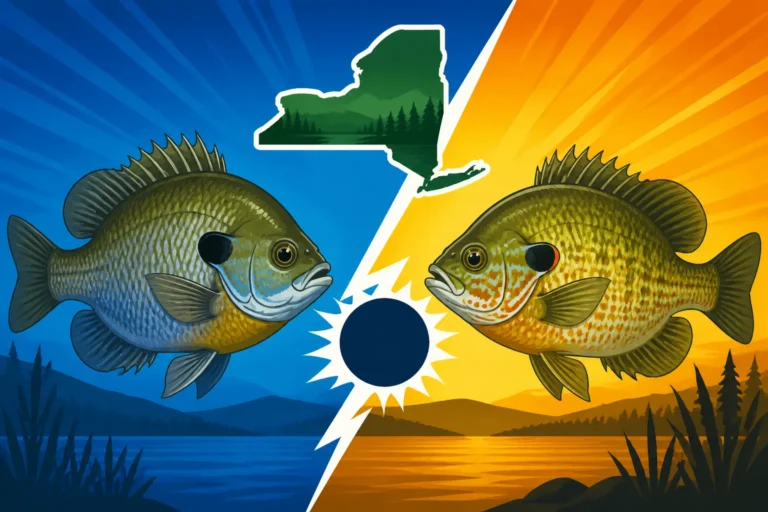
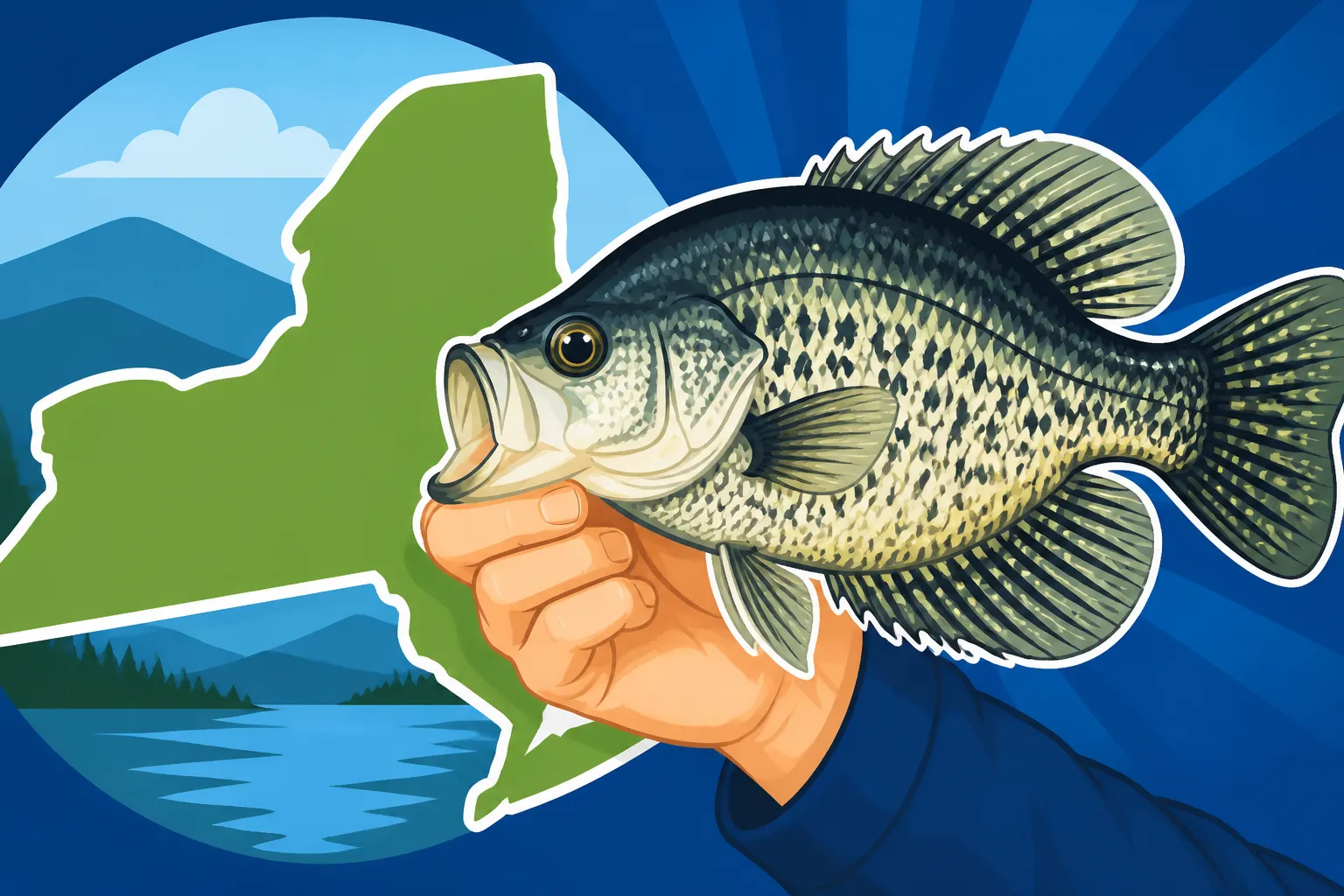
A black crappie, or Pomoxis nigromaculatus, is a member of the sunfish family, known for its deep, compressed body and a distinct pattern of irregular black blotches scattered over a silvery-green or golden background. Unlike its close cousin, the white crappie, black crappie typically have seven or eight dorsal spines, while white crappie usually have six. This can be a subtle but helpful way to tell them apart when you're on the water. They have a relatively large mouth and eyes, which are excellent adaptations for feeding on small baitfish and insects, often in lower light conditions. Their delicate, paper-thin mouths also give them their nickname "paper mouths," which every experienced crappie angler knows means you need a soft touch when setting the hook. For more on their kin, check out Black Crappie vs White Crappie: Key Differences.
Where Do Black Crappie Thrive in New York?
Black crappie are incredibly adaptable, making them prevalent throughout New York's freshwater systems. They generally prefer clear, cool waters with abundant aquatic vegetation, submerged timber, or other forms of cover. You'll find them lurking around docks, fallen trees, brush piles, and weed beds, particularly in lakes, ponds, and slow-moving rivers. These structures offer them protection from predators and ambush points for their prey. They're less common in fast-flowing streams or open, featureless bodies of water. Some of New York's prime crappie real estate includes the Finger Lakes, Lake Champlain, Oneida Lake, and many smaller reservoirs and farm ponds across the state. They are a beloved species among New York's Panfish Species Explained.
Life Cycle and Growth Factors
A black crappie's life begins as an egg, often laid in a shallow, saucer-shaped nest guarded by the male. After hatching, the fry are tiny and vulnerable, growing rapidly in their first year. Their growth rate, however, isn't uniform across all waters or even within the same body of water. Several factors play a significant role. Food availability is paramount: abundant zooplankton, insect larvae, and small baitfish mean faster growth. Water temperature also dictates metabolism and growth; warmer water generally means faster growth, up to a point. Genetics, water quality, and even the density of the crappie population itself all contribute to how quickly and how large an individual crappie will grow. A crowded pond with limited food resources will often produce many small crappie, while a lake with fewer crappie but ample forage can yield true giants.
The Average Black Crappie Size in New York
Now for the meat and potatoes of what you came here for! When we talk about "average," it's important to remember that it's a generalization. A crappie caught in a small farm pond in rural New York might have a very different average size than one caught in a vast, nutrient-rich lake in the western part of the state. However, we can still establish some reliable benchmarks.
Typical Length and Weight
In most New York waters, a typical black crappie will average between 8 to 12 inches in length. These are the fish you'll commonly encounter and keep for a delicious meal. In terms of weight, these fish usually fall into the 0.5 to 1.5-pound range.
Now, don't get me wrong, it's absolutely possible to catch smaller ones, especially in waters with dense populations or during specific times of the year when younger fish are more active. And conversely, it's those larger "slabs" that really get anglers excited! While 8-12 inches is a good general benchmark, consistent efforts in prime habitats can often yield fish at the upper end of that spectrum, and occasionally, much larger. This is just one of the Fish Species You Can Catch in New York.
Factors Influencing Crappie Size
Why do crappie sizes vary so much? It's a complex interplay of environmental conditions and population dynamics. Let's break down the most significant factors:
- Forage Base: This is arguably the biggest determinant. Crappie need plenty of food to grow. In waters with an abundant supply of small baitfish (like shiners or juvenile perch), insect larvae, and zooplankton, crappie will grow larger and faster. If food is scarce, growth will be stunted, leading to a population of many small, thin fish. Think of it like a buffet: unlimited options mean everyone gets bigger.
- Water Quality and Habitat: Clear, well-oxygenated water with ample cover is ideal. Healthy aquatic ecosystems provide both food and protection, allowing crappie to thrive. Polluted or overly turbid waters, or those lacking suitable structure, will generally produce smaller, less healthy fish. Good habitat also influences where you find Crappie in New York.
- Genetics: Just like in humans, some fish are genetically predisposed to grow larger than others. While difficult for an angler to influence, it's a background factor in any fishery.
- Fishing Pressure: Heavily fished waters, especially those where anglers consistently remove the larger, older fish, can impact the average size. If all the "trophy" fish are constantly being pulled out, the average size of the remaining population might decrease over time. Conversely, well-managed fisheries with slot limits or creel limits designed to protect larger fish can help maintain a healthy average size and increase the chances of catching a true lunker.
- Population Density: This goes hand-in-hand with the forage base. If a lake has too many crappie for the available food, they'll all compete for limited resources, resulting in a stunted population where few fish reach a respectable size. This is a common issue in many small ponds if not managed properly.
When a Crappie is Considered "Slab-Sized"
For many crappie anglers, the term "slab" isn't just a casual descriptor; it denotes a truly impressive fish. While definitions can vary slightly from region to region and angler to angler, in New York, a black crappie generally earns the "slab" moniker when it reaches or exceeds 13 to 15 inches in length and weighs 1.75 pounds or more.
Catching a crappie that pushes 2 pounds or beyond is considered a significant achievement and certainly worthy of a photo. These are the fish that require a bit more skill, patience, and often, a dedicated approach to find. They are older, wiser fish that have survived numerous challenges, and bringing one to the boat is a real thrill. Many seasoned anglers set 15 inches as their personal benchmark for a true trophy crappie in New York. While not every fish will be a trophy, even catching a consistent string of 10-12 inchers can make for an incredible day on the water and a fantastic meal.
Why Size Matters to Anglers and Ecosystems
The size of crappie isn't just about bragging rights; it holds significant implications for both the individual angler and the overall health of the aquatic environment. Understanding these dynamics helps us appreciate the importance of responsible angling practices.
Angler Expectations and Catch Limits
Let's be honest, most of us are hoping for bigger fish when we hit the water. The average size of crappie directly impacts our expectations for a day's outing. If you're consistently catching 6-inch crappie, you might adjust your strategy, try different spots, or even move to a different lake in search of larger specimens. Conversely, knowing that a particular lake is known for its "slab-sized" crappie can motivate you to travel further and dedicate more effort.
Beyond personal goals, size is critically linked to fishing regulations. New York State has specific New York Fishing Regulations Explained which often include minimum size limits and daily creel limits for various species, including crappie. These regulations are put in place precisely to manage the size structure and health of fish populations. For instance, a minimum size limit might ensure that fish have a chance to spawn at least once before being harvested, contributing to future generations. Knowing the average size helps anglers quickly determine if their catch is legal to keep, avoiding potential penalties for Fishing Without a License in New York: What Happens or violating size restrictions.
Ecological Role of Crappie Size
Crappie, regardless of their size, play an essential role in the food web of New York's lakes and rivers. Smaller crappie are a primary food source for larger predatory fish like bass, walleye, and pike, as well as birds of prey such as ospreys and eagles. A healthy population of smaller crappie ensures a robust forage base for these predators, contributing to the overall balance of the ecosystem.
As crappie grow larger, their role shifts slightly. While still potential prey for the biggest predators, they become more dominant in their own niche, often competing with other medium-sized fish for food and habitat. Larger crappie also consume larger prey items, including small baitfish, helping to control those populations. A diverse size structure within a crappie population indicates a healthy, balanced ecosystem where all age classes are present and thriving. If you only see small crappie, it might be a sign of overpopulation or a lack of larger predators to thin the ranks.
Managing Crappie Populations for Healthy Growth
Effective fisheries management is crucial for sustaining healthy crappie populations with good size distribution. This often involves a combination of regulatory measures and habitat enhancement efforts by the New York Department of Environmental Conservation (DEC) and local conservation groups.
Regulations, such as daily bag limits and minimum size limits, are designed to prevent overharvest and allow fish to reach a mature size. Sometimes, "slot limits" are implemented, where anglers are encouraged to keep smaller fish (below a certain size) and release larger ones (within a specific "slot" size) to protect spawning adults, while allowing the removal of stunted fish. This can help prevent overpopulation of small crappie and encourage faster growth among the remaining fish.
Habitat management is another key aspect. This can include planting aquatic vegetation, sinking brush piles or old Christmas trees to create artificial cover, and improving water quality. These efforts provide better spawning grounds, nursery areas for young fish, and prime foraging and ambush locations for adult crappie. When anglers participate in catch-and-release, especially for those "slab" crappie, they contribute directly to these conservation goals, ensuring future generations of big fish for everyone to enjoy.
Beyond the Average: Finding Larger Crappie in New York
So, you're not just interested in the average; you want to find those elusive slabs! It's absolutely doable in New York, but it requires a bit more knowledge, patience, and often, a different approach than just tossing out a bobber and a worm.
Prime Locations for Trophy Crappie
To increase your odds of catching bigger crappie, you need to focus on waters known for supporting larger fish and target the specific types of structures they prefer.
- Large, Deep Lakes and Reservoirs: Generally, bigger bodies of water with diverse forage bases tend to produce bigger crappie. Think of some of New York's larger Finger Lakes, like Seneca or Cayuga, or extensive reservoirs that offer varied depths and plenty of cover. These lakes often have a more balanced predator-prey relationship and more consistent food sources.
- Lakes with Abundant Forage Fish: Crappie are primarily piscivores, meaning they eat other fish as they grow larger. Lakes teeming with schools of baitfish like emerald shiners, alewives, or young perch are prime candidates for producing big crappie.
- Waters with Ample Submerged Structure: Trophy crappie are often found holding tight to significant underwater features. Look for deep-water brush piles, submerged timber, rock piles, old bridge abutments, or deep weed lines. These spots offer cover, ambush points, and often concentrate baitfish. If you're looking for Best Fishing Spots in New York, seek out those with plenty of structure.
When scouting a new spot, look for these characteristics, and don't be afraid to consult local bait shops or online fishing forums. Many experienced anglers are happy to share general knowledge, though few will give up their secret honey holes!
Techniques for Targeting Bigger Crappie
Catching bigger crappie often means changing your strategy from simply catching numbers. You'll want to focus on presentation, bait choice, and being patient.
- Go Deeper (Often): While crappie move shallow during the spawn, for much of the year, particularly during hotter months or cold snaps, the biggest crappie will retreat to deeper, more stable water. Using electronics to find submerged structure and schools of baitfish in deeper water is key. Vertical jigging directly over these structures with small jigs or spoons can be incredibly effective.
- Larger Baits and Lures: While small jigs and minnows catch crappie of all sizes, don't be afraid to "upsize" your offering if you're targeting true slabs. Larger live minnows (2-3 inches), bigger soft plastics, or even small crankbaits can deter smaller crappie and appeal more to the biggest ones. Sometimes a bigger meal is what a big fish is looking for.
- Spider Rigging/Trolling: For covering water and finding active fish in larger lakes, techniques like "spider rigging" (using multiple rods with different baits at varying depths) or slow trolling with small crankbaits or jigs can be highly effective. This allows you to present baits across a wider area and depth range until you dial into what the bigger fish prefer.
- Quiet Approach: Crappie, especially larger ones, can be skittish. Approaching quietly, using a trolling motor instead of an outboard, and making long casts can increase your success. They have excellent eyesight, particularly in clear water.
You can find a huge variety of rods, reels, and tackle appropriate for these techniques on popular online retailers like Amazon, ensuring you have the right tools for the job. Having the right setup, like a sensitive How to Set Up a Rod for Panfish, can make all the difference when feeling those subtle bites from a slab crappie.
The Role of Seasons and Time of Day
Timing is everything when it comes to consistently catching larger crappie.
- Spring Spawn (The Best Time): Without a doubt, the spring spawn is the most consistent time to target large crappie. As water temperatures rise, crappie move into shallow bays, coves, and flats to spawn. They are aggressive, concentrated, and often less wary. This is when you'll find those big females loaded with eggs. Look for water temperatures in the mid-50s to low 60s Fahrenheit. This is also one of the Best Time of Year to Fish in New York for many species.
- Fall (Secondary Peak): As waters cool in the fall, crappie often school up and feed aggressively to put on weight for winter. They might be found deeper than in spring, but they're still actively feeding. This can be an excellent time for vertical jigging or slow trolling.
- Winter (Ice Fishing): Don't overlook ice fishing for crappie in New York! While often found in schools, larger crappie can be targeted by fishing slightly deeper or near heavier cover than smaller ones. Using a flasher or fish finder is invaluable for locating them under the ice. See How to Ice Fish for Panfish for more details.
- Summer (Challenging but Rewarding): Summer can be tougher, as crappie often retreat to deeper, cooler waters during the day. However, early mornings, late evenings, and especially fishing at night can be incredibly productive. They'll move shallower under the cover of darkness to feed.
- Low Light Conditions: Regardless of the season, crappie are often most active during low-light periods – dawn, dusk, and cloudy days. Their large eyes are adapted for seeing in dimmer conditions, giving them an advantage over their prey and making them more confident to feed.
By understanding the average size of black crappie in New York and the factors that influence it, along with specialized techniques and timing, you'll be well on your way to catching more, and bigger, of these fantastic fish.
Here's a quick summary table to help you visualize the crappie size spectrum:
| Category | Typical Length (Inches) | Typical Weight (Pounds) | Preferred Habitat | Fishing Strategy Focus |
|---|---|---|---|---|
| Small/Young | 5-7 | Under 0.5 | Shallow, dense cover; often stunted populations | Numbers; simple presentations |
| Average Keepers | 8-12 | 0.5-1.5 | Varied cover; main lake, large ponds | General angling, minnows, jigs |
| "Slab" Trophy | 13-15+ | 1.75+ | Deeper, significant structure; healthy forage base | Targeted deep or shallow during spawn, larger baits |
Disclaimer
This article is for general informational purposes only and does not constitute professional advice. Laws, prices and regulations vary by location and change over time. Consult a qualified professional for guidance on your specific situation.