Brook Trout vs Brown Trout: Key Differences
It's incredibly common for anglers, both seasoned and new, to sometimes scratch their heads trying to tell the difference between a brook trout and a brown trout, especially when you're out there on a beautiful New York stream. While they're both stunning fish that offer fantastic angling opportunities, they have distinct characteristics, preferred habitats, and even different backstories in our state's waters. This guide is here to untangle that confusion, giving you all the details you need to confidently identify these magnificent trout and understand why those differences matter.
The Basics: Understanding What You're Dealing With
Before we dive into the nitty-gritty of identification, let's establish a foundational understanding of each species. Knowing their origins and general characteristics will help paint a clearer picture of why they look and behave differently. It’s not just about spots and colors; it’s about their whole story.
A Closer Look at the Brook Trout in New York
Ah, the brook trout, or "brookie" as many affectionately call it. This is New York's native trout, a true wild gem of our colder, clearer waters. When you talk about pristine, untouched Adirondack ponds or secluded Catskill headwaters, you're often talking about prime brook trout territory. They are an integral part of our state's natural heritage and are revered for their vibrant colors and wild spirit.
Brook trout thrive in very specific conditions: cold, highly oxygenated water, often found in smaller streams, spring-fed ponds, and the upper reaches of river systems. They're particularly sensitive to pollution and changes in water temperature, which means their presence is often a good indicator of excellent water quality. If you find a stream teeming with brook trout, you know you've stumbled upon a truly special, healthy ecosystem. They tend to be smaller than brown trout on average, but what they lack in size, they more than make up for in beauty and tenacity. Catching a wild brook trout, especially one with those electric blue halos on its spots, is a memorable experience for any angler.
Unpacking the Brown Trout's Story in New York
Brown trout, while now firmly established and beloved throughout New York, aren't actually native to North America. They were introduced from Europe in the late 19th century, specifically brought over because of their hardiness and ability to tolerate a wider range of environmental conditions compared to their native counterparts. This adaptability has allowed them to thrive in many of New York's rivers, streams, and lakes, often coexisting with, or even outcompeting, native species in certain areas.
You'll find brown trout in a much broader array of New York waters than brook trout. They can handle slightly warmer water temperatures, more turbid conditions, and a greater degree of habitat disturbance. This makes them a fantastic sport fish for many anglers, as they're often found in larger, more accessible rivers and even some of our bigger lakes. They grow to impressive sizes, offering a powerful fight that can test even experienced anglers. A big brown trout can be a truly formidable opponent, and their cunning nature means you often have to work a bit harder to entice a strike. Many anglers dedicate their entire season to pursuing these magnificent fish.
Distinctive Features: How to Spot the Differences on the Water
Now, let's get down to the visual identification. When you land a beautiful trout, how can you tell definitively whether it’s a brook or a brown? It comes down to a few key physical markers that, once you know them, become quite obvious.
Key Visual Cues: Coloration and Markings
This is often the first place anglers look, and for good reason! The patterns and colors are usually the most striking differences.
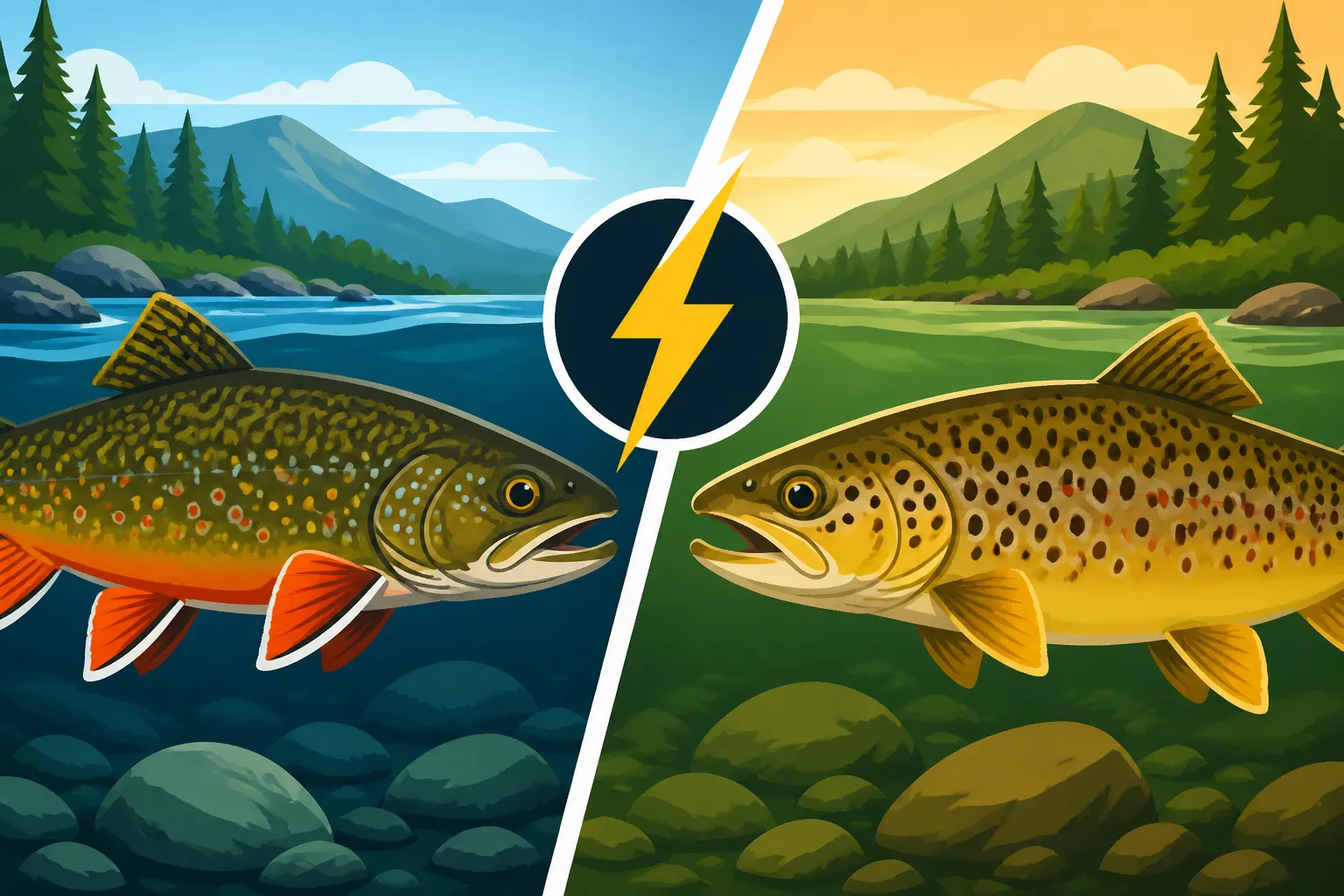
- Brook Trout: Think vibrant colors! Brook trout are generally darker, often appearing olive green to almost black on their backs, fading to lighter flanks and a white belly. Their most distinctive feature is a pattern of light, worm-like markings called "vermiculations" on their back and dorsal fin. Crucially, they have red spots, often surrounded by distinctive blue halos, scattered along their sides. Their lower fins (pelvic, anal, and caudal) often have a leading edge of white, followed by a black stripe, and then a reddish-orange hue. This "white leading edge" is a huge giveaway for brook trout.
- Brown Trout: Brown trout tend to live up to their name, with a more muted, brownish-yellow or golden-brown base color, typically lighter than a brook trout. Their backs might be olive to dark brown, fading to yellowish-brown on the sides and a creamy or yellowish belly. They have dark spots (often black or dark brown) and scattered reddish-orange spots, but these red spots lack the blue halo found on brook trout. The spots might extend onto their dorsal fin and adipose fin, but their tail fin is usually unspotted. Their fins generally lack the stark white leading edge you see on a brookie.
Here's a quick comparison table to keep it straight:
| Feature | Brook Trout | Brown Trout |
|---|---|---|
| Back Color | Olive green to dark, often black | Olive to golden brown |
| Side Color | Lighter flanks, vibrant | Yellowish-brown to golden |
| Belly Color | White or cream | Creamy or yellowish |
| Back Markings | Light, worm-like "vermiculations" | Typically uniform, sometimes spotted |
| Side Spots | Red spots with distinct blue halos | Dark spots (black/brown) & reddish-orange spots, no blue halos |
| Lower Fins | Distinct white leading edge, black stripe, then reddish-orange | Generally plain, matching body tones, no stark white edge |
| Tail Fin | Often slightly forked, some spots | Square to slightly forked, typically unspotted |
Body Shape and Fin Characteristics
Beyond color, the actual physical structure of the fish can give you clues.
- Brook Trout: Brook trout tend to have a more streamlined, torpedo-like body, especially in riverine populations. Their mouths are often smaller, and their bodies can appear slightly more delicate, particularly the wild, stream-dwelling fish. Their tail fin is typically square or only very slightly forked. Their pectoral, pelvic, and anal fins are usually somewhat rounded.
- Brown Trout: Brown trout often appear more robust, with a slightly deeper body than a brook trout of similar length. They have a larger mouth, sometimes extending past the eye, which is indicative of their predatory nature. Their tail fin is usually square or only very slightly emarginate (indented) but often appears less forked than a brook trout's. Their fins tend to be more pointed than a brookie's. The sheer bulk of a larger brown trout is often immediately noticeable compared to a brook trout.
Habitat Preferences: Where You're Likely to Find Them
Knowing where to look is half the battle in identifying these fish. Their preferred homes are quite different in New York.
- Brook Trout: As mentioned, brook trout are cold-water specialists. They absolutely demand pristine, crystal-clear water with ample oxygen. You'll find them in the smallest headwater streams, spring-fed beaver ponds, and high-altitude lakes, particularly in the Adirondacks, Catskills, and other mountainous regions. Think about those hidden gems, often requiring a bit of a hike to reach. They seek out areas with overhead cover, like fallen logs, undercut banks, and dense riparian vegetation, which provides shade and keeps the water cool. If you're fishing a tiny, babbling brook that feels like it's straight out of a nature documentary, you're probably in brook trout country. Protecting these habitats is key to ensuring Are Brook Trout Native to New York? continue to thrive.
- Brown Trout: Brown trout are much more adaptable. While they appreciate cool water, they can tolerate warmer temperatures and more varied stream conditions than brook trout. You'll find them in larger rivers and streams throughout New York, including some of the famous stretches of the Delaware, Beaverkill, and Genesee Rivers, as well as many of the Finger Lakes. They often inhabit stretches with more varied bottom structure, like gravel runs, deep pools, and areas with submerged rocks and logs. They are master ambush predators and will often hold in currents near structure, waiting for an unsuspecting meal to drift by. Their presence in a wider range of waters is a testament to their resilience, but it also means they compete with native species in some areas. When you're fishing in more accessible, larger water bodies, you're more likely to encounter a brown trout. Check out New York's Best Rivers for Fishing to find great brown trout waters.
Angling Approaches: How Their Differences Affect Your Fishing
The distinct characteristics of brook and brown trout don't just affect how they look; they also influence how you approach catching them. Understanding these nuances can significantly improve your success on the water.
Tackle and Techniques for Each Species
Given their size differences and habitat preferences, it makes sense that you might use different gear and methods for each.
- Brook Trout: For brook trout, especially those wild fish in smaller streams, a lighter touch is usually best. Think ultra-light spinning gear with light line (2-4 lb test) and small spinners, tiny spoons, or natural baits like worms or crickets. Fly fishing for brookies is incredibly rewarding, using small dry flies (like an Adams or an Elk Hair Caddis) or small nymphs. A short, light fly rod (2-4 weight) is perfect for navigating tight quarters and delicate presentations. Because they often inhabit overgrown streams, shorter rods also prevent getting tangled in the brush. Sometimes, just a simple rod, reel, and a small box of flies or lures will do. You might even find some excellent, affordable ultralight gear for brook trout streams on Amazon, perfect for fitting into a backpack for a hike. When focusing on these smaller, native fish, remember that New York Freshwater Fishing Rules often have specific regulations for wild trout streams.
- Brown Trout: Brown trout, especially the larger ones, can be quite challenging and require more robust tackle. For spinning gear, a medium-light to medium action rod with 6-8 lb test line is appropriate for casting larger lures like Rapala-style crankbaits, spoons, or heavier spinners. Live bait, such as shiners or large worms, can also be very effective, particularly in deeper pools or slow runs. Fly anglers targeting brown trout often use heavier setups (5-7 weight rods) to cast larger streamers, nymphs, and even mice or terrestrial patterns. Their aggressive, predatory nature means they're often willing to hit larger, more substantial offerings. In rivers like the Salmon River or the West Branch of the Delaware, where trophy browns are a possibility, durable waders and a reliable net are essential. You can often find great deals on durable, specialized fly fishing gear for larger trout on Amazon, including a variety of nymphing indicators and streamer patterns.
Behavior and Fight Characteristics
How these fish behave when hooked can also vary quite a bit, making the fight distinct.
- Brook Trout: Hooking a wild brook trout is often a surprisingly aggressive experience for such a small fish. They tend to hit lures or flies hard and put up a feisty, energetic fight, often darting quickly and making short runs. While they don't have the sustained power of a large brown trout, their quick, acrobatic struggles in small streams are incredibly fun. They might thrash and jump, especially if you're using light tackle, which adds to the excitement. It's a quick, spirited dance that reminds you of their wild origins. Many anglers practice New York Catch-and-Release Trout Fishing Rules to preserve these precious native populations.
- Brown Trout: Brown trout are known for their cunning and powerful fights. When hooked, they often make strong, deep runs, using their body weight and the current to their advantage. They might head straight for heavy cover, like submerged logs or rock piles, in an attempt to break off. Larger browns can be incredibly stubborn, shaking their heads violently and pulling with surprising force. It's a game of patience and skill to bring a big brown trout to the net, and they often fight all the way until they're landed. This powerful fight is one of the main reasons they are such a sought-after game fish in New York. Learning How to Trout Fish in New York effectively will significantly increase your chances with these resilient fish.
Conservation and Management in New York
Understanding the differences between brook and brown trout isn't just about identifying your catch; it plays a crucial role in conservation efforts and adherence to fishing regulations here in New York.
Why Distinguishing Them Matters for Regulations
New York's Department of Environmental Conservation (DEC) carefully manages trout populations, and often, regulations differ between species, especially when it comes to native brook trout versus introduced brown trout.
- Protecting Native Brook Trout: Because brook trout are native and can be more vulnerable to habitat degradation and competition, certain streams or sections of streams might have special regulations aimed at protecting them. This could include reduced daily limits, higher minimum size limits, or even catch-and-release only rules for brook trout, particularly in wild, self-sustaining populations. For example, some small, pristine Adirondack ponds might have very restrictive rules to ensure the survival of their unique brook trout strains. Understanding if you've caught a brook trout versus a brown trout is vital to ensure you're complying with these specific rules. You don't want to mistakenly keep a brook trout when the regulation for that particular waterbody specifies catch-and-release for that species. Always consult the New York Fishing Regulations Explained before heading out.
- General Trout Management: While brown trout are not native, they are a significant component of New York's fisheries and are heavily stocked. Regulations for brown trout are often more liberal than for wild brook trout in certain areas, but they still exist to ensure healthy populations. The goal is to balance angling opportunities with sustainable management. The state issues a What Is a Trout Stamp? for those who want to fish for trout, which helps fund these stocking and conservation programs. Knowing what kind of trout you have on the line ensures you're following the correct rules for size and creel limits. For instance, How Many Trout Can You Keep Per Day in New York? can vary depending on the species and location.
Their Role in New York's Ecosystems
Beyond regulations, the presence and distinction of these two species tell a story about the health and history of New York's aquatic environments.
- Native vs. Introduced: The brook trout represents the historical, natural state of New York's cold-water ecosystems. Their presence signifies a healthy, undisturbed environment. Conversely, the widespread distribution of brown trout highlights the adaptability of introduced species and the ways in which human intervention has reshaped our fisheries. While brown trout provide excellent recreational fishing, their presence in native brook trout waters can sometimes lead to competition for food and habitat, as well as potential predation on younger brook trout. This delicate balance is something the DEC monitors closely.
- Ecological Indicators: Catching a brook trout can be a moment of connection to New York's pristine past, a reminder of the importance of conserving our wilderness areas. A Guide to New York's Trout Species will further illuminate the importance of these fish. Their need for cold, clean water makes them biological indicators; if brook trout populations are struggling, it often points to broader environmental issues like climate change or increased pollution affecting water quality. Brown trout, by being more tolerant, can sometimes thrive in waters where brook trout cannot, providing fishing opportunities even in less pristine environments, though their presence doesn't necessarily indicate top-tier water quality. It’s a complex relationship, and knowing the difference on your line connects you directly to this larger ecological picture.
Disclaimer
This article is for general informational purposes only and does not constitute professional advice. Laws, prices and regulations vary by location and change over time. Consult a qualified professional for guidance on your specific situation.