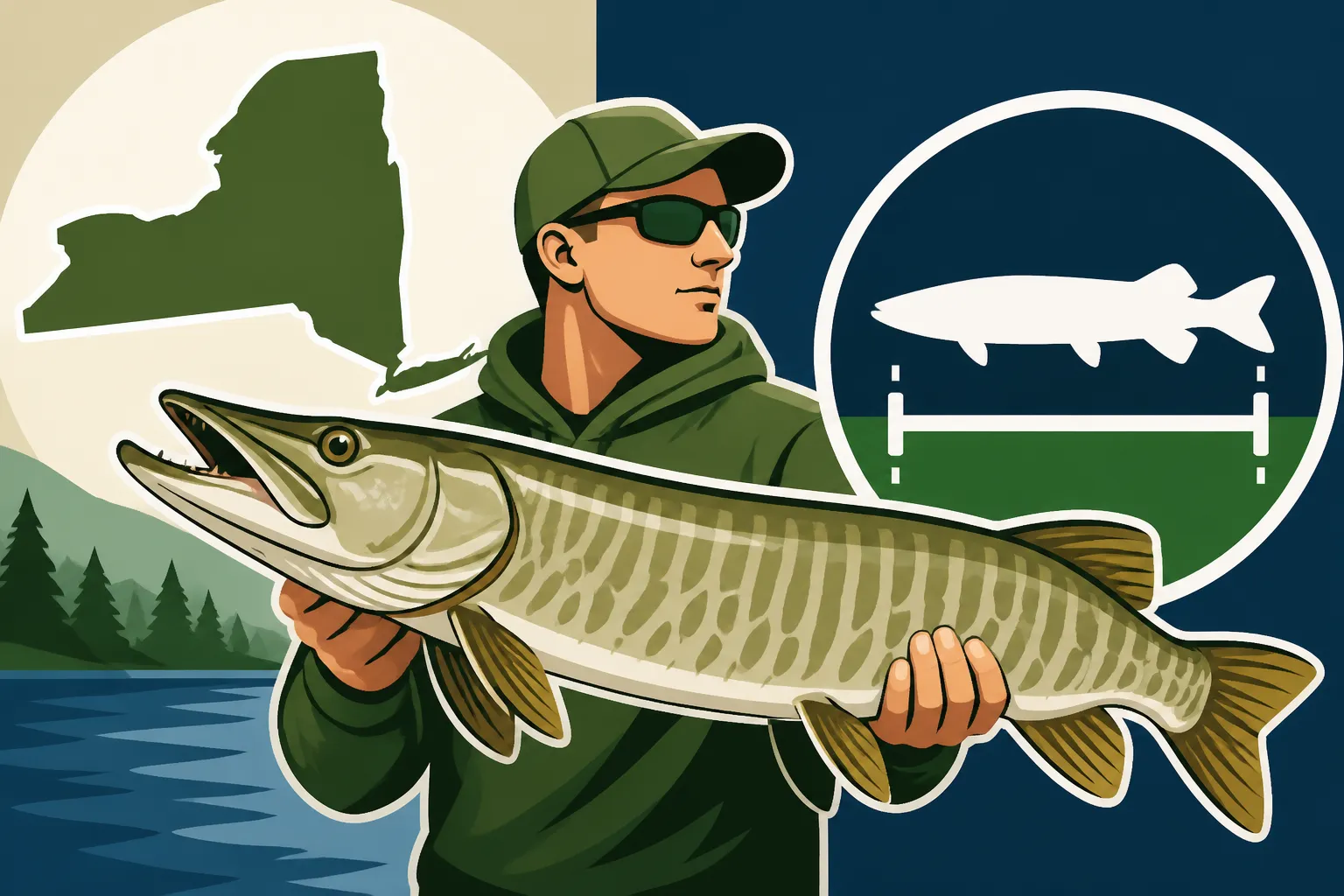
New York Muskellunge Minimum Size Limit
There's nothing quite like the heart-stopping anticipation of muskie fishing. You spend hours, sometimes days, casting massive lures, enduring the elements, all for a chance at that one truly epic freshwater predator. But the thrill of the catch comes with a critical responsibility: knowing and respecting the regulations. One of the most important rules, and often a source of confusion for even seasoned anglers, is the New York Muskellunge Minimum Size Limit. This comprehensive guide will untangle those rules, ensuring you're fully prepared for your next trophy hunt in New York's incredible waters.
Understanding New York's Muskellunge Management Philosophy
Muskellunge, often called "the fish of 10,000 casts," are a unique species that demand respect and careful management. Their slow growth rate and trophy potential make specific regulations absolutely vital for their survival and the sustainability of our fisheries.
Why Size Limits Matter for Muskellunge
Unlike some faster-growing species, muskellunge take a considerable amount of time to reach maturity and breeding age. A smaller fish might look impressive, but it hasn't yet had the opportunity to contribute to the next generation of muskie. Minimum size limits are primarily put in place to ensure that these incredible fish have a chance to spawn at least once, and often multiple times, before they can be legally harvested. This biological reality is at the heart of why these regulations exist.
Think about it: every muskie you encounter is a testament to years of growth and survival. Protecting those fish, especially the younger ones, means ensuring there will be more trophy fish for future anglers. It validates our collective desire for big, healthy fish populations. Anglers dedicate so much time and effort to pursuing these apex predators, and a strong, well-managed population is what makes that dedication worthwhile. Without these thoughtful limits, overharvesting could quickly decimate local populations, turning our incredible muskie fisheries into mere memories.
The Role of the DEC in Setting Regulations
The New York State Department of Environmental Conservation (DEC) is the backbone of these conservation efforts. They're not just pulling numbers out of a hat; their regulations are based on extensive scientific research, data collection, and biological assessments of fish populations across the state. DEC biologists study growth rates, spawning habits, population densities, and angler harvest data to determine the most effective size limits. They also consider the specific ecosystem of each body of water, acknowledging that a lake might have different needs than a river.
The process often involves public input too, gathering insights from anglers, guides, and local communities. This collaborative approach ensures that the rules are not only scientifically sound but also practical for those on the water. Ultimately, the DEC's role is to ensure that New York's incredible natural resources, including its robust muskie populations, are protected and enhanced for both current and future generations of anglers. For a broader look at the rules, check out our guide on New York Fishing Regulations Explained.
Navigating the Muskellunge Minimum Size Limits in New York
It's easy to assume there's one single rule for muskellunge across the entire state, but the reality is a little more nuanced. While there is a general statewide regulation, some of our most famous muskie fisheries have their own specific rules designed to protect their unique populations.
The General Statewide Regulation
For many of New York's waters, the general rule of thumb for muskellunge is a 40-inch minimum size limit. This means if you catch a muskie that is less than 40 inches from the tip of its snout to the furthest tip of its tail, it must be immediately and carefully released. This 40-inch threshold is a significant benchmark, ensuring that most muskie have had at least one or two spawning cycles under their belt, contributing to the health of the population before they are eligible for harvest.
Measuring a muskie accurately can be a bit of an art, especially with a lively fish. You'll want to lay the fish gently on a measuring board or tape, ensuring its mouth is closed against the bump at the end of the board (if using one) and its tail is compressed to give you the longest possible measurement. More on precise measurement techniques in the next section, but the key takeaway here is: if it's not 40 inches, it goes back in the water. No exceptions. This statewide limit applies to many lakes and rivers throughout New York, offering consistent guidance for anglers venturing into less specialized muskie waters.
Critical Exceptions: St. Lawrence River, Lake Ontario, and Chautauqua Lake
Now, here's where it gets really important to pay close attention. New York is home to some truly world-class muskie fisheries, and these prime locations often have stricter rules to protect their exceptional trophy potential. For instance, if you're fishing the St. Lawrence River and its tributaries, or Lake Ontario and its tributaries, you're looking at a much larger 54-inch minimum size limit for muskellunge. Yes, you read that right – 54 inches! That's a true giant, and it speaks volumes about the quality of the muskie fishing in these areas and the commitment to fostering truly massive fish.
Similarly, Chautauqua Lake also boasts special regulations, often aligning with or exceeding the 54-inch benchmark, depending on the most recent DEC assessments. These higher limits are not arbitrary; they are specifically tailored to manage trophy-sized populations, account for cross-border regulations (like with Canada on the St. Lawrence), and ensure the genetic integrity of these unique muskie strains. These particular bodies of water are renowned for producing some of the largest muskellunge in North America, making them prime destinations for serious muskie anglers. To ensure you're always up-to-date on these specific rules, always consult the New York DEC Fishing Regulations Guide before heading out. Specific information about fishing these legendary waters can be found in guides like Muskellunge Fishing in New York's Thousand Islands and Chautauqua Lake Muskellunge Fishing.
Here’s a quick overview of the key muskellunge size limits in New York:
| Waterbody | Minimum Size Limit (inches) | Primary Management Goal |
|---|---|---|
| Most New York Waters (Statewide General Rule) | 40 | Protect spawning stock, sustainable harvest |
| St. Lawrence River & Tributaries | 54 | Trophy management, cross-border alignment |
| Lake Ontario & Tributaries | 54 | Trophy management, regional consistency |
| Chautauqua Lake | Often 54+ (check current regs) | Trophy management, unique population |
Practical Application of Muskellunge Regulations on the Water
Knowing the rules is one thing, but applying them accurately and responsibly when you've got a thrashing muskie boatside is another challenge entirely. Proper measurement and quick, ethical release are paramount for the health of these magnificent fish.
Accurate Measurement and Verification
When that muskie is finally subdued and in your net, the adrenaline is pumping, but it's crucial to remain calm and methodical for an accurate measurement. The official measurement for muskellunge in New York is the total length, which means from the tip of the snout (mouth closed) to the very end of the longest lobe of the tail, with the tail compressed. Don't eyeball it! You absolutely need a reliable measuring device on your boat or kayak.
Many dedicated muskie anglers use a specialized "bump board" – a rigid ruler with a fixed end where the fish's snout can rest, making for a precise measurement. Others use a flexible measuring tape attached to a flat surface in their boat. The key is to get the fish secured gently, minimizing its time out of the water. Lay the fish flat, with its belly down if possible, and slide it against the measurement device. Gently compress the tail lobes to get the maximum length. If there's any doubt, or if it's right on the cusp of the legal limit, it's always best practice to err on the side of caution and release the fish. Remember, we're talking about inches here, and being even slightly off could lead to a violation.
Best Practices for Catch and Immediate Release
Because muskie are so resilient yet so sensitive to improper handling, catch and release is not just a suggestion; it's a critical part of ethical muskie fishing, especially for undersized or trophy-potential fish. The goal is to minimize stress and injury. The moment you land an undersized muskie, the clock starts ticking. Your priority should be getting that fish back into the water quickly and safely.
Keep the fish in the net and in the water as much as possible while you prepare for release. If you absolutely must take it out for a quick photo, keep it horizontal, supported under the belly, and get it back in within seconds. Avoid dragging the fish over gunwales, dropping it on the boat floor, or handling it with dry hands, which can remove its protective slime coat. Always have your tools ready before the fish is even landed. Tools like long-nosed pliers or hook cutters, which you can easily find on Amazon, are essential for quick and clean hook removal. If the hook is deeply set or the fish is particularly stressed, consider cutting the line as close to the hook as possible rather than struggling to remove it. You can find more detailed methods in our guide on How to Figure-Eight a Muskie Boatside. After release, hold the muskie gently by the tail and head in the water, allowing it to regain its strength and swim away on its own.
Essential Gear and Techniques for Responsible Muskellunge Fishing
Muskellunge are powerful, toothy predators. Catching and releasing them safely for both the fish and the angler requires more than just a sturdy rod and reel; it demands specialized tools and refined techniques.
Specialized Tools for Muskie Safety
Don't skimp on your muskie handling gear. It's an investment in conservation and your own safety. First and foremost, you need a large, wide-mouthed landing net with a rubberized, knotless mesh. The large size allows you to fully engulf the fish, minimizing stress and preventing it from flopping out. The rubberized mesh protects the fish's delicate slime coat and fins much better than traditional knotted nylon nets, which can cause significant damage. You can find excellent options for these nets, often from brands like Frabill or Beckman, on Amazon with various handle lengths to suit your boat.
Next, you need long-nosed pliers and a pair of sturdy bolt cutters or heavy-duty hook removers. Muskies have incredibly sharp teeth, and reaching in with your fingers is a recipe for disaster. Long pliers allow you to securely grip the hook and extract it safely. If a hook is deeply embedded or barbed in a difficult spot, bolt cutters are a lifesaver. Cutting the hook in half or severing the line close to the hook is often the quickest and least stressful option for the fish, even if it means losing a hook. Another critical tool is a release cradle or a large, soft measuring board with clear markings. These allow you to manage the fish in the water or with minimal handling outside of it. Always keep these tools readily accessible; fumbling for them while a muskie is thrashing can prolong the struggle and harm the fish.
Minimizing Stress and Maximizing Survival
Beyond the gear, how you handle the fish after the catch is paramount. The goal is to get the muskie back into the water as quickly and gently as possible. When the fish is in the net, keep it submerged. Remove the hooks while it's still in the water if feasible. If you must lift it for a measurement or a quick photo, always support the fish horizontally with two hands – one under the head, the other under the tail or belly. Avoid holding a muskie vertically by the gill plate or jaw alone, as this can cause severe damage to its internal organs and spine due to its heavy weight.
Many muskie anglers practice the "figure-eight" technique with their lures boatside, which keeps the fish in the water longer and tires it out less, making the landing and release process smoother. After hook removal and measurement, gently place the fish back in the water, ideally headfirst, and hold it upright. Allow fresh water to flow over its gills. If it's slow to respond, gently move it back and forth to help circulate water through its gills until it regains strength and swims away on its own. It's often helpful to keep the boat moving slowly to provide this flow. Remember, a muskie's survival often depends on the choices you make in those critical moments after the catch. For tips on tempting these fish, check out our guide on Best Lures for Muskellunge. If you're looking for broader tactics, our How to Fish for Muskellunge guide has more insights. Don't forget, these fish also have specific feeding habits, which you can learn more about in What Muskellunge Eat.
Adhering to Regulations: Legalities and Ethical Considerations
Fishing for muskellunge is a privilege, not a right. Understanding and respecting the legal framework surrounding these majestic fish is an essential part of being a responsible angler. Violating these regulations can lead to serious consequences and undermines the conservation efforts that make muskie fishing possible in New York.
The Legal Ramifications of Non-Compliance
Ignoring the minimum size limits for muskellunge in New York is not a minor oversight; it's a direct violation of state law and carries significant penalties. If a New York Environmental Conservation Officer (ECO) catches you possessing an undersized muskie, or a muskie from a special regulation water that doesn't meet its higher limit, you could face hefty fines. These fines can range from hundreds to thousands of dollars, depending on the severity of the offense and whether it's a first-time or repeat violation.
Beyond financial penalties, you could also have your fishing gear seized – including your rods, reels, and even your boat in some cases. More severely, you risk the suspension or revocation of your New York fishing license, meaning you could be barred from fishing in the state for a period of time. This isn't just a slap on the wrist; it's a serious impact on your ability to enjoy the sport you love. Enforcement officers are well-versed in the regulations and are committed to protecting New York's fisheries. They are present on the waters, and they do enforce these rules. Ignorance of the law is never an acceptable defense. While this guide focuses on muskie, understanding the broader implications of non-compliance is critical, as detailed in our article on Penalties for Fishing Without a License in New York.
Cultivating a Culture of Conservation
Beyond the legal obligations, there's a profound ethical responsibility that comes with muskie fishing. These fish are at the top of the food chain, iconic symbols of wildness, and an incredible challenge for any angler. Every decision we make on the water, from how we handle a fish to whether we adhere to the size limits, has a ripple effect on the entire population and the future of the sport.
Cultivating a culture of conservation means actively embracing these regulations, not just begrudgingly following them. It means educating fellow anglers, especially newer ones, about proper handling and the importance of size limits. It means making the conscious choice to release fish, even legal ones, if you're not planning to eat them or if you believe they have greater trophy potential for someone else down the line. We are all stewards of New York's natural resources. By protecting muskellunge and adhering to the minimum size limits, we're ensuring that future generations will have the same thrilling opportunities to pursue these legendary fish, perhaps even breaking the New York State Muskellunge Record: 69 Pounds, 15 Ounces someday! Remember to always check the New York Muskellunge Season Dates as well, as closed seasons also protect these vital fish.
Disclaimer
Please remember that fishing regulations, including size limits and seasons, can change. While every effort has been made to provide accurate and up-to-date information, it is the angler's responsibility to consult the most current New York State Department of Environmental Conservation (DEC) Fishing Regulations Guide before heading out on any fishing trip. This guide is for informational purposes only and should not be considered a substitute for the official DEC regulations.