Best Lures for Chinook Salmon
It can feel incredibly overwhelming to stand at the edge of Lake Ontario or its powerful tributaries, knowing that immense Chinook salmon are lurking, but having no idea which of the hundreds of lures in your tackle box will actually tempt them. The struggle is real – these majestic fish aren't always easy to fool, and the conditions change constantly, making your lure choice critical. This comprehensive guide is designed to cut through the confusion and equip you with the knowledge to pick the absolute best lures for Chinook salmon, maximizing your chances of a truly memorable catch in New York's incredible waters.
Understanding Chinook Salmon Lure Preferences
Before we dive into the specifics of shiny metal and wiggling plastics, it's crucial to understand why Chinook salmon react to certain lures. These fish are powerful predators, and their feeding habits, coupled with their aggressive nature, dictate what they'll strike. Whether they're actively feeding or simply reacting out of instinct, the right lure appeals to their core drives.
Mimicking Natural Prey: The Alewife and Smelt Connection
For the vast majority of their lives in Lake Ontario and Lake Erie, Chinook salmon are pelagic predators, meaning they primarily feed on baitfish in the open water. And what's on the menu? Overwhelmingly, it's alewives and rainbow smelt. These small, silvery fish form the backbone of the Chinook's diet, and consequently, the most effective lures are those that closely imitate their size, shape, and swimming action.
Think about it: a hungry Chinook cruising through the deep, clear waters isn't looking for something completely alien. It's honed its hunting skills on schools of flickering baitfish. So, when you present a lure that looks, moves, and even vibrates like a distressed alewife or a darting smelt, you're tapping directly into their primal feeding response. This is why spoons, with their inherent flash and wobble, and slender plugs, designed to mimic a swimming baitfish, are so incredibly effective. They're not just random pieces of metal; they're carefully crafted imitations of what Chinook expect to eat. If your lure doesn't at least vaguely suggest "food," you're already at a disadvantage.
Triggering Reaction Strikes: Flash, Vibration, and Aggression
Beyond simply looking like food, many successful Chinook lures are designed to trigger a "reaction strike." This is when a salmon, even if not actively feeding, strikes out of aggression, territoriality, or simply an irresistible impulse caused by a sudden flash or vibration. Chinook salmon are incredibly powerful and, especially when approaching their spawning phase, can be quite aggressive.
Lures with bright, reflective surfaces, erratic movements, or strong vibrations are key here. A spoon darting erratically or a plug sending out strong thumps through the water can irritate or startle a salmon into striking. This is particularly effective when fish are somewhat lethargic or "full" but still possess that aggressive instinct. Consider how a sudden, unexpected movement can elicit a defensive reaction in almost any predator. The flash of a spoon can mimic a struggling fish, making it an easy target, while the vibration of a crankbait can mimic a panicked baitfish. Even in tributaries, where fish are focused on spawning, a brightly colored fly or bead might provoke a strike not because it's food, but because it's an annoyance in their personal space. Understanding this aggressive side of Chinook behavior is crucial for selecting lures that don't just mimic, but provoke.
Top Lure Categories for Open Water Chinook Salmon
When you're out on the vast expanse of Lake Ontario or Lake Erie, particularly during the summer months, trolling is the name of the game. And for trolling, a few specific lure types consistently outperform the rest. These are the workhorses that charter captains and seasoned anglers swear by.
The Allure of Trolling Spoons
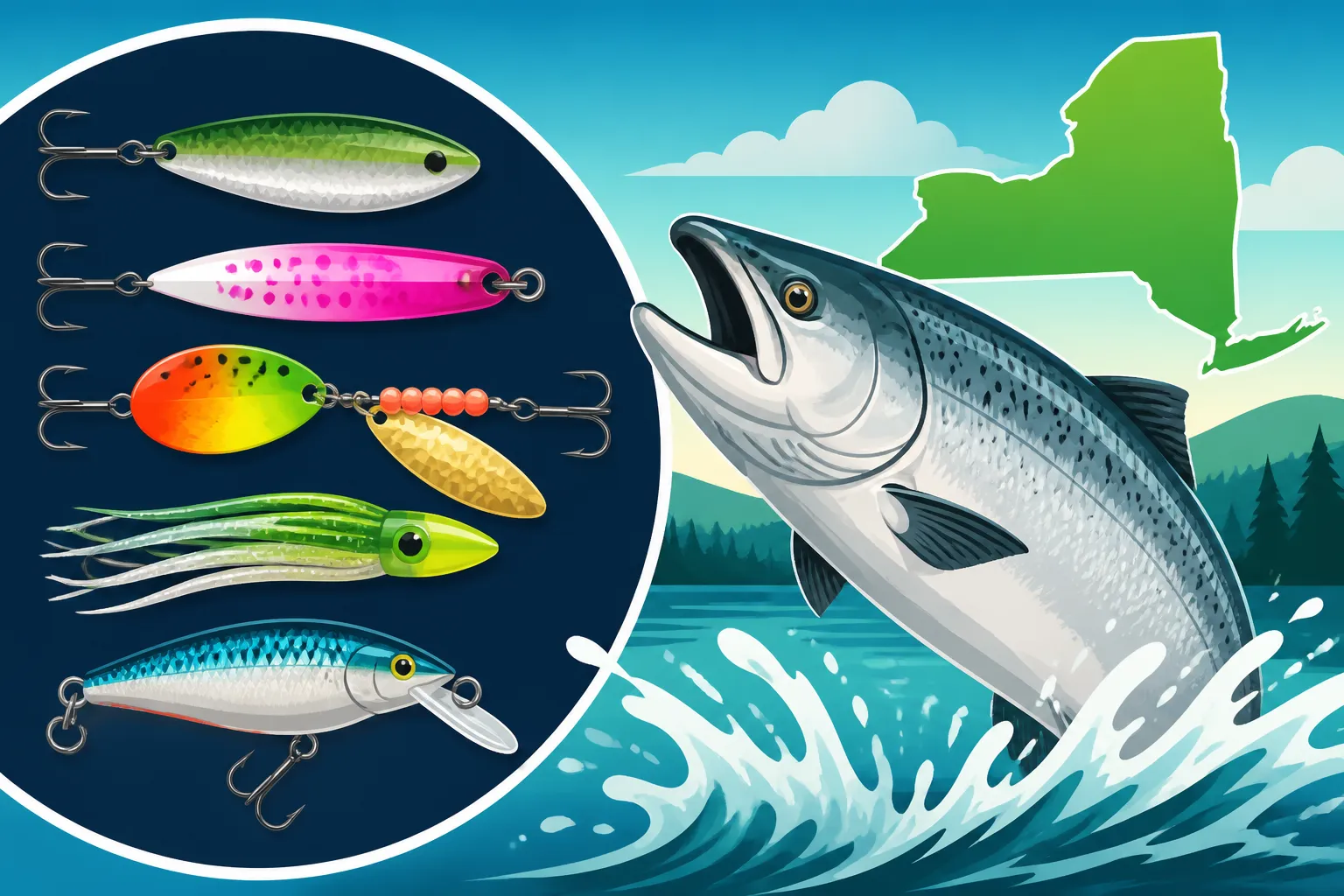
Spoons are arguably the most iconic and consistently effective lure for open water Chinook salmon. Their simple design, which allows them to wobble and flash like a wounded baitfish when trolled, makes them irresistible. The flash and erratic movement mimic an injured alewife or smelt, signaling an easy meal for a cruising Chinook. Different spoon sizes, weights, and curves produce varying actions, from tight wiggles to wide sweeps.
Key Spoon Characteristics and Usage:
The effectiveness of a spoon often comes down to its specific design and how it's presented. For Chinook, you're usually looking at spoons ranging from 3.5 to 5 inches in length. Brands like Michigan Stinger, Dreamweaver, and Northern King are absolute staples in any serious Lake Ontario angler's tackle box. The colors can vary wildly, but always include some with chrome, silver, or gold bases for maximum flash. Green, blue, black, and purple patterns on these reflective bases are perennial favorites, often mimicking the natural coloration of baitfish. When choosing, consider the water clarity: brighter, more reflective colors for darker or deeper water, and more natural, subtle patterns for clear conditions. You can often find a wide selection of these spoons on platforms like Amazon, making it easy to stock up on various colors and sizes.
When rigging, it's generally best to use a fluorocarbon leader (15-20 lb test) tied directly to the spoon. The main line usually comes off a planer board, downrigger, or dipsy diver, depending on the desired depth. Spoons are incredibly versatile; they can be trolled at a wide range of speeds, but finding that sweet spot where the spoon has its most enticing flutter is key. Many experienced anglers will run multiple spoons at different depths and colors until they identify what the fish are keying in on that day. For more detailed insights, check out our guide on How to Troll Spoons for Chinook Salmon.
Deep-Diving Plugs and Their Action
While spoons get a lot of glory, deep-diving plugs are equally vital, especially when Chinook are holding at specific depths or when you want a different action profile. These plugs, often referred to as crankbaits in other fishing circles, have a lip or bill that causes them to dive and vibrate intensely as they're trolled. This creates a more aggressive, thumping action that can be incredibly effective at drawing strikes.
Popular Plugs and Their Presentation:
The most renowned deep-diving plugs for Chinook salmon are undoubtedly the J-Plug and the Mag Lip. The J-Plug, a classic that has stood the test of time, has an erratic, darting action that perfectly imitates a panicked baitfish. It's often run plain, or sometimes with a short leader to a flasher for added attraction. The Mag Lip, particularly popular in the 3.5 to 4.5-inch range, boasts a wide, vigorous wobble that sends out strong vibrations, attracting fish from a distance. Its unique "kick-out" action often triggers strikes when other lures fail. Other notable options include Rapala Down Deep Husky Jerks and Thundersticks, which provide a tighter, more subtle wiggle.
Rigging plugs often involves a short, heavy leader (20-30 lb fluorocarbon or monofilament) to prevent the plug from fouling or twisting. Unlike spoons, plugs typically have a built-in action, so the trolling speed needs to be carefully managed to ensure the plug is "running true" and not washing out. Varying your boat speed slightly can often make a plug's action more erratic and enticing, prompting a strike. Experiment with different depths using downriggers, divers, or even lead core line until you hit the productive zone. Keep an eye on your fish finder to locate schools of baitfish and actively feeding salmon.
The Power of Flasher/Fly Combinations
The flasher/fly combination is a deadly duo, particularly for drawing in and enticing Chinook salmon that might be spread out or a bit finicky. The flasher isn't a lure itself, but an attractor. It's designed to spin, dart, and flash, mimicking a school of baitfish or an injured, struggling fish, sending out significant vibration and visual cues. Behind the flasher, usually on a 20-30 inch leader, trails a "fly" – which is really a skirted jig or a hoochie (squid imitation) that imitates a small baitfish or squid.
Selecting and Rigging Flasher/Fly Setups:
The magic of the flasher/fly lies in its synergistic effect. The large flasher, typically 8-11 inches long, is the main attractor, drawing the Chinook in. Common colors for flashers include chrome, green, blue, and black, often with glow or UV tape accents. Brands like Dreamweaver, Pro-Troll, and Big Weenie are top contenders. The "fly" that follows is the actual bait, and these usually come in patterns that mimic alewives (silver, green, blue, white) or often feature vibrant, eye-catching colors like chartreuse, purple, or hot pink. The length of the leader between the flasher and the fly is critical and can vary based on water conditions and the salmon's mood, typically ranging from 20 to 36 inches.
When rigging, ensure your knots are strong and your leader is fresh, as the constant action of the flasher puts strain on the line. These setups are almost exclusively trolled, usually off downriggers or dipsy divers, to get them down to the desired depth. The flasher's action imparts a mesmerizing dance to the fly behind it, making it appear alive and struggling. This combination is particularly effective during mid-summer when salmon are actively pursuing bait in deeper water. Many anglers will run a few different flasher/fly combinations, varying the flasher color, fly color, and leader length until they discover the winning pattern. For more on maximizing your trolling efforts, check out our guide on Best Trolling Speed for New York's Lake Ontario Salmon.
Targeting River-Bound Chinook: Tributary Tactics
Once the majestic Chinook salmon begin their arduous journey from the vastness of Lake Ontario into its tributaries – rivers like the Salmon River, Oswego River, or Genesee River – their behavior changes dramatically. They cease active feeding and become solely focused on spawning. This shift requires a completely different approach to lure selection and presentation.
Drifting Egg Sacs and Beads
In the tributaries, particularly during the fall spawning run, Chinook salmon are not actively feeding on baitfish. Instead, they become highly territorial and will strike at anything perceived as a threat or an annoyance, especially something that resembles the eggs of other fish, including their own. This is where natural and artificial egg imitations truly shine.
Effective Presentation of Egg Sacs and Beads:
Real egg sacs, typically made from cured salmon or trout eggs, are incredibly effective. Anglers carefully tie small clusters of eggs into mesh netting, creating dime-sized or nickel-sized sacs. The natural scent and appearance are often irresistible. However, many anglers also find great success with artificial egg patterns, most notably "drift beads." These small, buoyant plastic beads (typically 6mm to 12mm) are designed to mimic a single salmon egg and are threaded onto the line a few inches above the hook. Popular bead colors include variations of orange, pink, and chartreuse, reflecting the natural colors of salmon eggs. The beauty of beads is their durability and reusability, a distinct advantage over natural eggs which quickly get washed out. Before you hit the water, you can easily find a good variety of drift beads on Amazon.
Both egg sacs and beads are primarily fished using a "drift" technique. This involves casting upstream and allowing the offering to drift naturally downstream, bouncing lightly along the bottom, precisely where salmon might be holding. A light-action rod with sensitive tip, a good quality spinning reel, and a mainline of 8-10 lb fluorocarbon or monofilament, paired with a lighter leader (6-8 lb test), are ideal for this. Small split shot or pencil weights are used to get the bait down, and the key is to use just enough weight to maintain bottom contact without snagging. The strikes can be incredibly subtle, often just a slight pause in the drift, so focus and feel are paramount. Understanding when these fish enter the rivers is key, and our guide on When Do Chinook Salmon Start Running in Lake Ontario Tributaries? provides valuable seasonal information.
Fly Fishing for Spawning Salmon
For the dedicated fly angler, pursuing Chinook salmon in the tributaries offers a unique and incredibly rewarding challenge. It's not about mimicking feeding behavior, but rather provoking that territorial or instinctual strike with specific fly patterns.
Go-To Fly Patterns and Techniques:
When salmon are in the rivers, they become very aggressive towards anything perceived as a threat to their redds (spawning beds) or as competition for mates. This is where "egg-sucking leeches," "intruder" patterns, and large, bright "stonefly" or "woolly bugger" imitations come into play. Egg-sucking leeches, with their bulbous "egg" at the head, are particularly effective as they mimic a small creature trying to consume salmon eggs. Intruder patterns, often tied with heavy weight and lots of flash, are designed to be aggressively swung through runs, annoying the salmon into striking. Bright colors like chartreuse, hot pink, purple, and black are common, as visibility and provocation are more important than exact imitation.
Fly fishing for these large, powerful fish requires specialized gear. A fast-action 9-10 weight fly rod, paired with a matching large arbor reel loaded with a heavy sinking line (sink-tip or full sinking line) is standard. A strong leader (15-20 lb fluorocarbon) is essential. The primary technique is swinging flies through runs, allowing the current to animate the fly, or nymphing larger patterns with strike indicators to get them down deep. It's a brute force fight, and hooking one of these giants on a fly rod is an experience you won't soon forget.
Matching Lures to Conditions for Optimal Success
Knowing the types of lures is one thing, but knowing when to use them is where true angling skill comes into play. Chinook salmon are highly sensitive to their environment, and adapting your lure selection to prevailing conditions can dramatically improve your catch rate.
Water Clarity and Color Choices
Water clarity is a massive factor in lure selection. The visibility of your lure directly impacts its effectiveness. Think about trying to find something specific in a dark room versus a brightly lit one – it's the same for a salmon.
Adapting Lure Colors to Water Conditions:
- Clear Water: When Lake Ontario's waters are gin-clear, or a tributary is running low and clear, fish tend to be more wary. This is the time to reach for more natural, subtle patterns. Spoons with silver, white, or light blue bases, often with small, sparse flecks of green or blue, can be incredibly effective. Plugs in natural baitfish patterns like chrome/blue or perch imitation can also be stellar. In tributaries, more realistic egg colors or darker, more understated fly patterns might get the nod. The idea is to avoid anything too flashy or unnatural that might spook a cautious fish.
- Stained or Murky Water: This is where the opposite rule applies. When the water has a green tint, is milky from runoff, or is simply darker at deeper depths, you need lures that really stand out. Bright, fluorescent colors become your best friends. Spoons in chartreuse, hot pink, orange, or even "glow" patterns (especially effective at dawn/dusk or deep water) are excellent. Plugs with bright, contrasting colors or strong UV finishes also work wonders. Flashers can be bright and bold too, often with contrasting tape colors. The goal is to maximize visibility and contrast so that the salmon can spot your lure from a distance, even in reduced visibility.
- Cloudy Days vs. Sunny Days: On bright, sunny days, particularly in clear water, metallic spoons with high flash (chrome, silver) can be very effective as they reflect sunlight brilliantly. On overcast days, or in deeper water, UV-enhanced lures or those with glow-in-the-dark properties can be more visible. Always have a variety ready, because what worked yesterday might not work today.
Depth and Presentation Adjustments
Knowing where the fish are holding is just as important as knowing what lure to use. Chinook salmon can be found anywhere from the surface to over 100 feet deep in Lake Ontario, and knowing how to get your lure to that precise depth is paramount.
Effective Depth Management:
- Shallow Water (Surface to 30 feet): In the early season (spring), or during low-light conditions, Chinook might be higher in the water column. Here, planer boards with longer lines, shallow-diving plugs, or lighter spoons can be effective. Surface temperatures can also play a role, as salmon will often hug the thermocline, which can be relatively shallow.
- Mid-Depth (30-60 feet): This is a very common zone for summer salmon. Dipsy divers set to various distances, downriggers, and lead core lines are all used to present spoons, plugs, and flasher/fly combos at these depths. It's often a matter of finding the precise depth of the baitfish schools and placing your lures just above, within, or slightly below them.
- Deep Water (60+ feet): In the heat of summer, Chinook will often seek cooler water deeper down. Downriggers become indispensable here, allowing precise depth control. Heavy spoons, deep-diving plugs, and flasher/fly combinations are run at these depths. Remember that light penetration is minimal, so glow lures and high-contrast colors can be important.
- Tributary Depths: In rivers, Chinook often hold in deep pools, current seams, and behind obstructions. For egg sacs, beads, and flies, a precise drift that gets your offering right into their face is critical. This means carefully adjusting your split shot or fly line weight to ensure bottom contact without excessive snagging. The idea is to make your lure look like an easy, natural drift right into their strike zone. For deeper insights into depth management, consider reading our article on How Deep to Troll for Salmon on New York's Lake Ontario.
Seasonal and Time of Day Considerations
Chinook salmon behavior, and thus lure effectiveness, changes dramatically throughout the fishing season and even throughout the day.
Tailoring Lures to Time and Season:
- Spring (April-May): As Lake Ontario warms up, Chinook are often found shallower, feeding aggressively on baitfish that are also moving into warmer waters. Smaller spoons, shallow-diving plugs, and bright, flashy colors can be very effective. The fish are often scattered, so covering water is key.
- Summer (June-August): This is prime trolling season. Chinook move deeper as surface waters warm, often congregating around the thermocline or baitfish schools. Larger spoons, deep-diving plugs, and flasher/fly combinations are essential. Morning and evening bites are often the most productive, but deep-water trolling can produce all day long.
- Fall (September-October): The pre-spawn and spawning periods. In the lake, larger, more aggressive spoons and plugs can still work as fish stage before entering rivers. Once in the tributaries, egg sacs, beads, and provocative fly patterns dominate. This is when the fish are often more interested in reaction strikes than feeding. Our guide to Best Time to Fish for Chinook Salmon on New York's Lake Ontario offers excellent seasonal breakdowns.
- Time of Day: Early morning and late evening (low light conditions) are almost universally considered the "golden hours" for Chinook. During these times, fish are often more active, move shallower, and are less wary. Lures with glow features or strong UV can be very effective. During midday, especially in summer, focus on deeper water and rely on scent and vibration, or more subtle, natural presentations if the fish are finicky.
Rigging and Presentation Tips for Success
Having the right lure is only half the battle. How you rig it, how you present it, and the subtle adjustments you make can be the difference between a triumphant reel scream and a silent boat ride. Precision in rigging and presentation transforms a good lure into a great one.
Leader Lengths and Line Choices
The connection between your main line and your lure is far more important than many anglers realize. It influences lure action, visibility, and abrasion resistance.
Optimizing Your Leader and Line:
- Material Matters: For open water trolling, fluorocarbon leaders (15-25 lb test) are highly favored due to their invisibility underwater and excellent abrasion resistance. They sink faster than monofilament, which can slightly enhance the action of some spoons. Monofilament (20-30 lb test) can also be used, especially for plugs where its slight stretch might be an advantage. For tributary fishing with egg sacs or beads, a lighter fluorocarbon leader (6-10 lb test) is crucial for a natural drift and stealth. In contrast, your main line for trolling will often be braided (e.g., 30-50 lb test) for sensitivity and strength, especially when using planer boards or divers, as it has minimal stretch.
- Length is Key:
- Spoons: Leader lengths for spoons typically range from 6 to 10 feet. A longer leader allows the spoon to exhibit its full, natural action, especially when coming off a downrigger or diver. Too short, and the lure's action can be hampered or it might be spooked by the main line or terminal tackle.
- Plugs: Shorter, stiffer leaders (3-6 feet, 20-30 lb test mono or fluoro) are often preferred for plugs. This helps prevent the plug from fouling its action or tangling with the main line, especially plugs with aggressive wobbles.
- Flasher/Fly: The leader between the flasher and the fly is critical, typically 20-36 inches. This length determines how the fly "dances" behind the flasher. Experimentation is key here; a subtle change of an inch or two can drastically alter effectiveness.
- Tributary Baits: For egg sacs or beads, a 12-24 inch leader of lighter fluorocarbon (6-8 lb test) off a small barrel swivel to a heavier main line (8-10 lb mono or braid) is common. This allows the bait to drift naturally.
Always inspect your leaders for nicks or abrasions, especially after catching a fish, and re-tie as necessary. A lost trophy due to a frayed leader is a heartbreak no angler wants to endure.
Speed and Action: Making Your Lure Dance
The perfect lure is useless if it's not presented with the correct speed and action. This is where subtle boat control and understanding your lure's design become paramount.
Fine-Tuning Your Trolling Speed:
- Trolling Speed: For open water trolling, speeds typically range from 2.0 to 3.5 miles per hour (MPH), though this can vary significantly. The ideal speed makes your chosen spoon or plug exhibit its most enticing action. Too slow, and spoons might not wobble properly; too fast, and they might spin or "wash out." Plugs have a narrower effective speed range. Watch your rod tips: a good, consistent wiggle indicates your lure is working correctly. Use your boat's speedometer and GPS to maintain precise speeds. Try to vary your speed subtly – momentary accelerations or decelerations can often trigger strikes from following fish. A slight turn of the boat can also cause the inside and outside lines to change speed and depth, sometimes provoking a bite. Our article on Best Trolling Speed for New York's Lake Ontario Salmon delves deeper into this essential aspect.
- Checking Lure Action: Always put your lures in the water next to the boat before deploying them fully. Watch how they move. Does the spoon have a consistent wobble? Is the plug diving correctly and vibrating strongly? If a lure is spinning or fouled, it's wasting your time in the water.
- Rod Action and Twitching: For tributary fishing, the "action" is imparted by your rod tip. When drifting egg sacs or beads, maintain a slight amount of slack in your line to allow a natural, drag-free drift. Any twitch or pull on the line will make the bait look unnatural. For fly fishing, the retrieve speed and rod movement are what animate the fly. Slowly stripping a streamer or jigging a weighted fly can give it the appearance of a struggling minnow or insect.
Table: Popular Chinook Salmon Lure Types
To help summarize, here's a quick overview of some top lure types and their common applications for Chinook salmon in New York waters.
| Lure Type | Primary Application | Key Features | Pros | Cons |
|---|---|---|---|---|
| Trolling Spoons | Open water, Lake Ontario | Metal, varying curves, wide color range | Versatile, high flash, proven effectiveness | Speed sensitive, can twist line |
| Deep-Diving Plugs | Open water, Lake Ontario | Hard plastic, diving lip, strong wobble | Aggressive action, loud vibrations, durable | Less forgiving on speed, can be expensive |
| Flasher/Fly Combo | Open water, Lake Ontario | Large attractor + small trailing lure | Strong attraction, effective in deep water | Cumbersome, requires specific rigging |
| Egg Sacs/Beads | Tributaries, spawning fish | Natural (eggs) or artificial (beads) | Highly effective for river-bound salmon | Delicate (eggs), subtle takes, often snaggy |
| Fly Patterns (Leeches, Intruders) | Tributaries, fly fishing | Heavily weighted, vibrant colors, large | Provokes aggressive strikes, challenging | Requires specific fly gear and technique |
Final Thoughts on Lure Selection
Choosing the best lures for Chinook salmon isn't about finding a single magic bullet. It's about understanding the species, adapting to the environment, and having a diverse arsenal at your disposal. Don't be afraid to experiment! What works one day, or even one hour, might not work the next. Pay attention to what other anglers are catching, observe baitfish activity, and trust your instincts. Remember, the journey to becoming a successful Chinook angler in New York is a continuous learning process.
Always carry a variety of lures, in different sizes, colors, and actions. Before you head out, consider checking online retailers like Amazon for specific brands and patterns that are currently hot. Make sure your tackle is in top shape, hooks are sharp, and lines are fresh. And most importantly, enjoy the incredible experience of pursuing these magnificent fish in the stunning waters of New York. Whether you're targeting big kings in the main lake or battling them in a roaring tributary, the right lure, presented correctly, will be your key to success. For a comprehensive overview of the fish you might encounter, check out our guide on Fish Species You Can Catch in New York.
Disclaimer
Fishing involves inherent risks, and conditions can change rapidly. Always prioritize safety, check local weather forecasts, and ensure your boat and equipment are in good working order. Adhere strictly to all New York State Department of Environmental Conservation (DEC) regulations regarding fishing licenses, catch limits, size restrictions, and season dates. This guide is for informational purposes only and does not constitute professional advice. The author and publisher are not responsible for any accidents, injuries, or legal infractions incurred while following this information.