Best Drift Speed for Fluke Fishing
If you've spent any time chasing fluke in New York waters, you know the frustration of a slow day when everyone else seems to be pulling them in. Often, the secret lies in a tiny detail that makes a massive difference: your drift speed. Getting this just right can turn a quiet trip into a banner day, and this guide will dive deep into understanding and mastering the optimal drift speed for fluke fishing, helping you put more of these delicious flatfish in your cooler.
Understanding Fluke Behavior and Drift Fishing Dynamics
Fluke, also known as summer flounder, are ambush predators. They spend their days camouflaged on the bottom, patiently waiting for an easy meal to swim or drift by. This inherent hunting strategy is precisely why drift fishing is so incredibly effective for them, and why your drift speed plays such a pivotal role in your success.
Why Drift Speed Matters for Fluke
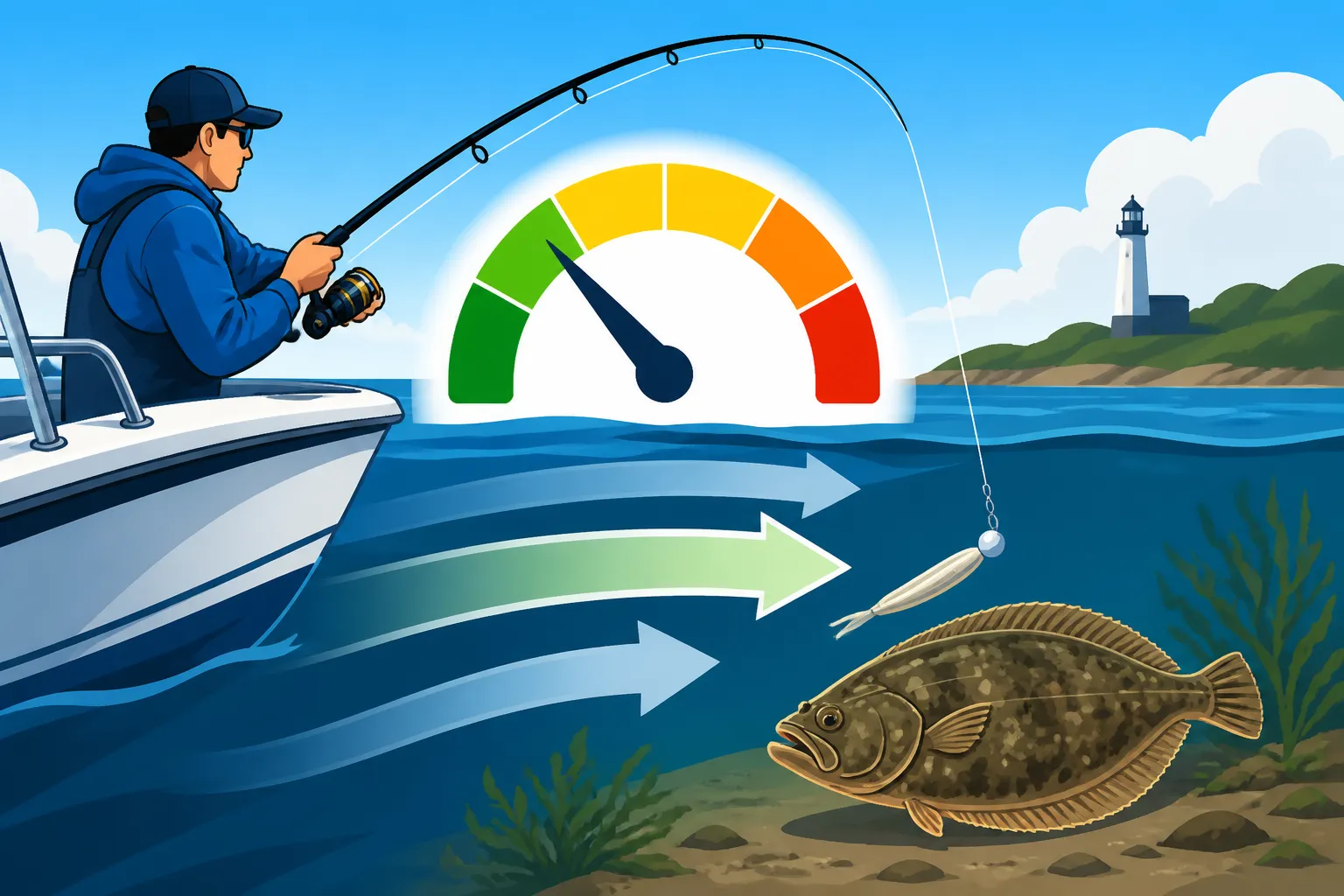
Imagine you're a fluke, nestled in the sand or gravel, peering upwards. What looks like a natural, unsuspecting meal? Something drifting gently with the current, perhaps a wounded baitfish or a succulent squid wafting past. If your bait zips by too quickly, it looks unnatural, almost like something spooked and fleeing, or it simply doesn't give the fluke enough time to react and strike. Conversely, if your bait is practically sitting still, it might not cover enough ground to encounter active fish, or it could look too stagnant to trigger that predatory instinct.
The ideal drift speed mimics the natural movement of prey in the water column, presenting your offering in a way that is both enticing and believable. It allows your bait or lure to 'swim' naturally, kicking up just enough disturbance to attract attention without appearing as a threat. Fluke have an amazing ability to sense vibrations and changes in pressure, so a bait that's moving correctly is sending all the right signals. It's about finding that rhythm where your bait hangs in the strike zone, giving the fluke ample opportunity to identify it, commit, and ambush. This is especially critical when you're targeting those larger, more wary doormats.
Factors Influencing Natural Drift Speed
Understanding the natural forces at play is paramount because they dictate how your boat, and by extension, your bait, moves across the fishing grounds. The most significant factors are wind, tide, and current, all working in concert to create the "drift."
Wind, obviously, pushes your boat. A strong wind can make your drift uncontrollably fast, especially if you have a high-sided boat that acts like a sail. This is often independent of the underlying current. The tide, on the other hand, is the horizontal movement of water caused by gravitational forces, pulling your boat and bait in a specific direction and speed. Tides can be incredibly strong in many New York areas, particularly around inlets and channels on Long Island Sound or the Great South Bay. Current is a more general term that often refers to the consistent flow of water, which can be influenced by rivers, offshore dynamics, or even localized underwater topography. Knowing the local tide charts and understanding how the wind direction and strength will interact with that tide is your first step. A wind blowing against the tide, for instance, can slow your drift down significantly, while wind and tide moving in the same direction can create a blistering pace. Even the shape and depth of the bottom structure can create localized eddies and currents that affect your precise drift over a specific spot. Your choice of boat also matters; a light center console might be pushed around more by wind than a heavier, deeper-keeled cuddy cabin.
Ideal Drift Speed Ranges for Fluke Fishing in New York
So, what's the magic number? While there's no single perfect speed for every situation, experienced fluke anglers in New York generally operate within a specific range, adjusting as conditions and fish behavior demand.
The Sweet Spot: General Guidelines
For most fluke fishing scenarios in New York, a drift speed between 0.5 to 2.0 knots is often considered the "sweet spot." This range allows your bait to cover enough ground to find active fish, yet move slowly enough to appear natural and give the fluke time to strike. Think of it as a leisurely stroll for your bait, not a sprint or a crawl.
- 0.5 to 1.0 knots: This slower end of the spectrum is fantastic when the water is colder, fluke are less aggressive, or when you're fishing areas with very dense structure where you want to keep your bait in the strike zone longer. It's also ideal when using lighter jigs or longer leader rigs where you want maximum natural presentation. If the bite is particularly finicky, a slower drift might be the key to triggering strikes. This speed also works well when you're fishing very specific, small pieces of structure.
- 1.0 to 1.5 knots: This is arguably the most common and often productive speed range. It’s versatile for a wide array of conditions and bait presentations. Your bucktails will dance, your Gulp! baits will swim tantalizingly, and live bait will move realistically. It’s fast enough to cover ground and find scattered fish, but slow enough to entice a strike from an opportunistic fluke. Many charter captains on Long Island Sound aim for this speed when the conditions allow.
- 1.5 to 2.0 knots: When the water is warmer, fluke are very active, or you're trying to cover a lot of ground quickly to locate schools of fish, picking up the pace to 1.5-2.0 knots can be highly effective. This speed can trigger reaction strikes from aggressive fluke, especially if you're using heavier bucktails or larger strips of bait that can handle the increased speed without spinning unnaturally. Sometimes, a faster retrieve or drift can provoke a chase from a competitive fluke.
It’s important to remember that this is a guideline. Your ability to consistently stay within this range, or adjust from it, is what separates consistently successful fluke anglers from those who are just along for the ride. Always be mindful of your boat's speed over ground (SOG) displayed on your GPS, as this is the true measure of your drift.
Adjusting for Conditions: Slower vs. Faster Drifts
The perfect drift speed is rarely static; it's a dynamic decision based on a host of environmental and behavioral factors. Smart anglers are constantly making micro-adjustments to optimize their presentation.
When to Lean Towards a Slower Drift (0.5 – 1.0 knots):
- Cold Water or Post-Front Conditions: Fluke, like most cold-blooded fish, become more lethargic in colder water or after a significant cold front. Their metabolism slows, and they're less likely to chase a fast-moving meal. A slower drift gives them more time to react and expend less energy for a strike. You’re practically placing the meal right in front of them.
- Picky or Heavily Pressured Fish: If you’re getting short strikes or fish are just nipping at your bait, it could be a sign they’re not fully committing. Slowing down your drift might be the answer, making the offering irresistible and easier to engulf. Heavily fished areas, like some of the popular spots along the South Shore of Long Island, often require a more subtle, slower presentation.
- Dense Structure or Rocky Bottom: When fishing over intricate wrecks, reefs, or rocky bottoms – prime fluke territory – a slower drift allows you to maintain better bottom contact and avoid snagging. It also gives your bait more time within the confines of the structure where fluke might be hunkered down.
- Using Live Bait or Delicate Presentations: Live spearing or peanut bunker benefit from a slower drift to appear as natural as possible. Similarly, if you’re using lighter jig heads with soft plastics, a slower drift helps maintain that enticing flutter and undulation without washing out the action.
- Heavy Boat Traffic: Sometimes, other boats can kick up a lot of noise and commotion. A slower, more methodical approach might be necessary to entice fish that are feeling pressured.
When to Pick Up the Pace for a Faster Drift (1.5 – 2.0+ knots):
- Warm Water and Aggressive Fish: In the peak of summer, when water temperatures are high and fluke are actively feeding, a faster drift can be incredibly productive. Aggressive fluke will readily chase down a quickly moving bait. This is often the case in open bays where baitfish are abundant and fluke are competing for food.
- Searching for Scattered Fish: If you’re on new grounds or not marking a lot of fish, a faster drift covers more territory, increasing your chances of finding scattered fluke. Once you locate them, you can always circle back and slow down.
- Strong Currents or High Wind (when unavoidable): Sometimes, Mother Nature simply won't cooperate with your ideal slow drift. If the current or wind is pushing you faster than you'd like, you might need to embrace the speed. In such cases, use heavier bucktails or larger baits that can maintain bottom contact and present naturally even at higher speeds. This is where understanding how to use larger sinkers or even a New York Recreational Marine Fishing Registry becomes handy.
- Triggering Reaction Strikes: Occasionally, a rapid presentation can provoke a strike from a fluke that might not have been actively feeding but couldn't resist a fast-moving, "fleeing" meal. This can be particularly effective with bucktails that dart and weave.
- When Using Larger, More Robust Baits: If you’re targeting trophy fluke with large whole baits or big strips, these can often handle and even benefit from a slightly faster presentation, mimicking larger prey.
Ultimately, pay attention to the feedback you're getting from your rod. If you’re constantly snagging, you’re likely too slow for the current conditions or using too heavy a weight. If you’re not feeling the bottom at all, you’re too fast or too light. The fish will tell you what they prefer through their bites – or lack thereof!
Tools and Techniques for Controlling Your Drift Speed
Controlling your drift speed isn't just about letting the wind and tide take you; it's about actively managing your boat's movement to present your bait exactly how you want it. This is where a few key tools and techniques come into play.
Using Drift Socks and Buckets
Drift socks, also known as sea anchors or drift anchors, are essential tools for any serious fluke angler in New York. These cone-shaped or parachute-like devices are designed to create drag in the water, effectively slowing down your boat's drift. They are particularly invaluable on windy days when the wind is pushing your boat faster than the underwater current.
You deploy a drift sock by tossing it off the bow or stern, depending on whether you want to slow the front or back of the boat more. For most fluke fishing, deploying it off the bow is common, as it helps keep the bow pointed into the wind or current, offering a more stable platform for fishing and allowing you to drift more directly over your desired course. You can even use two drift socks, one off each side, to "broadside" the wind and slow a very fast drift, though this makes steering more challenging. Sizes vary greatly, so make sure to choose one appropriate for your boat's length and displacement. A common mistake is using a sock that's too small, rendering it ineffective. You can find a wide variety of drift socks and related marine gear on Amazon, often with helpful reviews from other anglers.
Five-gallon buckets can also be used in a pinch as makeshift drift socks. While not as efficient or hydrodynamic as purpose-built drift socks, they still provide significant drag and can be surprisingly effective for slowing a drift, especially for smaller boats. Just tie them securely off the stern or bow, ensuring the rope is long enough to let the bucket sink and fill with water, creating maximum resistance.
Employing Your Outboard or Trolling Motor
Sometimes, a drift sock alone isn't enough, or you need to make very precise adjustments. This is where your boat's motor becomes your best friend.
- "Bumping" the Outboard: For many center console and larger boats, "bumping" the outboard is a common technique. This involves briefly engaging your main engine in forward or reverse, just enough to slightly alter your speed or direction, then putting it back into neutral. If you're drifting too fast, a quick bump into forward can slow you down. If you're drifting too slow or need to move laterally, a bump in reverse or engaging the rudder can provide that subtle adjustment. This technique requires a delicate touch; too much throttle and you'll spook the fish or send your lines flying.
- Electric Trolling Motors: For the ultimate in drift control, an electric trolling motor, especially a bow-mounted one with GPS-enabled spot-lock features, is a game-changer. Brands like Minn Kota and MotorGuide offer models that can maintain a precise speed and direction, or even hold your boat stationary against the wind and current. This allows you to drift at an incredibly consistent 0.8 knots, for example, regardless of the fluctuating natural forces. It’s like having a virtual anchor that lets you drift at a controlled pace. Many anglers also use these motors for fine-tuning their approach over specific structure, allowing them to make multiple passes at exactly the right speed. While a significant investment, the control offered by a quality trolling motor is unparalleled for finesse fluke fishing.
Anchoring and Controlled Drifts
While drift fishing typically implies continuous movement, there are times when a stationary approach or a highly controlled, very slow drift is advantageous, blurring the lines between traditional anchoring and drifting.
- Anchoring for Pinpoint Precision: In areas with very specific, small pieces of structure where fluke are concentrated, such as a rock pile or a small wreck, anchoring directly upcurrent from the spot can be incredibly effective. This allows you to drop your baits right into the strike zone and hold them there, working the same productive patch of water repeatedly. This method requires a good understanding of the current and accurate anchoring skills. You'd typically anchor, let out enough line for your boat to settle back, and then use your rod to bounce jigs or baits directly on the structure. This is a common strategy when fishing for blackfish (tautog) but can be highly successful for fluke holding tight to structure on certain tides.
- Shallow Water "Controlled Drifts" with Poles: In very shallow water, especially in expansive bays or flats, anglers can use push poles or shallow water anchors (like a Power-Pole or Talon) to create ultra-slow, controlled drifts. By intermittently deploying and retracting these poles, you can essentially "walk" your boat along the bottom at an incredibly slow pace, giving fluke ample time to ambush your presentation. This is less common for typical New York fluke fishing but can be deadly in specific shallow water scenarios. For anglers chasing fluke in less than 10 feet of water, this level of control offers an advantage you can't get with traditional drift socks.
Remember, the goal isn't just to move, but to move effectively. Combining these tools and techniques allows you to be an active participant in your drift, rather than just a passenger, greatly increasing your chances of success. Learning How to Fish for Fluke on Long Island Sound often involves mastering these precise drift control techniques.
Reading the Water and Fine-Tuning Your Approach
Mastering fluke fishing isn't just about having the right gear; it's about continuously observing, adapting, and fine-tuning your approach based on what the water and the fish are telling you.
Interpreting Your Electronics
Modern marine electronics are powerful allies in the quest for optimal drift speed and fluke location. Your fishfinder and GPS are not just for navigation; they are crucial tools for real-time situational awareness.
- GPS for Speed Over Ground (SOG): Your GPS will display your "Speed Over Ground" (SOG), which is the most critical metric for drift fishing. This tells you exactly how fast your boat is moving relative to the bottom. Keep a constant eye on this number and aim to stay within your target range (e.g., 0.8 to 1.5 knots). Don't confuse SOG with "Speed Through Water" (STW), which measures your speed relative to the water itself, and can be misleading in strong currents. The SOG on your GPS is your true drift speed.
- Fishfinders for Bottom Contact and Fluke: Your fishfinder, whether it's traditional 2D sonar, DownImaging, or SideImaging, is indispensable. You need to see the bottom. If you're drifting too fast or your weight is too light, you'll lose bottom contact, and your bait will be too high for the bottom-dwelling fluke. Adjust your weight or slow your drift until you see your jig or sinker consistently hitting the bottom. Furthermore, paying attention to what your fishfinder shows as bottom structure (gravel, sand, rocks) and marking any "bumps" or "streaks" that might indicate fluke holding tight to the bottom is crucial. Sometimes, a fluke will show up as a distinct, flat-lying arc or blob right on the seabed. If you see fish and aren't getting bites, your speed or presentation might be off. If you are struggling to understand your readings, consider learning How to Read a Fish Finder for New York Lakes.
- Charting and Waypoints: Use your chartplotter to mark successful drift lines and waypoints where you've caught fish or observed good concentrations. This allows you to re-run productive drifts with precision, ensuring you're presenting your bait over the same productive ground. Many modern units even have track lines that show your drift path, making it easy to replicate.
Bait Presentation and Weight Selection
The interaction between your drift speed, your bait, and the weight you're using is a delicate dance. Getting this balance right is key to a natural presentation that fluke can't resist.
- Matching Weight to Speed and Depth: This is perhaps the most fundamental aspect. You need just enough weight to consistently maintain bottom contact at your chosen drift speed, without being so heavy that your bait becomes lifeless or frequently snags. As a general rule, in a faster drift or deeper water, you’ll need more weight. In slower drifts or shallower water, less weight is appropriate. For instance, in a slow 0.5-knot drift in 20 feet of water, a 1-ounce bucktail might be perfect. But in a 1.5-knot drift in 40 feet, you might need 3 or 4 ounces. Experiment. If you're consistently not feeling the bottom, increase your weight. If you're feeling the bottom constantly but getting snagged, you might be too heavy or drifting too slowly over rough ground.
- Bucktails and Soft Plastics: Bucktails are phenomenal for fluke because their hair or synthetic fibers flair and pulsate on the drift, mimicking baitfish. Combining them with a strip of bait (like squid, spearing, or Berkley Gulp!) adds scent and visual appeal. The heavier the bucktail, the faster the drift it can handle while still maintaining bottom contact and a natural jigging motion. With soft plastics like grub tails or shad bodies, the action is built into the tail; a good drift speed will make these tails undulate enticingly. Don't be afraid to try different colors and sizes based on water clarity and the prevalent baitfish. Learning about What a Fluke Fish Is can give you insights into their feeding habits to inform your bait choices.
- Live Bait Rigs: If you're using live bait like snappers, spearing, or peanut bunker on a traditional three-way swivels or a sliding sinker rig, the drift speed is equally important. A natural drift allows the live bait to swim freely and realistically, attracting fluke with its distress signals and natural movement. Too fast, and the bait will struggle unnaturally or spin; too slow, and it might just hunker down. For live bait, often a slightly slower drift (0.7-1.2 knots) is preferred to maximize its natural appeal. Don't forget that on some days, the Best Time of Year to Fish in New York for fluke will be when they are most active.
Here's a quick reference table to help visualize the relationship between drift speed, depth, and suggested weight:
| Drift Speed (Knots) | Water Depth (Feet) | Suggested Bucktail/Jig Head Weight (Ounces) | Notes |
|---|---|---|---|
| 0.5 – 1.0 | 10 – 20 | 0.5 – 1.5 | Ideal for picky fish, cold water, dense structure, or delicate live bait. Maximize bottom time. |
| 0.5 – 1.0 | 20 – 40 | 1.0 – 2.5 | Still slow, but deeper water requires more weight to maintain contact. |
| 1.0 – 1.5 | 10 – 20 | 1.0 – 2.0 | Versatile range for active fluke, good for covering ground while maintaining appeal. |
| 1.0 – 1.5 | 20 – 40 | 2.0 – 4.0 | Most common productive range for many New York fluke spots. |
| 1.0 – 1.5 | 40 – 60+ | 3.0 – 6.0+ | Deeper water or stronger currents require heavier weights to stay down. |
| 1.5 – 2.0 | 10 – 20 | 1.5 – 3.0 | Good for aggressive fluke, searching new areas, or triggering reaction strikes. |
| 1.5 – 2.0 | 20 – 40 | 3.0 – 5.0+ | Requires heavier tackle to fish effectively at this speed. |
Remember, this table is a starting point. Always adjust based on local conditions, the specific bait or lure you're using, and the feedback you get from the fish. Some days, a fast drift with heavy jig might be the ticket; other days, a slow, methodical crawl with light tackle is what they want. Keep an eye on your New York Fishing Seasons Explained for optimal fluke fishing times. If you're heading out with a guide, many Long Island Fishing Charters will handle these adjustments for you, but understanding the principles will make you a better angler. You can even check out various weights and sinker styles on Amazon for your tackle box. For more in-depth knowledge, exploring Fluke Fishing on Long Island Sound provides excellent local insights.
Mastering the ideal drift speed for fluke fishing is a journey of continuous learning and adaptation. It's about blending your knowledge of fluke behavior with a keen understanding of environmental conditions and the precise application of your tackle and boat control. Don't be afraid to experiment, observe, and learn from every drift. That dedication to refinement will undoubtedly lead to more successful and satisfying days on the water, turning those "what if" moments into "fish on!" cheers.
Disclaimer
Fishing regulations and best practices can change. Always consult the latest New York State Department of Environmental Conservation (DEC) regulations before heading out on the water. This guide is for informational purposes only and should not replace official sources.