How to Fly Fish the Beaverkill River
There's nothing quite like the feeling of standing in the cool, clear waters of a storied trout stream, a gentle current swirling around your waders as you prepare to cast. But let's be honest, fly fishing, especially on a legendary river like the Beaverkill in New York, can feel incredibly intimidating for both newcomers and seasoned anglers who are new to these specific waters. You might be wondering what gear to bring, which flies to use, or even where you can legally cast a line without trespassing. This guide is here to cut through that confusion, offering practical, in-depth advice on how to confidently and successfully fly fish the beautiful Beaverkill River, making your next angling adventure truly memorable.
The Legendary Waters of the Beaverkill: A Fly Angler's Dream
The Beaverkill River isn't just another stream; it's a cornerstone of American fly fishing history, a place where legends were born and cherished traditions continue to thrive. Its name conjures images of pristine waters, challenging trout, and the serene beauty of the Catskill Mountains. But beyond the romance, there's a practical reason why this river maintains its status: it consistently offers incredible fly fishing opportunities for those willing to learn its secrets.
A Rich History and Unmatched Reputation
For over a century, the Beaverkill River has been at the heart of fly fishing in the United States. It's one of those places that serious anglers whisper about, a destination on many a bucket list. Back in the day, pioneers of American fly fishing walked these very banks, developing techniques and patterns that are still in use today. Think about it – some of the most iconic dry flies, like the Hendrickson, were first conceived and proven effective right here in the Catskills. This rich heritage isn't just a historical footnote; it imbues every cast with a sense of connection to generations of anglers who shared the same passion. The river's reputation isn't just built on history, though; it's reinforced by the healthy populations of wild brown trout and brook trout, alongside well-managed stocking programs that ensure a vibrant fishery year after year.
Why the Beaverkill Draws Anglers from Around the World
What makes the Beaverkill so special that people travel from far and wide to fish its waters? It’s a combination of factors. First, the clarity and quality of the water are exceptional, fed by mountain springs and maintaining a consistent temperature crucial for trout. Second, the diversity of the river itself – from wide, glassy pools to fast-moving riffles and intricate runs – offers a natural classroom for every fly fishing technique imaginable. You’ll find sections that demand delicate dry fly presentations and others where a heavier nymph rig is essential. It's a river that truly challenges and rewards. Beyond the fishing, the sheer beauty of the surrounding Catskill landscape provides an unparalleled backdrop, making every trip feel like a true escape into nature. If you're interested in broadening your horizons, consider Fishing the Beaverkill River beyond just fly fishing, but for purists, the fly rod is king here.
Understanding the River's Unique Character
The Beaverkill River, while undeniably famous, is also a relatively intimate stream, especially in its upper reaches. It's not a massive, sprawling waterway. This means that stealth and careful wading are often critical to success. The river flows through a mix of private and public lands, so knowing where you can legally access the water is paramount (we’ll dive into this later). Its bottom composition varies from smooth gravel to larger cobblestones, which means good wading boots with felt or studded soles are a must for safety and stability. The vegetation along the banks can be dense in places, requiring accurate casting and a bit of bushwhacking, but it also provides excellent cover for trout and fantastic insect habitat. Understanding these nuances—the river's size, its bottom, and its surroundings—is key to unlocking its secrets.
Gearing Up for Success on the Beaverkill
When heading out to fly fish the Beaverkill, having the right gear can make all the difference between a frustrating day and a truly triumphant one. While you don't need the most expensive equipment, selecting tackle that matches the river's characteristics and the fish you'll encounter is crucial.
The Right Rod, Reel, and Line for Catskills Trout
For the Beaverkill, a balanced setup is your best friend. Most anglers will find a 7-foot 6-inch to 9-foot fly rod in a 3-weight to 5-weight range to be ideal. A 4-weight, 8-foot 6-inch rod is often considered the "sweet spot" for versatility, allowing for delicate presentations of dry flies in slower pools while still having enough backbone to handle a nymph rig in faster water. Pairing this with a matching fly reel that has a smooth drag system is important, though for trout of the Beaverkill's size, a high-end drag isn't as critical as for larger, faster species.
When it comes to line, a weight-forward floating line (WF) is the standard choice. It casts well, allows for good line mending, and handles dry flies and most nymphing situations with ease. Don’t forget your leader and tippet! A 9-foot tapered leader ending in 4x, 5x, or even 6x tippet is generally recommended. The clearer the water and the more wary the fish, the finer your tippet should be. You can easily find quality fly lines, leaders, and tippet materials on platforms like Amazon, ensuring you're ready for finicky Catskills trout.
Essential Waders, Boots, and Safety Gear
Wading the Beaverkill is an integral part of the experience, but it requires appropriate gear to stay comfortable and, more importantly, safe. Breathable chest waders are essential, allowing you to move freely through the water and access prime fishing spots. Combine these with sturdy wading boots that offer excellent ankle support and grip. Felt soles are traditional and provide good traction on slippery rocks, but rubber soles with studs can offer an even more secure footing, especially on mossy or algae-covered stones. Many anglers, myself included, will often purchase their waders and boots separately to get the perfect fit and comfort combination, and Amazon offers a wide selection from various brands.
Beyond waders and boots, never underestimate the power of safety. A wading staff can be a lifesaver, providing an extra point of contact and stability in swift currents or over uncertain terrain. Polarized sunglasses are also non-negotiable; they cut glare, allowing you to spot fish and submerged obstacles, and protect your eyes from stray hooks. A brimmed hat and a good vest or pack to carry your gear, water, and snacks complete the essential safety and comfort kit.
Stocking Your Fly Box: Must-Have Patterns
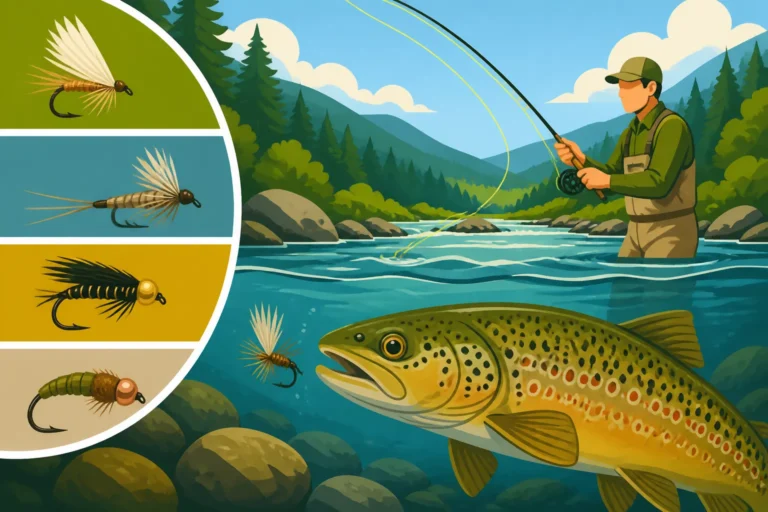
The Beaverkill is famous for its prolific insect hatches, and "matching the hatch" is often the key to success. This means having a variety of fly patterns that imitate the aquatic insects that trout are feeding on at any given time. While hatches can be unpredictable, there are several staples that should always have a place in your Beaverkill fly box.
Here's a quick guide to some must-have patterns:
| Fly Type | Recommended Patterns | Best Time of Year | Notes |
|---|---|---|---|
| Dry Flies | Hendrickson, Quill Gordon | April-May | Classic early-season emergers and adults |
| Sulphur, Blue Winged Olive | May-June, Sept-Oct | Important mid-season and fall hatches, various sizes | |
| Caddis (Elk Hair, Grannom) | April-June, Sept | Prolific hatches, fish in riffles | |
| Light Cahill, Adams | May-July | General attractors, good when specific hatch is unclear | |
| Nymphs | Pheasant Tail, Hare's Ear | Year-round | Imitate a wide range of aquatic insects |
| Stoneflies (Prince Nymph) | Year-round, especially colder water | Larger food source, good for deeper pools | |
| Caddis Larva (Peeking Caddis) | Year-round | Important during caddis hatches, various colors | |
| Streamers | Woolly Bugger (Olive, Black) | Year-round | Imitate baitfish and leeches, effective in off-hatch periods |
| Muddler Minnow | Year-round | Attractor pattern, good for aggressive fish |
Knowing Best Dry Fly Patterns for Catskills Trout is crucial, but don't just stop at dry flies. Be sure to carry various sizes of each pattern, from tiny #20s for sparse hatches to larger #12s for robust ones. Stocking up on these essential fly patterns, many of which are readily available on Amazon, will prepare you for most situations you’ll encounter on the Beaverkill.
Mastering Beaverkill Trout and Their Habits
Successfully fly fishing the Beaverkill River goes beyond just having the right gear; it requires a deep understanding of the river itself, the trout that inhabit it, and the insects they feed on. Patience, observation, and adaptability are your most valuable tools here.
Deciphering the River: Reading Water for Productive Spots
The Beaverkill is a masterclass in river dynamics. Trout hold in specific areas for very good reasons: food, cover, and comfortable currents. Learning to "read the water" means understanding where these elements converge.
- Pools: These are the slower, deeper sections. Look for seams where faster currents meet slower water, or for structure like submerged logs or rocks. Trout often cruise the edges of pools, especially during hatches, or hold in deeper pockets.
- Riffles: Faster, shallower sections with broken water. These are oxygen-rich and often productive, especially for nymphing, as the turbulent water dislodges insects, making them easy targets for trout. Look for darker patches, which indicate deeper depressions where fish might hold.
- Runs: These are typically straight sections with a moderate current. Trout will often position themselves behind current breaks (like large rocks or underwater ledges) to conserve energy while waiting for food to drift by.
- Undercut Banks and Overhanging Vegetation: These offer excellent overhead cover from predators and shade from the sun. Fish frequently lie tight to these banks, ready to dart out for a meal. Approach these areas stealthily and cast carefully.
Remember, trout are creatures of habit. If you catch a fish in a particular type of spot, chances are similar spots further up or downriver will also hold fish.
Identifying Key Hatches and Matching the Hatch
"Matching the hatch" is more than just a catchy phrase; it's a fundamental strategy on the Beaverkill. Trout can be incredibly selective, especially when a major insect hatch is underway. They'll often ignore everything else to key in on a specific size, shape, and color of insect.
The key to matching the hatch lies in observation:
- Look for activity: Are fish rising? If so, how are they rising? Gently sipping bugs off the surface suggests emergers or duns. More aggressive splashes might indicate caddis or even larger terrestrials.
- Examine the naturals: Catch one of the insects floating by. What color is it? How big? What shape? This will guide your fly selection. Turn over rocks in the streambed to see what nymphs are present.
- Consider the stage: Are the insects hatching (emergers), flying as adults (duns), or falling back to the water to lay eggs (spinners)? Each stage requires a different fly pattern.
As the season progresses, different insects become prominent. Early season might see Hendricksons and Quill Gordons, while late spring and early summer bring out the Sulphurs and various caddisflies. Later in the summer, terrestrials like ants and grasshoppers become important, and fall sees a resurgence of Blue Winged Olives. Having a diverse fly box, as discussed earlier, and knowing Best Dry Fly Patterns for Catskills Trout will equip you for these changing conditions.
Fly Fishing Techniques Tailored for the Beaverkill
The Beaverkill demands a versatile approach, and mastering a few key techniques will greatly improve your success.
- Dry Fly Presentations: This is often the most exciting way to fish. For dry flies, precision is key. You want your fly to drift naturally, without any drag (the unnatural pull on your line). This often means making upstream casts, quartering upstream, or executing specific mends to counteract conflicting currents. Focus on presenting your fly just above where you expect a fish to be holding, giving it time to drift into the feeding lane. Remember, a delicate landing is paramount on these clear waters.
- Nymphing Strategies: When fish aren't rising, they're usually feeding subsurface on nymphs and larvae. How to Nymph Fish for Trout effectively involves getting your fly down to the fish's level and maintaining a natural, drag-free drift. Indicators (small floats) help you detect subtle takes, while split shot or weighted flies ensure your nymphs get to the correct depth. High-stick nymphing, where you hold your rod tip high to minimize line on the water, is very effective for controlling your drift in complex currents.
- Streamer Fishing Tactics: While perhaps less common than dry fly or nymphing on the Beaverkill, streamers can be incredibly effective, especially for larger, more aggressive brown trout, or during periods of high water or low light. Streamers imitate baitfish or leeches. Cast them across and downstream, then strip them back in erratic movements, mimicking a fleeing or injured minnow. This technique can provoke a territorial strike even from fish that aren't actively feeding.
Experiment with these techniques. The river will tell you what the fish want on any given day. Don't be afraid to switch tactics if one isn't producing.
Navigating the Beaverkill: Access, Ethics, and Regulations
Fishing a river like the Beaverkill isn't just about casting a line; it's about respecting the resource, the landowners, and the regulations that protect this precious fishery. Being prepared with knowledge of access points and local rules is just as important as having the right fly.
Finding Public Access Points and Understanding Private Waters
The Beaverkill flows through a mix of public and private land, which can sometimes be confusing. The New York State Department of Environmental Conservation (DEC) has acquired numerous public fishing rights (PFR) easements along the river, marked by clear "Public Fishing" signs. These easements allow anglers to wade and fish within the streambed and along a designated strip of bank, even if the surrounding land is private. It's vital to respect these boundaries. If an area isn't clearly marked with a PFR sign, assume it's private and seek permission before entering.
Some popular public access points include areas around Beaverkill Campground, Barnhart Road, and specific bridge crossings. Always park in designated areas and avoid blocking private driveways or roads. A good quality map, or even satellite imagery on your phone, can help you identify PFR sections. For the full rundown on where to get your permit, check out our New York Fishing License Guide to ensure you're compliant before heading out.
Respecting the Resource: Catch and Release Ethics
While the Beaverkill offers opportunities to keep fish in some sections, many anglers, especially fly fishers, practice catch and release to help sustain the wild trout populations and improve the overall fishing experience. If you choose to release your catch, doing so ethically is paramount to the fish's survival.
Here are some best practices for catch and release:
- Minimize handling: Try to keep the fish in the water as much as possible. If you must lift it, do so gently, supporting its belly.
- Wet your hands: Always wet your hands before touching a fish to avoid removing its protective slime layer.
- Use barbless hooks: Pinching down the barb on your hooks makes removal much easier and less damaging.
- Remove hook quickly: Use forceps or a hemostat to quickly and carefully remove the hook.
- Revive the fish: If the fish seems stressed, hold it gently in the current, facing upstream, until it swims away on its own. Don't pump it back and forth; this forces water the wrong way through its gills.
- Avoid prolonged fights: Use appropriate tackle to land fish efficiently, minimizing stress.
Essential New York Fishing Regulations for the Beaverkill
Before you even cast a line, make sure you understand New York Fishing Regulations Explained thoroughly. New York State has specific regulations for trout and salmon, and the Beaverkill River often has special regulations that differ from general statewide rules. These special regulations might include specific season dates, size limits, daily creel limits (the number of fish you can keep), and even tackle restrictions (e.g., artificial lures only, fly fishing only, catch and release only).
Always consult the current New York DEC Fishing Regulations Guide or the DEC website before your trip. Regulations can change annually, and ignorance is no excuse for a violation. Pay close attention to sections marked "Special Regulations for Trout Streams" or specific to the Beaverkill River. For instance, some stretches might be "no kill" or "catch-and-release only" for certain periods. Ensuring you have the appropriate New York Fishing License Types Explained is also a fundamental responsibility. It's your responsibility as an ethical angler to know and follow these rules, protecting the Beaverkill for future generations.
Disclaimer
This article is for general informational purposes only and does not constitute professional advice. Laws, prices and regulations vary by location and change over time. Consult a qualified professional for guidance on your specific situation.