How to Match the Hatch on Catskills Streams
There's nothing quite like the serene beauty of a Catskills stream, the crisp air, the gentle ripple of the water—and nothing quite as maddening as watching trout rise all around you, actively feeding, yet completely ignoring every fly you present. It's a classic scenario many of us have faced, leaving us scratching our heads and wondering what secret handshake the fish are looking for. This guide is all about demystifying that challenge, helping you understand the art and science of "matching the hatch" so you can confidently select the right fly and turn those frustrating refusals into thrilling hook-ups on New York's iconic trout waters.
What "Matching the Hatch" Actually Means and Why It Matters in the Catskills
When you hear experienced fly anglers talk about "matching the hatch," it might sound like some arcane secret, but at its heart, it's a simple concept: presenting a fly to a fish that closely imitates the natural insects (or other food items) they are actively feeding on at that moment. It's about thinking like a trout and understanding their current menu. In the Catskills, where generations of trout have seen countless anglers and even more artificial flies, the fish can become incredibly selective. They're not just looking for any insect; they're looking for the specific insect that's drifting past them in abundance.
The Trout's Perspective: Why They're Picky Eaters
Imagine you're at a buffet, and there are a hundred identical pieces of pizza, but only one of them has exactly the toppings you crave. You're going to pick the one that matches your preference. Trout in a stream operate similarly, though their preferences are driven by survival and efficiency. When a large "hatch" of insects occurs – say, thousands of tiny Sulphur mayflies are emerging – the trout will key in on that particular food source. They'll adjust their position in the current, their feeding behavior, and their expectations to intercept these specific insects. If you throw a huge, bushy Caddisfly pattern when they're gorging on small, delicate Mayflies, it simply won't look right. It's too big, too dark, or moves incorrectly, and the trout, being smart and cautious, will ignore it.
This pickiness is especially pronounced in highly pressured waters, which many popular Catskills streams can be, particularly during prime hatch times. The fish learn quickly. A poorly presented or incorrect fly isn't just ignored; it can spook the fish, making them even warier. Understanding this fundamental concept is the first step toward success. It's not about tricking the fish with something completely new; it's about fooling them into thinking your artificial is just another one of the thousands of naturals they're already expecting.
Beyond Just Size and Color: Presentation, Drift, and Life Cycle
"Matching the hatch" goes deeper than just picking a fly that's the same size and color as the natural. While those are critical starting points, they're only part of the equation. Think about how a real insect behaves on the water. Is it struggling to emerge, sitting perfectly still, or fluttering frantically? Each of these behaviors, or "life cycle stages," requires a different type of fly pattern and a specific presentation.
For instance, a Mayfly goes through several stages: nymph (underwater), emerger (struggling to break the surface), dun (floating on the surface to dry its wings), and spinner (returning to the water to lay eggs). If trout are feeding on emergers, a perfectly dry dun pattern might be ignored because it doesn't represent what they're seeing. Similarly, the "drift" of your fly is paramount. A natural insect floats downstream at the exact speed of the current, without drag or unnatural movements. Your artificial fly needs to do the same. Even the most perfect fly pattern, if dragged unnaturally across the surface by your line, will be rejected. This is why learning to How to Fly Fish in New York effectively, including managing your line for a drag-free drift, is just as important as selecting the right fly.
Becoming a Streamside Detective: Identifying the Insects
The true art of matching the hatch begins before you even tie on a fly. It starts with keen observation and a bit of detective work. The Catskills are teeming with aquatic life, and understanding what the trout are focused on requires a sharp eye and sometimes, a little hands-on investigation. You can't match something you haven't identified!
On-Water Observation: Looking for Rising Fish and Insect Activity
When you first approach a Catskills stream, take a moment. Don't just cast blindly. Look at the water, and listen. Are there any fish rising? If so, observe their rise forms. A gentle "sip" or a bulging rise just under the surface suggests they're taking emergers or duns delicately. A more aggressive splash might indicate they're chasing skittering Caddisflies or even larger prey. Watch the surface of the water for natural insects. Are there small, sail-winged bugs floating downstream? These are likely Mayfly duns. Are there larger, moth-like insects fluttering haphazardly? That sounds like a Caddisfly hatch. You might also see tiny, darker insects clustered on the water, signaling a Trico hatch, which can drive trout into a frenzy of delicate feeding.
Pay attention to the time of day and the weather conditions. Different insects hatch at different times and under various atmospheric pressures. A warm, cloudy afternoon might bring out a robust Mayfly hatch, while a cooler evening could trigger a Caddisfly emergence. By combining observations of the trout's feeding behavior with the presence of natural insects, you start to build a picture of what's on the menu.
Netting and Examining Naturals: Getting Up Close and Personal
Sometimes, visual identification isn't enough, especially when insects are small or hatches are sparse. This is where a small, fine-mesh seine net or even a simple piece of white cloth can be invaluable. Sweep the net through the water just downstream of a rising fish or where you see insect activity, then bring it ashore and examine the contents. What's clinging to the mesh? What size are they? What color? Note the number of wings, the antennae, and the tail filaments.
If you don't have a net, simply scoop some water with your hand or cup, or gently pick up a struggling insect from the surface. A small, clear container or a magnifying glass (many fly boxes even come with one!) can help you examine the details. Compare what you see to the flies in your box. Is it a size 16 Mayfly with olive-green body and gray wings? Or a size 14 tan Caddisfly? This direct comparison is the fastest way to confirm your suspicions and get you closer to the perfect match. A well-stocked fly box with an array of sizes and colors, easily organized, like those you can find on Amazon, will make this step much more efficient.
Understanding Aquatic Insect Life Cycles: Mayflies, Caddisflies, and Stoneflies
To truly match the hatch, a basic understanding of the predominant aquatic insects in the Catskills is essential. The "Big Three" you'll encounter most often are Mayflies, Caddisflies, and Stoneflies, each with distinct characteristics and life cycles that dictate how trout feed on them.
-
Mayflies: These are the most iconic insects for fly anglers, known for their upright, sail-like wings and two or three tails. Their life cycle includes an aquatic nymph stage, an emerger stage where they ascend to the surface, a "dun" stage where they float on the surface to dry their wings, and a "spinner" stage when they return to lay eggs. Trout can feed on any of these stages, but often become highly selective during the dun or emerger phases. Common Catskills Mayflies include Sulphurs, Blue-Winged Olives (BWOs), Hendrickson's, and Green Drakes. Knowing New York Fishing Season Dates and Catch Limits for specific trout species can also clue you into when certain hatches are more likely to occur.
-
Caddisflies: Often mistaken for moths due to their tent-shaped wings and more erratic flight, Caddisflies are another huge food source. Unlike Mayflies, many Caddisflies quickly emerge from the water and fly off, or skitter across the surface. This means trout often key in on the pupal (emerger) stage just under the surface, or the adult stage as it struggles or deposits eggs. Their larvae often build cases out of pebbles or twigs. Common Catskills Caddisflies include the Grannom, Light Cahill, and Tan Caddis.
-
Stoneflies: These are generally larger insects, characterized by two pairs of wings that lie flat over their backs and two long tails. They are powerful crawlers as nymphs and typically emerge by crawling out of the water onto rocks or stream banks, rather than hatching in the open water. Trout will primarily feed on Stonefly nymphs, especially during higher flows or when the nymphs are dislodged from the streambed. Big, dark Stonefly nymphs are excellent searching patterns when no hatch is evident.
By learning to differentiate between these groups and recognizing their different life stages, you're well on your way to selecting the most effective fly.
| Insect Group | Common Catskills Species | Key Characteristics (Adult) | Typical Sizes | Common Fly Patterns | Trout Feeding Behavior |
|---|---|---|---|---|---|
| Mayflies | Sulphur, BWO, Hendrickson | Upright "sail" wings, 2-3 tails | #12 – #20 | Adams, Parachute Sulphur, Pheasant Tail | Gentle sips, slow rises, often selective |
| Caddisflies | Grannom, Light Cahill, Tan Caddis | Tent-shaped wings, shorter body | #10 – #18 | Elk Hair Caddis, CDC Caddis, LaFontaine Emerger | Splashy rises, aggressive takes, skittering |
| Stoneflies | Little Black Stonefly, Golden Stonefly | Flat wings, large, 2 tails | #6 – #14 | Stimulator, Stonefly Nymph, Girdle Bug | Primarily subsurface takes on nymphs, less common surface feeding |
Cracking the Code: Choosing the Right Fly
Once you've done your detective work and identified the natural insects, the next step is to choose the fly that best imitates them. This is where your fly box becomes your arsenal, and knowing the purpose of different fly types is key.
Dry Flies: Mimicking Adults on the Surface
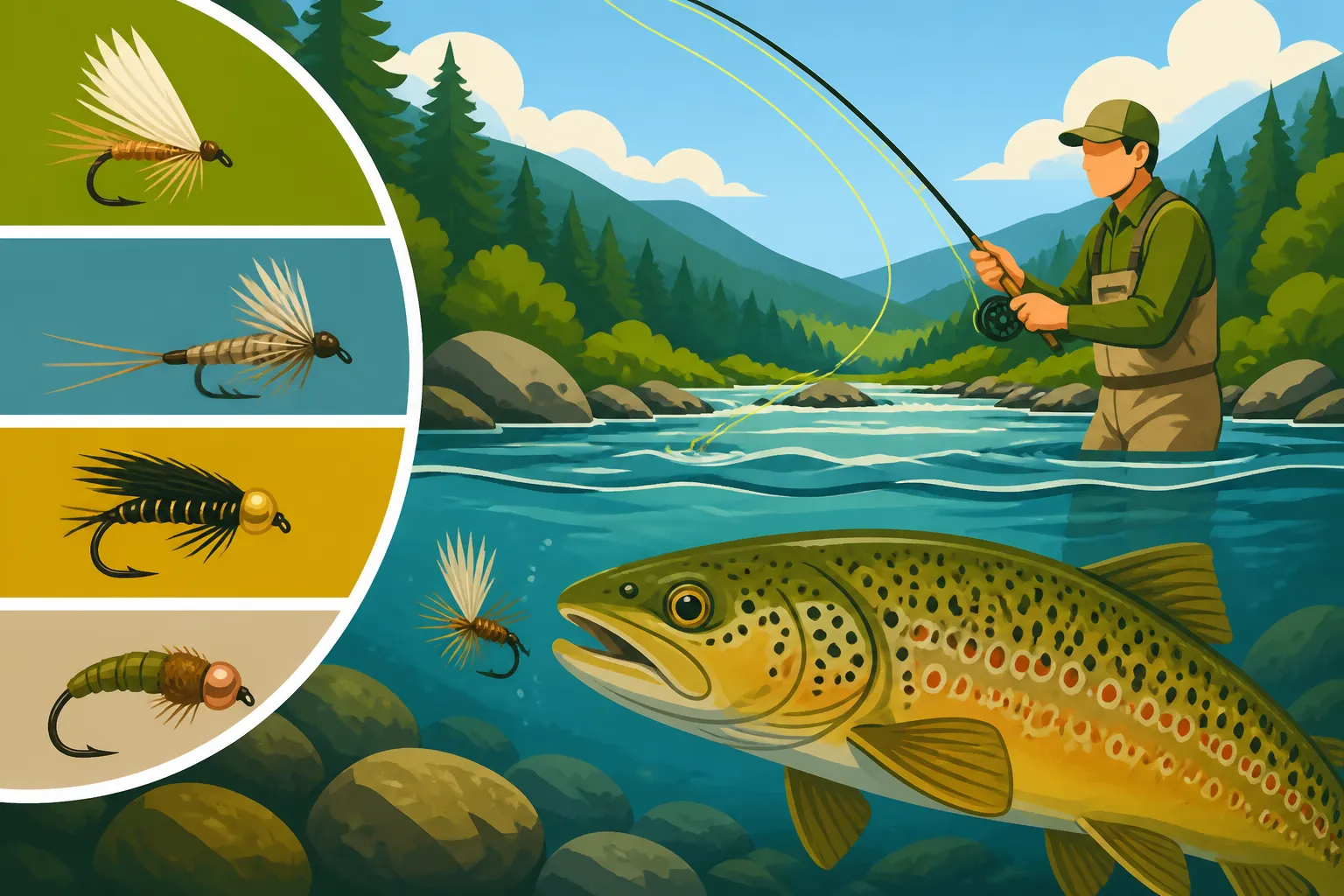
Dry flies are perhaps the most romantic aspect of fly fishing – seeing a trout rise and take your perfectly presented imitation off the surface. These flies are designed to float and primarily imitate the "dun" (sub-imago) stage of Mayflies or the adult stage of Caddisflies that are either resting on the water, skittering, or laying eggs. When trout are clearly rising and taking insects from the surface, a dry fly is your go-to.
When selecting a dry fly, focus on matching the size, color, and general profile of the natural. If you see tiny, olive-bodied Mayflies with upright gray wings, a small fly like a Parachute Adams or a Blue-Winged Olive pattern in a similar size (say, a #18 or #20) would be a good starting point. For Caddisflies, which often skitter, a bushy Elk Hair Caddis can be very effective. Remember that presentation is just as vital as the fly itself; a drag-free drift is paramount to convince a trout your dry fly is the real deal. Otherwise, the fish will often refuse it, even if it's the perfect match.
Nymphs and Emergers: The Often-Overlooked Stages
Here's a secret that isn't really a secret among seasoned anglers: trout feed subsurface far more often than they do on the surface. Nymphs (the aquatic larval stage of Mayflies, Caddisflies, and Stoneflies) and emergers (the stage where insects are rising through the water column to hatch) represent a massive percentage of a trout's diet. If you're not seeing active rises, or if you're seeing "subsurface bulges" where fish are feeding just below the surface, it's time to go subsurface.
Choosing a nymph or emerger requires careful consideration of the natural insect's size, shape, and color. For Mayfly nymphs, patterns like the Pheasant Tail or Hare's Ear are incredibly versatile. For Caddis emergers, a LaFontaine Emerger or a CDC Caddis Pupae can be deadly. These flies often need to be fished with a technique called "nymphing," which involves using indicators or specialized rigs to get the fly down to the fish's feeding zone and ensure a natural drift. Learning How to Nymph Fish for Trout effectively will dramatically increase your success rate, especially when the hatch isn't fully on or when trout are simply not looking up. Don't be afraid to experiment with different weights and sizes, as a subtle difference in sink rate can make all the difference.
When the Hatch Isn't On: Streamers and Attractors
What happens when there's no apparent hatch, no visible insects, and no rising fish? This is a common scenario, especially early or late in the day, during off-seasons, or when conditions like high water obscure insect activity. In these situations, you shift from "matching the hatch" to "matching the general food source" or simply trying to provoke a strike. This is where streamers and attractor patterns shine.
Streamers, which imitate baitfish, sculpins, or even large aquatic invertebrates, can elicit aggressive strikes from larger trout. Patterns like Woolly Buggers, Sculpzillas, or Zonkers are excellent choices for probing deeper runs, undercut banks, and fallen log jams where bigger fish often hide. They appeal to the predatory nature of trout. Attractor patterns, on the other hand, don't necessarily imitate any specific natural but use bright colors, flashy materials, or an exaggerated profile to grab a fish's attention. Think about a Stimulator, Royal Wulff, or a Copper John. While not strictly "matching the hatch," they match a trout's instinct for an easy meal and can be surprisingly effective when the fish aren't selective. Sometimes, the goal isn't perfect imitation, but simply getting the fish to react.
Practical Tips for Catskills Success
Fly fishing the Catskills is a journey of continuous learning, but there are some foundational practices that will give you an edge, especially when trying to match the hatch. It’s about being prepared, persistent, and open to local wisdom.
Essential Gear for Hatch Matching
Having the right tools in your vest can make all the difference when those elusive Catskills trout demand a precise match. Beyond your rod, reel, and line, a few specialized items are key:
- A Magnifying Glass: As mentioned earlier, a small jeweler's loupe or a compact magnifying glass integrated into your fly box is invaluable for examining tiny naturals. Some anglers even carry a small, clear vial to observe captured insects without them escaping. You can find excellent, compact options easily on Amazon.
- A Seine Net or Scoop: A small, fine-mesh net is perfect for collecting insects from the drift. If you don't have one, even a white plastic cup or a small piece of mesh screen can serve the purpose.
- A Wide Assortment of Flies: This is non-negotiable for hatch matching. You need variations in size (from tiny #22s up to larger #8s), color (olive, tan, gray, black, brown, cream), and style (dry, emerger, nymph, spinner). Organize your fly boxes meticulously by type and size so you can quickly find what you need when the fish are rising. Companies like Orvis offer excellent, well-designed fly boxes that are easy to manage streamside, and many diverse fly assortments are available on Amazon to get you started.
- Fly Floatant and Desiccant: For dry flies, floatant is crucial to keep them riding high. Desiccant powders help dry out waterlogged flies quickly, getting them back in action.
- Forceps or Hemostats: For safely removing hooks, especially from smaller fish, and for delicate fly changes.
- Good Polarized Sunglasses: These cut glare, allowing you to see insects on the water's surface, fish rising, and even fish in the water, which is incredibly helpful for observation.
Patience and Persistence: It's Not Always Instant
Matching the hatch is rarely an instant success story. There will be times when you think you have it perfect, only for the fish to remain stubbornly uninterested. This is where patience and persistence become your greatest virtues. Don't get discouraged. Instead, use each refusal as a clue.
If trout are rising consistently but ignoring your fly, ask yourself:
- Is the size right? Go a size smaller or larger.
- Is the color right? Is it more olive, more tan, or a different shade of gray?
- Is the presentation flawless? Is there any drag? Is it landing softly?
- Am I fishing the right life cycle stage? Are they taking emergers instead of duns? Or vice-versa?
Sometimes, a subtle change, like switching from a standard dry fly to a parachute pattern of the same size and color, can make all the difference due to its lower profile and softer landing. Keep observing, keep adjusting, and keep casting with purpose. Remember, trout fishing, especially in the Catskills, is as much about the process and the challenge as it is about the catch. The satisfaction of finally cracking the code and hooking a fish on a perfectly matched and presented fly is unparalleled.
Local Knowledge and Resources: Fly Shops and Guides
One of the absolute best resources for understanding current hatches and effective patterns in the Catskills are the local fly shops and experienced guides. These folks are on the water constantly and have their finger on the pulse of what's happening. Before heading out, especially if you're unfamiliar with a particular stream or haven't fished it in a while, stop by a local shop.
They can tell you:
- What major hatches are occurring or are expected.
- What specific fly patterns are working best (and they'll likely have them in stock!).
- Current water conditions (temperature, flow, clarity).
- Any special regulations or areas to focus on.
Hiring a local guide, even for a single day, can also be an incredible investment. They can quickly teach you the nuances of reading the water, identifying insects, and presenting flies specific to a particular stretch of the Beaverkill River or Willowemoc Creek. They often have insights that only come from years of fishing these specific waters. While you might know New York Freshwater Fishing Rules generally, a local expert can fine-tune your approach for specific conditions and locations. They can help you connect the dots between the aquatic insect life and your fly selection faster than you could on your own, significantly accelerating your learning curve.
Ultimately, mastering the art of matching the hatch in the Catskills is an ongoing adventure. It combines scientific observation with artistic presentation, and a good dose of patience. But when you finally fool that wary trout, it's a moment you won't soon forget, and it's what keeps us coming back to these beautiful, challenging waters.
Disclaimer
This article is for general informational purposes only and does not constitute professional advice. Laws, prices and regulations vary by location and change over time. Consult a qualified professional for guidance on your specific situation.