How to Fish a Drop Shot for Steelhead
It's incredibly frustrating when you're out on the water, you know the steelhead are there, but they just won't commit. They're notoriously finicky, often just nudging a bait or inspecting it before drifting off. This guide is all about equipping you with the knowledge and techniques to effectively fish a drop shot rig for steelhead, giving you a distinct advantage when these beautiful, hard-fighting fish are playing hard to get in New York's challenging waters.
Understanding the Drop Shot Rig for Steelhead
When it comes to outsmarting wary steelhead, having a versatile and subtle presentation is paramount. The drop shot rig, while often associated with bass fishing, has proven itself to be an absolute game-changer for steelhead anglers in New York's Great Lakes tributaries and beyond. It's not just another rig; it's a strategic advantage that allows your bait to dance tantalizingly right in the strike zone, suspended perfectly off the bottom.
Why Drop Shotting Shines for Finicky Steelhead
Steelhead in our rivers, especially during periods of low, clear water or heavy fishing pressure, can be incredibly difficult to entice. They become hyper-aware, inspecting every drift and often refusing anything that looks unnatural. This is where the drop shot rig truly excels. Unlike a traditional jig or egg sac setup that drags along the bottom, the drop shot suspends your bait a precise distance above the riverbed. This allows your offering to move naturally with the current, uninhibited by the weight, which remains firmly on the bottom.
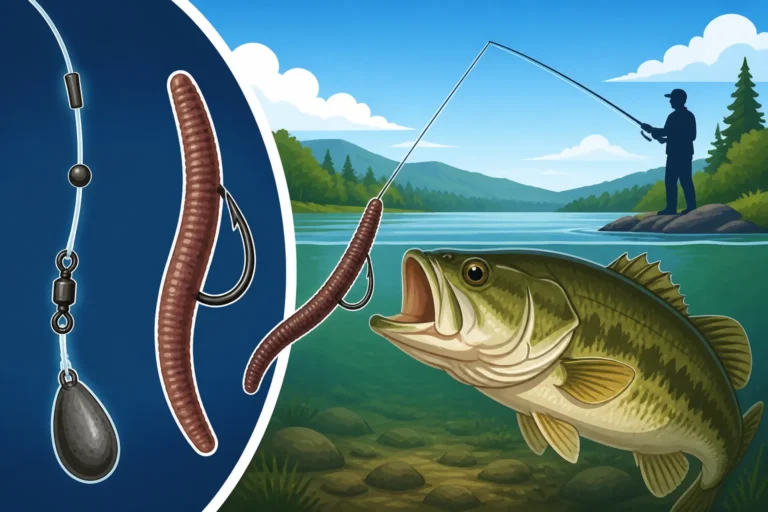
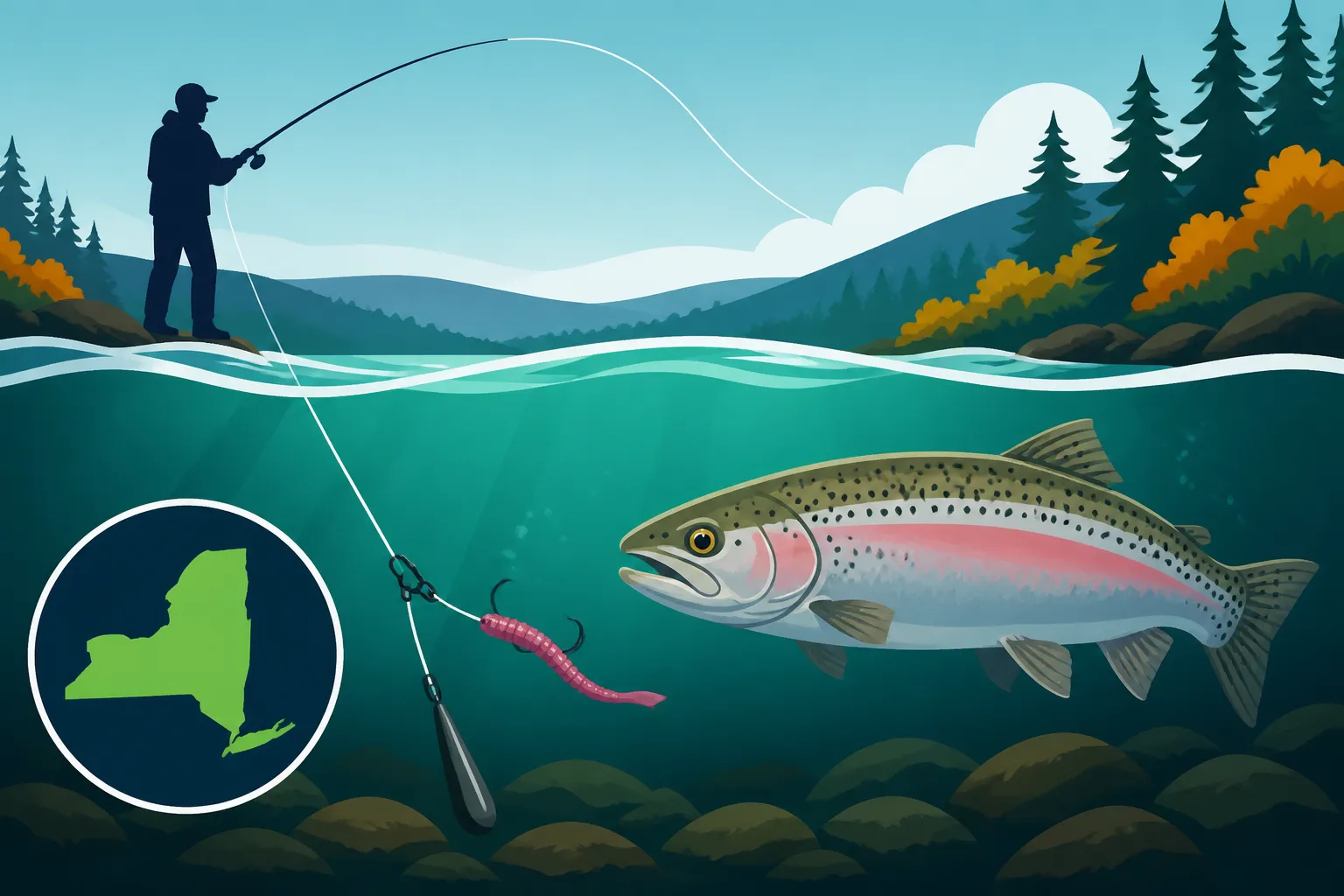
Imagine a perfect egg sac, a delicate worm, or a small soft plastic bait fluttering just off the gravel, perfectly presented to a steelhead holding in a current seam or behind a boulder. The weight maintains bottom contact, transmitting every subtle tap and current change right up your line, enhancing sensitivity dramatically. Meanwhile, your bait can quiver and pulse with the slightest rod tip movement or current flow, mimicking natural forage. This natural, suspended presentation is often the key to triggering strikes from steelhead that have seen every other trick in the book. It’s particularly effective when these fish are holding tight to cover, reluctant to move far for a meal.
Essential Components of a Steelhead Drop Shot Rig
To build an effective drop shot rig for steelhead, you need to pay close attention to each component. The beauty is in the balance and sensitivity of the system.
- Rod and Reel: A light to medium-light spinning rod, typically 7 to 9 feet in length, is ideal. Look for a fast action tip that allows for excellent sensitivity to detect those subtle steelhead bites, but with enough backbone to fight powerful fish in current. Popular choices often fall into the 8' to 9' range, helping with longer casts and better line control for improved drifts. Pair this with a high-quality spinning reel in the 2500-3000 series, spooled with 10-15 lb braided mainline. The braid offers superior sensitivity and casting distance, crucial for covering water on wider rivers like the Salmon River.
- Mainline and Leader: While braid is your mainline, you'll need a fluorocarbon leader for stealth and abrasion resistance. A 6 to 10 lb fluorocarbon leader, usually 4 to 8 feet long, is a good starting point. Fluorocarbon is nearly invisible underwater, a massive advantage in clear water conditions often found in tributaries. You can find excellent spools of fluorocarbon leader material on Amazon from brands like Seaguar or Berkley, ensuring you're well-stocked. The length of your leader will depend on water clarity and depth – longer for clearer, deeper water.
- Drop Shot Hooks: Specialized drop shot hooks are critical. These are typically wide-gap, fine-wire hooks designed to hold soft plastics securely and keep them horizontal. Sizes #4 to #1 are common, depending on the size of your bait. Gamakatsu and Owner are popular choices. The goal is a hook that is strong enough to handle a powerful steelhead but light enough not to impede the natural movement of your bait.
- Drop Shot Weights: The weight is perhaps the most defining feature of this rig. Drop shot weights are designed with a swivel at the top and a line clip, allowing you to quickly adjust the depth of your bait without retying. They come in various shapes (pencil, round, tear-drop) and weights (1/8 oz to 1/2 oz or more). Tungsten weights are increasingly popular due to their smaller profile and increased sensitivity compared to lead, though they are pricier. For New York's rivers, having a selection of 1/4 oz to 3/8 oz weights will cover most scenarios, allowing you to adapt to varying current speeds and depths.
Setting Up Your Drop Shot Rig Step-by-Step
Setting up a drop shot rig properly is key to its effectiveness. It’s not overly complicated, but precision in your knots and understanding how to adjust your leader length will dramatically increase your success rate. A properly tied and adjusted rig ensures your bait is presented perfectly and gives you maximum sensitivity to detect even the slightest strike.
Knot Tying for Success: Palomar and Snell Knots
The two primary knots you'll need for a steelhead drop shot rig are the Palomar knot and, optionally, the Snell knot.
- Connecting Braid to Fluorocarbon Leader: Start by attaching your fluorocarbon leader to your braided mainline. A strong, compact knot like the FG knot or the Alberto knot is highly recommended here. These knots pass smoothly through rod guides and maintain high breaking strength, which is vital when fighting strong steelhead. If those are too complex, a double uni knot can work, though it's bulkier.
- Tying the Hook (Palomar Knot): The Palomar knot is a favorite for drop shotting because it’s incredibly strong and allows the hook to stand out perpendicularly from the leader, which is crucial for optimal bait presentation.
- Start by doubling your leader line and passing the loop through the eye of the hook.
- Tie a simple overhand knot, ensuring the hook hangs freely.
- Pass the loop back over the hook.
- Moisten the line and pull both ends of the leader (the tag end and the main line) simultaneously to tighten the knot securely.
- Now, here's the critical part: leave a long tag end after tying the Palomar knot. This tag end will become the section where you attach your drop shot weight. Don't trim it short! This tag end is what suspends your hook at the desired distance above the weight.
- For an even better presentation where the hook stands out more, some anglers prefer to tie a Snell knot. The Snell knot is often used with octopus-style hooks and helps the hook ride in line with the leader, potentially leading to better hookups with subtle bites. If you opt for a Snell knot, you'll still need to leave a long tag end to attach your weight.
Leader Length and Weight Selection for Different Conditions
This is where the drop shot rig’s adaptability truly shines. The length of your tag end (the leader extending below the hook) dictates how far your bait is off the bottom.
- Adjusting Leader Length: In most situations, you’ll want your bait suspended 12 to 24 inches off the bottom. If steelhead are hugging the riverbed due to strong currents or cold water, keep your tag end shorter, perhaps 6 to 12 inches. If they're slightly elevated, or you're fishing over snags and want to keep your bait clear, extend it to 24 inches or even more. The beauty of drop shot weights with a line clip is that you can adjust this length on the fly without retying. Just slide the weight up or down the tag end. This adjustability is invaluable when exploring different holding lies and trying to dial in the perfect presentation.
- Weight Selection: Your weight choice depends primarily on current speed and depth.
- Light Weights (1/8 oz – 1/4 oz): Use these in slower, shallower runs or when the current is mild. They allow for a more natural, subtle drift.
- Medium Weights (1/4 oz – 3/8 oz): These are your workhorses for most moderate currents and depths common in New York's steelhead rivers. They provide good bottom contact and stability.
- Heavy Weights (1/2 oz +): Reserve these for heavy currents, deep pools, or when you need to quickly get your bait down in fast-moving water. The key is to use the lightest weight possible that still allows you to maintain consistent bottom contact and feel the subtle bumps of the riverbed without your rig being swept away too quickly. Having a variety on hand, easily purchased from retailers like Amazon, will ensure you're prepared for any conditions.
Mastering Drop Shot Presentation for New York Steelhead
Once your rig is tied, the real art begins: presenting it effectively to New York's steelhead. This isn't about aggressive retrieves; it's about subtle finesse, letting the current do most of the work, and enticing those often-stubborn fish into striking.
Reading the Water and Targeting Holding Lies
To effectively drop shot for steelhead, you need to understand where these fish hold. Steelhead will often position themselves in areas where they can expend minimal energy while waiting for food to drift by. This means targeting current seams, eddy lines, behind large rocks or logs, and in deeper pockets or runs.
On rivers like the Salmon River or the Oswego River, look for changes in current speed and depth. A drop-off, a slower current lane next to a faster one, or the tail end of a deep pool can be prime holding lies. Your goal is to cast upstream and slightly across the current, allowing your weight to sink and make contact with the bottom. Then, let your rig drift naturally downstream, using your rod tip to maintain a slight bow in your line. This helps you feel the weight ticking along the bottom and detect subtle bites. If you feel anything unusual—a sudden stop, a heavy feeling, or a quick tap—set the hook! Steelhead strikes can be incredibly light, especially in cold water. Don't be afraid to cast to the same spot multiple times, fanning your casts to cover the entire area, as steelhead often hold in tight schools or specific zones.
Subtle Movements for Maximum Appeal
The beauty of the drop shot is that your bait is suspended, so you don't need exaggerated movements. In fact, less is often more.
- Minimal Rod Tip Movement: Once your weight is on the bottom and drifting, occasionally give your rod tip a subtle twitch or shake. This imparts a lifelike quiver to your suspended bait without moving the weight too far off the bottom. Think of it as making your egg sac "dance" or your worm "twitch."
- Controlling the Drift: The current is your friend. Let it do most of the work. Your job is to manage your line, reeling in just enough slack to maintain tension and feel the bottom, but not so much that you're pulling your weight and bait unnaturally. This delicate balance is key to a natural presentation.
- Vertical Jigging (Optional): In deeper pools or when fishing from a boat, you can experiment with a more vertical presentation, gently lifting and dropping your rod tip a few inches. This makes your bait rise and fall, mimicking a dying insect or a struggling minnow. However, for most river fishing, a natural horizontal drift is more productive. Remember, steelhead often respond to subtle, almost imperceptible movements. It’s about being patient and letting the rig present the bait in the most natural way possible.
Bait Choices that Entice Steelhead
While the drop shot rig itself is a versatile tool, pairing it with the right bait is crucial for success. Steelhead have varied diets depending on the season and what's available in the river.
- Egg Imitations: Soft plastic egg clusters or single eggs are perennial favorites for steelhead, especially during the fall and spring spawning runs of other salmonids. Colors like chartreuse, orange, pink, and natural "trout egg" blends are highly effective. Companies like FishUSA and Lunker City make excellent egg patterns that rig perfectly on a drop shot hook.
- Worms and Larvae: Small plastic worms, particularly those with a thin, natural profile, can be deadly. Waxworms, mealworms, or bloodworm imitations in natural browns, reds, or even translucent colors can tempt wary fish. These baits offer a subtle, wriggling action that steelhead find hard to resist.
- Small Minnow Imitations: Tiny soft plastic swimbaits or minnow shapes, usually 1-3 inches long, can mimic natural forage fish. These work well in clearer water or when steelhead are actively feeding on baitfish. Natural silver, olive, or pearl colors are good choices.
- Scent and Attractants: Don't underestimate the power of scent. Applying a quality fish attractant to your soft plastics can make a significant difference, especially on slow days. Popular scents like garlic, anisse, or pro-cure egg juice can mask human odors and encourage fish to hold onto the bait longer, giving you more time to set the hook. This is especially true for our New York steelhead, who have a keen sense of smell.
Common Mistakes and How to Avoid Them
Even with the best gear and knowledge, making mistakes is part of the learning process. But by being aware of common drop shot pitfalls, you can drastically improve your steelhead fishing success.
Over-Fishing a Spot and When to Move On
It’s easy to get fixated on a promising-looking run or pool, especially if you've seen fish there or had a bump. However, one of the biggest mistakes anglers make, particularly with a finesse technique like drop shotting, is over-fishing a single spot. Steelhead are often transient, and while they might hold in an area, they can quickly move or become spooked.
- The "Rule of Five Casts": A good rule of thumb is to make about five to ten well-placed casts through a promising section. If you haven't had any interest, it's often more productive to move a short distance, even just 20-30 feet, and try a new angle or a different pocket of water. Steelhead might be holding slightly upstream, downstream, or in a different current seam than you initially thought.
- Don't Pressure the Fish: Continuously casting to the same exact spot after a refusal can put fish down. If you get a bump but no hookup, try letting the area rest for a few minutes or switch to a slightly different bait color or size before re-approaching. Sometimes, a subtle change in your How to Rig an Egg Sac for Steelhead Fishing or your Best Lures for Chinook Salmon (if you're also targeting these) can make a difference.
- Cover Water Effectively: The drop shot is excellent for systematically picking apart water. Don't just cast straight out. Fan your casts, covering areas closer to shore, mid-river, and further out, exploring different depths and current speeds within a run. Moving and covering water will always increase your chances of finding actively feeding fish.
Adapting to Changing River Conditions
New York's rivers are dynamic environments. Water levels, clarity, and temperature can change rapidly due to weather or dam releases, and these changes directly impact steelhead behavior and how you should fish your drop shot.
- Water Clarity:
- Clear Water: In low, clear conditions, stealth is paramount. Use lighter fluorocarbon leaders (6-8 lb), smaller hooks, and natural-colored baits. Lengthen your leader below the hook to create a more natural drift. Cast further upstream to avoid spooking fish. This is often the case during the Fall Steelhead Run Timing in New York.
- Stained or Off-Color Water: When the water has some color, steelhead become less spooky. You can often get away with slightly heavier leaders (8-10 lb) and brighter, more visible baits like chartreuse, pink, or orange. Consider shortening the leader below the hook slightly, as visibility is reduced, and fish might not see your bait from as far away.
- Water Temperature: Steelhead are cold-blooded, and their metabolism is directly affected by water temperature.
- Cold Water (below 40°F): Fish become sluggish. Slow your retrieves, use smaller baits, and ensure your presentation is extremely subtle. Fish them slowly and thoroughly. Pay attention to Best Water Temperature for Steelhead Fishing.
- Moderate Water (40-55°F): This is often prime steelhead territory. Fish are more active, and you can experiment with a wider range of baits and presentations.
- Current Speed:
- Fast Current: Increase your drop shot weight to maintain bottom contact (e.g., 3/8 oz or 1/2 oz). Shorten the tag end below the hook to prevent the bait from swinging too wildly. Cast slightly more upstream to allow the weight to sink and grab the bottom before it reaches the target zone.
- Slow Current: You can use lighter weights (1/8 oz or 1/4 oz) to allow for a more subtle, slower drift. Lengthen the tag end below the hook to give your bait more action and hang time in the water column. The ability to quickly change your weight by simply clipping it on and off your leader is one of the distinct advantages of the drop shot rig. Knowing New York Fishing Regulations Explained is also crucial for adapting your approach legally.
| Feature | Pros of Drop Shot for Steelhead | Cons of Drop Shot for Steelhead |
|---|---|---|
| Presentation | Extremely natural, suspended bait presentation. Ideal for finicky fish. Keeps bait off snaggy bottom. | Can be less effective in very fast, turbulent water where bait gets washed out quickly. |
| Sensitivity | Excellent bottom contact and bite detection. Weight transmits vibrations directly to rod. | Requires a sensitive rod and good line management to maximize feel. |
| Adaptability | Easily adjustable bait depth by sliding weight. Versatile for various baits and conditions. | Knot tying (Palomar) takes practice to get the hook to stand out correctly. |
| Hook-up Ratio | Hook stands proud, often leading to solid hook-ups in the upper jaw. | Can result in missed strikes if fish only "peck" at the bait without fully committing. |
| Snag Resistance | Weight on the bottom is often sacrificial and easily replaced, saving hooks and leaders. | Weights can get snagged, requiring re-tying, though usually just the weight and not the entire rig. |
| Learning Curve | Relatively easy to learn the basic setup and presentation. | Mastering subtle twitches and drifts requires practice and river knowledge. |
By understanding these nuances, from choosing your Best Time to Fish for Steelhead on New York's Lake Ontario Tributaries to selecting the right leader, you'll be well on your way to more consistent steelhead success with the drop shot rig. Whether you're fishing with Steelhead Guides on Lake Ontario Tributaries or exploring on your own, this technique can elevate your game. If you're keen to learn more about specific locations, check out our guide on New York's Salmon River Fishing Guide or New York's Oswego River Fishing Guide, where drop shotting is a highly effective technique.
Disclaimer
Fishing involves inherent risks. Always prioritize safety, wear appropriate personal flotation devices, and be aware of changing weather and water conditions. Consult the latest New York State Department of Environmental Conservation (DEC) regulations before fishing, as rules and limits can change seasonally and by water body. This guide is for informational purposes only and does not substitute for professional advice or current official regulations.