How to Fish Docks for Bass
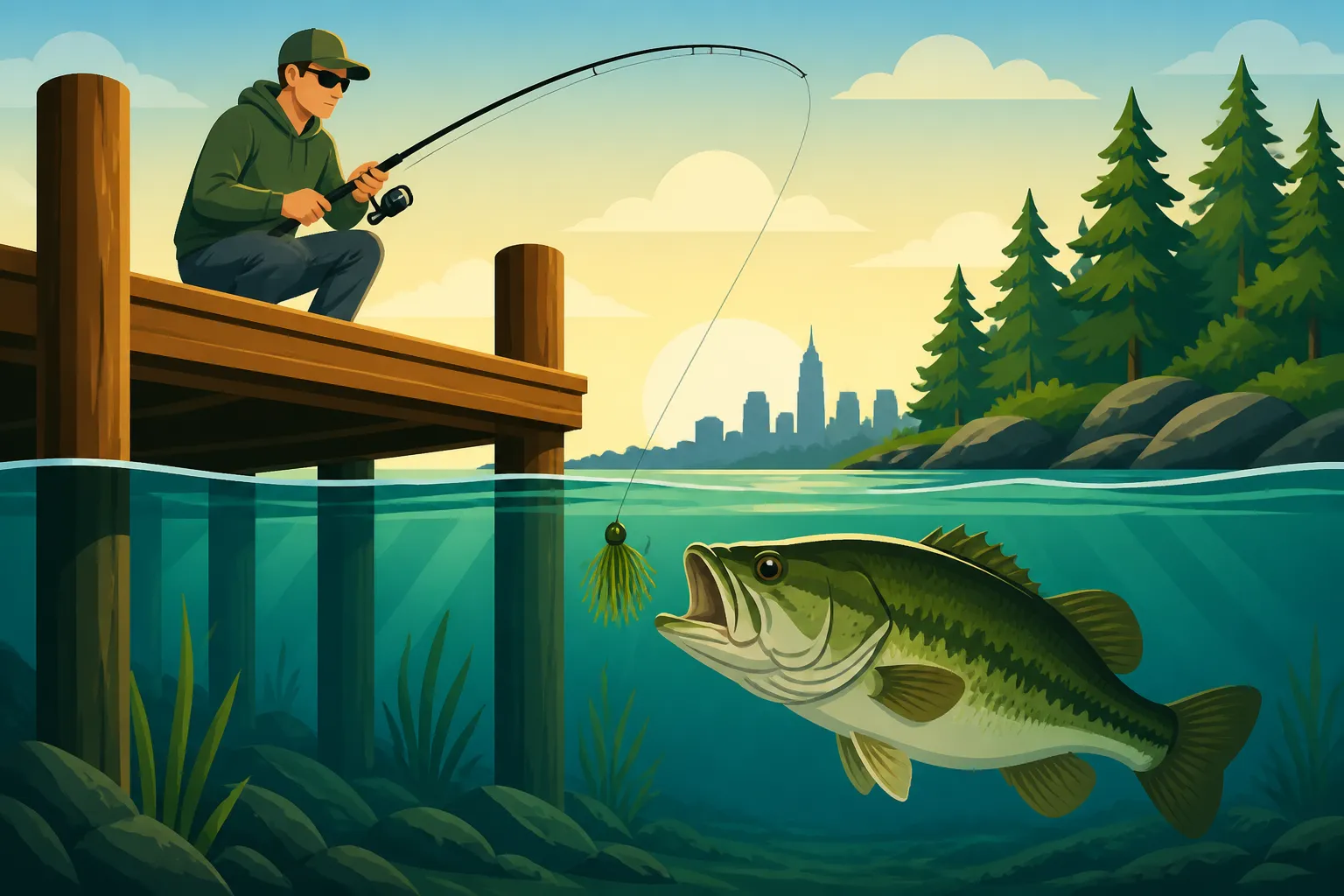
Few things are as inviting to a bass angler as a long line of docks stretching down a shoreline, yet many of us have stared at them, wondering how to effectively pull out the fish we just know are hiding beneath. It can be incredibly frustrating to see all that prime structure and come up empty-handed. This guide is here to break down the art of fishing docks for bass, offering practical advice and techniques to help you turn those elusive shadows into successful catches in New York waters.
Why Docks Are Absolute Bass Magnets
Docks aren't just for tying up boats; they're bustling underwater ecosystems and prime real estate for bass. Think of them as submerged cities, offering everything a bass could ever want or need. Understanding why bass love docks is the first step to figuring out how to catch them. It's all about comfort, safety, and opportunity.
Shade and Shelter from the Sun
One of the most immediate benefits docks offer bass is shade. Just like us, bass prefer to get out of the scorching midday sun. The overhead structure of a dock casts a cool shadow that extends into the water, providing a perfect refuge. This is especially true on bright, clear days when bass become more light-sensitive and retreat from direct sunlight. They'll often position themselves directly under the darkest part of the dock, waiting in ambush.
Beyond just comfort, this shade also serves a strategic purpose. Bass are ambush predators, and low light conditions can give them an advantage over unsuspecting prey. Baitfish and other small creatures might feel safer in the open, not realizing a lurking bass is just a shadow away. This preference for shade can dictate where you should cast and what time of day might be most productive. On a sunny afternoon, focus heavily on the shaded areas; on overcast days, bass might roam a bit more freely around the dock perimeter.
Abundant Food Sources
Docks are veritable smorgasbords for bass. They act as natural attractors for various forms of prey, from tiny baitfish to larger invertebrates. Think about it: docks are often built over weed beds or rocky areas that already hold a good population of smaller fish. The pilings themselves become encrusted with algae and mussels, drawing in smaller organisms, which in turn attract baitfish.
Beyond natural elements, docks are human activity hubs. People drop crumbs, lose small items, or even clean fish right off the dock, all of which create an artificial food chain. Minnows, crayfish, frogs, and even juvenile panfish like bluegill or perch frequently congregate around dock pilings and underneath the structure. These convenient feeding opportunities make docks an irresistible pantry for hungry bass. If you can identify what the local bass are feeding on, you're one step closer to choosing the right lure.
Structural Diversity and Ambush Points
The sheer amount of structure docks provide is incredible. It's not just a flat surface; it's a complex network of pilings, crossbeams, ladders, boat lifts, mooring ropes, and even discarded items. Each of these elements creates a unique piece of underwater real estate that a bass can utilize. These structures break up current, provide hiding spots from larger predators (though bass are often apex predators in their habitat), and most importantly, offer perfect ambush points.
A bass can sit just out of sight behind a piling, waiting for a baitfish to swim by. They can tuck under a boat lift, hidden from above, or hug a vertical post. Understanding this structural diversity means not just casting at a dock, but casting to specific pieces of structure within and around the dock. Every submerged rope, every shadowy corner, and every change in depth around a dock can hold a bass. This is why thorough, precise casting is so crucial when targeting these areas.
Understanding Different Dock Structures
Not all docks are created equal, and knowing the nuances of different types can significantly impact your approach. From the rustic charm of an old wooden dock to the modern precision of a floating marina, each presents its own set of challenges and opportunities for the savvy bass angler.
Permanent Fixed Docks
Fixed docks are typically built on solid pilings driven into the lakebed or river bottom. These are sturdy, permanent fixtures that offer a stable environment for bass. They often have more complex submerged structures due to their construction, with numerous crossbeams and braces underwater that might not be immediately visible from above. The pilings themselves, especially older wooden ones, can be covered in barnacles, algae, and insect larvae, creating a micro-ecosystem that attracts baitfish.
When fishing fixed docks, pay close attention to the depth around the pilings. Often, bass will relate to specific depths, especially where a drop-off or a channel might run close to the dock. The ends of these docks, where they extend furthest into deeper water, can be particularly productive. Look for irregularities in the pilings, such as broken sections or old tires tied as bumpers, as these can offer unique hiding spots. These docks usually create a very consistent shade line, which is great for pinpointing where bass might be holding.
Floating Docks and Marinas
Floating docks, as their name suggests, float on the water's surface, typically anchored to the bottom. Marinas are essentially large complexes of interconnected floating docks. While they don't have deeply driven pilings, they still offer fantastic bass habitat. The pontoons or floats themselves provide overhead cover, similar to a fixed dock, creating extensive shaded areas. These docks often have ropes, chains, and pipes extending down into the water, adding more vertical structure for bass to relate to.
Fishing floating docks requires a slightly different approach. Because the dock itself moves with the water level, the shade line and the relationship of the bass to the structure can change. Bass will often hold tight to the floats themselves or suspend just beneath them. In marinas, the sheer number of boats tied to the docks creates even more structure – keel lines, rudders, props, and mooring lines all become potential hiding spots. Flipping and pitching into the tight spaces between boats and under the dock sections becomes paramount here. Consider the water depth under the floats; if it's very shallow, bass might only use these areas during low light conditions or when looking for very specific prey.
Boat Lifts and Associated Structures
Boat lifts are an extension of the dock environment and are absolute goldmines for bass. Whether they're permanent structures attached to a fixed dock or independent floating lifts, they provide incredible cover. The framework, cables, and cradles of a boat lift offer intricate hiding places and ambush points. When a boat is on the lift, it adds even more shade and structure. When the boat is launched, the lift's framework often remains submerged or partially submerged, creating new, unmolested bass hangouts.
Targeting boat lifts requires precision. Bass will often position themselves in the deepest, darkest parts of the lift structure, particularly near the motor or stern of a boat that's currently on the lift. Flipping jigs, creature baits, or even small topwater frogs right into the tightest spots can be incredibly effective. Don't be afraid to make multiple casts to a single lift, approaching it from different angles, as bass can be incredibly territorial and might strike aggressively once your lure is presented just right. Many anglers overlook these spots, thinking they're too cluttered or difficult to fish, but that's exactly why they hold big fish!
| Dock Type | Key Features | Bass Behavior | Recommended Techniques | Lure Suggestions |
|---|---|---|---|---|
| Fixed Docks | Pilings, crossbeams, stable, consistent shade | Often hold tight to pilings, deeper edges, consistent | Flipping, pitching, skipping, fan casting along edges | Jigs, Texas-rigged worms, crankbaits (shallow) |
| Floating Docks | Pontoons, moving with water level, ropes/chains | Suspend under floats, relate to vertical lines | Skipping under floats, casting parallel to dock | Weightless worms, soft jerkbaits, small jigs |
| Boat Lifts | Intricate framework, cables, cradles, boats | Hide deep within structure, ambush points | Precision flipping/pitching, working tight spaces | Jigs, creature baits, senkos, topwater frogs (in cover) |
Essential Techniques for Dock Fishing
Successfully fishing docks for bass isn't just about showing up; it's about employing the right tactics with precision and stealth. Bass under docks can be incredibly wary, especially if the area sees a lot of fishing pressure or boat traffic. You need to be a ninja on the water, presenting your lure exactly where it needs to be without spooking the fish.
Flipping and Pitching
Flipping and pitching are your bread and butter for dock fishing. These techniques allow you to present your lure quietly and accurately into tight spaces, minimizing splash and disturbance. Flipping involves using a short, controlled pendulum motion to drop your lure into a target, while pitching uses a slightly longer arc to cast without a full overhead retrieve. Both are crucial for getting your bait under the dock, between pilings, and into other hard-to-reach cover. If you can master How to Flip and Pitch for Bass in Heavy Cover, you'll be well on your way to dock fishing success.
The key here is accuracy and repetition. Don't just make one cast to a promising spot; work it from multiple angles. Let your bait fall naturally. Bass often hit on the initial drop as the bait mimics something falling from the dock. Focus on the darkest, most shaded areas, as well as any submerged structure you can identify. A silent entry is paramount; a loud splash will often send wary bass scurrying. Practice these techniques in your backyard to build muscle memory before hitting the water.
Skipping Lures Under Docks
This is perhaps the most advanced and rewarding technique for dock fishing. Skipping involves casting a lure with a low trajectory, making it bounce across the water's surface like a skipping stone, allowing it to penetrate far under docks where traditional casts can't reach. This is especially effective with flat-bottomed jigs, soft plastics, or weightless worms. Many anglers overlook the deep recesses under docks, and that's exactly where the biggest, shyest bass often hide.
To master skipping, you need the right rod and reel setup – typically a medium-heavy rod with a fast tip and a baitcasting reel spooled with fluorocarbon or braided line. The trick is to snap your wrist, keeping the rod tip low, and aim for the water just in front of the dock's edge. The lure should hit the water at a shallow angle and skip across, landing softly far under the structure. It takes practice, but the rewards are massive. Imagine getting your lure 10 or 15 feet under a dock where no one else can reach; that's where the trophies live! You might want to grab some practice skipping lures, which you can easily find on Amazon.
Fan Casting and Parallel Presentations
While flipping, pitching, and skipping focus on precise target fishing, sometimes a broader approach is needed. Fan casting involves making several casts in a fan-like pattern around the entire dock structure, working your way around its perimeter. This helps you cover more water and identify active bass that might be roaming just outside the immediate cover. A good rule of thumb is to start with longer casts, then shorten them as you get closer to the dock, ensuring you're covering all potential holding areas.
Parallel presentations are equally important. Instead of casting directly at the dock, cast your lure to run parallel along its length, just outside the pilings or floats. This keeps your lure in the "strike zone" for a longer period, mimicking a baitfish swimming along the dock's edge. This is particularly effective with crankbaits, spinnerbaits, or swimbaits. Bass often patrol these edges, especially in low light conditions or on overcast days, waiting for an easy meal. Combining fan casting with parallel retrieves ensures you're thoroughly dissecting the entire dock area.
Lures and Baits for Dock Bass
Choosing the right lure is critical, but it's not just about the lure itself; it's about matching the lure to the specific dock structure, conditions, and the mood of the bass. The goal is to imitate common prey or provoke a reaction strike. You can find a wide array of these effective lures on Amazon, making it easy to stock your tackle box for your next New York fishing adventure.
Jigs and Creature Baits
Jigs, especially skirted jigs paired with soft plastic trailers or creature baits, are perhaps the most effective dock fishing lures. Their compact profile, heavy weight, and weedless design make them perfect for penetrating dense cover and navigating around pilings and cables. They can be flipped, pitched, or skipped with incredible accuracy, and once they hit the water, they sink quickly, allowing you to present them right in a bass's face.
A black and blue jig is a classic for a reason, mimicking crayfish or other bottom-dwelling prey. Green pumpkin or natural craw colors are also excellent choices. When using creature baits as trailers, choose profiles that add bulk and action, such as flapping claws or wiggling appendages. Let the jig fall naturally, watching your line for any subtle twitch or jump, which often indicates a bite. Once it hits bottom, a slow drag or a couple of subtle hops can entice a strike. This setup is particularly potent when bass are holding tight to cover, reluctant to chase.
Soft Plastics: Worms and Senkos
Soft plastics are incredibly versatile and a must-have for dock fishing. Texas-rigged worms are fantastic because they're practically weedless, allowing you to work them through brush, cables, and around pilings without constant snagging. A 4-inch or 6-inch worm in green pumpkin, black, or junebug colors can be deadly. When rigged weightless or with a light weight, they have a natural, enticing fall that bass find hard to resist. This slow fall is often key to getting bites from finicky dock bass.
Senkos (or stick baits) are another legendary soft plastic, particularly when rigged wacky style or Texas-rigged weightless. Their subtle shimmy on the fall is incredibly appealing to bass, and they are masters at skipping far under docks. The beauty of a Senko is its simplicity; it often doesn't need much action from the angler. Just let it fall, watch your line, and prepare for a strike. The natural action of these lures is often enough to fool even the most cautious bass.
Topwater Lures and Spinnerbaits
While much of dock fishing focuses on subsurface presentations, don't overlook topwater lures, especially during low light conditions like dawn, dusk, or on overcast days. Poppers, walk-the-dog baits, or even hollow-bodied frogs (if there's weed matting around the docks) can elicit explosive strikes. Bass hiding in the shadows under docks will often aggressively rocket to the surface for an easy meal.
Spinnerbaits, particularly those with willow leaf blades for cutting through cover, can also be effective when retrieved parallel to dock edges or through more open areas around the dock. The flash and vibration can draw bass out from cover, especially when they're actively feeding. Choose a spinnerbait with a subtle flash for clear water or a brighter, more aggressive blade for stained water. Remember, How to Fish a Topwater Lure for Bass is an art, and docks provide perfect ambush points for bass to smash them.
Advanced Strategies for Maximizing Dock Success
Once you've got the basics down, there are always ways to refine your dock fishing game. It's about paying attention to details, understanding bass behavior, and being persistent. Turning good fishing into great fishing often comes down to these subtle adjustments.
Reading the Water and Observing Bass Behavior
The most successful dock anglers are also the best observers. Before you even make a cast, take a moment to "read" the dock. Are there any visible weed lines? How deep does the shade extend? Are there any boats tied up that provide extra cover? Is there any baitfish activity around the dock? Sometimes, you can even spot bass cruising or holding position if the water is clear enough, particularly with the aid of polarized sunglasses. Good quality polarized sunglasses are an indispensable tool for any angler, and you can find many great options on Amazon.
Pay attention to how the bass react to your presentations. Are they ignoring fast-moving baits? Slow it down. Are they shying away from a loud splash? Focus on quieter entries. Bass behavior can change throughout the day and with different weather conditions. Best Time of Day to Fish in New York can heavily influence how bass position themselves around docks. A sharp drop in barometric pressure, for instance, might push them deeper and make them less aggressive, requiring a slower, more deliberate approach.
The Importance of Stealth and Quiet Approach
Docks are often in high-traffic areas, meaning bass underneath them can be very skittish. Approaching a dock quietly is paramount. Use your trolling motor sparingly and at low speeds, or better yet, drift into position if wind and current allow. Avoid dropping tackle boxes, banging paddles, or making unnecessary noise in your boat. Even the shadow of your boat passing over a dock can spook wary bass.
Cast beyond your target and reel your lure into the strike zone, rather than casting directly onto it. Maintain a low profile in your boat or on the shore. Sometimes, the biggest bass under a dock are the ones that have learned to evade anglers, and a stealthy approach can give you the edge you need. This is especially true when fishing heavily pressured lakes or rivers in New York, where bass are accustomed to human presence.
Varying Your Retrieve and Presentation
Don't be a one-trick pony. If one retrieve isn't working, change it. A slow, steady retrieve might be ignored, while a sudden twitch-pause-twitch can trigger a reaction strike. Experiment with different fall rates for your soft plastics by adjusting your weight. Sometimes a weightless presentation that flutters tantalizingly slowly is the ticket; other times, a heavier weight that gets down quickly is needed for an aggressive reaction.
Consider how you're working your lure after it's under the dock. Are you just reeling it straight back? Try letting it sit for a moment, then giving it a few subtle shakes, mimicking a dying baitfish. Hop a jig up and down directly beside a piling. Remember, the goal is to make your lure look as natural and irresistible as possible to a bass that has plenty of natural food readily available. Don't be afraid to change colors, sizes, or even lure types if a particular pattern isn't producing results. The fish will tell you what they want if you pay close enough attention.
Disclaimer
This article is for general informational purposes only and does not constitute professional advice. Laws, prices and regulations vary by location and change over time. Consult a qualified professional for guidance on your specific situation.