A Guide to New York’s Trout Species
For many anglers, the world of trout fishing in New York can feel like a beautiful but sometimes bewildering maze. You're out on the water, you hook a gorgeous fish, and then you find yourself scratching your head, wondering "Is this a brook trout or a brown? Is it legal to keep this rainbow, or should I release it?" Understanding the distinct characteristics, preferred habitats, and fishing regulations for each trout species is absolutely essential, not just for compliance but for truly appreciating the incredible diversity of our state's fisheries. This comprehensive guide will help you confidently identify and understand New York's primary trout species, empowering you to become a more knowledgeable and successful angler.
Why Identifying Trout Species Matters for New York Anglers
It might seem like a small detail, but knowing your trout species is more than just impressing your fishing buddies at the local bait shop. New York State has specific regulations, including size limits, daily creel limits, and even season dates, that often vary by species and by water body. Misidentifying a fish could lead to unintentional violations, and nobody wants to deal with that hassle after a relaxing day on the water. Beyond the legalities, a deeper understanding of each species’ behavior and habitat preferences can dramatically improve your fishing success. You'll learn what to look for, where to cast, and what lures or flies might be most effective.
Navigating Different Regulations for Each Species
Imagine you're fishing a popular Catskills stream, and you've had a fantastic day catching a mix of trout. If you don't know the difference between a brook trout and a brown trout, you might accidentally keep too many of one species or keep a fish that's under the minimum size limit for its kind. The New York State Department of Environmental Conservation (DEC) publishes a fantastic New York Fishing Regulations Explained guide each year, and it’s critical reading. These regulations are designed to protect fish populations and ensure sustainable fishing for everyone. For instance, some waters might have a specific slot limit for brown trout, meaning you can only keep fish within a certain size range, while brook trout might have a different, more general limit. Always double-check the local rules for the specific body of water you're fishing.
Improving Your Fishing Success Through Species Knowledge
Knowing the habits of different trout species gives you a massive advantage. For example, some trout species are more aggressive feeders, while others are notoriously shy. Some prefer fast, oxygenated riffles, while others might hide out in deep, slow pools under cover. If you know you're targeting brook trout, you might focus your efforts on smaller, colder streams with plenty of overhead cover. If it's brown trout you're after, larger rivers with deeper pools and undercut banks are often key. Understanding their natural diet also helps you select the right bait or fly. You can find excellent resources, including books and guides, on platforms like Amazon that delve into the specific entomology and forage patterns preferred by each trout species. This knowledge isn't just academic; it translates directly into more fish on the end of your line.
Brook Trout: New York's Native Gem
The brook trout, Salvelinus fontinalis, holds a special place in the hearts of New York anglers. It's not just a beautiful fish; it's our state's official freshwater fish and the only trout species truly native to New York. Finding a wild brook trout in a pristine Adirondack stream or a secluded Catskills beaver pond is an experience that connects you directly to the untouched wilderness. Their vibrant colors and elusive nature make them a prized catch.
Identifying the Brook Trout
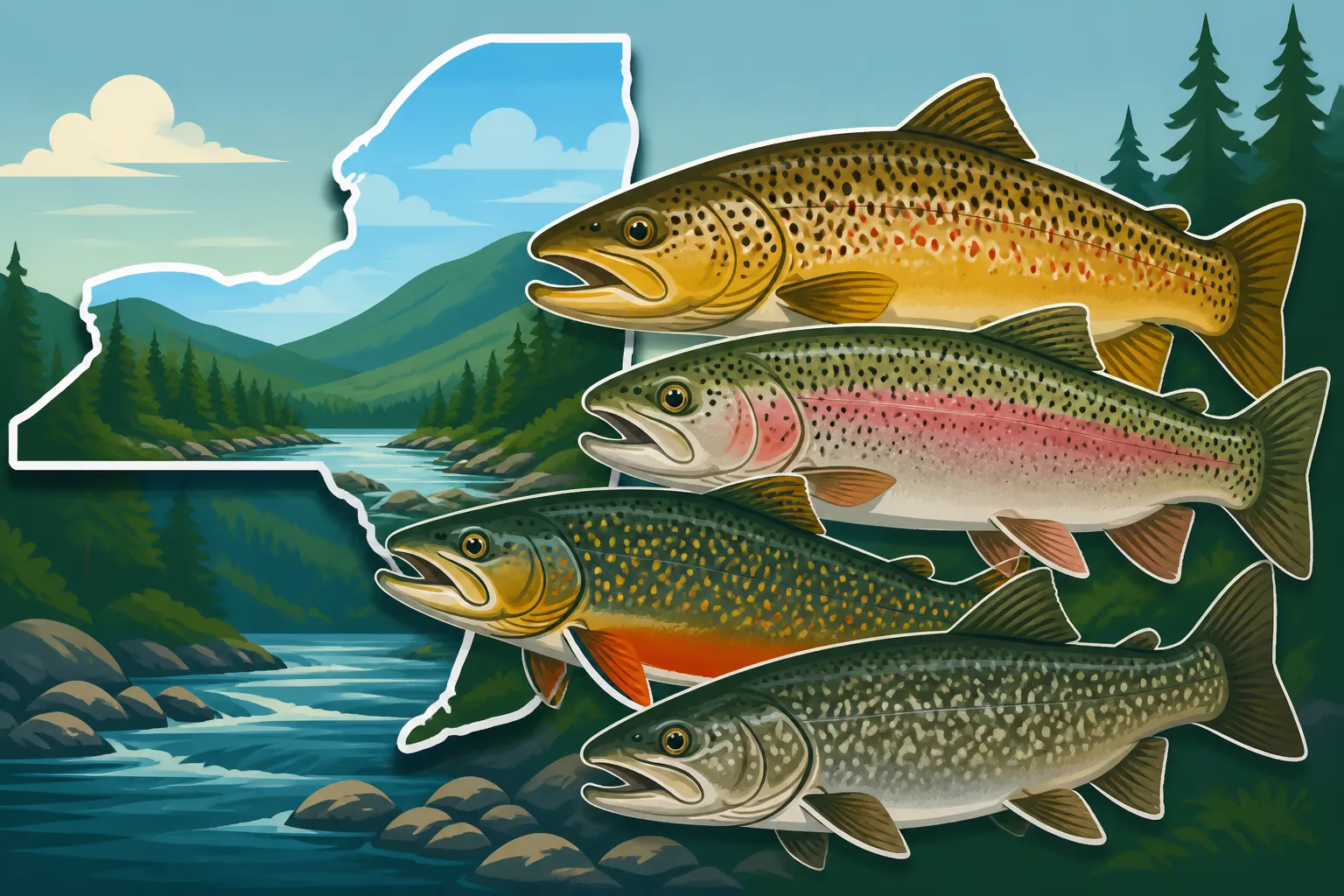
Brook trout are easily one of the most striking fish you'll encounter. They boast a dark, mottled olive-green back that transitions into lighter sides adorned with distinct, worm-like patterns known as "vermiculations." Scattered along their sides, you'll see small, reddish-orange spots, often surrounded by a light blue halo. Their lower fins (pelvic, pectoral, and anal) are typically orange-red and have a crisp, white leading edge followed by a thin black line, a feature often called "fin tips." This white edge is a dead giveaway.
When you're comparing a brook trout to other species, that bright white leading edge on the fins is your best friend for quick identification. Their body shape is generally more elongated and sleek than some other trout. Remember, while they are called "trout," brook trout are technically members of the char family, along with lake trout, which explains some of their unique characteristics and preferences for colder, cleaner water. It's these specific details that help answer the question, How to Identify a Brook Trout.
Habitat and Behavior of Brook Trout
Brook trout are picky residents. They demand exceptionally cold, clean, and highly oxygenated water. This is why you'll primarily find them in the headwaters of streams, small mountain brooks, pristine ponds, and high-elevation lakes throughout the Adirondacks, Catskills, and other less developed areas of New York. They thrive where water temperatures rarely exceed the mid-60s Fahrenheit, often preferring temperatures in the low 50s.
Their behavior is typically opportunistic. They'll hold in pockets of slower water, behind rocks, under logs, or beneath undercut banks, waiting for insects, larvae, or small baitfish to drift by. They can be incredibly wary, making a stealthy approach essential. During spawning season in the fall, their colors become even more brilliant, with males developing an intense crimson belly. They're often found in smaller, more intimate settings, making them a favorite target for fly anglers who enjoy the solitude of wading small streams.
Brown Trout: The Hardy European Import
Introduced from Europe in the late 19th century, the brown trout, Salmo trutta, has become a cornerstone of New York's trout fisheries. These adaptable fish are incredibly resilient, able to tolerate warmer water temperatures and more varied habitats than their native brook trout cousins. They are known for their strong fighting spirit and their potential to grow to impressive sizes, especially in larger rivers and lakes.
Identifying the Brown Trout
Brown trout typically have a yellowish-brown to golden-brown body, often with a bronze sheen. Their backs are usually darker, fading to a lighter belly. The most distinctive markings are the dark spots, often ringed with a lighter halo, scattered across their sides, gill covers, and dorsal fin. Unlike brook trout, these spots are often surrounded by a pale, almost cream-colored halo, and they frequently have some red or orange spots mixed in, particularly along the lateral line, though these rarely have the blue halo seen on brook trout.
The tail fin of a brown trout is usually broad and square or slightly forked, and it generally lacks the distinct spotting or heavy marking you might see on a rainbow trout. Their lower fins are typically yellowish or brownish, without the bright white leading edge of a brook trout. When you're trying to differentiate them, pay close attention to the spot patterns and the color of the lower fins. Brown trout also tend to have a larger mouth than a rainbow trout, with the jaw extending past the eye in many cases.
Habitat and Behavior of Brown Trout
Brown trout are incredibly adaptable, which is why they've been so successful across New York. While they prefer cool water, they can tolerate slightly warmer temperatures than brook trout, making them suitable for a wider range of streams, rivers, and lakes. You'll find them throughout the state, from the larger rivers of the Catskills and Adirondacks to many of the Finger Lakes and even some smaller ponds that might be too warm for brookies. They are often found in waters that also hold smallmouth bass or other warm-water species, though they will seek out colder refuges when temperatures rise.
These trout are often nocturnal feeders, especially the larger, older individuals. They're opportunistic predators, consuming a wide variety of prey including insects, crustaceans, small baitfish, and even rodents or frogs. Big brown trout are notorious for their preference for large meals, which is why streamer fishing and fishing with large minnow imitations are so effective for trophy hunters. They'll often hold in deeper pools, under logjams, behind large boulders, and especially within undercut banks where they have both cover and access to food drifting by.
Rainbow Trout: The Leaping Acrobats
The rainbow trout, Oncorhynchus mykiss, is another beloved non-native species in New York, originally introduced from the Pacific Northwest. Known for their acrobatic jumps when hooked and their beautiful iridescent coloration, rainbow trout are a favorite target for many anglers. They are widely stocked throughout the state, providing fantastic fishing opportunities in many lakes, ponds, and rivers.
Identifying the Rainbow Trout
Rainbow trout get their name from the distinctive pinkish-red stripe that runs horizontally along their sides, especially prominent in mature fish. Their bodies are typically silvery to greenish-blue on the back, fading to white on the belly. Small, distinct black spots cover their back, sides, and often extend onto their dorsal, adipose, and tail fins. Unlike brown trout, these spots typically do not have halos.
The tail fin of a rainbow trout is usually moderately forked and heavily spotted. Their mouth is generally smaller than a brown trout's, with the jaw typically not extending past the back of the eye. A key characteristic, especially in larger specimens, is that robust, athletic build that hints at their fighting prowess. When you're trying to figure out if it's a rainbow or a brown, look for that pink stripe, the un-haloed black spots, and the heavily spotted tail. Sometimes anglers struggle with How to Tell a Steelhead From a Brown Trout, but the general rainbow features usually still apply to steelhead.
Steelhead: The Anadromous Rainbows
Within the rainbow trout species, New York is incredibly fortunate to host robust runs of steelhead. These are simply rainbow trout that spend a portion of their lives in Lake Ontario or Lake Erie, growing large and strong on the abundant forage fish, and then returning to tributaries like the Salmon River or the Niagara River to spawn. They exhibit incredible power and endurance, making them a premier sport fish.
Identifying a steelhead is essentially identifying a rainbow trout, but their appearance is often more silvery and streamlined when they first enter the rivers from the Great Lakes, a result of their pelagic, open-water existence. Once they've been in the river for a while, they'll start to take on more of the classic rainbow trout coloration. Their power and size, often reaching significant weights, truly set them apart. Many anglers travel from far and wide to experience the Fall Steelhead Run Timing in New York.
Habitat and Behavior of Rainbow Trout and Steelhead
Rainbow trout are highly adaptable and are widely distributed thanks to stocking programs. You'll find them in a vast array of New York waters, including large rivers, medium-sized streams, reservoirs, and many of the state's lakes. They can tolerate a slightly wider range of temperatures than brook trout but still prefer cool, well-oxygenated water. They often inhabit runs and riffles, feeding on aquatic and terrestrial insects.
Steelhead, on the other hand, are exclusively found in the tributaries that flow into Lake Ontario and Lake Erie. They migrate upstream in the fall, winter, and spring to spawn, providing incredible fishing opportunities. During their river migrations, they'll hold in deep pools, current seams, and behind obstructions, waiting for ideal spawning conditions or to ambush food. Their diet in the Great Lakes consists mainly of baitfish, but in the rivers, they'll readily take egg imitations, nymphs, and sometimes even flies designed to mimic minnows. Knowing the patterns of these runs is key to successful How to Fish for Steelhead in New York.
Lake Trout: The Deepwater Giants
Lake trout, Salvelinus namaycush, are another species that, like the brook trout, are actually char. They are native to New York and are renowned for their size and their preference for the deep, cold, oxygen-rich waters of our larger lakes. Catching a true trophy lake trout is a lifelong ambition for many anglers, requiring specialized techniques and a lot of patience.
Identifying the Lake Trout
Lake trout have a distinct, somewhat elongated body shape with a large head and a deeply forked tail, a key distinguishing feature from other trout. Their coloration varies widely depending on their habitat, but they are generally dark grey, green, or even brownish on the back, fading to a lighter belly. They are covered in numerous light, often worm-like or irregularly shaped spots on their head, body, and fins, including the tail. These spots are usually lighter than the background color.
Unlike brook trout, lake trout lack the vibrant red spots and the white leading edges on their lower fins. Their mouths are large, extending well past the eye. Smaller lake trout might sometimes be confused with brook trout due to their similar family lineage, but the deeply forked tail and the lack of prominent red or blue-haloed spots on the sides, along with the absence of white fin tips, generally clarify the identification.
Habitat and Behavior of Lake Trout
Lake trout are true cold-water specialists. They are found almost exclusively in the deepest, coldest, and most oxygenated lakes in New York, particularly in the Finger Lakes (like Cayuga and Seneca) and many of the larger, deeper Adirondack lakes such as Lake Placid and Lake George. In these environments, they spend much of their lives in the frigid depths, sometimes hundreds of feet down, where water temperatures remain consistently low.
Their diet primarily consists of baitfish such as alewives, smelt, and sculpin, though they will also consume insects and crustaceans. Because of their deep-water habits, special techniques like downrigging and jigging are often employed to reach them. While they can be found shallower during cooler seasons, particularly in spring and fall, their primary domain is the abyss. Fishing for them often means battling strong currents, dealing with extreme depths, and using heavy gear. It’s a completely different game than chasing brookies in a small stream. Learning the nuances of How to Fish Deep Water Lake Trout in Summer on New York's Finger Lakes is essential for success.
Other Salmonids and Hybrids in New York
While brook, brown, rainbow, and lake trout are the main players, New York's waters also host other fascinating salmonid species and even a few hybrids that can sometimes cause confusion for anglers. Understanding these additional species will round out your knowledge of our diverse cold-water fisheries.
Splake: A Unique Hybrid
The Splake is a fascinating hybrid fish, a cross between a male brook trout and a female lake trout. As you might expect, they exhibit characteristics of both parents. They tend to grow faster than brook trout but typically don't reach the immense size of a lake trout. They also share some of the brook trout's tolerance for slightly warmer water, making them suitable for stocking in lakes that might not sustain pure lake trout populations year-round.
Identifying a splake can be tricky, as their appearance can vary. They often have a somewhat forked tail, but usually not as deeply forked as a lake trout. Their body might show some of the worm-like markings of a brook trout, along with lighter spots characteristic of a lake trout. They may or may not have the white leading edge on their fins, and if present, it's often less prominent than on a pure brook trout. It's truly a mix-and-match situation, which is part of their charm and challenge. These hybrids are primarily found in stocked ponds and lakes across the state, and their regulations are often specific to the waters they inhabit.
Landlocked Atlantic Salmon: Salmon or Trout?
Many anglers new to New York fishing often wonder about the difference between trout and salmon, especially when they hear about "landlocked salmon." The landlocked Atlantic salmon, Salmo salar, is indeed a distinct species from trout, though they are all part of the larger salmonid family and often inhabit similar cold-water environments. In New York, these incredible fish are found primarily in some of the deeper Finger Lakes, like Seneca and Cayuga, as well as a few Adirondack lakes and reservoirs.
Landlocked salmon are streamlined, powerful fish, typically silvery with sparse black spots, often X-shaped, above the lateral line. They generally lack the prominent spots or colored fins of trout species. Their tail is usually slightly forked. While they are "landlocked," they still exhibit migratory behavior, moving from deep lake waters into tributary streams to spawn. They are highly sought after for their incredible fighting ability and beautiful table fare. Understanding their unique life cycle and behaviors is key to How to Fish for Landlocked Salmon.
Comparison of New York's Primary Trout Species
To help keep things clear, here's a quick reference table highlighting the key identifying features of New York's main trout species. This can be a handy tool to bookmark mentally (or even physically print out!) when you're out on the water, especially if you're still getting the hang of distinguishing between species.
| Feature | Brook Trout (Char) | Brown Trout (Trout) | Rainbow Trout (Trout) | Lake Trout (Char) |
|---|---|---|---|---|
| Native to NY? | Yes | No (Introduced) | No (Introduced) | Yes |
| Back/Sides Color | Dark olive/green, mottled | Yellowish-brown to golden | Silvery to greenish-blue | Dark grey/green/brown |
| Spots | Red/orange w/ blue halos, vermiculations | Dark spots w/ light halos, some red/orange | Small black spots, no halos | Light, irregular spots/vermiculations |
| Lateral Line | Sometimes a faint red hue | No distinct stripe | Pink/red horizontal stripe | No distinct stripe |
| Lower Fin Edges | Distinct white leading edge, then black | No white leading edge, yellowish/brown | No white leading edge, often dusky | No white leading edge, dusky |
| Tail Fin Shape | Square or slightly notched | Square or slightly forked | Moderately forked, heavily spotted | Deeply forked |
| Mouth Size | Moderate | Large (past eye) | Moderate (not past eye) | Large (past eye) |
| Preferred Habitat | Cold, clear small streams/ponds | Varied streams/rivers/lakes, can tolerate warmer water | Widely stocked rivers/lakes | Deep, cold, oxygenated lakes |
This table provides a quick visual guide, but remember that individual fish can show variations. Always look at a combination of features, not just one, for accurate identification. You can even find laminated field guides on Amazon that are waterproof and perfect for taking on your fishing trips.
Where to Find New York's Trout Species
New York State boasts an incredible diversity of trout habitats, from the smallest mountain trickles to the vast expanses of the Great Lakes. Knowing where each species prefers to live is key to planning your next fishing adventure. Our state is truly a paradise for trout enthusiasts, offering opportunities for every type of angler.
Trout Fishing in the Adirondacks
The Adirondack Park is arguably the crown jewel of New York's trout fishing. This vast wilderness region is home to countless pristine lakes, ponds, and streams, many of which hold robust populations of native brook trout. If you dream of hiking into a remote pond and casting for wild brookies with their stunning colors, the Adirondacks are your destination. You'll find a mix of brook, brown, and rainbow trout in the larger rivers and some stocked lakes, but the wild brook trout fishing in the smaller, colder waters is truly special. Areas like the West Branch of the Ausable River are renowned for their trout populations. For a deeper dive into the region, check out Best Adirondack Lakes for Fishing.
Trout Fishing in the Catskills
South of the Adirondacks, the Catskill Mountains are celebrated as the birthplace of American dry fly fishing. The legendary rivers here, including the Beaverkill, Willowemoc, Esopus, and Neversink, are primarily known for their exceptional brown trout fishing. While wild populations exist, these rivers also benefit from extensive stocking programs. You'll also find rainbow trout in many of these waters, providing a dynamic angling experience. The Catskills offer a blend of technical fly fishing in crystal-clear rivers and more accessible roadside stretches. It's a region steeped in angling history and still delivers world-class trout fishing. For specifics on targeting trout in these iconic waters, consider guides on How to Fly Fish in New York.
Finger Lakes and Great Lakes Tributaries
New York's Finger Lakes region offers a completely different kind of trout fishing experience. These deep, glacial lakes are primarily known for their abundant lake trout populations, offering anglers a chance to hook truly massive fish. While lake trout are the stars here, many of the Finger Lakes and their tributaries also host populations of brown trout, rainbow trout, and even landlocked Atlantic salmon. Trolling is a popular technique on the main lakes, while the feeder streams often hold migratory trout during spawning runs.
Moving west, the tributaries flowing into Lake Ontario and Lake Erie are famous for their world-class steelhead and salmon runs. During the fall, winter, and spring, these rivers swell with enormous rainbow trout (steelhead) and Chinook and Coho salmon, providing incredible opportunities for shore anglers and waders alike. Rivers like the Salmon River, Genesee River, and Oswego River are legendary for their prolific runs. This migratory fishing offers a unique challenge and the chance to catch powerful, ocean-run (or in this case, Great Lakes-run) fish. For more on this, see New York's Lake Ontario Fishing: Where to Go.
Other Notable Trout Fisheries
Beyond these major regions, New York has numerous other excellent trout fisheries. Many smaller streams and ponds across the state are regularly stocked with rainbow and brown trout, offering convenient and accessible fishing opportunities for families and beginners. The Great Sacandaga Lake, for example, is known for its lake trout and brown trout. Even some urban parks and suburban waterways receive trout stockings, bringing the joy of trout fishing closer to home for many. Always consult the current DEC fishing regulations guide for specific stocking schedules and local rules. You can find copies at many bait shops or sporting goods stores, or even order a physical copy through retailers like Amazon.
Essential Gear for New York Trout Fishing
Having the right equipment is crucial for a successful and enjoyable trout fishing experience in New York. While the specifics might vary slightly depending on the species you're targeting and the type of water you're fishing, a basic setup will get you started. Remember, good gear doesn't have to break the bank, but investing in quality items will make your time on the water much more pleasant.
Rods and Reels
For general trout fishing in New York's streams and smaller rivers, a light to medium-light action spinning rod, typically in the 6 to 7-foot range, paired with a matching spinning reel (sized 1000 to 2500) is a versatile choice. This setup allows for accurate casting of light lures and bait while providing enough backbone to handle a feisty trout. If you're targeting larger brown trout or steelhead in bigger rivers, a slightly heavier medium action rod might be more appropriate.
For fly fishing, a 4-weight or 5-weight fly rod, 8.5 to 9 feet long, is a fantastic all-around choice for most of New York's trout streams. This setup is light enough for delicate presentations but can still handle larger fish and windy conditions. If you're specifically targeting huge steelhead or lake trout, you'll need heavier fly gear, perhaps an 8-weight or 9-weight outfit. You can find a vast selection of rods and reels for all budgets and types of fishing on Amazon, often with helpful reviews from other anglers.
Line, Leaders, and Tippet
For spinning gear, 4 to 6-pound test monofilament or fluorocarbon line is usually ideal for trout. Lighter lines are less visible to fish and allow for better lure action, but you might want to bump up to 8-pound test if you're consistently hooking larger fish or fishing around heavy cover. For fly fishing, a standard weight-forward floating line (matching your rod weight) is a good starting point. You'll then connect a tapered leader, typically 7.5 to 9 feet long, with a tippet section of 4x, 5x, or 6x for most trout. Steelhead and lake trout might require heavier tippet in the 0x to 3x range. Remember, the goal is stealth and strength – you want a line that disappears in the water but can still land your catch.
Lures, Baits, and Flies
The choice of lures, baits, and flies is vast and often depends on the species and time of year.
- Lures: Small inline spinners (like Panther Martins or Mepps), tiny spoons (Kastmasters, Little Cleos), and micro crankbaits are highly effective for all trout species when using spinning gear. Soft plastics rigged on jig heads can also be deadly, especially for holdover trout in lakes.
- Baits: Live baits such as worms (nightcrawlers, red wigglers), minnows, and shiners are consistently productive, particularly for stocked trout and brown trout. PowerBait, corn, and cheese baits are also popular choices for hatchery-reared trout.
- Flies: Fly anglers have an endless array of options. Dry flies mimicking mayflies, caddisflies, and stoneflies are essential for matching hatches. Nymphs (Pheasant Tail, Hare's Ear, Prince Nymph) are incredibly effective for subsurface feeding trout. Streamers (Woolly Buggers, Sculpzillas) are excellent for targeting larger, predatory trout and steelhead. For steelhead, egg patterns and stonefly nymphs are also go-to choices. Carrying a varied selection will ensure you're prepared for whatever the trout are feeding on.
Waders and Boots
If you plan on doing any stream or river fishing, a good pair of waders and wading boots is a game-changer. They allow you to access prime fishing spots that are unreachable from the bank and stay warm and dry in the process. Chest waders are generally preferred for deeper water, while hip waders can suffice for smaller, shallower streams. Neoprene waders offer more warmth for cold-weather fishing, while breathable waders are comfortable for warmer months. Make sure your wading boots have good ankle support and felt or rubber soles for traction on slippery riverbeds. You can find various styles and price points for waders and boots online, including many options available through retailers like Amazon.
Conservation and Responsible Angling Practices
As anglers, we have a profound responsibility to protect New York's incredible trout resources. Practicing ethical and responsible angling ensures that these beautiful fish populations remain healthy for generations to come. It’s not just about what you catch, but how you treat the fish and the environment.
Catch and Release Best Practices
Many anglers in New York practice catch and release, especially for wild trout or during specific seasons like the New York Catch-and-Release Trout Fishing Rules. If you choose to release fish, it’s vital to do so in a way that maximizes their survival.
- Minimize Handling: Try to keep the fish in the water as much as possible. If you must handle it, do so with wet hands to avoid removing its protective slime coat.
- Barbless Hooks: Consider using barbless hooks or pinching down the barbs on your hooks. This makes hook removal much easier and less damaging to the fish. You can find many brands of barbless hooks or specialized pliers for pinching barbs on Amazon.
- Quick Hook Removal: Use needle-nose pliers or a hemostat to quickly and gently remove the hook.
- Revive Carefully: If the fish seems stressed, hold it gently in the current, facing upstream, until it swims away under its own power. Don't pump it back and forth, as this can force water over its gills in the wrong direction.
Protecting Trout Habitat
Trout are incredibly sensitive to their environment. Their survival depends on clean, cold water and healthy riparian (streamside) habitats.
- Leave No Trace: Pack out everything you pack in, including fishing line, bait containers, and any other trash.
- Respect Private Property: Always know if you're on public or private land and respect landowners' rights.
- Prevent Invasive Species: Clean your waders, boots, and gear thoroughly between fishing different water bodies to prevent the spread of invasive species like whirling disease or zebra mussels. A stiff brush and a bleach solution can go a long way in protecting our waters.
- Support Conservation Efforts: Consider joining local conservation groups or supporting organizations that work to protect and restore trout habitats in New York. Your voice and contributions can make a real difference.
Adhering to Regulations and Limits
This goes without saying, but it bears repeating: always know and follow the current New York State fishing regulations. These rules, set by the DEC, are in place for a reason – to ensure sustainable fishing and healthy fish populations.
- Check Annually: Regulations can change, so always consult the latest guide before your first trip of the season. You can usually pick up a free copy at any place that sells fishing licenses, like a local sporting goods store.
- Know Your Water: Some specific water bodies have special regulations that differ from statewide rules. Pay close attention to these "special regulations waters" sections in the guide. For example, some stretches of famous trout streams might have reduced daily limits or even be fly-fishing-only, catch-and-release-only sections.
- Understand Daily and Size Limits: Be absolutely clear on the daily creel limits (how many fish you can keep) and minimum/maximum size limits for each species you might encounter. This is where accurate trout identification becomes paramount! If you're unsure, it's always best to release the fish.
Conclusion: Embracing New York's Trout Diversity
From the vibrant, elusive brook trout nestled in the remote corners of the Adirondacks to the powerful, leaping steelhead battling upstream from the Great Lakes, New York offers an extraordinary spectrum of trout fishing experiences. Each species presents its own unique challenge and reward, inviting us to learn more, refine our techniques, and deepen our appreciation for these incredible fish.
By understanding the distinct characteristics of brook, brown, rainbow, and lake trout, along with other salmonids like landlocked salmon and splake, you're not just becoming a more knowledgeable angler – you're becoming a better steward of our state's natural resources. So grab your gear, consult your New York Freshwater Fishing Rules guide, and head out to explore the amazing diversity of trout fishing that awaits you across New York State. The journey of discovery, one trout at a time, is truly what makes fishing here so special.
Disclaimer
This article is for general informational purposes only and does not constitute professional advice. Laws, prices and regulations vary by location and change over time. Consult a qualified professional for guidance on your specific situation.