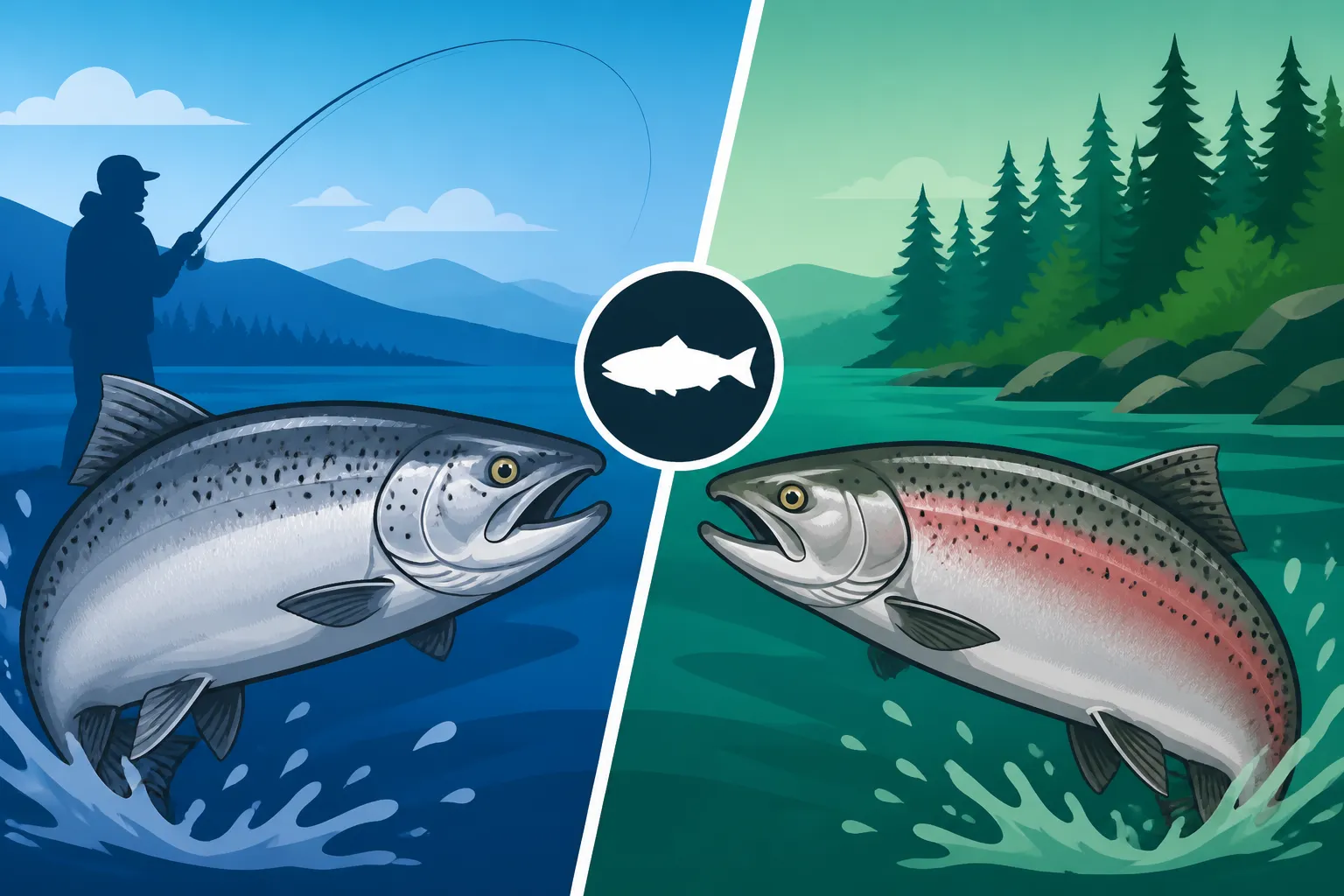
How to Identify a Chinook vs a Coho Salmon
There's nothing quite like the thrill of feeling a powerful salmon on the end of your line in New York's magnificent waters, but for many anglers, especially those new to Great Lakes fishing, distinguishing between a Chinook and a Coho salmon can be a real head-scratcher. It's a common frustration, looking at a gleaming silver fish and wondering if it's a King or a Coho. This guide is here to unravel that mystery, providing you with clear, practical ways to confidently identify which prized salmon you've landed, ensuring you stay within regulations and truly appreciate your catch.
Why Knowing Your Salmon Species Matters
You might think, "A salmon is a salmon, right?" Well, not quite, especially here in New York. Knowing the difference between a Chinook (King) and a Coho (Silver) salmon isn't just about showing off your fish identification skills; it has practical implications for responsible angling, adhering to regulations, and even improving your fishing success. Trust me, it's a skill worth cultivating.
Adhering to Fishing Regulations
New York State has specific regulations that can vary by fish species, water body, and season. While Chinook and Coho salmon often share similar general regulations, there can be subtle differences in daily creel limits, minimum size requirements, or even specific gear restrictions depending on the fishery. For instance, sometimes a particular river might have a slightly different daily bag limit for one species over the other, or a unique season might apply. Imagine reeling in a beautiful salmon, only to realize later that you've kept one too many of a specific species because you misidentified it. Ignorance of the law is never an excuse, and a simple mistake could lead to fines or penalties. Understanding these nuances helps protect the fishery and keeps you on the right side of the law. Always check the current New York Fishing Regulations Explained before heading out.
Enhancing Your Fishing Strategy
Different fish species often have different behaviors, preferred habitats, and feeding patterns. Chinook and Coho salmon, while both strong fighters and popular targets, aren't exact duplicates in the water. Chinook salmon are often known for their incredible power and deep runs, especially larger specimens, while Coho can be acrobatic, leaping and thrashing at the surface. Knowing which species you're encountering more frequently can help you fine-tune your tackle, presentation, and even choice of fishing spots. If you're consistently catching one species, you might adapt your lure color or trolling depth to better appeal to that specific fish, or switch techniques if you're trying to target the other. For more on general salmon fishing, check out How to Fish for Salmon in New York.
Contributing to Conservation Efforts
Accurate species identification plays a crucial role in fishery management and conservation. When anglers correctly report their catches, or when biologists conduct surveys, accurate species data helps track populations, assess stocking success, and understand the health of the ecosystem. By being able to differentiate between Chinook and Coho, you're not just a better angler; you're also an informal data collector, contributing to the collective knowledge that helps ensure these magnificent fish continue to thrive for future generations. It's about being a responsible steward of our natural resources, ensuring that the thrill of the catch continues year after year.
Key Physical Differences: Mouth to Tail
When you finally get that salmon boat-side or on the bank, the first place to look for definitive identification clues is its physical characteristics. Both Chinook and Coho salmon share that classic salmonid torpedo shape and silver scales, but upon closer inspection, they reveal distinct features that make identification straightforward once you know what to look for.
The Mouth and Gum Line: The Most Reliable Clue
This is arguably the absolute best way to tell a Chinook from a Coho salmon. Open the fish's mouth and examine the lower gum line.
Chinook Salmon (King Salmon): These fish have a dark-pigmented mouth, meaning both their gums and their tongue will appear black or dark gray. More importantly, along the lower gum line, the teeth are set in black gum tissue. This black gum line is a consistent and unmistakable characteristic of a Chinook. It's like their personal ID card! You'll notice this even in smaller Chinook, so it’s not just a feature of mature adults. It's a quick, reliable check that separates them from their Coho cousins instantly.
Coho Salmon (Silver Salmon): In contrast, Coho salmon have a mouth that is typically lighter, often with white or gray gums and tongue, though the roof of the mouth might still be dark. The critical difference is their lower gum line: it will be distinctly white or very pale. The teeth are set in this pale tissue, creating a clear contrast to the Chinook. This stark difference in gum coloration is the go-to method for most experienced anglers. If you’re ever in doubt, this is the first thing to check.
Tail and Spotting Patterns: Subtle but Helpful
While the mouth is the most definitive, looking at the tail and the spotting on the fish's body can offer additional clues, especially if you're getting a quick glance or the fish isn't fully accessible.
Chinook Salmon: Typically, Chinook salmon have spots on both the upper and lower lobes of their caudal (tail) fin. These spots often appear somewhat irregular and can be quite large. On their back and upper body, the spots are usually more pronounced and spread out. The tail itself often has a somewhat "forked" or squared-off appearance, but this can vary depending on the individual fish and its condition. Remember, the spotting pattern can be highly variable, so rely more on the gum line. The sheer size of a mature Chinook can also be a tell-tale sign; they're often much larger than Coho. How Big Do Chinook Salmon Get in Lake Ontario? can give you an idea of their impressive size.
Coho Salmon: Coho salmon, on the other hand, typically have spots only on the upper lobe of their caudal fin, with the lower lobe being largely spotless. The spots on their back and upper body tend to be smaller and more concentrated, often appearing more uniform. Their tail fin usually has a more distinct "forked" shape compared to the Chinook, although again, this isn't always a foolproof indicator. The overall body profile of a Coho can also appear a bit more streamlined or "silver" in some stages, hence their "Silver Salmon" moniker.
Body Shape and Coloration: Varies with Age and Environment
The general body shape and coloration can provide hints, but these are less reliable than the mouth or tail spotting as they can change significantly with age, spawning readiness, and even the specific body of water the fish inhabits.
Chinook Salmon: Adult Chinook salmon are often robust and deep-bodied, giving them a powerful, "kingly" appearance. Their overall color in open water is typically a silvery-blue or green on the back, fading to silver sides and a white belly. As they approach spawning season and move into rivers, their coloration undergoes a dramatic transformation, becoming much darker, often with shades of brown, olive, and even reddish-purple. Males can develop a pronounced "kype" (hooked jaw) during this time. Juveniles will exhibit parr marks.
Coho Salmon: Coho salmon tend to be a bit more slender and streamlined than Chinook, though this is a generalization. In open water, they are also silvery with a bluish-green back, often appearing a bit brighter or more "chrome" than a Chinook of similar size. Like Chinooks, their spawning colors are striking, shifting to dark green, almost black, on the back and head, with distinct reddish-brown or crimson sides, particularly in males. Males also develop a kype, though often less exaggerated than a large Chinook. Young Coho will also have distinct parr marks, but these will differ slightly from Chinook.
To help visualize these differences, here's a quick comparison table:
| Feature | Chinook Salmon (King) | Coho Salmon (Silver) |
|---|---|---|
| Lower Gum Line | Black or dark gray | White or very pale |
| Tail Fin Spots | Spots on both upper and lower lobes | Spots mostly on upper lobe; lower lobe often spotless |
| Back/Body Spots | Larger, more irregular, often spread out | Smaller, more uniform, often concentrated |
| Overall Body | Robust, deep-bodied, powerful build | More slender, streamlined |
| Color (Open Water) | Silvery-blue/green back, silver sides | Brighter silvery-blue/green back, chrome sides |
| Spawning Color | Darker (browns, olives, reds), pronounced kype (males) | Dark green/black back, crimson/red sides, kype (males) |
Behavioral and Habitat Nuances
Beyond their physical appearance, Chinook and Coho salmon exhibit distinct behaviors and prefer slightly different habitats, especially during their various life stages. Understanding these tendencies can give you a leg up in identifying which species you're likely to encounter, even before you hook one.
Spawning Runs and Timing
The timing and characteristics of their spawning runs are key differentiators, particularly in New York's Great Lakes tributaries.
Chinook Salmon: Chinook salmon are often the first major salmon run to capture anglers' attention in the late summer and early fall. Their powerful charge into the tributaries of Lake Ontario and Lake Erie usually begins in late August, with the run peaking through September and into early October. These are typically large, mature fish, sometimes measuring over 30 pounds, pushing hard upstream to their natal spawning grounds. They are absolute powerhouses in the rivers, often found in deeper pools and runs, using their massive bodies to navigate strong currents. Once they begin their spawning journey, they cease feeding aggressively but can still be enticed by egg patterns, large streamers, or flashy spoons. You can learn more about their run timing in When Do Chinook Salmon Start Running in Lake Ontario Tributaries?.
Coho Salmon: Coho salmon typically follow the Chinook run, with their peak activity often occurring from mid-September through October and even into November, overlapping somewhat with the tail end of the Chinook run and the beginning of the steelhead run. Coho are known for their acrobatic fights in the rivers, often leaping and rolling. They tend to prefer slightly shallower, gravelly stretches for spawning compared to the deeper pools favored by Chinooks. Their size is generally smaller than Chinook, usually ranging from 5 to 15 pounds, but they make up for it with incredible aerial displays. Like Chinooks, they become less focused on feeding during the spawn but can still be aggressive towards various presentations. For more on their migration, see When Do Coho Salmon Run in New York?.
Preferred Water Temperatures and Diet
While both species are cold-water fish, their optimal temperature ranges and typical diets can vary slightly, influencing where you might find them in different seasons.
Chinook Salmon: In the open waters of the Great Lakes, Chinook salmon prefer cooler temperatures, often found in thermal layers ranging from the mid-40s to low-50s Fahrenheit. They are voracious predators, primarily feeding on alewives, smelt, and other baitfish. Their diet contributes to their rapid growth and immense size. During summer, they are often suspended over deep water, following baitfish schools. Their preference for these deeper, cooler zones means they often require specialized trolling techniques and gear to reach them, such as downriggers. Finding the right thermocline and bait balls is crucial for targeting them.
Coho Salmon: Coho salmon also thrive in cold water but might tolerate slightly warmer temperatures than Chinooks, often found in the low to mid-50s Fahrenheit in the open lake. Their diet is also primarily baitfish, but they might consume a broader range of smaller prey, including insects when they are younger. Coho are often found cruising closer to the surface or along temperature breaks near shorelines, especially in spring and early summer. This tendency can make them more accessible to anglers fishing with planer boards or surface lines, and during specific times, even shore anglers might connect with them. Knowing their dietary preferences can guide your lure selection; if you're looking for new gear, you can often find great options on Amazon.
Fishing Considerations Based on Species
Knowing the difference between Chinook and Coho salmon isn't just an academic exercise; it has real implications for how you fish, what gear you use, and how you handle your catch. Each species offers a unique angling experience, and tailoring your approach can lead to more successful and enjoyable outings.
Lure and Bait Selection
While there's certainly overlap in what lures both species will strike, understanding their typical behavior can help you make more informed choices.
Targeting Chinook: Given their larger size and powerful nature, Chinook salmon often respond well to larger, more aggressive presentations. Big spoons (like those from the Michigan Stinger or Dreamweaver lines), meat rigs (utilizing cut bait), and large plugs or flasher-fly combinations are popular choices for open-water trolling. In the rivers, during their spawning runs, they are less actively feeding, but they can be triggered by instinct or aggression. Large egg imitations, estrus-scented baits, or big streamer flies can be effective. They tend to be deep-water hunters in the lake, so heavy-duty tackle and downriggers are often necessary to get your presentation into their strike zone.
Targeting Coho: Coho salmon, while still formidable, often respond to slightly smaller and perhaps more erratic presentations, especially in the lake. Smaller spoons, various crankbaits, and even some types of flies (when fly fishing) can be very effective. They are known for their aggressive strikes and often come to the surface for a lure, making topwater presentations occasionally successful during certain times. In rivers, bright, flashy spoons, small yarn flies, or even floating spawn bags can tempt a Coho. Their acrobatic fighting style often makes for an exciting battle on lighter tackle. If you're looking to stock up on a variety of lures, Amazon has an extensive selection suitable for both salmon species.
Fighting Style and Gear Selection
The way these fish fight is distinctly different, and understanding these differences can influence your rod, reel, and line choices.
Chinook Salmon: When a Chinook hits, prepare for a freight train! They are renowned for their initial, incredibly powerful, long runs, often peeling off hundreds of yards of line in seconds. Their fights are characterized by brute strength and deep, sustained battles. For this reason, heavier tackle is typically favored: stout rods with good backbone (often 8-10.5 feet for trolling, or 9-11 feet for river fishing), high-capacity reels spooled with strong monofilament or braided line (20-30 lb test or more), and reliable drag systems are essential. They tend to stay deep, making long, hard pulls that test your endurance.
Coho Salmon: Coho salmon, while strong, are often celebrated for their acrobatic fights. They tend to make shorter, faster runs, punctuated by spectacular leaps and headshakes at or near the surface. They might not have the sheer pulling power of a large Chinook, but their aerial antics make for an equally thrilling experience, especially on medium-heavy tackle. Lighter rods (7-9 feet for trolling, 8-10 feet for river fishing) and reels spooled with 10-20 lb test line can provide an exhilarating fight. Their tendency to jump means keeping a tight line is crucial to prevent them from throwing the hook.
Tips for Field Identification
It's one thing to read about the differences between Chinook and Coho salmon, and another to apply that knowledge on the water when you're excited and perhaps a bit rushed. Here are some practical tips for quick and accurate field identification, ensuring you can make a confident call when it counts.
Quick Visual Checks
When you have a fish in hand, or even just boat-side, you'll want to run through a mental checklist of the most reliable indicators.
- Open the Mouth and Check the Gums: This is your primary, most reliable identifier. Gently lift the gill plate or carefully open the mouth to expose the lower jaw and gums. If they're completely black or dark grey, it's a Chinook. If they're white or pale, it's a Coho. This is the difference you can hang your hat on, regardless of size or coloration. It's often the first thing experienced anglers check.
- Examine the Tail Fin: While still observing the fish, look closely at the caudal fin. Are there spots evenly distributed on both the upper and lower lobes? That's a strong indicator of a Chinook. If the spots are primarily confined to the upper lobe, with the lower lobe mostly clear, you're likely holding a Coho. This secondary check can confirm your gum line assessment or provide a good lead if the mouth isn't immediately visible or if you're trying to identify a fish in the water before landing it.
- Note Body Shape and Spotting: As a tertiary check, consider the overall body shape. Is it exceptionally thick and robust for its length? More likely a Chinook. Is it a bit more slender and graceful? Points for Coho. Then glance at the spotting on the back. Are the spots generally larger and more scattered (Chinook) or smaller and more concentrated (Coho)? Remember, these are less definitive, but they can support your primary observations.
Avoiding Common Identification Pitfalls
Even with the best intentions, mistakes can happen. Here are a couple of common pitfalls to watch out for.
Distinguishing from Other Salmonids: New York waters are home to a variety of salmonids, and sometimes, a young Chinook or Coho could be confused with a brown trout or a large rainbow trout/steelhead, especially in certain river stages. Always remember the dark mouth/white mouth rule. Brown trout often have an adipose fin that is unspotted and a tail that is less forked. Steelhead typically have a much lighter mouth coloration and different spotting patterns. For a deeper dive into distinguishing other species, consider reading How to Tell a Steelhead From a Brown Trout. Always focus on multiple characteristics, not just one.
Coloration Changes: As mentioned earlier, salmon change dramatically in color as they approach spawning. A bright silver Coho in the lake looks vastly different from a crimson-sided Coho in a river. Similarly, a chrome Chinook from Lake Ontario will look almost black and mottled during its spawning run. Don't let these dramatic color shifts throw you off! The mouth and tail spotting patterns remain consistent regardless of spawning coloration. Always prioritize those reliable features over transient color. Keeping a small, waterproof field guide, easily found on Amazon, can be a great backup for quick reference when you're on the water.
Frequently Asked Questions About Salmon Identification
It's totally normal to have questions when you're trying to sharpen your fish identification skills, especially with species as similar yet distinct as Chinook and Coho salmon. Here are some of the most common inquiries I hear from fellow anglers.
Do Young Salmon Have the Same Identification Marks?
This is a fantastic question, and one that often trips up even seasoned anglers! Generally, yes, the fundamental identification marks, especially the crucial lower gum line color, are present even in juvenile salmon. A young Chinook will still have that dark lower gum line, and a young Coho will have a white or pale one. However, the other features like spotting patterns might be less pronounced or slightly different on smaller fish.
For instance, parr marks (vertical bars along the sides) are present on both juvenile Chinook and Coho, but their shape and spacing can differ. Juvenile Chinooks often have larger, more rectangular parr marks that might extend below the lateral line, while Coho parr marks tend to be more oval and typically don't extend as far below the lateral line. But honestly, for definitive ID, stick to the mouth. It’s consistent from fingerling to monster.
Is One Species Larger Than the Other?
In general, yes, Chinook salmon tend to grow significantly larger and live longer than Coho salmon. Chinook are often referred to as "King Salmon" for a reason – they can reach immense sizes, with many mature adults in New York's Lake Ontario exceeding 20 pounds, and some even pushing into the 30-plus pound range. They are truly the giants of the Great Lakes salmon. New York State Record Chinook Salmon Weight highlights just how big they can get!
Coho salmon, or "Silver Salmon," are typically smaller, though still respectable. A mature Coho will often weigh between 5 and 15 pounds, with some exceptional individuals reaching closer to 20 pounds. While they may not have the sheer bulk of a Chinook, their fighting spirit is second to none, making them an incredibly fun catch on appropriate tackle. So, while size isn't a definitive identification rule (a small Chinook could be mistaken for a large Coho if you're not careful), it's a good general indicator when comparing typical mature specimens.
Can Chinook and Coho Salmon Hybridize?
No, Chinook and Coho salmon are distinct species and do not naturally hybridize. While both belong to the Oncorhynchus genus (Pacific salmon), their genetic makeup is different enough that they don't interbreed. You won't find a "Chinook-Coho" hybrid swimming around in New York's waters. Each species maintains its unique characteristics and reproductive cycle. This means the identification features we've discussed are reliable for distinguishing between the two without worrying about intermediate forms. This clear distinction is a relief for anglers and fishery managers alike, simplifying identification and conservation efforts.
Disclaimer
This article is for general informational purposes only and does not constitute professional advice. Laws, prices and regulations vary by location and change over time. Consult a qualified professional for guidance on your specific situation.