Landlocked Salmon vs Atlantic Salmon: Key Differences
It's incredibly common for anglers, especially those new to the vibrant fisheries of New York, to wonder about the distinctions between "landlocked salmon" and "Atlantic salmon." Many assume they're identical or simply a matter of geography, but there are indeed key differences that can impact how and where you fish. This guide will clarify the unique characteristics of each species, helping you understand the magnificent salmon you're pursuing in New York's waters.
Unpacking the Ancestry: Are They Even Related?
To truly grasp the differences between landlocked salmon and Atlantic salmon, we need to dive a little into their family history. They are, in fact, incredibly closely related, sharing the scientific name Salmo salar. Think of it like different branches of the same family tree, where one branch decided to stay home and the other ventured out to sea.
The Atlantic Salmon: A Saltwater Wanderer
The "true" Atlantic salmon is an anadromous fish, meaning it begins its life in freshwater rivers, migrates to the ocean to grow and mature, and then returns to its natal river to spawn. For generations, these powerful fish were a significant part of New York's ecological landscape, with strong runs historically occurring in major river systems like the Hudson.
Their life cycle is a marvel of nature. After hatching from eggs laid in gravel nests (redds) in cold, oxygen-rich freshwater streams, the young salmon, known as alevins, hide in the gravel, feeding off their yolk sacs. They then develop into parr, displaying distinctive vertical bars and red spots for camouflage in the river. After a year or two, they transform into smolts, undergoing physiological changes to adapt to saltwater, and begin their journey downstream to the ocean. In the vastness of the Atlantic, they feed voraciously, growing rapidly, sometimes spending several years at sea before an instinctual call draws them back to their freshwater origins to reproduce. The arduous journey upstream, often leaping waterfalls and navigating currents, is a testament to their strength and determination.
The Landlocked Salmon: A Freshwater Resident
Landlocked salmon are, genetically speaking, the same species as Atlantic salmon (Salmo salar). The crucial difference is that they complete their entire life cycle exclusively in freshwater. These populations typically originated from Atlantic salmon that became cut off from the ocean due to geological changes, such as glacial rebound or the construction of dams, or were intentionally stocked into freshwater lakes.
Over time, these freshwater-only populations adapted to their new environments, evolving subtle behavioral and physical traits to thrive without ever tasting saltwater. In New York, these incredible fish are a prized catch in many of our large, deep, and cold-water lakes, including many of the Finger Lakes and Lake Ontario. They still exhibit migratory instincts, often moving from the deep, open waters of a lake into tributary streams to spawn, mimicking their anadromous cousins' river migrations. This adaptation is a fascinating example of how resilient and flexible nature can be, allowing a species to persist even when its traditional migratory path is blocked.
Physical Traits: Spotting the Differences in Hand
While genetically identical, the different environments of the Atlantic Ocean and large freshwater lakes can lead to observable differences in appearance and size. Knowing what to look for can help you identify your catch and deepen your appreciation for these magnificent fish.
Fin, Tail, and Body Distinctions
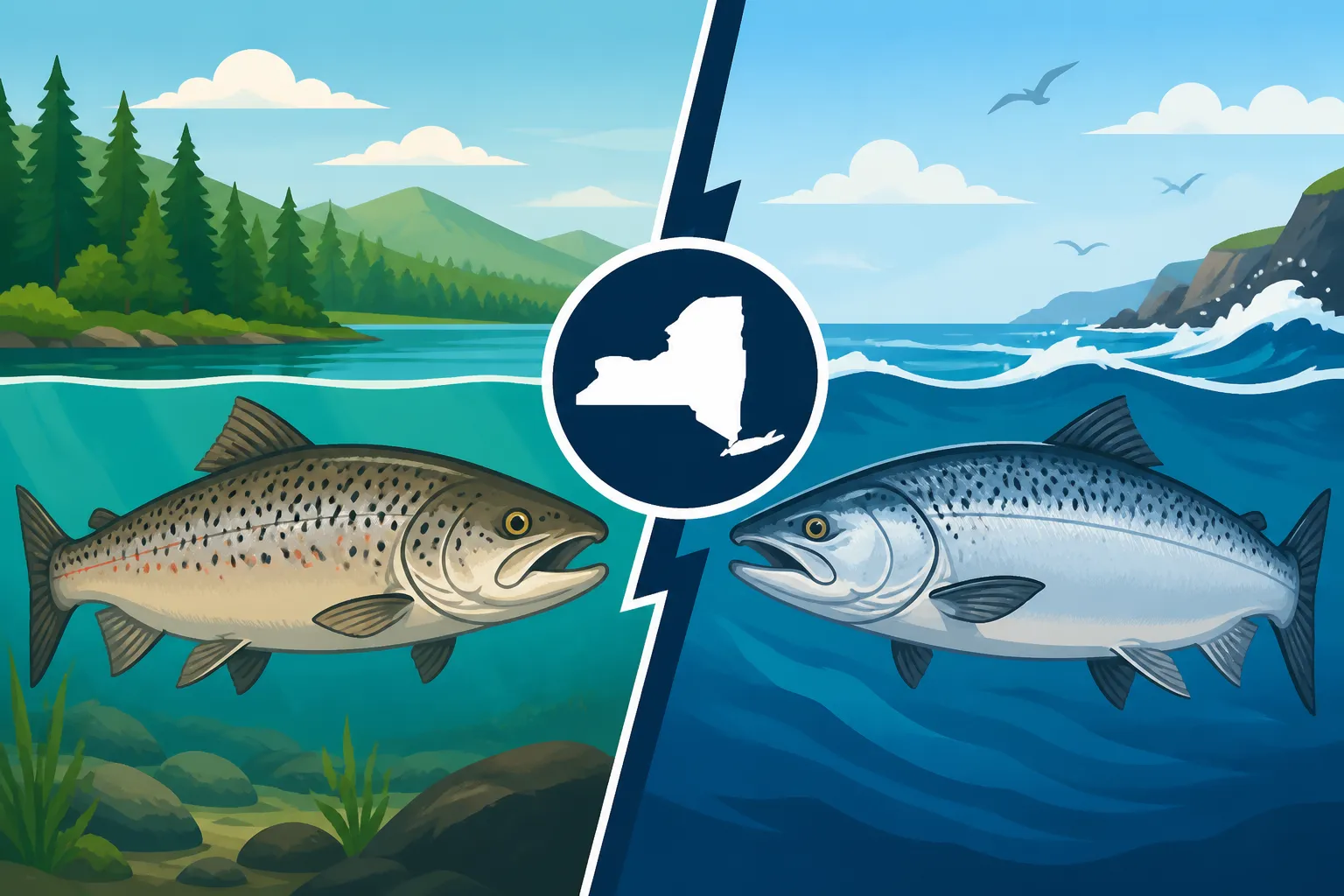
When you hold a landlocked salmon versus an ocean-run Atlantic salmon, you might notice some subtle yet consistent differences. Atlantic salmon, having spent time in the expansive, often rough environment of the ocean, tend to be more silvery and sleek. Their spots are usually fewer and larger, primarily concentrated above the lateral line, and they typically lack the distinct red spots sometimes seen on freshwater trout or even landlocked salmon parr.
Landlocked salmon, on the other hand, can sometimes retain a slightly more "trout-like" appearance. While still generally silvery, their coloration can vary depending on the specific lake and diet, sometimes showing a slight bronze or coppery hue. The spotting can also be more pronounced and widespread, though still generally above the lateral line. The caudal fin (tail fin) is typically forked in both, but some anglers swear the oceanic Atlantic salmon's tail can appear slightly more streamlined and powerful due to the constant battle against ocean currents. Their heads might also appear slightly smaller in proportion to their body in ocean-run fish compared to some landlocked specimens.
Consider the markings. Many Atlantic salmon, particularly those fresh from the sea, are almost iridescent silver with few, often X-shaped or irregular, spots above the lateral line. Landlocked salmon, while also often very silvery, can sometimes have a richer, almost golden sheen depending on the water's tannin content or the specific forage base in their lake. Their spots might be more numerous and sometimes more circular, though still generally dark.
Size and Growth Patterns
Here's where the biggest perceived difference often lies for many anglers. Atlantic salmon, with access to the vast food resources of the open ocean, generally grow much larger and faster than their landlocked counterparts. A mature Atlantic salmon returning to spawn can easily weigh into the double digits, with trophy fish reaching 20-30 pounds or more. Their growth is fueled by an abundant diet of baitfish and crustaceans in the nutrient-rich marine environment.
Landlocked salmon, constrained by the finite resources of a lake ecosystem, typically do not reach the same colossal sizes. While still formidable fighters and impressive fish, a large landlocked salmon in New York might range from 5 to 10 pounds, with exceptional specimens pushing into the mid-teens. Their growth is directly tied to the availability of forage fish in their specific lake, such as alewives or smelt. A lake with a robust baitfish population will produce larger landlocked salmon. For instance, the Average Landlocked Salmon Size on the Finger Lakes will vary depending on the specific lake's forage base.
| Feature | Atlantic Salmon (Ocean-run) | Landlocked Salmon (Freshwater) |
|---|---|---|
| Primary Habitat | Anadromous: Spawns in freshwater, matures in saltwater | Potamodromous: Spends entire life in freshwater lakes and rivers |
| Coloration | Bright, iridescent silver; few, large black spots above lateral line, often X-shaped | Silvery, sometimes with bronze/golden hues; more numerous, smaller black spots, often more scattered |
| Typical Size | Larger; commonly 10-30+ lbs (ocean phase) | Smaller; commonly 3-12 lbs (lake phase) |
| Migration | Extensive migrations between rivers and ocean | Migrations within large lakes and into tributaries for spawning |
| Diet | Marine baitfish, crustaceans in ocean; insects, small fish in rivers | Lake baitfish (alewives, smelt); insects, smaller fish in tributaries |
Habitat and Behavior: Where and How They Live
The environments these salmon call home dictate much of their behavior, from their feeding habits to their spawning rituals. Understanding these differences is crucial for any angler looking to target them.
Freshwater vs. Saltwater Ecosystems
Atlantic salmon, as true ocean dwellers for a significant portion of their lives, are adapted to the marine environment's salinity, currents, and vastness. Their bodies are built for long migrations and hunting in open water. While they are born and spawn in freshwater, the ocean is their primary feeding ground. Historically, New York's major river systems, like the Hudson and its tributaries, would see runs of Atlantic salmon coming in from the Atlantic Ocean. Unfortunately, many of these runs have been severely impacted or extirpated due to dams and pollution over the centuries, though restoration efforts continue.
Landlocked salmon, however, have entirely adapted to freshwater ecosystems. They thrive in large, deep, cold-water lakes that can support a healthy population of forage fish, like alewives, smelt, or ciscoes. In New York, excellent landlocked salmon fisheries exist in places like Lake Ontario, which functions like an inland sea, and several of the Finger Lakes, such as Seneca, Cayuga, and Keuka. These lakes offer the depth and cold temperatures necessary for salmon survival, especially during warmer summer months when they retreat to cooler waters. Fish Species Found in the Finger Lakes often include landlocked salmon, which are a major draw for anglers. The availability of baitfish in these freshwater giants is critical; without them, the salmon cannot grow to their impressive sizes.
Spawning Habits and Migration
Despite their divergent habitats for much of their lives, when it comes to spawning, both Atlantic and landlocked salmon exhibit remarkably similar behaviors. Both require cold, clean, oxygenated freshwater streams with gravelly bottoms to lay their eggs. The female digs a nest, or "redd," with her tail, deposits her eggs, and a male fertilizes them. She then covers the eggs with gravel. This instinct to return to a natal or suitable spawning stream is incredibly strong.
For ocean-run Atlantic salmon, this means an often epic journey from the ocean, up estuaries, and into the freshwater rivers where they were born. They rely on an incredible sense of smell and instinct to navigate thousands of miles back to their specific spawning grounds. This migration often occurs in the fall, with spawning happening in late fall or early winter.
Landlocked salmon undertake a similar, though usually shorter, migration. They typically spend the majority of their lives in the deep, cold waters of a large lake but will ascend tributary streams in the fall to spawn. For example, in the Finger Lakes, you'll find landlocked salmon moving into smaller creeks and rivers during the spawning season. This migratory pattern within a freshwater system is a testament to their inherent Atlantic salmon genetics. Understanding New York Fishing Regulations Explained regarding these spawning runs is crucial, as some areas may have special closures or catch-and-release rules to protect these vulnerable fish during reproduction.
Angling Considerations: What This Means for Your Fishing Trip
For the angler, understanding the differences between these two types of salmon translates directly into how you plan your fishing trips, the gear you use, and the regulations you adhere to.
Regulations and Conservation Efforts
Because true Atlantic salmon populations in New York are largely extirpated or struggling, they are often protected, and regulations surrounding them can be extremely strict or even prohibit their take. Any incidental catch of a wild Atlantic salmon (which is exceedingly rare) would likely require immediate release. Conservation efforts are focused on restoring natural runs, which is a monumental undertaking.
Landlocked salmon, on the other hand, are a managed fishery in New York. The New York State Department of Environmental Conservation (DEC) actively stocks landlocked salmon in many lakes to maintain healthy populations and provide angling opportunities. This means there are specific seasons, size limits, and bag limits that anglers must follow. These regulations can vary from lake to lake, so always consult the most current New York DEC fishing guide before heading out. Understanding New York Fishing License Guide requirements and specific local rules for where you plan to fish is paramount.
Fishing Techniques and Gear Considerations
For ocean-run Atlantic salmon, if you were to target them in areas where they are more abundant (outside of New York, given their rarity here), you'd likely employ heavy-duty gear for offshore trolling or robust fly-fishing setups in large rivers.
For landlocked salmon in New York, the techniques often mirror those used for lake trout or other large, cold-water predatory fish. Trolling is a hugely popular and effective method in large lakes like Lake Ontario or the Finger Lakes. Anglers use downriggers, planer boards, and lead core line to present spoons, stickbaits, and flies at specific depths where the salmon are feeding on baitfish. Popular lures might include classic spoons in silver, blue, or green, or minnow-imitating crankbaits. When they move into tributaries to spawn, fly fishing or drift fishing with egg patterns or small streamers can be highly effective. How to Fish for Salmon in New York covers many techniques that are applicable to landlocked salmon in our freshwater systems.
You'll want a medium-heavy spinning or casting rod with a good quality reel spooled with strong monofilament or braided line. Consider a line with at least 8-12 lb test, possibly heavier if you're trolling in areas with large fish or potential snags. When fishing for landlocked salmon, having the right combination of lures, swivels, and leader material can make all the difference. Many anglers find a good selection of tackle and specialized trolling gear readily available through online retailers like Amazon, making it convenient to stock up before a trip. For those who prefer to shop in person, local sporting goods stores or bait shops are also excellent resources.
Choosing the Best Time of Year to Fish in New York will also significantly influence your success. For landlocked salmon, spring and fall are often prime times when the fish are more active in shallower waters or in their spawning tributaries. In the summer, they retreat to cooler, deeper parts of the lakes, requiring specialized deep-water trolling techniques. You might also find particular gear, such as specialized electronics for finding deep schools of baitfish, on Amazon to give you an edge.
Disclaimer
This article is for general informational purposes only and does not constitute professional advice. Laws, prices and regulations vary by location and change over time. Consult a qualified professional for guidance on your specific situation.