Crappie in New York
There's nothing quite like the subtle tug on your line, followed by the sight of a beautiful, silvery crappie emerging from the water. For many anglers in New York, crappie fishing isn't just a pastime; it's a passion, offering a rewarding experience whether you're chasing a full stringer for a family fish fry or just enjoying a peaceful day on the water. This guide is dedicated to helping you understand everything there is to know about these popular panfish, from identifying them to finding their honey holes across our diverse New York waters.
Understanding Crappie Species in New York
When we talk about crappie in New York, we're primarily discussing two distinct, yet often confused, species: the black crappie and the white crappie. While they share a similar shape and general habits, there are some key differences that seasoned anglers and biologists alike use to tell them apart. Knowing which one you've hooked can sometimes inform your strategy, though often, where you find one, you might find the other.
Black Crappie vs. White Crappie: Key Differences
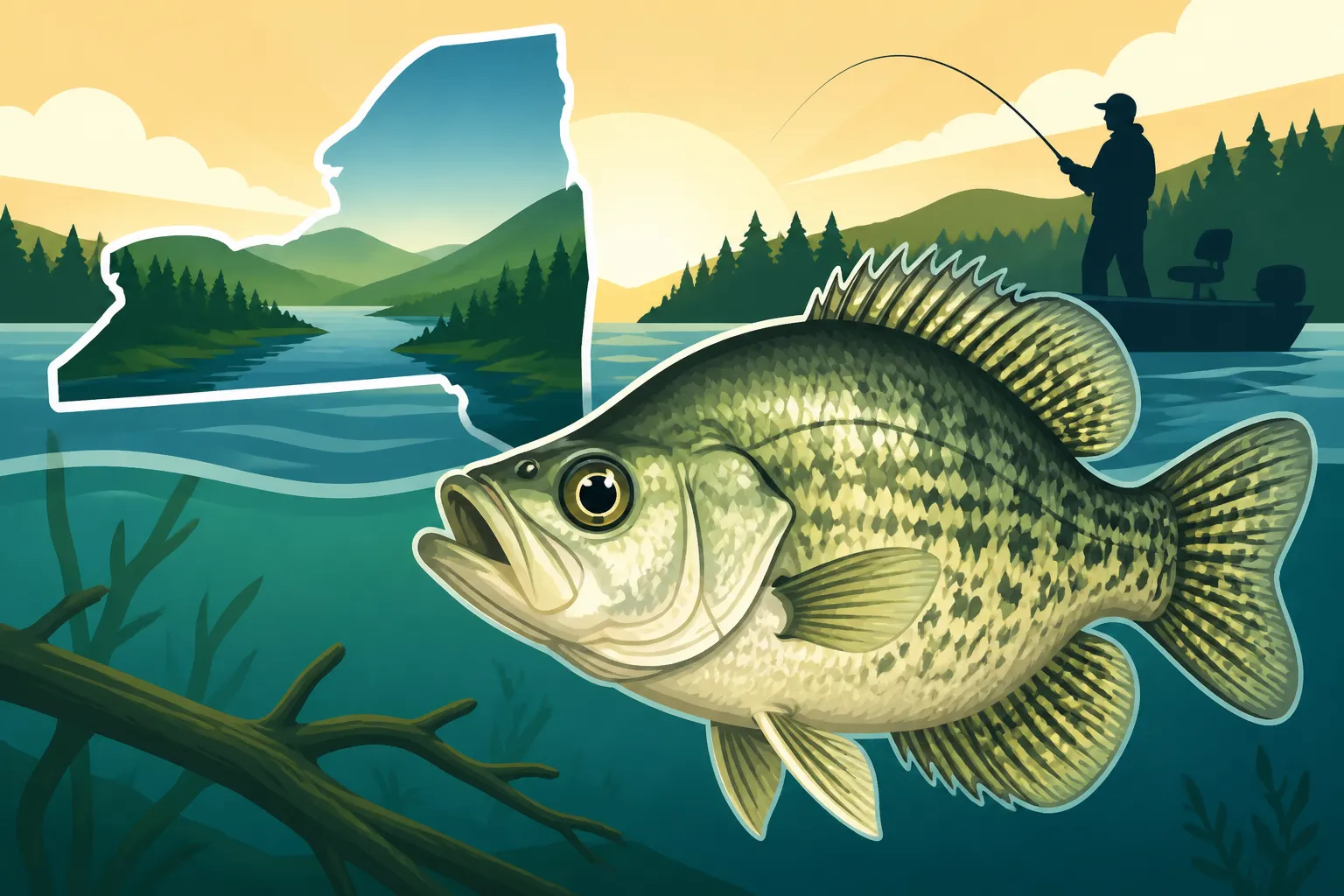
It's a common scenario: you pull up a crappie, and you're not entirely sure if it's a black or a white. Don't worry, even experienced anglers can pause. The most reliable way to tell them apart is by counting the dorsal fin spines and examining their body shape. Black crappie typically have 7 or 8 dorsal spines, while white crappie usually have 5 or 6. This can be tricky to count on a wriggling fish, of course. Another visual cue is the patterning and body shape. Black crappie tend to have a more speckled, "peppered" appearance with irregular dark spots scattered randomly over their body, and they are generally a bit deeper-bodied and more rounded. Their spots often form faint vertical bars, but not always.
On the other hand, white crappie are usually lighter in color and have distinct, often more organized, vertical bars along their sides. Their bodies are typically more elongated and slender compared to their black crappie cousins. Imagine a "football" shape for the black crappie and a "saucer" for the white crappie, though this is a simplification. Often, the conditions of the water they live in—like clarity and vegetation—can influence their coloring, making field identification even more challenging. Many times, you’ll just call them "crappie" and be happy with your catch! For a deeper dive, you might want to read our article on Black Crappie vs White Crappie: Key Differences.
Typical Size and Appearance in New York Waters
Crappie in New York rarely grow to truly massive sizes, but they offer consistent action and can provide a good meal. A "keeper" crappie in many New York waters is usually anywhere from 8 to 12 inches, with fish exceeding 13 or 14 inches considered excellent catches. The state record black crappie, for example, is a testament to the potential for truly impressive specimens. While you might not land a record breaker every time, a good day of crappie fishing often means plenty of fish in the 9-11 inch range.
Their silvery-green or olive backs fade into lighter sides and a white belly, which helps them camouflage in various aquatic environments. The dark spots (or bars) help break up their outline, making them ambush predators. These aesthetic differences, combined with the number of dorsal spines, are what set them apart. Understanding the average size and appearance helps you identify your catch and adhere to any local regulations. If you're curious about the general size of these fish, our guide on Average Black Crappie Size in New York has more details.
Where to Find Crappie in New York
Crappie are masters of structure. They love to hang out around anything that offers cover and a place to ambush unsuspecting baitfish or insects. This makes them relatively predictable once you understand their preferred habitats, though these can change with the seasons and water temperatures.
Preferred Habitats and Structures
Think "cover" and "edge" when you're looking for crappie. In New York's many lakes, ponds, and slower-moving rivers, you'll often find them congregating around submerged timber, brush piles, fallen trees, docks, bridge pilings, and weed lines. These structures provide protection from predators, a place to hide from the sun, and a buffet line for small forage. During the colder months, they tend to move deeper, seeking out similar structures in more stable temperatures.
Areas where open water meets a distinct structure are particularly productive. For instance, the edge of a deep weed bed that drops off into a channel, or a cluster of submerged logs near a prominent point, are classic crappie hangouts. They are also often found in the backwater areas of rivers, where the current is minimal, and vegetation can thrive. Understanding these preferences is key to narrowing down your search, especially on larger bodies of water.
Notable Crappie Hotspots Across the State
New York boasts an incredible array of crappie fishing opportunities. From the vastness of the Great Lakes to countless small ponds and reservoirs, there’s a crappie hotspot for every angler. Some of the most renowned locations include the Finger Lakes, which are famous not just for their scenery but also for their prolific crappie populations. Lakes like Cayuga, Seneca, and Keuka consistently produce excellent catches, especially around docks and deeper weed edges.
Moving further east, you’ll find that large reservoirs and interconnected waterways like Oneida Lake offer fantastic crappie fishing, particularly in bays and around various submerged structures. Our Oneida Lake Fishing Guide provides specific insights into fishing this fantastic body of water. Other notable areas include the smaller lakes and ponds throughout the Catskills and Adirondacks, as well as the quiet backwaters of the Hudson River and its tributaries. Even urban anglers can find crappie in some designated fishing ponds within city parks, proving just how widespread these adaptable fish are. Don't forget Lake Chautauqua in Western New York, which is another excellent destination for slab crappie, as detailed in our Chautauqua Lake Fishing Guide.
Best Times to Fish for Crappie
Timing is everything in fishing, and crappie are no exception. Their behavior, feeding patterns, and locations change throughout the year, primarily influenced by water temperature and their spawning cycle. Knowing when and how to approach them during these periods can dramatically increase your success.
Spring: The Spawning Season Frenzy
Ah, spring crappie! This is arguably the most anticipated time for crappie anglers in New York. As water temperatures begin to rise, typically into the high 50s and low 60s Fahrenheit, crappie move into shallower waters to spawn. This is when they become highly concentrated and aggressive, making them easier to locate and catch. Look for them in bays, coves, and shallow flats with submerged brush, reeds, or overhanging cover.
During the spawn, male crappie guard the nests, making them particularly territorial. They'll often strike anything that comes too close, even if they're not actively feeding. This shallow-water activity also makes them accessible to shore anglers and those in smaller boats. It's a fantastic time for fast action and filling your cooler. Check out our detailed guide on How to Catch Crappie in the Spring for more specific tips and tricks for this exciting season.
Summer, Fall, and Winter Patterns
Once the spring spawn concludes and water temperatures continue to climb, crappie generally transition to deeper, cooler waters. In summer, they'll often retreat to deeper structures like brush piles, channel edges, and submerged humps, seeking refuge from the heat and bright sunlight. Early mornings and late evenings can still find them moving shallower to feed, but daytime action often requires fishing deeper.
As fall approaches and water temperatures begin to drop, crappie become more active and start to feed heavily in preparation for winter. They'll often school up in large numbers, making it possible to catch a lot of fish once you find a school. Look for them around deeper breaks and structures, often moving between shallow feeding grounds and deeper holding areas. Winter, particularly for those brave enough to venture onto the ice, offers excellent opportunities for crappie as well. They remain schooled up, often near the bottom in deeper basins or over submerged structures. Ice fishing for crappie can be incredibly rewarding, and our guide on Best Ice Fishing Techniques for New York Panfish offers excellent advice for those cold-weather outings.
Essential Gear and Techniques for Crappie Fishing
You don't need a boatload of expensive gear to catch crappie in New York, which is one of the many reasons they're such a popular target. A simple, sensitive setup and a few key baits and lures can put you on plenty of fish.
Rods, Reels, and Line Choices
For crappie, sensitivity is key. You're often dealing with light bites and subtle takes. A lightweight spinning rod, typically in the 5 to 7-foot range with a fast to moderate action, is ideal. This allows for accurate casting of light lures and enough backbone to handle a decent crappie, while still being sensitive enough to detect those faint nibbles. Pairing this with a small, ultralight spinning reel (size 1000 or 2000) spooled with 4 to 6-pound test monofilament or fluorocarbon line is a perfect combination. Some anglers prefer braided line with a fluorocarbon leader for even more sensitivity and strength.
Monofilament offers good knot strength and shock absorption, while fluorocarbon is virtually invisible underwater and offers excellent sensitivity. Braided line provides the ultimate in sensitivity and castability, but its visibility usually necessitates a leader. Your choice often comes down to personal preference and the specific conditions you're fishing. For those looking to browse, a quick search for ultralight fishing combos on Amazon will show you many suitable options.
Baits and Lures for New York Crappie
Crappie are not particularly picky eaters, which is good news for anglers. Their diet mainly consists of small baitfish, insects, and crustaceans. The two most common and effective offerings are live bait and small artificial jigs.
Live minnows are often considered the ultimate crappie bait. Fished under a bobber or on a simple hook-and-sinker rig, their natural movement is irresistible to hungry crappie. You can find minnows at most local bait shops. Worms, grubs, and even small pieces of shrimp can also work in a pinch. For a broader perspective on panfish baits, check out Best Bait for Catching Sunfish and Bluegill.
Artificial jigs, particularly those in the 1/32 to 1/16 ounce range, are incredibly versatile and effective. Soft plastic "curly tail" grubs, tube jigs, and small swimbaits are all excellent choices. Color can sometimes make a difference, with chartreuse, white, pink, and black being perennial favorites. Tip these jigs with a small piece of crappie nibbler, a mealworm, or a wax worm to add extra scent and enticement. You can find a vast selection of these crappie jigs and soft plastics on Amazon, often in multi-packs that give you a variety of colors to experiment with.
Popular Techniques: Jigging, Trolling, and Bobber Fishing
There are several effective ways to present your bait or lure to crappie, each suited for different situations:
- Jigging: This is perhaps the most popular method, especially when crappie are schooled up or holding tight to structure. Drop a small jig directly down to their depth, then use a subtle up-and-down motion, or gently twitch the rod tip. This mimics a struggling baitfish or insect. Vertical jigging is fantastic when you've pinpointed a school using a fish finder, or when fishing through an ice hole.
- Bobber Fishing: This classic technique is fantastic for presenting live minnows or small jigs at a specific depth. A slip bobber allows you to set your bait deeper than the length of your rod, making it highly effective for fishing over submerged structures or along weed lines. The bobber acts as a visual strike indicator, making it easy to see even the lightest crappie bite.
- Trolling: On larger lakes, slowly trolling small crankbaits or jigs behind the boat can be a highly effective way to cover water and locate schools of crappie, especially when they are scattered. Adjust your speed and depth until you start getting bites, then focus your efforts in that area. This is particularly useful in open water situations during summer and fall.
Experimenting with these techniques based on the time of year and the specific body of water you're fishing will help you dial in your crappie success.
Crappie Fishing Regulations and Limits in New York
Understanding and adhering to New York's fishing regulations is not just about avoiding fines; it's about protecting our fisheries for future generations of anglers. Crappie, being a panfish, often fall under general statewide regulations, but specific waters might have unique rules.
General Statewide Panfish Regulations
In New York, crappie are generally classified as "panfish" along with species like sunfish and perch. For most waters, there are typically no closed seasons for panfish, meaning you can pursue them year-round, including during the ice fishing season. This is a huge benefit for crappie enthusiasts! However, it's crucial to always check the most current regulations for the specific body of water you plan to fish, as rules can change and special regulations often apply to certain lakes or rivers.
While there might not be a closed season, daily creel limits (the number of fish you can keep per day) and minimum size limits can vary. It’s not uncommon to find a generous daily limit for crappie, reflecting their abundance in many New York waters. However, some specific lakes or even sections of rivers may have more restrictive limits to help manage their populations or promote trophy fishing. Always consult the official New York State Department of Environmental Conservation (DEC) fishing regulations guide or their website before heading out. Our New York Fishing Regulations Explained article covers these topics in more detail.
Specific Water Body Regulations
It's tempting to assume that once you know the general statewide regulations, you're good to go everywhere. However, New York is home to thousands of lakes, ponds, and miles of rivers, and many of these have specific regulations that supersede the general rules. These special regulations are put in place for various reasons, such as protecting unique fisheries, managing specific populations, or addressing environmental concerns.
For crappie, you might encounter regulations that impose a reduced daily limit, a higher minimum size limit, or even tackle restrictions on certain waters. For example, a trophy crappie lake might have a lower daily creel limit or a slot limit designed to protect larger breeding fish. Always consult the "Special Regulations by County" section in the official DEC guide. Ignorance of the law is never an excuse, and a quick check can save you a lot of hassle. Familiarizing yourself with resources like the New York Freshwater Fishing Rules will make you a more responsible and successful angler. Knowing the New York Fishing Season Dates and Catch Limits is also crucial for crappie and all other species.
Identifying and Handling Your Crappie Catch
After the thrill of the bite and the fight, it's important to properly identify your catch and handle it responsibly, whether you plan to release it or take it home for dinner.
Correctly Identifying Your Catch in the Field
While we touched on the differences between black and white crappie earlier, quick field identification can still be tricky, especially if you're excited! The key is to look for those distinct vertical bars on the white crappie and the more random, speckled pattern on the black crappie. Remember the dorsal spine count as a definitive identifier if you're really unsure and need to be precise for regulations. If you're targeting panfish, our New York's Panfish Species Explained guide can help you distinguish crappie from other similar-looking species like bluegill or perch.
Sometimes, water clarity can impact a crappie's coloration. Fish from murky water might appear paler, while those from clear, tannin-stained waters might have a richer, darker hue. If you’re ever in doubt about the species, it’s always best to err on the side of caution regarding regulations. A photo can also help you identify it later with a field guide or online resource if you're truly stumped.
Handling Crappie for Release or Retention
Responsible fish handling is paramount for the health of our fisheries. If you plan to release a crappie, minimize its time out of water. Use a wet hand to handle the fish gently, supporting its body. Avoid touching the gills or eyes. If the hook is easily removed, do so quickly with pliers or a de-hooking tool. If the fish is deeply hooked, especially in the gills or stomach, it might be better to cut the line as close to the hook as possible rather than attempting to rip the hook out, which often causes more damage.
For crappie you intend to keep, proper care ensures the best quality meat. Get them on ice as quickly as possible. A cooler filled with ice will chill the fish rapidly, preserving its freshness and flavor. Don't just toss them into a bucket of warm water, as this can degrade the meat quickly. Bleeding the fish immediately after catching can also improve flavor by removing blood from the muscle tissue. Most crappie are fantastic table fare, offering flaky, white meat that's delicious pan-fried, baked, or broiled. You might be surprised at the fighting spirit and flavor these smaller fish possess! If you're aiming for a trophy, remember that the New York State record crappie is a truly impressive catch, and who knows, yours might be the next one! Check out the New York State Record Fish page for more exciting details.
Disclaimer
This article is for general informational purposes only and does not constitute professional advice. Laws, prices and regulations vary by location and change over time. Consult a qualified professional for guidance on your specific situation.