Why Chinook Salmon Die After Spawning
It's a sight that can be a little jarring, even for seasoned anglers: seeing large, dark-colored salmon, often bruised and tattered, lying dead or barely moving in the shallow waters of a river after the fall spawning run. Many people wonder why these magnificent fish, especially the mighty Chinook salmon that grace New York's Great Lakes tributaries, meet such a dramatic end. This guide will dive deep into the fascinating and somewhat melancholy biological reasons behind this phenomenon, helping you understand the incredible life cycle of these fish and what it means for the waters we love to fish.
The Incredible Life Cycle of the Chinook Salmon
Chinook salmon, often called "Kings" by those of us who chase them, undertake one of nature's most epic journeys. From the vast waters of Lake Ontario, they push into the smaller, swift-flowing rivers and streams to fulfill their ultimate purpose: reproduction. What many don't realize is that this journey is literally a one-way ticket for these fish.
Semelparity: A One-Shot Deal for Survival
You might hear a fancy scientific term thrown around: "semelparity." What does it mean in plain English? It means these salmon are designed for a single, massive reproductive effort in their lifetime. Think of it as putting every single ounce of energy, every last reserve, into one grand, final act of procreation. Once they spawn, their life's mission is complete, and their bodies simply give out.
This is a stark contrast to "iteroparous" species, like our beloved brown trout or even the amazing steelhead, which have the ability to spawn multiple times over several years. For Chinook, it’s all or nothing. This strategy is an evolutionary trade-off, where instead of spreading out their reproductive chances, they invest everything into producing a huge number of high-quality eggs or a vast amount of milt, maximizing the chances of genetic contribution from that single event. It’s a gamble, but one that has clearly worked for these powerful fish over millennia. You see this same strategy in many Pacific salmon species, and our Chinook salmon in New York's Great Lakes system—which are descendants of Pacific introductions—follow this ancient, predetermined path.
The Brutal Spawning Migration
Imagine swimming hundreds of miles, often against strong currents, leaping over natural barriers or even man-made weirs, all without a single bite to eat. That's precisely what a spawning Chinook salmon endures as it makes its way from the deep, cold waters of Lake Ontario into tributaries like the famous Salmon River, the Oswego River, or various smaller streams that feed into the lake. This arduous upstream migration begins in late summer and peaks in the fall.
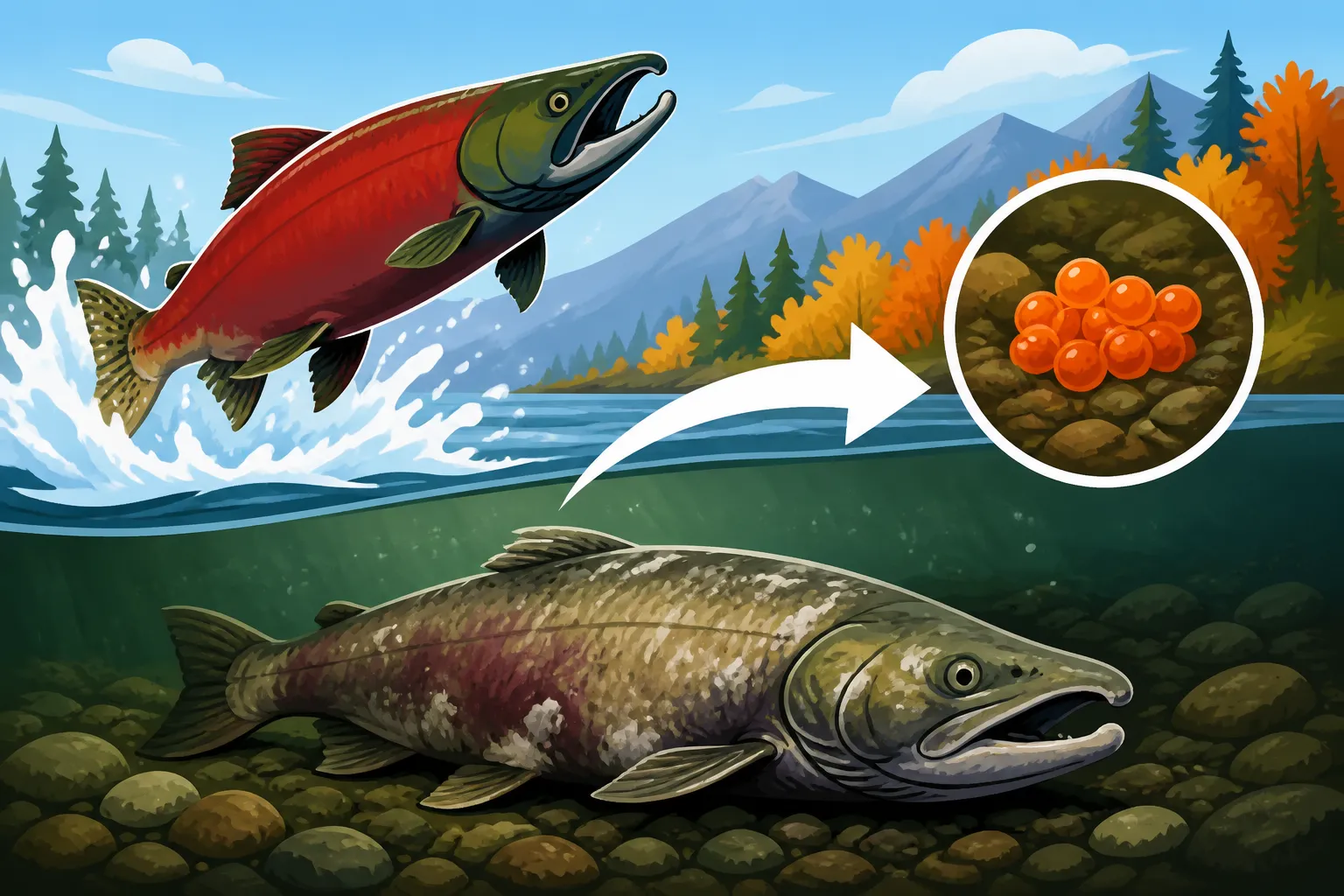
During this journey, the salmon's body undergoes incredible transformations. Their sleek, chrome-bright lake-dwelling appearance gives way to a darker, duller coloration. Males develop a pronounced hooked jaw, known as a "kype," used for fighting rivals and impressing females. They stop feeding once they enter freshwater, relying solely on the fat reserves built up during their time in the lake. Every ounce of energy is expended purely on swimming, fighting, and the development of reproductive organs. By the time they reach their chosen spawning grounds, they are physically depleted, battered from the journey, and often covered in scrapes or fungal growths, which are just another sign of their failing immune systems. It truly is a testament to their sheer determination.
Hormonal Cascade and Organ Failure
It's not just the physical exertion that leads to their demise. The Chinook's body is pre-programmed for this grand finale through a complex hormonal cascade. Once they enter freshwater and the spawning process begins, a surge of hormones takes over, essentially triggering a countdown to death. These hormones, particularly high levels of cortisol, prioritize reproduction at the expense of all other bodily functions.
Their immune system shuts down, making them highly susceptible to diseases, parasites, and fungal infections. Their digestive organs begin to atrophy because they no longer need to feed. Other vital organs, no longer receiving the necessary nutrients and energy, simply start to break down. It's an internal process that's irreversible once initiated. Even if a salmon were to somehow survive the physical toll of spawning, the physiological changes mean its body is no longer capable of sustaining life. It’s an almost perfect, albeit tragic, biological design to ensure the perpetuation of the species.
The Biological Design for Reproductive Success
The death of the adult salmon isn't just a byproduct of their journey; it's an integral part of their overall reproductive strategy and even benefits the ecosystem. It might seem wasteful, but in nature, every process has a purpose.
Maximizing Offspring Production
For Chinook salmon, the sheer volume and quality of their offspring are paramount. By dedicating all their energy to a single reproductive event, they can produce thousands of eggs or a massive amount of milt. A large female Chinook can lay several thousand eggs, each fertilized by a male that has often fought fiercely to earn his place on the redd (spawning nest).
This intense focus means there's no holding back. All resources are channeled into developing and depositing the next generation. The rapid deterioration of the adults post-spawn is a clear sign that absolutely nothing was held in reserve. This strategy ensures that the maximum possible genetic contribution is made, optimizing the chances for a strong future generation, especially in environments where survival rates for juvenile salmon can be challenging. It's a testament to life finding a way, even if it means a short, explosive existence for the parents.
Ecological Contributions of Post-Spawn Carcasses
While seeing deceased salmon might feel sad, these fish contribute significantly to the riverine ecosystem even after death. Their bodies, rich in nutrients accumulated from their years in the nutrient-rich waters of Lake Ontario, become a vital food source.
Once the salmon die, their carcasses begin to break down, releasing marine-derived nutrients (MDN) back into the freshwater streams. This influx of nitrogen, phosphorus, and other essential elements enriches the otherwise nutrient-poor headwater streams where young salmon fry will hatch and spend their first year. This "nutrient pulse" benefits a wide array of organisms:
- Scavengers: Birds like eagles and gulls, and mammals such as raccoons and even coyotes, feast on the easy meal.
- Invertebrates: Aquatic insects, which are crucial food for juvenile fish, thrive on the decomposing flesh.
- Juvenile Fish: Smaller fish, including the salmon's own offspring, can feed on decaying bits or the invertebrates that are nourished by the carcasses.
This cycle is incredibly efficient. The salmon migrate from the lake, carrying energy and nutrients upstream, deposit their eggs, and then their bodies deliver a final, essential gift to the nursery waters. It's a full-circle contribution to the very ecosystem that will nurture their young. It's a powerful demonstration of how interconnected everything truly is in nature, and something that makes New York's fantastic salmon fishery possible.
Identifying and Interacting with Spawning Salmon in New York
Understanding this unique life cycle helps us appreciate the Chinook salmon even more, and it also guides us in how we interact with them as anglers. The fall run is a prime time to witness this spectacle, but it also brings specific considerations. New York Fishing Regulations Explained can provide details on specific rules during these seasons.
Recognizing the Changes in Spawning Chinook
When you're out on a New York tributary in the fall, you'll quickly learn to distinguish the "fresh" salmon that just entered the river from the fish that have been there for a while, actively spawning. The changes are quite dramatic.
| Characteristic | Fresh, Pre-Spawn Chinook | Spawning/Post-Spawn Chinook |
|---|---|---|
| Coloration | Bright, chrome silver, often with a hint of green/blue | Darker, olive-green to brown, blotchy, sometimes blackish |
| Body Shape | Sleek, torpedo-like, muscular | Emaciated, sunken belly, often lumpy from spawning scars |
| Jaw (Males) | Slight hook | Pronounced "kype" (hooked jaw) |
| Fins | Intact, clean, strong | Frayed, tattered, often with white fungal growths |
| Eyes | Clear, alert | Dull, cloudy |
| Energy/Fight | Extremely powerful, long runs, strong fight | Weak, sluggish, short bursts of energy, often easy to land |
| Feeding Behavior | Actively feeding (in lake), reactionary strikes in river | Not feeding, aggressive towards perceived threats to redds |
These visual cues are important because they tell you a lot about the fish's condition and its stage in the life cycle. A dark, beat-up salmon with a hooked jaw is clearly nearing the end of its life's journey.
Ethical Considerations for Anglers
This brings us to a crucial point for us anglers: ethical practices. While fishing the fall run for Chinook Salmon in New York is incredibly popular, especially in places like Lake Ontario Fishing in New York: Where to Go and New York's Salmon River Fishing Guide, it's important to consider your approach, especially with actively spawning or post-spawn fish.
Many anglers choose to avoid directly targeting fish on their redds (spawning nests), which appear as clean, oval-shaped depressions on the riverbed. Disturbing these areas can harm the eggs. When you do hook a post-spawn fish that is clearly deteriorating, consider how you handle it. These fish are incredibly vulnerable. If practicing catch and release, try to minimize stress:
- Land quickly: Don't prolong the fight.
- Keep in water: Avoid removing the fish from the water entirely if possible, especially for photos.
- Gentle release: Support the fish until it swims away on its own.
- Barbless hooks: Using barbless hooks, which are often recommended or even required in some sensitive areas, can make unhooking easier and reduce injury. You can find excellent barbless hooks and other ethical angling gear on platforms like Amazon.
The goal isn't just to catch a fish; it's to participate respectfully in the natural world. Many anglers find greater satisfaction in targeting the fresh, powerful salmon entering the river, rather than the ones that are clearly at the very end of their life cycle.
Prime Times for Healthy Chinook Fishing in New York
If you're looking for that exhilarating fight and the pristine beauty of a truly vibrant King salmon, your best bet is to target them earlier in the run. The Best Time to Fish for Chinook Salmon on New York's Lake Ontario is typically in late summer and early fall, as they stage near the mouths of the tributaries or begin their initial push upstream.
During these periods, the fish are fresh from the lake, full of energy, and incredibly strong. They haven't yet begun the full physiological breakdown that comes with prolonged spawning activity. This is when they are at their peak, offering the kind of battle that legendary stories are made of. Knowing when and where to find these robust fish is key to an exciting and rewarding fishing experience. You can learn more about techniques in How to Fish for Salmon in New York.
Comparing Chinook to Other New York Salmonids
Understanding the semelparous nature of Chinook salmon also helps to differentiate them from other incredible salmonid species that call New York's waters home, especially when you consider Fish Species You Can Catch in New York.
Other Semelparous Salmonids in New York
Chinook aren't alone in their one-and-done reproductive strategy in New York. Coho Salmon in New York, another popular Great Lakes species, also exhibit semelparity. Like their larger Chinook cousins, Coho salmon undertake a similar arduous spawning migration, cease feeding, and undergo similar physiological breakdowns leading to their post-spawn mortality. While not as large as Chinooks, they are also incredibly hard-fighting fish when fresh.
Iteroparous Relatives: Steelhead and Brown Trout
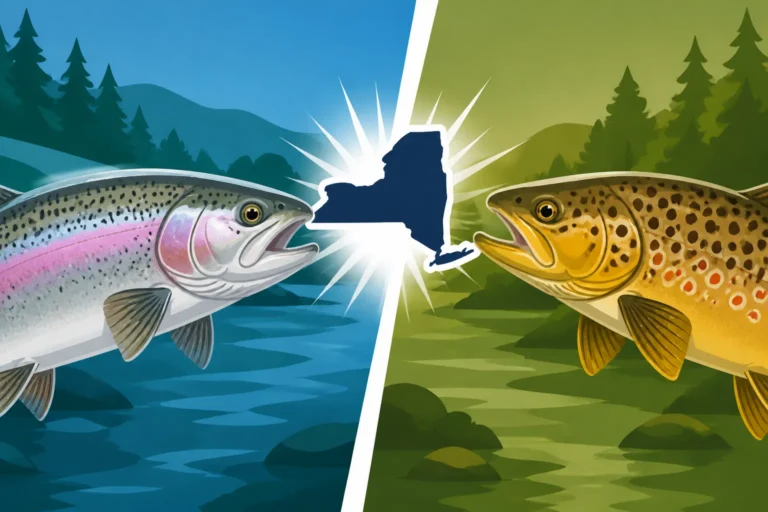
Contrast this with species like Steelhead Trout in New York (which are essentially migratory rainbow trout) and Brown Trout in New York. These fish are iteroparous, meaning they can spawn multiple times over their lifespan. A steelhead, for instance, might return to the lake, recover, and come back to spawn again in subsequent years. The same goes for many brown trout, especially the larger lake-run or wild river browns.
This fundamental difference in life history dictates how their bodies age, how they interact with the environment, and even how regulations are sometimes crafted around them. Knowing How to Tell a Steelhead From a Brown Trout or understanding the key differences like Steelhead vs Rainbow Trout: What's the Difference? becomes crucial for anglers seeking to identify their catch and understand the species they're pursuing.
Why This Distinction Matters for Conservation and Management
The varying life cycles of these salmonid species have significant implications for fisheries management and conservation efforts. Species that spawn only once, like the Chinook, rely heavily on successful yearly reproduction to maintain populations. Their management often focuses on ensuring sufficient access to spawning grounds, controlling harvest rates on mature fish, and supporting the survival of eggs and fry.
For iteroparous species, the ability to spawn multiple times offers a buffer against a single year of poor reproductive success. Management might focus more on protecting spawning adults to ensure they can return to spawn again, while also maintaining healthy habitats for their longer life cycles. As anglers, being aware of these differences not only enriches our understanding of the fish we pursue but also makes us better stewards of New York's incredible aquatic resources. By understanding How to Identify Fish Species in New York, we contribute to better conservation outcomes.
Disclaimer
This article is for general informational purposes only and does not constitute professional advice. Laws, prices and regulations vary by location and change over time. Consult a qualified professional for guidance on your specific situation.