Chinook Salmon Lifespan Explained
It's truly fascinating to consider the journey of a fish that can travel hundreds, even thousands, of miles in its lifetime, only to culminate its existence in one final, monumental effort. For many anglers in New York, the Chinook salmon is a prized catch, celebrated for its size and fighting spirit. But have you ever stopped to ponder the incredible, yet surprisingly brief, lifespan of these magnificent creatures? It's a tale of resilience, instinct, and a dramatic conclusion that often leaves us wondering about the forces that drive them. This guide will take a deep dive into the typical Chinook salmon lifespan in New York, breaking down each critical stage from egg to the final spawning run.
Understanding the Short, Yet Epic, Life of New York's Chinook Salmon
When we talk about Chinook salmon, often called "Kings" by anglers, their life story is one of rapid growth and an intense, singular focus on reproduction. Unlike some other fish species that can spawn multiple times over several years, Chinook salmon typically follow a strict biological blueprint that dictates a relatively short, but incredibly impactful, existence. This means that every stage of their life, from the moment they hatch to their final journey upstream, is geared towards maximizing their chances of contributing to the next generation.
The Brief But Intense Freshwater Phase
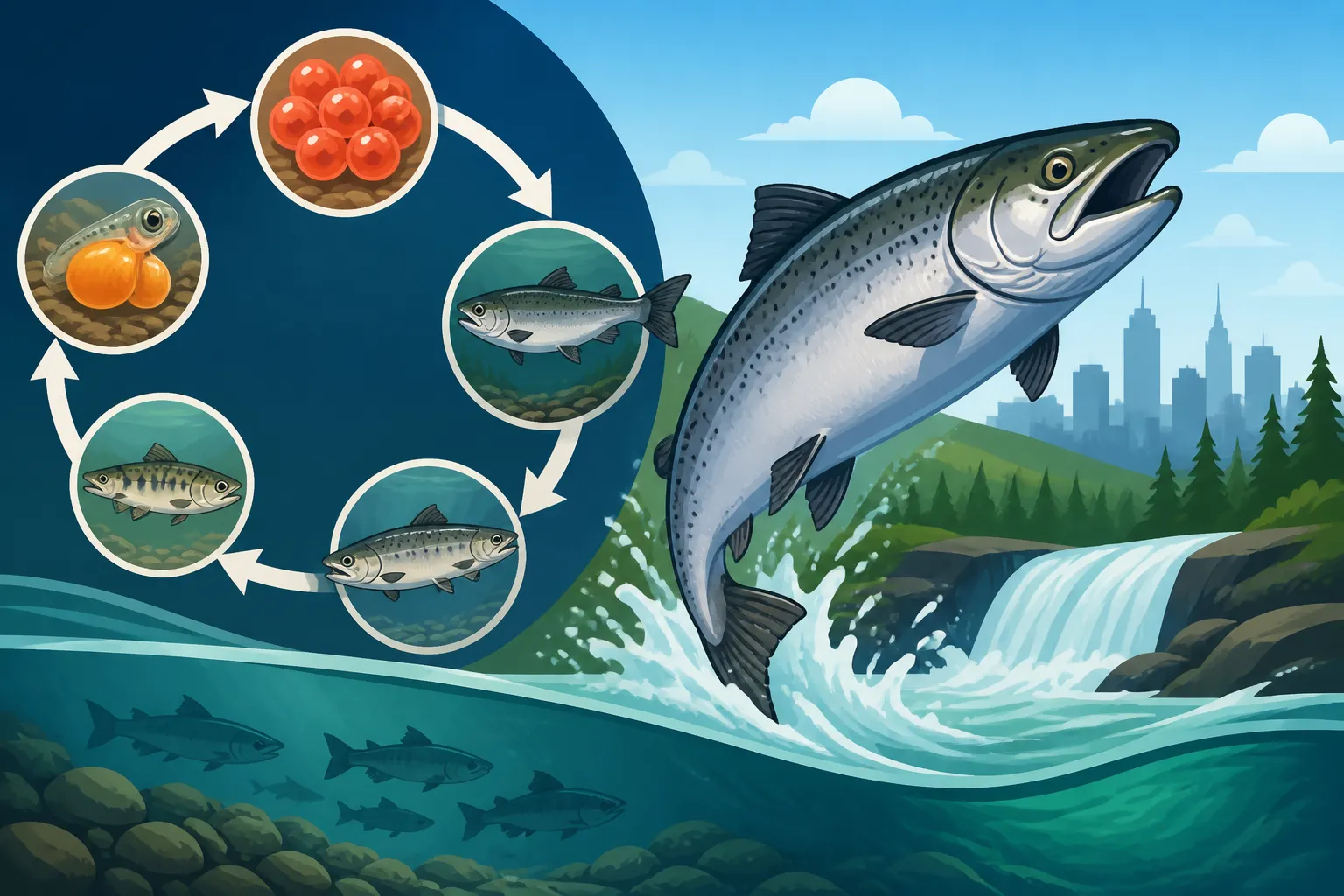
The journey for a New York Chinook salmon begins in the cold, clear gravel beds of tributaries that feed into Lake Ontario. Think of rivers like the Salmon River in Oswego County, the Oswego River itself, or the Genesee River near Rochester. These are the nurseries where life starts. Once the eggs hatch, usually in early spring, tiny alevin emerge, still carrying their yolk sacs for nourishment. They spend a few weeks hidden in the gravel, absorbing this vital energy. Once the yolk sac is gone, they become fry, venturing out into the currents to seek small insects and aquatic invertebrates.
This initial freshwater period is critical, fraught with peril from predators like larger fish and birds, and the constant threat of fluctuating water levels or temperatures. Over the next year or so, these small salmon grow into parr, developing distinctive vertical markings for camouflage. They diligently feed and mature, preparing for the most significant migration of their young lives: the downstream journey to Lake Ontario. This freshwater stage is vital for imprinting the specific scent of their natal stream, a memory that will guide them back years later for their final act.
The Years of Growth in Lake Ontario
Once the juvenile salmon, now called smolts, migrate from their nursery streams and enter the vast expanse of Lake Ontario, their growth accelerates dramatically. This Great Lake acts as a massive feeding ground, offering an abundance of prey. For Chinook salmon, the primary food source here is often alewives, a small, silvery baitfish that forms the backbone of the salmon's diet. The availability of these baitfish directly impacts how quickly and how large a Chinook can grow.
Over the next two to five years, these salmon will spend their lives in the open waters of the lake, constantly feeding and packing on weight. It's during this time that they transform from small, camouflaged parr into the massive, chrome-sided giants that anglers dream of catching. Their robust diet and the relatively stable, nutrient-rich environment of Lake Ontario allow them to reach impressive sizes, often exceeding 20 or even 30 pounds. This period is essentially a race against time, a furious effort to accumulate as much energy as possible for the arduous task of spawning. The health of Lake Ontario's ecosystem plays a direct role in how well these fish thrive, influencing everything from their average size to their overall health.
The Remarkable Life Cycle of a Chinook: A Stage-by-Stage Breakdown
To truly appreciate the Chinook salmon's lifespan, it helps to break it down into distinct stages. Each phase has its own challenges and purposes, all leading to the ultimate goal of reproduction. Understanding this cycle helps us understand Chinook Salmon in New York and the incredible effort involved.
From Redd to Smolt: The Nursery Years
The very beginning of a Chinook salmon's life starts with a 'redd,' which is essentially a gravel nest dug by the female salmon in the stream bed. Here, she deposits her eggs, which are then fertilized by a male. These eggs will incubate through the colder months, typically hatching in late winter or early spring. As mentioned, the first stage after hatching is the alevin, tiny fish that remain in the gravel, absorbing nutrients from their yolk sac. This hidden phase offers them protection from predators while they are most vulnerable.
Once the yolk sac is absorbed, they emerge as fry, actively feeding on microscopic organisms and small insects. As they grow through their first summer, they develop into parr, characterized by distinctive vertical bars on their sides. These parr will spend typically one to two years in their natal stream, honing their foraging skills and avoiding predation. This is the period where they "imprint" on the unique chemical signature of their home waters. This olfactory memory is crucial, guiding them back precisely to their birthplace when it's time to spawn. The migration from parr to smolt, when they transition to saltwater (or, in New York, a large freshwater lake like Ontario) and their bodies adapt to a new environment, marks the end of their nursery years and the beginning of their oceanic (or lacustrine) adventure.
Maturing in the Open Waters of Lake Ontario
Once Chinook salmon smolts enter Lake Ontario, they undergo a rapid physiological transformation to adapt to the open water environment. Their silvery scales develop, helping them blend in with the vast expanse of the lake, protecting them from predators such as larger fish, birds, and even seals (though seals are not a concern in Lake Ontario, other large predators certainly are). This is where the bulk of their growth occurs. They become voracious predators themselves, feeding heavily on species like alewives and smelt. Their diet is key to their impressive size.
During these years, which can range from two to five seasons, they build up immense reserves of fat and muscle. This energy storage is absolutely critical because the final stage of their life, the spawning run, demands an incredible amount of energy, and they will stop feeding once they enter the rivers. Anglers often refer to these lake-dwelling salmon as "chrome" or "silver" phase fish due to their pristine, bright appearance. They are at their peak physical condition during this period, offering powerful fights to those who pursue them. Knowing Best Fishing Spots on Lake Ontario can greatly increase your chances of encountering these magnificent fish during their prime.
The Fated Spawning Migration
The final, and most dramatic, stage of the Chinook salmon's life cycle is the spawning migration. Driven by an irresistible biological imperative, mature salmon begin to stage in the cooler, deeper waters near the mouths of their natal rivers in late summer and early fall. This is typically from late August through October in New York. The change in water temperature, photoperiod (daylight length), and rainfall events often trigger these mass movements. As they gather, their bodies begin to undergo profound physical changes.
Their silver lake coloration gives way to darker, more mottled hues, often with reds, browns, and greens. Males develop a pronounced hooked jaw (kype) and a humped back, designed for competitive spawning. Their digestive systems begin to shut down, as they will no longer feed. All their remaining energy is dedicated to the arduous upstream journey and the act of reproduction. They battle strong currents, navigate rapids, and overcome obstacles, all while fending off predators and rival salmon. This incredible feat of endurance is truly one of nature's marvels. You can find out more about this exciting period in our guide on Best Time to Fish for Chinook Salmon on New York's Lake Ontario.
Why Their Lifespan is So Precisely Coded
The relatively short lifespan of Chinook salmon, particularly their single spawning event followed by death, is a fascinating and somewhat tragic aspect of their biology. It's a strategy known as semelparity, where an organism reproduces once and then dies.
The Anadromous Journey and Its Demands
Chinook salmon are anadromous fish, meaning they hatch in freshwater, migrate to saltwater (or, in the case of New York, a large freshwater lake like Lake Ontario) to grow and mature, and then return to freshwater to spawn. This journey, especially the return migration, is incredibly demanding. Imagine swimming hundreds of miles upstream, often against powerful currents, leaping obstacles, and doing so without eating. Every ounce of energy stored during their years in Lake Ontario is expended during this final push.
The physical exertion required to fight currents, dig redds (for females), and compete for mates (for males) is immense. Their bodies are pushed to their absolute limits. The energy demands are so high that by the time they reach their spawning grounds and complete the act of reproduction, they are utterly exhausted, their bodies breaking down. This strenuous journey is a primary reason why their lifespan is limited; their physiology simply cannot sustain such an effort multiple times.
Semelparity: A One-Shot Reproductive Strategy
The concept of semelparity in Chinook salmon is a prime example of evolutionary biology at play. Instead of conserving energy to spawn multiple times over several years (a strategy called iteroparity, seen in species like lake trout), Chinook put all their eggs, so to speak, into one basket. They invest all their energy into a single, massive reproductive effort.
From an evolutionary standpoint, this strategy maximizes the chances of producing a large number of offspring in one go. While it means the parents die, it ensures that a significant portion of their genes is passed on. The sheer number of eggs laid by a female Chinook (often thousands) compensates for the fact that the parents won't be around to spawn again. This high-risk, high-reward strategy has proven incredibly successful for the species over millennia. This is Why Chinook Salmon Die After Spawning is such a critical part of their story. Their bodies literally shut down after this monumental effort; their immune systems weaken, and organ failure rapidly ensues, leading to their demise within days or weeks of spawning.
Factors Influencing Chinook Salmon Lifespans in New York
While the genetic blueprint for Chinook salmon dictates their semelparous life cycle, the actual duration and success of their journey are heavily influenced by a myriad of environmental and human-induced factors.
Water Quality and Habitat: Vital for Survival
The health of New York's waterways, from the smallest tributary to the vastness of Lake Ontario, directly impacts the Chinook salmon's lifespan. Clean, cold, oxygen-rich water is essential for egg incubation and the survival of young fry and parr. Sedimentation, pollution from agricultural runoff, or industrial discharges can severely degrade spawning habitats, reducing egg survival and harming juvenile fish. Streams with stable gravel beds and appropriate flow are paramount for successful reproduction.
Furthermore, the overall water quality of Lake Ontario affects the salmon during their growth phase. Contaminants can accumulate in their tissues, impacting their health and potentially shortening their lives. Robust, healthy habitats provide ample food, shelter from predators, and the ideal conditions for salmon to thrive and grow to their impressive sizes. Changes in water temperature due to climate shifts can also stress fish, making them more susceptible to disease and reducing their overall resilience.
Food Availability and Predation Pressures
The primary determinant of how large and healthy a Chinook salmon grows in Lake Ontario is the availability of its food source, predominantly alewives. If alewife populations decline due to environmental factors, overfishing, or disease, the salmon will grow slower, be less robust, and potentially have a shorter lifespan. A smaller, less healthy fish is less likely to survive predation, make the arduous spawning run, and successfully reproduce.
Predation is a constant threat throughout a Chinook's life. As eggs, they are vulnerable to smaller fish and insects. As fry and parr, larger fish and birds are a danger. In Lake Ontario, various predatory fish, and even some birds of prey, target juvenile and adult salmon. The balance of predator and prey populations within the ecosystem is a delicate one, and any significant shift can impact the overall health and lifespan of the Chinook salmon population. For example, some anglers might use specialized gear, which they could find on a site like Amazon, to better target these fish while minimizing stress if they plan to release them.
Human Influence: Stocking and Management
Human activities play a massive role in shaping the Chinook salmon population and their lifespan in New York. Since Chinook salmon are not native to Lake Ontario but were introduced and are heavily reliant on stocking programs, the New York State Department of Environmental Conservation (DEC) directly influences their numbers. These stocking efforts ensure a consistent population for recreational fishing. However, stocking decisions must be carefully balanced with the natural carrying capacity of the lake and the available food sources. Overstocking could lead to competition for food, resulting in smaller, less healthy fish with potentially shorter lifespans.
Fishing pressure is another human influence. While regulated through New York Fishing Regulations Explained and New York Fishing Season Dates and Catch Limits, heavy angling can reduce the number of mature fish returning to spawn. Conservation efforts, habitat restoration projects, and careful management of sport fishing are all crucial for maintaining a healthy and sustainable Chinook salmon fishery in New York.
Here's a quick overview of the Chinook Salmon's typical life stages and duration:
| Life Stage | Typical Location | Duration | Key Activities |
|---|---|---|---|
| Egg | Gravel beds of natal freshwater rivers/tributaries | ~3-5 months (over winter) | Incubation, development |
| Alevin | Hidden in gravel beds (still with yolk sac) | ~2-6 weeks | Absorbing yolk sac, developing fins |
| Fry | Actively feeding in natal river/tributary | ~several weeks to a few months | Active feeding on small invertebrates, developing parr marks |
| Parr | Growing in natal river/tributary | ~1-2 years | Further growth, establishing territories, imprinting on stream |
| Smolt | Migrating downstream to Lake Ontario | ~few weeks | Physiological adaptation to larger water body (osmoregulation), migration |
| Adult (Lake Phase) | Lake Ontario | ~2-5 years | Extensive feeding, rapid growth, maturation, building energy reserves |
| Spawning Adult | Migrating back to natal rivers/tributaries | ~1-4 weeks (during spawning run & activity) | Cessation of feeding, physical transformation, arduous upstream migration, spawning |
| Post-Spawn (Senescence) | Natal rivers/tributaries | ~Days to weeks post-spawning | Exhaustion, body deterioration, death (semelparous) |
This article is for general informational purposes only and does not constitute professional advice. Laws, prices and regulations vary by location and change over time. Consult a qualified professional for guidance on your specific situation.