What Striped Bass Eat in the Hudson River
As an angler who has spent countless hours chasing those elusive linesides up and down the Hudson River, I know firsthand the thrill and frustration of trying to figure out what they're biting on. It often feels like they change their minds daily! Understanding what striped bass eat in the Hudson River isn't just a fun fact; it's absolutely crucial for any angler hoping to consistently hook into these magnificent fish. This guide is going to break down their diverse diet, giving you the inside scoop on how to "match the hatch" and improve your chances.
The Hudson River's Pantry: What Striped Bass Feast On
The Hudson River is a rich, dynamic estuary, a veritable buffet for striped bass. From its freshwater reaches far upstate to its brackish waters near New York City, the river offers an incredible variety of forage. Stripers are powerful, opportunistic predators, and they're not afraid to take advantage of whatever is abundant and easy to catch.
Key Forage Species for Hudson River Stripers
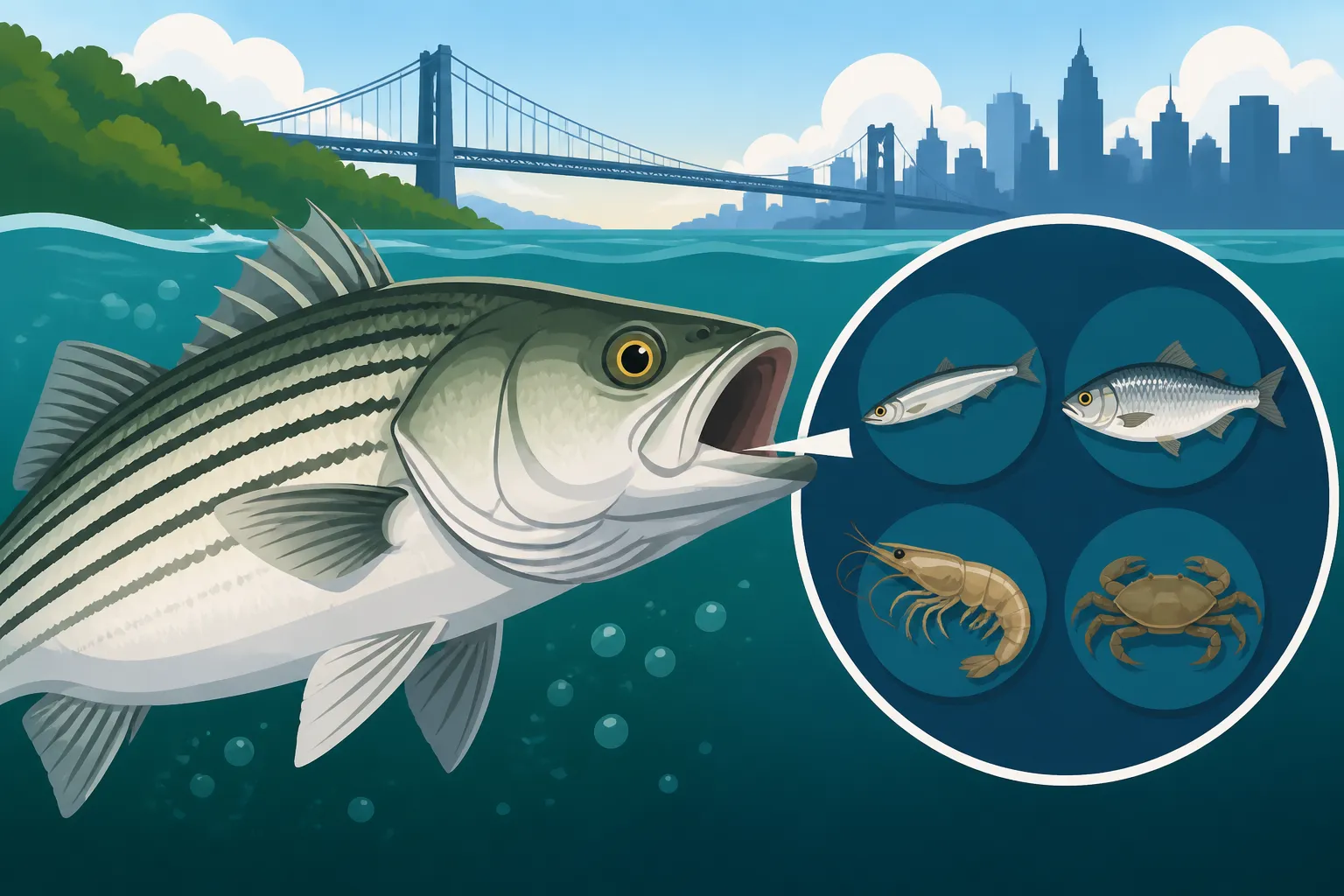
When we talk about the cornerstone of a striped bass diet in the Hudson, one species immediately comes to mind: Atlantic Menhaden, affectionately known as "bunker." These oily, protein-rich baitfish are like prime rib for stripers, especially the bigger, hungrier ones. Menhaden swim in dense schools, and when they enter the Hudson, they draw the stripers in with them. Catching stripers feasting on a bunker school is an unforgettable experience, with explosions of water and screaming drags. If you're wondering how to target them during this feast, our guide on How to Fish Bunker for Striped Bass has some excellent tips.
Beyond bunker, other herring species play a vital role. Alewives and Blueback Herring make significant migrations up the Hudson River in the spring, heading to spawn in freshwater tributaries. These runs are a huge draw for striped bass, which gorge themselves on the migrating baitfish, refueling after their own winter dormancy. You'll often find anglers specifically targeting these spring runs, knowing the stripers won't be far behind. Smaller forage fish like American Sand Lance (often called "spearing" by local anglers) and various silversides are also constantly on the menu, especially in the shallower, brackish areas of the river. These smaller baits are always present and provide a steady food source for stripers of all sizes.
Seasonal Shifts in the Striper Diet
Just like we change our eating habits with the seasons, so do striped bass in the Hudson. Their diet is intimately tied to the availability and migration patterns of their prey, as well as their own metabolic needs driven by water temperature.
In the spring, as the stripers migrate upriver for their spawning run, their diet is incredibly diverse. They're shaking off winter sluggishness and looking for easily accessible protein. This is when they hit those migrating alewives and blueback herring hard. But they're also not above slurping up worms and small crustaceans from the river bottom. Anglers often find success using bloodworms or sandworms during this period, precisely because the stripers are keying in on these benthic creatures. It's a prime time, as detailed in our article on How to Fish for Striped Bass in the Spring Run.
As summer progresses and water temperatures rise, larger bunker become more prevalent in the lower and middle sections of the Hudson. This is when those substantial, oily meals really become critical for larger stripers, helping them pack on weight. They might also shift their attention to crabs and shrimp, particularly in the brackish zones where these crustaceans are abundant. This is also when you'll find stripers moving into deeper, cooler waters during the day, becoming more active feeders during low light hours.
The fall is a period of intense feeding, often referred to as the "fall run." As water temperatures begin to drop and baitfish like bunker, spearing, and juvenile herring start their migration out of the river and south along the coast, the striped bass go into overdrive. They're trying to pack on as much fat as possible for the colder months. This is a time of incredible opportunity for anglers, as stripers will aggressively chase down anything resembling fleeing baitfish. Our comprehensive guide Striped Bass Season on the Hudson Runs April Through November provides even more context on these dynamic feeding periods.
| Season | Primary Forage | Secondary Forage | Typical Angler Approach |
|---|---|---|---|
| Spring | Alewives, Blueback Herring, Worms | Small crustaceans, Juvenile fish | Live bait (herring, worms), small soft plastics, jigs |
| Summer | Atlantic Menhaden (Bunker), Crabs | Shrimp, Eels, Smaller fish | Live lining bunker, chunking, large swimbaits |
| Fall | Atlantic Menhaden (Bunker), Spearing | Juvenile herring, Any fleeing bait | Live lining bunker, chunking, topwater lures, large plugs |
Beyond the Obvious: Surprising Striper Snacks
While baitfish dominate their diet, striped bass are far from one-dimensional eaters. Their predatory nature means they'll exploit any food source available, making them incredibly adaptable and, sometimes, delightfully unpredictable for anglers.
The Role of Opportunistic Feeding
Striped bass are the definition of opportunistic predators. If it moves, fits in their mouth, and looks remotely edible, they'll likely give it a try. This means their diet extends well beyond the typical baitfish we often associate with them. Crabs, shrimp, and even freshwater mussels can become significant food sources, especially when baitfish are scarce or during specific times of the year. I’ve heard countless tales from fellow anglers about stripers spitting up crabs or even small eels boatside, reinforcing just how varied their diet can be. This adaptability is what makes them such successful survivors in an ever-changing environment like the Hudson River.
Consider a situation where a massive rainstorm flushes out countless worms, insects, and other benthic organisms from the riverbanks and tributaries. You can bet the stripers will be there, taking advantage of the easy meal. Or imagine a school of juvenile perch or sunfish venturing too far from their cover – a striped bass won't hesitate to make them a quick snack. This is why when you're selecting baits, sometimes thinking outside the box can pay off. While you might find specific lures online, a quick trip to Amazon can help you stock up on a variety of soft plastics that mimic different kinds of prey, not just herring or bunker.
How Their Diet Influences Fishing Tactics
Understanding this opportunistic nature is a game-changer for your fishing strategy. If stripers are focused on a particular type of forage, you'll have far greater success if your presentation mimics that food source. For instance, if you see them busting on tiny baitfish, a large bunker plug won't get a second look. Instead, a smaller jig or soft plastic swimbait that imitates those little guys will be far more effective. On the flip side, if the river is loaded with adult bunker, a large topwater plug or a lively chunk of fresh bunker is your best bet.
This is why local knowledge is so vital. Talking to bait shop owners, other anglers, or even observing what birds are doing can give you clues about the predominant forage. Are gulls diving aggressively? There might be small baitfish on the surface. Are you seeing large splashes? It could be bigger fish crashing on bunker. Knowing what's happening beneath the surface, and linking it back to what What Striped Bass Eat in the Hudson River, will directly translate into more hook-ups. It's not just about throwing your favorite lure; it's about throwing the right lure for the current menu.
Adapting to Their Menu: What Anglers Need to Know
Becoming a successful striper angler on the Hudson means becoming a detective. You need to observe, adapt, and always be thinking about what's likely on the menu at any given moment.
Matching the Hatch: Baits and Lures
So, how do you put this knowledge into practice? It comes down to "matching the hatch" – selecting baits and lures that closely imitate what the striped bass are currently feeding on.
- When they're on bunker: This is prime time for big, oily presentations. Live lining a fresh bunker is incredibly effective. If you don't have live bait, chunking with fresh cut bunker is another killer technique. For artificials, large swimbaits, poppers, and lipless crankbaits that mimic the size and profile of bunker are excellent choices. You can find a huge variety of these on Amazon, often in multi-packs, to cover different conditions. Our article Best Live Bait for New York's Hudson River Striped Bass offers more detailed advice.
- During herring/alewife runs: Smaller, slender lures are key. Soft plastic jerkbaits, small paddle-tail swimbaits, and even metal jigs can imitate these baitfish effectively. Color choices often lean towards silver, green, or blue, mimicking the natural sheen of herring.
- When they're bottom feeding: This is when worms, crabs, and even eels become important. Bloodworms or sandworms presented on a simple bottom rig are phenomenal in the spring. Cut pieces of clam or even small sections of eel can also entice strikes from stripers rooting around for a meal. Remember, for bait fishing with natural bait, especially in the Hudson, using How to Use Circle Hooks for Striped Bass is often required and always a good practice to ensure healthier releases.
- Opportunistic scenarios: Always have a few "wild card" lures in your tackle box. Things like dark-colored soft plastic eels or tube lures can mimic a variety of bottom-dwelling creatures. Topwater plugs can entice an aggressive strike even when bait isn't actively showing, as stripers are curious and will often investigate a disturbance on the surface.
Protecting Their Food Source
As responsible anglers, understanding the striper's diet also brings a crucial responsibility: protecting the entire ecosystem of the Hudson River. The health of the striped bass population is directly linked to the health and abundance of their forage base. If the populations of key baitfish like menhaden or herring decline, the stripers will suffer.
This is why supporting sustainable fishing practices and adhering to regulations is so important. When baitfish populations are managed responsibly, it ensures there's enough food for striped bass and all the other predators in the ecosystem. Organizations dedicated to conservation often work to monitor and protect these crucial forage species. As anglers, we can do our part by staying informed, practicing catch-and-release responsibly (especially for those large breeding females – see Catch-and-Release Handling Rules for tips), and supporting efforts to maintain a healthy river environment. After all, a thriving food chain means a thriving fishery for all of us to enjoy for years to come.
Disclaimer
This article is for general informational purposes only and does not constitute professional advice. Laws, prices and regulations vary by location and change over time. Consult a qualified professional for guidance on your specific situation.