Bluegill vs Sunfish: What’s the Difference?
It's incredibly common for new anglers, and even some seasoned ones, to find themselves scratching their heads when it comes to identifying panfish. We've all been there, holding up a small, colorful fish and wondering, "Is this a bluegill, a sunfish, or… what exactly is it?" The good news is, you're not alone in that confusion, and this guide is here to clear up the mystery, helping you understand the subtle (and sometimes not-so-subtle) differences among these delightful New York freshwater catches.
Unpacking the Sunfish Family Tree in New York
Let's cut right to the chase: all bluegill are sunfish, but not all sunfish are bluegill. Think of it like this: "dog" is a big family, and "Golden Retriever" is a specific breed within that family. In the fishing world, "sunfish" is the larger family, and "bluegill" is a specific, very popular member of that family. This family, scientifically known as the Centrarchidae, includes a whole host of species we love to target, from the feisty bass to the humble panfish.
The Larger Panfish Category
When anglers talk about "panfish," they're usually referring to a group of smaller, easy-to-catch fish that are perfect for a meal in a frying pan. Bluegill definitely fit into this category, but so do crappie, yellow perch, and many other types of sunfish. It’s a term of endearment, really, for those accessible, fun-to-catch species that make up so many anglers' first catches. They're often found in abundant numbers, making them fantastic targets for a relaxed day on the water, especially when you're introducing kids to fishing. There's nothing quite like the excitement of a bobber disappearing under the surface, signaling a panfish on the line. Learning about New York's Panfish Species Explained can really deepen your understanding of what's out there.
What Defines a True Sunfish?
Within the broader "panfish" category, we have the true sunfish. These are species in the Lepomis genus. What sets them apart? Generally, they have a somewhat disc-shaped, compressed body, large eyes, and a single dorsal fin that often looks like two joined together. Many have vibrant color patterns, especially during spawning season. They're typically found in slow-moving or still waters – think ponds, lakes, and the calmer sections of rivers across New York. Their diets are pretty diverse, ranging from insects and small crustaceans to even tiny baitfish. This adaptability is part of why they're so widespread and beloved.
Getting to Know the Bluegill
Now that we understand where bluegill fit into the grand scheme, let's zoom in on this particular species. The bluegill (scientific name: Lepomis macrochirus) is perhaps the most iconic and widely recognized member of the sunfish family, especially here in New York. They are truly a cornerstone of freshwater fishing for countless anglers.
Key Identification Features of the Bluegill
So, how do you know if that fish on your line is a bluegill? They have a few distinct markers that, once you know them, make identification pretty straightforward:
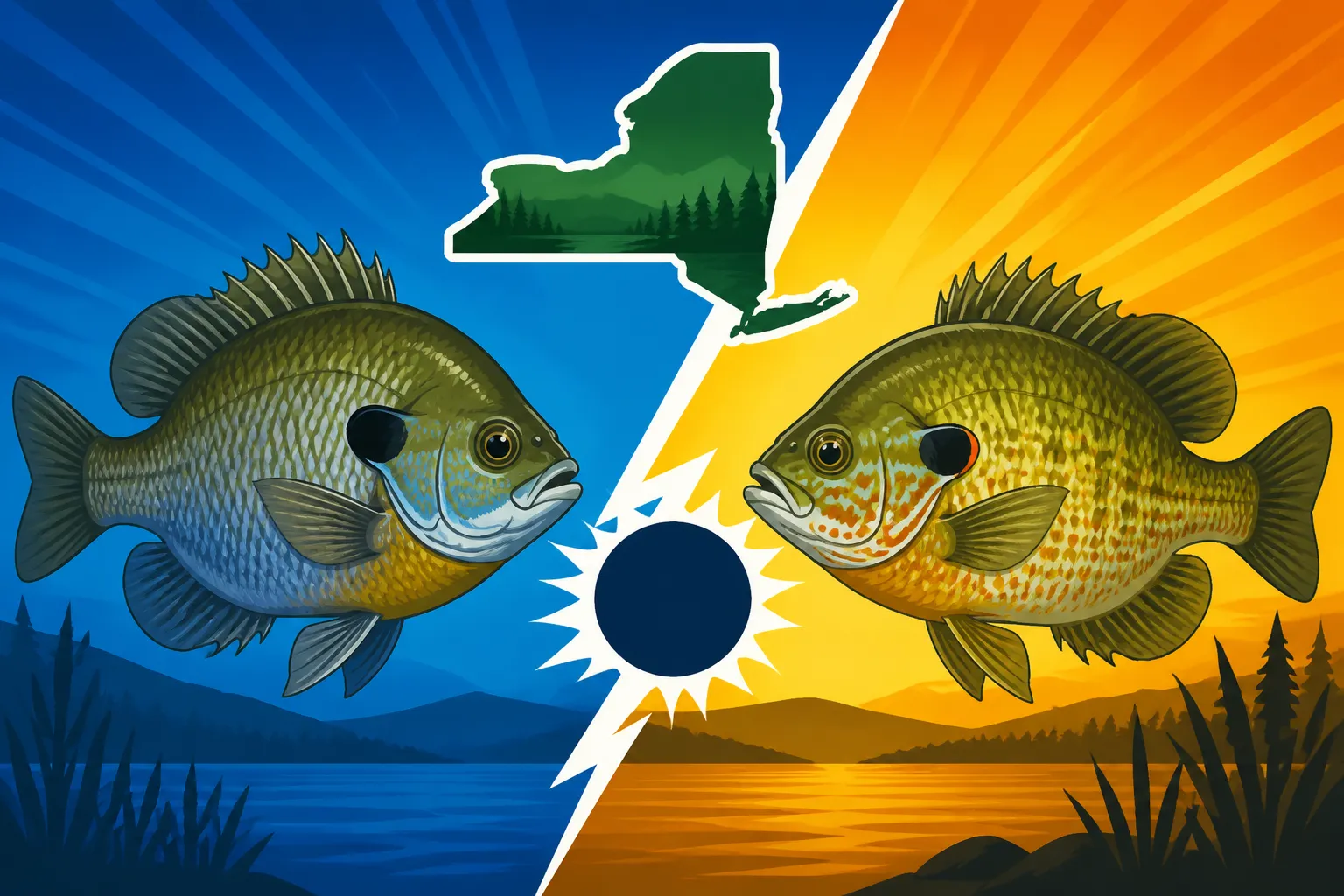
- The "Blue Gill" Ear Flap: This is perhaps their most defining characteristic and where they get their name. Look for a prominent, dark blue to black "ear flap" at the rear edge of their gill plate. This flap is entirely black, without any colored trim. Other sunfish might have a similar flap, but it will often have a colored edge.
- Vertical Bars: Many bluegill display several faint, dark vertical bars along their sides, though these can vary in prominence depending on the fish's mood, water clarity, and spawning status.
- Small Mouth: Bluegill have a relatively small mouth. If you try to stick your pinky finger into its mouth, you'll likely struggle. This is a good differentiator from some of their larger sunfish cousins like green sunfish or even smallmouth bass.
- Dark Spot on Dorsal Fin: You'll almost always find a distinctive dark spot at the base of the soft-rayed portion of their dorsal fin. This is another reliable identification mark.
- Coloration: While their name suggests "blue," their bodies are actually quite variable. They often have an olive-green back that fades to lighter green or yellowish sides, with an iridescent blue-green sheen around the gill plates, giving them that "blue gill" appearance. During spawning, males can develop a striking orange or even reddish belly.
Bluegill Habitat and Behavior
Bluegill are incredibly adaptable and can be found in almost any freshwater body across New York, from small farm ponds to massive Finger Lakes. They prefer clear, vegetated waters where they can hide from predators and ambush prey. You'll often find them congregating around submerged structures like fallen trees, weed beds, docks, and brush piles.
They are generally schooling fish, especially when young, which means if you catch one, there are likely many more nearby. Their diet consists primarily of aquatic insects, insect larvae, small crustaceans, and even tiny snails. They're not particularly picky, which is one reason why they are so much fun to catch. They're also known for their feisty fight on light tackle, pulling surprisingly hard for their size. If you're wondering how to target them, check out our guide on Best Bait for Catching Sunfish and Bluegill.
Exploring Other Common Sunfish Species in New York
While bluegill might be the poster child, New York waters are home to several other fantastic sunfish species. Understanding these will help you truly differentiate and appreciate the diversity within the Lepomis family.
Pumpkinseed Sunfish
The pumpkinseed (Lepomis gibbosus) is another incredibly common and colorful sunfish you'll encounter. They're often found in the same habitats as bluegill and can sometimes be confused with them.
- Key Differences from Bluegill: The most striking feature of the pumpkinseed is the bright red or orange spot on the rear edge of their black "ear flap." This red spot is usually absent in bluegill, or if present, is much less vibrant. Pumpkinseeds also have wavy, iridescent blue-green lines on their gill plates and operculum, resembling hieroglyphics. Their body color is generally more mottled, with irregular olive, orange, and blue markings, giving them a truly stunning appearance, especially when lit up by the sun. They also tend to have a slightly more compressed, rounder body shape than bluegill.
Green Sunfish
The green sunfish (Lepomis cyanellus) is a tougher, more robust member of the sunfish family, often found in less pristine or even slightly muddy waters where other sunfish might struggle.
- Key Differences from Bluegill: Green sunfish have a much larger mouth than bluegill; you can often fit your thumb inside a mature one's mouth. Their body is thicker and less compressed than a bluegill's, with a more elongated, bass-like shape. Their coloration is typically olive green to brown on the back, fading to yellowish-green sides, often with iridescent blue spots and streaks on the head and gill covers. The "ear flap" is dark but often has a pale, yellowish-orange edge, a key distinction from the all-black flap of the bluegill. They also have a dark blotch at the rear of both the dorsal and anal fins, another good indicator.
Redbreast Sunfish
The redbreast sunfish (Lepomis auritus) is another beautiful species, though perhaps less common in some New York waters compared to bluegill or pumpkinseeds. They tend to prefer flowing water, making them a treat to catch in rivers and streams.
- Key Differences from Bluegill: As their name suggests, redbreast sunfish often have a prominent orange to reddish breast and belly. Their "ear flap" is notably longer and narrower than that of a bluegill or pumpkinseed, often extending quite far back. Their body is typically olive-brown on top, with mottled sides that can have faint vertical bars. The longer opercular flap is the most reliable way to identify them.
| Feature | Bluegill (Lepomis macrochirus) | Pumpkinseed (Lepomis gibbosus) | Green Sunfish (Lepomis cyanellus) | Redbreast Sunfish (Lepomis auritus) |
|---|---|---|---|---|
| "Ear Flap" | Solid black, no colored edge | Black with prominent red/orange spot | Black with pale yellow/orange edge | Very long, narrow, dark |
| Mouth Size | Very small | Small | Large, bass-like | Medium |
| Body Shape | Disc-shaped, compressed, deep body | Rounder, compressed | Robust, elongated | Slender, elongated |
| Body Color | Olive-green back, yellowish sides, blue sheen on gills, faint vertical bars | Mottled olive, orange, blue, wavy blue lines on face | Olive-green, yellowish-green sides, iridescent blue spots on head | Olive-brown back, orange/red breast/belly |
| Dorsal Fin Spot | Distinct dark spot at base | Faint or absent | Dark spot at base | Faint or absent |
| Typical Habitat | Lakes, ponds, calm rivers, vegetation | Lakes, ponds, calm rivers, vegetation | Slow-moving water, sometimes muddy | Rivers, streams, flowing water |
Why the Confusion Exists (And Why It Matters Less Than You Think)
It's completely understandable why these fish cause so much head-scratching. Many sunfish species can hybridize, meaning they cross-breed, leading to offspring with mixed characteristics that make precise identification even tougher. Plus, their coloration can change dramatically based on water conditions, diet, and whether they're spawning. A stressed fish might look completely different from a healthy, vibrant one from the same lake!
For the average angler, especially those just starting out or fishing for fun, the exact species often matters less than the experience itself. As long as you're following the general New York Fishing Regulations Explained and understanding catch limits for panfish, a "sunfish" is often just that – a sunfish. The joy of fishing lies in the tug on the line, the beautiful colors, and the simple pleasure of being outdoors.
However, for those who truly love the science of fishing, or if you're trying to target a specific species for a record or a particular culinary preference, knowing the differences can be quite rewarding. Understanding these nuances also helps contribute to better conservation efforts by allowing us to monitor specific populations more accurately.
Tips for Enjoyable Panfishing in New York
Whether you're targeting bluegill, pumpkinseeds, or any other sunfish, a day spent panfishing is almost always a good day. These fish are accessible, numerous, and provide consistent action.
Simple Setup, Big Fun
You don't need fancy gear to catch sunfish. A light action rod and reel, spooled with 4-6 pound test line, is perfect. A small bobber, a few split shot weights, and a small hook (sizes 8-12 are usually ideal) will get you started. For bait, think small worms, pieces of nightcrawlers, mealworms, crickets, or even corn. Artificial lures like tiny jigs (1/32 to 1/16 ounce) tipped with a small plastic grub or feather jig can also be incredibly effective. You can find a huge variety of tackle on platforms like Amazon, making it easy to stock up before your next trip. To learn more about setting up your gear, check out How to Set Up a Rod for Panfish.
Finding the Hot Spots
Sunfish love structure and cover. Look for them around:
- Weed beds: Especially the edges, where they can ambush insects.
- Docks and Piers: The shaded areas and pilings offer excellent cover.
- Fallen Trees and Brush Piles: These submerged natural structures are magnets for panfish.
- Lily Pads: Fish the open pockets within or along the edges of lily pad fields.
- Shoreline Edges: Especially if there's overhanging vegetation or cover.
When fishing with kids, these easily identifiable spots make it a blast. Consider reading How to Fish With Kids in New York for more ideas on making it a memorable outing.
Best Times to Fish for Panfish
While you can often catch sunfish throughout the day, early morning and late evening tend to be the most productive times, especially in the warmer months. During the heat of the day, they might move to deeper, cooler water or seek heavier cover. However, on overcast days, they can remain active all day long. In New York, panfish fishing is generally excellent from late spring through fall. Even ice fishing offers incredible opportunities for yellow perch and some sunfish species; for that, you might look into Best Lakes in New York for Ice Fishing Walleye, as those lakes often hold panfish too.
Respecting the Resource
Even though panfish are often abundant, it's always good practice to respect the resource. Only keep what you'll eat, and handle fish gently if you plan to release them. Understanding and adhering to New York Freshwater Fishing Rules helps ensure healthy populations for future generations of anglers.
Ultimately, whether you call it a bluegill, a pumpkinseed, or just a "sunfish," these vibrant little fish offer endless hours of enjoyment on the water. They are a vital part of the New York fishing landscape, providing entry points for new anglers and consistent fun for veterans. So grab your rod, head to your favorite local spot, and enjoy the tug of a sunfish on the line!
Disclaimer
This article is for general informational purposes only and does not constitute professional advice. Laws, prices and regulations vary by location and change over time. Consult a qualified professional for guidance on your specific situation.