Is the Atlantic Sturgeon Protected in New York?
Few things can be as frustrating for an angler as unknowingly breaking a rule, especially when it concerns a truly magnificent and vulnerable species. You're out on the water, enjoying the peace and the thrill of the catch, only to realize later that the fish you encountered might be highly protected. This guide is here to unravel the complexities surrounding the Atlantic Sturgeon in New York, clarifying its protected status, how to identify it, and what your responsibilities are as a conscientious angler.
The Atlantic Sturgeon's Plight and Protection Status in New York
The Atlantic Sturgeon, a living fossil that has graced our waters for millions of years, represents one of New York's most compelling conservation stories. Its journey from an abundant resource to a species teetering on the brink highlights the critical need for robust protection measures. Understanding this history and the current legal framework is essential for any angler navigating New York's diverse waterways.
A Legacy of Overfishing and Habitat Loss
Once, these colossal fish were incredibly common, especially in major estuaries like the Hudson River. They were a cornerstone of commercial fisheries in the 19th and early 20th centuries, prized for their meat and especially for their roe, which was harvested for caviar. The demand was immense, and fishing pressure was relentless. Imagine steamboats dredging for sturgeon, hauling in hundreds, sometimes thousands, of these ancient fish in a single day. This intense exploitation, coupled with habitat degradation, pollution, and the construction of dams that blocked their migration routes to spawning grounds, led to a catastrophic decline in their populations. Their slow growth rate and late maturity—it can take an Atlantic Sturgeon more than a decade to reach reproductive age—made them particularly vulnerable to these pressures, hindering their ability to recover. Many of us have heard stories from our grandparents or great-grandparents about the "Hudson River beef" (a common nickname for sturgeon meat), but those days are long gone, and the reasons why are sobering reminders of unsustainable practices.
Federal and State Protections in Place
Given their severe population decline, the Atlantic Sturgeon received federal protection under the Endangered Species Act (ESA) in 2012. This listing by the U.S. Fish and Wildlife Service (USFWS) and the National Marine Fisheries Service (NMFS) designated five Distinct Population Segments (DPS) as either endangered or threatened, including the New York Bight DPS which includes the Hudson River. What does this mean in practical terms? It means that it is illegal to "take" an Atlantic Sturgeon. The term "take" under the ESA is very broad, encompassing not just killing but also harassing, harming, pursuing, hunting, shooting, wounding, trapping, capturing, or collecting. For anglers, this specifically means that if you accidentally catch an Atlantic Sturgeon, you must immediately release it without causing it undue harm. There is no open season, no possession limit, and absolutely no legal way to harvest an Atlantic Sturgeon in New York or anywhere else in the U.S. Anglers must familiarize themselves with these regulations, as ignorance is no excuse. This protection extends beyond just fishing; it also affects development projects that could impact their habitat. You can find more comprehensive details on general fishing rules in the New York Fishing Regulations Explained guide.
Why This Matters to Anglers
For the recreational angler, this protected status carries significant weight. It's not just a technicality; it's a moral and legal obligation. Any sturgeon caught, whether in freshwater or saltwater, must be immediately released unharmed. This isn't always easy, especially if you're not expecting to catch such a large, powerful fish. Imagine reeling in something massive, thinking you've got a trophy striped bass, only to realize it's an Atlantic Sturgeon. The adrenaline might be pumping, but your immediate priority must be the fish's welfare.
Fisheries management agencies rely on anglers to be their eyes and ears on the water. By understanding and adhering to these rules, you become an active participant in the species' recovery. Violating these regulations can lead to serious penalties, including substantial fines and potential jail time. These aren't minor infractions; they are federal offenses aimed at protecting a critically endangered species. It underscores why knowing the New York DEC Fishing Regulations Guide is so important before you even cast a line.
Identifying an Atlantic Sturgeon: What Every Angler Needs to Know
Accidentally catching a protected species is a genuine concern for many anglers. The Atlantic Sturgeon can be a tricky fish to identify for the untrained eye, especially since there are other sturgeon species, like the Shortnose Sturgeon, that also inhabit New York waters and are similarly protected. Knowing the distinguishing features is crucial to ensure you comply with the law and contribute to conservation efforts.
Key Characteristics and Appearance
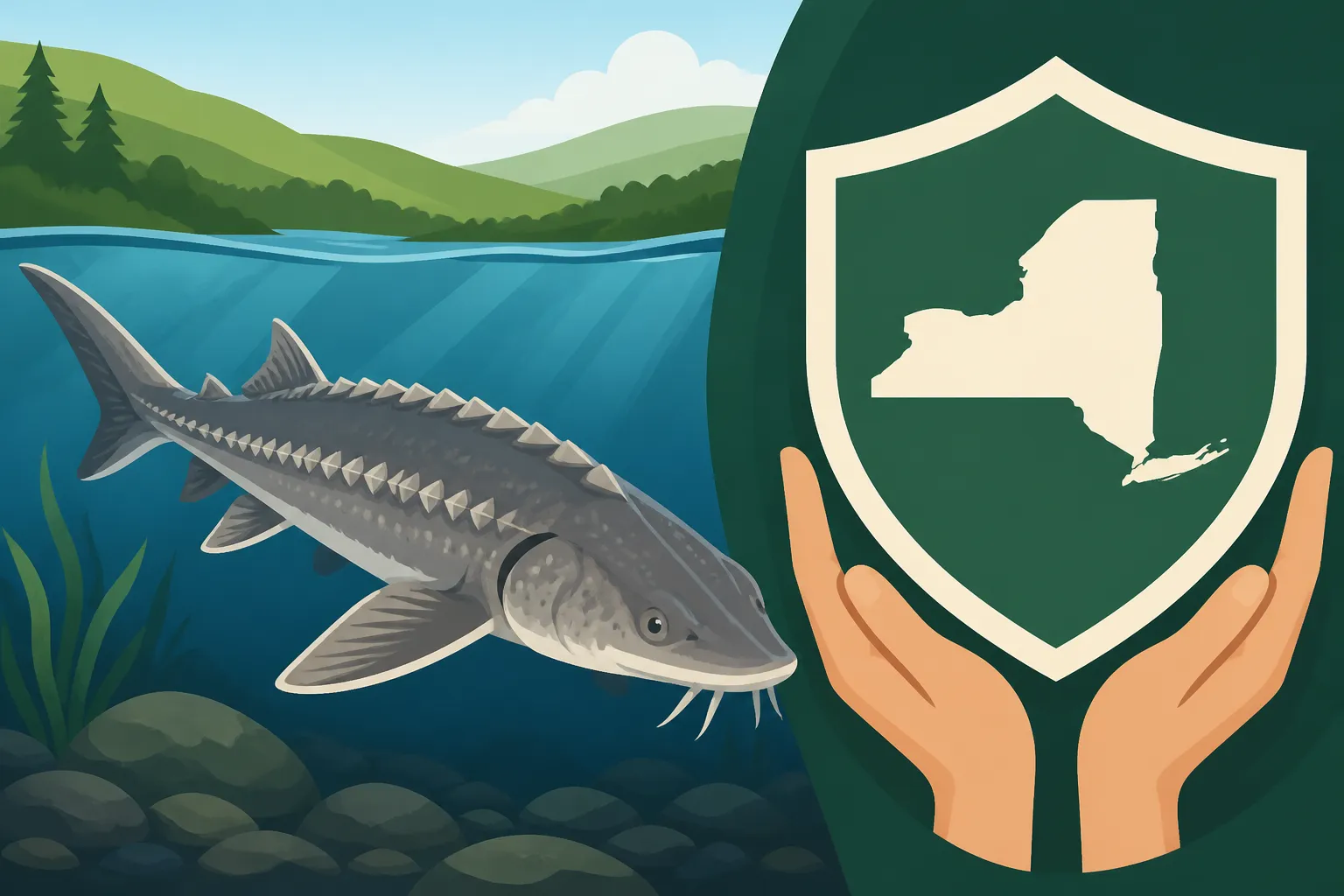
Atlantic Sturgeon are truly impressive fish, often described as primeval due to their ancient lineage. They have a distinctive, shark-like body shape, but instead of scales, they are covered in five rows of bony plates called scutes. These scutes run along their back, sides, and belly, giving them a rugged, armored appearance. Their coloration typically ranges from olive green to bluish-black on the dorsal side, fading to a lighter, often white, belly.
One of their most defining characteristics is their mouth, which is located on the underside of their head (subterminal) and is protrusible, meaning it can extend outwards like a vacuum cleaner nozzle. This allows them to suck up invertebrates and small fish from the bottom. In front of their mouth, they have four barbels, whisker-like sensory organs that they use to locate food in murky waters. Unlike many game fish, their tail fin is heterocercal, meaning the upper lobe is longer than the lower lobe, much like a shark's tail.
Perhaps the most striking feature when identifying an Atlantic Sturgeon is its size. They are the largest freshwater fish species native to North America (though they spend significant time in saltwater), capable of reaching lengths of up to 14 feet and weighing over 800 pounds, although individuals encountered by anglers in New York are more commonly in the 3-8 foot range. Their sheer size often gives them away. You might consult a general guide like How to Identify Fish Species in New York for a broader understanding of local species.
Distinguishing from Other Sturgeon Species
In New York, the primary sturgeon you might confuse with an Atlantic Sturgeon is the Shortnose Sturgeon. While both are protected, it's helpful to know the differences.
| Feature | Atlantic Sturgeon | Shortnose Sturgeon |
|---|---|---|
| Size | Larger, up to 14 feet | Smaller, rarely exceeding 4 feet |
| Snout Shape | Relatively long, pointed, and conical | Shorter, blunt, and rounded |
| Scutes (Back) | Generally 10-16 scutes along the dorsal midline | Generally 8-11 scutes along the dorsal midline |
| Scutes (Lateral) | Scutes are prominent and distinct | Lateral scutes may be smaller and less pronounced |
| Mouth Position | Closer to the tip of the snout | Set further back from the tip of the snout |
| Coloration | Darker, often olive to bluish-black with lighter belly | Lighter, often brownish or grayish with a pale belly |
| Habitat | Both freshwater (spawning) and saltwater (feeding) | Primarily freshwater, estuaries, rarely open ocean |
The size difference is usually the easiest way to tell them apart when you're on the water. If you hook a sturgeon that's over 4-5 feet long, it's almost certainly an Atlantic Sturgeon. Remember, all sturgeon in New York are protected, so the immediate release rule applies regardless of which species you've caught. If you're wondering about the potential size, you might be interested in Maximum Size of Sturgeon in the Hudson River.
Encountering a Sturgeon While Fishing
So, what do you do if you hook an Atlantic Sturgeon? First, remain calm. Panicking won't help the fish or your situation. The most important thing is to release the fish quickly and with minimal stress or injury.
- Do NOT Land the Fish: Resist the urge to bring it into your boat or drag it onto shore for a photo opportunity. This is illegal and extremely harmful to the fish. Their size and weight can make them difficult to handle, increasing the risk of injury to both you and the sturgeon.
- Cut the Line: If the fish is deeply hooked, or if the hook is in a difficult-to-reach spot, do not try to remove it. The safest action is to simply cut your line as close to the hook as possible. Hooks made of non-stainless steel will eventually corrode and fall out. You might want to carry a good pair of line cutters specifically for this purpose.
- Minimize Fight Time: Try to bring the fish to the side of the boat or to shallow water as quickly as possible without over-stressing it. Use heavy tackle if you're fishing in areas known to hold large fish, as this will reduce fight time.
- Use Appropriate Gear: If you're fishing in sturgeon habitat, consider using barbless hooks, which can greatly reduce damage and make unhooking easier. If you use barbed hooks, crimp the barbs down. You might want to pick up a good quality, rubberized, knotless landing net, readily available on platforms like Amazon, to minimize harm if you inadvertently need to cradle the head briefly to get to a hook. However, the goal should always be to avoid landing it entirely.
- Report Any Serious Injuries: If you witness a severely injured or dead sturgeon, or if you accidentally cause significant injury, contact the New York State Department of Environmental Conservation (DEC) or the National Marine Fisheries Service immediately. Your honest report can help biologists understand and protect these fish. You can learn more about general responsible fishing in Catch-and-Release Handling Rules.
The Role of Conservation and Angler Responsibility
The fate of the Atlantic Sturgeon, like so many other vulnerable species, rests heavily on the actions and attitudes of individuals. Anglers, being on the front lines of interaction with these creatures, play an absolutely vital role in their recovery. It’s not just about avoiding penalties; it’s about being part of a larger conservation success story.
The Importance of Catch-and-Release
For protected species like the Atlantic Sturgeon, catch-and-release is not just a recommendation; it's the law and a critical conservation strategy. When done correctly, catch-and-release allows fish to survive and potentially reproduce, contributing to the rebuilding of their populations. However, "correctly" is the operative word. Poor handling can still result in delayed mortality or severe injuries that impair the fish's ability to feed or evade predators.
When you inadvertently hook an Atlantic Sturgeon, your primary goal is to minimize its time out of the water and reduce physical stress. If it’s near the boat, consider trying to remove the hook while the fish is still in the water, if safe and practical to do so. Tools like long-nose pliers or specialized dehookers are invaluable for this, and many reliable options can be found on Amazon. Avoid holding the fish by its gills or eyes. If you absolutely must handle it (for instance, to get a hook out that’s close to the mouth but still in the water), support its entire body horizontally, especially its belly, and get it back into the water as quickly as possible. These giants need the water to support their internal organs. Any time spent out of the water is immensely stressful.
Reporting Sightings and Violations
Anglers are often the first to notice changes in fish populations or unusual occurrences on the water. Reporting sightings of Atlantic Sturgeon, especially healthy individuals, can provide invaluable data to scientists studying their distribution and recovery. This kind of citizen science helps paint a clearer picture of where these fish are thriving and where conservation efforts might need to be focused. You can usually find contact information for reporting sightings on the New York DEC website.
Equally important is reporting any suspected violations. If you witness someone actively trying to harvest a sturgeon, or otherwise harassing one, it's your responsibility to report it to environmental conservation officers. Take note of details like boat registration numbers, specific location, time, and any distinguishing features of the individuals involved. Do not confront individuals directly, as this could escalate into a dangerous situation. Simply gather information and report it to the authorities. These reports are crucial for enforcing regulations and protecting this vulnerable species from those who disregard the law. Remember, preventing Fishing Without a License in New York: What Happens is one thing, but protecting an endangered species is a whole different level of priority.
Future Outlook for Atlantic Sturgeon in New York
The road to recovery for the Atlantic Sturgeon is a long one, but there are reasons for cautious optimism. Studies show that populations in the Hudson River, a key New York habitat, are slowly but steadily increasing, largely thanks to the federal protections and ongoing conservation efforts. Scientists are continuously monitoring their numbers, studying their migration patterns, and working to restore critical spawning and foraging habitats.
Anglers continue to play a part not just by adhering to catch-and-release but by advocating for healthy waterways and supporting conservation initiatives. Clean water, unobstructed migratory routes, and minimal human impact are all essential for these magnificent fish to truly thrive again. Every time you correctly release a sturgeon, you're not just following the rules; you're casting a vote for a healthier, more diverse aquatic ecosystem in New York. While you might not specifically target them, recognizing the species and respecting its protected status is part of responsible fishing in New York, just like knowing which Fish Species You Can Catch in New York legally. Obtaining your New York Fishing License Guide is the first step in understanding all the rules that keep our waterways healthy.
Disclaimer
This article is for general informational purposes only and does not constitute professional advice. Laws, prices and regulations vary by location and change over time. Consult a qualified professional for guidance on your specific situation.