Do I Need a License to Fish My Own Backyard Pond?
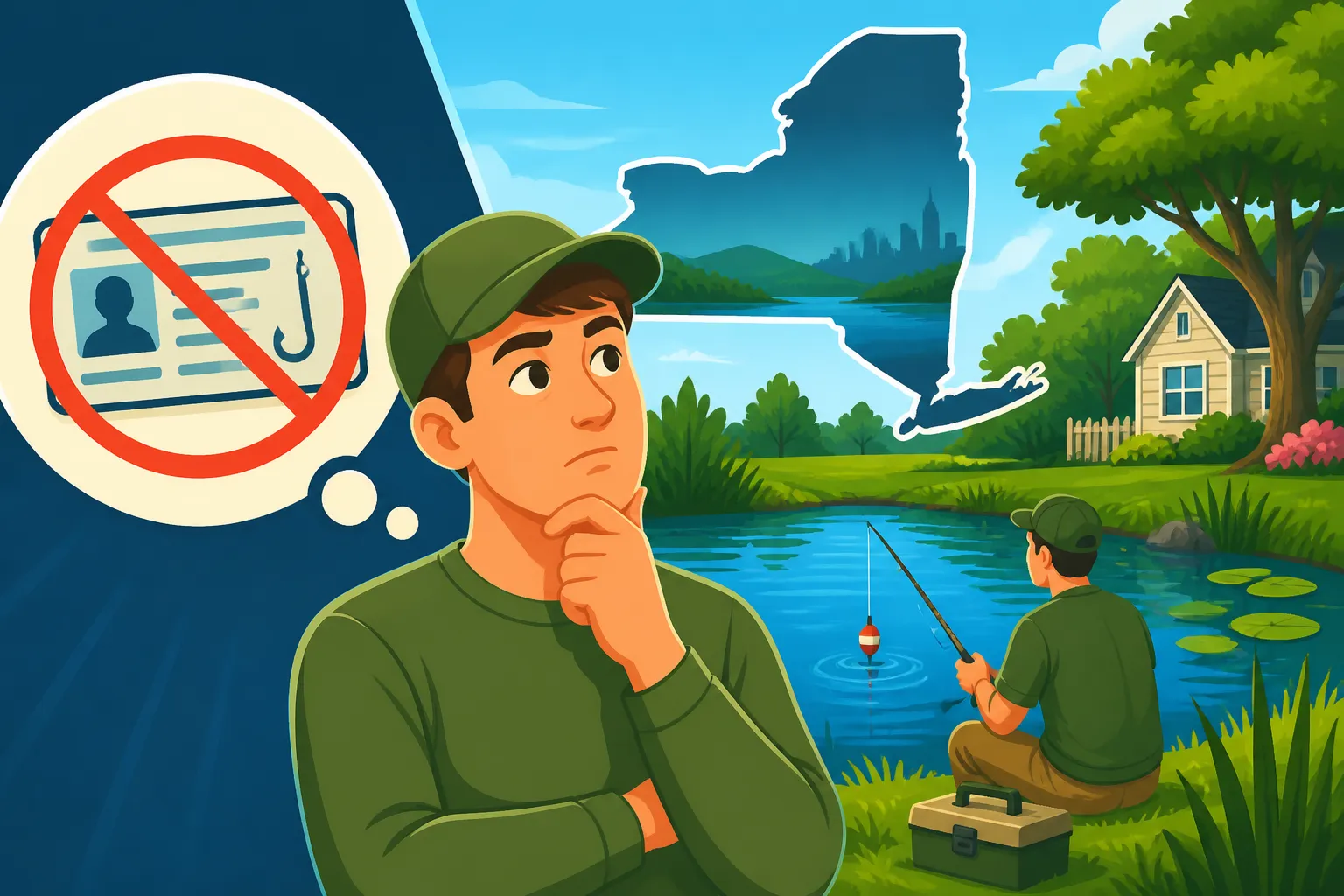
It’s a truly frustrating scenario: you’ve invested time, effort, and probably quite a bit of money into creating or maintaining a beautiful backyard pond, perhaps even stocked it with some feisty bass or eager panfish. You imagine a peaceful afternoon, rod in hand, just steps from your back door, only to be hit with that nagging question: "Do I actually need a fishing license for my own pond?" The confusion is real, and frankly, the regulations can feel like a tangled fishing line at times. This guide is here to untangle that mess, clarifying exactly when you do (and don't) need a New York fishing license to enjoy your private aquatic haven.
Understanding New York's Fishing License Requirements for Private Ponds
The core of the confusion often stems from a misunderstanding of what the New York State Department of Environmental Conservation (DEC) considers a "private pond" in the context of fishing licenses. It's not just about owning the land; it's about the water's connection, or lack thereof, to the broader public water systems of New York.
Defining a "Private Pond" in the Eyes of the Law
When it comes to fishing licenses, the DEC has a very specific definition for a truly private pond, and it boils down to one critical factor: isolation. For your backyard pond to be considered "private" and thus exempt from fishing license requirements for the landowner (and their guests), it must be entirely enclosed within your property boundaries and, crucially, have no inlet or outlet to any public waters.
Think of it this way: if your pond is fed by an underground spring and has no stream flowing into or out of it that eventually connects to a public lake, river, or even a public ditch, then it likely qualifies as a private pond. This means a pond that's basically a self-contained body of water on your land. On the other hand, if a stream flows into your pond from upstream, even if that stream is entirely on your property, and then flows out of your pond downstream, eventually connecting to, say, a local creek that leads to the Mohawk River, then suddenly your "private" pond isn't so private anymore. That connection means fish can move freely between your pond and public waters, and that's where the DEC steps in with its regulations.
This distinction is vital. Many folks assume that simply because they own the land, they own the water and everything in it. While you certainly control access to your property, the fluid nature of water and fish migration means that if there's any pathway for fish to travel between your pond and public bodies of water, even intermittently, then state regulations regarding public fishing apply. The DEC's focus is on managing the state's fishery resources as a whole, and if fish can swim in and out of your pond from public sources, your pond effectively becomes part of that larger resource.
The "No License Needed" Exemption Explained
So, let's get to the good news for many private pond owners! The New York State Environmental Conservation Law does provide an exemption from fishing license requirements for certain private waters. Specifically, if your pond meets the criteria of being wholly contained within your private property boundaries and has no inlet or outlet to public waters, then you, as the landowner, and any immediate family members or guests fishing with your permission, are generally not required to possess a New York fishing license to fish there.
This exemption is a huge relief for many who cherish the idea of a personal fishing retreat. It means you can grab your rod, step out back, and cast a line into your pond without the need to purchase a license, provided your pond is truly isolated. The logic here is that the fish within such an isolated system are considered part of your private property and not part of the common public trust managed by the state. This also extends to fish stocking, which we’ll discuss in more detail later. If you’re stocking your pond with fish from a private, permitted source, and there’s no way for those fish to escape into public waters, then the state generally takes a hands-off approach to the fishing activities within that isolated system.
However, it's paramount to understand that "no inlet or outlet" means precisely that. Even a seasonal overflow ditch that only carries water during heavy rains or spring thaws could be considered a connection to public waters if it eventually drains into a public stream or lake. These details matter. For a deeper dive into all general requirements, check out our guide on New York Fishing Regulations Explained.
When Your Backyard Pond Might Require a License
While the private pond exemption sounds fantastic, it's not a blanket rule for every waterbody situated on private land. There are specific circumstances where your "backyard pond" still falls under state regulations and, therefore, requires you to hold a valid New York fishing license.
Ponds with Connections to Public Waters
This is the most common reason why a private pond owner might still need a fishing license. If your pond has any sort of connection, however small or intermittent, to public waters, it instantly loses its "private pond" exemption status. This includes:
- Streams or Rivers: If a natural stream flows into or out of your pond, eventually connecting to a larger creek, river, or lake that is publicly accessible. Even if the stream is entirely on your property, the critical factor is its eventual connection.
- Drainage Ditches: Agricultural or roadside drainage ditches that eventually lead to public waterways can also be considered an "outlet" if water (and fish) can travel through them.
- Seasonal Connections: Don't be fooled by dry periods. If your pond overflows into a public system only during heavy rainfall or spring runoff, that still constitutes a connection. The potential for fish migration is the key.
- Shared Water Tables: While less common for the average backyard pond, if your pond is part of a larger, interconnected wetland system that feeds into public waters, it might also be subject to regulation.
Consider a hypothetical situation: you have a beautiful pond fed by a tiny spring. During most of the year, it's completely self-contained. But during the spring thaw, the water level rises, and a small trickle runs off into a culvert under the road, which then empties into a local trout stream. In this scenario, your pond is not considered isolated under DEC regulations because fish from the trout stream could potentially swim up the culvert and into your pond, or vice-versa. Therefore, anyone fishing in this pond, including the landowner, would need a valid New York fishing license. It's really about the flow, and whether nature has provided a pathway for fish to interact with the larger ecosystem. For more information on fishing in these interconnected waters, our article on New York Freshwater Fishing Rules offers important details.
Shared Ownership and Public Access Implications
Another scenario where a license would typically be required is if your pond isn't exclusively yours, or if there's any form of public access or implied public access.
- Boundary Line Ponds: If your pond straddles your property line and extends onto a neighbor's property, it’s no longer "wholly contained" within your private property. In such cases, both landowners and their guests would generally need a fishing license, especially if the pond connects to other waters. Even if it doesn't connect, shared ownership almost always brings it under state purview, as the shared resource often implies some level of public (or semi-public) interest that the DEC manages.
- Easements or Rights-of-Way: If there's a public or even a private easement that grants access to your pond for others (e.g., a shared access point for a few property owners), this can complicate the "private" status. The mere existence of such an easement might necessitate a license for anyone fishing, as the water body is no longer exclusively private.
- Implied Public Access: While rare, if your pond is easily accessible from a public road, or if you've historically allowed unrestricted public fishing, the lines can blur. While the DEC doesn't actively patrol every private pond, if there's a perceived public right to fish, it could lead to confusion and potential issues regarding license requirements. It's always best to clearly mark private property and restrict access if you want to maintain the "private pond" exemption.
The key takeaway here is that "private" in the eyes of the DEC means truly private and truly isolated. Any connection, any shared ownership, or any form of public access can change the game. When in doubt, it's always safer to assume a license is required or to check directly with the DEC. You can learn more about how to ensure you're compliant in our comprehensive New York Fishing License Guide.
Navigating the Nuances and Avoiding Common Misunderstandings
The intricacies of fishing regulations, even for a seemingly simple backyard pond, can be overwhelming. Many common assumptions can lead to misunderstandings, but a little knowledge goes a long way in ensuring you stay on the right side of the law and fully enjoy your fishing experience.
Stocking Your Pond: What You Need to Know
For many pond owners, the joy comes from actively managing their fishery, often through stocking. However, even stocking has its own set of rules in New York State.
First and foremost, if your pond does have a connection to public waters, you absolutely cannot stock it without a specific permit from the DEC. This regulation is in place to protect the genetic integrity of native fish populations and prevent the introduction of invasive species or diseases into public water systems. Unpermitted stocking can lead to ecological disasters, upsetting delicate balances in downstream ecosystems. For example, introducing a non-native species that outcompetes local fish or carries a pathogen could have widespread negative effects. The DEC takes this very seriously, and violations can result in significant penalties.
If your pond is truly isolated (no inlet or outlet to public waters), the rules are more relaxed. You can generally stock it with fish from private, permitted hatcheries or dealers without needing a DEC permit. However, you should always ensure your source is legitimate and follows proper health and safety protocols for fish transport. Many reputable suppliers, including those found on platforms like Amazon for various pond care items, will also provide guidance on sourcing fish. When considering fish for stocking, it’s important to research what species thrive in a pond environment and what their specific needs are. For instance, stocking certain trout species might require colder water and higher oxygen levels than your pond can naturally provide, leading to fish kills and wasted investment.
Always keep records of where your fish came from, especially if you ever have questions or if DEC officials inquire about your pond. While the "no license needed" exemption applies to isolated ponds, the responsible management of your water body is still important. Buying fish from a certified aquaculture facility ensures that the fish are disease-free and appropriate for stocking. This proactive approach helps protect your investment and the surrounding environment.
Educating Guests and Staying Informed
As the landowner, the responsibility for understanding and adhering to fishing regulations ultimately falls on you, even if others are fishing your pond. If your pond requires a license, it’s your duty to inform any guests who wish to fish there that they need a valid New York fishing license. This includes friends, extended family, or anyone else you invite. While you might be exempt as the landowner for a truly private pond, your guests are not automatically exempt unless the pond meets the strict isolation criteria and they have your explicit permission to fish.
Imagine you're having a family reunion, and your cousin from out of state wants to cast a line in your pond that, unbeknownst to him (and perhaps to you), has a seasonal connection to a public creek. If he fishes without a license and an environmental conservation officer (ECO) happens to be in the area (they do sometimes check such things if there's public access nearby or a complaint), he could face a fine. You, as the property owner, could also be held responsible for allowing unlicensed fishing. It's always best to err on the side of caution.
Here’s a simple table to help clarify common scenarios regarding backyard pond fishing licenses in New York:
| Pond Characteristic | Requires NY Fishing License? | Notes |
|---|---|---|
| Wholly on your private land, no inlet/outlet to public waters | No | This is the true "private pond" exemption. Landowner and invited guests usually do not need a license. |
| Has a stream/ditch connecting to public waters | Yes | Any connection, even seasonal, means fish can migrate. Public water rules apply to everyone. |
| Pond shared with neighbor's property | Yes | Not "wholly contained" on your property. Shared resources typically fall under state regulation, often requiring licenses for all parties. |
| Public easement or access point exists | Yes | If others have a right to access, the pond likely loses its "private" exemption, and licenses are required for fishing. |
| Stocked with fish from unknown or unpermitted source | Yes (and potentially illegal) | Unpermitted stocking of connected waters is prohibited. Even for isolated ponds, sourcing from reputable, permitted dealers is critical. |
| You are a guest on a truly private, isolated pond | No | If the pond meets all "no license needed" criteria, and you have the owner's permission, you are typically exempt. |
| You are a guest on a connected or publicly accessible pond | Yes | Regardless of the owner's status, if the pond is connected to public waters, you need a license. |
If you are unsure about the specific status of your pond, the best course of action is to contact your local DEC office. They can provide definitive guidance based on the geographic characteristics of your property and the water body in question. The DEC also publishes a comprehensive New York DEC Fishing Regulations Guide each year, which is an invaluable resource for all anglers. Familiarizing yourself with general regulations, like How Many Fishing Rods Can I Use at Once? or Rules on Number of Lines Allowed, can also prevent unintentional violations.
Remember, fishing without a license when one is required can lead to penalties, including fines. Our article on Fishing Without a License in New York: What Happens delves into the potential repercussions, as does Penalties for Fishing Without a License in New York. It's also worth noting that age plays a role in license requirements; you can find details in Do Kids Need a Fishing License to Fish in New York? and New York Fishing License Age Cutoff Explained. If you determine you need a license, knowing Where to Buy a New York Fishing License or How to Get a Fishing License in New York will be your next steps. Being well-informed is your best defense against inadvertently breaking the rules and ensures your time spent fishing is truly relaxing. For anything from fishing gear to pond maintenance supplies, many anglers check out resources like Amazon for their shopping needs.
Disclaimer
The information provided in this guide is for general informational purposes only and does not constitute legal advice. Fishing regulations in New York State can be complex and are subject to change. Always consult the most current New York State Department of Environmental Conservation (DEC) fishing regulations guide or contact your local DEC office directly for the most accurate and up-to-date information regarding your specific situation and property. Compliance with all applicable laws and regulations is the sole responsibility of the individual angler.